Home Blog Page 342

Women And Girls To The Front: Gender Equality In STEM For A Better Tomorrow

WOMEN hold up half the sky. Some years ago, Sarah al-Amiri, a young Emirati engineer, had a fixed gaze beyond the sky and towards our galaxy. “Space was a sector that we never dared to dream growing up,” she noted. 

Fast forward and al-Amiri is now the United Arab Emirates first Minister of State for Advanced Science, successfully leading an ambitious project which launched a spacecraft into orbit around Mars, the first-ever Arab interplanetary mission. This has only been achieved by four other nations, including China.

Al-Amiri contends that, “the mission is called Amal, which means ‘hope’ in Arabic, because we are contributing to global understanding of a planet. We are going above and beyond the turmoil that is now defining our region and becoming positive contributors to science”.

Throughout the COVID-19 pandemic, women in the UAE, China and elsewhere have also led ground-breaking efforts against the virus in the fields of public health, vaccines and treatments. The Hope Mission and COVID-19 pandemic highlight the potential gains to be achieved by ensuring full and equal access for women and girls in science, technology, engineering, and mathematics (STEM). As UN Secretary-General António Guterres emphatically stated, “women and girls belong in science and there is a dividend to be gained for countries that acknowledge this truth.”

Greater Participation Needed in STEM Fields

According to UNESCO, women account for only 28 percent of engineering graduates and 40 percent in computer science and informatics. This gender disparity is alarming, especially as STEM careers are often referred to as the jobs of the future, driving innovation, social wellbeing, inclusive growth and sustainable development.

Women account for only one-third scientific researchers globally, holding fewer senior positions than men at top universities. Furthermore, with the growth of artificial intelligence, automation and machine learning, there are risks for reinforcing inequalities, as the needs of women are more likely to be overlooked in the design of products and projects.

Increasing women’s participation in STEM accelerates sustainable development in low and middle-income countries, offering an opportunity to close gender pay gaps and boosting women’s earnings by USD 299 billion over the next decade. Studies indicate that girls perform as well as boys in science and mathematics, and in many parts countries outperforming them. Aptitude is not the issue. 

Gender equality in STEM acts as a powerful accelerator for the UN 2030 Agenda for Sustainable Development.  Norms and stereotypes that limit girls’ expectations need to be eliminated, while educators must motivate girls to become changemakers, entrepreneurs and innovators.

Thankfully, there are already encouraging signs of change, in both the UAE and China.


The co-authors Amb Ali Obaid Al Dhaheri (Right)and Siddharth Chatterjee(left). Photo-UAE Embassy China, 03 March 2021

Growing Equality and Empowerment in China

In China, the 14th Five-Year Plan provides new opportunities to prioritize gender equality. Central to the development agenda is a strengthening of science, technology and R&D sectors to address a transformation to a digital and innovative economy.  In China, women launch more than half of all new internet companies and make up more than half of inventors filing patent applications. The recently enacted Civil Code establishes new mechanisms for addressing sexual harassment and abuse in workplaces.

Success stories of women specializing in STEM fields should be heralded in order to empower others to follow.  As examples, Tu Youyou was China’s first Nobel laureate in Physiology or Medicine in 2015, with her discovery of a malaria therapy; whilst Hu Qiheng was a leader promoting Internet access in China, being inducted into the Internet Hall of Fame in 2013 as a global connector. 

In the private sector there are stellar mentors and roll-models such as billionaire Zhou Qunfei, who rose from a migrant worker to being the world’s richest self-made woman. As the CEO of Lens Technology, she built an empire manufacturing glass for tech giants such as Tesla, Apple and Samsung.

In Shenzhen, the private sector is now embracing its civic responsibilities, with companies such as Alibaba, Tencent and Huawei launching initiatives to recruit and promote women in STEM fields.

Rapid Progress by the UAE

The space industry is not the only sector in which Emirati women are exemplary.

According to the World Economic Forum 2021 Global Gender Gap Report, the UAE ranked first globally in four of the report’s indicators: women in parliament; sex ratio at birth; literacy rate; and enrolment in primary education.  Meanwhile, in the 2019 UNDP Human Development Report, the UAE ranks 35 of the 189 countries in the world in terms of women’s empowerment.

In terms of education, 77% of UAE women will continue to receive higher education after high school graduation, and 70% are graduates of higher education in the UAE. Female students now account for 46% of STEM subjects in UAE higher education.  Two thirds of the public sector positions are held by women, with 30 per cent of which are leadership positions.

On 30 March the UAE National Action Plan for Women, Peace and Security was launched by H.H. Sheikha Fatima bint Mubarak, Chairwoman of the General Women’s Union, President of the Supreme Council for Motherhood and Childhood, and Supreme Chairwoman of the Family Development Foundation. This Plan is not only a step in the right direction but also spearheads the vital role of women in the UAE.

For many years, Sheikha Fatima and the UAE have championed and presided over a group of specialised conferences in the Arab, international and Islamic worlds to empower women and enhance their stature.

As the UAE approaches its 50th Jubilee since foundation, it is a matter of pride that the country is making outstanding achievements and launching initiatives to empower women, surging ahead in promoting gender equality and ensuring that women play a key role in the nation’s growth.  This has earned the UAE a reputation as being among the most progressive countries in the world.

Global Gender Equality Initiatives

In March 2021, International Women’s Day was celebrated with the UN China Country Team coming together in recognizing tremendous contributions and leadership demonstrated by women and girls around the world.  Joint campaigns such as #HERstory saw the UNDP and UN Women shared inspiring stories on social media from women leaders in STEM around the world.  A workshop was launched to combat stereotypes and encourage women and girls across China to learn and excel in science and technology.

As part of the Generation Equality global initiative led by UN Women, governments, civil society, private sectors and change-makers from around the world are coming together to fuel a powerful and lasting coalition for gender equality.

It is 25 years since the UN Beijing Declaration and Platform for Action committed nations to the advancement of the rights of women. Now is the time to recommit to ensuring gender equality, especially for STEM in order to harness women’s full potential. Then women of China, the UAE and the world can hold up half of the sky, in principle and reality.

Authored by: Siddharth Chatterjee, UN Resident Coordinator in China & Ali Obaid Al Dhaheri, United Arab Emirates Ambassador to China

  • Forbes Africa

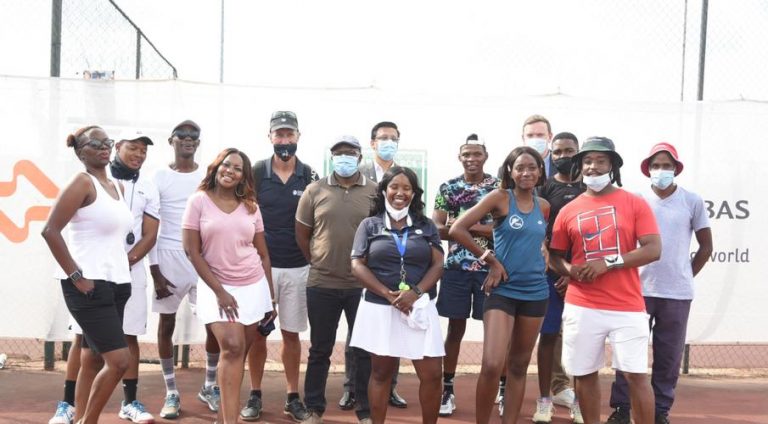
Tennis SA Hosts Development Clinic Ahead of BNP Paribas RCS Rising Star Tennis

TENNIS South Africa (TSA) hosted a successful clinic in Atteridgeville, Tshwane this past week, in the build-up to the highly anticipated second edition of the BNP Paribas RCS Rising Star Tennis series, which starts later this month.

Over 70 children from schools in Atteridgeville, Hammanskraal, Mabopane, Soshanguve and Ga-Rankuwa participated in the programme held at Mpho Makhoba Tennis Precinct, situated in the Mbolekwa Sports Complex.

Tennis equipment (rackets and balls) were donated to the participating schools to help them gear up for the nationwide Rising Star Tennis school’s tournament.

Six coaches from the BNP Paribas Coaches Mentorship programme, conducted the coaching clinic in Atteridgeville as part of TSA’s goal to provide opportunities and skill development to kids from historically disadvantaged communities.

Vikas Khandelwal, CEO of BNP Paribas South Africa, who attended the clinic expressed his satisfaction with the success of the Atteridgeville clinic. “Tennis is embedded in BNP Paribas’ DNA, and this initiative has an even greater impact than sport alone. Rising Star Tennis is bringing communities together during a time when it’s needed the most, giving children an opportunity to learn and have fun which is more important than ever right now.”

Programme ambassador Carol Tshabalala also took to the court to hit some balls with the enthusiastic young players, while South African teen sensation and programme ambassador Kholo Montsi conducted a virtual masterclass session from Florida in the United States.

“I’m honoured to be part of this project (Rising Star Tennis),” said Montsi, who competed in the junior division at last year’s French Open.

“I think it’s something very special and for me it’s great to be able to help other kids in South Africa. It’s an amazing opportunity and I’m blessed to be part of it.”

The 18-year-old Montsi shared some invaluable tennis tips with the kids to help them prepare for the BNP Paribas RCS Rising Star Tennis tournament.

Entries for the second edition of the national schools’ tournament close on 5 April, 2021 and district events will be held around the country this month.

“This year is bigger and better than ever. We’ve got primary schools, high schools and a wheelchair tennis competition,” said TSA CEO, Richard Glover.

“The objective is to get more kids across all communities across South Africa playing tennis. This is a really exciting celebration of grassroots tennis.”

The next BNP Paribas RCS Rising Star Tennis activation will take place in Gqeberha, Eastern Cape on Tuesday, 6 April, followed by another clinic in Polokwane, Limpopo on Thursday, 8 April 2021.

  • Supersport

The Way Nigeria Selects Vice-chancellors Is Deeply Flawed. But It Can Be Fixed

This depends on the type of university – federal, state or private – as well as the type of private university – secular, faith-based and hybrid. Another factor is whether the appointment is for a pioneer vice-chancellor or a successor.

The standard in federal and state universities is that pioneer vice-chancellors are appointed by fiat by the Visitor. The Visitor is usually the president of Nigeria or the governor of a state for public universities. It is the Proprietor for private universities.

For subsequent appointments, a vacancy is declared – in a newspaper advertisement – six months before the end of the tenure of the incumbent. Conditions are stated in the advertisement which include number of years of post-professorial qualification, academic and administrative qualifications, and experience in various other capacities.

At the close of the deadline for submission, candidates are shortlisted. Interviews can take place in different formats, depending on tradition or the preference of the Visitor, board of trustees or governing council.

Although this system worked seamlessly in previous years, it has come under strain in recent times. The problem is that the corrupt hand of operators can disrupt any system.

Why are some universities in crisis over appointments?

The intrusion of vested interests is the fundamental cause.

Take the role of state governors. There are 36 states in Nigeria. In most cases the governors regard the post as another political appointment preserved for family, friends, loyalists or their surrogates.

Another consideration for governors is that to win – or retain – power they must nurture the support of particular communities. This means that considerations such as ethnicity, sub-ethnicity, senatorial zone balancing, home town of origin, nepotism and religion are at work.

On another level, chairmen and influential members of a university’s governing council could favour a particular candidate, and not always the best, as a form of patronage (as dictated by their appointing authorities) or as a reward for the highest bidder.

And then there’s the more direct corruption – some vice-chancellors are said to have literally bought the position with considerable sums of money.

Staff unions also play a role. They sponsor candidates supposedly to advance the cause of the staff. But in most cases, other disruptive factors are at play. These include political interference as well as other considerations, such as clamours for a ‘son of the soil’ (host state or community) or member of a religious group.

What makes the position so attractive these days?

The obvious reason is the concentration of power and access to wealth in the position. Vice-chancellors have the power of patronage as they interface with – and are courted by – powerful people such as politicians, traditional rulers and religious leaders. Many might have helped them into office in the first instance.

Vice-chancellors are also well remunerated. The consolidated salary, perks and allowances of a public university vice-chancellor is many times that of the highest paid professor.

In addition, gifts and patronage flow into the office throughout the tenure of the incumbent, especially during religious and commemorative occasions.

Then there’s the exercise of power. Vice-chancellors could make – or mar – the careers of friends or foes. They too dispense patronage within the system as they nominate or appoint the chair and members of powerful boards or committees; they chair the appointments and promotions committee, which also entitles them to determine external assessors of professorial candidates. In other words, they determine the career progression of their non-professorial colleagues.

Lastly, in many cases they also influence the choice of their successors as they nominate their deputies, who are often groomed to succeed them in office.

What would be a better way of making the appointments?

The only solution is to make the process of appointment transparent by giving each candidate a fair shot at the position. There should be no preferred or anointed candidates, sponsored by external or internal vested interests.

A few changes might help.

First, sitting vice-chancellors should leave their posts in the last three months of the selection exercise. This is to ensure that they don’t rig the system in favour of certain candidates. In their place, the oldest serving professor, if found above board, should oversee the transition.

Second, sitting deputy vice-chancellors who are interested in the office should also step aside for the process to be fair to all.

Third, the composition of the selection panel should be done with emphasis on character, diversity of representation – within the institution as well as outside – such as disciplines and gender.

Fourth, the criteria for selection and scoring should focus on the academic and administrative abilities and character of the candidates. Certain criteria give undue advantage to candidates at the expense of others. For example, candidates in the sciences have an edge in the number and size of research grants won for the obvious reason that scientific research is heavily funded all over the world. Since the job is not primarily to win grants, that should not be a criterion for selection.

Candidates should be judged fairly under the rubric of contribution to knowledge in their various disciplines.

How did you become a vice-chancellor, and are there lessons to be learnt?

I responded to a newspaper advertisement, was shortlisted and was interviewed with other candidates. The university hired the famous boardroom guru, Dr Michael Omolayole, as a consultant to lead the exercise. The panel comprised the chair, who was also the pro-chancellor and chairman of the university council, a former pioneer vice-chancellor as well as members of the board of trustees and council.

We were interviewed in three stages, two of which were in group format (all candidates together) and the final one featuring one candidate at a time. Practical questions were asked to test our knowledge of university administration and ability to handle hypothetical problems. The panel also cleverly asked us to recommend our top three candidates.

The result of the exercise, in which I topped all three sections and was the preferred candidate of the others, was relayed to the Senate when I was presented on October 18, 2010. It was meant to show the transparency of the system that produced me. That gave the system and the candidate legitimacy.

  • The Conversation

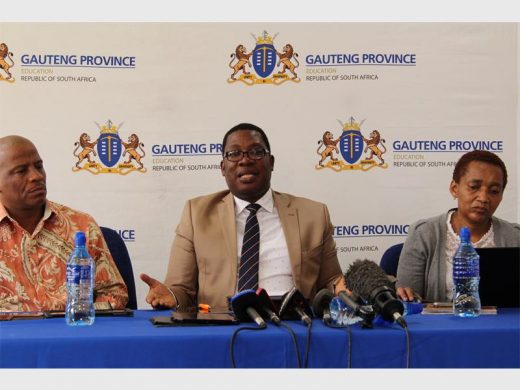
EFF Calls For Removal Of Gauteng MEC For Education Panyaza Lesufi Over ‘Conspiracy To Conduct Tender Corruption’ Claims

THE EFF is calling for the removal of Gauteng MEC for Education, Panyaza Lesufi, for the ‘damning reports of his conspiracy to conduct tender corruption for the benefit of his allies’.

On Sunday, the City Press reported that Lesufi was recorded in a meeting on February 3 in Soshanguve, north of Pretoria, during which his department tenders were discussed with members of the community and school governing bodies.

“We therefore call for the immediate removal of Panyaza Lesufi as an MEC for brazenly plotting patronage and the robbery of the Basic Education Sector in Gauteng in a time of global economic crisis. Lesufi’s nefarious scheme of self-enrichment is a sabotage of education and the future of children, and is tantamount to treason,” said the EFF in a statement.  

“In a meeting with his collective in Tshwane, it is reported that Lesufi suggested that all tender related matters must be discussed with him, so as to allow for his people to be supposedly empowered at the expense of service delivery.

“The criminality of Lesufi is even further exposed, when he suggests in the meeting in which he is recorded that there may be traitors within his plot to loot, who will report him to police authorities for awarding tenders without following the appropriate bidding process.””

According to the City Press, Lesufi told the meeting that, as an MEC for Education, he had to ensure that people were satisfied at all costs.

“As comrades, I’m telling that, if I have to assist you to make business with the department, school governing bodies are the ones who deal with schools’ businesses. I am pleading with you, comrades, to convene meetings of area SGBs so that when they advertise for people to bid, they should advertise in this Whatsapp group, because if I interfere in that area, I will be accused of involving myself in their business. Some SGBs ask for quotations from their uncles and relatives. I am telling you that you should know and be involved,” said Lesufi.

Lesufi has denied the allegations.

“I am fully aware that there are forces at play who want to assassinate my character for political expediency. Unfortunately in a democratic society the accuser doesn’t need to proof their allegations but the accused must proof their innocence. I take my work and my commitment to serve so serious that it’s clear it’s becoming a pain to my enemies something I have no control over,” said Lesufi on Sunday, rejecting the allegations.

  • Inside Politics

SADTU NEC Condemns Government’s Threat To Freeze Public Servants Wages

0

HE SA Democratic Teachers Union has decided to continue to engage government about the wage freeze before embarking on any strike action.

The decision follows SADTU’s national executive committee (NEC) meeting held on Monday and Tuesday to discuss the ongoing impasse related to the 2018 three-year public wage agreement signed between unions and government.

In a statement, SADTU said that should the employer frustrate the current negotiations by insisting on the wage freeze, the union shall have no option but to ballot members to go on a strike.

“The Union is against austerity measures because such measures destroy the possibility of addressing the inequality and put brakes on economic recovery. The Union will not tolerate the destruction of the collective bargaining right,” SADTU said in a statement issued by spokesperson, Nomusa Cembi.

“The NEC condemned governments threat to freeze public servants wages. If the freeze was to be implemented, public servants like other education workers would not afford the basic needs, let alone keep up with the rising costs of living that have been drastically increased by the pandemic.”

SADTU said freezing of salaries will in no way contribute to economic development.

“Freezing of salaries will in no way contribute to economic development, for it is an established fact that, where dont have, lesser buying power, with little circulation of money, no economy will grow,” said Cembi.  

“The freezing of salaries has demoralised workers and is working against the any dream of achieving an effective and efficient developmental state. Public Servants are heavily hungry and no NORMAL employer can expect them to excel at work.”

The public sector unions are demanding that government honours its three-year wage agreement of 8%.  

The matter has caused massive tension between government and public servants.

As part of the 2018 three-year salary agreement, public sector workers would have received a CPI+1% salary increase in 2020.

However, due to the dire financial state of the country and complications brought about by Covid-19, the government said it was forced to renege on the agreement, implementing a wage freeze instead.

  • Inside Politics

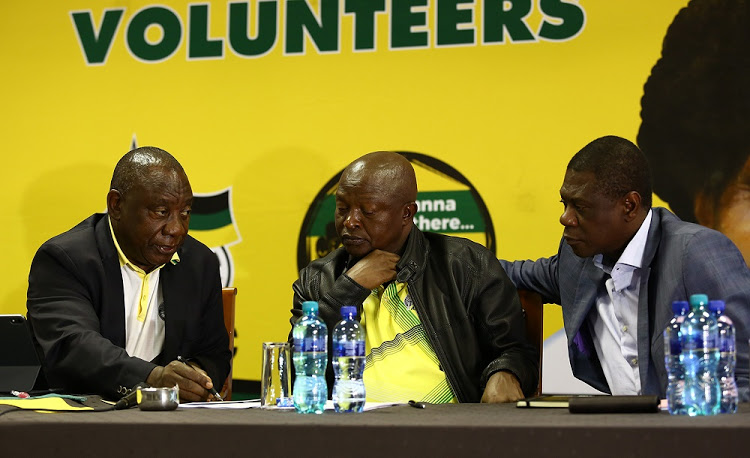
ANC NEC Welcomes Progress At Finding Solutions To Address Student Debt, Funding Of Higher Education

0

STAFF REPORTER|

THE ANC National Executive Committee has received a report on the funding of higher education, according to President Cyril Ramaphosa.

Ramaphosa made the announcement on Monday night after the conclusion of a three-day ANC NEC virtual meeting held from Friday to Monday.

The president’s comments comes barely two weeks after scores of students from Wits University and the University of Johannesburg embarked on violent protests, saying lack of finances should not hinder the poor to attain higher education.

Ramaphosa said the NEC noted has the important progress that has been made over the last decade towards the ANC’s commitment to provide free higher education to poor and working-class students.

“The NEC welcomed the work in progress to look at solutions to address the student debt as well as the critical issue of funding of higher education for the missing middle,” said Ramaphosa.

“The NEC agreed with the caution that we must ensure that we do not underfund critical TVET, Community Education and Training & Skills sectors. These components are critical to empowering millions of young people & ensuring lifelong learning and adult education & literacy.”

Over 8,000 students are at the risk of being financially excluded for the 2021 academic year.

Many of them have been excluded from the university because of a lack of funds from the National Students Financial Aid Scheme (NSFAS). 

  • Inside Education

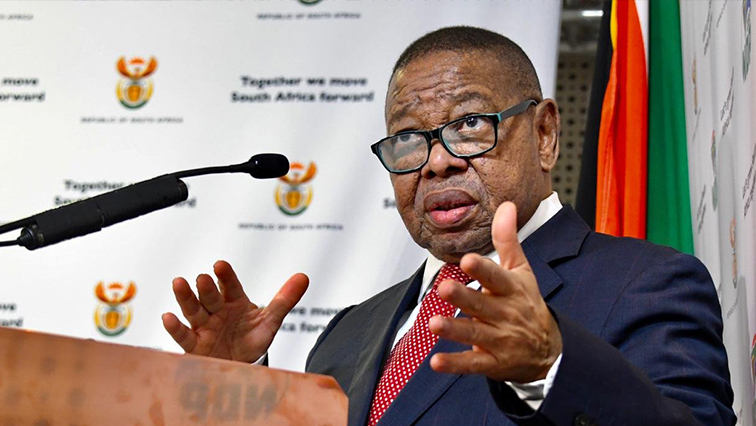
SAFTU, EFF and Students Intensify Calls For Nzimande To Step Down Over Mishandling Of Student Protests

NYAKALLO TEFU|

THE South African Federation of Trade Unions (SAFTU) is one of the leading political formations leading the charge on calls for the resignation of Minister of Higher Education, Dr Blade Nzimande, after likening student protests in South Africa to ‘a soap opera’. 

“In the middle of a battle that is being waged against financial exclusions in pursuit of free education, the ‘Communist minister’ Blade Nzimande has recklessly likened the students’ efforts in exercising their democratic right to demand the basic education right as a ‘soap opera’,” said SAFTU’s General Secretary, Zwelinzima Vavi.

This comes after Nzimande made off-the-cuff comments about the ongoing protests by students at various institutions of higher learning, beginning at Wits University, where students have been calling for an end to financial exclusion and the cancellation of historic debt. 

Nzimande made these remarks after students at a number of universities took to the streets in response to the call by the SA Students Congress (Sasco) to shut down all institutions of higher learning for failing to meet their demands, including the implantation of free education in South Africa.

“Every year, it’s like a soapie now, The Bold and the Beautiful, every beginning of the year there is instability,” said Minister Nzimande.

The minister also called on police to act swiftly against acts of violence and destruction to property.

“The destruction of property is a criminal offence and all those engaging in such acts must be apprehended by law enforcement agencies and face the full might of the law.”

Vavi said it was disheartening for the higher education minister to be calling the fight for free education and against financial exclusions a ‘The Bold and Beautiful’ soapie. 

“His utterances are blind and insensitive to the plight of students who face financial exclusion and de-registrations on a yearly basis,” added Vavi. 

Student leaders said the minister has on several occasions failed to attend several meetings to discuss issues pertaining to financial exclusion. 

“However, it is not shocking because of the fat perks of ministerial position have transformed him into the enemy of the working class; a class on whose back he rose to prominence,” said Vavi. 

Vavi said Nzimande must hang his head in shame because students were essentially fighting an austerity program that has led to cuts in essential services such as education and healthcare. 

“For belittling the genuine struggles for access to the basic service, education, SAFTU calls on the communist, Blade Nzimande to resign from his position,” added Vavi. 

The Economic Freedom Fighters (EFF) has also called on Nzimande to resign after he compared the student protests to a television soap opera.

EFF’s spokesperson Vuyani Pambo said Nzimande’s removal was long overdue as he continues not to account to Parliament,’repeatedly giving sermons and then retreating to unidentifiable engagements’.

“This has revealed that he has no regard for the oversight role of parliament as he continues to schedule mythical engagements when he is supposed to account before the committee,” said Pambo.

“He has on a yearly basis exhibited disdain for students, at one point calling for them to fall, because they have bravely refused to accept mediocre interventions that do not represent their core demand of the decommodification of education. At the height of a global pandemic, his department which is charged with scientific research and innovation has made no sophisticated contribution to any developmental measure to curb the impact of the virus on South Africa either socially, medically or economically.”

The South African Union of Students’ general secretary, Lwandile Mtsolo, has also supported calls for Nzimande’s resignation.

Mtsolo said Nzimande’s utterances and mishandling of genuine student grievances in various statements were a growing concern. 

“It is no secret that the minister has failed to deliver on his own promises. There is nothing ‘Bold and Beautiful’ about poor governance and lack of engagement in times of crisis in the higher education sector,” said Mtsolo. 

Mtsolo added that protests and loss of lives should never amount to a ‘soap opera’. 

“Coming from a communist background, Minister Nzimande should know better that financial exclusion at the heart of student protests across the country has a negative impact on those who look towards education as a solution out of poverty, the poor and working class in the main,” said Mtsolo. 

Sasco’s deputy president, Buyile Matiwane, said the students organisation supported the call for Nzimande to step down.

According to Nzimande, the following damage and costs have been recorded at universities:

  • CPUT recorded four cases of vandalism with repairs worth R2.6 million.
  • UJ recorded seven cases of vandalism with repairs amounting to R202 826.
  • UKZN recorded damage with repairs amounting to R27.3 million.
  • UFH recorded damage with repairs amounting to R468 000.
  • UWC recorded two cases of vandalism and theft to the worth of R166 007.
  • UniVen recorded three cases of vandalism in 2020 with repairs costing R133 227.

Nzimande said the total cost of repairs, including those that have already been carried out, amount to R32.7 million.

“None of these acts and massive losses incurred could be justified or associated with any legitimate forms of protest and should be condemned unequivocally by all, including our student and union stakeholders. I am also convinced that all progressive stakeholder organisations will agree that criminal and violent acts have no legitimacy in genuine political protests around demands for greater equality in post-school education and training.”

Nzimande has called on University Vice-Chancellors to tighten appropriate security measures at higher learning institutions.

–        Inside Education

No Education, No Protection: What School Closures Under COVID-19 Mean For Children And Young People In Crisis-Affected Contexts

SCHOOLS worldwide offer interconnected formal and informal services to children and young people. These services focus not only on academic achievement but on social, emotional, psychological, and physical health and well-being.

By providing physical protection and oversight, daily routines, and stability, as well as services for health, nutrition, sanitation, and other more specialized needs, education can both sustain and save lives, particularly in crisis-affected, post-crisis, and refugee-hosting countries.

Access to quality education in crisis-affected contexts provides hope for a better future by equipping children and young people with the tools they need to reach their full potential and experience life-long success.

With the rapid closure of schools across the world in response to the COVID-19 pandemic, children and young people, especially those in crisis-affected contexts, have lost an important space that offered them stability, even as the environment around them grew ever more uncertain.

The economic shocks caused by COVID-19 have had devastating consequences by compounding the poverty and food insecurity many families were already facing, including those in contexts enduring pre-existing challenges.

The mental health of adults and children alike has deteriorated as they have been confined to their homes; government and non-government agencies alike have reported a significant increase in violence and other threats that specifically target children and young people.

Drawing from research and experience on previous infectious disease outbreaks and an emergent body of work from the current COVID-19 pandemic, this report highlights the primarily negative effects resulting from the combination of sudden school closures and restricted access to and availability of services, social networks, and other protective facilities for children and young people living in crisis-affected contexts.

The consequences of school closures on education and child protection can be categorized into three principal areas.

LOSS OF LEARNING AND IMPEDIMENTS TO PROVIDING INCLUSIVE, EQUITABLE,
QUALITY EDUCATION

School closures are having a significant negative influence on academic attainment and on social and emotional learning (SEL). To mitigate the loss of face-to-face instruction, education stakeholders have attempted to rapidly disseminate online and other distance learning resources, including lessons offered on the internet, television, and radio, as well as printed study materials. Analysis of these global efforts has produced several key findings.

  • The content and quality of distance education varies widely, even within a country, and children’s ability to engage in learning depends heavily on the resources and support available in individual households.
  • Many learners are struggling to access distance learning options, due to barriers related to information and communications technology, infrastructure, and digital literacy.
  • Challenges in access to and the availability of education have been exacerbated for children and young people living in crisis-affected and post-crisis contexts, as well as those from lower socio-economic backgrounds.
  • Accessibility for children and young people with disabilities has been extremely limited across available distance learning platforms, many of which were not designed to be inclusive.
  • Other groups of children and young people have also been marginalized; girls in particular are less able to engage with the distance education offered, due to their household duties.
  • Across contexts, parental engagement—including their individual availability, level of education, ability or willingness to support their children’s learning at home while juggling multiple priorities—is a significant factor in the success or failure of remote learning modalities.
  • Without daily face-to-face contact with teachers, children and young people lose not only their teachers’ pedagogical expertise in facilitating participation and engagement with the content, including SEL, they also lose dependable routines and protective oversight.

NEGATIVE IMPACT ON CHILD WELL-BEING AND HEALTHY DEVELOPMENT

Schools are hubs for social services beyond academic learning, many of which encourage the enrollment and retention of children and young people who might otherwise be excluded from education. Critical services curtailed or lost due to school closures include the following:

  • At the peak of school closures, an estimated 396 million children and young people worldwide lacked access to school-based nutrition and nutritional supplement programs, which both combat malnutrition and incentivize parents to enroll their children in school, especially girls.
  • Children and young people with disabilities have lost access to specialized or rehabilitative care. This encompasses differentiated academic support and clinical services, which these children and young people disproportionately require. Outside the schools, such services are out of reach for families living in poverty.
  • Children and young people lack access to the formal mental health and psychosocial support (MHPSS) services often provided in schools; integrating these services into the school day prevents stigmatization of those with mental health issues and “normalizes” the healing process, in particular for refugee children and young people.
  • School closures mean children and young people have lost important informal social amenities and safeguards, many of which are difficult to quantify yet are crucial to ensuring children’s and young people’s well-being and healthy development. Relationships with their peers and teachers can promote positive mental health, and the schools provide entry points into social networks for both pupils and their parents. This is particularly important for marginalized groups, such as lesbian, gay, transgender, queer, and/or intersex (LGBTQI) youth.

AMPLIFIED CHILD PROTECTION RISKS AND HARMS EXPERIENCED BY CHILDREN AND YOUNG PEOPLE

Schools aim to provide physical and emotional security and dependable routines for children, young people, and their families, especially in crisis-affected nations.

During school hours, children are productively occupied, and they are supervised by teachers and school administrators who have safeguarding responsibilities. During the lockdowns, the home or community has not been a place of safety for many children and young people, thus the child protection risks have multiplied, compounded by growing economic uncertainty, health-related concerns, and other domestic burdens:

  • There is growing evidence that dealing with a lack of routine and the structured activity schools provide creates negative feelings among children and young people, including a sense of isolation, all of which have severe effects on their mental health, particularly for those with existing MHPSS needs.
  • Research across child protection agencies worldwide shows a significant decrease in the availability of social support services, even as hotlines report increasing instances of sexual and gender-based violence (SGBV), child abuse, child labor, and other forms of exploitation and neglect.
  • In situations of armed conflict, the absence of school has deprived children and young people of the incentives that help them avoid enlisting in the armed forces. This creates a heightened risk of the recruitment and use of children and young people by armed forces and armed groups, which disproportionately target boys.
  • As families suffer pandemic-related economic shocks, children and young people are more vulnerable to engaging in hazardous and exploitative labor.
  • Refugee children and young people are often those most educationally and economically deprived. This includes having limited access to formal education, fewer opportunities for remote learning, and a higher risk of abandoning their education to enter the workplace.
  • Evidence suggests that there have been significant setbacks in recent progress toward gender equality, especially for girls, who are more likely to report that household duties prevent them from engaging in remote learning. Confronted with home confinement in a context of economic uncertainty, girls—especially adolescents—are at increased risk of child, early, and forced marriage (CEFM) and other forms of SGBV. Moreover, because schools are closed, which limits monitoring and reporting, cases of female genital mutilation and cutting (FGM/C) are on the rise since the start of the pandemic.
  • With schools closed, children and young people with disabilities face acute risks. Their need for care at home may put additional stress on parents or caregivers accustomed to the support offered through the schools, and experts warn of increasing abuse and neglect of children and young people with disabilities.
  • Across all groups, the abuse suffered during school closures will likely have long-term consequences: in addition to causing significant mental health issues, sexual abuse can lead to sexually transmitted infections, unwanted pregnancies, and life-threatening complications while giving birth.

In sum, school closures have been shown to have a hugely negative impact on children and young people, immediately and in the long-term.

Looking ahead, the situation for vulnerable children and young people worldwide remains fragile. Before the pandemic, 127 million children and young people of primary and secondary school age were already out of school. The outbreak of COVID-19 put additional stress on already over-extended and under-resourced education systems around the world. Context-specific risks may prevent or delay the reopening of some schools, in particular those that have been the target of attacks or used as temporary housing during the crisis. However, even as schools reopen, there is the risk that children and young people from some marginalized populations will be excluded from re-enrollment or opt out of attending school because they need to work or have been married and/or become pregnant. Others will struggle to re-engage with schooling as they deal with the long-term effects of violence, abuse, neglect, and exploitation.

RECOMMENDATIONS

When confronted with the ongoing effects of the COVID-19 pandemic and future infectious disease outbreaks or other emergencies, policymakers must ensure that children and young people remain squarely at the center of their decision-making. Before future school closings occur, officials must strive to understand and weigh up the multitude of risks children and young people can and will face, along with the wider public health prerogatives.

The following key recommendations outline how best to respond to and recover from COVID-19 school closures and to prepare for future shocks:

  • Prioritize the identification of the most marginalized children and young people in each context, then address the systemic barriers that prevent their engagement with education and access to protective services.
  • To prevent children and young people from “falling through the cracks,” strengthen child protection and education systems and improve collaboration between stakeholders, prioritizing support for children and young people already out of school.
  • As schools reopen, emphasize outreach to the children and young people from marginalized and less-visible groups, who are most at risk of not returning or were already out of school.
  • As schools reopen, prioritize access and well-being over rapid academic catch-up.
  • Moving forward, provide ongoing training and strengthen the capacity of teachers and school administrators, as well as parents and caregivers, to support children’s and young people with their at-home learning, and their wider MHPSS needs.
  • Provide more equitable remote learning by strengthening education systems, reviewing existing materials and media, and developing new materials that are appropriate, learner centered, and useful for at-home learning.
  • Ensure that scholastic materials and distance learning modalities feature inclusive options for children and young people with a variety of disabilities.
  • Engage in ongoing planning and preparedness for future school closures in emergency situations, including improving water, sanitation, and hygiene (WASH) facilities, reducing class sizes to accommodate social distancing, and improving resiliency and readiness to shift to distance modalities.
  • Increase predictable financing for education and child protection, including humanitarian and development aid.
  • Reliefweb

Online learning is an opportunity to meet the needs of struggling students

Dr THELMA DE JAGER and Professor MASHUPYE HERBERT MASERUMULE|

AS MANY have observed, the COVID-19 pandemic has laid bare many challenges that students face at school and higher education institutions. In South Africa, these relate particularly to inequalities arising from students’ diverse socioeconomic backgrounds. These inequalities account for the learning barriers and inability to learn effectively.

Contributing to ineffective learning, research conducted in South Africa showed that a total of 97% of educators never or seldom use a flexible curriculum and extra time to accommodate the diverse learning needs of students.

South Africa’s constitution provides for equal access to education and its inclusive education policy exists to make this a reality. But in practice, in classrooms, students’ diverse needs are not being met. The results of ineffective teaching can be seen in the student dropout rate in South Africa, which increase annually. It’s estimated that 60% of young South Africans effectively drop out of school, without any schooling qualification.

The reasons for this could be slow schooling progression due to repetition of school years. Contextual factors also play a role. These include poverty, absenteeism of educators, ill-equipped and large classes, lack of teaching and learning resources, students with insufficient reading and writing skills and inadequately trained educators. Additionally, the lack of educators’ skills in adjusting the curriculum to meet the diverse learning needs of a multicultural learner body hampers the academic progress of South African students.

Get your COVID-19 updates via WhatsApp.

A study was conducted among a group of student teachers to see whether a different approach to instruction could help them. This approach is called differentiated instruction – that is when the instructor tailor-makes support for individual students. Content, assessment and strategies are designed to meet their needs. The results suggested that this could improve students’ performance.

But COVID-19 has added to students’ challenges. Teaching and learning was largely based on technology and forced online teaching. The change to online, remote teaching has contributed to students failing or dropping out because they have complex needs which some poorly resourced institutions can’t meet. The need for access to technology added to existing difficulties such as language.

On the other hand, this switch to more online teaching and learning could be an opportunity to embrace inclusive education and create differentiated online teaching activities. It could be a way to introduce variety which benefits students.

Differentiated teaching and learning style

A study was conducted that looked at the influence of differentiated assignments on first-year student teachers’ academic progress in a South African university. These students faced a typical set of challenges, including insufficient English language skills, lack of confidence to communicate in class discussions, the inability to question unclear concepts and lack of time management and critical thinking skills. Most were from rural backgrounds. They were trying to adapt to urban learning environments and had financial constraints.

One group was given three assignments adapted for their learning style. They could choose how they preferred to complete the task by using various visual aids to interpret or summarise data and solve problems. The other group was not given this choice.

In a test at the end of the semester, the group that had chosen the method that suited them, performed on average 6% better than the other group. But they still had language difficulties and needed help to clarify concepts and new terminology.

As many have been agitating, this emphasises the importance of decolonising the medium of instruction for cognitive justice – “equal treatment of all forms of knowledge”.

These results suggest that lecturers must reassess and adjust their pedagogical practices. They must also include the needs of students in a digitally orientated world. Some students require in-person contact with their lecturer to understand abstract concepts.

Guidelines to create online differentiated activities

The continuing COVID-19 pandemic is not only challenging lecturers to ensure all students are effectively included in teaching and learning, but could also be an opportunity to embrace inclusive education.

The lecturer is central in the successful creation of online differentiated learning activities. Before creating an online assignment, a lecturer should be well acquainted with the learning disabilities and needs of their students, available technology applications, diverse instruction methods, visual illustrations, and other strategies to overcome learning barriers.

We’ve drawn on our experience and research to suggest some guidelines for teachers to create differentiated activities. These can start with simpler activities and move to more complex ones to ensure students grasp the new content. Immediate feedback is essential.

Divide a lesson’s content into three sections, each suited to a different learning preference:

  • A short activity to introduce and clarify new concepts of the lesson. Use videos and visual images.
  • An interactive teaching and learning activity followed by short-answer questions online.
  • Self-study or a research activity (reading and writing).

When compiling online lessons for disadvantaged English second language students, teachers should consider the following:

  • Set clear lesson outcomes so that students know what they should accomplish with the lesson content and activities.
  • Use visual images and apply culturally relevant texts that can be related and applied to students’ real-life experiences.
  • Use visual images to illustrate unclear concepts. Describe and explain the relevance of the images.
  • Use colour effectively to ensure the contrast is easily readable.
  • Create short video clips to demonstrate physical sciences experiments, calculations or clarification of abstract concepts.
  • Use short paragraphs and short sentences.
  • Create documents that are structured with page numbers, clear headings and sub-headings.
  • Create short-answer questions.

Research findings have indicated that interesting, fun and enjoyable online teaching and learning methods stimulate students’ curiosity and contribute to effective learning, regardless of their needs and their learning style preferences. For example, 3D-illustrated lectures can improve students’ concentration and engagement.

Given the extra workload, lecturers from different institutions need to collaborate to compile interesting online lessons. These lessons can also be video recorded and, ideally, broadcast so that students who don’t have access to data can view them.

–        The Conversation

Sports Corner: These Are The School Activities Now Allowed Under New COVID-19 Rules

SPORTS, choirs and tournaments are permitted again at schools following an amendment to Covid-19 directions by the Department of Basic Education.

The signed amendment, dated 27 March, gives the go-ahead for school sports matches, physical education, extra-curricular activities, and inter-school, district, provincial and national school sport tournaments.

However, the conditions are tough, with no spectators allowed and a host of other rules that must be adhered to.

These are:

  • A Covid-19 compliance officer must be appointed for each venue;
  • There must only be one controlled entrance to the venue;
  • All participants must undergo health and temperature screening before warm-up or the event;
  • Any person who enters the venue must undergo health and temperature screening;
  • Hand sanitisers must be available at the entrance gate and every person who enters the venue must sanitise their hands;
  • Participants and officials must sanitise their hands before and after a match or event;
  • A person who leaves the venue temporarily and returns again, must redo the process of health and temperature screening, and hand sanitising;
  • For contact tracing, a register of all officials and pupils from visiting and hosting schools who are attending a school match or event must be kept by the hosting school for at least 21 days. It must contain the following information of officials and pupils:
  • Full names; residential address; cellphone number, telephone number or email address; and, contact details of the people living in the same residence as the person attending training or a school match or event;
  • A digital registration and health screening platform, such as the Teacher Connect Application, may also be used to assist with the administration of the registration process;
  • If a person has Covid-19 symptoms or presents with a temperature above 38°C, that person must be refused access into the venue;
  • The number of people, including participants, referees, adjudicators, technical officials, volunteers, medical team, media or broadcasting team, and stadium workers, permitted at a venue at any one time is limited to: A maximum of 100 people, for indoor venues; A maximum of 250 people for outdoor venues;
  • If the venue is too small to hold 100 people indoors or 250 persons outdoors, observing a distance of at least 1.5m from each other, then not more than 50% of the capacity of the venue may be used, subject to strict adherence to all health protocols and social distancing measures;
  • Teams, technical officials, volunteers, relevant stadium staff, medical staff and registered members of the media or broadcaster team must leave the venue as soon as their responsibilities are completed. Social distancing and the wearing of face masks must always be maintained by people not participating in matches or events;
  • Participants must always wear face masks, except when participating in an event;
  • Technical officials must report before the start of any event or competition for Covid-19 regulations and protocol briefing session and screening;
  • All ablution facilities must be sanitised regularly and kept clean as per Covid-19 protocols; entry to the ablution area will be regulated to adhere to social distancing protocols; and all sport equipment must be sanitised before and after use;
  • Championships, tournaments and inter-school sport matches that require learners to travel to other schools or provinces may resume without spectators;
  • A list of names of all officials, pupils and any other person from the visiting school must be provided to the hosting school at least three days before an event or match, for the purposes of compliance;
  • Oral history, spelling bees, moot court, speech contests, debates and school clubs may resume activities, without spectators with strict adherence to social distancing, hygiene and safety measures;
  • Choir practice or rehearsals, choir competitions and inter-school choir events may resume, without spectators;
  • In order to comply with the venue capacity, the categories permitted to participate in respect of the South African Choral Eisteddfod (SASCE) are limited to small ensembles, farm schools, special schools, female and male voices.
  • Agencies