Home Blog Page 370

Over 30 Fort Hare Students Now In Quarantine After Attending ‘Wild’ Tavern Parties

NYAKALLO TEFU

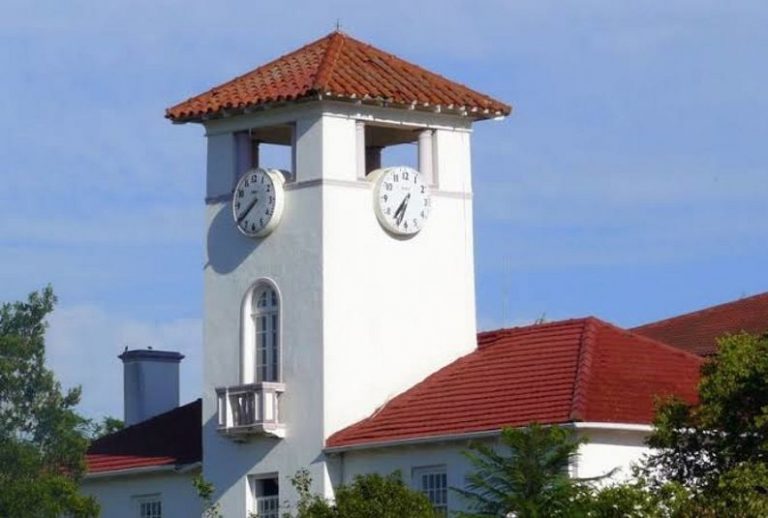
THE Eastern Cape Health Department has launched a testing and tracing campaign following a recent outbreak of COVID-19 at the University of Fort Hare’s East London campus.

This, after 30 students tested positive amid allegations of non-compliance to Alert Level 1 Regulations where masks were not worn, social distancing not observed and non-sanitizing of hands not done at a tavern in Quigney on October 3.

Department spokesperson, Siyanda Manana said most of the students that tested positive are from the Nursing Science Faculty and, to a lesser degree, the Law Faculty.

“Students that have attended the parties confirmed that Lockdown Regulations were not adhered to. Patrons who were at the tavern were allegedly more than 300, some allegedly been drinking from one bottle and dancing close
to each other”, he said.

He said the students were quarantined and isolated at the Alice Campus where the University had set aside a residence with 134 rooms.

Manana says they fear a second wave of COVID-19 and there might be a resurgence of the pandemic.

Manana has urged people to avoid places where there are large crowds.

“We have seen an increase in the numbers as the Levels of Lockdown were brought down by the government, however people seem to think that COVID-19, is no more”, Manana said.

(COMPILED BY INSIDE EDUCATION STAFF)

Confidential Report Exposes The Rot At Centre Of NSFAS

NYAKALLO TEFU

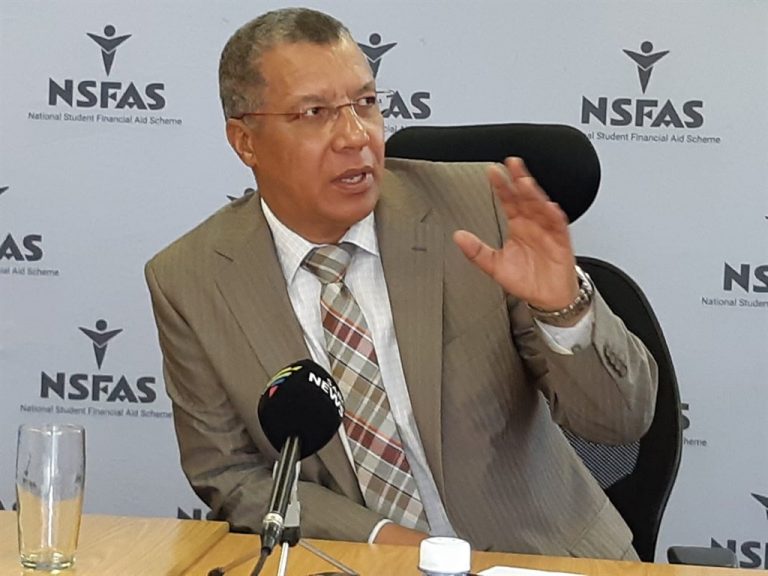
A report by NEHAWU tabled in Parliament has detailed how National Students Financial Scheme’s administrator Randall Carolissen made irregular appointments without following proper processes.

The report was submitted to the portfolio committee on higher education, science and technology.

The report shows that no processes were followed in the recruitment of senior management staff at NSFAS under Carolissen.

Nehawu alleges that this was done in order to create positions for Minister Blade Nzimande’s preferred candidates.

Nehawu claims that Sibongile Mncwabe, a former PA and Acting Chief of Staff to the Minister of Higher Education and Training, “is overseeing all the HR matters at NSFAS in order to open an opportunity for ‘nepotism’.”

Nehawu also claims that Nzimande extended the term of the administration for a period of four more months from September to December 2020.

This was done silently, without the Government Gazette and consultation with stakeholders, according to Nehawu.

“The Minister did not consult with key stakeholders prior to the extension, for example, NEHAWU and SASCO were not consulted,” the union said.

“This appointment has serious constraints on the fiscus due to lack of funds within the government.”

The union also claimed that there has been unnecessary and illegal extension of contracts for the team of NSFAS advisors.

“The extension of all Advisors amounts to fruitless and wasteful expenditure as they all earn around R2 Million each per annum,” said Nehawu.

“In addition to salaries, each advisor receives a package which includes unlimited flights home (similar to members of Parliament), month to month car rentals, airport shuttles and V&A luxury apartments. Some of the Advisors appointed themselves into Executive positions at NSFAS, making them permanent employees before the end of the Administration period.”

NSFAS has denied Nehawu’s allegations.

In its report to Parliament, NSFAS said the administrator, in consultation with Nzimande, acquired the requisite ministerial approval to appoint advisors, in accordance with the legislative prescripts.

“The process of identifying candidates for appointment was therefore a collaborative process with nominations for the various advisory roles sought from: The Administrator; the Department of Higher Education and Training; and the Minister,” said NSFAS.

“The selection of the Advisors was based on their areas of knowledge, expertise and experience, as well as their availability for a short-term role.”

(COMPILED BY INSIDE POLITICS STAFF)

12 Million Children Missed Up To 4 Months Of School Due To COVID-19, Insecurity In Africa

0

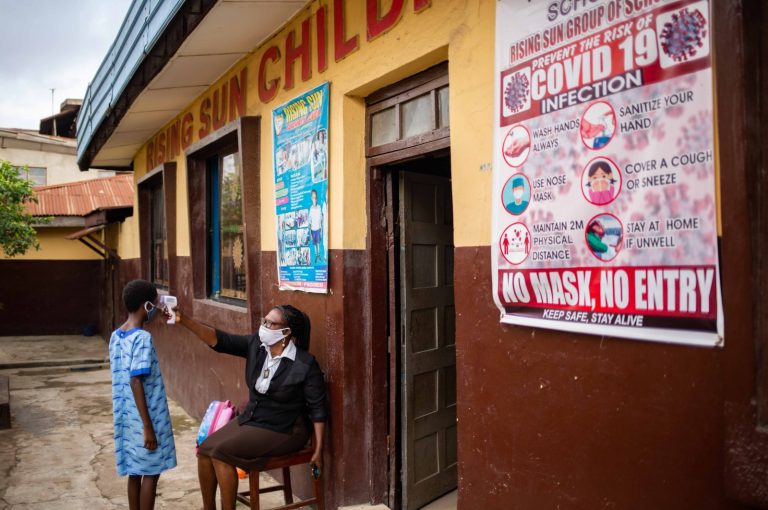
AT LEAST 12 million children across Africa’s central Sahel region have been forced out of school as a result of the coronavirus pandemic as well as widespread conflict, a humanitarian group said Monday.

In a statement, the Norwegian Refugee Council (NRC) said children had missed up to four months of school across Burkina Faso, Mali and Niger due to COVID-19 restrictions, while 776,000 could not attend school the entire year due to insecurity in the region.

“Children are in the midst of a dual health and security threat in the central Sahel. All the 40,000 schools in the region were forced to close because of the pandemic, pushing students from pre-school to secondary levels out of class in an area where access to education is often already hampered by growing insecurity, repeated displacement and poverty,” the statement quoted Maureen Magee, the Regional Director of NRC in Central and West Africa, as saying.

Magee added that 4,000 schools have been shut down or razed. While schools begin to reopen in the region, the main parts of educational facilities still lack the necessary resources to halt the spread of the deadly virus.

NRC said that only 15% of 18,000 schools in Nigeria have water points while in Burkina Faso the lack of rooms increases the risk of COVID-19 transmission.

Apart from unacceptable conditions, the raging conflict in the region makes it impossible for many children to get a proper education.

Some 90 attacks were recorded in the central Sahel between January and July 2020 alone.

The highest number of attacks such as arson, looting of schools, abduction, threats and killing of teachers was reported in Burkina Faso with more than 40 incidents.

“Too many children whose lives are already devastated by conflict, now watch their future hang by a thread.”

“The situation for students in conflict-affected schools in Burkina Faso, Mali and Niger remains at a standstill. Over 4,000 schools remained closed for 776,000 students because of insecurity alone during 2019-2020 school year. This is almost twice as much as in 2018-2019,” said the NRC.

Last week, the U.N. High Commissioner for Refugee (UNHCR) said urgent efforts are needed to avoid the “disastrous consequences” of a rapidly worsening humanitarian crisis in the central Sahel region.

To discuss the issue, Denmark, in partnership with Germany, the European Union and the United Nations, is hosting a ministerial roundtable conference for the central Sahel on Oct. 20 in Copenhagen.

“Tomorrow’s pledging conference on the central Sahel must place education and protecting schools firmly on its agenda. It cannot be the site of broken promises once again.”

“Only real political commitments commensurate with the education stakes in the region will enable children to turn over a new leaf and write a brighter chapter for the next school year,” said Magee.

(SOURCE: DAILYSABAH)

Fourways Chess Star Kajol Naidoo Is Voted Sports Achiever Of The Year

0

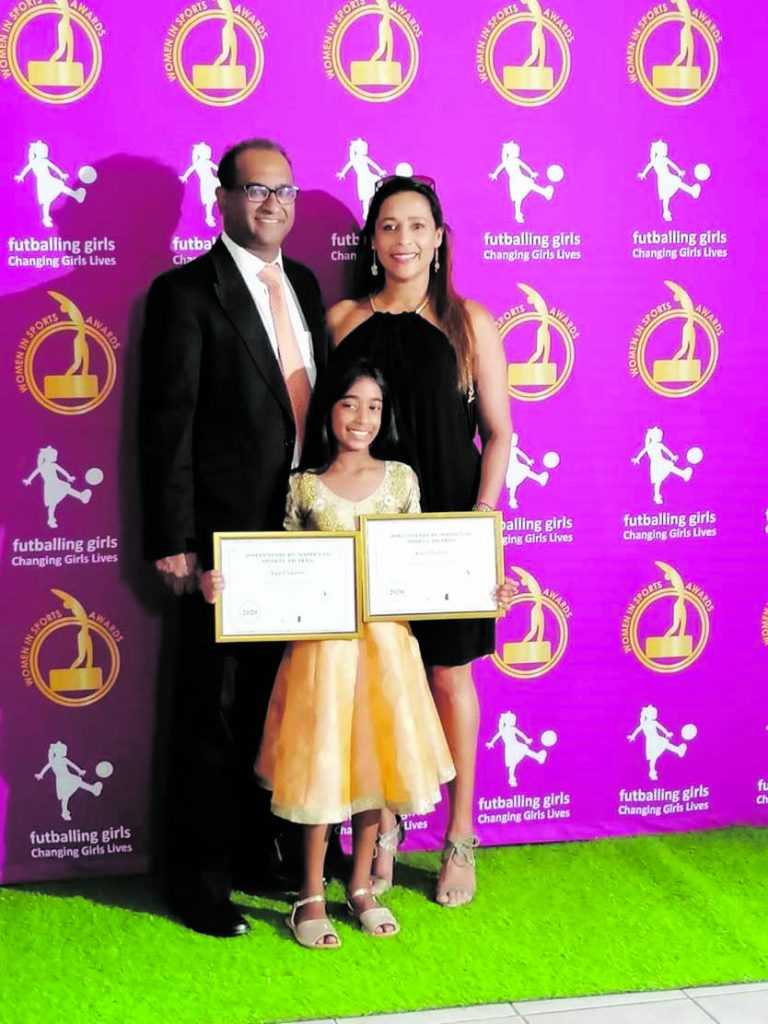
YOUNG Fourways chess player, Kajol Naidoo (9) was awarded Sports Achiever of the Year as well as Sports Athlete of the Year at Johannesburg Women in Sport Awards.

The ceremony, which was held virtually, was hosted by the Johannesburg Sports Confederation in conjunction with the Joburg Metropolitan Council. The finalists for the various categories were selected after what is said to be a rigorous nomination process.

Kajol impressed judges with not only her chess achievements and love for the sport but also for her dedication. Coupled with this, Kajol still found the time and resource to give back to the City by upskilling and sharing her knowledge.

Her father, Gerard, explained she was nominated by Joburg Metro Chess as she is the 2019 U8 girls South African national champion and represented the country in India at the Commonwealth Chess Championship in June.

In the same year in August, she attended the World Chess Cadets Championship in China. “Kajol is also the U8 girls South African Schools individual chess champion (July 2019), and she won gold at the African Youth Chess Championship for U8 girls in Namibia in December 2019.”

The Radford House learner went on to be the only U10 girl player in the category Team A, at the South African Junior Chess Championship in January this year, where she won all her games and her board prize. Her team also broke a long-standing record to have the highest score across all rounds.

Back in February, Kajol won the Gauteng Primary School Female Athlete of the Year Award.

Despite intensive coaching and tournament routines, she finds downtime and relaxation in the outdoors and with her pets, swimming, biking, hiking, running, sketching, painting, playing with Lego and watching movies.

“I am so excited having won these prestigious awards and want to thank my parents, coach Craig Bornheim, and God. I can’t wait to move from Internet tournaments back to the board and to travel internationally and play and win again.”

(SOURCE: FOURWAYSREVIEW)

South Africa Needs Laws To Deal With Deepfakes, Writes UJ’s Professor Tshilidzi Marwala

PROFESSOR TSHILIDZI MARWALA

IT IS election season once again in the United States, and if the latest polls data is anything to go by (and barring anything unusual) Donald Trump will lose this election.

His victory in 2017 was aided by the confluence of Facebook, Cambridge Analytica, Big Data and Artificial Intelligence (AI). We now live in an era where we are always connected to an electronic device, whether we are on Twitter, Facebook, or even WhatsApp.

Being connected means that we are being tracked and consequently influenced to act in a particular way. This influence includes what we buy and how we vote.

One could conclude that we are surrendering our democracy to machines.

Nevertheless, what is wrong with intelligent machines? If intelligent machines can monitor our vital data, determine whether we are at risk of dread diseases, and alert a doctor, why complain about the machine? Machines bring many good attributes to our lives.

Though machines, just like humans, discriminate against ethnic minorities and poor people, they are more correctable than humans are. For example, police in the US use Idemia, which scans faces using algorithms. Yet, results from the National Institute of Standards and Technology have indicated that two of Idemia’s algorithms were more likely to confuse black than white faces.

Machines are corrected by infusing them with representative data while human beings require more than education to be taught not to discriminate.

With the problems we face in the judiciary, where there are accusations of bias, we should perhaps start to think seriously about replacing our lawyers, judges and leaders of Chapter 9 institutions with AI machines. This is serious because AI machines are proving to be more rational and thus logical than human beings.

Going back to Trump, the question becomes, what can go wrong with an election? Recently, I read the book Deep Fakes: The Coming Infocalypse by Nina Schick. One of the big fears about elections is deepfake technology.

They are called “deep” because they are based on deep neural networks, which relate the input (a person’s facial image) to the output (another person’s body). Facebook uses deep neural networks for facial recognition to automatically label images when they are uploaded.

 These deep learning neural networks have been used to create the generative adversarial networks (GANs) that are able to fake a person saying things that they did not say and create images of people that have never existed. In fact, this is akin to transposing the face of one person onto another.

GANs are made of two neural networks with one generating an image or data and another one classifying whether it is real or fake. This continues until the network that is generating the data is so good that the classifiers think they are real. The competition between the generator and classifier networks is called game theory.

GANs can be used for essential functions such as estimating missing data, including pictures that are not complete. For example, they have been used to complete images of incomplete statues of Roman emperors from 2,000 years ago.

GANs can be used to harm people. For example, the first iterations of GANs were used to place female celebrities into fake pornographic movies, showing how fundamentally patriarchal our global culture is. While disturbing, these videos are remarkably convincing.

According to visual threat company, Sensity, non-consensual deepfake pornography accounted for 96% of the total deepfake videos online with 99% of those mapped faces from female celebrities on to porn stars.

The impact of deepfakes in influencing public thought is already apparent. As Quartz journalist Olivia Goldhill put it in November 2019, “Today’s sexist weapon is tomorrow’s political tool”.

For instance, in 2019, a video of Nancy Pelosi, the speaker of the US House of Representatives, was intentionally slowed by 25%, altering the pitch to make it appear as though she was slurring her words.

The video, which went viral after it was initially posted on a Facebook page called Politics Watchdog, is an example of a deepfake. While many amusing doctored videos like this are available online, the use of them in politics presents a disturbing reality. How do we discern the fake from the genuine?

The Pelosi video prompted US intelligence officials to issue a warning ahead of the 2020 elections about the use of deepfakes to influence political campaigns.

In another instance, a deepfake was created to make it seem like Barack Obama had used some unfavourable terms to describe current US President Donald Trump. The potential for disinformation to spread and for public thought to be swayed is stark, and there is an opportunity for these videos to be used to swing elections.

In a political campaign created by RepresentUS, a grassroots anti-corruption organisation, manipulated videos of North Korean dictator Kim Jong-un and Russian President Vladimir Putin were used to warn Americans that their democracy is in danger. Using this technology, people can be created. 

ThisPersonDoesNotExist.com, for example, provides a snapshot of how easy it is to create a new face and transplant your views onto it – effectively creating an AI human that is disturbingly realistic.

As the creator of the website, Phillip Wang put it, “most people do not understand how good AIs will be at synthesising images in the future”.

Deepfakes fall under the general area of information warfare. What can South Africa do to protect people from deepfakes? Firstly, we need to understand what deepfakes are.

Secondly, we need to understand the underlying technologies driving deepfakes.

The underlying technologies driving deepfakes are AI, machine learning, big data and social networks. Thirdly, we need to come up with strategies to control or limit the negative impact of deepfakes.

This should include introducing laws that specifically deal with deepfakes.

Furthermore, it should include capacitating our national intelligence sector to have the capabilities to develop and deploy technologies that limit the proliferation of deepfakes.

  • The views expressed in this article are that of the author/s and do not necessarily reflect that of the University of Johannesburg.

Nigeria: Adamawa Teacher, Oluwabunmi Anani Wins 2020 Maltina Teacher of the Year Award

IN 2015, Nigerian Breweries-Felix Ohiwerei Education Trust Fund introduced the Maltina Teacher of the Year, a national competition, to identify, honour and reward outstanding teachers in Nigeria.

Anani Oluwabunmi, a teacher at Concordia College, Yola, Adamawa State, has emerged the 2020 Maltina Teacher of the Year.

Anani, an English teacher was declared the winner at the grand finale held on Friday, October 16, 2020, at Eko Hotel & Suites, Victoria Island, Lagos.

For emerging the winner of the 6th edition of the Maltina Teacher of the Year, Anani will receive a total cash prize of N6.5 million (N1.5million immediately and N1million annually for the next five years) from the Nigerian Breweries – Felix Ohiwerei Trust Fund.

She would also have the privilege to be part of an all-expense paid capacity development training abroad while a fully equipped computer laboratory or six-classroom block worth N20 million will be built for her school in her honour by the Fund.

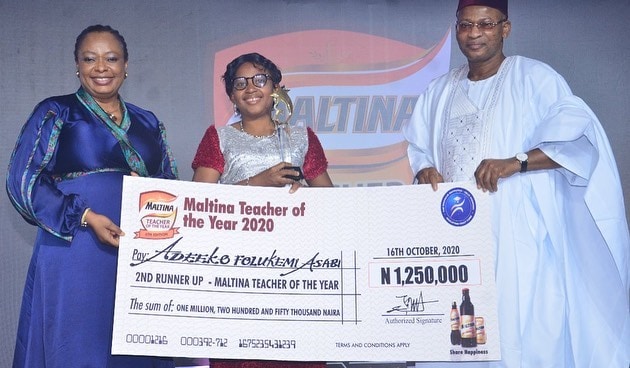
Idele Benedicta, a teacher from Asoro Grammar School Senior, Egor, Edo State emerged the first runner-up winning a total of N1.5 Million while Adeeko Folukemi, a teacher from Patterson Memorial Baptist Grammar School, Abeokuta, Ogun State emerged as second runner-up with a prize of N1, 250.000.00. Other 27 teachers who emerged as state champions were also rewarded with a sum of N500,000 each.

Speaking at the event, the Minister of State for Education, Honourable Chukwuemeka Nwajiuba commended the company’s unflinching commitment in supporting the education sector by rewarding high performing teachers through the annual Maltina Teacher of the Year initiative.

Mr Nwajiuba noted that it was heartwarming to note that the company is keeping faith with such exemplary initiative despite the disruptive impact of the coronavirus pandemic on businesses and economy.

In his welcome address, the Managing Director, Nigerian Breweries Plc, Mr. Jordi Borrut Bel explained that the initiative was designed to recognize, celebrate and motivate teachers whose stories have become great reminders of their role in laying the foundation for a good society.

While congratulating the finalists alongside state champions for coming this far, he stated that the role of teachers cannot be underestimated given their contribution to shaping and moulding lives. “With the Maltina Teacher of the Year, we are saying that our teachers can and should be rewarded for their roles in the development of our nation”, Bel said.

Also speaking at the event, the Honourable Commissioner of Education, Lagos State, Mrs. Folashade Adefisayo who represented the Executive Governor of Lagos State, Mr. Babajide Sanwo-Olu commended Nigerian Breweries Plc while noting that teachers play a significant role in nation-building given their contribution in imparting knowledge in the lives of their students.

In her remarks, the Corporate Affairs Director, Nigerian Breweries Plc, Mrs. Sade Morgan stated that the sixth edition was a clear improvement from the preceding year in terms of participation as the initiative received 1234 entries from teachers all over the country despite the short submission period and other challenges caused by coronavirus pandemic.

Morgan commended the resilience and uncommon passion of teachers for defying the odds by finding new ways to teach students virtually despite the technological limitation noted that their contribution during the difficult period lends credence to their critical role in societal development.

Speaking shortly after she was announced as the winner of the coveted prize, Anani thanked Nigerian Breweries Plc, Maltina for putting smiles on the faces of teachers through this initiative by rewarding and recognizing them.

Since inception, the Maltina Teacher of the Year initiative has produced six grand winners, Rose Nkemdilim Obi, Anambra (2015), Imoh Essien, Akwa Ibom (2016), Felix Ariguzo, Delta State (2017), Olasunkanmi Opeifa, FCT (2018), Ezem Collins (2019) and now Oluwabunmi Anani.

ABOUT MALTINA TEACHER OF THE YEAR

In 2015, Nigerian Breweries-Felix Ohiwerei Education Trust Fund introduced the Maltina Teacher of the Year, a national competition, to identify, honour and reward outstanding teachers in Nigeria.

Maltina Teacher of the Year is supported by the Federal Ministry of Education other stakeholders in education including the Nigeria Union of Teachers(NUT), All Nigeria Confederation of Principals of Secondary Schools (ANCOPPS) and Teachers Registration Council of Nigeria (TRCN).

ABOUT NIGERIAN BREWERIES-FELIX OHIWEREI EDUCATION TRUST FUND

The Nigerian Breweries-Felix Ohiwerei Education Trust Fund was set up in 1994 with a startup capital of 100 million Naira to enable sustained quality education through structured intervention in the sector.

The Fund has footprints across the six geographical zones in Nigeria at primary, secondary and tertiary levels of education. Through the Fund, NB Plc has constructed and furnished over 400 classrooms, sanitary facilities and libraries in 74 communities across the country. The Fund has also granted scholarships to deserving students in tertiary institutions.

ABOUT NIGERIAN BREWERIES PLC

Nigerian Breweries Plc, incorporated in 1946 is the pioneer and largest brewing company in Nigeria. With 23 malt and beer brands within its portfolio, it serves the Nigerian market and exports to other parts of West Africa. Nigerian Breweries Plc which is driven by the corporate philosophy of “Winning with Nigeria”, has continued to take an increasingly active part in supporting education, amongst our other CSR focus areas.

(SOURCE: PREMIUMTIMES)

Limpopo Education MEC Polly Boshielo talks to Inside Education

0

Limpopo Education MEC Polly Boshielo talks about her department’s response to education needs during COVID-19, Matric performance in the province and more.

SADTU Accuses Government Of Using COVID-19 To Avoid Honouring 2018 Public Sector Wage Agreement

0

CHARLES MOLELE

THE South African Democratic Teachers Union (Sadtu) has accused the government of opportunistically using the COVID-19 pandemic for failing to honour a 2018 agreement to increase public sector wages.

SADTU, the country’s biggest teachers’ union, said on Monday that it is confident that the Labour Appeal Court will rule in favour of the workers.

This comes after Judge President of the Labour Court, Justice Basheer Waglay, ruled on Friday in favour of an application by the unions for the matter to be heard directly at the Labour Appeal Court to expedite its resolution.

SADTU’s General Secretary Mugwena Maluleke said the unions were confident that they would emerge victorious, accusing the government of “spewing out flimsy excuses for reneging on the agreement”.

“In the first two financial years, the government had no qualms with the agreement. But shockingly, in the third year, the government has described it as unlawful, unaffordable and against public policy,” said Maluleke.

“The government is citing other priorities such as poverty and social grants for not complying with the collective agreement, as if such socio-economic problems had not existed beforehand. The government is plucking excuses out of the air and cluttering the process with breath-taking falsehoods.”

The unions have been locked in a four-month legal battle over the government’s refusal to implement the third leg of the wage agreement it had signed in January 2018 after enforcing the terms of the deal during the first two years without argument.

In papers filed in the Labour Court, SADTU and the other unions argued that the government should not be permitted to take advantage of the COVID-19 pandemic in an opportunistic manner to avoid its legal obligations set out in an agreement it had freely and deliberately undertaken to respect.

The unions said if this were to be allowed, it would strike at the heart of the principles of collective bargaining and industrial peace protected by the Constitution and the Labour Relations Act.

The unions also rejected claims by the National Treasury that the public wage increases were unaffordable, saying the Cabinet was aware of the economic conditions when it concluded the agreement.  

They also rejected the claim from the government that it was coerced into the agreement, saying it was “staggeringly shocking to suggest that cabinet made an unconstitutional offer because it was threatened by trade unions”.

Senzo Mchunu, Minister of Public Service and Administration, has said that the government did not have the necessary funds to honour the wage agreement.

The government has rejected the public-sector unions’ claim that it was using the COVID-19 pandemic as an excuse to refuse to grant the wage increases.

Instead, it has blamed the unions for turning down cost-cutting proposals to make the increases affordable. 

Following Judge Waglay’s decision on Friday, the unions were informed that the matter will be heard in the Labour Appeal Court on 2 December.

In a letter to the unions, the Labour Court registrar writes: “Although the Judge President is of the view that this is not the sort of matter which should forgo a hearing by the Labour Court, he has decided, for a number of reasons, to have the matter ventilated in the Labour Appeal Court, as a court of first instance.”

“To make matters worse, the government is trying to criminalise the legitimate collective agreement that it willingly signed. It seeks to exploit the adverse economic situation created by the COVID-19 pandemic. That is a blatant cynical attempt to hide behind this worldwide tragedy,” said Maluleke.

(COMPILED BY INSIDE EDUCATION STAFF)

Demonstrations Throughout France In Tribute To Beheaded Teacher

0

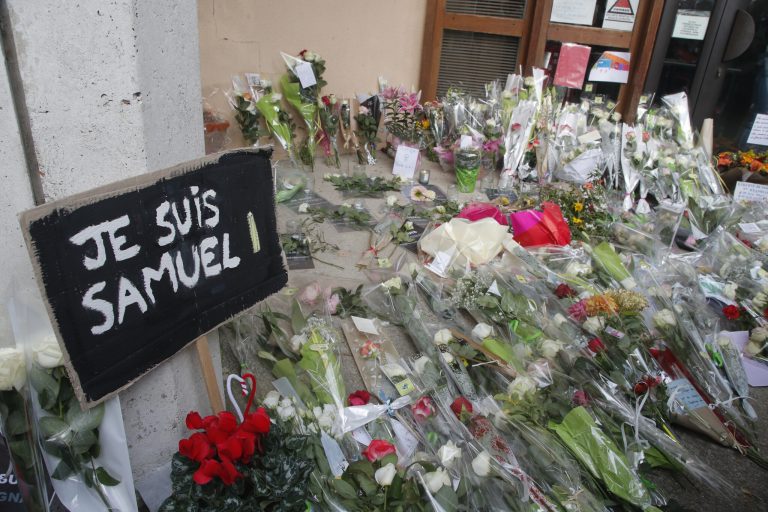
DEMONSTRATIONS are planned across France in tribute to a teacher who was beheaded by an attacker after showing his students caricatures of Mohammad.

Samuel Paty was murdered near the school where he worked, in the commune of Conflans Saint-Honorine, northwest of Paris, on Friday.

The suspected killer, who officials said was an 18-year-old Chechen refugee, was armed with a knife and a plastic pellet gun, was later shot dead by officers in a nearby town, police said.

French authorities have launched an anti-terror investigation.

President Emmanuel Macron called it an “assassination” and an “Islamist terrorist attack”.

The leaders of the main political parties, associations and trade unions will demonstrate on Sunday afternoon in Paris, Place de la République, and in many other cities including Lyon, Toulouse, Strasbourg, Nantes, Marseille, Lille and Bordeaux.

The Minister of Education Jean-Michel Blanquer and the Minister Delegate for Citizenship Marlène Schiappa have announced that they will represent the government “in support of teachers, secularism, freedom of expression and against Islamism”.

Here’s what we know about the attack so far:

Who was the victim?

Paty, a 47-year-old history and geography teacher, was decapitated near the school at around 5 pm local time.

Police told the AFP news agency that he had hosted a class discussion with secondary school students about cartoons of Islam’s Prophet Muhammad.

Some Muslim parents said they had complained to the school and French media reported Paty had received a number of threats in the wake of the class.

Blanquer said the school had taken “appropriate” steps in response to the complaints in setting up measures that both “supported the teacher and opened up a dialogue with parents”.

The minister added he would prepare a pedagogical “framework” on how to address the attack with students when they returned to school after half term. He said a minute’s silence would be organised.

President Emmanuel Macron visited the Bois d’Aulne school and met the history teacher’s colleagues on Friday evening.

He said afterwards: “One of our citizens was assassinated tonight because he was a teacher, because he taught students about the liberty of expression, the liberty to believe or not to believe.

“Our countryman was the victim of a cowardly attack. The victim of an Islamist terrorist attack.”

Who was the alleged perpetrator?

His alleged attacker was reported to be 18 years old, of Chechen origin and born in Moscow.

Officials said he was shot dead in the neighbouring town of Éragny after he acted in a threatening manner and failed to respond to an order to put down his weapons.

Officials said he was unknown to intelligence services.

French anti-terrorism prosecutor Jean-Francois Ricard told reporters the suspect, who had been granted a 10-year residency in France as a refugee in March, was armed with a knife and an airsoft gun, which fires plastic pellets.

His half-sister joined the Islamic State group in Syria in 2014, Ricard said. He didn’t give her name, and it is not clear where she is now.

The prosecutor said a text claiming responsibility and a photograph of the victim were found on the suspect’s phone.

He also confirmed that a Twitter account under the name Abdoulakh A belonged to the suspect. It posted a photo of the decapitated head minutes after the attack along with the message “I have executed one of the dogs from hell who dared to put Muhammad down.”

Ricard said the suspect had been seen at the school asking students about the teacher, and the headmaster had received several threatening phone calls.

France’s anti-terrorism prosecutor’s office said authorities investigating the killing of Samuel Paty in Conflans-Sainte-Honorine on Friday arrested nine suspects, including the teen’s grandfather, parents and 17-year-old brother.

A picture of the decapitated teacher was posted on social media immediately after the attack on an account that belonged to the assailant shot by police, France’s national anti-terror prosecutor said on Saturday.

What’s the background to this attack?

The incident came as the French government works on a bill to address Islamist radicals who authorities claim are creating a “parallel society outside the values of the French Republic”.

This marks the second terrorism-related incident since a trial began into the January 2015 massacre at the satirical magazine Charlie Hebdo, which had published cartoons depicting Muhammad.

The magazine republished them this year as the trial got underway.

Three weeks ago, an 18-year-old from Pakistan was arrested after stabbing two people outside the former Charlie Hebdo offices.

He told police he was upset about the publication of the caricatures. His victims suffered non-life-threatening injuries.

How have people reacted to the incident?

Politicians across the political spectrum have denounced the murder, and are taking part in demonstrations against extremism on Sunday.

Charlie Hebdo tweeted on Friday: “Intolerance just reached a new threshold and seems to stop at nothing to impose terror in our country.”

European Commission President Ursula von der Leyen on Saturday expressed her condolences to the victim’s family and said her “thoughts were going out to teachers in France and throughout Europe” after the attack.

“Without them (teachers), there are no citizens. Without them, there is no democracy,” she added.

The Assembly of Chechens in Europe, which is based in Strasbourg, France, said in a statement: “Like all French people our community is horrified by this incident.”

The rector of the Lyon mosque, Kamel Kabtane, said the the murdered teacher “did his job” and was “respectful” in teaching his pupils about freedom of expression. He condemned the perpetrator, saying he had proved by his actions that he was “not religious”.

Paty “was entitled to raise the intellectual level on tolerance and freedom of expression,” he said.

“He was respectful and he even suggested to students who might feel shocked to go out. He wanted to speak without offending, without hurting,” Kabtane said in an interview with AFP.

(SOURCE: AP)

Acornhoek Physics Summer School is Accelerating Space Education in South Africa

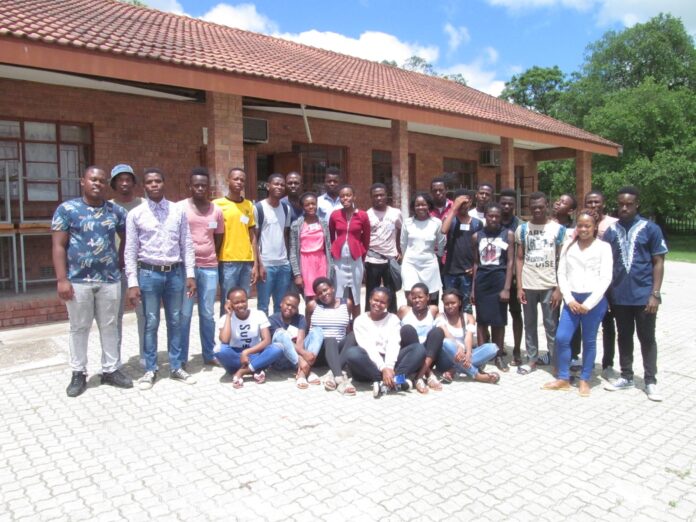
ACORNHOEK Physics Summer School is a summer school that is hosted every year to improve understanding of Physics and Mathematics. The summer school started in 2016, with the first classes being held at Magwagwaza high school, South Africa, from December 5 to 15, 2016 and January 2 to 6, 2017.

Since then, the summer school has been taking place every year during December and January holidays. During the summer school, classes are held on Physics, Mathematics, while career guidance is provided and other fun activities are involved.

Grade 11 students are taught Grade 12 Maths and science, and every year, alumni of the school come back to support the next batch. This summer school was founded by Sibusiso Mdhluli a current student of the University of Northwest & Cape Town and Shepherd Mpolwane a student of the University of Limpopo.

This year’s summer school will be held from 7 to 18 December 2020. Due to Covid-19, it will combine e-learning with physical learning i.e. students will learn from home for some days and learn at the venue on other days. A new course in Astronomy and Programming (Python) has been added, to provide early exposure to students to skills which are fast becoming essential for the 4th industrial revolution.

Fundraising of about R100,000 ($6,040) is needed to cover the purchase of 21 tablets (20 for students and 1 for teaching) which will be used for e-learning, data bundles, transport, meals during physical lessons, stationery, pay tutors and other safety product which may be needed for Covid-19.

In this interview, Sibusiso talks about the growth and impact of the summer school since inception and the present challenges faced.

Can you tell us about yourself, interests and your background?

My name is Sibusiso Mdhluli and I am based in South Africa. I am currently finishing my Master’s in Astrophysics at the University of the Western Cape. My interest is more into Machine Learning which is the area of Artificial Intelligence and this is part of the work I’ve been doing for my Masters. My other interest involves looking at ways of improving the education system in rural areas.

What was the inspiration behind Acornhoek Physics Summer School?

The summer school started when I noticed that many students where I come from are having challenges in terms of Physics and Maths. Since it’s more like a remote area, we don’t have many industrial materials to bring motivation to the students so they can see the need to do Science and Maths. After my friend, Shephard Mpulwane, and I finished our undergraduate (studies) in 2015, I suggested that we start a summer school in 2016 where we get students in grade 11 and teach them grade 12 physics and Maths during December holidays.

This also came from my own experience. When I finished my grade 11, I decided to spend my December time studying grade 12 physics and mathematics, and I realised how much it helped me. By the time I started my grade 12, I was almost ahead of all the other students and was part of the top students. When I saw how much it worked for me, I suggested to my friend, that we can follow the same pattern for summer school. And since then we have never looked back.

Every year we train grade 11 students for three weeks in December, give them career guidance and this year, we decided to integrate Astronomy into the curriculum. This will make them the first high school students in the country to study Astronomy.

What is the mission and vision of the Summer school?

The mission of the Summer school is to help students from rural areas to perform better in Maths and Science and expose them to various career opportunities.

How has been the program so far, and how many students have benefited in this impactful program?

So far, this is the number of students we have worked with:

2016 – 5

2017 – 17

2018 – 8

2019 – 22 

For this year, we plan to host 20 students.

You’re a student set on a great mission to impact lives, how have you been able to fund the program so far?

When we started in 2016, the students were contributing something minimal to sustain the program. For the first time last year, we got funding from the Department of Physics and Astronomy, University of the Western Cape, which was approved by Prof Roy Maartens. We also got another funding from IDIA – Inter-University Institute for Data-Intensive Astronomy, University of the Western Cape, which was approved by Prof Carolina Odman. Friends and colleagues also came through for us for last year’s summer school, and we were able to raise over R30 000, which we used to fund last year summer school.

How has Covid-19 affected the Summer School?

Since the pandemic started this year, we were not sure if we will be able to hold the summer school. What we finally decided on is to change the mode of the summer school so as to minimize social contacts between students and tutors and abide by the Covid-19 social distancing rules. 

The plan is that the summer school will be a mixture of online and onsite classes. To make this possible, we have to provide students with tablets. Presently, we are trying to raise funding of about R100,000 ($6,040) to acquire the necessary materials needed for them to attend the training online.

The alumni of the Summer School, what have they grown to become. Highlight notable success stories of the alumni?

Almost all of our alumni are at various levels in universities pursuing different degrees. Some of our first set of students will be finishing their undergraduate degrees this year. The network is developed by giving the alumni the chance to come back and tutor at the Summer School. 

Where do you see the Summer School in 5 or 10 years to come?

We would like to train more students intensively, accommodate them for that period of three weeks; since for now they attend and leave the same day. We would like to be able to provide bursaries for university studies to all the students who participated in the summer school. We also look forward to extending this project to other places in the country because we have seen the great impact it has created in this location. 

(SOURCE: AFRICANEWS.SPACE)