Home Blog Page 394

Three South African Vice-Chancellors Paint A Post-COVID Picture For Universities

WHAT long-lasting changes to South Africa’s higher education sector has the pandemic brought? And how will these affect the way universities deliver teaching and research?

Mamokgethi Phakeng, University of Cape Town: University teaching will draw from various methods that range between fully face-to-face and fully online. Long before COVID-19, the University of Cape Town recognised the need to prepare students for a digitally mediated world. For example, by the beginning of this year about 60% of UCT lecturers had chosen to record their lectures.

COVID-19 fast-tracked this process as we launched emergency remote teaching.

Many of our academics say they will never again teach in the same way as before. The new way puts the needs of students with barriers to learning at the forefront. It helps us design good learning experiences and reconsider methods of assessment. Students can revisit online course material, ask questions and get personal support, in and out-of-normal teaching hours. It’s especially helpful to students who are second-language English speakers or who have a disability.

Lecturers have found how easy it is to engage with students in a WhatsApp group. There are challenges, of course, such as how we can conduct assessment for some invigilated exams, and in data access and electricity provision for some students at home. We are surveying students and academics to monitor their experiences and review lessons for the future.

Tawana Kupe, University of Pretoria: The reliance on face-to-face or contact teaching was under question because of the rise of digital technologies that were slowly disrupting it. For a number of reasons, higher education institutions were taking their time. Some lacked capital. There was also the issue of students’ lack of access.

A return to purely contact learning is not going to be possible. People have experienced something that seems more relevant to a future marked by increasing digitisation. Universities will now need more resources allowing them to move with greater speed in changing to hybrid or blended teaching and learning. When it comes to research, the use of simulations will increase, as will the use of technologies that can gather research data.

Adam Habib, University of the Witwatersrand: I believe we are going to see a stronger shift to a blended learning model. Anecdotal evidence is showing that our students are performing better in the online environment than face-to-face. This suggests we need to re-imagine how we test and assess our students’ capabilities. Obviously certain degrees still require face-to-face learning but this can also be re-imagined.

The shift to online also means we are going to see the digital divide in our country grow sharper unless we are able to develop public-private partnerships to assist. Government will also need to adjust its thinking about how we achieve this financially and in terms of curriculum changes.

Do universities have the human and financial capacity to respond to these long lasting changes?

Mamokgethi Phakeng: New ways of teaching can release human capacity by allowing lecturers to manage their course loads more easily. And if they make it possible to increase the number of students who can enrol in certain courses, then they could bring more income to the institution, to help finance human capacity or infrastructure development.

Of course, there will always be courses that require students to work collaboratively, or to have access to labs, and those courses remain available. Other universities are now beginning to use the extensive resources we’ve developed under Creative Commons licences, to benefit the sector during the pandemic.

Tawana Kupe: Most universities do not have the human and financial capacity to respond to these changes given that they have not been adequately funded for decades. Many face an existential crisis if governments do not include them in the stimulus packages meant to reverse the impact of COVID-19.

The training of staff who manage the information technology infrastructure and academic staff who teach and do research is critical for a successful transition from contact teaching to hybrid teaching. Innovative and creative ways to fund the transitions will have to be developed. They should include partnerships and collaborations among universities and with governments, the private sector and international donors.

Adam Habib: Many academics and professional staff have been able to adjust fairly quickly to the new online mode of teaching. This has been under discussion for some time now. I do not believe we will have a human capacity issue. The real issue will remain how to finance higher education. There is going to be a significant financial challenge both as a result of subsidy cuts (given state finances) and the inability of students to pay fees (because of the economic crisis).

In South Africa, we will also see a growing “missing middle” cohort as a result of job losses. Providing financial support to these students is going to be more important now than ever.

Are South African universities unique in facing these long lasting changes? What can they learn from other universities?

Mamokgethi Phakeng: Universities around the world are re-examining how they teach, do research and serve their students, staff and alumni.

Digital technology has opened up ways for people and institutions around the world to discuss and collaborate on problems that are universal. COVID-19 is demonstrating that across the globe we are facing the same problems, so we need to work together to find solutions.

Tawana Kupe: No, South African universities are not unique. What South African universities can learn is how to navigate changes in modes of teaching, learning and research from those universities that are ahead in adopting hybrid or blended modes.

Adam Habib: South African universities have similar problems to other institutions across the world. The big distinction with South Africa is that we are undertaking these activities in the midst of deep inequalities.

This means that we have much to teach the world on how to engage in blended learning in unequal contexts and how to assist poor people in this regard.

(COMPILED BY THE CONVERSATION SA)
Motshekga: Parts Of The 2020 School Curriculum Will Be Pushed To 2021

NYAKALLO TEFU

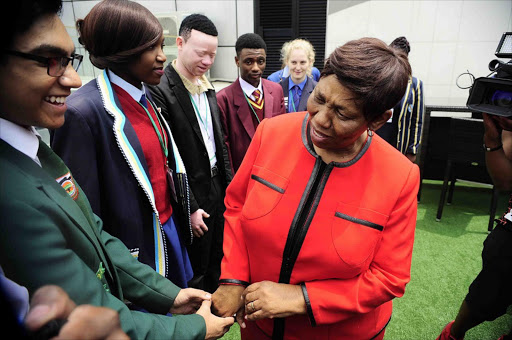
BASIC Education Minister Angie Motshekga says some of the school work for some grades will be carried over to 2021 following disruptions brought about by the outbreak of the coronavirus pandemic.

 Motshekga said it could take three years for schools to recover from work missed in the 2020 academic year.

“In 2021, when the Grade 3 learners start we will start with Grade 2 work which we had removed from the curriculum,” said Motshekga.

She said this year’s curriculum will only see 70% of the syllabus completed by December.

“The catch-up programme might run for about three years; we don’t think we will finish the work of 2020/2021 in 2021, this is why I say it’s going to be a three-year programme to see if we can clock back what we have lost,” said Motshekga.

Motshekga said Grade 7 learners are expected to return next week Monday and the rest of the grades will be phased in from 24 August.

She said government cannot cancel the academic year because it will put pressure on the one million Grade R learners who will be registered into the 2021 academic system.

However, she added, Grade 12 learners are expected to complete the syllabus in order to make space for other learners to be entered into the education system in 2021.

“We need Grade 12s to move to allow space for the grade 1s, just to get the system to breathe,” said Motshekga. 

(COMPILED BY INSIDE EDUCATION STAFF)

We’re Facing A ‘Generational Catastrophe’ In Education, UN Secretary-General Antonio Guterres Warned On Tuesday

0

THE world is facing a “generational catastrophe” because of school closures during the coronavirus pandemic, UN Secretary-General Antonio Guterres warned Tuesday.

“Getting students back into schools and learning institutions as safely as possible must be a top priority,” once local transmission of Covid-19 is under control, he added.

Guterres said that in mid-July, schools were closed in more than 160 countries, affecting over 1 billion students, while at least 40 million children worldwide have missed out on education in their critical pre-school year.

“We already faced a learning crisis before the pandemic,” the Secretary-General said.

“Now we face a generational catastrophe that could waste untold human potential, undermine decades of progress, and exacerbate entrenched inequalities.”

The knock-on effects on child nutrition, child marriage and gender equality, among others, are “deeply concerning,” he warned.

“The Covid-19 pandemic has led to the largest disruption of education ever,” Guterres said in a video message as he launched the “Save our Future” campaign with education partners and United Nations agencies.

The campaign calls for action to reopen schools, prioritize education in financing decisions, target those who are hardest to reach, and focus on creative and innovative ways of teaching.

“Despite the delivery of lessons by television, radio and online, and the best efforts of teachers and parents, many students remain out of reach,” he said.

Learners with disabilities, those in minority or disadvantaged communities, displaced and refugee students, and those in remote areas are at highest risk of being left behind, Guterres warned.

“And even for those who can access distance learning, success depends on their living conditions,” Guterres said. “Parents, especially women, have been forced to assume heavy care burdens in the home.”

More than 250 million school-age children were out of school prior to the coronavirus outbreak, he said, with only a quarter of secondary school children in developing countries leaving school with basic skills.

Countries around the world are now grappling with how to safely reopen schools amid the coronavirus pandemic — and whether to reopen at all.

Two new studies, released in The Lancet Child & Adolescent Health on Monday, turn a spotlight on strategies that could be key in bringing children back to the classroom: Scaled-up testing for cases, effective tracing of the contacts of those who test positive, and isolation of those who test positive or have symptoms.

Researchers in Britain found that schools could reopen safely provided sufficient contact tracing is in place.

And a team in Australia found that even though schools remained open in New South Wales between late January and early April, children and teachers did not contribute significantly to the spread of Covid-19 — because good contact tracing and control strategies were in place.

The British study uses a model to estimate how much testing and contact tracing would be needed to prevent a second wave of Covid-19 following the reopening of schools this September.

It suggests that, depending on the scenario, between 59% and 87% of symptomatic people in the community would need to get tested at some point during their infection, their contacts would need to be traced and those with illness would need to be isolated in order to prevent an epidemic rebound.

But “without sufficient coverage of a test-trace-isolation strategy, the UK risks a serious second epidemic peak” in December or February, researchers warned.

“We are at a defining moment for the world’s children and young people,” Guterres said Tuesday.

“The decisions that governments and partners take now will have lasting impact on hundreds of millions of young people, and on the development prospects of countries for decades to come.”

“We have a generational opportunity to reimagine education,” the UN Secretary-General added.

“We can take a leap towards forward-looking systems that deliver quality education for all.”

(COMPILED BY CNN)

COSAS Threatens To Render Private Schools ‘Ungovernable’

SANDILE MOTHA

THE Congress of South African Students has vowed to make private schools ungovernable should they remain open in the coming weeks.

The student body said on Tuesday it was a travesty of justice that while pupils in public schools are languishing at home, the ‘rich kids’ remain unaffected.

“What we are seeing here is inequality at it best. We cannot allow a situation where the majority black and poor learners are the only ones who have to suffer. This is not their own making. Learners must be treated the same regardless of which school they attend public or private,” said Jabulisa Mchunu, COSAS provincial chairperson speaking to Inside Education.

Mchunu said COSAS has lobbied other student formations such as the South African Students Congress to also join in the fight to shut down private schools.

“We are lobbying Sasco because they are our allies and together we form part of the progress youth alliance under the ANC banner. But we invite other student groups as well to assist us in pushing this campaign as we aim to picket in every private school that remains open. Besides, the lives of pupils in private schools also matters, so this attempt is also meant to protect them as well,” explained Mchunu.

Following public pressure and fears that the COVID-19 wave might spiral out of control amid the flu season, President Cyril Ramaphosa announced closure of schools, except for Grade 12.

All other grades are expected to be phased in from August 24.

Grade 5 pupils are also expected back at school next week.

The unprecedented closure only affected public schools while private institutions would make their own determination whether to remain open or closed.

These schools are, however, divided on the matter with some remaining open while others have opted for remote learning instead.

Responding to the threats by COSAS, Mandla Mthembu, chairperson of the National Alliance of Independent Schools Association (NAISA) said parents of pupils in private institutions were paying too much to allow it to go to waste.

“Parents pay a lot of money so that their kids can access quality education. They must get value for their money and we hope that police will acts swiftly and arrest anybody who disturbs teaching and learning,” said Mthembu.

Meanwhile, there were no major incidents reported in KZN as matric pupils returned after a short break.

Nolwazo Chiya, a governing body member at Menzi High School, said it was agreed that pupils would commence classes at 7am as an attempt to catch up on lost time.

Menzi High School is one of the best performing schools in the province boasting a consecutive 100% matric pass rate.  

“We do not want our pass rate to dwindle so we’re now resorting to this measure,” she told Inside Education.

According to the new revised academic calendar, schools will close on December 15 for grade R to 11.

Unlike the previous years, matric results will now be released next year on February 23.

(COMPILED BY INSIDE EDUCATION STAFF)

Mainstreaming Inclusive Education In South Africa

THE global pandemic has thrust many sectors into turmoil as nationwide lockdowns have been implemented globally. In South Africa, one sector that is experiencing considerable challenge  and concern is education.

While inclusive education has always been an apex priority of our country, now more than ever, teachers in South Africa need the skills, knowledge and attitudes to teach inclusively in diverse classrooms and communities. On 6 August 2020, the Teaching For All project will host a virtual event for university students to discuss inclusive education in South Africa.

“Through this event, we want to engage with the next generation of school teachers on inclusive education issues and advocate for inclusive education in the system by discussing the roles, responsibilities, opportunities and challenges that teachers will face in a post Covid-19 environment,” says Joanne Newton, Programme Manager: Teaching for All.

Teaching for All is an ambitious material and teacher development project that sees teachers as key change agents and provides them with the tools to teach inclusively in diverse classrooms; thus contributing to a reduction of children being excluded from education

Inclusive education recognises that all children have the ability to learn and the right to quality education to enable them to reach their full potential. In South Africa, despite the substantial gains made in education since 1994, many children continue to be marginalised due to a web of interrelated barriers, which make them vulnerable to educational, social and economic exclusion. Some are denied access, while many pass through the school system, or drop out, without receiving a quality education.

Keynote speaker, Professor Nareadi Phasha, who is a Professor of Inclusive Education at the University of South Africa (UNISA), believes that inclusive education plays a vital role in South Africa’s education sector.

“Previous research has found that teachers have a negative attitude towards pupils with disabilities and we need to ensure that we prepare South Africa’s future students for the fourth industrial revolution and to adapt their teaching practices for diverse classrooms,” she says.

Working with partners and key stakeholders, the Teaching for All project has developed teacher training modules and materials for Bachelor of Education and Postgraduate Certificate in Education programmes. Ten South African universities are currently delivering the training, with the implementation being monitored and evaluated by the Centre for International Education at Cape Peninsula University of Technology. South African Council for Educators (SACE)-endorsed inclusive education in-service programmes are under development for delivery to Provincial Education Departments.

The success of Teaching for All relies on multi-sector partnerships committed to providing quality education for all learners:  British Council, the Department of Basic Education, Department of Higher Education and Training, the University of South Africa and MIET AFRICA. The project is funded by the European Union. 

The virtual event will be live streamed through the British Council’s YouTube Channel.

(COMPILED BY iAFRICA.COM)

Angie Motshekga Admits Over 4 000 South African Public Schools Still Use Pit Latrines

Only 68 out of 4 000 pit latrines at public schools in South Africa have been fixed, according to Basic Education Minister Angie Motshekga.

Motshekga revealed this in response to a written parliamentary question from Economic Freedom Fighters (EFF) MP Ngwanamakwetle Mashabela who wanted details pertaining to school infrastructure and personal protective equipment amid rising coronavirus infections at certain schools.

“It is true that several schools have challenges related to water supply and sanitation. The Department of Basic Education is working with the various provincial departments of education, Rand Water and the water boards to address such challenges,” said Motshekga.

Motshekga reiterated the department’s commitment to eradicate pit latrines by 2022.

“It is also correct that the provincial departments of education identified more than 3 800 schools that rely on basic pit toilets. Again, the Department of Basic Education is working with the various provincial departments of education to address such challenges. Sanitation solutions have been implemented at 68 of these schools under the Accelerated Schools Infrastructure Delivery Initiative (ASIDI) programme.”

The ASIDI programme aims to eradicate the basic safety norms backlog in schools without water, sanitation and electricity.

“The provincial departments of education have addressed the needs at a further 834 schools. Several partnerships contributed to solve the challenge at another 103 schools. The Department of Basic Education appointed four different implementing agents to address a further 1 121 schools. These implementing agents are in varying stages of completion of the sanitation solutions. The current plan is to eradicate the basic pit toilets by March 2022. This is, however, dependent on the availability of funding for this purpose,” Motshekga said.

Two years ago, President Cyril Ramaphosa launched the Sanitation Appropriate for Education (SAFE) initiative in an attempt to rid schools of pit latrines.

This followed the deaths of Lumka Mkhethwa, 5, and Michael Komape, 5, who drowned in pit latrines in separate incidents in Eastern Cape and Limpopo, respectively.

“There are nearly 4,000 schools across the country that only have pit latrines or other inappropriate sanitation facilities. These are the schools that serve the children of the poor. It was in such a school, Mahlodumela Primary School in Limpopo, where five-year old Michael Komape drowned in a pit toilet in 2014. And it was in such a school, Luna Junior Primary School in the Eastern Cape, where Lumka Mkethwa lost her life in March this year,” said Ramaphosa.

“The utterly tragic and devastating deaths of children so young and so innocent remind us of the human consequences of service delivery delayed. They remind us that we must focus all our attention not on what we have achieved, but on what we haven’t. We have heard the cries of anguished families, we have felt the outrage of a society that cannot bear to witness to another needless death. It is our responsibility – as government, business, civil society, parents, teachers and communities – to act with purpose, urgency and unity. Through the SAFE initiative, we can all help to restore the dignity of learners in mostly rural and township schools by providing age-appropriate sanitation facilities.”

Equal Education, a body advocating for learner rights, says issues of safety in schools have been a concern for a while.

Equal Education Law Centre said on Monday that the NGO was disappointed that the education department has failed to meet another deadline to address the sanitation crisis by 2020.

“What is clear is that the eradication process is taking way too long. The fact that she is saying the eradication of pit latrines will be completed by 2022 is not acceptable when that deadline in terms of the minimum norms and standards passed years ago,” said Tarryn Cooper-Bell, spokesperson for Equal Education Law Centre in Cape Town, Western Cape.

“We are concerned about this number – 4 000. That is a massive number of children whose lives are in danger and it is disappointing to see how slow the process is going.”

Out of almost 25,000 nationwide, the 4 000 schools with pit latrines are found mainly in the Eastern Cape, KwaZulu-Natal and Limpopo provinces.

Eastern Cape has 61 schools with no toilets at all, and 1,585 schools with pit latrines while neighbouring KwaZulu-Natal province has 1,379 pit latrines in use. 

Limpopo Province, where Michael Komape went to school, has at least 932 unsafe toilets.

(REPORTING BY INSIDE EDUCATION STAFF)

Revised 2020 School Calendar For SA Announced Amid Criticism

NYAKALLO TEFU

THE Department of Basic Education has released a revised calendar for 2020, saying the school year will be completed on December 15 for Grade R to Grade 11 and will not be carried over to the first quarter of 2021.

This is the second time this year that the school calendar has been revised to accommodate the changes that have been brought by the impact of the Coronavirus.

In a statement issued on Saturday night, DBE said the school year will also see learners returning to school on August 24 following last month’s announcement by President Cyril Ramaphosa.

“The department considered the impact of the decision on the current calendar. The policy process to amend the school calendar commenced considering the urgency of the matter as necessitated by the prevalent Covid-19 environment,” said the department.

The review of the school calendar comes after a Cabinet decision that schools should break for four weeks.

In his address to the nation last month, Ramaphosa announced that schools will close on 27 July and re-open on 24 August.

 The calendar will be gazetted and published this week.

“The Minister will issue directions for the basic education sector this coming week. The directions will provide guidance on various matters affecting the basic education sector,” the department said.

While this was welcomed by many, others felt that the president and basic education minister Angie Motshekga were bowing to pressure by trade unions, which had written to DBE to shut down schools during the COVID-19 peak.

On Monday, the Western Cape Education Department (WCED) criticised the publishing of a new 2020 school calendar in the absence of gazetted dates, saying it had caused chaos and confusion for matric pupils.

Educational MEC Debbie Schäfer said the publishing of a new calendar while failing to gazette directions had caused more chaos in the system, with people now unsure whether matrics had to return today.

“According to the current gazetted directions schools can bring more grades back if they can comply with the protocols, so they are complying with the law,” said Schäfer.

The matriculants will finish writing their year-end examinations by December 15, and marking will be completed by 22 January 2021.

Matric results for the Class of 2020 will be released on February 2021.

The department said the reopening of schools in 2021 would take place on January 25 for teachers, and learners will return at a later date yet to be announced. 

(COMPILED BY INSIDE EDUCATION STAFF)

Learner Accuses Pretoria School Of Racism And Keeping It Open Despite COVID-19 Positive Cases

NYAKALLO TEFU

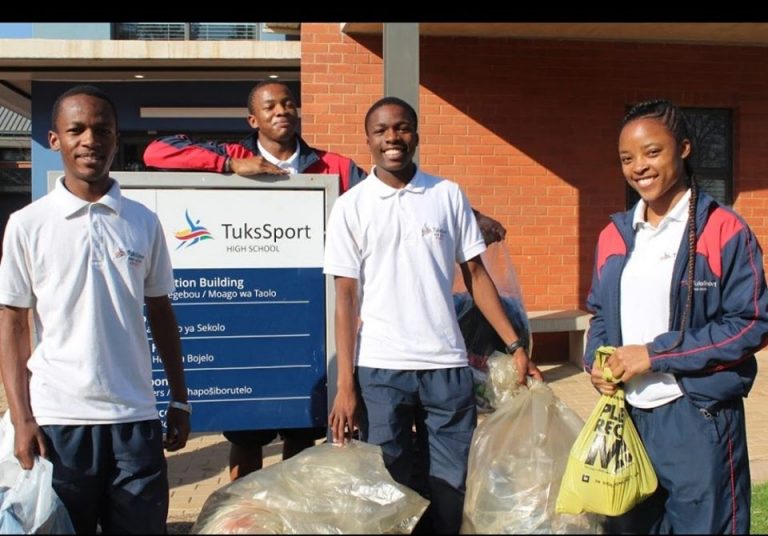
A GRADE 11 learner at Tuks Sport High in Pretoria has accused the school of failing to close or call off lessons despite a number of confirmed COVID-19 positive cases reported among teachers and learners.

The learner, Jaycobus Farmer from George in the Western Cape, says he was targeted after he and fellow learners raised issues about safety measures and protocols at the school.

Farmer said there are three teachers over the age of 60 at Tuks Sport High School who were still coming to school to teach learners despite government regulations.

The school headmaster, Hettie De Villiers, has denied this.

“The School complies with all the applicable Regulations. The Regulations do not prohibit people of the age of 60 from coming to work. It is that individual’s own choice to come to work or work from home,” said De Villiers.

“Although employees over the age of 60 are not encouraged to come to work, all employees over the age of 60, who underwent a thorough medical assessment and who were in good health, were allowed to come to work, subject to regular follow-up assessments by their Doctors.”

De Villiers has denied allegations of racism against Tuks Sport High School.

“This allegation is denied with contempt.  This is a blatantly false statement.  The School is proud to have more than 88% black and coloured learners,” she said.

Farmer was expelled a week ago after he was found guilty of disrespect and not adhering to the authority structures within Tuks Sport High School – intimidating or degrading a fellow learner in any way, including gestures, verbal threat or comments on a social media platform.

This is based on evidence that was produced, according to the school’s charge sheet.

Farmer has also been found guilty of bullying and engaging in any form of bullying, physical, emotional or cyber-bullying.

However, Farmer remains a registered learner of Tuks Sport High School until the end of the academic year and will be supported as per lockdown learning conditions.

He will be allowed to write his final Grade 11 exams at school, but will not be accommodated in the residence during the exam period.

“The school had promised that they would wash our masks every second day but they have never washed our masks,” said Farmer.

“They said they are in healthy condition but that is not the point. They are putting us at risk,” said Farmer.

Farmer alleged school teachers at Tuks Sport High have also been discriminating against the black and Coloured learners.

“We feel excluded. In the one incident recently the principal [Hettie de Villiers] called us in, saying we were moving in the Numbers Gang. We asked what she meant, and she clarified that we were walking in groups and when we asked her about other learners, she said there was a difference between us and them,” said Farmer. 

“I feel like the school does not care about our safety and I do not feel entirely safe at school, especially during the coronavirus pandemic peak, among other greater issues,” said Farmer.

“There have been certain cases that we were not made aware of, of people having contracted the virus, because they only closed the school after 12 cases of the coronavirus where reported.”

Farmer said the first six cases of the virus did not prompt the school to close.

He said all they did was isolate the learners and only notified parents when 12 cases were reported.

(COMPILED BY INSIDE EDUCATION STAFF)

Limpopo Education Investigates Allegations Of Teachers Stealing From School Nutrition Programme

PARENTS at Mukula High School are accusing parents of stealing food belonging to learners, according to a report by the SABC News.

The Limpopo Education Department has deployed a team to the Mukula High School, in Xikhumba village, outside Giyani to investigate allegations of the theft of food items meant for the school nutrition programme.

This follows allegations by some parents that bakkies, which they suspect acted on the behest of some teachers, went to the school and took food items, hours after they had been delivered at school.

Parents of Grade 12 learners were on Wednesday asked to collect food for their children at the school. Some, however, say they got small amounts of food items that will not last the learners for the duration of the week, as directed by President Cyril Ramaphosa that schools should continue feeding learners during this COVID-19 imposed break.

Some parents allege that they saw bakkies leaving and entering the school premises several times last Friday night, a few hours after a truck delivered food items at the school.

“On Friday, I saw a big truck at the Mukula. It was delivering food. It was a bulk of food. So, I don’t know what is happening because they said we must come with wheelbarrows so that we must collect the food, only to find that we got only a few things. But the truck was there and the food was plenty.”

Provincial government investigating allegations

The Limpopo Education Department says a team led by the circuit manager will be investigating these allegations.

“We have asked the district director to look into the matter. First of all, it is worrying to receive reports of possible theft of food since we all know that this is much-needed provision. We also have circuit monitors of the school nutrition programme to check what was delivered and what was given to learners and parents; also tighten up systems around stocktaking to make sure that it tallies with what the SGB and other members of the community are confirming to have received,” says Spokesperson Tidimalo Chuene.

Although parents at Mukula told SABC News that only Grade 12 and 11 learners at the school have thus far been given food items, Chuene says all schools in the province that benefit from the school nutrition programme have been feeding learners for the duration of this week.

Ramaphosa: Corruption During A National Disaster Is A Heinous Type Of Crime

CYRIL RAMAPHOSA

CORRUPTION during a national disaster is a particularly heinous type of crime, and perpetrators are going to be dealt with decisively and harshly.
 
It is difficult to understand the utter lack of conscience that leads a businessperson who has heeded the call to provide lifesaving supplies during a devastating pandemic to inflate the price of a surgical mask by as much as 900%.
 
Nor can one explain why a councillor would stockpile emergency food parcels meant for the poor for their own family, or why another councillor would divert water tankers en route to a needy community to their own home.
 
It is impossible to discern what drives an entire family whose member stole funds meant for unemployed workers to go on a spending spree, buying cars, paying for renovations and beauty treatments, and even tombstones.
 
Attempting to profit from a disaster that is claiming the lives of our people every day is the action of scavengers. It is like a pack of hyenas circling wounded prey.
 
As we find ourselves in the grip of the greatest health emergency our country has faced in over a century, we are witnessing theft by individuals and companies with no conscience.
 
We hear stories of alleged corruption in the procurement and deployment of personal protective equipment to fight COVID-19, of companies hiking the prices of essential items during the lockdown and of the illegal diversion of state resources meant for the vulnerable and destitute.
 
This insidious behavior is not the preserve of smaller companies.

There are large companies, including a JSE-listed company, that have been caught, investigated, found guilty and fined for excessive pricing.
 
These stories have caused outrage among South Africans.

They have opened up the wounds of the state capture era, where senior figures in society seemed to get away with corruption on a grand scale.
 
As a country, we have done much to turn our back on that era by disrupting and dismantling the networks that had infiltrated government, state companies and even our law enforcement agencies to loot public resources.
 
We have rebuilt vital institutions like the National Prosecuting Authority, SA Revenue Service and the Hawks. Through the establishment of bodies like the Investigating Directorate in the NPA, we have strengthened the hand of law enforcement to investigate and prosecute these crimes. And through the establishment of the SIU Special Tribunal, we have increased our capacity to get back funds stolen from the state.
 
But it is clear that we need to do more. And that we need to act more decisively.
 
As we set out to mobilise resources on an unprecedented scale to confront coronavirus and its effects on businesses, jobs and livelihoods, we put in place several measures to safeguard these funds.
 
These included regulations to ensure that emergency procurement of supplies and services was fair, transparent, competitive and cost effective. The Competition Commission has made effective use of regulations that prohibit unjustified price hikes to prosecute several companies for excessive pricing. The Auditor-General initiated special audits to detect and prevent the misuse of these funds.
 
While these measures have no doubt limited the potential for abuse to some extent, the evidence at hand now shows that they have not completely prevented it. And so, we need to take action.
 
Just over a week ago, I signed a proclamation authorising the Special Investigating Unit (SIU) to investigate any unlawful or improper conduct in the procurement of goods and services during the national state of disaster.
 
This is a broad remit that extends across all spheres of the state and, importantly, provides for civil proceedings to recover misappropriated funds. It enables the SIU to probe each credible allegation that is made about the theft of COVID-19 funds.
 
I will be receiving interim reports every six weeks on the cases at various stages of investigation and prosecution.

When investigations yield evidence of criminality, they will be speedily referred for prosecution.
 
Experience here and in many other countries shows that a multidisciplinary approach to tackling the commission of alleged criminality is needed for the fight against corruption to be successful. A broad range of investigative and prosecutorial capabilities need to be brought together under one roof.
 
‘Fusion centres’ that draw together different agencies for better information and intelligence sharing, to pool resources and to streamline operations are common practice in a number of countries.
 
We have taken this approach to detect, investigate and prosecute COVID-related corruption. A special centre has been established that brings together the Financial Intelligence Centre, the Independent Police Investigative Directorate, National Prosecuting Authority, the Hawks, Crime Intelligence and the SAPS Detective Service, South African Revenue Service, Special Investigating Unit and the State Security Agency.
 
This strengthens our response immensely. These bodies are now working together not just to investigate individual allegations, but also establish linkages between patronage networks that are trying to hide their activities. Because of this cooperation, prosecutions should proceed more quickly and stand a better chance of success.
 
 
But corruption is a far broader problem in our society. We must take steps right now that not only safeguard COVID funds, but that also protect all public funds and all institutions from corruption now and into the future.
 
We must look, for example, to extend the responsibility of our multi-disciplinary team of investigators and prosecutors beyond COVID-related crimes. We should use the current approaches and methods to dramatically strengthen the fight against corruption.
 
Ultimately, the success of these efforts does not rely on law enforcement alone. It depends on the actions of all individuals and all formations within society – from public servants to politicians, from businesses to political parties, from Parliament to government departments. It depends on the vigilance of citizens, religious bodies, traditional leaders, professional associations, the media and many others.

I therefore encourage people to “blow the whistle” should they have information about acts of malfeasance in relation to the abuse of public funds or resources.
 
It requires a new consciousness and new sense of accountability.
 
If, as public servants and political office-bearers, we claim to be serious about restoring public trust that has been severely eroded by corruption, we must avoid even the perception of conflicts of interest.
 
If as public servants and political office-bearers we truly care about the public whose interests we claim to represent, we must allow ordinary members of the public who have interest in doing business with government a fair chance to bid for such business opportunities, instead of passing on inside information about opportunities to our families and friends.
 
We already have regulations, such as annual financial disclosure, in place to discourage public servants doing business with the state.

Anyone bidding for state work has to make a declaration of interest, including whether anyone connected to the bid is employed by the state.
 
This is clearly not enough.

While everyone in South Africa has a right to engage in business activities, we are faced with the real problem of families and friends of political office-bearers or public servants receiving contracts from the state.

Not all conduct of this sort is necessarily criminal, but it does contribute to a perception and a culture of nepotism, favouritism and abuse. And it undermines public confidence in the integrity of our institutions and processes.
 
We are determined to finally deal with the entrenched patronage networks that enable government employees to bid for state contracts through their friends and relatives.
 
This requires not only better laws and stronger enforcement, but also political will and social mobilisation.
 
We are going to change the culture in the public service, encouraging more openness and transparency, making it easier to report misuse of public funds and working more closely with civil society to combat corruption.

A good example of this, is the Health Sector Anti-Corruption Forum, which brings together civil society, health sector regulators, law enforcement agencies and government departments to fight fraud and corruption in the area of health – and which has already made much progress in investigating alleged offences.
 
We will overcome the coronavirus and restore the health of our country and its people. But it will never be that our triumph over this pandemic is won at the expense of our integrity.
 
We will not allow public funds hard-earned by loyal taxpayers or donations by patriotic companies and individuals and the international community to vanish down a black hole of corruption.
 
Those found to have broken the law to enrich themselves through this crisis will not get to enjoy their spoils, regardless of who they are or with whom they may be connected.
 
I have said that COVID-19 presents us with opportunities to change the way live, do business and govern. This moment is definitely a turning point in the fight against corruption.
 
We are going to act boldly and must act together.

(CYRIL RAMAPHOSA – FROM THE DESK OF THE PRESIDENT)