Home Blog Page 395

Coronavirus: Preventing A Global Education Disaster

KEVIN WATKINS

‘The beautiful thing about learning’, the great blues guitarist BB King once wrote, ‘is that no one can take it away from you’.

Born and raised in poverty, King understood the value of education as a force for change. If only political leaders responding to the Covid-19 pandemic had an ounce of his insight.

Covid-19 is now mutating into a global education emergency. Millions of children, especially the poorest and young girls, stand to lose the learning opportunities that could transform their lives.

Because education is so closely tied to future prosperity, job creation, and improved health, a setback on this scale would undermine countries’ progress, reinforcing already extreme inequalities. Yet this emergency has yet to register on the pandemic response agenda.

Lockdowns have shut more than one billion children out of school. For an estimated 500 million, that means receiving no education at all.

A Save the Children survey in India found that two-thirds of children stopped all educational activity during lockdown.

The danger now is that a perfect storm of lost schooling, increased child poverty, and deep budget cuts will lead to unprecedented reversals in education.

This is an emergency layered on a pre-existing crisis. Even before the pandemic, 258 million children were out of school, and progress toward universal education had stalled. Now, increased child poverty alone could result in 10 million children not returning to school.

Many of these children risk being forced into child labour or early marriage (in the case of adolescent girls). Meanwhile, already abysmal pre-pandemic learning levels, which left half of all children in developing countries unable to read a simple sentence by the end of primary school, are set to worsen.

Pathbreaking research on the impact of the 2005 earthquake in Kashmir, Pakistan captures the risk to learning. Schools were closed for three months.

When they reopened, attendance quickly recovered.

But four years later, children aged between three and 15 who lived closest to the fault line had lost the equivalent of 1.5 years of learning.

Imagining that outcome on a global scale gives a sense of what is at stake. Education empowers people, reduces poverty, and improves health, and the human capital that it generates shapes the destiny of countries. Lost education will erode that capital, effectively placing the 2030 Sustainable Development Goals beyond reach.

Governments should now be investing to prevent that outcome. Unfortunately, education budgets are being hollowed out by recession and the diversion of public spending—and international aid—to health care and economic recovery.

As a result, governments in low- and middle-income countries could end up spending $77 billion less than planned on education over the next 18 months.

So, what can be done to avert disaster? In its new global Save our Education campaign, Save the Children has set out a three-part agenda for recovery.

The first priority is to keep learning alive during lockdowns. Governments should do all they can to reach children through radio, TV, and remote-learning initiatives. Countries such as Ethiopia, Uganda, and Burkina Faso have developed ambitious national distance-learning programmes. They and others need more donor support to implement them at scale.

Second, the pandemic creates an opportunity to address the wider learning crisis. Too many children are being taught at the wrong level, owing to schools’ rigid application of poorly designed curricula.

Every child returning to school should undergo a learning assessment aimed at identifying those in need of support. Remedial teaching programmes such as those pioneered by organisations like BRAC and Pratham can then prevent these children from falling further behind, thereby reducing the risk of future dropout.

Third, increased international financing is critical. Most of the world’s poorest countries, especially in Africa, entered the economic downturn with limited fiscal space.

That room for manoeuvre is now shrinking further as recession bites and external-debt problems intensify.

Rich-country governments have responded to the Covid-19 crisis by tearing up their fiscal and monetary policy rulebooks and underwriting ambitious national recovery plans. They should be equally bold in supporting education in developing countries.

More effective leveraging of multilateral development bank balance sheets is an obvious starting place. The Education Commission has advocated establishing an International Finance Facility for Education to provide loan guarantees, thus enabling the World Bank and other institutions to borrow cheaply on international markets and lend the funds to developing countries.

Every $1 of guarantees under this scheme could unlock $4 of financing for education.

This approach, which would include rigorous debt-sustainability evaluations of recipient countries, could mobilise resources on a scale commensurate with the crisis. Aid donors and the World Bank should support it.

To its credit, the Bank is front-loading resources already allocated to the International Development Association, its concessional lending arm. But an unprecedented crisis surely demands more than that. The Bank should establish a supplementary IDA budget of at least $35 billion and step up its support for education.

Debt relief is another potential source of financing. The G20’s Debt Service Suspension Initiative for IDA members (the world’s 73 poorest countries) is a small step in the right direction.

Unfortunately, private and Chinese creditors, which account for over half of these countries’ debt-service payments (about $25 billion this year) have shown scant interest in participating. As a result, countries like Cameroon, Ethiopia, and Ghana are currently spending two or three times more on debt service than they do on primary education.

In effect, countries are meeting short-term debt payments by eroding long-term human capital. Allowing the claims of private creditors to rob children of their right to an education is morally indefensible and economically ruinous.

That is why Save the Children has proposed a mechanism through which debt obligations can be converted into investments in children.

We can measure the health impact of Covid-19 on adults by tracking infection rates and deaths, and we can gauge its economic effects in terms of lost GDP, higher unemployment, and rising public debt.

The education emergency is less visible to policymakers. But it will leave millions of the world’s poorest children carrying the scars of diminished opportunity for the rest of their lives. We can—and must—protect their future.

—Project Syndicate

Multi-talented Mazizi Mpolongwana, 19, One Of The Best Athletes In Gauteng

SPORTING sensation Mazizi Mpolongwana has excelled in each and every sporting code he has attempted ever since he started playing soccer, rugby and athletics.

The 19-year-old athlete was born in Edenvale Hospital and grew up in Tembisa before moving to the West Rand.

“I fell in love with football first and got introduced to other sports like rugby and athletics later on in my life,” said Mazizi.

His family moved to Johannesburg when he was four years old and he attended Eastgate Primary School were he gained exposure to new sporting codes.

“I was selected to represent the school in soccer, rugby, cricket and cross country at the age of nine, and was in the team that won the soccer league in the same year,” said Mazizi.

In 2014, at the age of 13, he was already running for the U/14 team and was named the fastest boy in the province and country. Mazizi was a member of his high school rugby team that won the league, and he went on to play for the Gauteng Lions where he put on some impressive performances to secure victory.

Mazizi was an athletics champion for five years in a row, his high school rugby team won the league five times consecutively and the soccer team won the provincial league four times. For the golden boy 2019 was a good year as he was rewarded for his hard work and won a trophy for Sportsman on the Year in Ekurhuleni. After being voted Sportsman of the Year of his school for four years in a row he made the Golden Lions team for two years, and represented the province at the annual Craven Week Rugby Tournament.

Mazizi made his SAB League debut when he was only 14 while playing for Dennis African Stars, and played for the University of Johannesburg (UJ) U/19 side at the age of 16.

He recently trialled for the Highlands Park Multichoice Diski Challenge (MDC) side for six months, and currently is a triallist at Mapotwana FC competing in the ABC Motsepe League.

(COMPILED BY ROODEPOORT REKORD)

Space Age: Trailblazing STEM Education

BOB GRIESMER

NO-ONE in the space community would deny the importance of Science, Technology, Engineering and Maths (STEM) education to the younger generation and the populace as a whole. But agreement does not always result in action. Bob Griesmer recognises the shortfalls and describes a US home-grown solution.

I remember the magic of that night sky in 1957. The grass soaked my back as I peered upward in search of that moving, beeping beacon. The sky was crystal clear, the Milky Way unpolluted by city lights. Sputnik would kick off a decade-long race to the Moon. Ten years; why so long? That was a lifetime for this ten year old.

The capsules that followed – the Mercury, Gemini and Apollo – were my generation’s ‘covered wagons of the new frontier’ that John Kennedy held out as a promise. This was our manifest destiny. We who thought, even at a young age, that there were no mountains we could not climb, no alien planets we could not conquer, would come to consider science as a calling in our brave new world.

Life choices

So, why is it today that research indicates that by the time students reach the fourth grade, a third of boys and a higher proportion of girls have lost interest in science? By the eighth grade, almost 50 per cent have either lost interest or deemed it irrelevant to life choices as they move from being an adolescent to a young adult.

Research indicates that by the time students reach the fourth grade, a third of boys and a higher proportion of girls have lost interest in science

Both the Pew Research Center and PISA (Programme for International Student Assessment) demonstrate continued low academic rankings when the United States and other developed countries are compared to places like China, Hong Kong, South Korea and Vietnam. In 2015, America ranked 38th in maths and 24th in science in the PISA ranking. The Pew Research Center reported that the US ranks behind many other industrialised countries based on maths and science assessments. The United Kingdom, with a 26th ranking in maths, is leading some of the developed countries on the European mainland, but, with few exceptions, countries in the European Union are absent from the top ranking.

Therefore, it is imperative that we ask the question: what is the correct combination of ingredients that sparks curiosity and engages students so that they connect their skill-sets with the careers of the 21st century? I asked this question over eight years ago when I began a journey to fund research to test different platforms, a test that would help us understand what types of intervention, and how many, are needed to make a significant statistical difference.

Formal and informal educators all need to pay attention to how we reignite wonder. How do we break the cycle of disconnect between the sciences and the exciting life and career choices that might await those who are fortunate enough to be presented with clarity of career options and the academic training needed to compete for those well-paid careers? There should be robust and sustained efforts to enable students to connect the dots between Science, Technology, Engineering and Maths (STEM) and actualise their life interests and potential.

So how, and with what tools, do we demonstrate that maths is necessary for those well-paying technical jobs? In Virginia alone, there are reportedly some 50,000 jobs unfilled due to lack of qualified candidates. We know not everyone will join the ranks of becoming an astronaut, or for that matter, an astrophysicist or an engineer. However, there will be continued demand for technicians in areas such as manufacturing, health care and transportation, to name just three. These are workforce supply deficiencies that will continue to have serious social consequences if we do not make this a top priority.

Enter the Center

We are in a unique position at the Virginia Air & Space Center. The Center, in its capacity as the official visitor centre for NASA Langley Research Center, is dedicated to preserving US national achievements in air and space exploration, supporting NASA key messages and missions, and stimulating interest in the sciences.

As a NASA visitor centre, the Virginia Air & Space Center connects students and teachers with NASA content and brings cutting edge technology to the community, inspiring the next generation of scientists, technicians, engineers and mathematicians. Our 110,000 square foot facility is home to the Apollo 12 Command Module, the Orion test capsule, a collection of more than 30 aircraft spanning 100 years of flights and interactive exhibits that explore our world – past, present and future. It is logical, therefore, that the Center should act as a launch pad in optimising underutilised resources in the community and enabling successful programmes and projects.

There are, of course, many questions. What does this ‘intervention’ look like? How do formal education systems, such as schools, and informal educational institutions (such as science centres, zoos, aquariums, local industry and trade schools) work together for specific measurable outcomes? And what is the role of those free-choice learning institutions in communities around the world who have been limited to offering ‘fringe contributions’ in the form of a single spring school field trip?

STEM 360

How do we break the cycle of disconnect between the sciences and the exciting life and career choices that might await?

The STEM 360 Project, which began in July 2016, explored whether three different levels of STEM learning enrichment could positively and significantly improve four key STEM learning outcomes: (1) STEM Career Awareness; (2) STEM Academic Achievement; (3) STEM Engagement; and (4) Attitudes toward STEM.

Four strategies were used to enhance the existing STEM learning environment: in-school classroom educational outreaches provided by the Virginia Air & Space Center; field experiences at the Virginia Air & Space Center and other local informal STEM institutions; family and out-of-school time engagement through STEM ambassadorships; and STEM-coach engagement and support.

This project is not just about the Virginia Air & Space Center. Our sister community informal learning centres, such as the Virginia Zoo, Virginia Aquarium and Marine Science Center, and Norfolk Botanical Garden have become key partners in this endeavour. Although one might not ordinarily think that formal trade schools and private industry would have something to contribute to this kind of research, they have been effectively incorporated into the foundation of STEM 360.

As for levels of intervention, an equal number of schools from three school districts were assigned to one of three such levels. Level 1 provided the maximum amount of engagement with each of the four interventions, Level 2 provided a moderate level of engagement and Level 3 provided minimal or ‘typical’ level of STEM engagement (and was considered the control group).

Over 1800 students participated in some part of the project, but overall it was the students in the Level 1 treatment group – the group with the greatest quantity and quality of STEM 360 Project intervention – that showed the greatest benefits. Specifically, Level 1 students significantly improved their awareness of STEM careers and interest in pursuing STEM careers, science academic achievement, STEM engagement through participation in group visits to free-choice learning venues, and STEM attitudes and interests in a range of specific STEM topic areas. The results provide strong evidence that when key ‘levers’ of educational influence are activated, student progress in all four areas can be significantly enhanced.

In the words of Dr John Falk, the leader of the Institute for Learning Innovation, who put the structure and controls in place to ensure the integrity of the data and conclusions, a process of transformation commenced to ensure that the “Virginia Air & Space Center would not be just a nice place, but an essential place, not just a provider of STEM programmes, but a leader”.

This is the fundamental strategy that will drive the Virginia Air & Space Center to a new place, thereby ensuring not only its relevance, but its sustainability. Dr Falk, Sea Grant Professor Emeritus of Free-Choice Learning at Oregon State University, is an outstanding social scientist whose reputation and experience made him the logical choice to participate in and guide this important research project.

Now, having completed the two-year Phase I original research, as well as the replication Phase II, our sights are set on geographic expansion and pilot testing. The four years of research indicate, not surprisingly, that the highest level of student experiences (Level 1) demonstrate statistically significant improvement as compared with the lowest (Level 3) control group.

The STEM 360 Research Project continues to be funded through the Commonwealth of Virginia. We believe that new leadership opportunities exist for science centres which are able to successfully bundle the components considered in this research. We are achieving a more in-depth relationship with school divisions and our sister institutions due to the partnerships developed and the outcomes being achieved. How this rolls out into a larger context is yet to be tested with our next pilot project, Phase III, currently under design.

Trailblazers

We must stay true to the facts, do the research and deploy effective measures in order to provide the tools to the next generation as they explore their new frontier

We see the STEM 360 Project as a small component of a much larger and intricate supply chain of future trailblazers who have the training and determination to break barriers, like those who came from the generation that looked to the night sky and dared to chart their individual paths to explore new worlds. Katherine Johnson, who passed away in February 2020 at the age of 101 here in Hampton, Virginia, was breaking barriers with her mind at the dawn of the Space Age. She was a female African-American mathematician working at NASA Langley Research Center in a segregated group of ‘human computers’, but her mathematical talents propelled her into the world of white male engineers.

Margot Lee Shetterly, the author of the book Hidden Figures: The Story of the African-American Women Who Helped Win the Space Race, said of the ‘human computers’ such as Johnson, “We are living in a present that they willed into existence with their pencils, their slide rules, their mechanical calculating machines – and, of course, their brilliant minds”.

What must we do to ensure that we create equal opportunities for a new crop of trailblazers capable of meeting the challenges of the 21st century? We believe that the STEM 360 research platform is a viable programme that provides some answers to this question while, at the same time, addressing essential community needs and positioning the Virginia Air & Space Center as not just a provider, but a leader in STEM education and research. We are proud of the successes this research project has achieved and we look forward to the next phase of expansion that will share and build on what we have learned.

From the perspective of the Virginia Air & Space Center, “Failure is not an option”. These were the words that rang out in mission control in Houston when it committed to bringing back alive those three brave men of the Apollo 13 mission. Among them was astronaut Fred Haise, who I hope will not object to my revealing what he told our small dinner gathering at Stennis Rocket Center: despite what was portrayed in the Hollywood film Apollo 13. “There was no hugging going on upon the capsule’s re-entry”, he said. So, while Hollywood can inspire us, we must stay true to the facts, do the research and deploy effective measures in order to provide the tools to the next generation as they explore their new frontier.

John Dewey was an American 19th century philosopher, psychologist and educational reformer who many consider the father of American progressive education. He believed strongly that an educated critical-thinking population was essential to preserving democracy. In this global economy, with competing national interests and government systems, Dewey seems more relevant than ever. Our nations and our children’s futures are at risk if we do not, once again, capture and hold the high ground in science, technology, engineering and maths.

ABOUT THE AUTHOR|

Robert R Griesmer (www.RobertGriesmer.com) is Executive Director & CEO of the Virginia Air and Space Center (www.vasc.org). He has more than 30 years’ experience in leadership roles in free-choice learning institutions, having previously served as President & CEO of the Children’s Museum in West Harford, Connecticut, and Chief Operating Officer at The Maritime Aquarium at Norwalk, Connecticut. Before joining the non-profit world, Mr Griesmer held positions in New York City, Alexandria, Egypt, and Abu Dhabi, UAE, in banking, economic development and large scale infrastructure construction, respectively.

High-flying Limpopo School Principal, Luvhalani Bridget Sinyosi, Is Our Teacher Of The Week

CLASSROOM CORNER

Teacher of the Week

Teacher: Luvhalani Bridget Sinyosi

School: Dzata Secondary School, Nzhelele, Limpopo

THE principal of Dzata Secondary School, Luvhalani Bridget Sinyosi, recently won an award for excellence in secondary leadership during the 20th national teaching awards ceremony at the Ranch Hotel outside Polokwane, Limpopo.

Sinyosi works in a school with learners who come from child headed families and appreciates working in an environment where she can bring hope and meet their needs.

The Dzata Secondary School veteran school teacher was inspired by her mother, who taught her in primary school to take up the profession.

The school faces socio-economic challenges such as learners affected and infected with serious health conditions, orphans and vulnerable learners and teenage pregnancy.

Sinyosi has taken a lead to alleviate the challenges of these learners.

Sinyosi is highly involved in professional associations such as Nzhelele East Circuit, EMASA, and is a former Branch Education Convener in one of the Unions, mentor in different schools, and presents an educational programme at Nzhelele FM every Wednesday.

When asked how she felt, Sinyosi said that she was very happy because it was a huge achievement.

“I was competing with the best principals from nine districts in Limpopo. Receiving this award in front of all those academics, MECs, DDGs, District directors, circuit managers, and other participants from various categories made me cry; it was too much for me,” she said.

Sinyosi became the principal of Dzata in 2013 and since then the school’s performance has been more than an 86% pass rate in Grade 12.

“We achieve this through hard work, working as a team. We believe in academic excellence and developing the whole child. We also believe in teamwork.”

(COMPILED BY INSIDE EDUCATION STAFF)

Namibia To Close Schools Again To Curb COVID-19 Spread

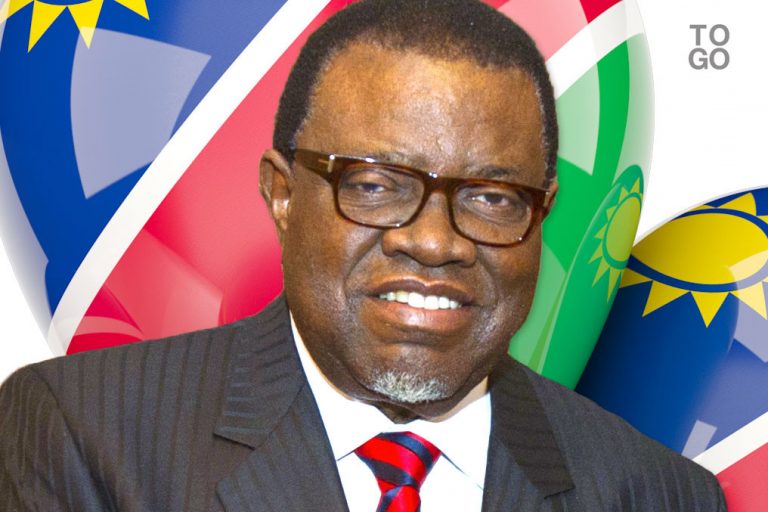
NAMIBIAN President Hage Geingob has ordered a shutdown of the country’s schools again starting next week as part of a raft of new measures in a bid to curb further spread of COVID-19.

In a televised speech on Friday, Geingob suspended schools from 4 August for 28 days, saying the move was necessary to ensure to eliminate the risks associated with the spread of the virus.

The measure affects early childhood development, pre-primary, primary and the first two grades of high school.

Reuters reports that public gatherings will also be capped at 100 attendants from 250 initially.

By Saturday afternoon, Namibia had reported 2,129 COVID-19 infections and 10 deaths, according to data from the U.S.-based Johns Hopkins University.

The consumption of alcohol at bars and taverns has also been prohibited, and Namibians will only be allowed to consume their drinks at home.

Geingob however relaxed rules for international tourists, who will no longer be subjected to a mandatory 14-day quarantine period upon arrival. They will instead be required to a negative polymerase chain reaction (PCR) test conducted 72 hours before arrival.

The president said the move was to ensure that the country moved on economically despite the health crisis.

“Our experience has taught us that a full lockdown of social and economic activities comes at an equally high premium and cannot be sustained over a prolonged period,” Reuters quotes Geingob.

(COMPILED BY NEW AGENCIES)

GPE Approves $400m For Education To Keep Children Learning Amid COVID-19

THE Global Partnership for Education (GPE) has approved grants totaling $381m to help 47 countries respond to coronavirus-related school closure and ensure children continue to learn during the pandemic.

A further $20 million is being provided to a joint initiative managed by the United Nations Educational, Scientific, and Cultural Organisation (UNESCO), United Nations Children’s Emergency Fund (UNICEF) and the World Bank, that will ensure regional and global efficiencies and knowledge sharing.

About 720 million students are still out-of-school in developing countries, where the combined impacts of school closures and economic hardship due to the coronavirus, threaten to reverse decades of hard-won gains in education. Girls are especially at risk, as they are more likely to have to take on household chores alongside remote learning. When girls are out of school, they are also more vulnerable to gender-based violence, early marriage and teenage pregnancy.

GPE Chief Executive Officer, Alice Albright said, “There is a real risk that millions of the most vulnerable children, especially girls, will never set foot in a classroom again. GPE is committed to ensuring that no child’s education is left behind because of COVID-19. Our emergency funds are helping partner countries keep children engaged in learning and make sure they can return when schools reopen.”

Developing country governments are using GPE funds to improve access to remote learning, support the safe reopening of schools and strengthen the resilience of the education sector to respond to future emergencies.

Remote learning solutions being applied in GPE partner countries vary widely, but three quarters rely on radio, television and print materials.

“These approaches ensure that the most marginalised children – those without access to internet connectivity or even electricity – are not falling too far behind. GPE works with partner countries to ensure that grants focus heavily on the most marginalized children, for example by providing materials adapted to children with learning disorders or disabilities, GPE Vice Board Chair, Serigne Mbaye Thiam said.

“It’s essential that distance learning programmes are reaching the poorest and most marginalized girls and boys and are not just accessible to the rich and able,” said “GPE’s emergency funding ensures that countries get technical and financial support to sustain learning for all their children.”

(SOURCE| THE GUARDIAN)

Learning In South Africa: The Evolving Education Landscape

THE higher education system in South Africa has experienced turbulent times in recent years. Student protests, university shutdowns, issues with student finances in the “Fees Must Fall” movement, together with high competition for places have all contributed to a challenging environment.

More recently, it has been necessary to execute a dramatic shift from on-campus to online learning in light of the COVID-19 crisis. Yet, some students lack the necessary equipment or connectivity for this and have home situations not conducive to learning.

At the start of the new millennium, South Africa began a radical transformation of the higher education sector. The number of universities was cut from 36 through incorporations and mergers – some of which created huge universities – aimed at breaking down apartheid’s racial divides and transforming the sector. Today there are 26 universities, however the number of places in these traditional institutions is far below rising demand from the enterprise sector for graduates with the right kind of skills to meet the needs of the workplace. All these factors combine to place a high degree of pressure on learning.

Completion rates

Meeting demand is one thing but another equally important factor in successful educational outcomes is course completions. Students dropping out before the end of their studies are an opportunity missed, not only for the future prospects of those students but also for those who, had they been able to secure a university place, may have gone on to graduate.

Last year it was reported that only 22 per cent of 2010 cohort students in South Africa completed their degrees in three years; 39 percent did so in four but by year six, still only 56 percent of registrants had completedi.

Of course, there are many reasons why students may not be able to complete a course of study but two factors stand out. Firstly, the student community is incredibly diverse with starting levels of knowledge varying enormously: this makes a traditional ‘one size fits all’ teaching approach less likely to succeed. Secondly, students don’t necessarily have the financial backing they need to stay in university, and many find they cannot afford living and other costs without a working income to back them up.

The loss of students from education before they are qualified is further exacerbated by the net loss of skills from the country. Indeed, one estimate put the number of skilled workers leaving South Africa at, “more than eight times” the number who arriveii

A widening skills gap

To keep up with the pace of change in the working world and produce graduates with the knowledge and capabilities that make them employable, university courses are having to adapt.

Enterprises need qualified graduates with the skills sets they require in their workforces. Yet, according to a report into skills supply and demand, “skilled labour can be difficult to find in most skilled and professional segments” with skills in shortage occupations including complex problem and solving skills, computers and electronics, and management. Also in demand are technical and financial management skills.

Unfortunately, skills needs evolve all the time, especially in the face of technology which has automated many tasks previously undertaken by skilled workers. It has been reported that “skilled labour can be difficult to find in most skilled and professional segments largely due to the poor state of the public education system.”

So, what skills will be needed as we move further into the 21st century and begin to work out what our new normal will be post COVID-19? It could be argued that digital skills are as essential as numeracy and literacy. Industries going through a digital transformation seek graduates with capabilities in this area and this means starting student tuition in coding, robotics and other disciplines early. Indeed, the Department of Education in South Africa has recognised this and is beginning a pilot study to introduce these subjects at school leveliv.

To help face higher education challenges in South Africa, an opportunity exists to explore digital forms of tutoring and learning. In this way, classroom teaching can be supplemented and learning continuity provided for when students are off campus. During the current period of shutdown it was suggested that institutions spend time exploring online tools for future digital support of learning.

A hybrid learning model, which blends online with face-to-face tutoring, can help meet capacity challenges and support students who would struggle to travel to university. At the same time, digital learning programmes can help students to learn at their own pace through personalised learning journeys accessed from a range of devices, not just a PC.

(Source: Times Higher Education)

Cosas Embarks On ‘Unprecedented’ Protest Action To Shutdown More Than 2 000 Private Schools

NYAKALLO TEFU and CHARLES MOLELE

THE Congress of South African Students (COSAS) on Monday threatened to shut down all private schools across the country in a desperate attempt to address the deep inequalities in education caused by apartheid-era education policies and spending practices.

This follows government’s announcement last week that all public schools would be closed for four weeks with the exceptions of some grades.

The recess is intended to reduce the rate of COVID-19 infections, currently standing at 453 000 confirmed cases and 7 067 deaths.

“We are going to lock all the gates of private schools with our own padlocks this week because they are not willing to close as requested by all South Africans,” said COSAS provincial secretary Sibabalo Mdingi.

Mdingi said COSAS is of the opinion that the country’s education system should seek to create a fair and equitable opportunity for every child, whether they attend private or public schools.

“Our Programme of Action to shut down private schools is to highlight the deeper inequalities in the country’s education system. We demand equal education and nothing else. Private schools are going to write similar exam papers to public schools – whether they have registered under National Senior Certificate or IEB. We can’t have two education systems in one country.”

The country’s five teacher unions (SADTU, NAPTOSA, SAOU, NATU, PEU), together with some school governing body associations (SGBs), are in support of calls to shut down private schools.

SADTU’s spokesperson Nomusa Cembi said government’s decision to halt public schooling for a month while allowing private schools to stay open will see the inequality gap widen,

“When president [Cyril] Ramaphosa announced the closure of schools were worried why only public schools because we believe that this will further exacerbate the gap between public and private schools. We do not want a situation where we have two education systems – one for public and one for the private schools,” said Cembi.

“We want to see all schools closing down as it happened at the beginning of the national lockdown in March when all schools were instructed to close. We want to see one education system.”

NATU’s president Allen Thompson said the ‘unequal’ closure of schools will only widen the gap between the poor and rich schools.

“That is very unfortunate. The private schools are part of the South African education system. We believe that they are being controlled by one Minister and as a result they deserve to be treated in the same way,” said Thompson.

NAPTOSA’s president Basil Manuel said Ramaphosa’s decision to close all public schools and leave out private schools was a ‘great injustice’.

“We believe that it’s a great pity that we didn’t seize upon the opportunity to solidify the view in the minds of the public that we have one education system,” said Manuel.

This week, Basic Education Minister Angie Motshekga is expected to meet with MECs between Monday and Thursday to iron out issues around independent schools.

The independent schools claim that their programme runs differently from that of private schools, which is why they were not included in the current closures by Government.

Mandla Mthembu, chairperson of the National Alliance of Independent Schools Association (NAISA), said the middle and low fee independent schools have had to cut teachers’ salaries as well as retrench staff at a time when teachers are more needed than ever.

“This is not the case for public school teachers who continue to enjoy the full benefits whether at work or not,” said Mthembu.  

“Unfortunately, it is not the case for independent schools teachers who have had to come face to face with unemployment and increasing the unemployment /UIF line in our country.”

Mthembu said that unlike public school teachers, both independent school teachers and SGB teachers are paid from school fees.

He said many parents stopped paying fees as soon as schools closed, placing independent schools in a precarious position.

School fee payments are currently at an average of between 25%, depending on the schools’ quintile category, said Mthembu.

Experts say the widening gap between private and Government schools is of great concern.

Around 60% of South African learners attending public schools attend no-fee schools, according to a study by Section 27.

Some of these schools charge less than R1 000 a year, while others charge more than R30 000 per year.

The money can be used to hire additional teachers, top up teacher salaries, and to offer extra-curricular arts and sports programmes and a greater array of subject choices.

Independent schools, on the other hand, charge high tuition fees, with some annual fees exceeding 20 times the average amount that provinces spend on each public school learner each year.

Independent schools are free to charge whatever school fees they wish, though charging school fees above certain thresholds may make them ineligible for state subsidies.

Independent schools are also free to set their own classroom sizes and school capacity without regard for the educational needs of the province.

(Compiled by Inside Education staff)

Education Department Puts Final Touches On Coding Curriculum

BASIC Education Minster Angie Motshekga says government is putting the final touches on the coding and robotics curriculum developed for Grades R to 9, which is due for completion by the end of July.

Motshekga said this when she tabled the department’s 2020/21 adjusted budget vote during a virtual plenary session.

The initial overall 2020/21 budget allocation for the DBE (before adjustments) was just over R25.3 billion, and this was reduced to over R23.2 billion following budget cuts and adjustments due to Coronavirus spending.

“The DBE has developed the coding and robotics curriculum for Grades R to 9, which is currently being repackaged to ensure proper sequencing and seamless progression from one phase to the next. We are planning that the repackaging process will be completed by the end of July 2020,” said Motshekga.

After putting the final touches on this curriculum, it will head to the quality council authority, Umalusi, for approval.

The roll-out of this curriculum forms part of the department’s strategic implementation of a curriculum with skills and competencies for a changing world in all public schools.

Once approved, teachers and subject advisors will receive training for this curriculum online because of the Covid-19 pandemic.

(Source: Northglen News)

The Case for Reopening Schools: The Harm From Lost Instruction Outweighs The COVID-19 Risks.

SUBMISSIONS OF PRIVATE SCHOOLS TO THE MINISTER OF BASIC EDUCATION REGARDING THE MAINTENANCE OF LEARNING AND TEACHING DURING COVID-19 PANDEMIC DESPITE OPPOSITION BY LEADING FIVE TEACHER UNIONS IN SOUTH AFRICA|

SOUTH AFRICAN WALDORF FEDERATION

The Federation of Waldorf Schools in Southern Africa has 16 member schools. 4 schools are low fee under R300 per month, 1 school is a low fee special needs school, 5 schools are mid fee schools and the remaining schools are well resourced schools. Thus we represent all sectors of our society. All our schools have opened and are strictly following all the regulations and protocols required to combat COVID and ensure the safety of all teachers and Children in our communities. Our low fee schools are subsidized.

In total out of 3400 learners we have had 5 infections, all of which have been traced back to sources not from within the school. Out of 350 educators 4 have tested positive also not from within the school. Schools have been deep cleaned and apart from 1 school that closed for a short period all schools have continued unaffected. Children were already in Isolation due to family circumstances, so no classes have been disrupted due to learner exposure.

All our schools have engaged in a hybrid of online/ Remote and physical learning and have staggered the attendance of our classes. 50% of learns are back at school at a given point with an average of 85 to 90 percent attendance. Thus our teachers are dual teaching. Where children do not have access to online learning Watts App and resource packs are being used.

ACCELERATED EDUCATION ENTERPRISES (AEE) ASSOCIATION     

The Accelerated Education Enterprises (AEE) Association, a custodian of the Accelerated Christian Education (ACE) Curriculum, has 650 Schools in South Africa (Primary and Secondary/ High Schools) and has 1600 Home Schools using the ACE Curriculum. 100% of our schools are open and all our Home Schools have been running even during lockdown because it is parents assisting their children at home with learning. We have Online Programmes which support our blended learning approach. To date we have had less than 10 cases of COVID 19 reported from our schools. It all the cases it has been staff members who got the virus outside of the school. SoP as provided by DBE were followed in each case. No child has had COVID 19 in all our schools.

We support the position of the Department of Basic Education (DBE) to keep the schools open. There is no evidence to support the claim that children are in danger of contracting COVID 19 in Schools. Children are better supervised in schools and have the best care and in certain circumstances even safer than being at home when there is no one to supervise them.

ASSOCIATION OF CHRISTIAN SCHOOLS INTERNATIONAL (ACSI)

The Association of Christian Schools International (ACSI) has a membership of 109 Independent Christian Schools in South Africa. We currently have 105 of our schools open and fully functioning (different grades on different days and the like) and only 4 of our schools, which are stand-alone ECD centres that have not fully opened. We have had 13 Covid-19 cases reported from our schools across the country. These cases are mostly of teachers/parents that have contracted the virus from outside the schooling environment. Some of these schools had to close to be disinfected, but all of them have reopened successfully and without any other issues due to their strict adherence of the Covid-19 protocols and procedures.

Our schools have been operating with a 60-95% attendance register of learners, depending on what level of Online/blended learner they can also administer. There has however also been a harsh financial knock that the schools have taken, staff salaries have been reduced, in some instances up to 50% salary cuts and also only receiving at most 80% of schools fees in the best of situations. For the most part, there has been a drop of, on average, 40% of schools fees paid in.

ANGLICAN BOARD OF EDUCATION SA

The Anglican Board of Education represents 350 schools in Southern Africa, 110 schools in South Africa both independent and public schools (these are old mission schools that are now funded by the government but are on Church land).

All the schools are open and ABE supports the call to remain open because schools are good for children and remain safe places. The attendance at school varies between 50% to 90% depending on access to online learning and the grade. There is higher attendance in matric. The infection rate in schools is very low (0.2%) and the infection has been traced to contact outside the school. Schools have closed to do proper cleaning and sanitizing of certain areas of the school if a case is reported. 

ASSOCIATION OF MUSLIM SCHOOLS

All 84 schools belonging to the Association of Muslim Schools in the nine provinces have reopened. The schools have all complied with the Covid 19 Standard Operating Procedures and have reported attendance ranging from 50% in the lower grades to over 85% in the Grade 12 and FET classes. Most schools are using a version of the reengineered time tabling schedules recommended by the DBE, with the popular choice being the alternate day model supplemented by online learning.

The incidence of Covid 19 infections varies from province to province but the trend appears to be that the source of infections is not from within the school but from home or community contact.

As with independent schools across the country, our member schools have also been severely affected by the economic downturn and the main casualties at this stage are staff who have had to take salary cuts of between 40% and 50%.

AMS supports the call for schools to remain open during this period with the proviso that individual schools need to be allowed flexibility and discretion according to their individual circumstances. 

SOUTH AFRICAN MONTESSORI ASSOCIATION

The South African Montessori Association has 189 members, of which 92% have successfully opened and phased in children from 18 June to date. Our Montessori schools serve both underprivileged and privileged communities.

SAMA has had three reported cases of COVID from our members, all of whom were parents who had contracted the infection from their workplaces and were in no way related to the schools. Regardless, the schools continue to follow the strict Health protocols and have been commended by the local Health authorities for the manner in which they have handled the situation.

We have had the most positive and uplifting feedback from our schools. The children have flourished since being able to return to school. Many schools reported that they visibly noticed the negative effect of school closure on the child’s emotional well-being and their physical development, particularly their gross motor and emotional development. This was soon remedied within two weeks of the children being back at school.

Most schools have had between 50% and 80% of children who have returned to school, with the remainder choosing to work online. However, the online learning pales in comparison to what the learners achieve in the classroom.

SAMA schools have been also very badly affected financially by school closures in the first phase of the lockdown. If

CATHOLIC INSTITUTE OF EDUCATION

Short report on Catholic Independent Schools 

There are 95 Catholic independent schools of which 39 are Pre-school to Grade 12 and the rest a mixture of primary and high schools. 

  • 3585 teachers
  • 53000 learners
  • 79% of leaners are black and 25 % Catholic.
  • 37 of these are no or lo fee schools.

Only one school has not opened due to intimidation.

COVID compliance is excellent although the costs of decontamination are becoming a challenge for low fee schools. CIE supplied PPE to no and low fee schools after raising funds. Schools have managed cases well – we do not actual figures but most schools have been affected but have closed and opened after decontamination.

While some schools report almost 100% attendance of learners, the average attendance is 80%. In Gauteng this has dropped as the numbers of COVID19 cases has risen, with schools with online capacity using a mixture of online and face-to-face, and one school using online for the most of the school (Grade R -11) online but Grade 12s at school. .

Teacher attendance varies due to those with comorbidities, testing positive or going into isolation, although these are preparing lessons or where possible teaching online.

While it is difficult to give are the actual numbers of cases. These have risen in Gauteng with several teachers and learners testing positive. All cases have come from outside the school.

Schools in townships have not faced any protests to date except the orphanage in Bronkhorstspruit which had to close the school portion because of intimidation. Soweto schools were warned on Thursday of COSAS action which did not materialise.

SOUTH AFRICAN BOARD OF JEWISH EDUCATION

The South African Board of Jewish Education (SABJE) has taken a decision to move all their schools in Gauteng to an online platform as a precautionary measure as per advice given to them by their medical consultants and concerns raised. This is in no way suggesting that schools must be closed. They have the resources and the infrastructure to provide online learning to all their students. The main concern has been about the need to protect teachers and to reduce the stress and anxiety levels some of them have had to deal with in the past months.  This is only for their Gauteng schools in the interim period. The decision will be reviewed when circumstances change and new advice is received from their medical practitioner consultants.