Home Blog Page 403

Science & Technology: How STEM Professionals Are Making A Difference

ON THE June 28th episode of High-Tech Sunday, Dr. Mark Vaughn, manager, Technical Talent Pipelining for Corning Incorporated’s Technology Community and the lead for the Technology Community Office of STEM, sat down with the 2019 Women of Color Technologist of the Year.

Dr. Pamela McCauley is the first academic who was selected for that honor. She talks about how she’s able to bridge the gap between people who work in STEM in industry and those in academia.

Dr. Mark Vaughn: It’s always interesting to hear about a person’s journey. Those of us who are part of the Career Communications Group family, with Black Engineer of the Year and Women of Color, know that you are a somewhat of a fixture on the national scene. But, how is it that you got started in the area of science, technology, engineering, and math (STEM) in the first place?

Dr. Pamela McCauley: When I was a little girl, we would visit my grandmother in Oklahoma City in the country. And we would always, in the summertime. beg to sleep outside on the patio on the roll-away bed. And that’s when I would look up and gaze at the stars. I absolutely fell in love with the constellations and wanted to know what stars were made of and that really began my love for science.

And then of course, my father always made sure we took math. So we had to take math courses every year, whether we needed them or not. I enjoyed math as well. So, I think I had the foundation to be comfortable with a STEM major early on. My father told me that I was smart so I should become a doctor. So I started out as premed. While I loved science and studying the human body, I realized pretty quickly that I didn’t like the sight of blood. And it probably wouldn’t be a good idea for me to study medicine.

How she got into industrial engineering

“So I went to the library and learned about other disciplines. This is the time when you actually had to go to a library. You had to go up steps, open doors, and pull out card catalogs. So, I went to the library and I learned about industrial engineering. And it said there’s an area within industrial engineering called bio mechanics. That looked at the study of people in the workplace or the study of the human body’s movement. I saw then that I could use my interest in the human body in engineering. That’s when I switched to industrial engineering.”

What is it that you are focused on in your research as it pertains to bio mechanics these days?

“In some of the recent research that I did, I’ve studied the bio mechanics of body-worn camera for law enforcement officers. Of course, that’s something that’s very timely as we think about what’s going on today. A lot of times, people don’t think about the science that has to go into some of these decisions. That is if they are made well. The reason that I got involved was because at my former institution, the University of Central Florida in Orlando, the Orange County sheriff’s office was considering implementing body worn cameras. So they wanted to have a study done to look at the different types of body-worn cameras as they were making these decisions.

“We all know the tremendous advantages of body-worn cameras. For example, one of the primary reasons they are used is because they include officers facing. But they also increase evidence quality, and then they reduce the number of civilian complaints. Also they reduce an agency’s liability because they you do have actual footage. Because if you have five people seeing the same thing, you’re probably going to have five different stories told. But if you have that camera there, that provides some additional assurance.

“I was really excited to do that study and I had officers in my ergonomics class. So we were actually having them do many of their maneuvers that they would do, such as running and jumping off a treadmill as if they were going to apprehend someone as they would do. Then we’ll evaluate how the body worn camera could stay in position and still collect the kind of information that was needed. That, I felt was a real contribution, and some of the things I loved to do in research that is going to be easily translatable so that it could make a difference.”

(Source: The Black Engineer)
13 South African Universities Feature In The World’s Top 2000 Higher Learning Institutions

THE universities of the Witwatersrand (Wits) and Johannesburg (UJ) are among the top 2 000 universities that made the cut in this year’s Center World University Rankings (CWUR).

This year, Wits was ranked second in South Africa and 275th internationally while UJ was seventh nationally and 706th in the world. In total, 13 South African universities attained a spot on the final league table where 20 000 higher education institutions were evaluated.

CWUR is a leading consulting organisation providing policy advice, strategic insights, and consulting services to governments and universities to improve educational and research outcomes. The organisation grades universities on seven factors to compile their annual list of the world’s top universities.

These include the quality of education, quality of academic faculty staff, alumni employment, and overall research performance. They believe that they are known objectivity, transparency, and consistency and are trusted by students, academics, university administrators, and governments from around the world.

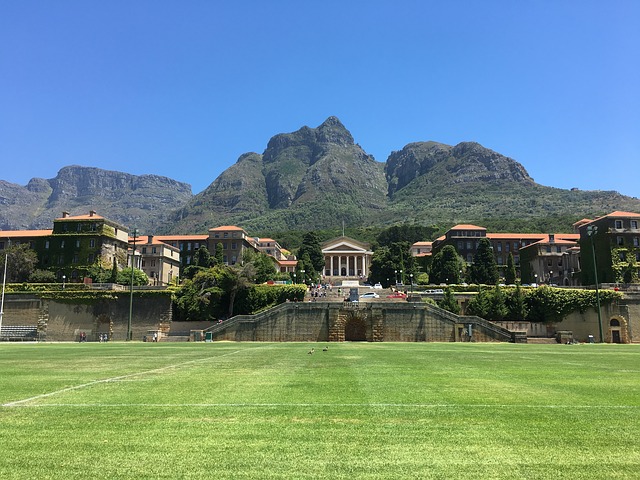
The University of Cape Town was ranked as the top university in the country and 268th globally.

Stellenbosch University (third nationally and 429th globally), the University of KwaZulu-Natal (fourth nationally and 429th globally) and University of Pretoria (fifth nationally and 578th globally wrapped up the top five South African universities.

UJ has been able to gradually climb nearly 250 places over just three years to its current global ranking of 706. This year they improved from last year’s standing by 55 places. Vice-chancellor and principal of UJ, Professor Tshilidzi Marwala said, “We are thrilled with this global endorsement that recognises our endeavours towards global excellence and stature, in the context of the Fourth Industrial Revolution.

“The rankings also reaffirm our stature as an international university of choice, anchored in Africa and dynamically shaping the future.” Globally, the top five universities rankings haven’t changed from last year’s list. Harvard University in the United States of America was ranked as the best university on earth for the ninth year in a row.

American universities Massachusetts Institute of Technology and Stanford University round up the top the three while the United Kingdom’s University of Cambridge and University of Oxford came fourth and fifth respectively.

The University of Johannesburg’s vice-chancellor and principal, Professor Tshilidzi Marwala has celebrated the university’s inclusion in the top 2 000 universities globally in this year’s rankings.

(Compiled by NorthCliffMelville Times)

Princeton To Remove President Woodrow Wilson’s Name From Public Policy School

PRINCETON University will remove Woodrow Wilson’s name from its public policy school over “racist thinking and policies” the former president had championed, the university says.

The university’s Board of Trustees approved the name change on Friday. In a letter, trustees said long-standing questions over Wilson’s history of supporting segregationist policies were “made more urgent” by the recent high-profile killings of Breonna Taylor, Ahmaud Arbery, George Floyd and Rayshard Brooks.

Trustees noted that Wilson infamously segregated the nation’s civil service after decades of racial integration. That legacy, trustees concluded, was not befitting a school geared toward public service.

“We have taken this extraordinary step because we believe that Wilson’s racist thinking and policies make him an inappropriate namesake for a school whose scholars, students, and alumni must be firmly committed to combatting the scourge of racism in all its forms,” the board said.

The school will be renamed the Princeton School of Public and International Affairs, and the residential Woodrow Wilson College will be renamed First College, Princeton said.

Wilson had a long history with Princeton. He obtained his undergraduate degree from the university in 1879 and returned in 1890 as a professor, teaching for 12 years before becoming the university’s president in 1902.

Princeton appended Wilson’s name to the School of Public and International Affairs in 1948 when it added a graduate program. In addition to the public policy school and residential college, a prestigious alumni award also bears Wilson’s name.

Trustees say Wilson’s name will remain on the alumni award however, because it was endowed by a gift that came with a “legal obligation to name the prize for Wilson.”

Alongside the veneration have also been concerns by students over Wilson’s prominence on campus. In 2015, students protested, occupying the president’s office. In response, the trustees assembled a special committee to review concerns over Wilson’s legacy and provide recommendations.

The committee recommended that the school keep the 28th president’s name on both schools, even as it acknowledged that “Wilson indisputably opposed the idea of admitting black students to the Princeton of his time.”

But as anti-racist protests surged across the nation, the celebration of Wilson’s legacy at Princeton was one more longstanding debate to re-enter the spotlight.

Students of the public policy school recently sent a letter, dated June 22, demanding, among other things, a name change.

“If Princeton saw fit to change the name of the School of Public and International Affairs in 1948 to reflect the politics of the mid-century United States, then it is time to change the name once again, over sixty years later, to reflect the morals and principles of our institutional identity in 2020,” the letter read.

(Compiled by NPR)

Willowmoore High School Principal, Lorna Sanders, Is Our Teacher Of The Week

CLASSROOM CORNER

Teacher of the Week

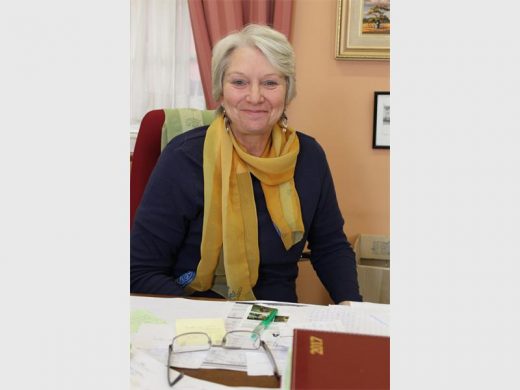
Teacher: Lorna Sanders

School: Willowmoore High School, Benoni, Gauteng

VETERAN educator Lorna Sanders remembers that all she ever wanted to be was a mathematics teacher.

A school principal at the Willowmoore High School in Benoni, Gauteng, Sanders was inspired by one of her mathematics educators who gave her the opportunity to assist her fellow students when he was busy with administration work.

Working with staff members and getting them to be excited about their teaching and their own learning is a great challenge for her.

However, she is able to get the staff to be a professional body.

She encourages her staff to get involved in up-skilling themselves using the latest trends in technology and in education.

She takes up challenges to try new methods in the classroom, attend conferences and networks.

In the same time she receives a lot of support from a very good team of staff who allow her to introduce new ideas.

She also ensures that her learners are involved in many activities and she will always go out of her to see that the learners receive the recognition that they deserve.

She also works closely with members of the community, School Governing Bodies (SGB) and the Education department.

She believes that no one will ever take away the empowerment that she has acquired by participating in the National Teachers Awards (NTA) from the district level to national level.

She will continue to continue the work that she is doing as it is a passion.

Sanders want everyone to be curious about the world and be excited about learning one small thing each day.

She would like to spend time up-skilling fellow educators in the use of technology in their classrooms as she is passionate about the way technology can assist educators without replacing educators.

She is determined to make learners aware of their surroundings and to become valuable members of society.

“I want the country to benefit from the learners that I am able to assist.”

(Compiled by Inside Education staff)

Maths teachers in South Africa: case study shows what’s missing

SOUTH African students are bad at maths compared to other countries. This is clear from results of South African learners in the International Mathematics and Science Study. The results show that South Africa’s performance is far from competitive in relation to other countries.

To try and understand the reasons for this poor performance, I did a qualitative case study focusing on a year-long post graduate course taken by aspiring teachers. I focused particularly on a Post Graduate Certificate in Education with a maths focus offered by one of the country’s university of technologies.

I looked at three key themes – the curriculum and its delivery, partnerships during delivery and policy influencing delivery. My research findings show that the success of the Post Graduate Certificate in Education in preparing maths teachers is not without concern and its delivery, in the case study context, needs rethinking.

My findings underscore earlier research that has suggested that a shortage of competent and confident qualified mathematics teachers is a key contributing factor to the low maths performance of South African school children.

Constraints

The one-year Post Graduate Certificate in Education offered at South African universities is a key qualification for aspiring teachers. This is taken after completing a diploma or degree in other fields such as engineering, business and hospitality. It offers an opportunity to university graduates to become a professionally qualified teacher in one-year instead of pursuing a career in industry.

My research highlights the constraints identified by students and lecturers of the post graduate certificate programme, in particular as it relates to the teaching of maths.

The first constraint I identified involved inadequate support structures as well as information, communication and technology infrastructure to meaningfully support the ever-increasing numbers of students taking up the course. The numbers have grown exponentially – from 10 in 1994 to 100 in 2014 and then 207 in 2015. In short, the university has been expected to do more with less.

The second constraint I identified was a potential over reliance on using Bachelors in Education content designed to be delivered over four years. This was evident from the statements from lecturers clarifying how they identify and select content to present during lectures.

This is a constraint as the four year Bachelors in Education content is not always suitable for the Post Graduate Certificate in Education context. This indicates a need to develop context specific content to make the best of the one-year post graduate certificate.

The third constraint was a limited partnership to develop professional learning communities. These should ideally involve lecturers and students, university representatives evaluating students during compulsory classroom teaching periods and the teachers in schools hosting students.

The main reason for this constraint appeared to be that most lecturers were part-time as the course was offered in the afternoon or evening. This meant that lecturers and students had limited time to engage. This affected the outcomes and the quality of the course.

Another outcome from the lack of engagement between the part-time lecturers was that lecturers duplicated content offered in other programme modules. Students and graduates noted this as one of their main concerns. Unnecessary duplication is a major problem because the post graduate certificate programme has a limited time-frame of just one year.

The fourth and final constraint was a lack of oversight over university policy stipulations linked to the delivery and assessment of the post graduate qualification.

For example, university policy stipulates that an assessment plan, programme and calendar must be provided to students. Such a document wasn’t provided to students as noted during interviews. Policy also stipulates that students must re-do practical teaching if they miss more than five days during the study period. One student noted that he was absent for a whole week during this period and no one noticed. He was awarded a pass for practical teaching.

My research found that lecturers didn’t follow all the university’s policies. This suggested that they weren’t being monitored by the relevant authorities. This lack of oversight by the university is clearly a major problem.

Next steps

I conclude from my findings that, to become confident and competent maths teachers, graduates who have passed the Post Graduate Certificate in Education need further development and support. If this isn’t provided, South Africa is unlikely to see an improvement in the performance of its school children.

Jacques Verster: Doctoral candidate Centre for International Teacher Education, Cape Peninsula University of Technology.

W&M Professor Explores Blackface Minstrelsy In America And Abroad In New Book

0

NATHAN WARTERS

BLACKFACE, dark makeup worn by a performer in a caricature of the appearance of a Black person, is now widely considered unacceptable in mainstream American culture — but that wasn’t always the case. 

William & Mary professor Chinua Thelwell explores its history in the United States and abroad in his new book “Exporting Jim Crow: Blackface Minstrelsy in South Africa and Beyond.” 

The topic is in the news again recently, as companies review branding that stems from minstrelsy for product lines such as Aunt Jemima and Uncle Ben’s. 

“Blackface minstrel shows portrayed enslaved Black people as happy and content,” Thelwell said. “Aunt Jemima and Uncle Ben’s products sell a similar patronizing fantasy of smiling Black servant characters. Such products traffic nostalgia for American slavery and do not reflect the values of multi-racial democracy. These products should have been renamed or removed years ago.” 

Thelwell and his family have fought against American racism and Jim Crow segregation for generations, and it helped guide Thelwell down a career path that led him to William & Mary as an associate professor of Africana studies and history

He is also one of the founding faculty members of the university’s new Asian & Pacific Islander American Studies program. 

“I have dedicated my professional career to the struggle for multi-racial democracy,” Thelwell said. “I’m proud to be part of an intergenerational movement for racial equality in the United States and abroad.” 

That struggle was communicated in the recent PBS documentary series, “Asian Americans,” which included accounts of Thelwell’s grandfather and other relatives being banished to Japanese internment camps during World War II despite being American citizens.

That PBS would choose to tell his family’s story filled Thelwell with immense pride, but the painful details gave him feelings of sorrow and vulnerability. 

“In many ways, the story of Japanese internment is a story of intergenerational trauma,” Thelwell said. “For my family, the trauma has become very public because of this documentary. Still, I’m proud because the documentary tells a story about the intergenerational activism of a Japanese American family.” 

Thelwell spoke to W&M News recently about his book. 

When did you decide to study blackface minstrelsy and why?

Blackface minstrelsy is a racist genre of performance that began in the United States and was exported abroad. I first became interested in this topic when taking a history class as an undergraduate student. I learned that Commodore Matthew Perry, the United States naval officer who used gunboat diplomacy to force Japan into a trading agreement in 1853, brought blackface minstrelsy to Japan. Some of his crew members were amateur performers and they presented a blackface minstrel show during their stay. This history immediately resonated with me because I had always wondered about how these kinds of racist images got to Japan. I also thought to myself: “Where else did these minstrel troupes go?” Later, in graduate school, I learned that South Africa has an interesting and relatively understudied history regarding blackface minstrelsy. 

What can we learn from your book?

My book is about America’s cultural imprint on the world. I have had opportunities to travel to countries in Africa, Asia, Europe, South America and the Caribbean and have always been fascinated by the large amount of American music that is played on the radio. Popular music is one of the most enduring cultural exports of the United States. My book demonstrates that this tradition of exporting American popular music to the world began with the blackface minstrel shows of the 1830s and 40s. Indeed, racist minstrel shows are part of America’s cultural legacy in the international arena. 

We Americans need to acknowledge this history. Racist images and ideas that began in our country influenced the ways in which people thought about race in other countries. As such, those of us who are interested in advancing anti-racist perspectives must be ready to move beyond the boundaries of the United States. In short, we have to do more to challenge racism in the United States and abroad. 

What is new?

“Exporting Jim Crow”provides an introduction to blackface minstrelsy in the global arena. There are other scholarly sources on this topic. However, the book covers more cities and countries than any other source. In order to describe how blackface minstrel shows got to South Africa, I use primary and secondary sources to trace the transatlantic and transpacific touring circuits of the mid-19thcentury. These circuits linked San Francisco and New York to Honolulu, Melbourne, Sydney, Calcutta, Bombay, Durban, Cape Town and London among several other urban centers. “Exporting Jim Crow”is the most expansive study on transnational blackface, covering more locations than any other work of scholarship. 

What progress do you think America has made in condemning blackface in mainstream culture?

Regarding traditional blackface imagery, there has been much progress. Before the 1960s, blackface imagery appeared in many Hollywood movies and cartoons. However, during the 1960s, civil rights movement activists lobbied against blackface in mainstream media forums. By the late 1960s, traditional blackface imagery became taboo in mainstream media in the United States. Today, in rare moments when blackface shows up on mainstream TV shows or movies in the United States, it has to be a self-aware commentary on blackface to be considered acceptable. Rather than ridiculing Black people, as it did in the past, self-aware blackface today is often used to make jokes about people who foolishly decide to put on blackface. 

Is America influencing other countries in the effort to eliminate these racist behaviors and images?

Yes, most definitely. Many American citizens understand the ugly history of blackface minstrel shows. And when we see these images in other countries, we can speak out. High-speed internet has really changed the global public discussion regarding blackface. Blackface images can travel across national borders even more quickly today than they did in the past. At the same time, anti-blackface critique also circulates more quickly. When people in other countries put on blackface, they are more likely to face immediate international criticism.

(Source: William & Mary University)

What’s The Future Of Online Higher Education In Africa?

AT ONE point during the global Covid-19 pandemic, 1.6 billion young people in 161 countries were out of school – close to 80% of the world’s enrolled students. This has spurred a significant surge in using technology to deliver education – with mixed results for students.

Many establishments were ill-prepared for the changes needed to make learning online a good experience for students. The question now is whether the Covid-19 crisis will result in a more permanent shift to online education delivery, and can this be sustained in Africa?

Africa has the world’s fastest-growing youth population. Yet, there is a stark undersupply of quality, affordable higher education across the continent. Current tertiary enrolment rates across Africa stand at roughly 8% – well below the global average of 32%.

Four years ago, CDC invested in UNICAF, Africa’s largest online university. This was underpinned by the belief that online education has the potential to increase access to higher education by making it cheaper, more flexible and more relevant and therefore opening up opportunities for higher education for a wider set of students.

As of May 2020, UNICAF has offered bachelor, master’s and PhD degrees to almost 30,000 students across every country in Africa through either a fully online or a blended learning format from its campuses in Malawi and Zambia. Students can get affordable degrees accredited from globally recognised British, American, European, and African universities.

Last year, we set out to evidence the impact that UNICAF has on its student base. Results of surveys with over 1,000 students are outlined in our insight study ‘What’s the impact of online higher education in Africa?

We found that overall, UNICAF fulfils its promise to provide a more affordable and flexible higher education. Its degree programmes are explicitly designed to allow people to keep working while studying. A large part of UNICAF’s student base is therefore made up of older students (aged between 25 and 39) returning to education. Of the students surveyed, 86% worked while studying. UNICAF students pay $4,000 on average for a postgraduate degree, in small monthly payments. This is significantly cheaper than any standard postgraduate degree available in most countries, particularly Nigeria and Kenya. Student satisfaction is high.

Critical to improving access to online higher education in Africa is the need to improve connectivity across the continent. A stable internet connection remains difficult to access for the majority of Africans, especially those living outside the hubs of Nairobi, Lagos or Johannesburg. Additionally, many Africans leave secondary education without the necessary digital skills to take advantage of online programmes. Connectivity is low in most countries and data prices across Africa are amongst the highest in the world. Across Africa only 18% of households had access to the internet in 2019. The majority of Africans use the internet on their mobile, and whilst cost is still prohibitively high for many, phones and data bundles are getting cheaper year on year.

Overall, trends are pointing in the right direction and we predict that online and blended higher education will grow significantly over the next decade. To accelerate this even further, we propose the following solutions:

  • Joint efforts between governments and connectivity providers are needed to address a lack of connectivity. CDC investee company, Liquid Telecom, for example, is working with local governments and has already connected over 6,000 schools and higher education institutions to broadband and is working to improve digital skills of ICT teachers in secondary schools.
  • Edtech companies in Africa should embrace cutting-edge thinking to deliver learning more efficiently and effectively. Many developments in technology and changes in the global approach to teaching are not yet used at scale in Africa. This includes: collaborative and project-based learning, mobile-friendly learning platforms, adaptive and personalised learning, improved automated assessment methodologies and technologies.
  • Online education companies should continue to engage with the continent’s forward-thinking employers and integrate 21st century skills into their offering. If the learning experience as well as the learning goals are transparent and attractive to employers, it’s easier for them to support their workforce to engage in continued learning (full-time or part-time). Companies such as Liquid Telecom (together with Microsoft), ALX and Andela have significantly pushed the agenda around learning job-relevant tech skills.
  • Partnerships between public universities and edtech companies can help to accelerate adoption of online teaching. There is a need for African universities (public and private) to develop online offerings. UNICAF’s recent partnerships in Zimbabwe and Rwanda underline its commitment to helping take public institutions online.
  • Innovative financing solutions to bridge the affordability gap must increase. Student loans, and, in particular income share agreements, will be an important part of education take-up in Africa, whether for new or existing universities. Innovative financing will further require collaboration between public regulators and private companies.

Ultimately, what matters most is the impact that further education has on a student’s life and career. In general, this is hard to measure. Establishing a robust methodology for measuring impact on a student’s career, and following through on data capture, is therefore critical. Last year, CDC published an Education Impact Framework, to stimulate debate in this area.

Even before COVID-19, there was already high growth and adoption in education technology, with global edtech investments reaching $18.66 billion in 2019 and the overall market for online education projected to reach $350 billion by 2025. We see significant opportunity to boost online education in Africa and help increase access to higher education.

(Source: How We Made It In Africa)

City of Ekurhuleni’s 2020-2021 Budget

The City of Ekurhuleni tabled a R46.6 billion budget on Thursday amid COVID-19 pandemic and a negative economic outlook.
Inside Education spoke to Member of the Mayoral Committee for Finance and Economic Development Nkosindiphile Xhakaza and the city’s youngest Chief Financial Officer, Kagiso Lerutla.

Wits Appoints Professor Zeblon Vilakazi As New Vice-Chancellor

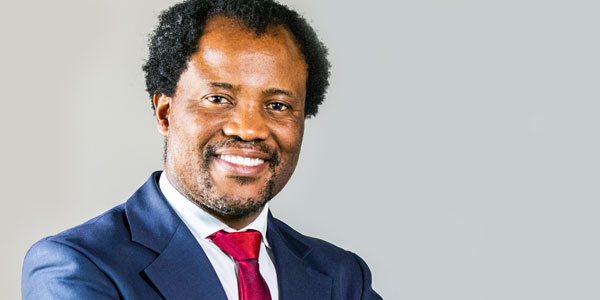
THE Council of the University of the Witwatersrand on Thursday announced the appointment of Professor Zeblon Vilakazi as the new Vice-Chancellor and Principal of the University from 1 January 2021.

He takes the reins from Professor Adam Habib, who leaves Wits at the end of the year to lead the School of Oriental and African Studies in London.

Vilakazi is the current Vice-Principal and Deputy Vice-Chancellor for Research and Postgraduate Studies at Wits.

Under his leadership, Wits’ research output has more than doubled, with the University increasingly producing more research with impact.

He is widely published (325 papers) and highly cited with an h-index of 70.   

“Professor Zeblon Vilakazi is the epitome of a world-class researcher who is globally recognised for his scientific work, and for his contribution towards developing higher education in Africa. He is a truly talented individual who is an inspiring exemplar for all Africans,” says Mr Isaac Shongwe, Chairperson of the Wits Council, the highest decision-making body of the University. “We are confident that Professor Vilakazi will ably lead Wits to its centenary in 2022 and beyond, steward a new vision for the academy, and reinvigorate the academic project in a higher education context that is rapidly changing,” said the university council in a statement.

(Compiled by Inside Education staff)

Ekurhuleni Gives R1bn Tax Incentives To The Indigent Despite COVID-19 Induced Revenue Losses

THALIA HOLMES

AS THE City of Ekurhuleni Finance and Economic Development Mayoral Committee Member (MMC) Nkosindiphile Xhakaza delivered his 2020 budget speech to a masked audience spaced widely apart in the legislature with several of his colleagues looking on via Microsoft Teams, the moment could not have been more aptly described than the words chosen by the MMC himself: “We have a new normal”.

COVID-19, Xhakaza said, “has had major health, economic and social effects on every human being from here in Ekurhuleni throughout the rest of the world”.

Not least of all for the man in charge of the city’s coffers, those effects have made themselves felt on the city’s finances.

The impact of the lockdown has resulted in a drastic reduction of revenue collection, an increase in accounts disputes, and requests for new payment arrangements and extensions, among others, said Xhakaza.

In addition, the city anticipates a leap in the number of indigent applications due to projected job losses and salary adjustments.

The overall impact? A R1.2 billion revenue loss for the city in the current financial year.

Already strained municipal revenues have taken a further knock, with the MMC stating that the current grant system will not provide municipalities with the financial allocation needed in order to confront the service delivery challenges confronting them. The city needs funds. But, says the MMC, so does its residents.  

Softening the blow from the pandemic

So, despite its revenue woes, the city has taken the decision to keep the municipality charges that it has control over, unchanged for the upcoming financial year. This means that assessment rates, sundry tariffs, refuse removal, burial and cemetery costs and municipal bus services will see no cost increases.

Tariffs that are not under the control of the city will, however, be hiked up: the water tariff will climb by 15%, sanitation will likely see an 11% increase, and the city will purchase electricity from Eskom at a 6.9% increase; however, the city will only pass on an increase of 6.23% to the consumer. “This means the city will absorb the difference,” said the MMC.

The city has also put a raft of other relief measures in place for its residents, including payment programmes for those who have lost income due to COVID-19; no interest charged for municipal bills that are in arrears for the six months surrounding the COVID-19 period, and payment incentives for residents to pay outstanding debts, with the city saying in some cases that it will provide discounts to those wishing to square off their debts.  

“Ours is to alleviate the pressure, hence we have announced no increases in terms of the property rates,” said Xhakaza in an interview following the budget speech.

“This is to give people an opportunity to come back; to look at turning around their production activities, and to contribute positively to the entire production chain.”

There were painful pay-offs in order to stay within budget though; for example, the city adjusted its medium-term capital expenditure budget of R7.4-billion in the current financial year to R4.9-billion for 2020/21:  “a move that has massive impact on the City’s infrastructure delivery programme,” said the MMC.

The city’s Chief Financial Officer Kagiso Lerutla said that they lost about R1-billion in offering this reprieve to residents.

“It means certain capex projects will be deferred, but we thought that in this point in time it’s very important to make sure that the residents are able to service those rates,” he said in an interview after the speech. “It doesn’t make sense to put an increase when you know that it is an artificial increase, because in light of the current economic conditions it’s very difficult for any person to service their current obligations.”

Mayor Mzwandile Masina earlier this year announced that Ekurhuleni was inventing the future through the city’s mega-investment projects such as the Botanical Gardens, Formula 1 Racecourse, Ekurhuleni International Convention Centre and Disney Africa.

‘We do not spend money we don’t have’

In the wake of the national treasury’s supplementary budget speech, which outlined that the nation’s debt to GDP ratio is expected to rise to 81.1% in the current financial year, the MMC emphasized the city’s desire to avoid similar debt afflictions.

“It must be emphasised that this government will not spend money it does not have, and increasing the level of indebtedness will simply make us vulnerable and threaten our transformation agenda,” said Xhakaza. “Reducing the overall burden of debt to release more resources for development remains our key objective.”

The city will use the almost R37-billion revenue generated internally and the R4.8-billion it receives in grants from the national treasury in order to find its operational expenditure.

Xhakaza highlighted that there would be “no borrowings to fund Opex (operational expenditure).”

The administration has embarked on a wide internal cost-cutting mission to try and balance its books.

“Our approach is to say we want to save jobs for our own employees, but importantly we must also continue to deliver services,” said the MMC after the speech.

In order to drive down costs, “we must look at other issues that are not directly linked to service delivery, issues like travelling, issues like catering … telephone calls or stationery costs; just to ensure that we don’t pass those costs to communities.”

These accounting decisions take place against the city’s boasted back-to-back clean audit findings issued by the Auditor-General.

“We continue to maintain an unqualified audit opinion,” said Xhakaza.

This means “that the quality of information that we report out there is reliable: our communities, the investors, the business communities can look at that information and say indeed this city is reporting according to the set standards, it’s transparent and there’s no hiding of any information.”

Spending priorities

Despite a rein-in on finances, the city will continue to spend in the areas of its priority. First up on that list is its social package, which will increase from R3.8-billion to R4.1-billion for the upcoming financial year.

The package offers things such as free refuse removal, the first 100kWh of electricity free every month and the first 9kilolitres of water and sewage free, to indigent residents. 

Other spending highlights earmarked for 2020/21 include:

  • R116.6-million in the next financial year is allocated to economic development projects such as the Reiger Park Enterprise Hub; the Ekurhuleni Fresh Produce Market; the Katlehong Automotive Hub and the Labore Industrial Park.
  • R206-million will be spent on wastewater treatment and plant upgrades, with a further R470.1-million allocated to the upkeep of the water network and clearing sewer blockages.
  • R503.7-million towards electrifying and maintaining electricity and lights infrastructure in the city
  • R562-million towards roads refurbishment
  • R274.3 million on projects such as the development and upgrading of cemeteries and the rehabilitation of the Boksburg Lake
  • R243-million towards Enterprise Resource Planning, which ensures data integrity for the city; and
  • R270 million towards repairing and maintaining the city’s ICT infrastructure.

Lastly, the MMC highlighted that despite the current tightness of the budget, the city’s mega-investment “dreams” are still on the cards: things such as the Botanical Gardens, Formula 1 Racecourse, the Zoo, Ekurhuleni International Convention Centre and Disney Africa.

“Once realised, Ekurhuleni will never be the same,” said Xhakaza.

“Nigerian billionaire businessman Aliko Dangote captures this moment factually when he says, “’If you do not have ambition you should not be alive.’”

(Compiled by Inside Education staff)