Home Blog Page 405

Why The Eastern Cape Is Uniquely Unsuited to Dealing With the Coronavirus

CHARLES MOLELE

LATEST DATA and statistics on the coronavirus pandemic in the Eastern Cape are frightening. From the deep rural villages of eastern Pondoland to the bright lights of Port Elizabeth, coronavirus infections are now edging towards the 10 000 mark.

The fight against COVID-19 pandemic in the Eastern Cape, which accounts for the largest amount of out-migrants in the country, is worsened by several challenges, including rough terrain and inaccessible roads in a largely rural district

On June 16, the Eastern Cape will mark 88 days since “Patient Zero” – a 28-year-old employee of Mercedes Benz South Africa, became the first infection recorded in the Eastern Cape in March.

Since then, 217 people have died and at least 9 250 people have tested positive.

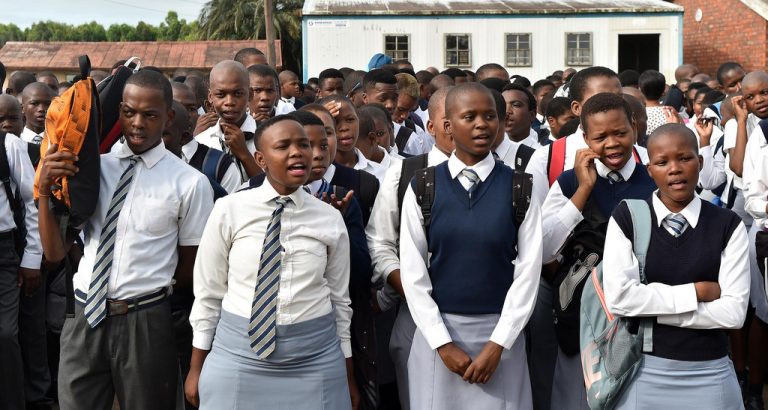
Within four days of reopening of schools on June 8, teaching at 77 Eastern Cape schools was affected – some due to confirmed COVID-19 cases and others as a result of suspected cases.

The provincial education department spokesperson Loyiso Pulumani confirmed this week that 77 schools in the province were affected by COVID-19.  

“As the first week of learning and teaching occurs, we wish to confirm that across the province we have 20 positive cases of COVID-19 within the schooling system,” said Pulumani.  

“We have 15 teachers, three pupils and two non-teaching staff who have contracted COVID-19. We also confirm that we have 48 persons under investigation in the province, according to our statistics.”

Department of Health spokesperson Sizwe Kupelo said this is the first time that the Eastern Cape has experienced such a traumatic and overwhelming public-health emergency.

“I have been in the department for 18 years. In those years we’ve never experienced any outbreaks originating from the Eastern Cape – all cases of cholera or typhoid, for instance, came to the Eastern Cape due to the migration of workers from other provinces like Gauteng and the Western Cape. When we had cholera for the first time, it was imported from Tembisa in Gauteng,” said Kupelo, citing ‘patient zero’ of Mercedes Benz South Africa who travelled from Germany and became the first person to test positive for COVID-19 in the Eastern Cape.  

“After patient zero, more cases from Gauteng and the Western Cape ended up here. Soon after President Cyril Ramaphosa announced the lockdown, a person died in the Western Cape from COVID-19 and was transported to the province in minibus taxi. People then attended the funeral and spread the disease.”

Kupelo said two funerals held in Kwadwesi and Zwide townships in Port Elizabeth in the Nelson Mandela Bay metro became the coronavirus hotspot after hundreds of people attended the funeral, ignored lockdown regulations and contracted the disease.

Out of these two funerals in Port Elizabeth in May, 54 people ended up being infected, including three children.

“A funeral of a prison warden in Majola village, Port St Johns, is another case in point. We ended up with 43 COVID-19 cases from the same funeral – 12 from one family. From the on the floodgates opened,” said Kupelo.

Kupelo said the Eastern Cape has over 1.5 million people who have left the province in search of greener pastures elsewhere in South Africa and their return to the province during the lockdown worsened the spread of the pandemic.

He said law enforcement agencies have also been lacking in the villages during the lockdown.

“There’s never been police or SA National Defence Force in the Eastern Cape villages and this led to a total disregard of social distancing protocols. Now the virus is here and government must do something,” said Kupelo.

“We want to call on law enforcement agencies to deal decisively with anyone in the Eastern Cap found to be in contravention of the National State of Disaster regulations that have been gazetted.” 

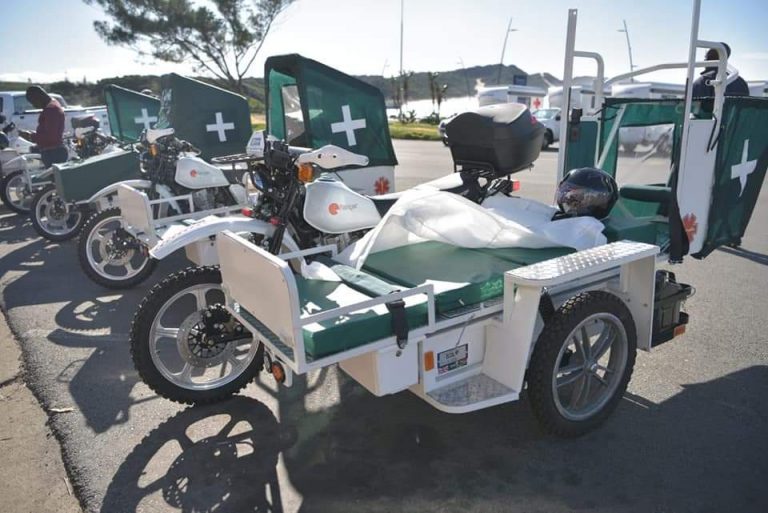
This week, 100 scooters were provided for health workers to do their fieldwork in the province as part of a concerted effort to fight COVID-19 pandemic.

Other measures announced by the Eastern Cape Department of Health include the appointment of unemployed nurses on 12-month contracts, the deployment of health officials to assist with screening motorists and passengers, and the appointment of a medical team, including paramedics and pharmacists to help.

Kupelo said the provincial government’s COVID-19 response has also been hampered by some health workers affiliated to the National Education, Health and Allied Workers’ Union (NEHAWU) refusing to treat COVID-19 patients.

“They complained about all sorts of things including lack of deep cleaning of hospitals. They also started using the non-availability personal protective equipment as an excuse. Lately they are coming to say they’ve not been trained to treat COVID-19. I dispute their claims. I am saying primary health care workers were deployed to villages to do mass screening and testing and they have screened more than 1 million people in the province and tested 30 000. These primary healthcare workers are all not positive. So why use all these things as an excuse,” asked Kupelo.

“Some of our patients died a lonely death because nurses refused to treat them. They died alone because they nurses didn’t want to look after them.”

According to the National Association of School Governing Bodies, most of the schools affected by COVID-19 were in the Buffalo City Metro (BCM), incorporating East London, King William’s Town, the capital Bhisho and surrounding rural settlements.

(Compiled by Inside Education staff)

Ramaphosa: Youth-led Activism Crucial In SA’s Efforts To Eradicate Gender-based Violence

CYRIL RAMAPHOSA

THE WORDS of Frantz Fanon that ‘each generation must discover its mission’ come to mind every time I have an opportunity to speak with young South Africans.
 
No matter where they live and no matter what they do, they each have a burning desire to change the world.
 
While they certainly want to improve their own lives, they also want to achieve a better society and a better world.

They see themselves as agents for fundamental transformation.
 
Throughout history young people have been a driving force for change. In just the last few decades, young people have waged numerous struggles against injustice, from the 1968 student uprising in Paris, to the anti-war movement in the United States in the 1960s, to the anti-colonial struggle in many African and Asian countries, to the fight against apartheid, to the Arab Spring.
 
Most recently, young people have been at the forefront of the #BlackLivesMatter movement that has gained global support in the wake of the killing of George Floyd in the United States.
 
Over the past week, activists around the world have also been demanding the removal of symbols that glorify the barbarity and violence of the slave trade and colonialism.
 
At an Oxford University demonstration last week a protestor carried a placard with the words ‘Rhodes must Fall’, the rallying cry of students in our own country five years ago.
 
Young people across the world have found common cause.

They are tearing down of statues and symbols of racism, demanding the decolonisation of educational curricula, and calling for institutions to address racism and social exclusion.
 
And so, as we pay tribute to the generation of 1976 on this Youth Day, we also salute the youth of post-apartheid South Africa, the worthy inheritors of this noble legacy.
 
The mission of 1976 generation was to dismantle bantu education; that of today’s youth is to take forward the project of national reconciliation and transformation.
 
In time to come it will be said that this year, 2020, marked the start of a new epoch in human history.
 
Not only has coronavirus had a momentous impact on people’s lives and livelihoods, it has also shaken up the global social order.
 
The manner in which the pandemic has taken hold has been a reminder of the interconnectedness of the human race and of the deep inequalities that exist between countries and within countries.
 
The pandemic presents an opportunity to ‘reset’ a world that is characterised by crass materialism, selfishness and self-absorption not just on the part of individuals but whole societies.
 
Young people are telling us that the essential values of integrity, compassion and solidarity must be the hallmarks of the new society that will emerge, and that they are determined to be the champions of this new, better world.
 
In the discussions I have had with young people during this Youth Month, I have said that we should never underestimate the power of an idea, because ideas can and have changed the world. Ideas have spurred human progress and they are what will enable us to chart a new path in the post-coronavirus era. 
 
These young people have turned their ideas into action. They have not let a lack of resources hinder them. They have carved a niche for themselves in a number of sectors from high-tech to environmental sustainability.
 
They are determined to succeed on their own merits, to not depend on handouts, and once they have ‘made it’ to help their peers.
 
Through programmes like the Presidential Youth Employment Initiative, the National Youth Service and many more we want to support this country’s young people to see their ideas through from incubation to opening the doors of their businesses.
 
Youth unemployment is the greatest challenge we face and the coronavirus pandemic has exacerbated an already dire situation.
 
Now more than ever we will look to the innovative and pioneering spirit of our youth to come up with solutions to the unemployment crisis that benefit them, their communities and society.
 
At the same time, I challenge our country’s youth to craft and design programmes that will enable us to meet our developmental goals.
 
In 1961, revolutionary Cuba sent legions of young student volunteers into the mountains and villages to construct schools, teach literacy and train new educators.

It is still held up as one of the most successful literacy campaigns in modern history.
 
Our young people must develop social upliftment initiatives and they must lead them.
 
Just as they took up the struggle for equality in higher education, the considerable energies of our youth must also be brought to bear to fight for equitable access to health care, for the transformation of land ownership and, most importantly, for gender justice.
 
Like all South Africans, I have been deeply disturbed by a surge over the last few days in the murder of young women at the hands of men. These are shocking acts of inhumanity that have no place in our society.
 
Youth-led civic activism, awareness raising and peer counselling are vital tools in our efforts to eradicate gender-based violence from society. At the same time, we must strengthen our justice system, ensuring that perpetrators are brought to book, bail and parole conditions are tightened and that those sentenced to life spend the rest of their lives behind bars.
 
While this needs society-wide action, I call on young men in particular to take up the struggle against gender-based violence. Unless we end the war that is being waged against South African women, the dream of a new society will remain elusive.
 
Those of us who were part of student movements during the apartheid era are often asked what we think of the young people of today.

There is a temptation to retreat into nostalgia about ‘the glory days’ of student politics and youth struggle, never to be replicated.
 
But just as the youth of yesteryear defined their mission, today’s youth have defined theirs.
 
South African youth of 2020 more than meet the high standard set by their predecessors. They are optimistic, resilient and courageous, often in the face of the harshest of circumstances.
 
They are a source of inspiration and hope. Through their actions, they are building a world that is more just, equal, sustainable and at peace.
 
I wish all the young people of South Africa a meaningful and inspiring Youth Day.

Eastern Cape’s Grade R Teacher Asja-Leah Strydom from Despatch Preparatory School Is Simply The Best

CLASSROOM MANAGEMENT

Teacher of the Week
Teacher: Asja-Leah Katia Strydom

School: Despatch Preparatory School, Eastern Cape

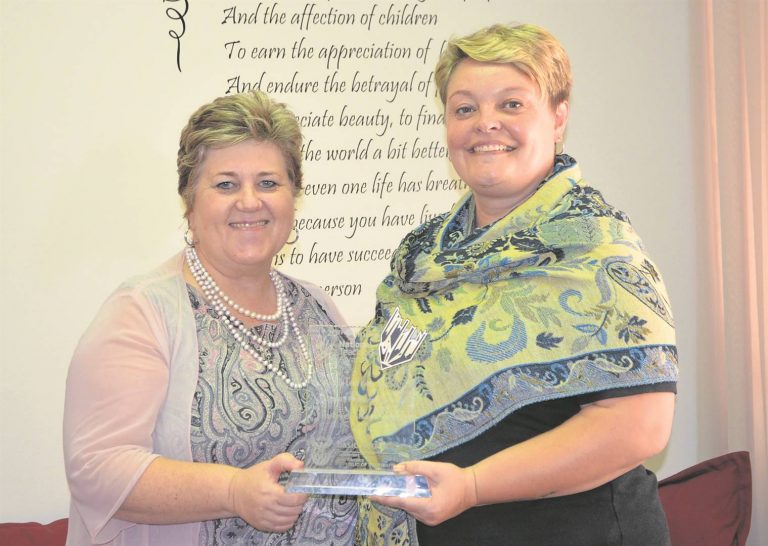
ASJA-LEAH KATIA Strydom was so dedicated to succeed as a teacher she decided to learn isiXhosa, the language spoken by most of her learners. Her biggest challenge until then was navigating the bridge between the language of the majority of her learners and her language.

But it was self-motivation and her teachers from Despatch Preparatory School in the Eastern Cape who inspired her to be a teacher.

She adds that she is motivated by being one of the first people to discover a talent and has the opportunity to develop that potential. Her strong point is her energy and passion for teaching and admits that she is obsessed with the profession.

Her recogni­tion that has culminated in her being a national finalist serves as motivation for those who come from a semi-rural environ­ment such as Despatch Preparatory School.

She said about her National Teachers Award: “This is an enormous honour to be seen and recognised by your country. It was absolutely amazing seeing the extra effort and how many teachers are going like ten thousand more miles. Children’s lives are genuinely changed by these teachers. There are teachers devoting their time to run Grade R classes over weekends to assist children. Others have designed apps and programmes interlinking with a curriculum. The best mathematics teacher in the country pushed herself for three years to get massive sponsorships by literally going from door to door. She did this to get Lego blocks, which she uses to teach high school maths. What was also inspiring, is language teachers taking their learners into the depth of areas where specific languages are spoken, so that the learners can hear the different dialects. It must have been very difficult to judge us, because what one school has another hasn’t, but you all have to bring something to your community.”

(Compiled by Inside Education staff)
COVID-19: Doctors, Parents, Teachers Caution Federal Government of Nigeria Against Opening of Schools

AS PRESSURE MOUNTS on the Federal Government to reopen schools across the country in the wake of the 2nd phase relaxation of the COVID-10 restrictions on socio-economic activities, critical stakeholders in the health and education sectors have called on the Federal and state governments to exercise restraint in reopening schools.

In May, the Presidential Task Force, PTF, on COVID-19 had recommended that states be allowed to decide on the reopening of schools, has not fixed issued for resumption and reopening of schools across the country. Calling for caution, the Nigeria Medical Association, NMA, and the Association of Medical Laboratory Scientists of Nigeria, ALMSN, warned against any plan to rush to reopen schools.

In a similar response, the National Parent Teacher Association of Nigeria, NAPTAN, and the Nigeria Union of Teachers, NUT, said a critical appraisal of the situation must be done to arrive at a decision that would not lead to regret later, even as the It is better to lose a session than lose lives — Prof Innocent Ujah, National President, NMA On his own part, the President of the Nigeria Medical Association, NMA, Prof Innocent Ujah said the coast was not yet clear to reopen the schools.

“We may not have to rush; if it is left to me I would say we should have waited for the next quarter and see what will happens. It is better to lose a session than losing our lives. It does not matter whether we are losing a session rather than escalating the community transmission and die of COVID 19. Nobody has the answer when it is rising or the trend. Ujah, who frowned on the poor compliance of the public with the relaxation guidelines, argued that it is better to lose a session than lose lives.”

 “I think it is better to be alive than dying or be infected. I think we should be cautious. If the coast is not clear because we don’t even know the directions that we are going, the coronavirus cases are increasing. Fatality is increasing even though it is about is still under 3 percent but any one life lost matters. “It is difficult to say what is on ground to make the state government think of telling students to go back to school. Have they gotten the emergency protocols including the wearing of face masks, hand washing, and use of sanitisers and social distancing?”

“Those are the basic protocols that they need. We don’t even know the capacity of the classrooms. Are they congested? Will they just sit down and take lectures and go home and not go for sports? If they go home and they are infected will they not infect their family members? There so many questions unanswered so we need to be cautious,” he asserted.

Most appropriate time to open schools is September — Dr Casmir Ifeanyi, National Publicity Secretary, AMLSN In the views of the National Publicity Secretary, Association of Medical Laboratory Scientists of Nigeria, AMLSN, Dr Casmir Ifeanyi who expressed worry about Nigerians compliance to the lockdown protocols, said it is not safe to open schools now because Nigeria has not run enough tests for a reasonable time to determine the curve of the infection.

“If I am a part of the technocrats driving this intervention, our schools should have remained closed until sometime in September. That is a more effective thing to do in this circumstance. That way, we would have had enough time to interpret this spike with epidemiological parameters to decide the prevalence of the disease and where we are in the pandemic in Nigeria. “There are a lot of uncertainties on where we are in Nigeria and the disease morbidity in-country. Unfortunately, people are in a hurry and I have always advocated we make haste slowly. That is not happening and that is worrisome.”

Ifeanyi who expressed worry about the low level of compliance to the lockdown protocols by Nigerian adults said: “We are not very much worried by the increase in numbers as compared to our worry that most adults have thrown caution to the wind. But we are worried about the compliance rate with non-pharmaceutical interventions like the use of nose masks to enforce respiratory protocol. “What is the compliance rate for hand hygiene, and the use of hand sanitisers intermittently? What also is the physical distancing in gatherings? Are we still complying with not more than 20 persons or are we still complying to the second phase of the lockdown which stipulates that those offices should not exceed 75 per cent of capacity? These are areas where I am worried.”

Ifeanyi said that the government should be fair and firm, even as he cited what happened in South Korea and Brazil where schools were hurriedly opened and shut almost immediately due to the rate of infection.

“These are countries were compliance rates are better than, as it is in Nigeria, where infrastructure is even a lot better than we have in Nigeria, even some of those schools that were opened in those climes have some sort of effective screening going on including laboratory-based screening to make sure that if they have asymptomatic cases or very new active cases they could be readily be detected and taken out of the midst of the students but that cannot happen in Nigeria and that is not part of the protocols in Nigeria and it is not anywhere near it.”

Reacting on the position of the Cross River State government, Ifeanyi who faulted the government provision of facial shield for students said: “I like the Governor for other things he is doing but I am worried that he is in a hurry to open schools. Now he had said he is going to produce masks for life to continue in Cross River and Calabar. He has not made available the projected number of local fabric-based masks he promised, now he is dabbling into making available face shields for students and pupils to return to school.”

“I am also certain that he will not meet that expectation because those are lofty ideas but before these ideas, we need to evaluate compliance rate.”

“I tried getting my ward to wear a face mask for 30 minutes but the young lad could not stay with it and you expect he will go to school and stay with it for eight hours? These are issues we have to avail our minds.”

In a telephone call on Sunday, the National President, NAPTAN, Haruna Danjuma, told Vanguard that the Association has entered into discussion with the Presidential Task Force in COVID-19 on the matter.

“Two weeks ago, we had a meeting with the committee and a number of issues and proposals were raised. The committee put forward some conditions that must be met before schools will be reopened. This is because we are not talking only about public schools, private schools are also involved and we cannot reopen one and leave the other.

“The meeting was not conclusive as there were some issues to be thrashed out and we are going to meet with them soon. However, one thing is important, the decision to be taken must consider the safety and health of all persons in the education sector,” Danjuma stated.

Health factor takes pride of place — Adesina Adedoyin, Lagos State Chairman, NUT Also reacting to the development, the Lagos State Chairman of the NUT, Otunba Adesina Adedoyin, argued that the health factor must take pride of place in arriving at whatever decision.

“As teachers, we want to go back to our duty posts but safety first. When we talk about safety and the health of stakeholders, we are not just talking about the pupils and students, but also about teachers and other workers in the sector. It is only the living that can learn, teach or sponsor the education of another person.”

“I understand the plight of our colleagues in private schools, most of whom are not paid salaries during this period, but that is not to say we should rush to do things we will later regret. Let us aggregate the opinions of experts and if they say it is safe for all to reopen schools, there is no problem with that,” he noted.

Adedoyin said although those suggesting adoption of virtual teaching had a point, it could never replace teacher-student physical contact.

He also opposed the call that virtual teaching being adopted by some private schools should be taken to have replaced the third term they ought to spend in school.

The National Association of Proprietors of Private Schools, NAPPS, had earlier issued its proposals for the reopening of schools.

According to the National President, NAPPS, Chief Yomi Otubela, a phased reopening was suggested by the Association even as it canvassed that pupils in primary six, students in Junior Secondary School 3 and students in Senior Secondary School 3 should be allowed to resume and sit for their final examinations before others would join.

A circular from the Federal Ministry of Education granted an approval for the closure of all school for a period of one month commencing from Monday, 23rd March, 2020 to prevent the spread of the coronavirus.

Each state in Nigeria has, however, contextualised this circular.

According to UNESCO, almost 40 million learners have been affected by the nationwide school closures in Nigeria, of which over 91 per cent are primary and secondary school learners.

In a short time, COVID-19 has disrupted the landscape of learning by limiting how students can access learning across the country.

(Source: VANGUARD/Nigeria)

STEM Training: A Call to Support Africa’s Health and Science Workforce

LYDIAH KEMUNTO BOSIRE

AS INDUSTRIALIZED economies start to see Covid-19 cases decline, the threat the coronavirus poses to much of Africa will soon become front and center. This is certainly not the first time a disease or virus has drawn attention to the vulnerabilities of health systems in the global south. However, the truly worldwide nature of the Covid-19 pandemic offers an opportunity to directly compare response capacities across all countries, and makes a strong case for massive investments in critical segments of human capital across Africa.


As an underprepared world grapples with the crisis, one thing is clear: A global pandemic requires a global response. Scientists in Geneva and Atlanta must work seamlessly with health officials in Gaborone and Addis Ababa, and they all need highly skilled experts running their responses. For this to happen, investments in heath and STEM training must transcend borders. Investing in human capital in African countries would increase local capacity to respond to crises and add to the worldwide talent pool, which would benefit all nations.

Africa’s overstretched health-care systems demonstrate the clear need for more STEM and health-care graduates and workers. The continent, for example, carries nearly a quarter of global disease burden, yet is home to only about 3% of the world’s health-care workers. In a country like Zambia, where there is one doctor for every 10,000 people, even a modest uptick in the number of domestically trained physicians would be a significant improvement.

Similarly, the Africa CDC estimates that the continent will need 15 million test kits for Covid-19 in the next three months alone, yet there are not enough trained laboratory personnel to process that many tests. Investing in African STEM and heath-care education would enhance regional capacity to respond to the current crisis and better prepare the region and the world for future pandemics.

Of course, in the African context, human capital is one input in a system with many other important variables. Some African countries have fewer intensive-care beds than you’d find in one Manhattan hospital. Once a Covid-19 vaccine is developed, distributing it might be hindered by problems with access to power and limits to cold supply chain logistics. However, a strong health-care and STEM workforce.

Industrialized countries, which already draw on global STEM talent to staff their health system, would also benefit from such an expanded investment. Data show that 54% of STEM degrees issued at a master’s-degree level in the U.S. are to foreign-born students. Approximately 20% of health-care workers in the U.S. are foreign-born, and some 12% of those are from African countries. These professionals are so critical that earlier in the pandemic, Boston-area hospitals called on the State Department to resume processing visas for international health-care workers. Simply put, the U.S. depends on a steady stream of health and STEM talent from low-income countries. Directing resources to science and technology studies in African countries — effectively expanding quality domestic education there — would be a welcome complement to this mobility to the U.S. and elsewhere.

While policymakers in low-income countries, understandably, see this global mobility as “brain drain,” Covid-19 has been a strong reminder that science is borderless, and that the world needs more “brain circulation,” not less. In efforts to develop a vaccine, U.S. companies are working in partnership with German firms, and Indian researchers are partnering with British researchers. In testing, a British company is producing a $1 at-home Covid-19 test in Dakar, Senegal, in partnership with a Senegalese subsidiary of a French research institute.

This initiative will produce up to 4 million tests a year in Dakar. Increasing the number of globally trained and connected Africans in STEM and health would encourage similar cross-border collaborations, dramatically improving the capacity of ountries and bringing diversity to the global response. More broadly, investments in STEM human capital throughout Africa can build the continent’s manufacturing sector while expanding its capacity to contribute to resilience in global supply chains.

With the right industrial engineers, biotech investors and material scientists in place, there can be a future where African countries supply critical health products such as personal protective equipment and ventilators to the region and the world.

This is an appeal to bilateral and multilateral donors, philanthropists, impact investors and corporations to be intentional about human capital, which requires collaborating and unlocking private capital at the intersection of the silos of education, finance and health, and possibly financial inclusion and livelihoods. Innovations on pay-for-success models could, for example, incentivize a Johns Hopkins University graduate from Zambia to return to Lusaka, while respecting her autonomy and avoiding paternalism.

Success is when Zambia-focused donor funds don’t have to choose between training 500 community health workers and this one expert out of Johns Hopkins. Countries need both.


There is no shortage of places where resources should be directed. Former Liberian president Ellen Johnson Sirleaf has the mandate as the goodwill ambassador for the World Health Organization on health workforce issues. Across the African continent, STEM and health-care students are typically at the very top of their cohort, and the universities that train them, including Ghana’s Ashesi University and Ivory Coast’s International University of Grand-Bassam, are constrained by financing. The African Academy of Sciences could use more resources. So too could many global universities keen to enroll qualified African STEM students, but struggling with the dilemma of balancing their needs for revenue with the imperative of diversity.

The Covid-19 pandemic can be the watershed moment for how collaboration among public and private stakeholders can put countries on track to recovery. In a crisis where one country’s preparedness and response directly affect health outcomes in another, we must be concerned with each other’s health-care systems. Investing in health-care and STEM human capital in Africa would not only directly benefit countries on the continent, but also add to the global capacity to fight the next pandemic.

ABOUT THE AUTHOR|

(Lydiah Kemunto Bosire is the founder and chief executive officer of 8B Education Investments, a financial technology company specializing in financing, connecting and mentoring African students in leading global universities. She was formerly at the United Nations and the World Bank)

(Bloomberg Quint)

Madibaz Prop Achieves Rugby And Academic Goals

0

COETZEE GOUWS

MADIBAZ RUGBY prop Tembelihle Yase has demonstrated how important hard work and a good support base are by excelling on the field and in the lecture room at Nelson Mandela University.

However, this was not achieved without some worrying times when his funding dried up after a contract with Eastern Province Rugby was terminated in 2015.

The 25-year-old graduate, who is doing his master’s in marketing, was deeply concerned about his future at that time.

“Fortunately, my mother and friends gave me massive support, both emotionally and financially,” he said.

The Nelson Mandela University marketing graduate has withstood several challenges to succeed at academics and on the sports field during his varsity career.

“It was a really challenging period, but I was awarded NSFAS [National Student Financial Aid Scheme] funding in 2016 and was able to come through thanks to the backing of my family and friends.”

Not surprisingly, he said ubuntu, a South African term that means showing humanity to others, was an important lesson he had learnt.

“In addition, hard work and staying true to yourself are two of the other biggest lessons for me at varsity,” said Yase, who matriculated from Cambridge High in East London in 2013.

After doing some research at high school, the prop said his personality and the marks he achieved in matric suggested he study marketing at a tertiary level.

His academic efforts saw him graduate with a marketing diploma in 2016, a BTech in marketing in 2017 and a BCom in finance and marketing in 2019.

This led to his master’s course, which he began last year.

Besides the support he received on a personal front, Yase acknowledged the high level of mentoring provided at Nelson Mandela University, both in the lecture room and on the sports field.

He was an important player for the first team this year as they topped the combined log from the 2019 and 2020 Varsity Shield seasons to gain promotion to the top-flight Varsity Cup next year.

Yase insists he is no superstar, just someone who has worked hard to manage the demands of completing his academic commitments and fulfilling his dreams on the rugby field.

“The key to my balance in academics and sports is humility,” explained the prop.

“I understand that anything you love can be taken away from you suddenly, just like that. So I always apply myself to give my absolute best effort academically and in rugby.”

(Source: YourSport)

OPINION| Eric Molobi, George Floyd and the Fourth Industrial Revolution

TSHILIDZI MARWALA

THE FUNDAMENTAL need for social and physical distancing during Covid-19 has made it imperative that we hasten our adoption of the 4IR. Perhaps you may have noticed the barrage of black blocks posted on social media sites such as Facebook, Twitter and Instagram last week.

In solidarity with the Black Lives Matter movement, which has seen a re-emergence of protests despite the Covid-19 pandemic on the back of George Floyd’s death, #blackoutTuesday trended. While the sea of black blocks was a powerful statement in itself, it was also an essential lesson in algorithms.

Algorithms are set of instructions that allow a computer to operate.

The Black Lives Matter hashtag has mostly been used as an educational tool, as a platform for activists and as a vehicle for change.

Yet, as blackout Tuesday trended, many used the Black Lives Matter hashtag, which in effect clogged up the posts one could access. It was in effect, a silencing in itself.

The algorithms on social media sites dictate the order in which you see posts as you scroll through your feed, which is based on specific signals. Posts are prioritised and given more visibility based on a range of factors, including the time spent engaged with the poster, the number of followers and the kind of hashtags used.

Blackout Tuesday served as a lesson in the Fourth Industrial Revolution (4IR). While a powerful tool for messaging, for a movement, we must also appreciate how precarious Black Tuesday can be.

Another social media platform, Tik Tok, which has been increasingly popular as countries across the world have had to go into lockdown, came under fire in the last week for effectively silencing #blacklivesmatter by not showing any posts under the hashtag.

The company responded by saying it was a technological glitch that had impacted the hashtag views on a number of words.

This is perhaps, the most fitting instance of the 4IR in action as we honour Eric Molobi, whose birthday was this past Friday (5 June 2020).

It was after matric when he began working as an electronic technician, and was the age of many of our students that he had his first encounter with racial discrimination that led to his politicisation. In a team of 18 people, Molobi was the only black technician, and often the foreman would order him to disappear for a day to elude being seen by a visiting government inspector.

It was only when he called at the local trade union offices that Molobi discovered it was illegal to employ black people in a skilled capacity.

This spurred him to action. At 31, he was jailed on Robben Island for his political activities and imprisoned for six years. He used this time to study and obtained a BA degree through UNISA.

It is here that his narrative changed. He was released in 1980 and was later employed on the Education Aid Programme of the South African Council of Churches under Reverend Beyers Naudé.

As unrest took hold of the 1980s, Eric Molobi played a pivotal role in the political landscape and was instrumental in forming the United Democratic Front in 1983.

His role as a revolutionary in the sphere of education also evolved. He became the national coordinator of the National Education Crisis Committee (NECC), an alliance of high school and university student, youth and labour movements, which had been created as a response to the crisis in black schools.

It was here that the vision for education policy after democracy materialised. In the post-apartheid landscape, he emphasised educational and community development.

Similarly, we are now watching our own narrative change. 4IR is changing all aspects of our lives. Advancements in artificial intelligence (AI), the internet of things, blockchain, biotechnology, material science and robotics are driving the 4IR. To understand this shift, it is imperative to trace back the previous three industrial revolutions.

The first industrial revolution mechanised production using water and steam power, replacing cottage industries and manual labour. The second industrial revolution saw the introduction of electricity and mass production and changed the scale and speed of manufacturing significantly.

The third industrial revolution saw increasingly optimised and automated production lines through electronics and electricity. With electricity, each machine could be powered individually with its own electric motor.

Similar to the industrial revolutions that have gone before it, the 4IR is poised to change every facet of society from the way we interact, to how our industries operate to the way we consume. It is fundamentally a paradigm shift.

The 4IR is a meeting of the physical, digital and biological spheres through these technologies.

Some of our leaders, such as Eric Molobi, sought ways of improving themselves and searched for ways of studying under dire conditions while they served their sentences.

You may ask why I draw parallels with this. The answer is that at a time when the nation has faced a lockdown, unlike any other experience we could have imagined, students have been required to continue learning online.

And while this is the 4IR personified, we should pause and ask ourselves, what valuable lessons can we take from our “confinement”, which, of course, is not comparable to incarceration.

I have wondered what learnings were there between the four walls, especially for our political prisoners.

Would Eric Molobi have found himself as a hashtag and similarly silenced, deleted or an accidental victim of algorithms, which sometimes seek to hide inconvenient truths?

While our world is dominated in all spheres by algorithms, I have just illustrated that these can be manipulated and are not always neutral. Yet, there are many instances where the technologies of the 4IR can add immense value to us.

The lockdown, necessitated by the coronavirus pandemic, has brought this to the fore. Arguably, the fundamental need for social and physical distance has made it imperative that we hasten our adoption of the 4IR.

As we’ve seen in recent months, perhaps in a more extreme case, is that the 4IR will permeate all aspects of our lives.

The call to action in the face of Floyd’s death, for instance, has perhaps been the most amplified instance we have ever seen in the Black Lives Matter movement.

It is worth noting that in our country, we have not seen a similar outcry for deaths under similar circumstances such as that of Collins Khosa, Petrus Miggels and Sibusiso Amos.

Eric Molobi’s school of thought rings more true than ever now. If one examines the Floyd phenomenon, we have to ask ourselves what has triggered such a response. Why is this so? With many confined with little else but technology, there has been increased interaction with other users of social media, which in itself has served as a form of education.

Many who have not been mobilised in the past have taken notice now. Of course, there is a dissonance between a social media activist and a real one. However, the uprising we see could be due to the new normal we see where technology, and particularly the technologies of the 4IR permeate into every aspect of our lives.

But perhaps, this is now the most crucial time to take notice of the pitfalls of these technologies.

AI’s function in simple terms is to mimic human thinking. Yet, this means it also mimics human bias. In 2018, Amazon had to scrap an AI recruiting tool that showed bias against women. The device reviewed resumés with the aim of mechanising the search for top talent, but by 2015, the company realised bias that has been built into the system, based on the dominance of men in the tech industry.

The system taught itself that male candidates were preferable, and thus penalised resumés that included the word ‘women’ or ‘female’. Similarly, face-recognition algorithms do not work very well for African faces.

Police in the United States use Idemia, which scan faces using algorithms, yet the results from the National Institute of Standards and Technology have indicated that two of Idemia’s algorithms were pointedly more likely to confuse black women’s faces than white women’s faces, or black or white men.

Where Idemia’s algorithms erroneously matched the faces of white women at an accuracy of one in 10 000, it incorrectly matched black women’s faces about once in 1 000 – so ten times more frequently. One of the reasons for this is because of the limitations of the African face libraries.

Another is the suboptimal data collection for African faces, which are different from Asian and European faces. A third reason is that we have not designed AI algorithms for face recognition from the African perspective, but rather from the European and Asian perspectives.

This is not to say that we should eschew any mention of the 4IR; instead, there is a need to identify where the gaps lie and how we can address these challenges. The corona world we find ourselves in has served as somewhat of a yardstick for our preparedness for the 4IR.

It has revealed where we can adapt, but it has also revealed the drawbacks of the 4IR. I would argue that this is perhaps one of the most crucial arguments for adapting the 4IR in our country and our own communities.

We are hardly likely to ever be able to address these challenges if we only rely on the big players in China or the United States, for example.

In adapting to the 4IR, we are creating platforms, regulation and systems unique to our own circumstances. Of course, this calls for rational thinking leaders and citizens guided by the principle of the national or public good.

In this era of bias entrenched in our technologies, with fake news rampant to mislead and a moral compass guided by social media, it is more imperative than ever that we have leaders of Eric Molobi’s calibre. Far from being denied information in the 4IR, we are overwhelmed by it, and often it becomes difficult to discern what is true and what is not.

As an educationist, as someone who shaped policy after democracy, as someone who wore many hats as many are now urged, Eric Molobi’s legacy serves as an important reminder that we must critically interrogate everything we are faced with to extract what is true and just.

ABOUT THE AUTHOR|

Professor Tshilidzi Marwala is the Vice-Chancellor and Principal of the University of Johannesburg.  He recently penned an opinion article, published in Voices 360 on 11 June 2020.

Basic Education Taken To Court Over Failure To Feed Vulnerable School Children

EQUAL EDUCATION, SECTION 27 and the school governing bodies of two Limpopo schools have launched an urgent court application against the Department of Basic Education (DBE) and provincial education departments.

The EE and the SGBs are challenging the DBE’s failure to roll out the National Schools Nutrition Programme to all learners in all grades.

The government’s feeding scheme normally provides meals to over 9 million learners every day, but was halted when schools closed on March 18 due to COVID-19, jeopardizing the food security of these learners and exacerbating the severe hardship experienced within their households.

EE and the SGBs, represented by the Equal Education Law Centre (EELC) and SECTION27, have filed legal papers at the North Gauteng High Court.

The NGOs argue that the failure of the DBE and provincial education departments to roll out the school nutrition programme to all qualifying learners – or even to produce a plan or programme for doing so – is a regressive measure that violates learners’ rights to basic nutrition, basic education and equality. 

“Throughout the time that schools have been closed, a number of child rights and education justice organisations, including SECTION27, EELC and EE, have repeatedly engaged with the DBE urging them to reinstate the NSNP for all learners,” the NGOs said in a statement.  

“The closure of the NSNP impacts on not only the health and education of learners, but has knock-on effects on entire families – in a context of heightened unemployment and loss of income due to the nationwide lockdown, many families are struggling to put food on the table. These families urgently require the NSNP to be reinstated in order to meet their children’s basic nutritional needs and ensure that they are able to buy other desperately needed necessities in the home.”

 SECTION27 and EE have received gravely concerning testimonies from learners, caregivers, educators and SGB members about the dire hardship faced by children across the country in the absence of the NSNP.

The following statements demonstrate the severity of suffering:

 “I had to get a job doing gardening to earn some money to buy food. My sister and I do not have enough food at home. Without the meals from school, I could not concentrate on school work because I was hungry.” – Matric learner, Limpopo

 The government must also think about those learners at home. I feel bad because I am receiving meals at school while my younger sister is still struggling at home. It is not right.” – Matric Equaliser (learner member of EE), Gauteng

“I have been extremely stressed during this period but because I am a mother, I have to make a plan to make sure my family does not go hungry. I have had to resort to taking loans from a loan shark in order to make sure my family survives. The weight on my shoulders is heavy.” – Single mother of five, Limpopo

It is “unfair that some children will be able to benefit and others will not be able to” since “parents are no longer working and need the feeding scheme now more than ever”. – Grade 10 Equaliser (learner member of EE), Gauteng

(Compiled by Inside Education staff)

World’s Poorest Children Are Missing Out On Vital Early Education, Campaigners Warn

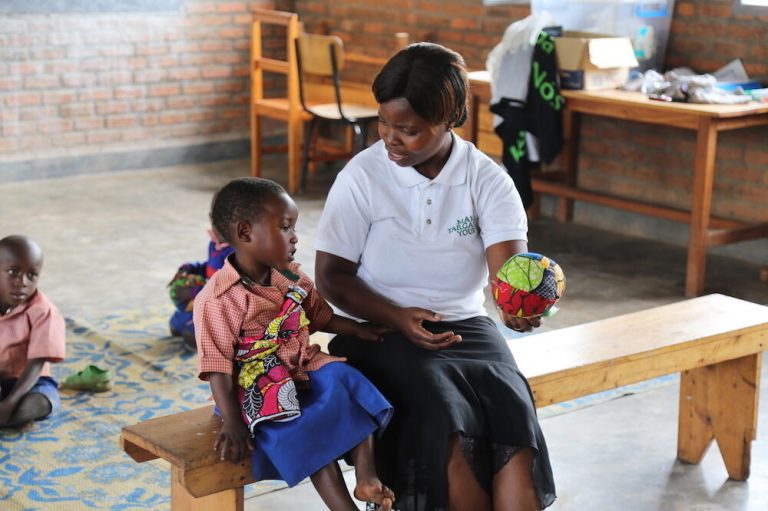
SOME of the world’s poorest children are missing out on vital education in the first few years of their lives because of a woeful lack of investment, a global children’s charity warns today.

A commitment to devote just 10% of education budgets to the early years would reap quick dividends, placing millions more children around the world into pre-primary education, according to Theirworld.

Only one in four children aged three to five attend some form of pre-school education in sub-Saharan, West and Central Africa, falling to less than 2% for the poorest children in Cameroon, the Central African Republic and the Democratic Republic of Congo.

This compares to 94% in the UK or other rich countries.

Research shows that 90% of a child’s brain development takes place before a child turns five, yet education for the under-fives is chronically underfunded, especially in the world’s poorest countries.

In a typical year, governments spend 6.6% of their education budgets on early childhood education, falling to 3% in poorer regions. Countries that provide international aid for education contribute less than one per cent of education aid to pre-primary education.

The Global Partnership for Education (GPE), one of the major funds for education in lower-income countries, held a board meeting as it builds its strategy through 2025.

The decisions made this year will determine how billions of dollars in education financing will be spent.

Theirworld is urging GPE to recognize the 10% target for early childhood education in its new funding strategy. It also wants all national sector plans to include early education.

Hundreds of people from more than 75 countries across the globe have added their name to the charity’s campaign to get the GPE to increase investment in early years education.

Justin van Fleet, President of Theirworld, said:“Every child has a right to a quality and inclusive education, starting with good quality preschools, playgroups or nurseries. So it is a tragedy that around the world 175 million children are denied this right because of a chronic lack of funding in early years education.”

“Countries have already agreed to the Sustainable Development Goals so it’s important to acknowledge the costs to achieve them. It’s time for governments, donors and international agencies to prioritise quality early childhood education – and we’re calling for at least 10% of education budgets to be dedicated to the education of young children. The youngest children are just learning to speak – so we need to speak up for them. And the GPE board members have a unique opportunity to lead on this issue.”

(Source: TheirWorld)

Makhura: COVID-19 Pandemic Gaining Momentum in Gauteng

NYAKALLO TEFU

PREMIER David Makhura says he is deeply concerned that the first wave of the coronavirus is still infecting masses of people in Gauteng, with at least 758 new cases recorded per day.

Makhura was speaking during a weekly media update on COVID-19 pandemic following a meeting of the Gauteng Provincial Command Council this week.

 “Over the past seven days, the number of new cases has doubled. Hospital admissions are increasing. Twenty more people have succumbed to COVID-19. The pandemic is gaining momentum. We must face this reality head-on and mobilise all resources and energy to save lives,” said Makhura.

The province has over 7,000 COVID-19 infections with 57 deaths.

Makhura said so far 7.4 million people have been screened in the province while 338 211 have been tested.

He said he was particularly concerned by the infection rate in the City of Johannesburg and the City of Tshwane metros.  

City of Johannesburg is currently on 3 906 confirmed cases while City of Tshwane has recorded 1 071 cases.

Makhura said since Level 3 lockdown, the number of trauma cases have also increased, adding that as the flu season approaches, the number of people needing healthcare will increase dramatically.

“The province has embarked on a massive flu immunisation programme targeting pregnant women, the elderly, those with chronic illnesses and health workers”, said Makhura.

Since March, 335 Gauteng public servants have tested positive for coronavirus after the province tested 172 113 workers, including public health workers and school teachers.

“Like all other patients, affected staff and their family members are receiving care and treatment in line with the World Health Organization (WHO) protocols”, said Makhura.

Makhura said he was looking forward to a meeting with Health Minister Zweli Mkhize next week to ask for reinforcements and further support in order to strengthen response. 

(Compiled by Inside Education staff)