Home Blog Page 405

What Steps Should Morocco Take to Lead Africa in Health Technology?

“AFRICAN TECH” is no longer a myth.Two-hundred-thirty-four African start-ups raised $2 billion in 2019 across all stages, from seed to growth. There has thus been a real vertical acceleration of African Tech.

But the acceleration is also horizontal, and extends beyond the three traditional champions (Nigeria, Kenya, South Africa), with Egypt also becoming a major player. In 2019, 85% of funds ($1.72 billion) went to the three destinations, and another $211 million to Egypt.

Yet, the dynamics of start-up creation in Morocco are still weak compared to the aforementioned geographies.

The total financing of Moroccan companies active in digital technology, all sectors combined, over 2019 reached $7 million, compared to $3.9 million in 2017.

This contrast can be explained by the lack of support and financing for Moroccan start-ups, especially in their seed phase.

Some winning strategies for Morocco over the next three to five years would be to focus on new high-growth technologies that address medium-income markets in Africa and to experiment with new methods to address unmet social needs such as those in the health sector. Moreover, there is a particular value in developing sectors where growth contributes directly to job creation.

Build the foundations of Morocco’s leadership in health technology

The health technology sector is growing and mobilizing significant financial capital.

According to the Partech Analysis 2020, Africa’s health technology sector attracted a total of $189 million in 2019, a 969% increase compared to 2018. This represents 9.3% of the total funding dedicated to start-ups, all sectors combined, operating in Africa.

For Morocco to become the African leader in health technology, it would have to increase the share of research and development (R&D) in Gross Domestic Product (GDP) and structure and/or consolidate its three ecosystems: Technological (research and development), entrepreneurial, and financial (venture capital market in particular).

It is essential to federate the three innovation ecosystems and create synergy between their respective actions. For instance, Morocco could strengthen synergy between academia (and research centers) and the entrepreneurial ecosystem and speed up access to finance.

Increase R&D investments and focus on biotechnology, information technology, and science

African countries allocate less than 1% of their respective gross domestic product to research and development. Morocco is no exception. South Africa and Kenya, who lead the continent in terms of R&D to GDP ratio, only dedicate 0.8%, according to World Bank Data. In comparison, the average of R&D share of GDP in OECD countries is 2.4%.

In the biomedical field in particular, research in data processing and artificial intelligence is relatively inexpensive.

Moreover, time to market technological output of this research is relatively short.

This underlines the importance of widening the footprint of information technology and sciences within national universities in order to increase the pool of talents specializing in such advanced technologies.

In the biomedical area, university research centers are compatible with the insertion of incubators. The main mission of incubators is to examine new ideas by researcher-entrepreneurs in order to help transform the best proposals with added value for the community into business projects (and/or start-ups).

On the other hand, accelerators, which can be private or public, are involved at a later stage of the development process and are responsible for helping emerging companies raise funds to accelerate growth and “exit.”

This public-private partnership strategy requires an increase in the budget allocated to research and a cultural shift within universities and research centers, placing innovation and entrepreneurship at the heart of the ecosystem.

Nurture and sustain the entrepreneurial ecosystem

Entrepreneurship is recognized as an efficient vehicle for innovation and economic development. However, sustaining the entrepreneurial ecosystem remains a major challenge in most developing countries.

The vitality of such an ecosystem rests on fundamental foundations: Process simplification (e.g. creation of a moral entity), risk mitigation (for both the business and entrepreneur), and business growth optimization. These foundations rest on four pillars: Legislation, taxation, finance, and emulation and mentoring.

From a legal standpoint, simplification of regulations and processes and cost-minimization are paramount to encourage the spark of new businesses.

With regard to taxation, emerging companies should benefit from a simple, transparent, and advantageous taxation system with low wage costs and reduced and fixed income tax rates. These would provide start-ups with greater freedom in capital management, increase visibility over expenses, and therefore enable better budget planning.

Nn optimized and transparent taxation system would initially limit the need for capital. Nevertheless, it is vital for entrepreneurs to be able to benefit from seed investment programs from either the public or private sectors (banks or venture capital companies) or both.

Finally, fostering exchange and collaboration between peers, providing mentorship, and offering supporting systems with shared resources at lower costs (e.g. co-working spaces, calculation servers, training, and access to legal and financial accounting services) are all in-kind benefits which would help sustain the entrepreneurial ecosystem and foster its performance.

Develop the capital-risk market

The venture capital market is less developed in Morocco than in South Africa, sub-Saharan Africa, or Egypt. This translates into longer wait times for project financing for entrepreneurs and sometimes delays unfortunately lead projects into the “valley of death.”

The question is: How can Morocco mitigate this morbid phenomenon and shorten timelines for access to financial capital? How can Morocco enhance the pool of companies at the seed stage? Wouldn’t the secret lie in a strategy of strong profitability for those investors who chose to fund emerging companies at a very early stage (seed, A-series)?

The first step would be to create an environment conducive to attracting capital through regulations’ reforms or tax incentives favoring venture capital investment.

For instance, part of the available national capital (institutional and private) should be redirected towards biotechnology and health technology sectors, particularly those based on machine learning and artificial intelligence. In order to lift barriers to international investment, thresholds for exemptions or minimizations should be revisited in order to avoid double taxation.

Developing the venture capital market fuels economic growth and promotes job creation. It is estimated that just under 40% of new jobs created in the United States in the last 40 years were created by venture capital-backed firms. 

US and China as examples

In China, where a venture capital market has been developing over the past 15 years, it is estimated that privately financed companies specializing in this type of investment have created 10 million new jobs. In the United States, venture capital investments totalled $72 billion for more than 5,000 operations in 2018. In China, these amounted to $71 billion for more than 2,800 operations in 2018, and in 2018 in Europe, $18 billion was invested in 2,500 operations.

Beyond the absolute number of transactions closed per year, the key performance indicators should be measured as a percentage of seed or “A” series transactions because that is the biggest gap in the Moroccan market.

By contrast, investment in Africa at the seed stage and A series is becoming well established. This involved 206 transactions, a 57% year-on-year increase, and a total of $620 million, a 116% year-on-year increase in 2019, according to the Partech 2020 report.

Will Morocco succeed in capturing its fair share of this growth in seed and A-series investments?

Overall, there are several reasons to believe that the impact of venture capital will become more significant. One example is the growth in technology financing posted by Moroccan companies between 2017 and 2019, increased from  $3.9 million in 2017 to $7 million in 2019. One thing is certain: technology hubs, seed funds, business angels, and accelerators will remain the key drivers of such a transformative economic model in the foreseen future.

Conclusion

The success of these strategies is closely linked to the following three conditions: the magnitude of budget allocated to research and development, human capital investment and countrywide digital infrastructure, and the performance of the venture capital market.

Morocco should seize the opportunity offered by Africa’s dynamic technology market and the worldwide venture capital plebiscite for African solutions to innovate and develop Moroccan technology services, for both the national and international markets.

The kingdom should also capitalize on the common linguistic traits it shares with Middle Eastern countries to open new emerging markets for its future technology products and to attract regional investors.

ABOUT THE AUTHORS|

Dr. Kaouthar Lbiati is a physician, specialist in international health policy (London School of Economics Alumni), Advisor to the Moroccan Institute of Strategic Intelligence (IMIS) and member of the strategic board of the American pharmaceutical company “Cytovia Therapeutics” specialized in cell therapies and cancer.

Dr. Tariq Daouda holds a Bachelor’s degree in Mathematics and Computer Science, a Master’s degree in Machine Learning from the Université de Montréal and a PhD in Bioinformatics from the Université de Montréal. His doctoral thesis focused on the application of AI to the study of the adaptive immune system. Dr. Daouda is currently a postdoctoral researcher at Harvard Medical School.

Mind Sports South Africa Gives Backing To Esports Schools Partnership

MIND SPORTS South Africa (MSSA) has backed the Memorandum of Understanding (MoU) signed this month between the International Esports Federation (IESF) and the International School Sport Federation (ISF).

The deal aims to promote healthy living among high school students who play esports games.

A new IESF initiative entitled Run to Play is part of the collaboration, and sees children rewarded with being allowed to play esports once they have run for one kilometre.

Whoever runs the fastest is allowed to play first.

MSSA says it is the oldest national federation for esports in the world after being formed in 1985, as well as the first national body to promote esports at school level.

An official esports league for students began in 2010 and has since grown in popularity.

“The MoU signed by IESF and ISF is a clear indication that MSSA is on the correct path,” said MSSA President Amanda Pakade.

“The MoU too shows that esports is well and truly, through IESF, being more-and-more accepted as a fully accredited sport.”

All schools in South Africa will now be encouraged to become active participants in esports, MSSA said.

Other mind sport disciplines, such as board games, are also governed by the MSSA.

(Source: Insidethegames.biz)

Veteran Educator Kesval Govender From Woolhope Secondary School in Eastern Cape Is Our Teach Of The Week

CLASSROOM CORNER

Teacher of the Week

Teacher: Kesval Govender

School: Woolhope Secondary School, Port Elizabeth, Eastern Cape

KESVAL GOVENDER from Woolhope Secondary School in the Eastern Cape says he was forced to be a teacher by the financial dif­ficulties that his parents experienced.

He has grown to love teaching and as a people’s person, he loves working with and encouraging the development of young people’s potential whether in academics, sport, arts and culture.

He derives pleasure when he receives past learners who return to school to share their successes post school life.

The major challenge is the popularity of the school that usual­ly results in overcrowding. To solve this challenge he uses spe­cial rooms and has asked the local education district office to supply the school with five prefabricated classrooms to place these learners.

He feels that his commitment to transformation has contrib­uted to his success as a principal.

During his tenure as the school princi­pal, he put in place programs, measures and policies that have transformed Woolhope Secondary School, from a former In­dian-only school to a truly South African school that embraces diversity in all aspects.

He regards his participation in the National Teachers Awards (NTA) as a highlight of his career. It is an affirmation of his contributions to education in the Nelson Mandela District and Eastern Cape at large.

He plans to continue working with NGOs in the education sector.

Woolhope Secondary School, situated in Malabar, Port Elizabeth, opened its doors for quality education on 19 January 1971. 451 learners of Indian origin enrolled on that first day.

The staff consisted of just 22 and today, Woolhope is a thriving and truly a non-racial, multi-cultural school with a learner population of 971 and a staff complement of 42.

Where as it started with a learner base that was purely Indian (as per the apartheid laws of the that time). Today it is truly a modern South African School, with learners coming from all parts of the city and from all ethnic backgrounds.

(Compiled by Inside Education staff)

UCT: It’s Time To Rethink The Global University

THE PANDEMIC has disrupted higher education international activities and the financial models on which universities increasingly depend. But the previous model was already problematic, contributing to global warming and benefitting rich universities more than poor. The University of Cape Town (UCT) is hosting a series of virtual events that will seize the moment to rethink global collaborations for a sustainable and equitable planet.

The COVID-19 pandemic has brought vividly to the fore both the perils of globalised higher education and the critical need for universities to work together across borders to solve threats to humanity such as this.

The current model of the globalisation of higher education, which requires executives, academics and students to travel in large numbers, has already posed a serious challenge to sustainability and exacerbates inequalities in higher education given the costs involved – particularly for universities in developing countries.

The coronavirus pandemic is posing an urgent further challenge to that model, and UCT believes that this disruption to our global patterns of behaviour should be seized as an opportunity for reinvention.

What can we do differently, and what can we not afford to lose?

“If we don’t step into our discomfort zone, we’ll stay in the same place while the world changes around us.”

Unleashing the new global university is a series of virtual events in which UCT invites innovative, international and local speakers to have challenging conversations that help us reimagine the internationalisation of higher education.

Rethinking a model on which so many universities depend will not be easy, says UCT Vice-Chancellor, Professor Mamokgethi Phakeng, who initiated and will host the series of events.

“If we don’t step into our discomfort zone,” says Phakeng, “we’ll stay in the same place while the world changes around us. We need to disrupt ourselves so that we can lead the way, rather than follow wherever the change takes us.”

The first event, on 29 June, will focus on the future of conferences and international meetings. Most of us will by now have attended virtual versions of large international gatherings that were intended to be physical get-togethers.

Should we consider this to be the future of conferences? What are the gains and losses of online conferences, workshops and consortium meetings? How can conferences be reinvented?

Dr Katye Altieri, lecturer in oceanography at UCT and one of the Vice-Chancellor’s 2030 Future Leaders, recently attended an extremely large virtual conference and says it was a great experience.

“Having attended the online European Geosciences Union General Assembly 2020, with 26 000 earth scientists from 134 countries, it is easy to imagine continuing online conferences beyond COVID-19,” she explains.

“I was planning to travel to Vienna for the conference, but no-one else from my research group was attending, as it’s too costly. All of my postgraduate students attended the virtual conference for at least one session, and many for the whole week, and they really benefitted from the online session interactions.”

Apart from the expense and the travel time involved, traditional, physical conferences are not always scintillating experiences.

Esther Ngumbi, assistant professor of entomology and African American studies, University of Illinois at Urbana-Champaign, is one academic who has argued for a complete rethink.

“Every month, scientists gather at conferences around the world,” she wrote in Wired in March this year, in an article entitled ‘Science conferences are stuck in the Dark Ages’.

“Their topics range…, but they are equally dull, dated and drill like,” she says.

These conferences are critical for academic success, but for decades, she argues, “the room has been the same: four walls, a podium and a projector.”

Ngumbi is one of the speakers of the first UCT event, each of them engaging with a counterpart in a conversation that is primed to push boundaries and look for innovative solutions.

The other participants are Phil Baty, chief knowledge officer of Times Higher Education, Isabel Casimiro, president of the Council for the Development of Social Science Research in Africa (CODESRIA), and Katye Altieri, lecturer in oceanography at UCT.

“The open flow of ideas and talent across borders is the lifeblood of great scholarship and will be the key to addressing some of the world’s shared grand challenges, such as the current pandemic, and looming disasters, such as global heating,” says Baty.

“But the long-standing and deep-seated inequalities in global scholarship, between the elite and usually rich universities of the global north and those in the global south, are often exacerbated by restrictions of movement, driven by deliberately hostile visa and immigration regimes. 

“The rise of the virtual conference should help smash structural inequalities in global scholarship.”

“I really hope that improvements to remote-access, digital events can help break down these inequalities and help support a new era of equal partnership and exchange, and help show the world the extraordinary power of universities when their academics share and collaborate.”

Conversation 2: African-led collaborations

The second event, on 13 July, will focus on whether or not the disruption to the current higher education model can bring about a shift in the centre of gravity in international collaborations and help us to reimagine a different approach that empowers African institutions to take the lead in collaborative projects and partnerships both within and outside the continent.

Future topics include undergraduate mobility and postgraduate international experiences.

(Source: UCT)

People Living With Diabetes Could Develop ‘Severe’ COVID-19

0

EVIDENCE slowly emerging in South Africa suggests that people living with diabetes (PLWD), as well as those with an elevated body mass index (BMI), are likely to experience a more “severe and complicated” course of COVID-19.

This according to Associate Professor Joel Dave, head of the Division of Endocrinology at the University of Cape Town’s (UCT) Department of Medicine.

Diabetes is said to be one of the leading comorbidities (the presence of one or more conditions occurring with a primary medical condition) of COVID-19, alongside an elevated BMI, hypertension and HIV.

UCT News caught up with Dave who unpacked this subject further.

Niémah Davids (ND): Are PLWD more at risk of SARS-CoV-2 infection?

Joel Dave (JD): There is currently no evidence to suggest that PLWD or people with an elevated BMI are at greater risk of being infected with [severe acute respiratory syndrome coronavirus] SARS-CoV-2.

However, there is evidence from other countries and increasing evidence from South Africa indicating that, when infected with SARS CoV-2, PLWD and those with an elevated BMI are more likely to develop a severe and complicated form of COVID-19. 

The exact reason for this is not yet known. But it’s presumed to be because PLWD often have an elevated BMI, are older, have other associated comorbidities (such as hypertension, heart disease, kidney disease) and often have a dysfunctional immune system, placing them at risk of more severe infections.

ND: Are we seeing more PLWD admitted to hospital with COVID-19 in South Africa?

JD: Preliminary data from the Western Cape shows that PLWD who are diagnosed with COVID-19 are more likely to require admission to a hospital and to an intensive care unit. 

At least 30% of all [COVID-19] admissions in people over 50 years old are PLWD. In addition, this data also shows that 53% of people who die from COVID-19 are PLWD. The good news is that it appears that PLWD who have well-controlled diabetes suffer less severely with COVID-19 and are less at risk of death from COVID-19 than PLWD who have poorly controlled diabetes. It is therefore imperative that PLWD strive for good diabetes control.  

ND: How do you recommend PLWD and obesity, who also have COVID-19, manage the two?

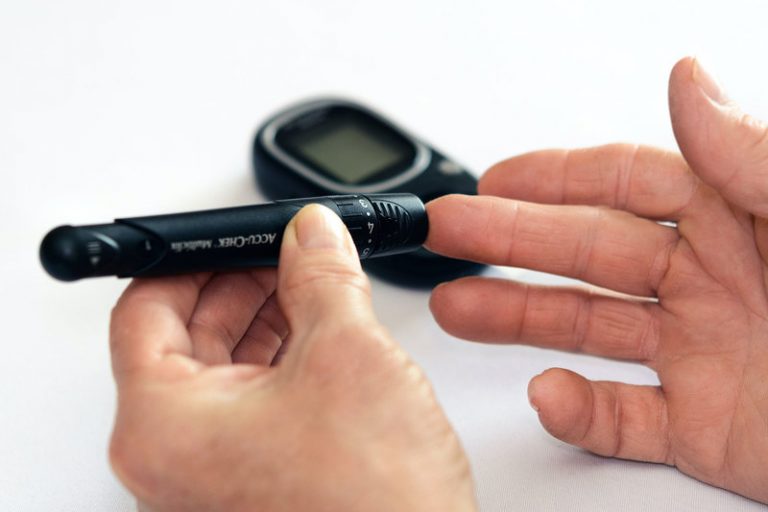
JD: PLWD who have mild COVID-19 can usually be managed at home. It’s important that they continue their usual medication, but with more frequent monitoring of their finger prick blood glucose levels. By doing this, PLWD can ensure that their diabetes remains controlled. They should also adhere to the recommended lifestyle measures and activities that promote good diabetes control and weight loss, if required.

In addition, PLWD should maintain regular telephonic contact with their healthcare providers who will help adjust their medication if necessary and advise whether they need to seek further medical care.

PLWD who develop shortness of breath, vomiting or uncontrolled glucose levels should urgently contact their healthcare provider, as they will likely require admission to hospital.

ND: What are some of the precautionary measures PLWD can take against getting infected with SARS-CoV-2?

JD: Even though PLWD and those with an elevated BMI are not at greater risk of SARS-CoV-2 infection, it is essential that they continue to self-isolate as much as is reasonably possible, especially if they are over 50 years old. If they do need to be exposed to other people, it is critical that they are meticulous with the recommended preventative measures, such as wearing masks, maintaining a two-metre social distance, practising frequent hand hygiene and not touching their faces. 

Nobel Laureate Malala Yousafzai Celebrates Completion Of Degree At Oxford University

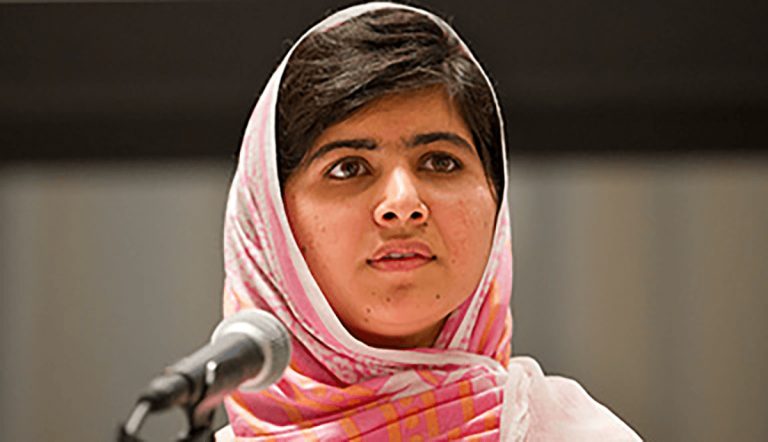
NOBEL Laureate Malala Yousafzai completed her degree in Philosophy, Political Science and Economic at Oxford University here on Saturday.

Malala Yousafzai, 22, was quite happy over completion of her degree at one of the world-class universities. She celebrated her happiness with her family. Mala who is followed by 1.6 million followers is symbol of courage and knowledge for millions and millions of girls across the globe.

Taking to Twitter, she also shared development with her fans and friends, saying that: “Hard to express my joy and gratitude right now as I completed my Philosophy, politics and Economics degree at Oxford.

“I don’t know what’s ahead. For now, it will be Netflix, reading and sleep,” she said.

In the picture, she shared on Twitter, Malala was sitting in the middle of her father and mother and was smiling on her success while a big cake was lying there in front of her to celebrate success. Two boys were also present there and one of them made sign of victory on the occasion.

Malala Yousafzai who was hit by the Taliban just for going to school and continuing education in Swat district in 2012, and she was taken to UK for her treatment followed by World-wide fame due to her courage and bravery for education.

(Source: Pakistan Point News)

Oxford College Recommends Removal Of Cecil Rhodes Statue

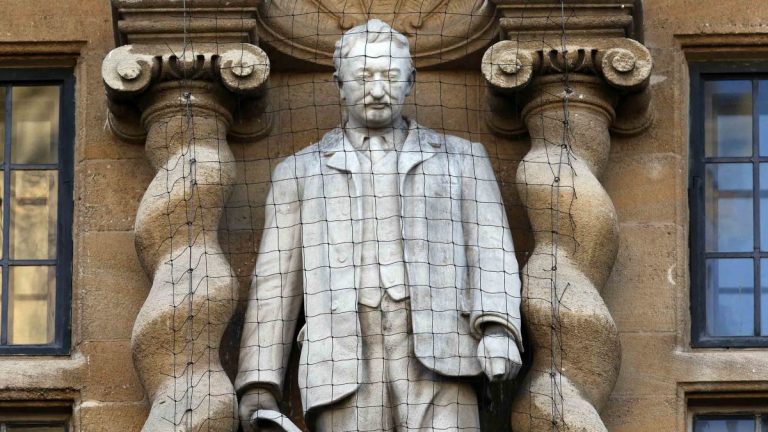
THE GOVERNING body of Oxford University”s Oriel College on Wednesday recommended the removal of a statue of Victorian imperialist Cecil Rhodes that has long been the target of protests — though it won”t be taken down immediately.

The college”s governors said they had “voted to launch an independent Commission of Inquiry into the key issues surrounding the Rhodes statue.”

In a statement, Oriel College”s governing body, made up of faculty, said they had “expressed their wish to remove the statue of Cecil Rhodes” and a plaque to him, adding that “this is what they intend to convey to the Independent Commission of Inquiry.”

Rhodes made a fortune in the late 19th century from gold and diamond mines where miners labored in brutal conditions. He was an education benefactor whose legacy includes Oxford University”s prestigious Rhodes scholarships, which have been awarded to international students for over a century.

Famous Rhodes scholars include former U.S. President Bill Clinton and feminist writer Naomi Wolf.

His statue was removed from the University of Cape Town in South Africa in 2015 after students led a “Rhodes Must Fall” campaign.

A similar campaign has sought the removal of his statue in Oxford. The movement had gained new momentum since the death of George Floyd spurred anti-racism protests worldwide and a renewed debate on colonialism and its legacy in Britain.

Other historical monuments and statues around the world, honoring figures from Christopher Columbus to Belgium”s King Leopold II, have since become flash points in protests.

Earlier this month, Black Lives Matter protesters pulled down a controversial statue of 17th-century slave trader Edward Colston in the English city of Bristol and threw it into the harbor. Colston was prominently involved in England”s slaving company, the Royal African Company, which transported tens of thousands of Africans across the Atlantic Ocean.

Oriel”s governors said the new commission would include people from academia, education policy, law, politics and journalism. The commission aims to look into how to improve access to black and ethnic minority students and faculty, and review “how the college”s 21st-century commitment to diversity can sit more easily with its past.” The Rhodes statue will stay up until the inquiry finishes its work later this year.

In a statement, the Rhodes Must Fall campaign group said it welcomed Oriel College”s intention to take down the statue, but demanded a stronger commitment to follow it through.

“This is a potentially epoch-defining moment for our institution, the University of Oxford. We can, potentially, offer a powerful example of the decolonial project in higher education in the U.K. and beyond,” the group said.

(Source: AP)

Pupils From Pretoria High School for Girls Stage Protest Against Racism

NYAKALLO TEFU

PUPILS from the Pretoria Girls High School on Thursday protested against racism and inequality.

Pupils at the school say their concerns from 2016 have not been addressed.

In an interview with ENCA, one of the student leaders who was part of the protests in 2016, Zulaikha Patel, said the school continues to silence black voices.

The learners are calling for the school to change its discriminatory systems if they support #BlackLivesMatter movement. https://twitter.com/MmuiWabatho/status/1273584630252408839?s=20

In August 2016, pupils at the school protested against an instruction given to black students to straighten their hair, saying it discriminated against them.

Boys From Various Gauteng Schools Combine Efforts To Tackle Critical Issues Like Climate Change, Xenophobia and Gender-Based Violence

HEADS and deputy heads of boys’ schools around Gauteng are currently combining efforts to run the BoysForAction programme.

The programme was formed this year by Daanyaal Ballim who is the deputy head boy of St John’s College and Wanagwa Peter Nyasulu who is executive head of Student Wellness at St Stithians College.

Daanyaal said the programme has transcended their competitive nature and united the boys.

He said the top nine boys’ schools St John’s College, St Stithians Boys College, King Edward’s School, Parktown Boys, Jeppe High School for Boys, St Alban’s College, St Benedict’s College, St David’s Marist Inanda and Pretoria Boys are all part of the initiative.

The deputy head boy said BoysForAction is all about taking action, “It is a boys’ schools driven initiative aimed at tackling social issues faced by the country by educating, creating awareness and fundraising. It is multifaceted as it deals with all kinds of social issues, be it xenophobia, gender-based violence, climate change (natural disaster) and more.”

Daanyaal added that being cognisant of the position of privileged schools they are in, they want to use that privilege, resources and social influence for the greater good.

“Furthermore, we recognised a lack of continuation of projects by leadership bodies within our schools resulting in no meaningful progress being made. Therefore, BoysForAction aims to lay the foundation in which succeeding year groups can build upon and grow initiatives within our communities.”

The boys also recognised the lack of cohesion between boys’ schools which they saw as an untapped opportunity and resource of change. They saw the mass impact they could have on communities due to sharing of ideas form the schools which are a part of BoysForActionRecent as it is, the programme has played a massive role during this time of crisis.

To pick one example out of their many active works; through a social media challenge, BoysForAction raised R4 710 for Islamic Relief SA and the Solidarity Fund. BoysForAction will also join efforts with Parktown High School for Girls in collecting warm clothes for girls in need this winter.

The committees will gladly accept clothes for boys and girls from residents.

Daanyaal said, “We hope that BoysForAction will become a consistent tool for change in our communities which will allow the youth to help those around them.”

(Source: RosebankKillarneyGazette)

Western Cape Education Department Condemns Use Of Indemnity Forms At Provincial Schools

NYAKALLO TEFU

THE WESTERN Cape Education Department has condemned the use of indemnity forms by some schools across the province before admitting learners in their premises.

Some parents have alerted the provincial education department that their children have been given indemnity forms that required to be signed and handed in before returning back to school.

“A number of parents have reported to us that they have been asked by schools to sign an indemnity form before their child is allowed to return to class. The WCED does not support the use of such forms, and indemnity forms do not remove legal responsibility from the Department,” said Schafer in a statement.

“Parents DO NOT have to sign such forms, and their children may not be refused entry to school if they do not sign. Any parent that has been asked to sign such a form should contact their district office immediately.”

Schäfer said her department does not support such forms, adding that indemnity forms do not remove legal responsibility from the department.

Schools in the Western Cape have been open for two weeks now and Schafer has thanked parents, staff and learners for cooperating.

(Compiled by Inside Education staff)