Home Blog Page 406

African Children Remain Under Siege From COVID-19: UNICEF

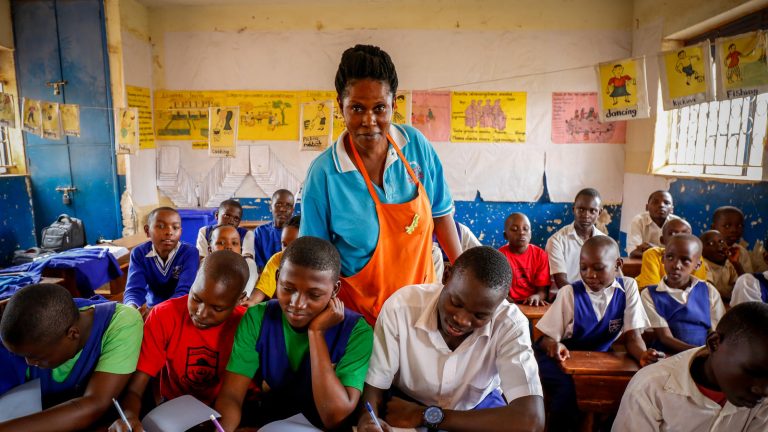
CHILDREN in Africa remain confronted by a host of threats due to the COVID-19 pandemic, the United Nations Children’s Fund (UNICEF) said on Tuesday in commemorating Day of the African Child.

The direct and secondary impacts of the virus threaten to unravel the gains made for the poorest children across Africa, UNICEF said in a statement emailed to Xinhua.

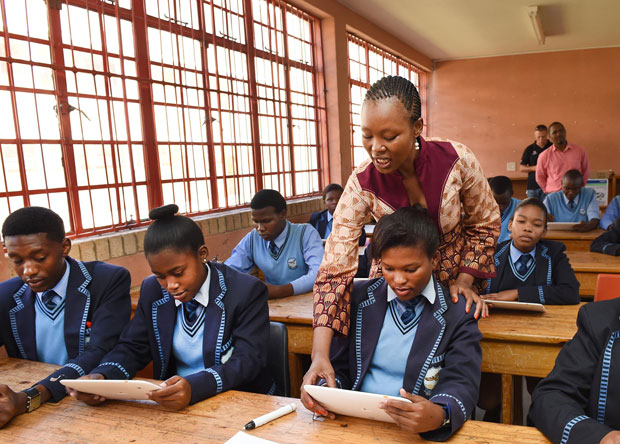
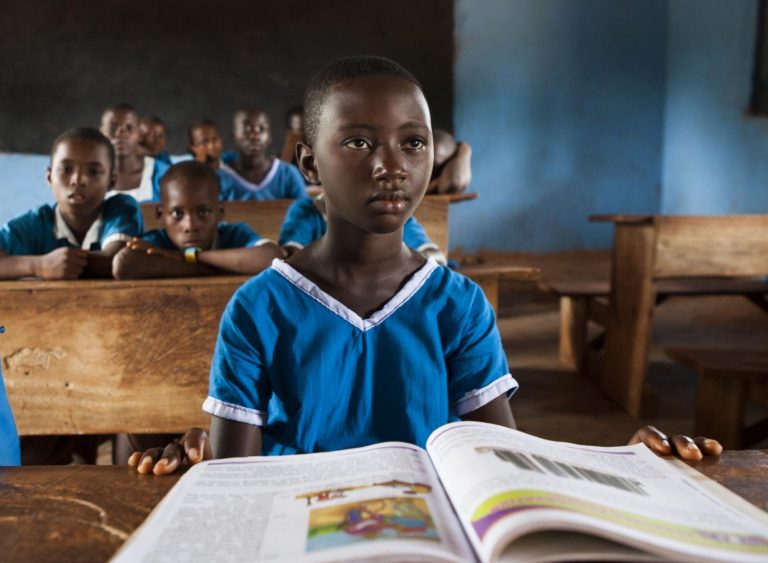
While wealthier children are able to continue learning online, barely one in five households in Eastern and Southern Africa have internet access, according to UNICEF.

Eighty-four percent of the rural population – where the bulk of African learners reside – have no electricity, meaning online learning is not an option, said UNICEF.

Up to 16 million children in Africa are no longer accessing critical daily meals at school while violence is increasing, and more African children will fall into poverty, UNICEF said.

Prior to COVID-19, it was estimated that around three out of every four children in Africa are affected by multi-dimensional poverty. These children are deprived of the most basic things in life, like access to sufficient food and clean drinking water, going to school, being able to get medical help, sleeping in adequate shelter, going to the bathroom in a safe place, or living in an environment free of physical and emotional abuse.

The economic fallout of the COVID-19 pandemic could push up to 86 million more children into household poverty by the end of 2020, two thirds of these in Africa, according to analysis released by Save the Children and UNICEF.

Only 16 percent of children in Africa are covered by social protection programs, making it impossible for families to withstand financial shocks caused by COVID-19 and furthering the cycle of intergenerational poverty, said UNICEF.

While the challenges are immense, UNICEF said it is collectively achieving significant regional results, including 71 million people reached with messaging on COVID-19 prevention and how to access services, 10.8 million children supported with distance/home-based learning, more than two million people reached with hand-wash supplies and two million children and women reached with essential healthcare services in UNICEF-supported facilities.

(Source: Xinhua Agency)

ConCourt Declares It Unconstitutional For A Private School To Terminate Parents’ Contract Without Proper Justification

NYAKALLO TEFU

THE CONSTITUTIONAL Court has declared that it is unconstitutional for a private school to terminate a parent’s contract without proper justification, including affording the parents an opportunity to make representations on what the impact would be on the children.

This was the ruling of the Constitutional Court on Wednesday following a dispute between the Pridwin Preparatory School in Johannesburg and the parents of two pupils.

The ConCourt said that the decision by Pridwin Preparatory School to cancel the Parent Contract was constitutionally invalid, in that it breached the constitutional rights of the applicants’ children. 

Each party was ordered to pay its own costs in the ConCourt, the High Court and the Supreme Court of Appeal.

“Constitution is circumscribed. It does not extend to a positive duty to continue providing education at the private institution. But, once an independent school provides basic education, it is then required to ensure that the right to basic education of children attending the independent school is not negatively infringed,” said the ConCourt judges.

“That will occur, for instance, where no independent opportunity to be heard is afforded before a decision is made to discontinue that education. Pridwin had a negative duty not to impair and diminish the children’s rights to a basic education. In addition, there should be no interference with the rights already enjoyed by the children, except where there is proper justification for that interference.”

Equal Education, successfully admitted as amicus curiae when the case was heard in the Johannesburg High Court, was represented by the Equal Education Law Centre in the matter.

EE said in a statement that the ruling would not only affect elite private schools, but also had consequences for the rights of pupils who attended low-fee independent schools. 

“Open-ended contract termination clauses between parents and schools did not ensure the right of education of pupils was protected, which therefore did not ensure the pupils best interests were taken into account,” said EE.

Pridwin Preparatory School cancelled the two contracts between itself and the parents on June 30 2016.

The parents then applied to the Johannesburg High Court for the cancellation of the contracts to be set aside.

In 2017, the High Court dismissed the parents’ case.

The Supreme Court of Appeal (SCA) also dismissed the applicants’ appeal in 2018.

The parents then lodged an application for leave to appeal in the Constitutional Court.

The parents argued that the decision to terminate the Parent Contracts was unreasonable, procedurally unfair, did not have regard to the children’s best interests and impermissibly impaired the children’s rights to basic education.

(Compiled by Inside Education staff)

EUSA Calls For Basic Education Minister Angie Motshekga’s Sacking

NYAKALLO TEFU

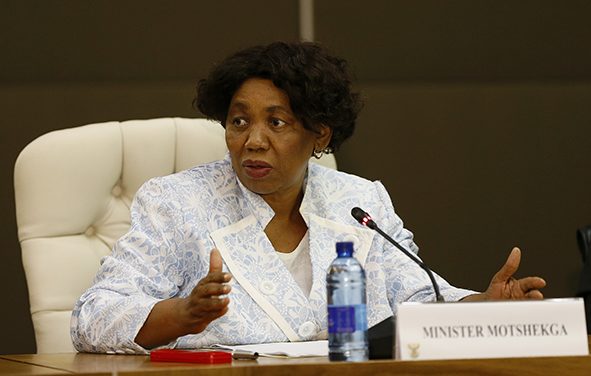
THE Educators Union of South Africa (EUSA) has called for Basic Education Minister Angie Motshekga to be sacked.

The 27 000-members teachers’ union led a march on march on Youth Day at the Union Buildings calling for President Cyril Ramahosa to sack the minister following her decision to reopen schools despite reported number of COVID-19 infections in more than 150 schools.

EUSA’s founder and leader Kabelo Mahlobogwane said teachers and administrators are dying at South African schools while Motshekga is sending more learners and teachers to school next month.

“We are saying we are not opposed to the continuation of education but education must happen in a manner that it doesn’t endanger the lives of teachers and learners,” said Mahlobogwane.

Grade 7 and 12 learners returned to school on June 8 but over 150 schools have since closed due owing to the number of positive COVID-19 cases.

“It’s going to be more grades. In August more grades are going in, regardless of the fact that even water and toilets have not been delivered in schools”, said Mahlobogwane.

Last week the teachers’ union lost a court bid to order Motshekga to halt the government’s plans to reopen schools for Grade 7 and Grade 12.

(Compiled by Inside Education staff)

Beijing Shuts Schools to Stem Virus as Cases Spread Beyond City

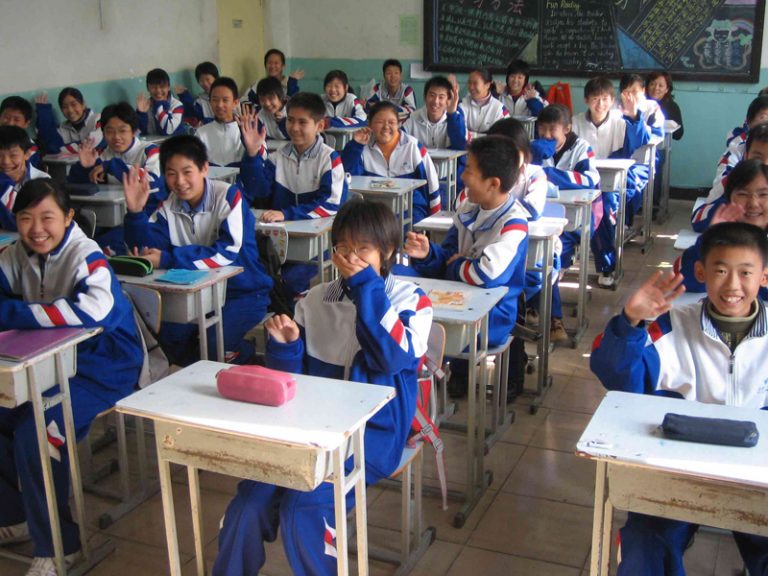
BEIJING has ordered all schools to close in an escalation of containment measures as it struggles to halt a new coronavirus outbreak which has already spread to neighboring provinces.

The Chinese capital on Tuesday lifted its emergency response to level two and said that people will have to be tested for the virus before being allowed to leave the city.

The total reported number of infections has reached 106, according to the National Health Commission, while cases linked to the Beijing cluster have already been reported in two provinces in China’s northern region.

While the decision to close schools and limit people leaving signals the severity of the growing crisis, officials have so far taken a more targeted approach towards the latest outbreak compared to similar resurgences in Wuhan and in the country’s northeast region. The stakes are higher in Beijing, where the country’s business and political elite reside, and an aggressive lockdown risks undoing China’s economic re-opening and nascent moves to restart travel with other countries.

Beijing has restricted movement only in areas where new cases have been found. While taxis and cars from ride-hailing apps have been banned from leaving Beijing and passenger buses from some cities in nearby provinces have been halted, trains and most other forms of transport to and from Beijing remain open.

The costs of imposing an across-the-board shutdown are too high as Beijing’s population is much larger than that of Wuhan, said Yanzhong Huang, professor at the Center for Global Health Studies of Seton Hall University.

“A city-wide lockdown in Beijing would not only reverse the process of economic and social reopening, a key policy objective of the party, but also undermine considerably the government’s own narrative on the success of its anti Covid-19 campaign,” Huang said. “The social, economic, and political pain might be way too high to justify a city-wide lockdown.”

Beijing on Tuesday closed another food market located near the financial district after a case linked to the original cluster was discovered. Eleven other food markets have been shuttered and almost 300 others sanitized, while nearly 30 housing compounds have been put under lockdown, local officials said.

Housing compounds and companies are collecting information from their residents or workers on whether they have been to or had contact with anyone who has been to Xinfadi, the fruit and vegetable market where the new cluster was first discovered. It supplies around 80% of the city’s farm produce and tens of thousands of people pass through daily.

With mass testing and contract tracing underway, the next few days will be crucial in deciding whether to reinstate the strict measures in place during the height of China’s epidemic, when workplaces and restaurants were shut and social gatherings were banned.

The city of more than 20 million has said it can test over 90,000 people a day. It tested more than 70,000 on Sunday.

“Beijing’s reported cases in the next three days will determine where the epidemic is going,” Wu Zunyou, chief epidemiologist with China’s Centers for Disease Control and Prevention, told state television on Monday night. Those who have contracted the virus should display symptoms in around two days and if cases aren’t surging by then, it’s safe to say the outbreak has basically stabilized, said Wu.

“There’s no obvious sign of family clusters, or cross-infection between patients,” he said.

Zeng Guang, a senior expert with the National Health Commission, said he sees a high chance of a “mild second wave” when the number of infections increases in the next couple days before the spread is contained.

“But even if the virus spreads across China and lockdowns have to be implemented, Beijing will not be the second Wuhan,” he said.

(Source: Bloomberg)

Youth Day 2020: 50% Unemployment Rate Among Young South Africans Is A Key Concern, says Professor Tawana Kupe

YOUTH DAY is an annual national holiday in South Africa which commemorates the 1976 uprising by black learners against an unjust and inequitable apartheid education system. ‘Bantu education’ was an inferior education system meant to deny black people access to the kind of education that enabled one to attain their full potential as human beings.

This system sought to undermine black learners, using education as a weapon of subjugation to keep them from achieving success for themselves and their families. The atrocities which unfolded on 16 June 1976 turned the world’s eye to apartheid South Africa’s lack of humanity as police opened fire on schoolchildren. Youth Day now serves as a reminder that young South Africans were at the forefront of our struggle for democracy and freedom.

Today we continue to live with the legacy of Bantu education, and it will take a concerted effort over the next few decades to undo its damage. This is an urgent task of transformation necessary to develop the full potential of all our youth in a complex and rapidly changing world.

While progress has been made over the years, inequality and inequity have continued in post-apartheid South Africa. Under-resourced schools within our basic education system are once again a legacy of apartheid’s oppressive systems.

It is also true that failures in resourcing and managing schools in the post-apartheid period have compounded and sustained these legacies.

However, we are encouraged that so many students from these kinds of schools excel against the odds and #ChooseUP for its quality educational programmes, and go on to become success stories for themselves, their families and communities. But we need to ensure that no learners are left behind.

Youth Day provides us with an opportunity to address issues facing the youth today. It is my view that an education without digital skills or digital access is today the new Bantu education; a lack of access to digital skills now puts young people at risk of falling behind their peers. This deepens the divide between students who have access, and those who don’t.

 Faced with this challenge in our current context, the University of Pretoria decided we would not resume the academic term online during lockdown until we had addressed this inequality and lack of access by loaning laptops to students who had no access. Although there were some initial glitches, we mostly managed to roll out our deliveries on time.

The digital divide during the current COVID-19 pandemic has also exacerbated some of the structural problems within our education and economic systems.

The creation of a new society that can withstand pandemics will require massive investment to address these divides and give our youth a future-proof education.

To further help our students, we worked with mobile network operators to have the UP Connect platform made free of data costs. Under level 3 of the national COVID-19 lockdown, we’re also making provisions for some students who cannot access online learning at all to be given permission to return to campus.

This is because in some rural areas there is no mobile network coverage, making it impossible for some students to learn online.

To this end, I’d like to acknowledge our donors, whose generosity and understanding of how detrimental a lack of access to knowledge can be have enabled us to get laptops for our students as we continue our high quality of teaching and learning online.

These donors have invested in our youth to enable them to get the digital skills necessary in a technologically changing world, and have ensured that our students can continue their education on a more equitable footing.

For many young people in South Africa today, unemployment is a key concern. The average age on our continent is around 20 years old, which means that Africa has among the youngest median populations in the world. However, with this comes the worrying statistic that, in South Africa, more than 50% of youth are unemployed. It is worrying to consider what the further implications of this are in light of the COVID-19 pandemic.

As we reflect on Youth Month and its significance, I urge all our students to take advantage of the Ready for Work and Entrepreneurship programmes available to boost your skills for life beyond university. We are proud that these programmes, combined with our high quality of teaching and learning, have resulted in more than 90% of our students being employed or studying further within six months of graduating.

These programmes are designed to give young people the skills, hope and the knowledge to be adaptable in an ever-changing world. The economic impact of this high employment and entrepreneurship rate among our students has a lasting legacy on families, and transforms lives throughout South Africa, Africa and the world as we play a meaningful role in changing our society. 

COVID-19 has taught us all how to be tech-savvy and how to adapt to new challenges. As an institution, we need to continue to provide high-quality education and equip our students with the scarce skills our country needs. We must constantly re-examine our curricula to ensure our students receive relevant training to prepare them for an ever-changing work environment.

The pandemic has also shown us the power of the internet, and how much we can do online and remotely. While you continue to work through your classes online, start thinking about what the lockdown has taught you about yourself, your skills and your hobbies, and how you can apply these skills for the benefit of society. Using your skills to help and uplift others is THE UP WAY.

Remember that the youth of 1976 contributed significantly toward bringing down the apartheid regime. More than 40 years later we must ask ourselves, as members of the UP community, what are we doing to make today (and every day) matter? Whatever we do must always be in service of ensuring that all our youth attain their full potential.

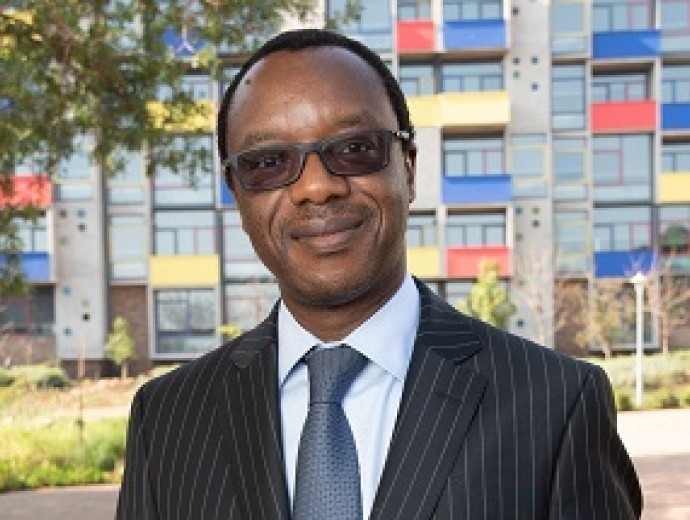
(Professor Tawana Kupe is Vice-Chancellor and Principal of the University of Pretoria)

COSAS Calls For Mass COVID-19 Testing After 150 Schools Closed Down This Week

NYAKALLO TEFU

PRESSURE is mounting for Basic Education Minister Angie Motshekga to review her decision to reopen schools after 150 of them were closed owing to COVID-19 infections.

The Progressive Student Movement (PSM) will march to the Union Buildings in Pretoria on Tuesday to demand the immediate resignation of Motshekga.

The organization has criticised the South African education system, saying it does not cater for learners in poor communities.

“The current scourge has exposed her indecisiveness and leadership skills and more importantly her ability to be innovative in terms of problem solving,” said the PSM in a statement on Monday.

“In addition to the statement we would also like to propose the closure of schools thus to avoid the school becoming “Super Spreaders” or to spread like wildfire. This is in line or rather instigated by the current outbreak of COVID-19 in schools and this substantiated our theory that in fact the department will find it difficult to contain the spread under their proposed set of directives.”

The Congress of the South African Students has also called for mass COVID-19 testing for teachers and students at affected schools, particularly in the Western Cape, the country’s epicentre of the disease.

The closure of schools happened in quick succession this week as a measure to contain the spread of the COVID-19 virus and it has so far affected over 500 000 learners and hundreds of teachers across the country.

In the Eastern Cape, 77 schools were closed after several teachers, pupils and supporting staff tested positive for COVID-19.

“As the first week of learning and teaching occurs, we wish to confirm that across the province we have 20 positive cases of COVID within the schooling system. We have 15 teachers, 3 learners and 2 non-teaching staff who have contracted COVID 19,” said Loyiso Pulumani, spokesperson for the Eastern Cape Department of Education.    

“We also confirm that we have 48 persons under investigation in the province according to our statistics. By the end of the week the number of schools temporarily closed stood at 77 as a result of COVID 19.”

Pulumani said the department was investigating 48 other schools for possible cases of COVID-19 infections.

“Through our preparation and round-the-clock monitoring, we hope to keep it this way. We aim to save the academic year, while preserving lives,” said Pulumani.  

In KwaZulu Natal, 28 teachers and five pupils tested positive for COVID-19, resulting in the closure of at least 28 schools.

“Of the 28 schools affected, 14 will reopen on June 15 after all safety protocols have been followed,” said KwaZulu Natal Premier Sihle Zikalala.

“We want to implore all the teachers, learners and other non-teaching staff to continue exercising caution, even when they are not within school premises.”

In Gauteng, 56 schools were forced to close after learners and teachers tested positive for the coronavirus.

Gauteng Premier David Makhura said since the reopening of schools, both learners’ and teachers’ attendance has been above the 85% mark.

In the Western Cape, 98 teachers have tested positive for COVID-19, resulting in the closure of 16 schools.

“The names of the schools and teachers will not be publicised because once word gets out, principals who are already busy, are swamped with questions and visits,” said Debbie Schafer, Western Capes’ MEC for Education.

In the North West, Department of Education’s spokesperson Elias Malindi said only one school has reported a case of COVID-19.

“So far teaching and learning has been going smoothly with no cases of the virus detected,” said Malindi.

Grade 7 and Grade 12 learners in the Northern Cape Province have also been affected by the reported COVID-19 cases.

The Northern Cape has 534 schools offering Grade 7 and 12 lessons.

Out of the 534 schools, a total of 515 schools opened their doors on June 8.

“The province opened with minor challenges. We have taken note of these challenges and we are working tirelessly to address these matters”, said the Northern Cape Department in a statement.

The department said since the reopening of schools on Monday, no cases of COVID-19 were reported, which means no schools were closed.

“We are also concerned about the malicious reporting from media houses and the public about the situation at schools. This is detracting the attention of the Department and the community from areas where minor challenges are experienced,” the department said in a statement.

The Limpopo Department of Education said two schools were shut down due to suspicion of COVID-19 cases.

The province has 3711 schools across 10 education districts.

“31 schools in the province are not open owing to water and sanitation problems. This number includes the 2 that have been closed due to suspicion of the coronavirus”, said department’s spokesperson’s Tidimalo Chuene.

Chuene said their curriculum team will package a catch-up program for learners who missed school due to infrastructure challenges.

“There is also the option of moving them to nearby school,” said Chuene.

In Mpumalanga three schools have also reported COVID-19 related cases.

“The two schools were closed after teachers tested positive. In one school the results of all the teachers who were tested came back negative and as such that school was given a clean bill of health to resume classes on Monday June 15,” said the Department of Education’s spokesperson Jasper Zwane.

Zwane said 95 % of schools reopened successfully and attendance by both Grade 7 and 12 Learners was recorded to be above 90%.

The department of education in the Free State said only two people – a learner and an administration clerk – tested positive for the coronavirus.

The affected schools were decontaminated and cleared.

PSM said it holds the Department of Basic Education accountable for allegedly exploiting learners from poor communities as they have not received any learning material such as text books and stationary.

According to organization, these learners are in Limpopo, Eastern Cape, KwaZulu Natal, Mpumalanga and the North West.

The movement has also accused the Education department of doing nothing about displaced learners in Gauteng, saying the department expected poor and illiterate parents to register their children online.

COSAS spokesperson Mphumzi Giwu said that the student body wanted all schools in the Western Cape to be shut down as infections were on the rise.

“We call on all learners to remain at home, all learners to boycott schools, all schools to be shut down simply because we are concerned by the rising number of infections from teachers, staff members and learners,” said Giwu.

(Compiled by Inside Education staff)

Why The Eastern Cape Is Uniquely Unsuited to Dealing With the Coronavirus

CHARLES MOLELE

LATEST DATA and statistics on the coronavirus pandemic in the Eastern Cape are frightening. From the deep rural villages of eastern Pondoland to the bright lights of Port Elizabeth, coronavirus infections are now edging towards the 10 000 mark.

The fight against COVID-19 pandemic in the Eastern Cape, which accounts for the largest amount of out-migrants in the country, is worsened by several challenges, including rough terrain and inaccessible roads in a largely rural district

On June 16, the Eastern Cape will mark 88 days since “Patient Zero” – a 28-year-old employee of Mercedes Benz South Africa, became the first infection recorded in the Eastern Cape in March.

Since then, 217 people have died and at least 9 250 people have tested positive.

Within four days of reopening of schools on June 8, teaching at 77 Eastern Cape schools was affected – some due to confirmed COVID-19 cases and others as a result of suspected cases.

The provincial education department spokesperson Loyiso Pulumani confirmed this week that 77 schools in the province were affected by COVID-19.  

“As the first week of learning and teaching occurs, we wish to confirm that across the province we have 20 positive cases of COVID-19 within the schooling system,” said Pulumani.  

“We have 15 teachers, three pupils and two non-teaching staff who have contracted COVID-19. We also confirm that we have 48 persons under investigation in the province, according to our statistics.”

Department of Health spokesperson Sizwe Kupelo said this is the first time that the Eastern Cape has experienced such a traumatic and overwhelming public-health emergency.

“I have been in the department for 18 years. In those years we’ve never experienced any outbreaks originating from the Eastern Cape – all cases of cholera or typhoid, for instance, came to the Eastern Cape due to the migration of workers from other provinces like Gauteng and the Western Cape. When we had cholera for the first time, it was imported from Tembisa in Gauteng,” said Kupelo, citing ‘patient zero’ of Mercedes Benz South Africa who travelled from Germany and became the first person to test positive for COVID-19 in the Eastern Cape.  

“After patient zero, more cases from Gauteng and the Western Cape ended up here. Soon after President Cyril Ramaphosa announced the lockdown, a person died in the Western Cape from COVID-19 and was transported to the province in minibus taxi. People then attended the funeral and spread the disease.”

Kupelo said two funerals held in Kwadwesi and Zwide townships in Port Elizabeth in the Nelson Mandela Bay metro became the coronavirus hotspot after hundreds of people attended the funeral, ignored lockdown regulations and contracted the disease.

Out of these two funerals in Port Elizabeth in May, 54 people ended up being infected, including three children.

“A funeral of a prison warden in Majola village, Port St Johns, is another case in point. We ended up with 43 COVID-19 cases from the same funeral – 12 from one family. From the on the floodgates opened,” said Kupelo.

Kupelo said the Eastern Cape has over 1.5 million people who have left the province in search of greener pastures elsewhere in South Africa and their return to the province during the lockdown worsened the spread of the pandemic.

He said law enforcement agencies have also been lacking in the villages during the lockdown.

“There’s never been police or SA National Defence Force in the Eastern Cape villages and this led to a total disregard of social distancing protocols. Now the virus is here and government must do something,” said Kupelo.

“We want to call on law enforcement agencies to deal decisively with anyone in the Eastern Cap found to be in contravention of the National State of Disaster regulations that have been gazetted.” 

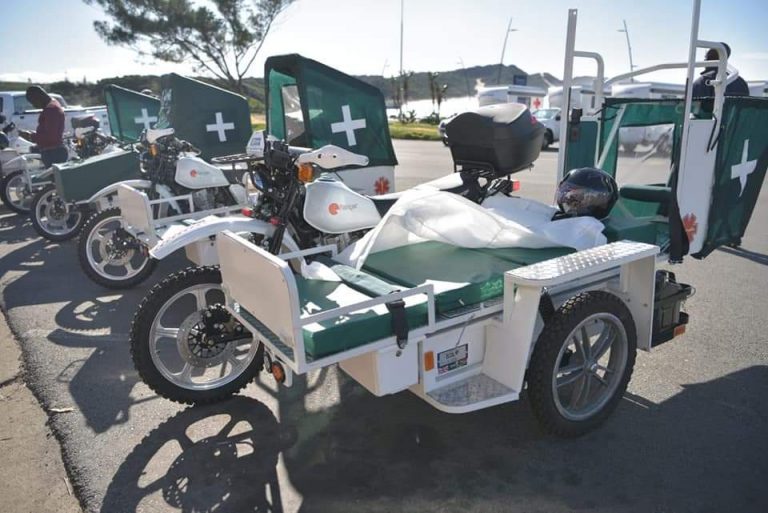
This week, 100 scooters were provided for health workers to do their fieldwork in the province as part of a concerted effort to fight COVID-19 pandemic.

Other measures announced by the Eastern Cape Department of Health include the appointment of unemployed nurses on 12-month contracts, the deployment of health officials to assist with screening motorists and passengers, and the appointment of a medical team, including paramedics and pharmacists to help.

Kupelo said the provincial government’s COVID-19 response has also been hampered by some health workers affiliated to the National Education, Health and Allied Workers’ Union (NEHAWU) refusing to treat COVID-19 patients.

“They complained about all sorts of things including lack of deep cleaning of hospitals. They also started using the non-availability personal protective equipment as an excuse. Lately they are coming to say they’ve not been trained to treat COVID-19. I dispute their claims. I am saying primary health care workers were deployed to villages to do mass screening and testing and they have screened more than 1 million people in the province and tested 30 000. These primary healthcare workers are all not positive. So why use all these things as an excuse,” asked Kupelo.

“Some of our patients died a lonely death because nurses refused to treat them. They died alone because they nurses didn’t want to look after them.”

According to the National Association of School Governing Bodies, most of the schools affected by COVID-19 were in the Buffalo City Metro (BCM), incorporating East London, King William’s Town, the capital Bhisho and surrounding rural settlements.

(Compiled by Inside Education staff)

Ramaphosa: Youth-led Activism Crucial In SA’s Efforts To Eradicate Gender-based Violence

CYRIL RAMAPHOSA

THE WORDS of Frantz Fanon that ‘each generation must discover its mission’ come to mind every time I have an opportunity to speak with young South Africans.
 
No matter where they live and no matter what they do, they each have a burning desire to change the world.
 
While they certainly want to improve their own lives, they also want to achieve a better society and a better world.

They see themselves as agents for fundamental transformation.
 
Throughout history young people have been a driving force for change. In just the last few decades, young people have waged numerous struggles against injustice, from the 1968 student uprising in Paris, to the anti-war movement in the United States in the 1960s, to the anti-colonial struggle in many African and Asian countries, to the fight against apartheid, to the Arab Spring.
 
Most recently, young people have been at the forefront of the #BlackLivesMatter movement that has gained global support in the wake of the killing of George Floyd in the United States.
 
Over the past week, activists around the world have also been demanding the removal of symbols that glorify the barbarity and violence of the slave trade and colonialism.
 
At an Oxford University demonstration last week a protestor carried a placard with the words ‘Rhodes must Fall’, the rallying cry of students in our own country five years ago.
 
Young people across the world have found common cause.

They are tearing down of statues and symbols of racism, demanding the decolonisation of educational curricula, and calling for institutions to address racism and social exclusion.
 
And so, as we pay tribute to the generation of 1976 on this Youth Day, we also salute the youth of post-apartheid South Africa, the worthy inheritors of this noble legacy.
 
The mission of 1976 generation was to dismantle bantu education; that of today’s youth is to take forward the project of national reconciliation and transformation.
 
In time to come it will be said that this year, 2020, marked the start of a new epoch in human history.
 
Not only has coronavirus had a momentous impact on people’s lives and livelihoods, it has also shaken up the global social order.
 
The manner in which the pandemic has taken hold has been a reminder of the interconnectedness of the human race and of the deep inequalities that exist between countries and within countries.
 
The pandemic presents an opportunity to ‘reset’ a world that is characterised by crass materialism, selfishness and self-absorption not just on the part of individuals but whole societies.
 
Young people are telling us that the essential values of integrity, compassion and solidarity must be the hallmarks of the new society that will emerge, and that they are determined to be the champions of this new, better world.
 
In the discussions I have had with young people during this Youth Month, I have said that we should never underestimate the power of an idea, because ideas can and have changed the world. Ideas have spurred human progress and they are what will enable us to chart a new path in the post-coronavirus era. 
 
These young people have turned their ideas into action. They have not let a lack of resources hinder them. They have carved a niche for themselves in a number of sectors from high-tech to environmental sustainability.
 
They are determined to succeed on their own merits, to not depend on handouts, and once they have ‘made it’ to help their peers.
 
Through programmes like the Presidential Youth Employment Initiative, the National Youth Service and many more we want to support this country’s young people to see their ideas through from incubation to opening the doors of their businesses.
 
Youth unemployment is the greatest challenge we face and the coronavirus pandemic has exacerbated an already dire situation.
 
Now more than ever we will look to the innovative and pioneering spirit of our youth to come up with solutions to the unemployment crisis that benefit them, their communities and society.
 
At the same time, I challenge our country’s youth to craft and design programmes that will enable us to meet our developmental goals.
 
In 1961, revolutionary Cuba sent legions of young student volunteers into the mountains and villages to construct schools, teach literacy and train new educators.

It is still held up as one of the most successful literacy campaigns in modern history.
 
Our young people must develop social upliftment initiatives and they must lead them.
 
Just as they took up the struggle for equality in higher education, the considerable energies of our youth must also be brought to bear to fight for equitable access to health care, for the transformation of land ownership and, most importantly, for gender justice.
 
Like all South Africans, I have been deeply disturbed by a surge over the last few days in the murder of young women at the hands of men. These are shocking acts of inhumanity that have no place in our society.
 
Youth-led civic activism, awareness raising and peer counselling are vital tools in our efforts to eradicate gender-based violence from society. At the same time, we must strengthen our justice system, ensuring that perpetrators are brought to book, bail and parole conditions are tightened and that those sentenced to life spend the rest of their lives behind bars.
 
While this needs society-wide action, I call on young men in particular to take up the struggle against gender-based violence. Unless we end the war that is being waged against South African women, the dream of a new society will remain elusive.
 
Those of us who were part of student movements during the apartheid era are often asked what we think of the young people of today.

There is a temptation to retreat into nostalgia about ‘the glory days’ of student politics and youth struggle, never to be replicated.
 
But just as the youth of yesteryear defined their mission, today’s youth have defined theirs.
 
South African youth of 2020 more than meet the high standard set by their predecessors. They are optimistic, resilient and courageous, often in the face of the harshest of circumstances.
 
They are a source of inspiration and hope. Through their actions, they are building a world that is more just, equal, sustainable and at peace.
 
I wish all the young people of South Africa a meaningful and inspiring Youth Day.

Eastern Cape’s Grade R Teacher Asja-Leah Strydom from Despatch Preparatory School Is Simply The Best

CLASSROOM MANAGEMENT

Teacher of the Week
Teacher: Asja-Leah Katia Strydom

School: Despatch Preparatory School, Eastern Cape

ASJA-LEAH KATIA Strydom was so dedicated to succeed as a teacher she decided to learn isiXhosa, the language spoken by most of her learners. Her biggest challenge until then was navigating the bridge between the language of the majority of her learners and her language.

But it was self-motivation and her teachers from Despatch Preparatory School in the Eastern Cape who inspired her to be a teacher.

She adds that she is motivated by being one of the first people to discover a talent and has the opportunity to develop that potential. Her strong point is her energy and passion for teaching and admits that she is obsessed with the profession.

Her recogni­tion that has culminated in her being a national finalist serves as motivation for those who come from a semi-rural environ­ment such as Despatch Preparatory School.

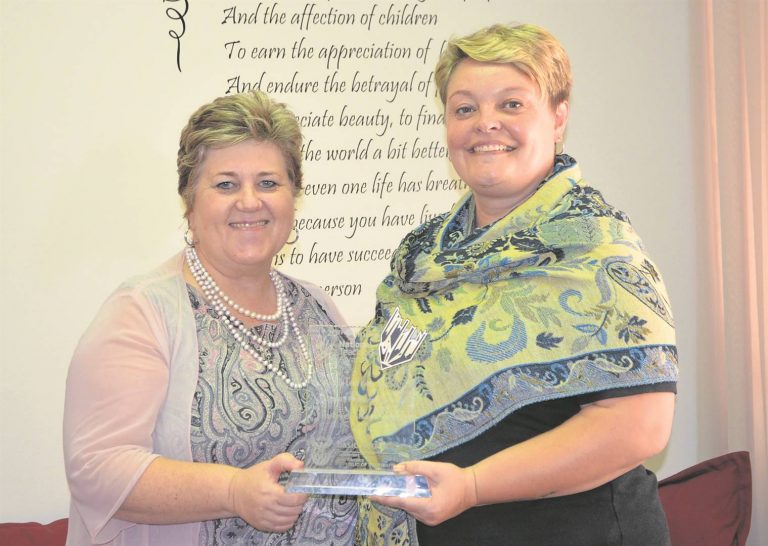
She said about her National Teachers Award: “This is an enormous honour to be seen and recognised by your country. It was absolutely amazing seeing the extra effort and how many teachers are going like ten thousand more miles. Children’s lives are genuinely changed by these teachers. There are teachers devoting their time to run Grade R classes over weekends to assist children. Others have designed apps and programmes interlinking with a curriculum. The best mathematics teacher in the country pushed herself for three years to get massive sponsorships by literally going from door to door. She did this to get Lego blocks, which she uses to teach high school maths. What was also inspiring, is language teachers taking their learners into the depth of areas where specific languages are spoken, so that the learners can hear the different dialects. It must have been very difficult to judge us, because what one school has another hasn’t, but you all have to bring something to your community.”

(Compiled by Inside Education staff)

COVID-19: Doctors, Parents, Teachers Caution Federal Government of Nigeria Against Opening of Schools

AS PRESSURE MOUNTS on the Federal Government to reopen schools across the country in the wake of the 2nd phase relaxation of the COVID-10 restrictions on socio-economic activities, critical stakeholders in the health and education sectors have called on the Federal and state governments to exercise restraint in reopening schools.

In May, the Presidential Task Force, PTF, on COVID-19 had recommended that states be allowed to decide on the reopening of schools, has not fixed issued for resumption and reopening of schools across the country. Calling for caution, the Nigeria Medical Association, NMA, and the Association of Medical Laboratory Scientists of Nigeria, ALMSN, warned against any plan to rush to reopen schools.

In a similar response, the National Parent Teacher Association of Nigeria, NAPTAN, and the Nigeria Union of Teachers, NUT, said a critical appraisal of the situation must be done to arrive at a decision that would not lead to regret later, even as the It is better to lose a session than lose lives — Prof Innocent Ujah, National President, NMA On his own part, the President of the Nigeria Medical Association, NMA, Prof Innocent Ujah said the coast was not yet clear to reopen the schools.

“We may not have to rush; if it is left to me I would say we should have waited for the next quarter and see what will happens. It is better to lose a session than losing our lives. It does not matter whether we are losing a session rather than escalating the community transmission and die of COVID 19. Nobody has the answer when it is rising or the trend. Ujah, who frowned on the poor compliance of the public with the relaxation guidelines, argued that it is better to lose a session than lose lives.”

 “I think it is better to be alive than dying or be infected. I think we should be cautious. If the coast is not clear because we don’t even know the directions that we are going, the coronavirus cases are increasing. Fatality is increasing even though it is about is still under 3 percent but any one life lost matters. “It is difficult to say what is on ground to make the state government think of telling students to go back to school. Have they gotten the emergency protocols including the wearing of face masks, hand washing, and use of sanitisers and social distancing?”

“Those are the basic protocols that they need. We don’t even know the capacity of the classrooms. Are they congested? Will they just sit down and take lectures and go home and not go for sports? If they go home and they are infected will they not infect their family members? There so many questions unanswered so we need to be cautious,” he asserted.

Most appropriate time to open schools is September — Dr Casmir Ifeanyi, National Publicity Secretary, AMLSN In the views of the National Publicity Secretary, Association of Medical Laboratory Scientists of Nigeria, AMLSN, Dr Casmir Ifeanyi who expressed worry about Nigerians compliance to the lockdown protocols, said it is not safe to open schools now because Nigeria has not run enough tests for a reasonable time to determine the curve of the infection.

“If I am a part of the technocrats driving this intervention, our schools should have remained closed until sometime in September. That is a more effective thing to do in this circumstance. That way, we would have had enough time to interpret this spike with epidemiological parameters to decide the prevalence of the disease and where we are in the pandemic in Nigeria. “There are a lot of uncertainties on where we are in Nigeria and the disease morbidity in-country. Unfortunately, people are in a hurry and I have always advocated we make haste slowly. That is not happening and that is worrisome.”

Ifeanyi who expressed worry about the low level of compliance to the lockdown protocols by Nigerian adults said: “We are not very much worried by the increase in numbers as compared to our worry that most adults have thrown caution to the wind. But we are worried about the compliance rate with non-pharmaceutical interventions like the use of nose masks to enforce respiratory protocol. “What is the compliance rate for hand hygiene, and the use of hand sanitisers intermittently? What also is the physical distancing in gatherings? Are we still complying with not more than 20 persons or are we still complying to the second phase of the lockdown which stipulates that those offices should not exceed 75 per cent of capacity? These are areas where I am worried.”

Ifeanyi said that the government should be fair and firm, even as he cited what happened in South Korea and Brazil where schools were hurriedly opened and shut almost immediately due to the rate of infection.

“These are countries were compliance rates are better than, as it is in Nigeria, where infrastructure is even a lot better than we have in Nigeria, even some of those schools that were opened in those climes have some sort of effective screening going on including laboratory-based screening to make sure that if they have asymptomatic cases or very new active cases they could be readily be detected and taken out of the midst of the students but that cannot happen in Nigeria and that is not part of the protocols in Nigeria and it is not anywhere near it.”

Reacting on the position of the Cross River State government, Ifeanyi who faulted the government provision of facial shield for students said: “I like the Governor for other things he is doing but I am worried that he is in a hurry to open schools. Now he had said he is going to produce masks for life to continue in Cross River and Calabar. He has not made available the projected number of local fabric-based masks he promised, now he is dabbling into making available face shields for students and pupils to return to school.”

“I am also certain that he will not meet that expectation because those are lofty ideas but before these ideas, we need to evaluate compliance rate.”

“I tried getting my ward to wear a face mask for 30 minutes but the young lad could not stay with it and you expect he will go to school and stay with it for eight hours? These are issues we have to avail our minds.”

In a telephone call on Sunday, the National President, NAPTAN, Haruna Danjuma, told Vanguard that the Association has entered into discussion with the Presidential Task Force in COVID-19 on the matter.

“Two weeks ago, we had a meeting with the committee and a number of issues and proposals were raised. The committee put forward some conditions that must be met before schools will be reopened. This is because we are not talking only about public schools, private schools are also involved and we cannot reopen one and leave the other.

“The meeting was not conclusive as there were some issues to be thrashed out and we are going to meet with them soon. However, one thing is important, the decision to be taken must consider the safety and health of all persons in the education sector,” Danjuma stated.

Health factor takes pride of place — Adesina Adedoyin, Lagos State Chairman, NUT Also reacting to the development, the Lagos State Chairman of the NUT, Otunba Adesina Adedoyin, argued that the health factor must take pride of place in arriving at whatever decision.

“As teachers, we want to go back to our duty posts but safety first. When we talk about safety and the health of stakeholders, we are not just talking about the pupils and students, but also about teachers and other workers in the sector. It is only the living that can learn, teach or sponsor the education of another person.”

“I understand the plight of our colleagues in private schools, most of whom are not paid salaries during this period, but that is not to say we should rush to do things we will later regret. Let us aggregate the opinions of experts and if they say it is safe for all to reopen schools, there is no problem with that,” he noted.

Adedoyin said although those suggesting adoption of virtual teaching had a point, it could never replace teacher-student physical contact.

He also opposed the call that virtual teaching being adopted by some private schools should be taken to have replaced the third term they ought to spend in school.

The National Association of Proprietors of Private Schools, NAPPS, had earlier issued its proposals for the reopening of schools.

According to the National President, NAPPS, Chief Yomi Otubela, a phased reopening was suggested by the Association even as it canvassed that pupils in primary six, students in Junior Secondary School 3 and students in Senior Secondary School 3 should be allowed to resume and sit for their final examinations before others would join.

A circular from the Federal Ministry of Education granted an approval for the closure of all school for a period of one month commencing from Monday, 23rd March, 2020 to prevent the spread of the coronavirus.

Each state in Nigeria has, however, contextualised this circular.

According to UNESCO, almost 40 million learners have been affected by the nationwide school closures in Nigeria, of which over 91 per cent are primary and secondary school learners.

In a short time, COVID-19 has disrupted the landscape of learning by limiting how students can access learning across the country.

(Source: VANGUARD/Nigeria)