Home Blog Page 407

OPINION| Eric Molobi, George Floyd and the Fourth Industrial Revolution

TSHILIDZI MARWALA

THE FUNDAMENTAL need for social and physical distancing during Covid-19 has made it imperative that we hasten our adoption of the 4IR. Perhaps you may have noticed the barrage of black blocks posted on social media sites such as Facebook, Twitter and Instagram last week.

In solidarity with the Black Lives Matter movement, which has seen a re-emergence of protests despite the Covid-19 pandemic on the back of George Floyd’s death, #blackoutTuesday trended. While the sea of black blocks was a powerful statement in itself, it was also an essential lesson in algorithms.

Algorithms are set of instructions that allow a computer to operate.

The Black Lives Matter hashtag has mostly been used as an educational tool, as a platform for activists and as a vehicle for change.

Yet, as blackout Tuesday trended, many used the Black Lives Matter hashtag, which in effect clogged up the posts one could access. It was in effect, a silencing in itself.

The algorithms on social media sites dictate the order in which you see posts as you scroll through your feed, which is based on specific signals. Posts are prioritised and given more visibility based on a range of factors, including the time spent engaged with the poster, the number of followers and the kind of hashtags used.

Blackout Tuesday served as a lesson in the Fourth Industrial Revolution (4IR). While a powerful tool for messaging, for a movement, we must also appreciate how precarious Black Tuesday can be.

Another social media platform, Tik Tok, which has been increasingly popular as countries across the world have had to go into lockdown, came under fire in the last week for effectively silencing #blacklivesmatter by not showing any posts under the hashtag.

The company responded by saying it was a technological glitch that had impacted the hashtag views on a number of words.

This is perhaps, the most fitting instance of the 4IR in action as we honour Eric Molobi, whose birthday was this past Friday (5 June 2020).

It was after matric when he began working as an electronic technician, and was the age of many of our students that he had his first encounter with racial discrimination that led to his politicisation. In a team of 18 people, Molobi was the only black technician, and often the foreman would order him to disappear for a day to elude being seen by a visiting government inspector.

It was only when he called at the local trade union offices that Molobi discovered it was illegal to employ black people in a skilled capacity.

This spurred him to action. At 31, he was jailed on Robben Island for his political activities and imprisoned for six years. He used this time to study and obtained a BA degree through UNISA.

It is here that his narrative changed. He was released in 1980 and was later employed on the Education Aid Programme of the South African Council of Churches under Reverend Beyers Naudé.

As unrest took hold of the 1980s, Eric Molobi played a pivotal role in the political landscape and was instrumental in forming the United Democratic Front in 1983.

His role as a revolutionary in the sphere of education also evolved. He became the national coordinator of the National Education Crisis Committee (NECC), an alliance of high school and university student, youth and labour movements, which had been created as a response to the crisis in black schools.

It was here that the vision for education policy after democracy materialised. In the post-apartheid landscape, he emphasised educational and community development.

Similarly, we are now watching our own narrative change. 4IR is changing all aspects of our lives. Advancements in artificial intelligence (AI), the internet of things, blockchain, biotechnology, material science and robotics are driving the 4IR. To understand this shift, it is imperative to trace back the previous three industrial revolutions.

The first industrial revolution mechanised production using water and steam power, replacing cottage industries and manual labour. The second industrial revolution saw the introduction of electricity and mass production and changed the scale and speed of manufacturing significantly.

The third industrial revolution saw increasingly optimised and automated production lines through electronics and electricity. With electricity, each machine could be powered individually with its own electric motor.

Similar to the industrial revolutions that have gone before it, the 4IR is poised to change every facet of society from the way we interact, to how our industries operate to the way we consume. It is fundamentally a paradigm shift.

The 4IR is a meeting of the physical, digital and biological spheres through these technologies.

Some of our leaders, such as Eric Molobi, sought ways of improving themselves and searched for ways of studying under dire conditions while they served their sentences.

You may ask why I draw parallels with this. The answer is that at a time when the nation has faced a lockdown, unlike any other experience we could have imagined, students have been required to continue learning online.

And while this is the 4IR personified, we should pause and ask ourselves, what valuable lessons can we take from our “confinement”, which, of course, is not comparable to incarceration.

I have wondered what learnings were there between the four walls, especially for our political prisoners.

Would Eric Molobi have found himself as a hashtag and similarly silenced, deleted or an accidental victim of algorithms, which sometimes seek to hide inconvenient truths?

While our world is dominated in all spheres by algorithms, I have just illustrated that these can be manipulated and are not always neutral. Yet, there are many instances where the technologies of the 4IR can add immense value to us.

The lockdown, necessitated by the coronavirus pandemic, has brought this to the fore. Arguably, the fundamental need for social and physical distance has made it imperative that we hasten our adoption of the 4IR.

As we’ve seen in recent months, perhaps in a more extreme case, is that the 4IR will permeate all aspects of our lives.

The call to action in the face of Floyd’s death, for instance, has perhaps been the most amplified instance we have ever seen in the Black Lives Matter movement.

It is worth noting that in our country, we have not seen a similar outcry for deaths under similar circumstances such as that of Collins Khosa, Petrus Miggels and Sibusiso Amos.

Eric Molobi’s school of thought rings more true than ever now. If one examines the Floyd phenomenon, we have to ask ourselves what has triggered such a response. Why is this so? With many confined with little else but technology, there has been increased interaction with other users of social media, which in itself has served as a form of education.

Many who have not been mobilised in the past have taken notice now. Of course, there is a dissonance between a social media activist and a real one. However, the uprising we see could be due to the new normal we see where technology, and particularly the technologies of the 4IR permeate into every aspect of our lives.

But perhaps, this is now the most crucial time to take notice of the pitfalls of these technologies.

AI’s function in simple terms is to mimic human thinking. Yet, this means it also mimics human bias. In 2018, Amazon had to scrap an AI recruiting tool that showed bias against women. The device reviewed resumés with the aim of mechanising the search for top talent, but by 2015, the company realised bias that has been built into the system, based on the dominance of men in the tech industry.

The system taught itself that male candidates were preferable, and thus penalised resumés that included the word ‘women’ or ‘female’. Similarly, face-recognition algorithms do not work very well for African faces.

Police in the United States use Idemia, which scan faces using algorithms, yet the results from the National Institute of Standards and Technology have indicated that two of Idemia’s algorithms were pointedly more likely to confuse black women’s faces than white women’s faces, or black or white men.

Where Idemia’s algorithms erroneously matched the faces of white women at an accuracy of one in 10 000, it incorrectly matched black women’s faces about once in 1 000 – so ten times more frequently. One of the reasons for this is because of the limitations of the African face libraries.

Another is the suboptimal data collection for African faces, which are different from Asian and European faces. A third reason is that we have not designed AI algorithms for face recognition from the African perspective, but rather from the European and Asian perspectives.

This is not to say that we should eschew any mention of the 4IR; instead, there is a need to identify where the gaps lie and how we can address these challenges. The corona world we find ourselves in has served as somewhat of a yardstick for our preparedness for the 4IR.

It has revealed where we can adapt, but it has also revealed the drawbacks of the 4IR. I would argue that this is perhaps one of the most crucial arguments for adapting the 4IR in our country and our own communities.

We are hardly likely to ever be able to address these challenges if we only rely on the big players in China or the United States, for example.

In adapting to the 4IR, we are creating platforms, regulation and systems unique to our own circumstances. Of course, this calls for rational thinking leaders and citizens guided by the principle of the national or public good.

In this era of bias entrenched in our technologies, with fake news rampant to mislead and a moral compass guided by social media, it is more imperative than ever that we have leaders of Eric Molobi’s calibre. Far from being denied information in the 4IR, we are overwhelmed by it, and often it becomes difficult to discern what is true and what is not.

As an educationist, as someone who shaped policy after democracy, as someone who wore many hats as many are now urged, Eric Molobi’s legacy serves as an important reminder that we must critically interrogate everything we are faced with to extract what is true and just.

ABOUT THE AUTHOR|

Professor Tshilidzi Marwala is the Vice-Chancellor and Principal of the University of Johannesburg.  He recently penned an opinion article, published in Voices 360 on 11 June 2020.
Basic Education Taken To Court Over Failure To Feed Vulnerable School Children

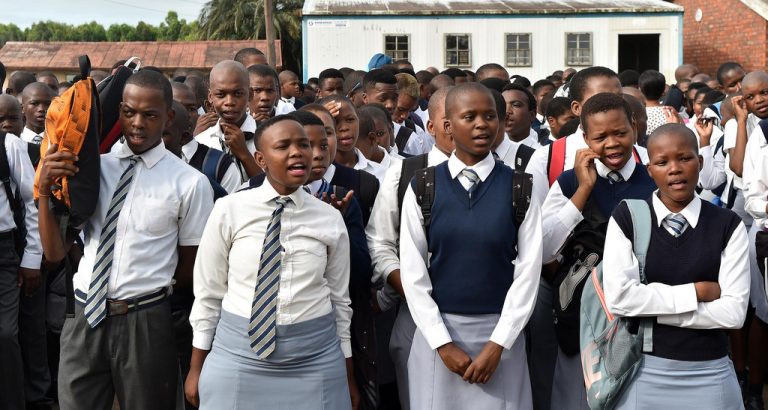
EQUAL EDUCATION, SECTION 27 and the school governing bodies of two Limpopo schools have launched an urgent court application against the Department of Basic Education (DBE) and provincial education departments.

The EE and the SGBs are challenging the DBE’s failure to roll out the National Schools Nutrition Programme to all learners in all grades.

The government’s feeding scheme normally provides meals to over 9 million learners every day, but was halted when schools closed on March 18 due to COVID-19, jeopardizing the food security of these learners and exacerbating the severe hardship experienced within their households.

EE and the SGBs, represented by the Equal Education Law Centre (EELC) and SECTION27, have filed legal papers at the North Gauteng High Court.

The NGOs argue that the failure of the DBE and provincial education departments to roll out the school nutrition programme to all qualifying learners – or even to produce a plan or programme for doing so – is a regressive measure that violates learners’ rights to basic nutrition, basic education and equality. 

“Throughout the time that schools have been closed, a number of child rights and education justice organisations, including SECTION27, EELC and EE, have repeatedly engaged with the DBE urging them to reinstate the NSNP for all learners,” the NGOs said in a statement.  

“The closure of the NSNP impacts on not only the health and education of learners, but has knock-on effects on entire families – in a context of heightened unemployment and loss of income due to the nationwide lockdown, many families are struggling to put food on the table. These families urgently require the NSNP to be reinstated in order to meet their children’s basic nutritional needs and ensure that they are able to buy other desperately needed necessities in the home.”

 SECTION27 and EE have received gravely concerning testimonies from learners, caregivers, educators and SGB members about the dire hardship faced by children across the country in the absence of the NSNP.

The following statements demonstrate the severity of suffering:

 “I had to get a job doing gardening to earn some money to buy food. My sister and I do not have enough food at home. Without the meals from school, I could not concentrate on school work because I was hungry.” – Matric learner, Limpopo

 The government must also think about those learners at home. I feel bad because I am receiving meals at school while my younger sister is still struggling at home. It is not right.” – Matric Equaliser (learner member of EE), Gauteng

“I have been extremely stressed during this period but because I am a mother, I have to make a plan to make sure my family does not go hungry. I have had to resort to taking loans from a loan shark in order to make sure my family survives. The weight on my shoulders is heavy.” – Single mother of five, Limpopo

It is “unfair that some children will be able to benefit and others will not be able to” since “parents are no longer working and need the feeding scheme now more than ever”. – Grade 10 Equaliser (learner member of EE), Gauteng

(Compiled by Inside Education staff)

World’s Poorest Children Are Missing Out On Vital Early Education, Campaigners Warn

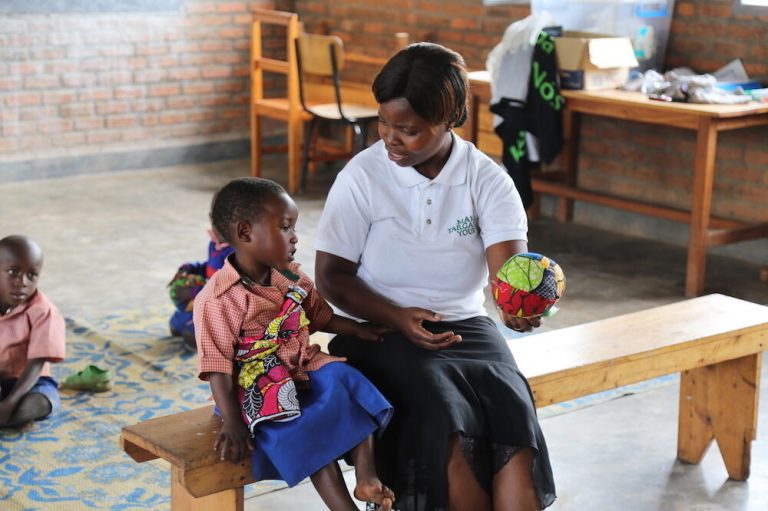
SOME of the world’s poorest children are missing out on vital education in the first few years of their lives because of a woeful lack of investment, a global children’s charity warns today.

A commitment to devote just 10% of education budgets to the early years would reap quick dividends, placing millions more children around the world into pre-primary education, according to Theirworld.

Only one in four children aged three to five attend some form of pre-school education in sub-Saharan, West and Central Africa, falling to less than 2% for the poorest children in Cameroon, the Central African Republic and the Democratic Republic of Congo.

This compares to 94% in the UK or other rich countries.

Research shows that 90% of a child’s brain development takes place before a child turns five, yet education for the under-fives is chronically underfunded, especially in the world’s poorest countries.

In a typical year, governments spend 6.6% of their education budgets on early childhood education, falling to 3% in poorer regions. Countries that provide international aid for education contribute less than one per cent of education aid to pre-primary education.

The Global Partnership for Education (GPE), one of the major funds for education in lower-income countries, held a board meeting as it builds its strategy through 2025.

The decisions made this year will determine how billions of dollars in education financing will be spent.

Theirworld is urging GPE to recognize the 10% target for early childhood education in its new funding strategy. It also wants all national sector plans to include early education.

Hundreds of people from more than 75 countries across the globe have added their name to the charity’s campaign to get the GPE to increase investment in early years education.

Justin van Fleet, President of Theirworld, said:“Every child has a right to a quality and inclusive education, starting with good quality preschools, playgroups or nurseries. So it is a tragedy that around the world 175 million children are denied this right because of a chronic lack of funding in early years education.”

“Countries have already agreed to the Sustainable Development Goals so it’s important to acknowledge the costs to achieve them. It’s time for governments, donors and international agencies to prioritise quality early childhood education – and we’re calling for at least 10% of education budgets to be dedicated to the education of young children. The youngest children are just learning to speak – so we need to speak up for them. And the GPE board members have a unique opportunity to lead on this issue.”

(Source: TheirWorld)

Makhura: COVID-19 Pandemic Gaining Momentum in Gauteng

NYAKALLO TEFU

PREMIER David Makhura says he is deeply concerned that the first wave of the coronavirus is still infecting masses of people in Gauteng, with at least 758 new cases recorded per day.

Makhura was speaking during a weekly media update on COVID-19 pandemic following a meeting of the Gauteng Provincial Command Council this week.

 “Over the past seven days, the number of new cases has doubled. Hospital admissions are increasing. Twenty more people have succumbed to COVID-19. The pandemic is gaining momentum. We must face this reality head-on and mobilise all resources and energy to save lives,” said Makhura.

The province has over 7,000 COVID-19 infections with 57 deaths.

Makhura said so far 7.4 million people have been screened in the province while 338 211 have been tested.

He said he was particularly concerned by the infection rate in the City of Johannesburg and the City of Tshwane metros.  

City of Johannesburg is currently on 3 906 confirmed cases while City of Tshwane has recorded 1 071 cases.

Makhura said since Level 3 lockdown, the number of trauma cases have also increased, adding that as the flu season approaches, the number of people needing healthcare will increase dramatically.

“The province has embarked on a massive flu immunisation programme targeting pregnant women, the elderly, those with chronic illnesses and health workers”, said Makhura.

Since March, 335 Gauteng public servants have tested positive for coronavirus after the province tested 172 113 workers, including public health workers and school teachers.

“Like all other patients, affected staff and their family members are receiving care and treatment in line with the World Health Organization (WHO) protocols”, said Makhura.

Makhura said he was looking forward to a meeting with Health Minister Zweli Mkhize next week to ask for reinforcements and further support in order to strengthen response. 

(Compiled by Inside Education staff)

Professor N’Dri Thérèse Assié-Lumumba Joins UNESCO Forum On World After COVID-19

COVID-19 may help us “think of a new turning point” in overturning established power structures and compelling people to reconsider borders, N’Dri Thérèse Assié-Lumumba, professor of Africana studies in the College of Arts and Sciences, said May 13 during a United Nations online forum.

The United Nations Educational, Scientific and Cultural Organization (UNESCO) invited Assié-Lumumba, along with women leaders and scholars from around the world, to contribute her perspective and expertise to “UNESCO Online Forum: Imagining the World After.”

“The coronavirus didn’t apply for a visa to travel across the globe,” Assié-Lumumba said in a nine-minute video. “We need to rethink the idea of borders, the idea of separation, and think instead of how we can come together as one human family, as a community.”

Even the world’s most powerful countries, economies and militaries have been humbled by the virus, she said, opening an opportunity for scientists, policymakers and citizens to redirect resources to improve human experiences. She said she hopes new systems of education emerging after COVID-19 will include previously marginalized voices and focus on the unity of humanity.

Assié-Lumumba chairs the scientific advisory committee of UNESCO’s intergovernmental Management of Social Transformations (MOST) program.

(Reporting by Kate Blackwood, Cornell Chronicles)

COVID-19: 15 Schools In Western Cape Closed After 98 Teachers Tested Positive

NYAKALLO TEFU

WESTERN Cape MEC for Education Debbie Schafer has confirmed that 98 teachers have tested positive for the coronavirus, leading to early closure of 15 schools in the province, officially declared South Africa’s epicenter of the COVID-19 pandemic.

“The names of the schools and teachers will not be publicised because once word gets out, principals who are already busy, are swamped with questions and visits”, said Schafer.

Schafer said her department stood by its decision to reopen schools, regardless of the number of positive cases detected at different schools in the province in recent days.

She said a lot of work went into making sure schools were ready to reopen under safe conditions.

“When a case of COVID-19 is detected at a school, it will be closed, cleaned and only reopened when they receive a certificate to do so,” said Schafer.

The coronavirus has taken its toll on schools in the Western Cape, having infected more than 1,000 children and almost 100 teachers in the province, authorities said on Thursday.

Almost 1,800 children and 98 teachers have been infected in the Western Cape, leading to the closure of at least 20 schools this week, the provincial government said.

Of the cases involving children, 1,537 cases were reported before the schools were reopened, according to the provincial department of education.

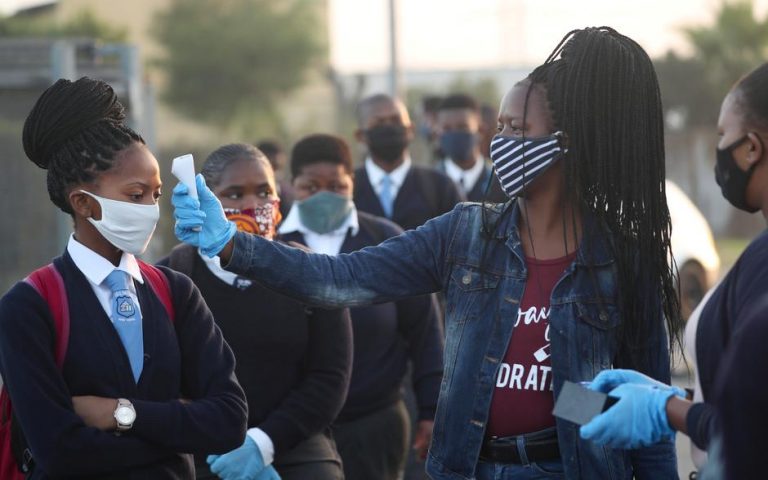
South Africa reopened schools for grade 7 and grade 12 on June 8 following a suspension of almost three months.

“We have followed top medical advice in supporting the decision to reopen schools safely in this province,” Western Cape Governor Allan Winde said at a digital press conference.

“I fully understand that parents are worried about the COVID-19 pandemic and how the reopening of schools might impact their child’s well-being,” Winde said.

According to data provided by the Western Cape Department of Health, as of June 5, there had been a total of 1,787 cases of COVID-19 in people under the age of 20, representing roughly six percent of all cases at the time.

Of these 1,787 infections, five children have died, accounting for 0.3 percent of all confirmed cases of those infected under the age of 20.

The data, however, does show that children are at a significantly lower risk than adults, Winde said, adding that in fact, those at highest risk are residents over the age off 55 and those with underlying health conditions such as diabetes and hypertension.

“The reality is that the virus is going to be around with us for some time, possibly another year at least,” said Winde.

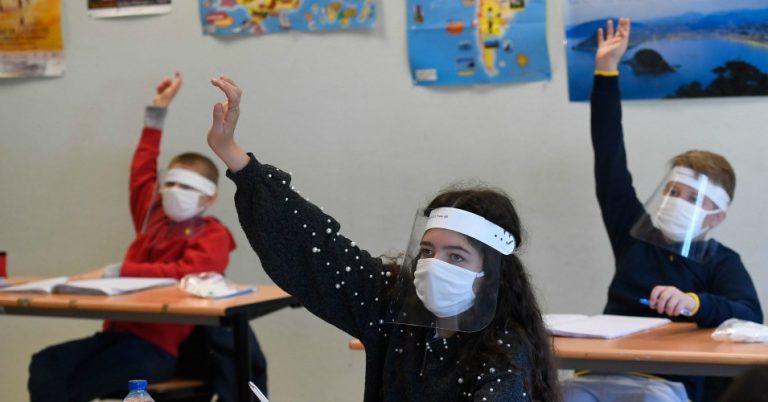
“We must adjust to the ‘new normal’ of COVID-19, by making sure that we reopen our schools in a way that reduces the risk and ensures the safety of our learners and staff,” said Winde.

It is for this reason that the Western Cape government has spent 280 million rand (about 16.8 million U.S. dollars) on masks and cleaning materials thus far, Winde said.

The South African Paediatric Association has supported the phased reopening of schools based on medical evidence that children are less likely to get sick and if infected, have milder disease, are unlikely to die from the virus, and are probably less infectious than adults.

The Western Cape has remained the epicenter of the virus in the country, recording 36,279 confirmed cases and 891 deaths as of Wednesday, in comparison with 55,421 cases and 1,210 deaths nationally.

(Additional reporting by news agencies)

29 Eastern Cape Schools Closed Due To COVID-19 Cases

NYAKALLO TEFU

THE EASTERN CAPE Department of Education has confirmed that 29 schools were closed on Wednesday after some teachers, pupils and supporting staff tested positive for COVID-19.

The department said it is currently investigating 48 other schools for possible infections.

According to the department, 31 of the schools were in the Buffalo City Metro, which incorporating East London, King William’s Town, the Eastern Cape capital Bhisho and surrounding rural settlements.

“After advice from the health department on who needs to isolate and cleaning has been done, schooling can resume,” the department said in a statement.

The department has meanwhile called for calm among staff, pupils and parents, saying all necessary steps would be taken to ensure that schools are cleaned and are checked regularly for possible cases of COVID-19.

“Through our preparation and round-the-clock monitoring, we hope to keep it this way. We aim to save the academic year, while preserving lives,” the department said.

(Compiled by Inside Education staff)

Teachers Union Warns Safely Reopening US Schools During ‘Triple Crisis’ Could Cost $116.5 Billion

A LEADING U.S. teachers union warned Wednesday that safely reopening K-12 public schools this fall in the midst of the coronavirus pandemic will require an estimated $116.5 billion federal investment—and that’s on top of the funding needed to address budget cuts that have cost local education systems over 750,000 jobs.

The American Federation of Teachers (AFT) issued the warning in a report entitled Reopening Schools During a Time of Triple Crisis: Financial Implications (pdf), published just hours before a U.S. Senate Health, Education, Pensions, and Labor Committee (HELP) hearing entitled “Going Back to School Safely.”

“This is a five-alarm fire,” declared AFT president Randi Weingarten in a statement.

Weingarten explained the importance of returning to classrooms for children, parents, educators, and the economy—then warned that “if schools can’t get the money they need to safely reopen, then they won’t reopen, period.”

“America is facing a triple crisis: a health pandemic, a racial justice crisis, and an economic crisis—and they’re all interrelated,” she said. “Public schools are centers of their communities and essential to repairing our nation’s fraying social fabric. And the economy won’t recover fully unless school buildings reopen.”

AFT’s new report follows a flexible and science-based blueprint on reopening that the union released in late April as well as online polls conducted in May for USA Today that showed both K-12 teachers and parents of school-aged children worry about what a return to in-person learning will mean for safety and education.

The union’s estimate for how much it will cost to safely reopen accounts for adding instructional, health, custodial, and cleaning staff; buying supplies, including personal protective equipment; enabling more distance learning; resuming before- and after-school care; making transportation safer; meeting children’s social and emotional needs; and providing additional academic support to students.

The $116.5 billion “does not include some additional costs that we could not estimate, especially for facility retrofits,” the report notes.

“Such retrofits include no-touch faucets and doors, hand-washing stations, upgrades to ventilation systems, signage, and reconfiguration of classrooms and other spaces. We believe the cost of these would be another several billion but cannot make a more specific estimate.”

Weingarten expressed frustration with the Republican-controlled Senate and President Donald Trump for refusing to seriously engage with the Health and Economic Recovery Omnibus Emergency Solutions (HEROES) Act, or H.R. 6800, which was introduced and passed by House Democrats in May.

“These numbers show the sheer scale of the effort required,” Weingarten said of AFT’s analysis, “and the fact that neither the Senate nor the president has begun any negotiations on the HEROES Act is astounding to us. America’s teachers are sending an SOS because we know that if we don’t return to face-to-face learning, a generation of students will be added to the coronavirus casualty list.”

The newest round of coronavirus-relief funding passed by the House of Representatives last month includes $100 billion for both K-12 and higher education.

But Senate Republicans have no plans to consider the $3 trillion legislation, which they call “a liberal wish list.” Senate Majority Leader Mitch McConnell, Kentucky Republican, has said any additional relief package will be smaller than the $2 trillion package signed into law in late March.

Citing over 750,000 recently lost public education jobs, the AFT report says that “the HEROES Act would help states address these and other potential teacher and support staff job losses by supplying $57.9 billion directly to school districts to offset revenue losses and costs related to the pandemic.”

The union analysis found that the HEROES Act funding “is enough money to save and restore 633,000 jobs in public schools nationally, in addition to paying for all the materials and supplies that these workers and their students would typically use.”

The report says the legislation could save or restore the jobs of an estimated 316,365 teachers, 74,739 teaching assistants, and 241,896 other education personnel.

The AFT estimate of the cost of safely reopening “is the second to surface this week” and the result of a “more severe analysis,” according to U.S. News & World Report.

Earlier this week, AASA, the School Superintendents Association, and the Association of School Business Officials International, said that in order to adhere to the Centers for Disease Control and Prevention’s safety recommendations for reopening, school districts will be forced to spend nearly $2 million per district that they hadn’t budgeted for—a cost so prohibitive that some are now scrapping plans for in-person classes entirely this fall.

Even if the large majority of schools do reopen in the fall, some teachers and students likely won’t be there. The USA Today polling from May found that nearly six in 10 parents would consider not sending their children back and one in five educators likely would not return. That figure was one in four among teachers 55 and older.

The U.S. has nearly two million confirmed Covid-19 cases and has seen over 112,000 deaths. Dr. Anthony Fauci, director of the National Institute of Allergy and Infectious Diseases, told a healthcare conference Tuesday that the pandemic has turned out to be his “worst nightmare” and warned that “it isn’t over yet.”

(Source: Common Dreams)

Two Gauteng Department Of Health Staffers Test Positive For Covid-19

NYAKALLO TEFU

TWO SENIOR OFFICIALS from the Gauteng Department of Health have tested positive for COVID-19.

The Gauteng Department of Health said the two officials – spokesperson Kwara Kekana and stakeholder relations manager Julius Maputla – were currently in self isolation.

“The Office of the MEC [Dr Bandile Masuku] has a public duty to declare positive cases as part of the drive to fight against stigma and ignorance surrounding COVID-19, as well as to promote transparency,” said the MEC’s spokesperson, Philani Mhlungu.

Both the Gauteng Health provincial Central Office and the Disaster Management Centre have been disinfected.

Following her infection, Kekana took to social media platform Twitter to share the news about her COVID-19 test results and self-isolation:

“Once more, we wish to confirm that so far, Masuku, who has to date tested five times, as well as the remainder of the officials in his office remain negative in terms of confirmed test results”, said Mhlungu.

(Compiled by Inside Politics staff)

Gauteng Department Of Education Mourns Death Of Two Teachers In Ekurhuleni

NYAKALLO TEFU

TWO TEACHERS from Thuto Lesedi Secondary School in Vosloorus in Ekurhuleni have died in separate incidents, Gauteng Department of Education has confirmed.

According to the department, a 63-year-old acting principal collapsed while the 58-year-old teacher is alleged to have experienced severe complications and later died in her sleep at home.

Gauteng Education MEC Panyaza Lesufi has expressed shock and sadness at the death of the two educators from the same school. 

“This is a huge loss for the school and the education sector in a difficult period. We would like to convey our sincere condolences to both families and the school community. We pray for their strength during this time of grief,” said Lesufi.

(Compiled by Inside Education staff)