
Cyril Ramaphosa
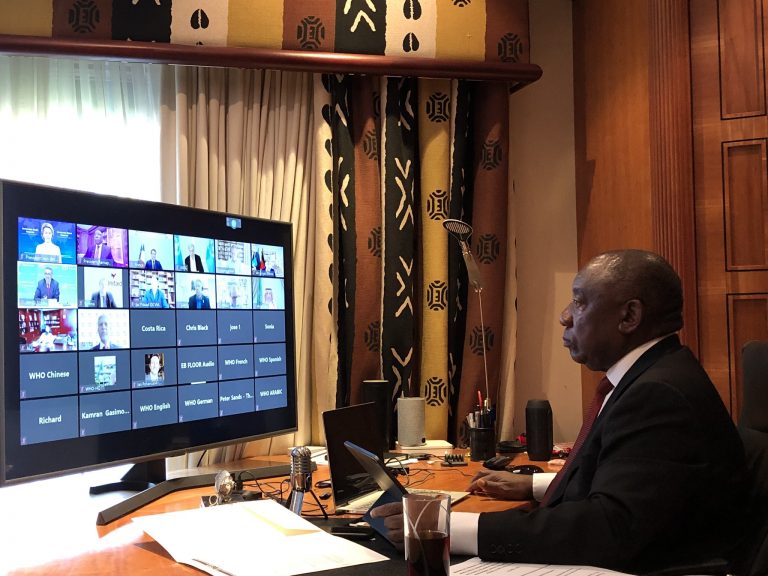
On this day twenty-six years ago, a new nation was born in Africa.
On the 27th of April 1994, the men, women and children of South Africa emerged from the dark vale of oppression to stand in the light of freedom.
As millions cast their votes for the first time, they boldly declared to the world that South Africa belongs to all who live in it.
The price of our freedom was paid by generations of patriots.
We pay tribute to the great leaders who resisted colonial domination and who fought for our liberation, both those who have left us and those who are still living.
We remember Chief Albert Luthuli, Nelson Mandela, Govan Mbeki, Oliver Reginald Tambo, Walter Sisulu, Albertina Sisulu, Stephen Bantu Biko, Robert Mangaliso Sobukwe, Charlotte Mannya Maxeke, Ruth Segomotsi Mompati and Mam Winnie Madikizela-Mandela.
We remember John Langalibalele Dube, Dr AB Xuma, Sefako Mapogo Makgatho, ZR Mahabane, Josiah Gumede, Pixley ka Isaka Seme, King Cetswayo, King Hintsha, Makhanda, Sekhukhune, Makhado, Bambatha and the many brave leaders of the Khoi and San rebellions.
They watered the tree of liberty so we could enjoy its fruit and stand under its shade today.
We honour their memory and the contribution of the many ordinary compatriots whose names are unknown but whose sacrifices were just as great.
Our Constitution, and the Freedom Charter from which it draws its inspiration, both begin with the words: ‘We, the People’.
They are an ever-present reminder that everything we have achieved as a young democracy and everything we hope to achieve is founded on the will of the people.
Our Constitution is the defender of all who live in our great land, be they black or white, rich or poor, young or old, man or woman, citizen or resident.
Over the past 26 years we have made great progress in building a common future in which all South Africans have a part.
We have been building homes, schools, hospitals, clinics and universities.
We have been providing water, sanitation and electricity to many South Africans who never had access to such services.
We have expanded access to health care and education.
We have been hard at work to rebuild our economy and strengthen our institutions.
We have initiated work, internship and study opportunities for young people, assisting them to secure jobs or to be self-employed.
We have accelerated programmes to give our people access to land, and returned land to those who were forcibly removed.
We are supporting vulnerable families, parents, the elderly, persons with disabilities and our veterans with social grants.
Our young democracy has much to be proud of.
But the devastating legacy of our past runs so deep that at times we ourselves have been found wanting in addressing the suffering it has subjected our people to.
Poverty and inequality continues to stalk our land.
A child born to parents of means has a comfortable home, is fed and sheltered, receives a good education and has good prospects for a prosperous life.
For a poor child, every day of life can be a struggle for shelter, for food and for opportunity.
For such a child, their chances of finishing school, of studying further, of gaining useful skills and of finding a job are much smaller.
Even now, after all the progress we have made, the circumstances of one’s birth largely determines where and how we live, where we study, where we work and where we are cared for when we are sick.
It is the greatest form of injustice. It is a stain on our national conscience.
The triumph of 1994 was about much more than being able to vote.
It was about setting right the wrongs of the past, about redress, restitution and restoration.
It was about levelling the field for the black child and the white child, and making sure they each have an equal chance in life.
The promise we made on the 27th of April 1994 can no longer be deferred.
We must make real the right of all our people to health care, food, shelter, water, social security and land.
In this final decade of the National Development Plan, we must change the pace of social and economic transformation.
As a country, we are more than capable of building a more equal society where these rights are realised.
For as long as this is delayed, freedom for some is freedom for none.
This Freedom Day, we find ourselves engaged in a struggle that has thrown into sharp focus the poverty and inequality that still defines our society.
The coronavirus pandemic forces us to confront this reality.
Though we are certainly all braving the same tide, we have not been impacted in the same way by this pandemic.
Some people have been able to endure the coronavirus lockdown in a comfortable home with a fully stocked fridge, with private medical care and online learning for their children.
For millions of others, this has been a month of misery, of breadwinners not working, of families struggling to survive and of children going to bed and waking up hungry.
The social relief measures announced last week that are now being implemented are therefore as much about narrowing the gulf of inequality as they are about supporting vulnerable citizens through this trying time.
With every day that passes, this experience is teaching us much about ourselves, about our society and about our country.
We are learning about the limits of our endurance, about our relations with others and about our very nationhood.
The true lessons of this experience will not just be about the necessity of social distancing, proper hand washing and infection control.
They will also be about whether we have the ability to turn this crisis into an opportunity to invest in a new society, a new consciousness and a new economy.
In this new society, the privileged cannot afford to close their eyes to the plight of the poor and sleep peacefully at night.
This is the time when we should actively work to build a fair and just country
In the South Africa that we all want, no man, woman or child will go hungry, because they will have the means to earn an income, and our social assistance programmes will be matched by efforts to enable communities to grow their own food.
In this new society, the provision of services to our people is the foremost priority of government.
The public servant understands that they are just that: a servant of the people.
Public representatives put the interests of the people ahead of their own.
Before this pandemic was visited on our country, we were deepening our efforts to address poverty, underdevelopment, unemployment and a weak economy.
This pandemic could set these efforts back by many years.
It will take a great deal of effort and resources for our society and our economy to recover.
The challenges we faced before this health emergency remain.
Even as we turn the tide on the coronavirus pandemic, we will still have to confront a contracting economy, unemployment, crime and corruption, a weakened state and other pressing concerns.
We will have to find new, exceptional and innovative ways to overcome them.
This is not something government can do alone.
The collaborative spirit with which government, business, labour and civil society formations have worked to drive the national effort to combat the coronavirus is yet another affirmation of just how far we have come.
Robust engagement, strong institutions, social compacting and consensus-building are all the fruits of the national democratic project that began in 1994.
The business community has shown itself ready and willing to support the workforce and to rally its resources to combat this disease.
The labour movement has worked with its partners in government and business not only to protect its members from the worst effects of this pandemic, but to champion the interests of the poor and unemployed.
Across society, NGOs, non-profit organisations, community bodies, religious communities and individuals are working together to defend our people against this virus and its damaging economic and social effects.
In doing so, they have demonstrated the solidarity and compassion that is at the centre of the concept of ubuntu.
As President Nelson Mandela said: “To be free is not merely to cast off one’s chains, but to live in a way that respects and enhances the freedom of others.”
Respect for the rights of others is the beating heart of freedom.
Violating the coronavirus response provisions and exposing others to a potentially fatal illness is the worst form of disrespect for others.
This pandemic has changed the face of humankind, not just our country.
It has reminded us of our own mortality, but also of how interconnected we are.
If we did not realise it before, we all know it now – that our interdependence is key to our very survival as a people.
This Freedom Day let us stand united against this disease.
Let us also stand united against poverty, inequality and hunger.
We can only overcome this crisis and rebuild our shattered economy if we work together.
Let the good that has come from this experience – of collective action and unity of purpose – continue.
Let the generosity of spirit endure.
We owe it to the memories of those who came before us to live the values they cherished, of empathy, compassion and solidarity.
As we are reminded this Freedom Day, we have known far worse and we have prevailed.
Let us keep our arms locked together in a column of defence against this pandemic, a united people.
Let us use this crisis to reaffirm our resolve to fundamentally change our society.
Let us emerge from the coronavirus pandemic a better country, a more equal country.
This year, we are celebrating Freedom Day apart, each of us confined to our homes.
Next year – through your determination, through your courage and through your actions – we will once again celebrate Freedom Day together.
I wish you all a happy and, above all, a safe and peaceful Freedom Day.
I thank you.
Ramaphosa: ‘Poverty, Unemployment and Inequality Continues To Stalk Our Land’
Government Urged To Limit Re-opening of Schools To Grade 12 Learners Only
Nyakallo Tefu
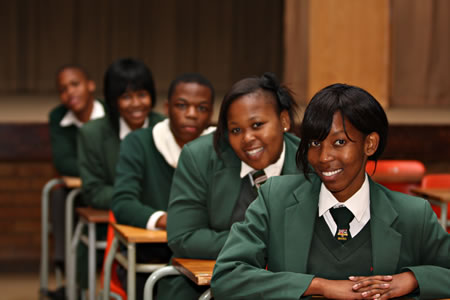
About 11 million South African learners might have to spend the rest of the 2020 Curriculum year doing online learning if a proposal by education stakeholders and senior government officials is endorsed by the National Coronavirus Command Council on Wednesday.
Disagreements over whether or not to allow all learners to return to school on May 6 has forced the Departments of Basic and Higher Education to twice postpone the scheduled meetings meant to announce the decision on Friday and Monday.
While Basic Education Department has proposed a phase-in approach in a leaked confidential document labelled Framework for a Curriculum Recovery Plan- Post Covid19 that will see only Grade 7 and Grade 12 returning to school on May 6, an increasing number of stakeholders, including senior government officials have warned against allowing lower grade learners back in the classroom at the height of the pandemic, saying the action would put the lives of many learners at risk.
The number of COVID-19 cases in South Africa is rising rapidly across the country, even as the whole country is quiet and under lockdown.
By Monday this week, the number of Covid-19 cases in South Africa has increased to 4 793 and the death toll had also risen to 90.
Gauteng (1 353), KwaZulu Natal (902) and the Western Cape (1 737) are the hardest hit, with a total number of 3 992 confirmed COVID-19 cases as of Monday evening.
Government insiders have told Inside Education that Gauteng is one of the provinces that have opposed proposals to re-open schooling for all learners at a go, as this would put the safety of learners at risk.
“Safety first. That’s our approach,” said a senior Gauteng Education official, who asked to remain anonymous.
He added: “We can regain the curriculum, but unfortunately we can’t regain a life. My worry is that parents can pressurise us about kids, but if one child dies or one child gets this thing [Coronavirus], we are going to be in trouble. We can only risk with matriculants. We can’t risk with others at lower grades. We honestly can’t,” said the senior Gauteng Education official.
The official said the only reason Gauteng would agree that the Grade 12 learners go back to school was due to the fact that if they don’t, this will cause a serious logistical backlog for government.
“There might be a generation that will not go to school and you don’t want that because if Grade 12s are still within the system you can’t have Grade 1. These things are interlinked. He said unlike Grade 7s, the Grade 12 would be able to exercise social distance,” said the senior government official.
“At least Grade 12s are adults. You can argue that they know the basics of social distancing and washing hands. But Grade 7s are still young,” said the senior Gauteng official.
National Teachers Union’s president Allen Thompson said his organization was opposed to universal opening of schools.
“We have recommended to the department not to open all classes but just for the matriculants as they will be able to take instruction,” said Thompson.
“NATU is calling for Grade 12s to be prioritized because we believe they have capacity to follow health guidelines. Grade 7s are still young they won’t follow instructions.”
Thompson said while the teacher union could guarantee the safety of Grade 12s, it believed that Grade 12 learners were old enough to observe social distancing protocols.
“Remember that we are not sure if Grade 12’s will be safe if they go back to school but they will be able to follow instructions as they are ready to go to tertiary institutions and even the work environment. We believe they value life more than those coming from lower grades, they know that they are almost done. We believe they will subscribe to the precautions,” he said.
Thompson said if they go back to classes, Grade 12 learners will be bale to subscribe to ‘necessary’ precautions as required by government.
SA Democratic Teachers Union (SADTU) has meanwhile called on government to ensure that all safety measures are put in place two weeks before schools, universities and TVET colleges are re-opened.
“The first priority is the safety of all our learning institutions because we cannot afford to lose lives. Corpses can neither be taught nor teach”, said SADTU in a statement.
SADTU said it was, above all, ‘deeply’ concerned about the safety of teachers, lecturers, education support personnel, school learners and students.
“Above all, we are concerned about the readiness of the provincial departments with regard to the availability of health and safety essentials that have to be put in place in the learning institutions at least two weeks before any activity can take place,” it said.
“We have the right to be concerned because Alert 4 Level requires honesty, transparency and accuracy regarding readiness with precautionary measures. We are raising these things because our sister Union, DENOSA has raised these matters and provinces concealed the facts about their readiness until the Minister of Health was shocked when he visited one of the hospitals in the Eastern Cape. We believe education is an enabler. However, it can only be effective in a conducive and safe environment.”
Basic Education spokesperson Elijah Mhlanga has apologized for twice postponing the joint media briefing by the Departments of Basic Education and Higher Education.
“The education media briefing scheduled for tomorrow [Monday] has been postponed. We will issue a media statement soon. Apologies for the inconvenience caused,” said Mhlanga.
He said the debate and discussion on the postponed media briefing has been noted.
“We are tracking the infection rate of the Coronavirus. We are monitoring the behavior of people in relation to the regulations. We said from the start that compliance with regulations would determine the next course of action. Decisions on education are based on the assessment done daily. Whatever criticism you level against the Department do keep in mind that we are dealing with a dangerous virus which has killed people already,” said Mhlanga.
“We need to remember also that the Department had NEVER published a date for the reopening of schools. The anxiety is caused by fake news and leaked discussion documents. That context is critical, never lose sight of the fact that the COVID-19 is a new situation and we have no previous experience on it. The anxiety is understandable because this matter has got to do with people’s lives.”
Mhlanga explained that the Department is one of many other departments that are affected by the current situation.
“Cool heads are required at the moment, we need to make
decisions based on scientific evidence. Those who insult us we really must
understand, it’s probably the stress. There are parents who say children must
go back to school and then you have others who say it’s dangerous to go back
now.
We are in a situation where we are expected to reconcile clashing views into a
position that will serve the interest all people. Let’s allow the National
Coronavirus Command Council to deliberate on these matters and lead us. This is
national matter that affects a whole range of stakeholders, not just for one
Department. There will be a media briefing soon.”
Western Cape Education Offers School Teachers Tips on How To Teach Learners During COVID-19 Lockdown

Nyakallo Tefu
The Western Cape Education MEC Debbie Schafer has offered teachers guidelines and programs to learn how to make use of online resources.
Schafer said on Sunday that South African’s needs to start embracing technology and adapt to new challenges brought on by the novel coronavirus pandemic.
“I am very aware of the public sentiment around online learning in South Africa. It is true that not all learners have access to online resources and equipment that can make distance learning possible. I have addressed this in previous parts of this series, and will continue to do so later this week”, said Schafer.
The schools in South Africa have been closed since March due to coronavirus and no learning and teaching has been taking place.
The country has now moved to Level 4 lockdown as of 1st of May.
This means that learners across the country will continue learning via online programs and teachers who have not familiarized themselves with the digital world have to do so.
“The world has already shifted into a digital landscape, and while we have certainly made great strides in educating our teachers in e-learning over the past five years, we need more teachers to embrace e-learning during these very unusual times, and beyond”, said Shafer.
On Sunday, the Western Cape education department published a document which seeks to assist principals and teachers on how to harness the use of technology while learners are still at home.
“There are multiple platforms and tools for online teaching and learning that could be used. Some are more complex than others, while others are already used by many in our daily lives, but just for other purposes,” said Schafer.
Therefore, the WCED has put together some simple guides to up-skill teachers in basic, yet valuable, digital activities.
· How to download videos from YouTube:
· How to set up Facebook for learning & teaching:
· How to use MS Teams for Education:
Online learning and teaching has been widely criticized in South Africa, with many highlighting that it means the less privileged will be left out as schooling resumes and they don’t have access to resources that have been offered to learners.
The Western Cape education department has also put together a number of programmes for teachers to take part in, for them to be more equipped for the digital world.
Cape Teaching and Leadership Institute (CTLI) has also developed a course on self-paced learning. The Remote Teaching and Learning FOR TEACHERS course covers five modules to cater for a variety of different needs and interests in online learning:
· Module 1: DIY Home Classroom
· Module 2: Teaching Strategies
· Module 3: Finding Digital Content
· Module 4: Creating Content
· Module 5: Sharing Platforms
This course can be accessed on both computer and mobile devices at https://wcedeteacher.wixsite.com/eteacher, or via the School Closure Pack on the WCED ePortal.
Several other smaller “quick and digestible” training snaps will also be prepared and made available e.g. training for teachers on broadcast presenting and how to record with video.
MEC Debbie Schafer: Quality Teaching At Home During COVID-19 Pandemic

By Debbie Schäfer, Western Cape Minister of Education
With schools closing all over the world due to Covid-19, online or distance learning have become the new buzz words in many countries.
I am very aware of the public sentiment around online learning in South Africa. It is true that not all learners have access to online resources and equipment that can make distance learning possible.
This, however, cannot be a reason to stop the Department from advancing in this area, and to encourage all teachers and learners to use it, where they can.
The world has already shifted into a digital landscape, and while we have certainly made great strides in educating our teachers in e-learning over the past five years, we need more teachers to embrace e-learning during these very unusual times, and beyond.
I am not talking about teachers setting up elaborate online learning sites. I am referring to some of the most basic forms of technology or social media, which many South Africans have. These include the use of WhatsApp and Facebook for example.
The WCED has published a document which seeks to assist principals and teachers on how to harness the use of technology while learners are still at home.
There are multiple platforms and tools for online teaching and learning that could be used. Some are more complex than others, while others are already used by many in our daily lives, but just for other purposes. Therefore, the WCED has put together some simple guides to up-skill teachers in basic, yet valuable, digital activities.
These guides cover:
· How to use WhatsApp
· How to set up Google Classroom
· How to download videos from YouTube
· How to set up Facebook for learning & teaching
· How to use MS Teams for Education
The guides are there to assist teachers in reaching their learners, where possible through sharing notes, lessons, activities, videos and assignments.
In addition to this, the Cape Teaching and Leadership Institute (CTLI) has developed a course on self-paced learning. The Remote Teaching and Learning FOR TEACHERS course covers five modules to cater for a variety of different needs and interests in online learning:
· Module 1: DIY Home Classroom
· Module 2: Teaching Strategies
· Module 3: Finding Digital Content
· Module 4: Creating Content
· Module 5: Sharing Platforms
This course can be accessed on both computer and mobile devices via the School Closure Pack on the WCED ePortal.
Several other smaller “quick and digestible” training snaps will also be prepared and made available e.g. training for teachers on broadcast presenting and how to record with video.
In these unusual and disruptive times, each school should determine what is the best fit for their teachers and their learner context.
For some, it may be WhatsApp or Facebook. For another teacher, digital may not be an option at all.
As mentioned in Part 4 of the series, I indicated that the WCED is planning to send a survey to all schools to determine their digital needs. This has been distributed to principals and teachers. The results will give us a clearer picture of what is required from each school, grade, and even class.
We have been encouraged by stories of teachers who are using technology as a means to connect with their learners using different tools.
Ashric Don, a Grade 7 teacher at Klapmuts Primary School, created a Facebook group to support learners in his class with their school work. The initiative has expanded to include multiple grades, and group members now hail from as far away as Namibia.
Evan Papier teaches Economics and Management Science (EMS) and Life Orientation at Groendal Secondary School, and has been using WhatsApp groups, voice notes, photos and video messages to send content to and receive work from his Grade 12 learners. Other teachers from the school are doing the same for their classes.
It can be difficult to create content for e-learning without the right equipment or setting. But Ronald Kock, who teaches at Diazville High School, created an innovative set up to use a cardboard box for screen recordings, and shared the idea on social media.
I would like to point out that Groendal Secondary and Klapmuts Primary School are both Quintile 1 schools. This means that they are no-fee schools classified to be in areas that serve the poorest communities.
These teachers have sought ways and means to connect with their learners despite the poverty levels that exist within their school communities. This is the kind of attitude that we like to see in our teachers.
While this might not be a possibility for every teacher and learner, we can at least try where the opportunities may possibly exist.
The first step is training oneself. We have now given our teachers the tools to do so.
Pietermaritzburg High Court Orders KZN Education Department to Release Draft Scholar Transport Policy
Nyakallo Tefu and Charles Molele
The KwaZulu Natal Department of Education has been instructed by the Pietermaritzburg High Court to release a draft scholar transport policy for public comment.
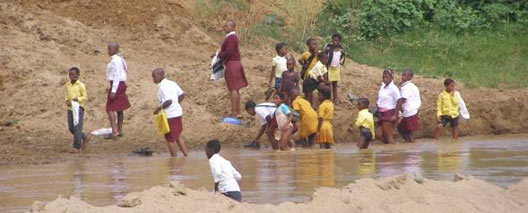
Equal Education’s Jay-Dee Cyster said the court order against KZN Education Department was a huge victory for learners around the country who walk long and dangerous routes to school, sometimes more than 30 kilometres on foot to get into a classroom.
“Our relentless campaign for scholar transport since 2014, and our legal challenge in the Pietermaritzburg High Court, has succeeded in getting the KwaZulu-Natal Department of Education (KZN DoE) to release a draft scholar transport policy, for public comment.”
She added: “It is as a result of the determination of Equal Education (EE) members that the KZN DoE has finally applied itself to the development of a policy to address the need for safe, reliable, government-subsidised scholar transport across the province.”
“A provincial policy is crucial to clarifying the responsibilities of the departments of education and transport to enable rigorous planning, including data collection and budgeting and ensure implementation.”
KZN Education’s head of department Dr Vusi Nzama said the Department welcomed the court order and will abide by it.
Nzama said the draft KZN Learner Transport Policy document of the Department, published in both English and Zulu, was gazetted on April 16 this year for public comment and scrutiny.
He said the Department has now given the public 30 days to submit comments on the draft scholar transport policy document.
“We have now availed the copy of the draft document to the Equal Education and the High Court and we are satisfied with the court order. It is now out for public comment,” Nzama told Inside Education on Monday
Learners in the KZN province have been pictured crossing rivers to get to school, with many traveling long distance of over 30 kilometres, resulting in members from Equal Education fighting for safe, reliable, government-subsidized scholar transport across the province.
The draft KZN Learner Transport Policy document, which has been by Inside Education, stipulates that all learners from Grade R to Grade 12 have a Constitutional right to safe and secured learner transport to and from school.
The policy document also sets out the criteria for who qualifies for learner transport, citing that any learner who travels a minimum distance of 3 kilometres to the nearest appropriate school qualifies for learner transport.
It document also states that that learners who have difficulty learning in mainstream schools as a result of a disability, including visual impairment, hearing impairment, physical impairment, medical impairment and intellectual disability, qualify for learner transport.
“If, as a consequence of budgetary constraints, the implementing authorities are unable to provide all learners who qualify for learner transport with transport, the Head: Education shall on the advice of the Director: Learner Transport prioritise learners in each district in keeping with the intent and purpose of the KZN Learner Transport Policy,” according to policy document.
It further states that Principals of schools, the KZN Education’s Head of department and district officials should work together to ensure every learner has access to safe and secure transport.
“The school Principals shall inform learners’ parents/guardians who applied for learner transport whether their applications were successful and in the case of those learners who were unsuccessful, inform the learners’ parents or guardians in writing why their applications were unsuccessful,” according to the KZN Learner Transport Policy.
The policy document also stipulates that officials in charge of learner transport shall prepare a consolidated list of all learners requiring learner transport at schools in each district.
“The list should include information on the current number of learners receiving learner transport in each school, the number of vehicles servicing each school, the number of learners that were eligible for learner transport but not provided transport, together with any other relevant information,” according to the draft policy document.
“The implementing departments shall be guided by the criteria for the identification of beneficiaries for learner transport as set out in the National Policy and as amplified further hereunder. The KZN DOE shall act consistently and with transparency and to this end it shall ensure inter alia that school Principals are regularly informed of the prioritisation criteria under the KZN Learner Transport Policy.”
On Monday, Equal Education said it will be requesting an extension of the deadline in order to allow time for its legal representatives to go through the draft scholar transport policy.
Cyster said Equal Education said the court action against KZN Education Department was a long and protracted one but well worth it.
“In October 2019, represented by the Equal Education Law Centre (EELC), we returned to court to get the KZN DoE to stop wasting time and publicly release the provincial scholar transport policy. We were able to secure a court order by consent in the Pietermaritzburg High Court that the KZN DoE must release the draft scholar transport policy by a particular date,” said Cyster.
She said the EE’s campaign titled #LongWalkToSchool has achieved the victories, including the provision of government-subsidised buses to three schools in Nquthu in 2015, the publication of the National Learner Transport Policy in 2015, and the delivery of buses and taxis to 12 Nquthu schools in 2018.
“We also manage to win public commitment from the national Department of Basic Education to work with National Treasury to explore the introduction of a conditional grant to fund scholar transport,” said Cyster.
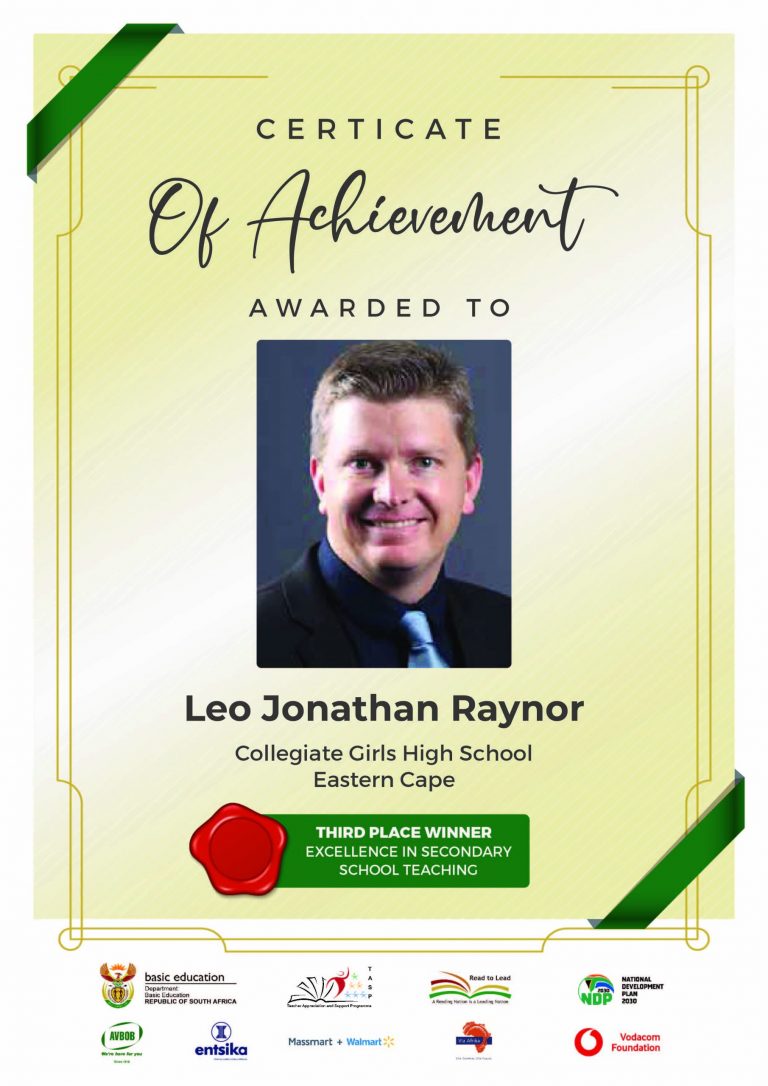
Our Teach of the Week is Leo Jonathan Raynor from Collegiate Girls High School in Port Elizabeth, Eastern Cape
CLASSROOM CORNER
Teacher of the Week
Teacher: Leo Jonathan Raynor
School: Collegiate Girls High School in Port Elizabeth, Eastern Cape
Eastern Cape school teacher Leo Jonathan Raynor was impressed by the excellent teachers he had when growing up and decided to follow their example.
His goal was to mould the minds of the youth, and let them realise that they were important and that they could make a difference.
He added that their voices need to be heard and not squashed.
Being a teacher allows him to encourage learners to have the confidence to use their voice in a productive and constructive way.
He says teaching has become a profession that is not just one of sharing of information but rather one of mentorship and guidance along with the necessary imparting of important life skills and information.
He enjoys conversations in the classroom which are around topics of current interest, historical significance and just the general concerns of young people.
This means that each and every day is filled with thought-provoking questions and intense conversation.
Being involved in extra-mural activities and tours allows him a unique opportunity to get to know learners in a more authentic environment and build bridges that extend beyond the classroom.
He feels that one of his strengths is his keeping up-to-date with technological advancements that can be used to share information with learners.
He also strives to maintain positive relationships with every learner that he teaches.
Raynor states that he has thoroughly enjoyed the NTA journey and learnt a lot through the process.
He adds that he will cherish the experience for many years.
He plans to continue to deliver excellence in the field of teaching and to mould the minds of the future.
UK Universities Seek Government Bailout In COVID-19 Lockdown
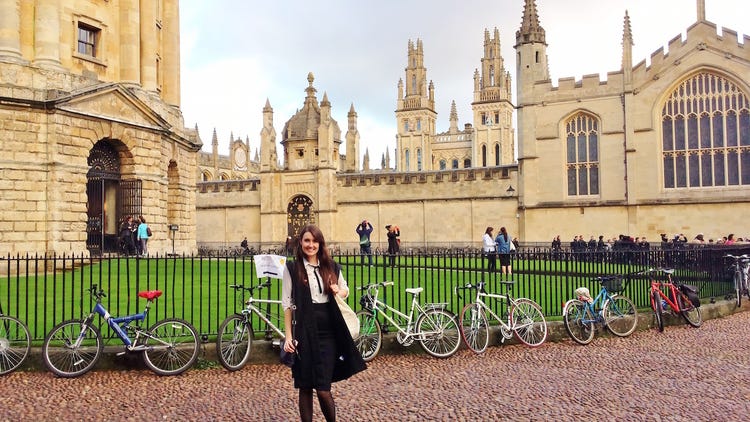
The COVID-19 pandemic and an ensuing recession will lead to 111,000 fewer UK and 121,000 international first-year students attending the British universities this year, resulting in a 2.5-billion pound funding black hole, a report from a leading university staff union warned this week.
According to London Economics consultancy’s analysis for the University and College Union (UCU), the largest decline in income is the expected loss of 1.51 billion pound from students outside the European Union (EU), with Chinese and Indian students making up a majority of this international group of students who pay significantly higher tuition fees.
The report finds that universities hit hardest by the falls in fee and grant income are those that cater for significant numbers of international students, with their difficulties having severe knock-on effects for the rest of the sector.
It concludes that without government intervention, an estimated 30,000 university jobs are at risk, with a further 32,000 jobs under threat throughout the wider economy.
“This alarming report shows that university staff and students are now staring over the edge of a cliff and desperately need the government to step in and protect the sector,” said UCU general secretary Jo Grady.
“Our world-renowned universities are doing crucial work now as we hunt for a vaccine and will be vital engines for our recovery both nationally and in towns and cities across the UK. It is vital that the government underwrites funding lost from the fall in student numbers. These are unprecedented times and without urgent guarantees, our universities will be greatly damaged at just the time they are needed most,” she said.
According to the report, the coronavirus pandemic and an ensuing recession will lead to 111,000 fewer UK and 121,000 international first-year students attending the British universities this year, resulting in a 2.5-billion pounds funding black hole.
The total economic cost to the country from the reduced direct and indirect economic activity generated by universities due to the loss in income is estimated at more than 6 billion pounds.
According to London Economics, all universities would suffer substantial falls in income, with 91 institutions – almost three-quarters – left in a critical financial position where income only just covers expenditure.
“Many institutions have a very considerable exposure to international students, and the pandemic will result in a very substantial loss in enrolments and income. Government support of universities is crucial to protect students in the short term and institutional research and teaching capacity in the longer term,” said Dr Gavan Conlon, partner at London Economics.
Alistair Jarvis, chief executive of Universities UK representative group which had tabled a proposal for state support recently, said the government must take “urgent action” to financially support institutions.
“Some institutions will be particularly impacted by any combined reduction in international student numbers and increased deferrals,” said Jarvis.
The government’s approach so far has been to encourage universities to access the financial measures already put in place to tackle the fallout of the pandemic.
These include a furlough or forced leave scheme for staff who are paid 80 per cent of their wages by the government as well as continuity loan schemes, unveiled by UK Chancellor Rishi Sunak last month.
But the Opposition Labour Party has stressed that universities cannot be treated like any other business.
“UK universities must be valued as part of the frontline response to the coronavirus pandemic, supplying students to the NHS [National Health Service] and conducting world-class research into the virus.
“Labour is calling on the government to underwrite all Higher Education institutions to secure their future and their role in our economic recovery and acknowledge their contribution to the national effort to fight this pandemic,” said Rebecca Long-Bailey, Labour Shadow Education Secretary.
(This story is auto-generated from a syndicated feed in London)
Africa Must Have Research And Treatment Tailored To Its Reality
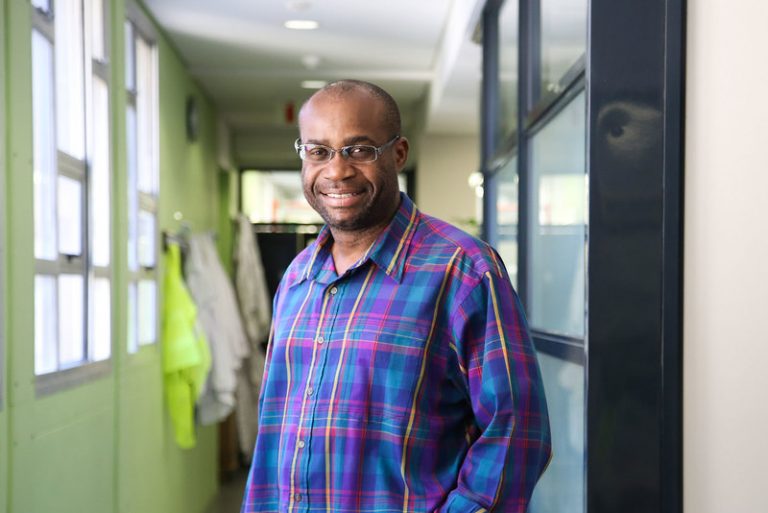
Kelly Chibale
I hate malaria with a passion. Growing up in the poor villages and townships of Zambia, I experienced its impact first-hand. As a boy, I was infected several times and once spent days in hospital. My family and friends struggled with the costs of treatment and inability to work while ill. All this inspired me to dedicate my life to tackling the disease.
Africa is often described as the “next frontier” in the global economy but malaria — both driven by and causing poverty — still chokes economic growth. Yet we have made advances to break that cycle in recent years.
The coronavirus outbreak has taken a heavy human toll and temporarily slowed malaria drug development by freezing new clinical trials and delaying existing ones. But as a reminder of how a pandemic can wreck lives and livelihoods, it reinforces the importance of infectious disease research.
Recent testing of two malaria drugs, chloroquine and hydroxychloroquine, for use against Covid-19, highlights the value of funding in the field. Co-infection — people with Covid-19 and one or more of malaria, tuberculosis and HIV/Aids — is bringing fresh focus on these conditions. It is catalysing new forms of research and co-operation between the public and private sectors, pioneered in neglected fields including malaria.
For example, the Bill & Melinda Gates Foundation has worked with 15 pharmaceutical companies and supported the Covid-19 Therapeutics Accelerator to speed up the search for treatments. Such efforts provide a blueprint for preparations against outbreaks of as yet unknown infectious agents and suggest new approaches to address unmet medical needs.
Africa is starting to play a more important role. Pharmaceutical research and development historically occurred mostly in richer countries with concentrations of infrastructure, technology and scientists and clinicians. While the difficulties are formidable in Africa, strong progress has been made recently, illustrated by the Holistic Drug Discovery and Development Centre (H3D) at the University of Cape Town.
The centre’s flagship molecule, an experimental anti-malaria medicine identified in partnership with the non-profit Medicines for Malaria Venture, has completed trials in South Africa and is being tested in patients in Ethiopia. It has potential to protect, treat, block transmission and be part of a single-dose cure that would be a significant advance. H3D helped lay the foundation for the growing contribution of African malaria researchers and scientists, working with other organisations to contribute to a pipeline of medicines. It has also created a platform to develop drugs for other diseases including TB.
Eliminating malaria requires that we halt transmission. One approach is to prevent an infected person passing on the parasite. Another is the use of “endectocides” such as ivermectin, the drug to treat river blindness, which make the blood toxic and kill both mosquito and malaria parasite.
The development of technologies is pointless without access to the affected communities. They need greater engagement with researchers, such as through the Isdell: Flowers Cross Border Malaria Initiative. This brings together governments, international partners and scientists with the Anglican church, non-governmental organisations, traditional leaders and community activists on the borders of Angola, Namibia, Zambia and Zimbabwe.
Such groups must work together to build consensus around a framework for infectious disease research. We also need to remove the financial, regulatory and legal barriers that often get in the way.
Applying northern hemisphere solutions to southern problems will not always work. There is a strong interplay between genetics, the socio-economic and physical environments in which patients live and effective treatment. It is vital for African countries to build drug discovery and development capacity close to patient populations to understand the continent’s needs.
We need to improve outcomes by using Africa-focused approaches to help the countries where the burden of malaria is greatest — designing trials and prioritising drugs and dosing that reflect the physiology of African patients.
Regulation remains a roadblock. For more Africans to be enrolled in clinical trials, we must harmonise rules across the continent, shorten timelines and raise approval rates for clinical trials.
We also need more partnership between regulators, industry and academia to support innovation, drug development and registration. National agencies must accelerate their vetting of innovative medicines, without the traditional lag of up to a decade after US and European approval. By building a stronger and more co-ordinated base for research in Africa, we can help the continent and the wider world.
Professor Kelly Chibale is founder and director of the Drug Discovery and Development Centre (H3D) at the University of Cape Town.
Lord’s Taverners: Turning The Tables With Table Cricket
Cape Town has been the host for many memorable sporting clashes between England and South Africa. Recent years alone have gifted us unforgettable drama – Ben Stokes’ recordbreaking 258 in 2016 and Graham Onions and Graeme Swann surviving the final overs to save the Test in 2010 spring to mind.
But in March Cape Town played host to a different type of sporting fixture, but one that is by no means less significant.
Atop the world-famous Table Mountain legends from English and South African cricket battled it out at a game of table cricket, an adapted form of the sport devised by the Lord’s Taverners which is designed to give young people with a disability the chance to play and compete in competitive sport.
England were represented by former Test captains David Gower and Mike Gatting with SuperSport commentator Jeremy Fredericks flying the flag for the home side.
“What the Lord’s Taverners have done in the UK is roll out these types of projects across the country for a long time now. And it’s amazing to see these kids really just enjoying themselves,” said Gower, who has been supporting the Taverners for nearly 40 years.
“It’s simple, it’s effective, and it gives them a sense of the team spirit that we have grown so accustomed to.”
Gatting, a Lord’s Taverners trustee, is hugely supportive of the charity’s efforts to spread the game and improve the lives of disabled young people.
“We’ve seen first-hand in the UK what table cricket can offer. It enables young people to understand tactics, work as a team and to build a social life. It helps to develop self-confidence, leadership and as we are seeing more and more around the world, there is a real need for the game to provide vital life skills and help disabled young people fulfil their potential,” Gatting explained.

Bradlyn Stuurman is one of the table cricket coaches in South Africa. He plays a huge role in ensuring as many children as possible benefit from the game.
“Whenever I see the kids playing table cricket I have a smile on my face,” Stuurman beamed.
“They are no different to any other kids, all they want to do is play and have fun and this game is amazing because they can feel part of a team.
“A lot of them will see cricket on TV but never have played a cricket match, but now it’s an opportunity to say they’ve captained a team, or bowl someone out. I think the camaraderie with other schools has been another thing, they were nervous at first seeing new people, but they are being exposed to new opportunities and having the opportunity to play sport regularly.”
Delia Tew is a teacher at Vista Nova School, a public special school in Cape Town. “The problem is there aren’t a lot of sports that can apply to children with different abilities. We have one learner, he can’t access many things. In the classroom at school he was a little bit depressed, he wasn’t happy.
“But when we introduced him to table cricket, it was something he could do. I promise you it was like seeing a different child. It’s not something you often see, that kind of excitement… it’s amazing to see.”
The setting for this ground-breaking fixture is deeply appropriate, the shared name between the location and the sport being the obvious reason but also because of the Taverners’ close relationship with South Africa. The celebrity cricket XI of the UK-based disability sports charity was in Cape Town to play two cricket matches to help raise awareness for its sister organisation, Lord’s Taverners South Africa and to raise awareness of the work of the charity locally which includes table cricket.
Money raised at events throughout the tour has helped to raise funds to deliver table cricket in a further 20 schools across South Africa. They also support Sporting Chance, a Cape Town initiative that uses cricket to give structure, organisational and leadership opportunities to disadvantaged children.

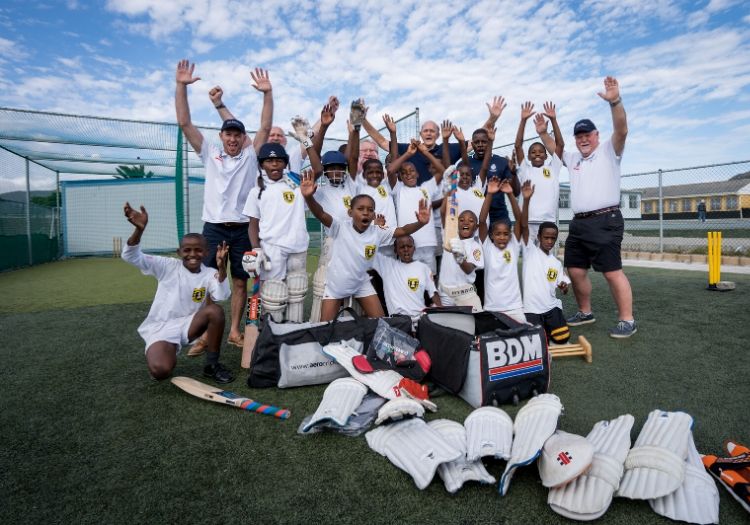
The Cricketer donated a huge bundle of cricket equipment to the cause and the Taverners gifted it to the children of the Masiphumelele township. Jonnie Irwin, presenter of Channel 4’s A Place In The Sun was there to present the kit along with Gatting and said: “You can see the difference that sport is making. You can see that the kids here are living in abject poverty but as soon as you get close to the sports fields, you are greeted with a cacophony of noise of them all having fun and competing hard.
“Everything they are going through is forgotten when they are on a sports field – it’s something that has really resonated with me.
“This programme is so important. When you see the delight these kids get from picking a new shiny cricket ball out of a bag to replace the old thing that looks more like a Rubik’s cube, it’s just so rewarding and, more importantly, such a simple thing we can all do.”
What is table cricket?
Table cricket is an adapted version of cricket, played on a table tennis table and specially designed to give young people with a disability the chance to play and compete in the sport we all love. There are different scoring zones around the table and, just like in regular cricket, fielders have to be carefully positioned to prevent runs or to get the batter out. Teams of six take turns to bat or bowl, with the bowler using a ramp to deliver the ball (either a regular ball that runs true or a weighted one that swings).
The batter scores by hitting the ball into the scoring zones, avoiding the fielders if they can. Alongside the enjoyment of playing the game and competing, table cricket has been shown to develop teamwork and social skills, and help with coordination and cognitive skills.
Over the past four years the number of schools playing table cricket in the UK has nearly trebled with 470 regularly playing it in 2019.
Sixty-four county competitions were held last year with 11 regional champions taking part in the national finals at Lord’s. In total 8,863 young people living with a disability benefitted from the sport.
(The Cricketer Magazine)
UCT Engineering Students Design Portable Hand Sanitizer Distiller
Nyakallo Tefu
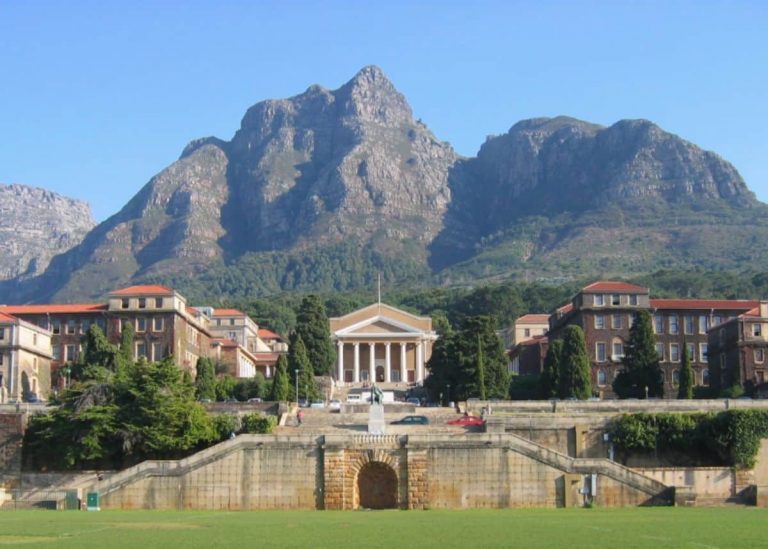
University of Cape Town engineering students have designed a portable hand sanitizer to fight the spread of the coronavirus pandemic.
The hand sanitizer has been widely recommended all over the world, according to UCT’s faculty of engineering management.

The design came about when the Faculty of Engineering and the Built Environment’s Professor Amit Mishra challenged students to come up with ideas to help flatten the curve of COVID-19.
One of the designated teams, who called themselves The Corry Team, then concluded that with sales of alcohol prohibited they could design a device that will put surpluses to good use.
They then decided on a portable distillation vessel to make hand sanitizer and titled their design, “Corry”.
In a statement, the team explains that the team’s prototype, which mimics the design of a Grainfather (an all-in-one brewing system), shows how breweries and distilleries can become producers of affordable hand sanitizers at a time of supply shortages.
South Africa has the fifth highest alcohol consumption rate in the world.
Team leader Thabiso Letlala, a chemical engineering student, says the current alcohol ban has resulted in large wine and spirits companies having the capacity to repurpose their facilities for non-potable ethanol production.
Other members of the Corry Team are Lebohang Mhlambi, (BSc, mechanical engineering) and Nosipho Msimango (BSc, chemistry and human anatomy and physiology).
“We could use this [alcohol] to supplement the production of affordable hand sanitizers,” said Letlala.
Letlala says Corry is a portable distillation vessel that produces sanitiser with the input of liquor, hydrogen peroxide and glycerol.
“The ingredients of the sanitizer, and their quantities, are based on recommendations from the WHO. Hydrogen peroxide and glycerol are affordable and can be bought at any pharmacy or cosmetics store”, said Letlala.
Letlala said the idea is to get supplies into the country’s most vulnerable communities, many with no running water for hand washing. Communities that are densely populated are at greater risk as they struggle to practise social distancing.
“More than 55% of South Africa’s population lives below the national poverty line,” he said. “Flattening the curve could prove to be near impossible in many communities that are under-resourced and densely populated. Solutions are needed that will delay, if not prevent, the virus from reaching these communities.”
He said breweries could easily modify their production lines to manufacture sanitisers.
Letlala and his team’s device, called Corry, is a portable distillation vessel that produces sanitiser with the input of liquor, hydrogen peroxide and glycerol. The ingredients of the sanitiser, and their quantities, are based on recommendations from the WHO. Hydrogen peroxide and glycerol are affordable and can be bought at any pharmacy or cosmetics store, said Letlala
Letlala has also partnered with Enactus UCT, working with Takudzwa Shumbamhini, the society’s deputy president.
“We’ll be entering the Ford Innovation Challenge to obtain seed funding for the project. The project will serve as the society’s annual social entrepreneurship project,” Letlala said.
The Corry Team is looking for support or assistance with this project, either expertise or resources.
(Additional reporting from UCT news)