Home Blog Page 431

South Africa: Broken And Unequal Education Perpetuating Poverty And Inequality

0

The South African education system, characterised by crumbling infrastructure, overcrowded classrooms and relatively poor educational outcomes, is perpetuating inequality and as a result failing too many of its children, with the poor hardest hit, according to a new report published by Amnesty International on Tuesday.

Broken and Unequal: The State of Education in South Africa calls on the government to urgently address a number of endemic failings in the system in order to guarantee the right to a decent education for every child in South Africa.

The report particularly highlights poor infrastructure in public schools including sanitation which has tragically resulted in the death of two children in pit latrines in recent years.

“For South Africa to comply with both its own constitutional and international human rights obligations with respect to education, major change is needed urgently,” said Shenilla Mohamed, Executive Director of Amnesty International South Africa.

“The right to quality education includes having a school where learners are safe to learn and have the adequate infrastructure and facilities to do so, but our research has found that this is not the reality for many learners in the country.”

The report details how the education system continues to be dogged by stark inequalities and chronic underperformance that have deep roots in the legacy of apartheid, but which are also not being effectively tackled by the current government.

For example, it brings to the fore that many schools and the communities they serve continue to live with the consequences of the political and economic decisions made during the apartheid era where people were segregated according to their skin colour, with schools serving white communities properly resourced. The result of this modern-day South Africa is that a child’s experience of education still very much depends on where they are born, how wealthy they are, and the colour of their skin.

As the President prepares to deliver the State of the National Address this week, the critical question is: why is it that a child’s experience of education in South Africa still depends very much on where they are born, how wealthy they are, and the colour of their skin?

While the report acknowledges that there has been progress made since the end of apartheid on widening access to education as well as other aspects, it has identified weaknesses by the Department of Basic Education, such as repeatedly failing to reach its own targets with respect to infrastructure and facilities.

In these circumstances it is not surprising that educational outcomes remain relatively poor. For example, a recent international survey found that more than three quarters of children aged nine cannot read for meaning. In some provinces this is as high as 91% in Limpopo and 85% in the Eastern Cape. And of 100 learners that start school, 50-60 will make it to matric, 40-50 will pass matric, and only 14 will go to university.

“South Africa has one of the most unequal school systems in the world. Children in the top 200 schools achieve more distinctions in mathematics than children in the next 6,600 schools combined. The playing field must be levelled.”

The right to quality education includes having a school where learners are safe to learn and have the adequate infrastructure and facilities to do so, but our research has found that this is not the reality for many learners in the country

Broken promises

In 2013, the government enacted the Minimum Norms and Standards for educational facilities, requiring the government to ensure that by November 2016, all schools have access to sanitation and electricity and that all pit latrines are replaced with safe and adequate sanitation and schools built from inappropriate materials, such as mud and asbestos are replaced. Yet as the government’s own statistics show, these targets have not been met.

As the government continues to miss its own targets to improve learning facilities, Amnesty International’s research in Gauteng and the Eastern Cape found numerous examples of schools with poor infrastructure and lacking basic facilities.

These included badly maintained buildings that had never been renovated, many of them dating back decades to the apartheid era and even previously. The buildings were hazardous, built with dangerous material such as asbestos and poorly maintained, in some cases putting the safety and security of learners at risk. The buildings were also unhygienic, poorly maintained and in some cases unsafe. Schools that were visited by Amnesty International had overcrowded classrooms without basic equipment and materials such as furniture and textbooks, with lack of security exacerbating the problems of vandalism and burglary.

One of the key infrastructure issues is poor sanitation which compromises not just learners’ education but also their health, privacy and dignity. Amnesty International researchers found numerous examples of badly maintained, broken or unsanitary toilets, including pit latrines. Students who were interviewed by the organisation in Gauteng raised it as a particular concern, saying that in many cases toilets were “dirty” and “unhealthy”. In the Eastern Cape, issues of concern included lack of sufficient toilets for the number of pupils in line with the learner to toilet ratio of 1:30; lack of an adequate and/or reliable water supply often requiring use of a borehole; poor hygiene with associated health problems among learners; leaking septic tanks; broken sanitation infrastructure that could not be repaired owing to lack of funds and an inability to remedy vandalism or theft in sanitation facilities.

“The fact that the Limpopo Department of Education says that it will take an estimated 14 years to replace all pit latrines in the province’s public schools is shocking. Given the recent deaths, it is unacceptable that the government cannot guarantee that more children won’t die this year or any coming years for that matter,” said Mohamed.

Beyond infrastructure, other barriers that children face to access a quality education include lack of sufficient transport, which often impacts on not just their ability to access education but also can put their safety at increased risk.

Some children walk for between 30 minutes and an hour to get to their educational institution meaning it is likely to be more than 3km. This is despite the fact that the Department of Transport, in collaboration with the Department of Basic Education, is required to ensure that transport is provided to grades R to 12 pupils who live more than 3km from the nearest school.

Children in the lowest income groups are also more likely to walk to school than those in the highest income group. In KwaZulu-Natal alone, where more learners walk to school than in any other province, more than 210,000 pupils walk for more than an hour each way, and 659,000 walk for between 30 minutes and an hour each way.

When they do get to school, students are often being taught in overcrowded classes impacting on their ability to learn effectively. For example, Amnesty International saw many cases of teacher learning ratios exceeding the stipulated ratio of 1:35 increasing to double this figure in one case.

Amnesty International visited numerous schools that had insufficient resources to meet the requirements for a decent education and this is borne out by the Department of Basic Education’s own statistics.

According to the Department’s own statistics for 2018, out of 23,471 public schools, 20,071 have no laboratory. Furthermore, 18,019 have no library, while 16,897 have no internet.

Almost 1,000 schools have no sports facilities, while 4,358 have only illegal plain pit latrines for sanitation; 1,027 have no perimeter fencing, essential for teacher and pupil safety, while 239 have no electricity, and 37 have no sanitation facilities at all.

In its recommendations, Amnesty International calls for the review and reform of how the education budget is distributed in order to achieve quality education for all and to combat entrenched inequality in the system.

The repeated failure of government to address the issues is not only a question of accountability, it has consequences for the life chances of thousands of young people and the future of this country

“The repeated failure of government to address the issues is not only a question of accountability, it has consequences for the life chances of thousands of young people and the future of this country,” said Shenilla Mohamed.

SOURCE: AMNESTY INTERNATIONAL
What the discovery of a new HIV strain means for the pandemic

0

Linda-Gail Bekker

University of Cape Town’s (UCT) Professor Linda-Gail Bekker said the fight against HIV has made some formidable gains in treatment and treatment outcomes with remarkable gains in longevity. Further, a thorough understanding of HIV is crucial in ensuring that HIV tests are effectively detecting the virus, and deeper insights could have a bearing on vaccine development.

The discovery of a rare new strain of HIV for the first time in nearly 20 years recently made headlines around the world.

The big question is what the discovery means for the overall response to the HIV epidemic.

A team of US researchers from Abbott, an American medical devices and health care company, led by Mary Rodgers and co-authors at the University of Missouri, announced the discovery in a study published in the Journal of Acquired Immune Deficiency Syndrome. The new subtype is the first strain to be identified since guidelines for classifying new HIV strains were first established in 2000.

HIV has a multitude of different subtypes and, like other viruses, it changes (mutates) over time. This new strain is an important discovery, but it does not signify a new public health threat. It occurs rarely and can be effectively treated with existing antiretrovirals. Because antiretrovirals target characteristics of HIV that are common across all different subtypes, this new finding will not affect treatment and antiretroviral agents will still be effective as long as drug resistant mutations have not occurred.

The essence of the discovery is that it enhances scientists’ understanding of the complexity of the human immunodeficiency virus and its evolution and adds detail to the already comprehensive viral picture.

Having a thorough understanding of HIV is crucial in ensuring that HIV tests are effectively detecting the virus. Deeper insights could also have a bearing on vaccine development.

Viral strains

There are two main types of HIV. HIV-1 is the most common. HIV-2 is less common and accounts for fewer infections. The strains of HIV-1 can be classified into four groups – M, N, O and P. While N, O and P are quite uncommon, group M is responsible for most of the global HIV epidemic, accounting for roughly 95% of all infections worldwide. The newly discovered strain (also known as a clade) is part of group M and has been labelled as “subtype L”.

The prevalent strain found in South Africa is known as a subtype of clade C.

One of the candidate HIV vaccine regimens currently under investigation in South Africa is designed to be effective against subtype C. It is not yet known whether, if found to be effective in this region, it will be as effective in a region with a different prevalent strain. For example, in the US the predominant strain is subtype B.

The process of confirming a new strain of any virus can be long. Three separate cases need to be identified before a new subtype can be announced. The first two cases of this new strain were found in the Democratic Republic of Congo in 1983 and 1990 and the third case in 2001. So while the strain has been known to scientists for 18 years, the entire genome needed to be tested for confirmation. The technology to do this did not exist at the time.

The genome sequencing technology available today allows scientists and researchers to build entire genomes at a faster rate and lower cost than ever before. To use this next-generation technology successfully, the responsible scientists had to apply new techniques that focus on the virus portion of the collected sample in order to fully sequence the genome.

From a scientific point of view, the discovery helps us stay one step ahead of a virus. Furthermore, the role that new technology played in identifying the strain serves as an important reminder of how far we have come. The innovation and advancements in technology and molecular virology should be celebrated.

The fight against HIV has made some formidable gains in treatment and treatment outcomes with remarkable gains in longevity.

UNAIDS estimates that new infections have decreased by 16% from 2,1 million in 2010 to 1,7 million in 2017. Undoubtedly one of the most promising achievements is the reduction in mother-to-child transmissions around the world. But the HIV response does not favour complacency.

Emergency persists

The notion that HIV is no longer an emergent threat is one that jeopardises the work of scientists and communities who continue to drive prevention of HIV and fight against the pervading stigma. The HIV emergency is not over. The epidemic still needs vigilant attention, especially as reduction rates stall.

The ultimate solution is a working cure and preventative vaccine. The HVTN studies in South Africa are currently conducting HIV preventative vaccine trials in the hope that one day there will be an effective vaccine to prevent HIV. But until then, we need to refocus our energy on scaling up the effective treatment and prevention tools we have in hand to all those who need them.

Linda-Gail Bekker, Professor of medicine and deputy director of the Desmond Tutu HIV Centre at the Institute of Infectious Disease and Molecular Medicine, University of Cape Town.

SASCO calls on Ramaphosa to address student accommodation crisis in his SONA speech

0

THE South African Student Congress has called on President Cyril Ramaphosa to make a bold commitment to address student accommodation and build more universities during his State of the Nation Address on Thursday.

SASCO also called on Ramaphosa to improve already existing universities, in particular the historically disadvantaged and black campuses.

The ANC-aligned SASCO made these demands after its 21st electoral conference at the Saint Georges Hotel in Irene, Pretoria.  

This after the conference was scheduled unsuccessfully three times last year – in Port Elizabeth, Mpumalanga and KwaZulu-Natal.

“Should President fail to declare these emergency student issues, we will take war at his door step and demand to be taken serious,” said SASCO’s incoming President Bamanye Matiwane.

SASCO also paid tribute to the late Joseph Shabalala, founder of Ladysmith Black Mamambazo, who died on Tuesday at Pretoria hospital after a long illness.

“We shall be using shall be using the song “Homeless’ to capture the frustrations of many students in our country who yearn for the decent, affordable and safe student housing/accommodation.

The national congress elected its new leadership with a new mandate for the next two years.

Matiwane, from Nelson Mandela University, was elected president and Buthanani Ngwane from the University of South Africa in Johannesburg was elected SASCO’s secretary-general.

Among those present at the SASCO’s national congress was ANC secretary-general Ace Magashule, who delivered an address on Saturday evening.

Gauteng MEC Panyaza Lesufi Distraught After Randburg Learner Dies

0

Gauteng MEC for Education Panyaza Lesufi is saddened with yet another learner passing away in Gauteng – a Ferndale High School learner died on Tuesday morning after falling from the third-floor school’s balcony.

Spokesperson for the department, Steve Mabona, said the information at their disposal is that the learner had an epileptic seizure which resulted in him falling from the third floor.

“Paramedics and the parents of the said learner were immediately called to the scene and the learner was rushed to a nearby hospital after being attended to on the scene. Unfortunately, the learner succumbed to his injuries,” he said.

Lesufi tweeted: “Sadly, the boy passed on. Once more, We must go and face the family and break the news , it’s too much now. Our sincere condolences to the family and friends and learners at Ferndale High. This is the 11th death since the reopening of schools this year— Panyaza Lesufi (@Lesufi).

Lesufi will visit the school on Wednesday.

TUT IT whizzkids invent device to assist visually impaired people

0

C4Me (See for me), as the invention is called, enables the visually impaired to avoid obstacles.

Two final year Information Technology students at the Tshwane University of Technology (TUT) have invented a device that will assist the visually impaired move freely and know exactly where they are going. C4Me (See for me), as the invention is called, enables the visually impaired to avoid obstacles.

Siphamandla Mqcina and Philanjalo Ndlovu have been working on the device since June 2019. They recently travelled to Toronto, Canada, where they presented their device at a global workshop.

Mqcina and Ndlovu have been studying Computer Industrial Systems at TUT’s Soshanguve South Campus for the past three years.

Mqcina says an encounter with a visually impaired student inspired their invention.

“C4Me was inspired here on campus. We were walking and when we looked, we found that the person cannot see. So we felt guilty about it and we sat around and discussed the issue. We discussed on how we can help that person with the knowledge that we have about technology.”

Mqcina and Ndlovu have been spending their own money, even sacrificing their bursaries, to ensure that C4Me succeeds.

Ndlovu says their biggest challenge now is getting developers and sponsors on board to assist in manufacturing their device.

“Right now we need money; we need funds, we need people with experience, we need everyone who can help us so that we can make C4Me and help people who can’t see.

Story originally published on SABCNEWSONLINE

Basic Education Portfolio Committee Appeals for Safety at Khayelitsha Schools

0

Basic education portfolio committee has appealed for safety at several Khayelitsha schools in the Western Cape after teachers and learners were attacked by criminals.

Chairperson Bongiwe Mbinqo-Gigaba said the committee’s urgent intervention was requested by the Khayelitsha Development Forum on a matter between the Western Cape Department of Education and KDF and all the Khayelitsha schools.
 
The committee was made aware that the MEC for Education in the Western Cape had promised to deploy security guards to all the Khayelitsha schools after ‘the devastating criminal attacks on educators at schools’.

According to the KDF, between January 2020 and today, more than six schools have already fallen victim to violent crime by armed assailants.
 
“I have taken the matter up with the National Department of Basic Education (DBE) to ask for assistance in liaising with the relevant provincial education department. As a committee we take the question of the safety of our learners and educators very seriously. Whilst these discussions by the education authorities are underway, I appeal for calm at our schools,” said Mbinqo-Gigaba.
 
“Furthermore, I appeal to communities to help us keep all our schools violence-free. If you know or are aware of such thugs in your community, report them to the authorities. The safety of our learners and educators is paramount as education ensures a better future for all learners. They need an environment that is conducive to teaching and learning.”
 
She said the committee will also monitor the progress made by the DBE and the provincial department in resolving this matter expeditiously.

15 major changes planned for schools and universities in South Africa – including new subjects

0

Government has published its Draft National Youth policy for 2020 – 2030, outlining its plans to get more young South Africans into education and employment opportunities over the next 10 years.

The document states that youth unemployment has reached ‘crisis proportions’ in South Africa and remains one of the major challenges facing the country today.

“South Africa’s unemployment rate is high for both youth and adults; though, the unemployment rate among the youth currently stands at an alarming 56.4% and is considered to be one of the highest globally,” it said.

“Against this background, it is clear that the major contributor to poverty, inequality, and unemployment amongst the youth in South Africa is the low level of educational attainment and skills.

“The latest national data from Stats SA (2018) shows that of the 10.3 million persons aged 15-24 years, 32.4% (approximately 3.3 million) were not in employment, education or training, with females constituting 35.3% and males 29.6%.”

Other statistics that point to a failure in the education system include:

  • About 52% of 24-year-olds in the country have completed Grade 12, compared to 70% in most developing countries;
  • A million young people exit the schooling system annually, of whom 65% leave without achieving a Grade 12 certificate;
  • Half of those who exit the schooling system do so after Grade 11, either because they do not enrol in Grade 12 or they fail Grade 11.

 Plans to fix the problem

To address the issues in South Africa’s education sector, the policy document outlines a number of proposals which should be introduced by 2030.

Below are the proposals for each sector.

Schools 

  • The Department of Basic Education, in partnership with private providers, should support learners who need a ‘second chance’ to pass matric. The Department of Higher Education, Science and Technology should also provide young people who have left school with the opportunity to complete their education to enable them to compete in the open labour market;
  • All schools should be encouraged to have an anti-racism policy that supports small freedoms such as allowing African children to wear natural Afros to schools;
  • All South African learners must learn an indigenous language. Sign language should also be progressively introduced in all schools;
  • Basic computer literacy should be included in the school curriculum;
  • Practical subjects such as entrepreneurship, technical skills and handwork (art) need to be introduced to the curriculum help those who are not inclined to proceed to higher education;
  • Schools in rural areas should be able to use local farming land for practical or experiential learning in agriculture. Local farmers can mentor learners;
  • Existing incentives to attract young people to the teaching profession should continue until at least 2020. This means that teacher salaries should be competitive.

Post-school

  • The number of TVET colleges should be expanded to increase the participation rate to 25% and the graduation rate 75% by 2030;
  • Government should introduce a new community college framework designed for youth who did not complete their schooling or who never attended school and thus do not qualify to study at TVET colleges or universities. This will offer tailor-made qualifications to meet the needs of the youth;
  • The government should progressively introduce free education for poor learners until undergraduate level and increase the funding options available to support students at the post-secondary level who are academically successful but unable to complete their study programmes due to financial hardships;
  • All higher education institutions (colleges, universities) must introduce foundation programmes for learners in transition from the basic to higher education learning environment. These foundation courses should include soft skills development to help students cope with university demands;
  • All government departments including municipalities should have internship programmes, which should be monitored in terms of numbers and quality;
  • Every qualification at university should be coupled with an experiential component to ensure graduates have experience when they qualify;
  • The BRICS virtual university must be established to facilitate the use of ICT for educational purposes and promote access to education, particularly for females;
  • Based on feasibility studies, agricultural colleges and schools of excellence must be established in each province and agriculture faculties must be introduced and/or strengthened in universities and TVET colleges.
  • SOURCE: BUSINESSTECH

20 reasons why, in 2020, there are still 260m children out of school

0

Millions more are in classrooms but don’t get a quality education – here we look at some of the causes of a global learning crisis.

Theirworld’s vision is to end the global education crisis and unleash the potential of the next generation. Despite the Sustainable Development Goal to have every child in school and learning by 2030, there are still 260 million children who don’t go to primary or secondary school.

Without urgent action, in a decade 825 million children – half of all young people in the world – will not have the most basic skills necessary for jobs of the future.

Theirworld’s #WriteTheWrong campaign is about raising awareness of the issue and advocating for big change to tackle the global education crisis.

Here we look at some of the reasons why so many young people are out of school or being denied a quality education. Each obstacle is huge to the children trying to overcome them – so we’ve listed 20 reasons in purely alphabetical order.

Attacks on education

Hundreds of schools around the world have been attacked – disrupting or ending the education of many children. A shocking report last year revealed more than 14,000 attacks on education – including about 10,000 directly on schools – in 34 countries over a five-year period.

The Global Coalition to Protect Education from Attack said: “Buildings were bombed, damaged or used by armed forces or groups, sometimes making them inaccessible to students. Nine countries each suffered more than 500 attacks on schools.”

Schools were occupied for military purposes in at last 30 countries. Female students and teachers in particular were targeted – including through the bombings of girls’ schools, abduction, rape and harassment at school and on the routes students take to school.

The Safe Schools Declaration – a commitment to protect schools from attack and military occupation – was launched in 2015 and has now been signed by 101 countries.

Child labour

More than 150 million children aged five to 17 – half of them under 11 – are victims of forced labour and often miss out on education. Of those, 73 million work in hazardous jobs, according to the International Labour Organization.

Child labour is classed as work that is mentally, physically, socially or morally dangerous and harmful to children – and interferes with their schooling.

Child labourers work in a variety of roles including in homes, mines, fields and factories. They can carry heavy loads, work long hours and suffer exposure to pesticides and other toxic substances.

Many girls begin working as young as five, mainly in agriculture or in homes as domestic servants. Child domestic workers are particularly vulnerable to trafficking, forced labour, sexual violence and many health issues.

Child marriage

There has been progress, with 25 million child marriages prevented in the past decade. But there is still a long way to go.

Each year, around 12 million girls a year are married before the age of 18 – including 38% of girls in sub-Saharan Africa – often with devastating consequences for their health and education. Too often marriage is seen as a higher priority for girls than going to school.

“Child marriage violates girls’ rights to health, education and opportunity. It exposes girls to violence throughout their lives and traps them in a cycle of poverty,” says the charity Girls Not Brides.

Boys can be affected but most victims of child marriage are girls. There are child marriages in every part of the world, including Europe and north America. But the highest rates of girls under 18 getting married are in Niger (76%), Central African Republic and Chad (both 68%).

Climate change

This can impact children’s education in many ways. The obvious one is an increase in extreme weather such as flooding or typhoons, which leaves schools damaged, destroyed or being used as shelters.

Around 37 million children have their education disrupted each year because of environmental threats. In South Asia, 18,000 schools were shut in 2017 following damage or destruction in the region’s worst flooding in years.

Academic research published last year by the US National Academy of Sciences found that extreme climate changes in the global tropics can make it hard for children to attain a secondary school education.

Families affected by droughts, heat waves and crop failures often remove their children from school to work at home or because they cannot afford fees.

Conflict

Almost one in five children live in countries affected by conflict – and many of them are denied an education as a result.

The long-term effects of growing up in a conflict zone are devastating and UNICEF estimates that 48.5 million children worldwide are missing school because of wars and conflicts.

Children in conflict-affected countries are 30% less likely to complete primary school and half as likely to complete lower-secondary school.

Girls are almost two and a half times more likely to be out of primary school and 90% more likely to miss secondary schooling if they live in conflict-affected countries, according to the emergencies fund Education Cannot Wait.

Disabilities

Children with disabilities are more likely to miss out on school than other children. Even if they go to school, they are more likely to leave before finishing their primary education. For children who are already marginalised, such as girls and children living in rural areas, a disability creates an additional barrier to accessing education.

Of the 100 million or so children around the world with a disability, 80% of them are in developing countries. In these countries, 40% of children with disabilities don’t go to primary school and 55% are not in secondary education.

Beyond those stark facts are millions of other children with disabilities who are in classrooms but are left feeling excluded, intimidated and unvalued by the failings of school systems.

The UN’s 2018 Disability and Development Report said: “Among the countries with data, persons with disabilities … are less likely to attend school, they are more likely to be out of school, they are less likely to complete primary or secondary education, they have fewer years of schooling and they are less likely to possess basic literacy skills.”

Funding

Lack of funding at a local, national and international level has a huge effect on the numbers of children who are in school – and on the quality of education.

Some of the poorest countries in the world struggle to finance an education system for all their children. Some systems have to charge fees to survive, which leads to families unable to afford education.

Three-quarters of the world’s out-of-school population are in over 70 developing nations, which need to increase their own spending on education while continuing to receive help from the international community.

Until recently, funding for education during humanitarian crises was less than 2% of the aid total. Things are changing thanks to the 2016 launch of the Education Cannot Wait fund, which is reaching millions of children in emergencies.

Gender

The UN estimates that 130 million girls between the age of six and 17 are out of school and 15 million girls of primary-school age – half of them in sub-Saharan Africa – will never enter a classroom.

Girls are four times more likely to be out of school than boys from the same background. Often, girls are marginalised and are out of school simply because they are girls and it is not the cultural norm for them to be educated. Their chances of getting a quality education are even smaller if they come from a poor family, live in a rural area or have a disability.

Between 2000 and 2015, the gender gap in literacy narrowed dramatically and the number of girls going to primary school rose significantly. But it hasn’t been enough.

Fewer than two in three girls in low-income countries complete primary school and only a third finish lower secondary school. Only about 40% of girls in sub-Saharan Africa complete lower secondary school.

Hunger

Lack of daily, nutritious meals can mean children dropping out of school or not being able to concentrate in the classroom.

“Every day, countless children across the globe turn up for school on an empty stomach, which makes it hard to focus on lessons,” says the UN’s World Food Programme. “Many simply do not go, as their families need them to help in the fields or around the house.”

The offer of a daily meal is a strong incentive for families to consistently send their children to school.

Lack of food has been a major driver behind three million children in Venezuela dropping out of school during the economic and hunger crisis.

Journey to school

A simple walk to school can be extremely unsafe or intimidating for some children. Many parents refuse to send their children – particularly girls – to school in case they are harassed, exploited or sexually abused.

Many children in remote communities also have to make the most unimaginable and dangerous journeys every day to access education.

Some walk along treacherous cliff edges. Others trek into the mountains for miles or cross broken bridges to be at school on time. For children living in rural or poverty-ridden areas there is no quick solution and often it is easier to quit school.

During violent conflicts, girls are deliberately targeted by armed groups and government forces. They often suffer sexual violence, abduction, intimidation and harassment. A study in India in 2016 found that half of all girls were sexually harassed on the way to school – including being leered at, pinched or groped.

Lack of teachers

When the Sustainable Development Goals were launched in 2015, the UN said the world would need 25.8 million additional primary school teachers by 2030.

But that isn’t the only issue. Too many teachers don’t have the training or qualifications needed to deliver a quality education. Only 85% of primary school teachers globally have been properly trained – in sub-Saharan Africa it’s just 64% (and only 50% of secondary teachers).

Many existing teachers, especially in the least developed countries, are untrained, underpaid and working with scarce resources. Some drop out because they are poorly paid or spend too much of their time on non-teaching duties. In many countries affected by conflict, there can be a lack of teachers because they have been become targets for attacks and intimidation.

The lack of female teachers can make school a daunting experience for girls. In many African countries, such as Liberia and the Central African Republic, only about one in five primary teachers are women.

Language

Millions of children, particularly in rural locations, are much more likely to drop out of school if they are not being taught in their mother tongue.

About 500 million children get school lessons in a language they don’t speak at home with their families.

In the developing world, children are more likely to enrol and succeed in school if they are taught in their own language.

In particular, girls and rural children with less exposure to a dominant language stay in school longer and repeat grades less often if they learn in their native tongue.

Natural disasters

The South Asia floods of 2017 destroyed or damaged 18,000 schools and put 1.8 million children out of school – but natural disasters are happening all the time and disrupting education around the world.

Natural events such as earthquakes, cyclones, floods and landslides can derail schooling for millions of children. They can damage or destroy schools or force them to be used as temporary shelters.

Even if the schools survive, it can take months or even years for them to be repaired and for education to return to normal. Families whose livelihoods have been destroyed may no longer be able to afford to send their children to school.

In the Asia Pacific region, it is estimated that climate change will lead to around 200 million children a year will have their lives severely disrupted by natural disasters over the coming decades.

Periods

Periods are a natural part of life for girls – but also a major reason for them missing out on education.

They often don’t have access to sanitary products or separate toilets. They face discrimination, stigma and bullying during their periods, sometimes even from their teachers.

In many parts of the world, girls simply drop out of school for several days every month. That can lead to them quitting education altogether.

UNICEF estimates that one in 10 girls in Africa miss school because of their periods each year. In India, as many as one in five girls drop out of school after their periods start.

Pregnancy

In many countries, girls who are pregnant – regardless of their circumstances – can be excluded from school and not allowed back even after they give birth.

That picture is improving, especially since 26 African countries adopted policies by 2018 to ensure girls can return to school after having their baby.

But even where they are allowed to return, many young mothers stay away due to stigma, fees, lack of childcare and the unavailability of flexible school programmes.

About 16 million girls aged 15 to 19 and one million girls under 15 give birth every year – most in low- and middle-income countries, according to the World Health Organization.

Recruitment

There are an estimated 250,000 child soldiers in the world today in at least 20 countries About 40% of child soldiers are girls, who are often used as sex slaves and taken as “wives” by male fighters.

Recruitment forces children to miss out on education for years or to drop out of school for ever.

In the past five years, children have been recruited by armed groups in the vicinity of schools in at least 15 countries, according to the Global Coalition to Protect Education from Attack.

Despite efforts to free child recruits, there are still about 19,000 child soldiers in South Sudan alone.

Refugee crises

Conflicts like those in Syria, South Sudan and Yemen have led to the biggest refugee crisis since the Second World War.

More than half the world’s school-age refugees are excluded from education as host nations struggle under the weight of growing humanitarian emergencies.

Of the 7.1 million refugee children of school age, 3.7 million do not go to school, according to the UN refugee agency UNHCR last year.

Only 63% of refugee children are at primary school – compared to 91% of all children across the world. Just 24% of adolescent refugees attend secondary school, compared to 84% globally.

Sanitation

Basic drinking water and sanitation is taken for granted in high-income parts of the world. But nearly half the world’s schools lack clean drinking water, toilets or handwashing facilities.

Almost 900 million children have to contend with a lack of basic hygiene facilities during their education, putting their health at risk and meaning some have to miss school.

In poorer countries only 53% of upper secondary schools have drinking water. Globally, only 66% of primary schools have handwashing facilities but the average across the poorest countries is 43% – and much lower in some nations.

In the least developed countries, only 57% of schools have single-sex toilets, which can lead to problems particularly for girls such as period stigma and sexual harassment.

Violence

Conflict and military occupation aren’t the only violence that children face at school or on the way there.

Gang violence, bullying and various forms of discrimination can lead to students dropping out of school.

An estimated 246 million girls and boys are harassed and abused on their way to and at school every year – with girls particularly vulnerable. In Africa, half of all children said they had been bullied at school.

18 million girls aged 15 to 19 are victims of sexual violence – often leading to them leaving school and reinforcing cultural practices such as early marriage.

And that’s not all…

These are just 20 reasons why children drop out of school or miss out on quality education. We haven’t even included overcrowded classrooms, a lack of learning materials, no schools nearby – sadly the list goes on and on.

SOURCE: THEIRWORLD

Katlehong school learners receive shoes made out of recycled Netcare hospital’s drip bags

0

NYAKALLO TEFU

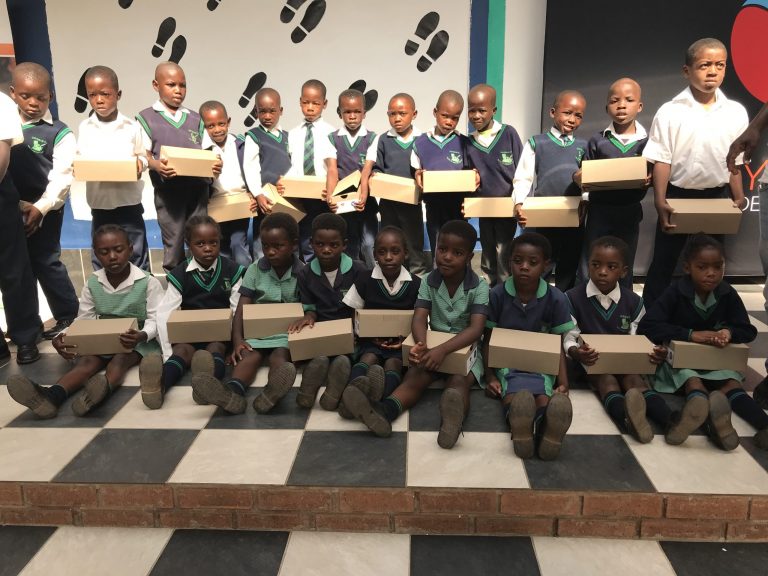
Dozens of excited pupils from Chivirikani Primary School in Katlehong, Ekurhuleni, received free shoes made from used hospital drip bags this week, thanks to Adcock Ingram and Netcare’s shoe project, My Walk Made with Soul.

“It’s as if we were pregnant for 24 months with this idea and today, we finally give birth”, Dr Nceba Ndzwayiba, director of transformation at Netcare.

Chivirikani Primary School is the first school to receive a donation of 1 300 school shoes made from used non-hazardous PVC drip bags, oxygen masks and associated tubing from Netcare hospitals .

This through an innovative partnership between Netcare and Adcock Ingram Critical Care, where they have come up with a way to make school shoes while recycling.

According to My Walk Made with Soul, 20 drip bags make 1 pair of school shoes.

The project started over a year ago, where the shoes were tried and tested at 3 schools to see if they will have any health implications because they were made from plastic.

Chivirikani School principal, Christopher Maluleke, has thanked My Walk, saying this will make a vast difference in the school as many children have been without school shoes.

At the launch, Grade 2 pupils were given the first few pairs donated to the school, with the children beaming with excitement as they walked to the stage to collect their shoes.

The academic year can be financially draining for most parents and guardians, with many unable to provide basic needs for their children throughout the year.

However, in an effort to assist struggling parents, this year over 25 000 school children will receive a pair of school shoes in Mzansi.

Netcare and Adcock Ingram Critical Care have also launched a newly built kitchen at Chivirikani Primary School.

“The department of education loves partnerships because we are not able to help every learner or every school”, says Department of Education spokesperson, Elijah Mhlanga.

Mhlanga says they are not only tackling one issue, they are also tackling the issue of nutrition in the school.

The kitchen is important to the school as the children receive meals on a daily.

A new fridge, stove, microwave and plates and cutlery have been also been donated.

Mhlanga toured the kitchen, thanking the team for a job well done.

  • INSIDE EDUCATION

UWC students protest while classes are suspended

0

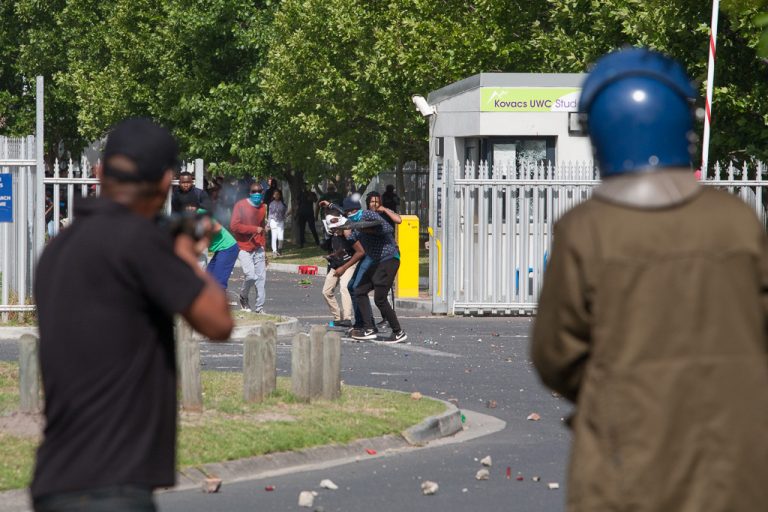
Over 200 students gathered outside the Main Hall at the University of the Western Cape (UWC) on Wednesday and sang protest songs, while calling for students to be allowed to register and get accommodation.

One student held a placard saying: “We want registration and accommodation. They are giving us POLICE #UWCSHUTDOWN!”. Campus security guards, holding riot shields, prevented students from entering the Main Hall. SAPS officers, riot police and a number of police vehicles increased throughout the day. Security eventually used red tape to cordon off the hall.

The university has suspended classes for the rest of the academic week.

Various student organisations, such as the Student Representative Council (SRC), DASO-UWC, the EFF Student Command, and SASCO-UWC, have been demanding since Monday that UWC postpone classes until all students are registered and have a place to live. Students have been sleeping in the student centre and in the TV rooms of residences.

Mandla Motyawa, the Deputy Chairperson of the EFF Student Command, said that there were still many students not registered due to not being able to pay their fees. This is one of the primary demands that students have given to the university.

“All students should start on the same footing,” said Motyawa. “The accommodation issues are tied with the registration [process]. The students cannot stay in any student accommodation if they are not yet registered.”

Gasant Abarder, spokesperson for UWC, said that the “SRC demanded bulk clearances for registration.”

“However, this can only happen on a case-by-case basis with discussions with our Student Credit Management office. There, students get individual assistance about their specific set of circumstances,” said Abarder.

Motyawa said that the university had failed to communicate with the students who were protesting, even though the students sent them their memorandum of demands.

“The only communication they’ve made is to suspend the academic program,” said Motyawa.

Abarder said: “The university has communicated with students, staff, parents and guardians via bulk SMS, email and social media.”

He also said that daily engagements between the Deputy Vice-Chancellor of Student Development and Support and the SRC have been ongoing.

SOURCE: GROUNDUP (Story by Liezl Human and Ashraf Hendricks)