Police
have started recording statements from teachers at Kakamega Primary School in
western Kenya who were at the scene of the stampede that left 14 pupils dead
and 39 others injured on Monday.
They also
recorded statements from other witnesses.
In a
briefing, Western region police commander Peris Kimani said detectives would
focus on safety regulations in place to unravel what caused the tragedy.
She said
six pupils are still admitted in hospital with two in the Intensive Care Unit.
The injured pupils were reported to be in stable condition.
The
police boss said there were missing gaps in the timeline of the tragedy that
detectives were trying to unravel to establish what triggered the incident.
It is
still unclear whether teachers on duty were at the scene at the time of the
incident.
Ms Kimani
said there were three teachers on duty who need to explain what happened as the
learners left the classrooms and were descending the stairs from the third and
second floor to go home.
Of
interest to the investigators is where the teachers were when the pandemonium
broke out.
Headteacher
Dickson Wanyangu has recorded a statement with the police as investigations
gather pace.
Detectives
from the Directorate of Criminal Investigations (DCI) are also involved as
heartbroken parents demand answers over the death of their children.
Ms Kimani
said detectives also wanted to know what safety policies and regulations had
been put in place by the school to protect the learners given that the
staircases were narrow and could not serve a large number of pupils.
“We have already
recorded a statement from the head teacher and we are moving with speed to
ensure other teachers record statements so that we can conclude the
investigation fast,” she said.
She said
counsellors from the Kenya Red Cross, St John’s Ambulance, County Government
and Masinde Muliro University will visit homes of the affected families to
offer counselling services.
More than 6000 financially needy learners from Ekurhuleni have benefited from the city’s Community Bursary Fund, renamed Godfrey Pitje Bursary Fund, according to Executive Mayor Mzwandile Masina.
DOWNLOAD THE EBOOK NOW to read more about City of Ekurhuleni’s R100 million Godfrey Pitje Bursary Fund, which has so far produced over 1,300 graduates and benefited 6,600 financially needy learners across the region.
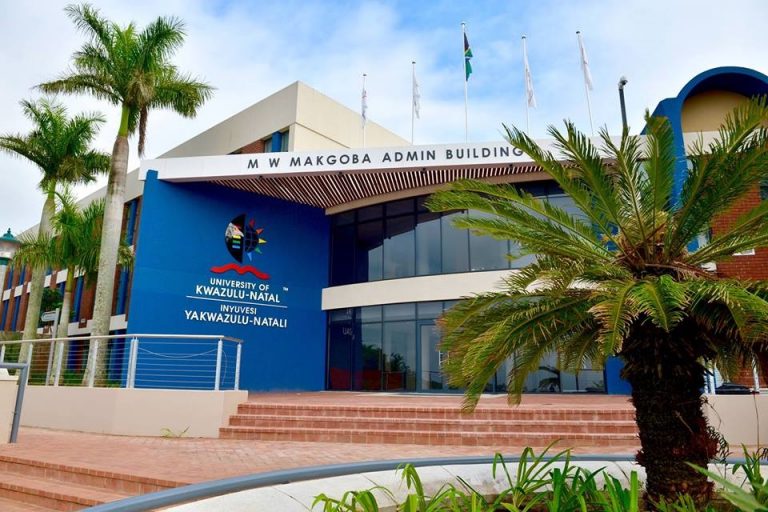
Rampaging students at the University of KwaZulu-Natal have set alight the HIV support centre at the Howard College campus.
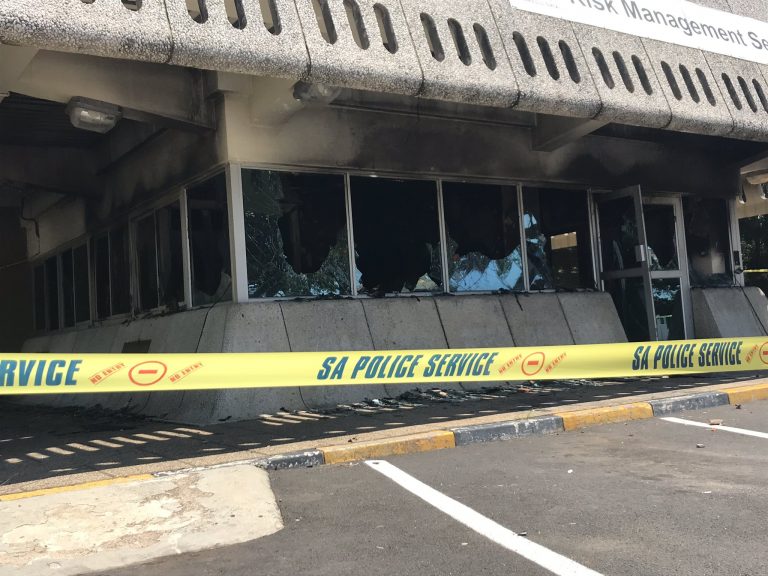
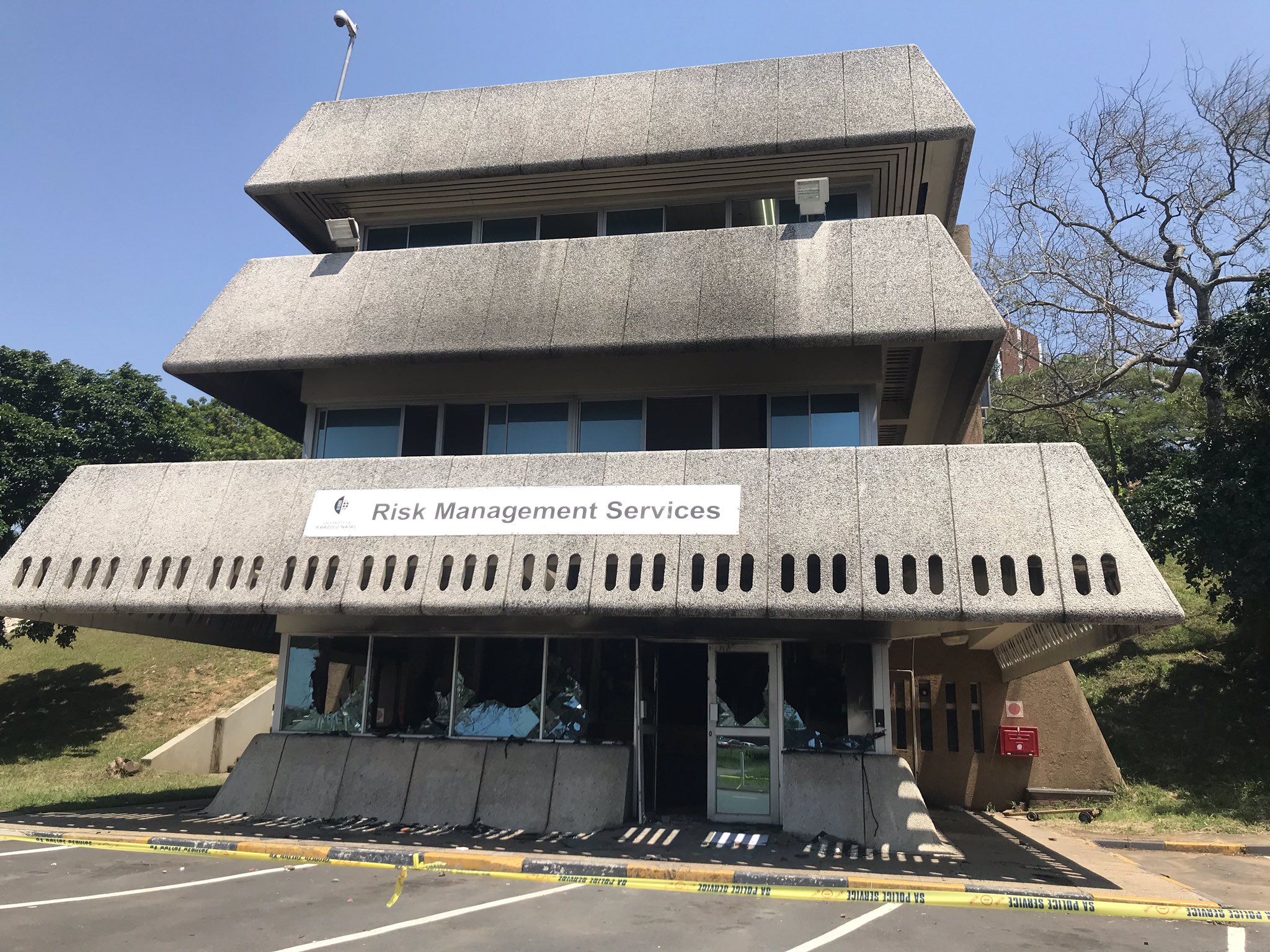
The building is the second one to be set alight. Last week, the Risk Management Services building at Westville campus was torched allegedly by protesting students.
Students armed with rocks and sticks were engaged in running battles with police and campus security Monday morning. Police used rubber bullets in a bid to disperse the crowd.
#UKZNProtest#NSFAS2020 UKZN Edgewood College campus as a group of students, armed with rocks and sticks are at war with the campus securities. It is alleged that one student who was shot with a rubber bullets has been rushed to hospital. @TheMercurySApic.twitter.com/7x4SeJhhbb
There were also reports of unrest at UKZN’s Pietermaritzburg campus.
Students are demanding that historical debt be scrapped.
#UKZNPROTEST "Blade Nzimande said this 15% historical debt is no more and we can register. When we get here, they demand it and telling us we can't register. What nonsense is that? We must as well burn the school," said one of the students wearing a mask. @TheMercurySA
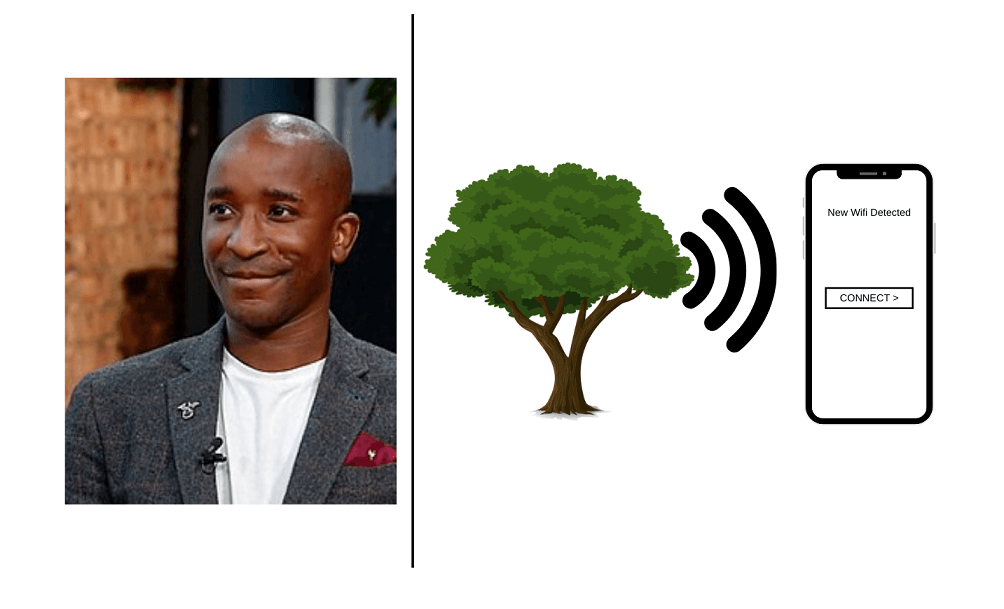
Zimbabwean AI expert William Sachiti, CEO of UK-based start-up Academy of Robotics has published an open-source technology – ‘Trees of Knowledge’ – to improve access to education through smartphones in Africa.
This free-to-develop technology enables a tree or rural landmark to broadcast a Wifi connection providing access to a pre-loaded package of educational content.
“There is an urgent need to improve access to education for these children. For many children their classes are taught gathered under the shade of a large tree, so ‘Trees of Knowledge’ seemed a natural technical extension of this existing system,” Sachiti said.
The Wifi connection and content come from a micro-computer molded into the landmark to protect it from theft or damage.
Anyone within a roughly 100m radius can then access the content on any mobile device free of charge. Users can also charge their phone by plugging it into the accompanying solar-powered battery charging station.
I would like to share my most important invention. We use micro computing, A.I, and clever software to turn trees growing in the wild in Africa into digital teachers to help educate some of the over 34 million children in Africa who do not go to school.https://t.co/mRJMFeekGY
The micro-computers will run on the power equivalent of a small rechargeable battery and can run for years without maintenance. All the user needs is a wifi-enabled device such as a phone, tablet, laptop or computer.
There is no need for the phone to be connected to a carrier or any network provider, removing the issue of expensive data charges.
The technology uses a basic computer like the Raspberry Pi computers which have been used in refugee camps in Lebanon by UNICEF as part of its Raspberry Pi for Learning initiative.
Globally there are 258 million children out of school and UNESCO’s new report Education Progress highlights that the problem is particularly acute in Sub-Saharan Africa where the population of primary-school-aged children has doubled since 1990 and 1 in 5 children of primary school age are out of school.
However, this is also a region witnessing rapid growth in smartphone adoption. Already more than 23% of people in Sub-Saharan Africa have access to a smartphone – a number which is estimated to rise to 39% in the next five years.
“One of the challenges in providing education through smartphones is that, while many people have access to a basic smartphone of some description, in many areas 3G coverage is still patchy.
The data costs are high for most people and in rural areas keeping the phones charged is a problem when there is limited or no electricity. Trees of Knowledge aims to address all these challenges.”
Sachiti added: “Every day millions of children walk for hours to get to school in the hope – often a vain hope – that they will find a teacher present at their school. In other cases, children are unable to attend school because they need to take care of the family’s cattle or support their families in other ways.“
Sachiti believes that Africa’s burgeoning tech ecosystem can play a vital role in this collective effort commenting:
“While many programs already exist to fix this problem, it is still not enough. With the growth of the developer community in Africa, I believe we have the opportunity to simply release the technology and let local communities build it themselves. If this technology reaches one or two more children, then I feel it would be a success.”
The pre-loaded educational content is likely to be largely video-based and would be free to access by anyone at any time.
Whilst the system can work with existing educational content packages, ultimately Sachiti hopes that ultimately, content will come from local educators.
Sachiti was educated in Zimbabwe before moving to the UK where he started his first technology company at aged 19.
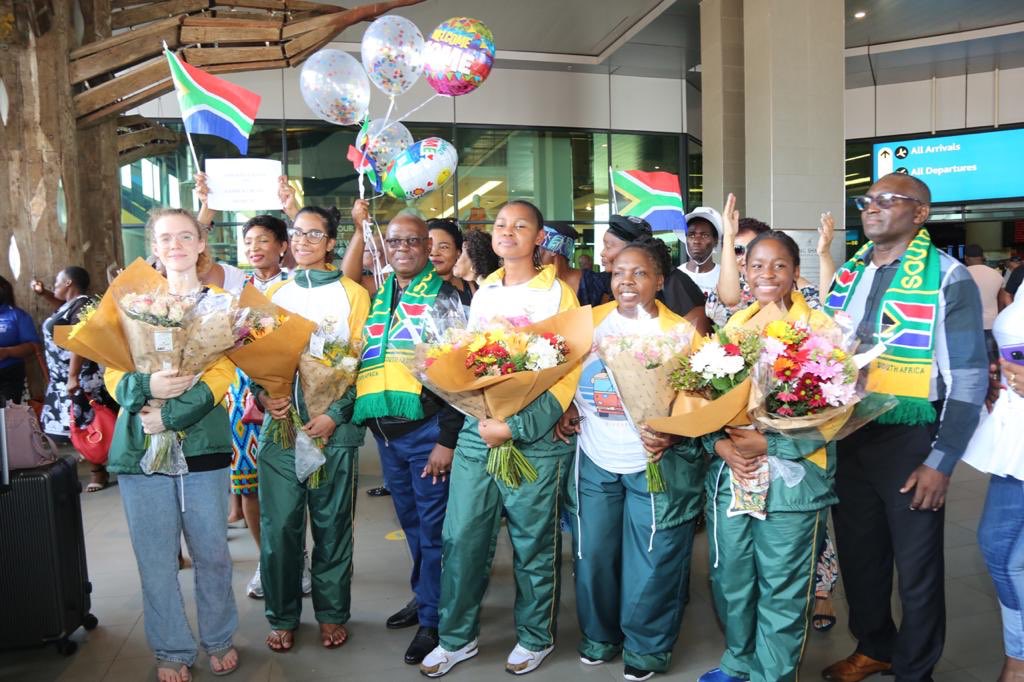
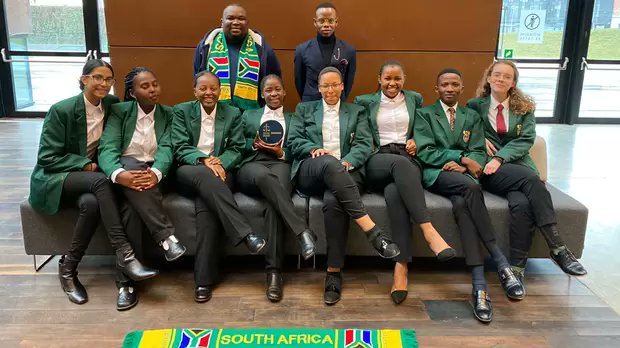
President Cyril Ramaphosa has hailed the team of South African Grade 11 learners, who won the 5th International School Moot Court Competition in Gdynia, Poland.
Ramaphosa said the learners’ victory is an achievement to be celebrated by all South Africans.
“Team South Africa has made our country proud again and our learners’ triumph demonstrates that when learners, educators and parents work together, we can achieve great things.”
The human rights-centred contest saw South Africa edge out USA in the final round after earlier wins against competitors from Bulgaria, Romania, Mongolia, St Maarten and Venezuela.
The contest simulated litigation before an international tribunal under the moot fact: “Scene of conflict over the past decade in Tabanath.”
“This victory also tells us that our schools are effective in preparing young South Africans for life beyond the classroom and beyond the borders of our country,” said Ramaphosa.
MEDIA STATEMENT: SAHRC Elated with Team South Africa’s Victory at the Fifth International School Moot Court Competition https://t.co/O36vrTnsfa
South Africa has won this competition on three occasions before the most recent victory.
Team members for 2020 were Sureshka Naidoo and Caitlin Schwarer of Eden College; Nondumiso Ntshangase and Nosipho Dube of Mathubesizwe High School in KwaZulu-Natal; Mihlali Precious Stotile and Ondele Bede of Holy Cross, and Okhela Sigwela and Lizalise Dlomo of Hudson Park High School in the Eastern Cape.
The South African team was chosen from a number of contestants who participated in the national schools moot court competition in September 2019.
The contest produced a high level of research and public presentation by learners from a broad range of schools and backgrounds.
“This should inspire all of us to work even harder to secure better education outcomes for all learners across our country,” the President added.
The Ekurhuleni Community Enterprise Development Fund has reached the closing date for two of its four funds, with about 5000 people attending a total of seven information sessions hosted since its launch in December, and 3500 forms taken by acknowledged individuals, rather than random distributions.
The R 300 million fund comprises the Phanda Fund, the Ximilani Fund, as the Fetola A and B Funds, which are run in partnership with the National Empowerment Fund (NEF). Applications for the first two funds, for which the 3500 forms were distributed, have now closed while those for the Fetola are still open.
Caiphus Chauke, Head of Department at the Economic Development Department in the Ekurhuleni Metro says they will now assess the number of actual applications but are concerned with the quality rather than the quantity of applications.
Chauke said submissions will initially be examined to see whether it involves female, youth and people with disability.
Applications will then undergo a rigorous three stage assessment looking at the strength of the business plan, an inspection of where the business will be run as well as an interview with potential entrepreneur.
“Economic transformation is an imperative and SMMEs are key drivers and contributors to job creation and economic progression,” Small Business Development Minister Khumbudzo Ntshavheni said at the time of the fund’s launch.
“We need to create an enabling environment for their growth and sustainability, through the right policies and targeted support mechanisms to ensure their participation.
Availing information on funding, reducing the cost of funding and bringing business support services closer to communities are some of the measures to unlock funding bottlenecks.”
Also at the launch, Ekurhuleni mayor Mzwandile Masina urged residents and City based businesses to take advantage of the opportunities offered by the fund, noting that it is a critical pillar of the City’s ten point economic plan and promised residents that applications will be handled in a fair and transparent manner.
The Gauteng provincial government also views small business as key drivers of economic growth and job creation and in its recently unveiled budget reiterated its commitment to pay invoices within 30 days and made special allocations to various departments for the payment of outstanding invoices.
The Funds and how they work
· The Phanda Fund aims to support the development of community enterprises in the form of individual entrepreneurs, small, micro and medium enterprises, cooperatives, and informal traders located within the City of Ekurhuleni. This focuses on the township economy, industrialization, business services, environmental services and human development. The thresholds for this fund are from R50 000 to R1.5 million.
· The Ximilani Fund is designed to syndicate with registered organisations, organised business formations, associations and/or chambers of commerce located within the City. The funding thresholds for this fund range from R50 000 to R1.5 million.
· The Fetola A Fund seeks to partner on a 50-50 cost and risk sharing basis with development finance institutions, state-owned enterprises, corporate social investment partners, enterprise and supplier development, and private funds. Ideal partners are those organisations that exist for the sole purpose of developing black businesses. The funding range for this is from R100 000 to R6 million.
· The Fetola B Fund is a soft loan that is exclusively reserved for Ekurhuleni-based entrepreneurs. The minimum application is R250 000. This Fund is aimed at black-owned businesses, individual entrepreneurs, small, micro and medium enterprises as well as potential industrialists and will be administered by the NEF
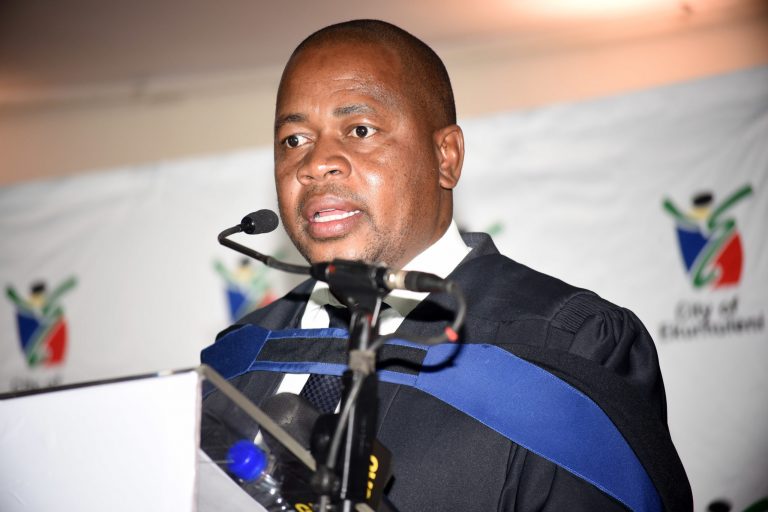
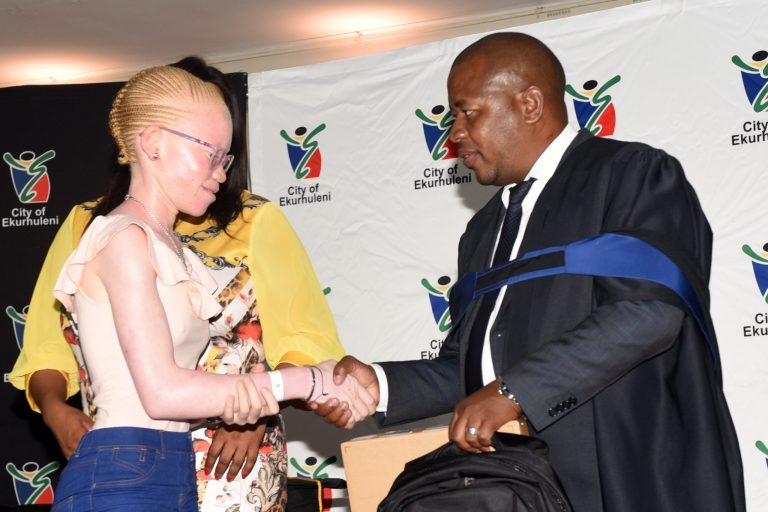
Ekurhuleni Mayor Mzwandile Masina has honoured university graduates for their hard work and dedication to their studies.
The graduates are beneficiaries of the City’s R100 million community bursary scheme, which has now benefitted over 6 000 financially needy students in the Metro.
On Wednesday, Masina spent a day with these graduates, including the top matric learners of 2019.
The occasion was the annual City of Ekurhuleni Academic Excellence Awards Ceremony 2020, held at the Alberton Civic Centre.
Masina handed out certificates and bursaries for the 2020 academic year including corporate gifts to the top performing learners, which included new graduate Kamogelo Innocent Motsoagae, a recipient of the Community Bursary Scheme who graduated in physiotherapy.
He was joined on stage by a newly graduated medical doctor Lisa Nunes and architect Lerato Tsuping, recipients of the Ekurhuleni Mayor’s Tertiary Assistance Fund (EMTAF).
The trio wrote under the topic, THIS IS MY STORY: Building Bridges, Breaking Barriers, about their experiences overcoming their challenging circumstances and graduated thanks to the financial assistance from the Ekurhuleni Metro.
Their work was moderated by Councillor Lesiba Mpya, MMC for Human Settlements in Ekurhuleni.
“I would like to take this opportunity to thank the City of Ekurhuleni and the mayor for the bursary given to me a few years ago,” said Motsoagae.
“I have had my own struggles and challenges, but I am glad I finally made it as a physiotherapist, thanks to the bursary scheme from the city of Ekurhuleni.”
Motsoagae said he would use his position as physiotherapist to promote healthy living, particularly in black communities.
He said he was deeply concerned about the number of people dying due to lifestyle- and stress-related diseases such as diabetes, strokes and heart attacks.
Motsoagae said he would like to establish weekly boot camps in the township where people can be taught about the value of healthy living and physical exercise.
“I would like to say, you can deal with these diseases without using medicine but routine exercise and healthy lifestyle. I would also like to teach our people how to deal with obesity in our communities. Lastly, I would also like to see more men reduce their big stomachs through daily exercise,” he said.
Motsoagae said as a man, he was also concerned about the high incidents of gender-based violence in South Africa.
“We must speak out against gender-based violence, especially men, who are mainly the perpetrators of GBV. It all starts from the bottom. We need to educate young men on how to deal with their anger and violence from an early age,” he said.
From left: Physiotherapist Kamogelo Motsoagae, Architect Lerato Tsuping and Dr Lisa Nunes
Nunes, 24, who comes from Alberton, said she was the first generation child in her family to have the luxury of studying towards a medical degree at Wits University.
“I have always loved helping people and doing good things. That’s why I chose to be a medical doctor. I have always to assist people from less privileged backgrounds than me. I am also very grateful to the bursary that I received from Ekurhuleni,” said Nunes, a former Alberton High School learner.
She said university experience was different from high school.
“My advice to those who are going to university for the first time this year is that start working from day one and be disciplined throughout the whole year. However, enjoy yourself too, eat well, pursue your hobbies and have fun at the same time and spent time with your family when the need arises.”
Nunes intends to do internship at Baragwanath Hospital as part of her community service before getting a full-time post in the local or provincial government sector.
Tsuping, who studied architectural design studies at the University of Johannesburg, said she was a change agent and looking forward to transform the face of architecture in Ekurhuleni.
She said as a little girl growing up in Nhlapo Section, a violent and economically depressed part of Katlehong township, she said she had to overcome many challenges affecting the youth including alcohol, drugs, bad influences and hopelessness.
“I come from Nhlapo Section, one of the most disadvantaged areas in the township but I have made it against all odds. I told myself that despite my background, I will become an architect.”
“Things are bad but excuses don’t help. There are so many bad influences. We need to go back to our communities and teach young people that you can become whoever you want to be in life if you are disciplined and focused,” said Tsuping.
Tsuping said as an architect, she hopes to change many government buildings in Ekurhuleni by adding a bit of bright colours to them.
“Most of the buildings in Ekurhuleni are an eyesore, if not totally intimidating. I would like to add a bit of colour to these buildings in order to make them look good,” said Tsuping.
Protesting students have torched a building at the University of KwaZulu-Natal (UKZN), with university management describing the act as “wanton criminal behaviour.”
Police spokesperson Brigadier Jay Naicker said students also gathered on the Howard campus and disrupted registration points at about 07:00.
“They forced other students to join them. The crowd grew to around 1 000 students. They moved to Princess Alice Street and set DSW (Durban Solid Waste) bins on fire on the road. Registration has been suspended. The situation is tense.”
He said police were monitoring the protests and would “take appropriate action.”
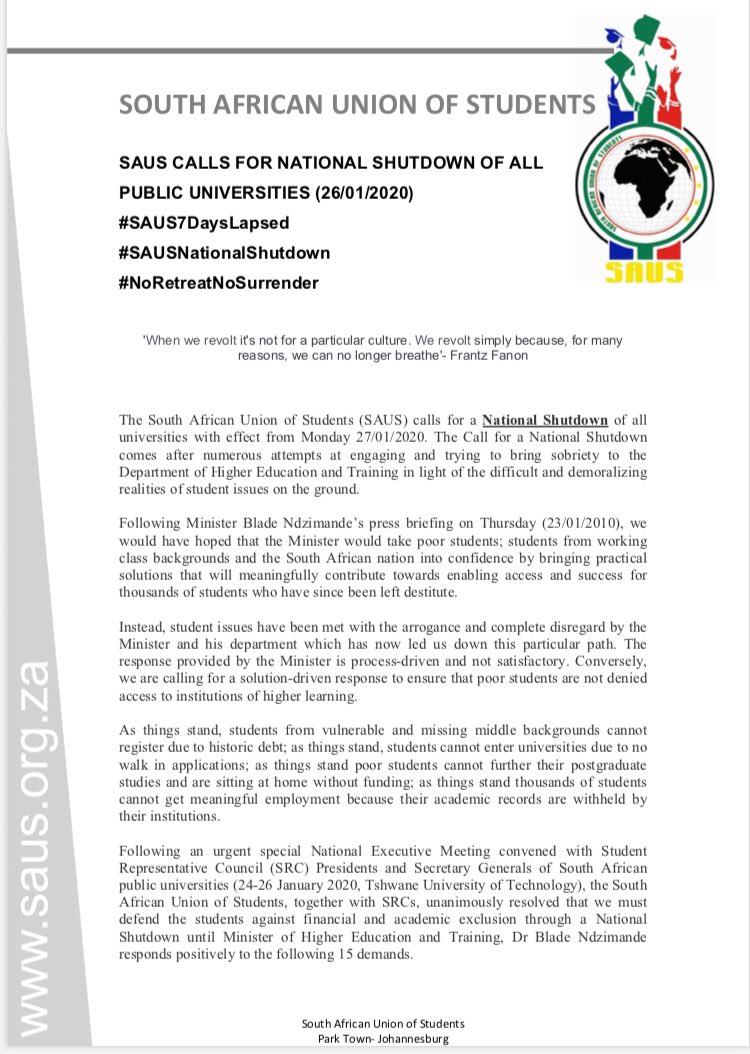
The escalation follows a statement by the Department of Higher Education in which it termed as “unfortunate” the call for a national shutdown of universities by the South African Union of Students (SAUS), apparently over what they say is inadequate responses by minister higher education minister Blade Nzimande over concerns raised with him.
Naicker reported that security officials at the Westville campus spotted around 600 students approaching the security officers’ building at around 01:00am.
“They were seen carrying petrol bombs and stones. The security guards fled the scene and returned a short while later to find the security officers’ building set on fire.”
Police spokesperson Brigadier Jay Naicker
Police deployed public order policing units, as well as the fire department to the scene.
“The suspects fled the scene prior to the police’s arrival. A case of arson and public violence is being investigated.”
University spokesperson Ashton Bodrick denounced the protests as “wanton criminal behaviour.”
“Despite their best efforts, a grave act of arson was committed in the early hours of this morning when the risk management services building (security control centre) on the Westville campus was set alight and burnt,” Bodrick said on Wednesday.
“In as much as we respect the students’ right to protest, there is no excuse for any act of violence and damage/destruction of valuable university resources and property.”
Student leaders at the institution have issued several demands, including the cancellation of historic debt.
The Department of Higher Education says the call for a national shutdown of universities by the South African Union of Students (SAUS) is “unfortunate.”
The union said it was forced into action after Higher Education Minister Blade Nzimande failed to respond adequately to a list of demands sent to him on issues relating to student funding, accommodation, and safety.
The Department said there was no need to disrupt the 2020 academic year because Nzimande had already responded to the union.
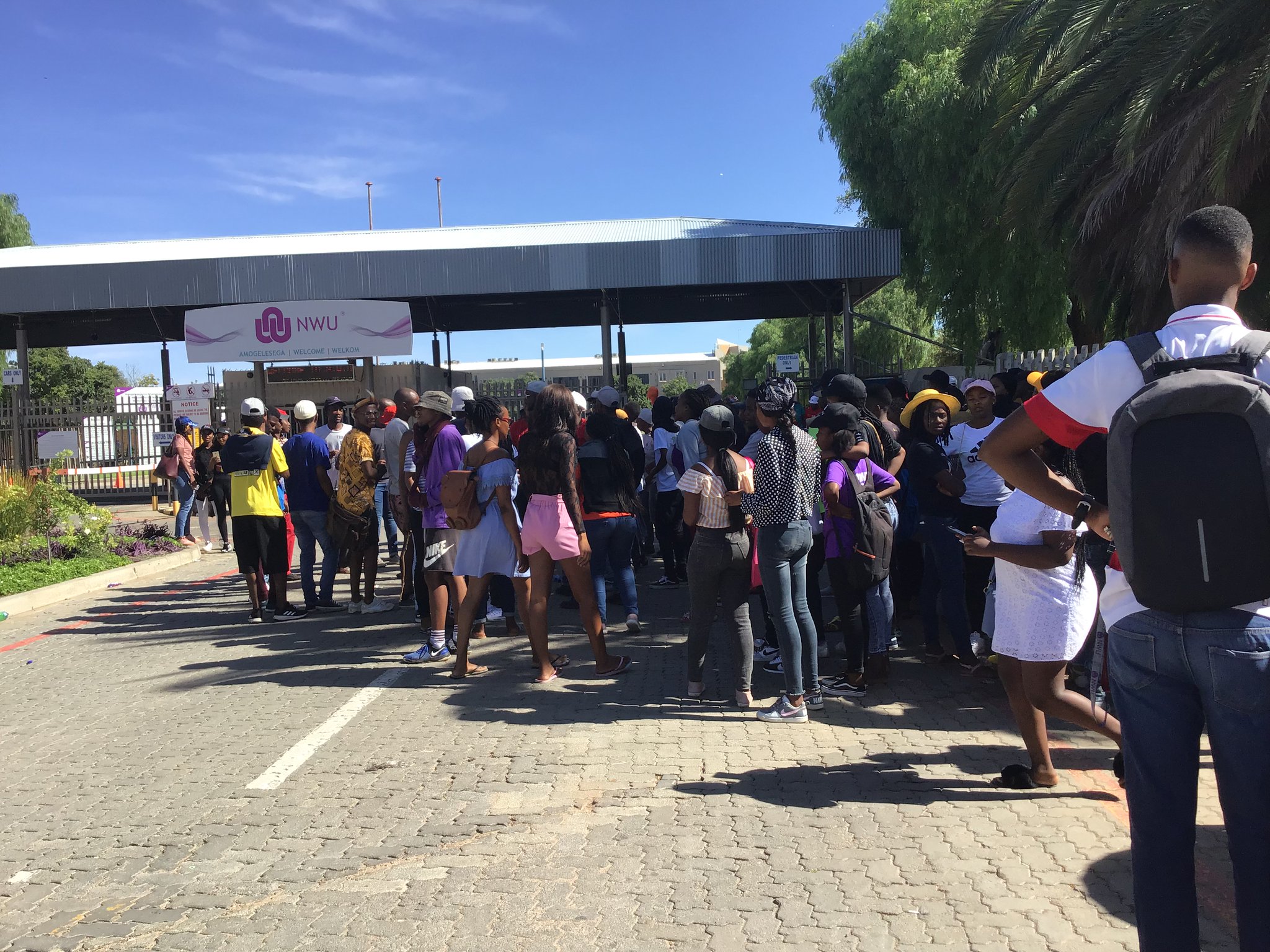
Two campuses of the North West University – the Mahikeng Campus and the Vaal Triangle Campus in Vanderbijlpark – have been shut down due to student protests
“On the response given by the minister, we’re not aware what they’re unhappy about at the moment. It will be proven that they had engaged with us,” departmental spokesperson Ishmael Mnisi said.
Mnisi added that the ministry had done its best to accommodate the union.
Ministers response to South African Union of Student (SAUS) memorandum dated 16 January 2020. pic.twitter.com/Du2UgNwIoH
— Minister Dr Blade Nzimande (@ministerdrblad1) January 26, 2020
In Nzimande’s letter to SAUS, the minister responded point-for-point to the concerns raised by the union, and added, “I hope that the channels of engagement between SRCs, universities and the department are sufficiently open to allow for continued engagement on medium, and longer-term issues as well as any urgent matters.”
SAUS said it held talks with 21 of the 26 public universities of which some students from 18 institutions have agreed to join the shutdown.
There is a proverb common to many African cultures which says that it takes a village to raise a child. This idea – that the broader community has a responsibility for the development, well-being and safety of each child – comes to mind when I think about the tragic and deeply upsetting death of 13-year-old Enoch Mpianzi on a school camp just over a week ago.
Sadly, Enoch is not the only child in recent weeks to lose his life for reasons that were entirely preventable, if only adults had exercised due care and responsibility.
One thinks of another 13-year-old, Keamohetswe Shaun Seboko, who recently drowned in the swimming pool of a Magaliesburg primary school, and the two children who died at the Lekgolo Primary School in Limpopo when a truck crashed into a wall that collapsed on them.
One thinks also about the many children, like 6-year-old Nathlia Pienaar, who are killed in the crossfire of gang wars on the Cape Flats. We remember also the tragic deaths of Michael Komape and Lumka Mkethwa, both of whom died after falling into pit latrines.
All of those young lives, and the lives of many others, need never have been lost. All these tragedies could have been prevented if measures had been taken to keep these children out of harm’s way.
It seems to me that, as a society, we are failing our children.
Too many children find themselves in dangerous situations, whether it is on a makeshift raft on a river or being left alone in a shack with a paraffin lamp.
When contractors leave excavations unprotected or school infrastructure is not maintained or school transport is overcrowded, the lives of children are put at risk.
But there is more than negligence and neglect at work. Many children are targeted by sexual predators, criminal gangs and drug sellers precisely because they are vulnerable.
As a society, we need to be more diligent and more active in protecting our children from these and other dangers. As a society, we need to build a culture of responsibility.
We need to be responsible for ourselves, for our children and for others. Just as we need to ensure that children are able to grow up in a safe, nurturing and stimulating environment, so too must we feel a duty to protect and care for all those who we know and interact with.
We must feel this duty of care on the road. While we welcome the drop in road fatalities over this festive season, the grim reality is that over 1,600 people died on our roads in just a month and a half.
It is disturbing that over 9,000 motorists were arrested for offences including drunk driving, speeding, and reckless and negligent driving.
A culture of responsibility means that we should all drive safely and respect the rights of pedestrians and other road users.
A culture of responsibility means that fathers need to be present in the lives of their children. Too many women have to raise children on their own, which often limits their prospects and those of their children.
A culture of responsibility also means that we should practice safe sex and not expose ourselves or others to HIV. We should not abuse alcohol or use drugs.
We should seek to live healthy lives so that we avoid diseases that are largely preventable and live longer lives.
Such a culture should be embraced in particular by all those in society who occupy positions of authority and influence, whether they are religious leaders or politicians, traditional leaders or celebrities.
Through their words and actions, they should seek to build a better society in which all are appreciated and cared for.
Elected officials and public servants are entrusted with the responsibility to ensure the safety and well-being of citizens. They must ensure that there is adequate and safe infrastructure in schools.
They must act quickly when there is an interruption to water supply in a communities or when faulty streetlights are reported. They must ensure that health and safety regulations are enforced and that the rule of law is maintained.
In addition to the ongoing work that is taking place across government, at all levels, to give effect to this responsibility, we have sometimes had to take extraordinary measures.
In response to the deaths and injury caused by children falling into pit latrines, we launched the SAFE initiative to accelerate the provision of appropriate toilets to all schools in the country. We deployed the South African National Defence Force to parts of Cape Town to support the police in their efforts to reduce gang violence.
More recently, we have, together with civil society, embarked on an emergency response plan to end violence against women and children.
Yet, there is clearly much more that we need to do, as government and as a society.
We applaud those individuals and organisations that have taken upon themselves responsibility for the well-being of others. There are people like Ralph Bouwers and Mark Nicholson, who organise recreation activities for young people in Lavender Hill in Cape Town to keep them from turning to gangsterism.
There are the mothers, sisters and daughters who work as student volunteers with Operation Bobbi Bear, an organisation in Amanzimtoti in KwaZulu-Natal that offers shelter to young children who have been abused.
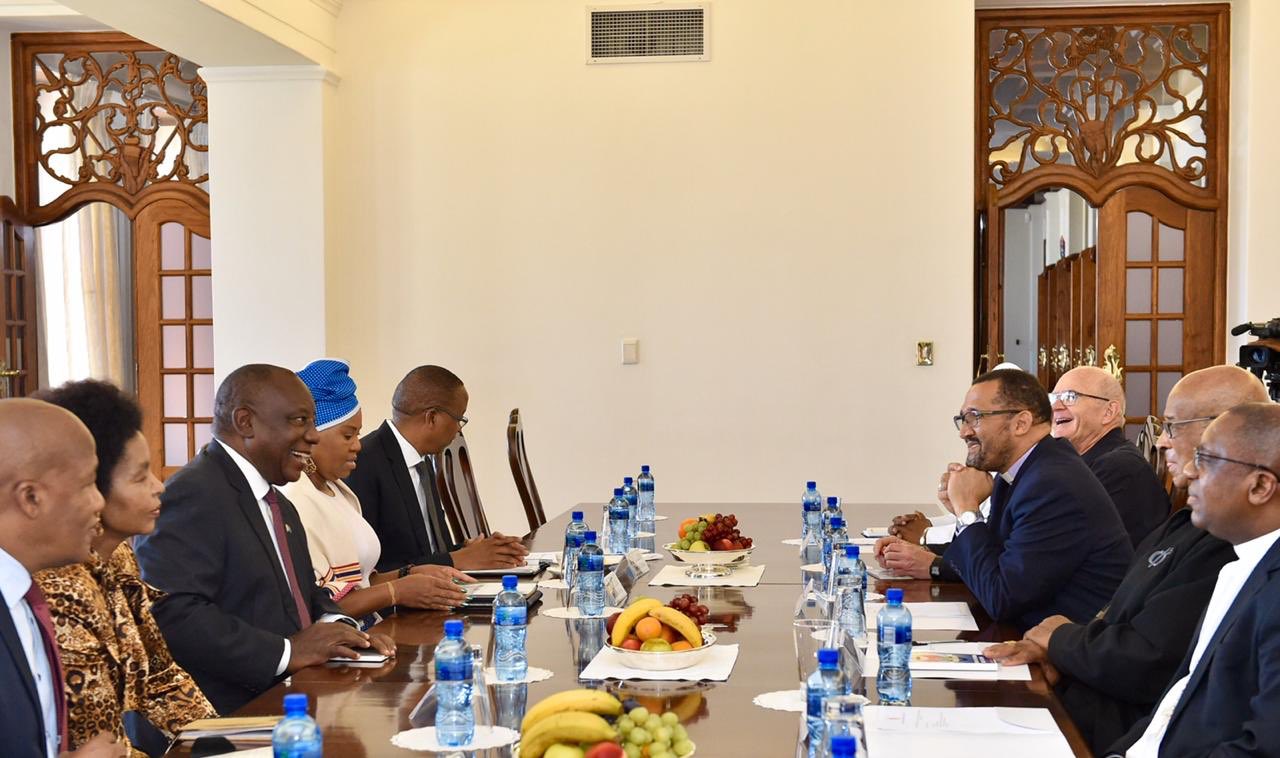
There are many faith-based groups like the Southern African Catholic Bishops’ Conference, who I met last week, who told me about the work they are doing to respond to the needs of the poor, to support families to be more caring and nurturing and to assist young people in confronting the many challenges before them.
These South Africans are showing us the way. Through their example, they are reminding us of what it means to take responsibility for ourselves and for others.
This country has witnessed far too many tragedies. Too many young lives have been lost, too many children hurt and traumatised.
We can bring these tragedies to an end if we all, each one of us, take responsibility for raising the children in our great South African village.