South Africa’s Higher Education Minister says he’s concerned with the numbers which show that fewer matriculants achieved more than 40% for mathematics in the 2019 matric examinations.
A record 81.3% of matrics passed in 2019, with over 180,000 achieving bachelor passes.
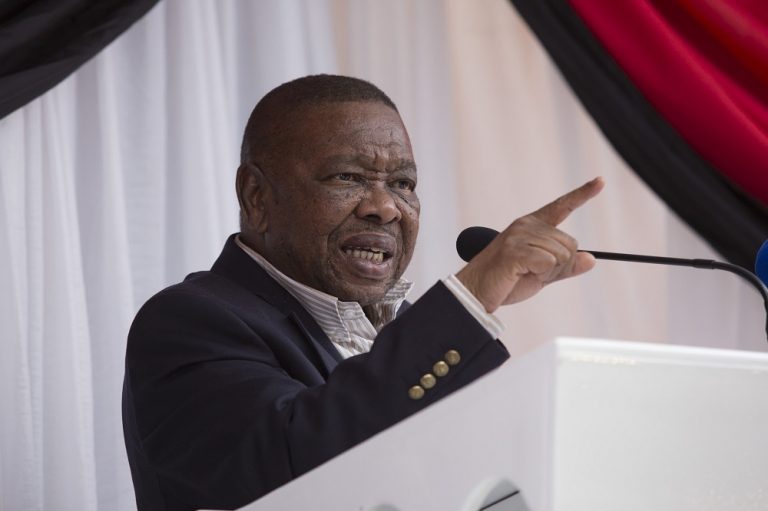
However, Blade Nzimande said, fewer pupils would be allowed to study programmes in mathematics and science compared to the previous year.
Nzimande pointed out that most bachelor degree programmes that required mathematics would not accept candidates who achieved lower than 40%.
“The actual number who passed with 40% or above in mathematics was lower than the number in 2018. The number in 2018 was 86,874. In 2019, the number was 77,751, which means it’s a drop.”
The minister was speaking on the implications of matric results on the post-school education and training sector.
Analysing the application statistics, he noted that more students opted for universities rather than TVET colleges.
Statistics showed that 453 157 students preferred admission at universities, while 90 111 chose colleges, said Nzimande, adding that more than 212 000 returning university students have been declared eligible for funding from the National Student Financial Aid Scheme (NSFAS) funding for the 2020 academic year.
NSFAS received more than 500 000 applications for the 2020 academic year.
Nzimande said applicants included those who were writing their 2019 NSC examinations, grades 10 and 11 pupils intending to further their studies at TVET colleges and returning pupils.
The student financial aid scheme has so far approved 430 000 applications, he said.
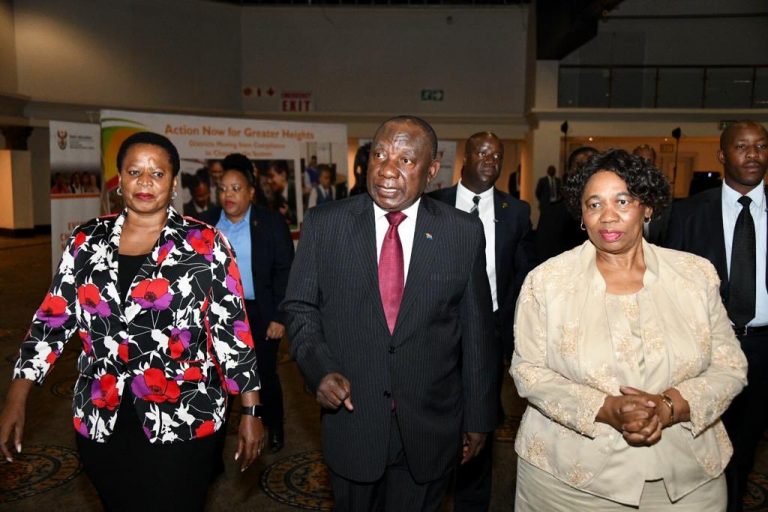
President Cyril Ramaphosa told key stakeholders in the basic education sector immediate task as government is to improve the foundational skills of literacy and numeracy, especially reading.
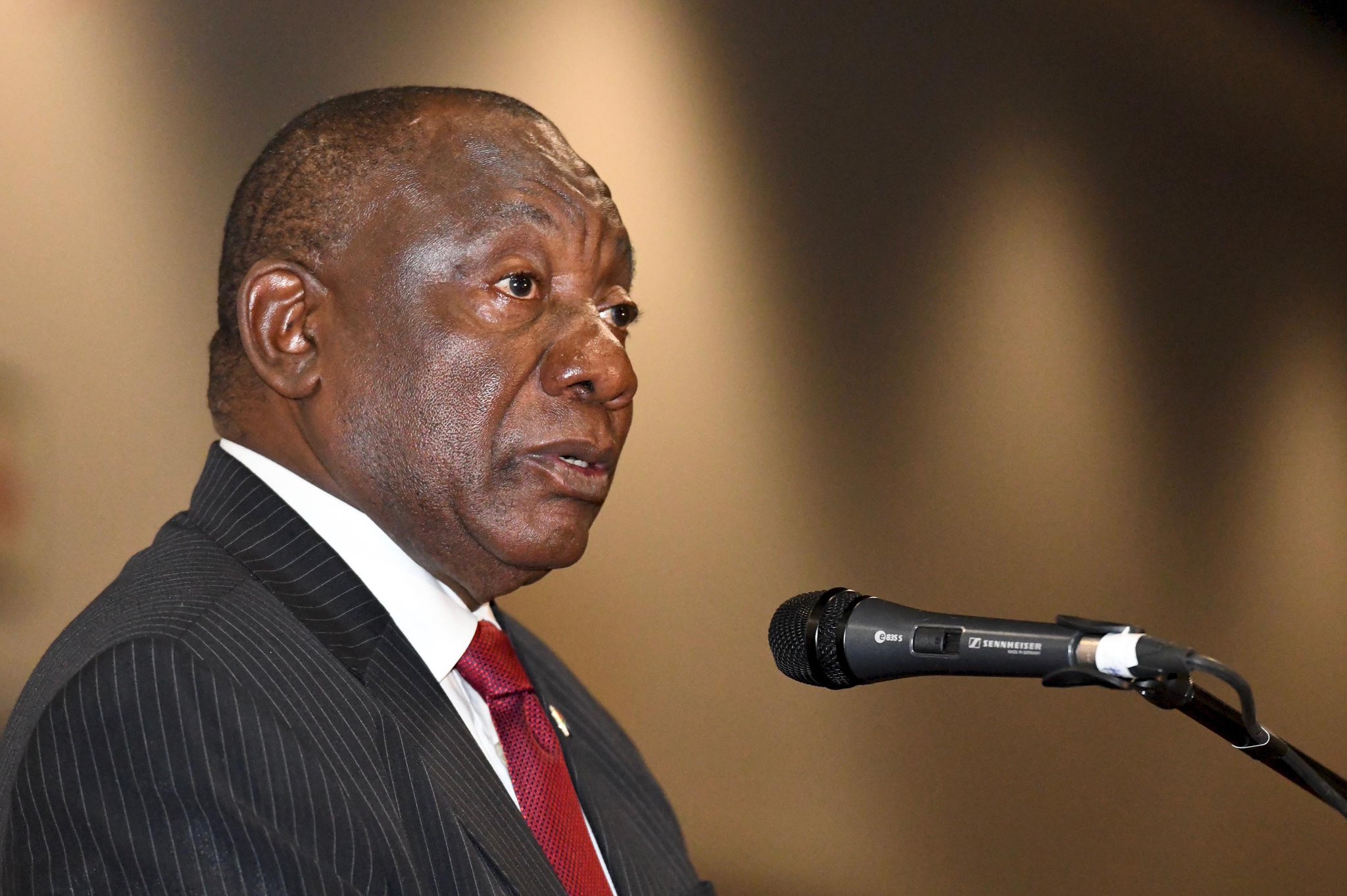
“It is for this reason that reading for meaning has now been declared an apex priority,” Ramaphosa told delegates at the Annual Basic Education Sector Lekgotla in Kempton Park, Ekurhuleni.
The President said that by 2030, “South Africans must have access to education and training of the highest quality, leading to significantly improved learning outcomes.”
He added that skills such as literacy, numeracy and science must be complemented by team work, critical thinking, communication, persistence, and creativity. “All these skills are interconnected,” he said.
“They are part and parcel of the skills set necessary to meet the demands of a changing economy and the future of work.”
#2020DBESectorLekgotla Ramaphosa: Education resides at the centre of what is the future of work. Globalisation, 4IR, climate change and we have found the future of work revolves around lifelong learning. pic.twitter.com/NynIgghsDC
“The main thrust of our plan is to ensure reading for meaning across the curriculum, in all grades, and in all schools throughout the country. Our plan is to ensure that we teach all our learners to read well.”
He said society needs to play its part so that all learners and young people becoming lifelong readers.
“Today, we say to all South Africans that reading is not a portion of education, it is education.”
President Ramaphosa called for a collaborative approach.
“We cannot succeed on our own as government to get the nation reading. That is because the first real teacher of any child is the parent. What is taught at home must be reinforced at school. Similarly, what is taught at school must be reinforced at home.”
He said government has moved to strengthen the capacity of the sector, especially teachers, through the wall-to-wall capacity building of anyone in the reading ‘supply chain.’ “All teachers are going back to school to be taught the latest how-to-teach reading methodologies.”
Ramaphosa also spoke of the “value and importance” of partnerships in meeting the developmental needs of our country.
#Ramaphosa: Our challenges in the basic education are still immense. Judging by the recent progress, it shows that we are capable of achieving greatness as a nation. #DBE2020SecotorLekgotla
“Our collective task as a nation is to move South Africa to the next frontier of economic development, in which basic education plays a key role,” said Ramaphosa.
Hector Peterson Primary School principal Mmabatho Mahapa is hoping a contractor who has been building a block of classrooms at her school since 2017 could finish the work soon so they can improve on the 89% pass rate they scored last year.
The school located in Phagameng township in Modimolle, Limpopo has 1068 learners some of whom sit for their lessons in shipping containers because of the delays.
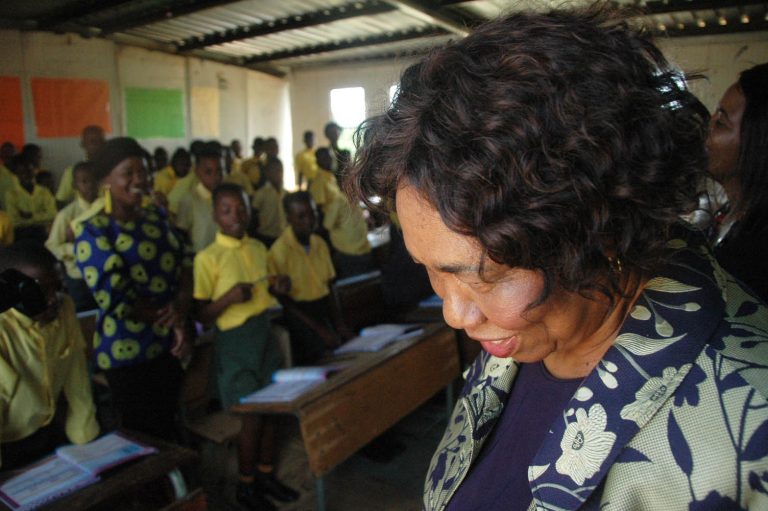
The school was one of two in the area toured by Minister of Basic Education Angie Motshekga on the first day of the 2020 schooling calendar Wednesday.
Motshekga visited the school as part of the national educations department’s school readiness and back to school oversight and monitoring visits.
The Department of Basic Education (DBE) said its officials assess the readiness of schools at the beginning of the academic calendar “in order to advance any form of assistance from the earliest possible point in the year.”
The visits also focus on among other aspects, such as the delivery of learner and teacher support materials and adherence to teaching and learning from the first day of school.
These include a meeting with school management teams to assess challenges and entrench the school improvement programs from the outset.
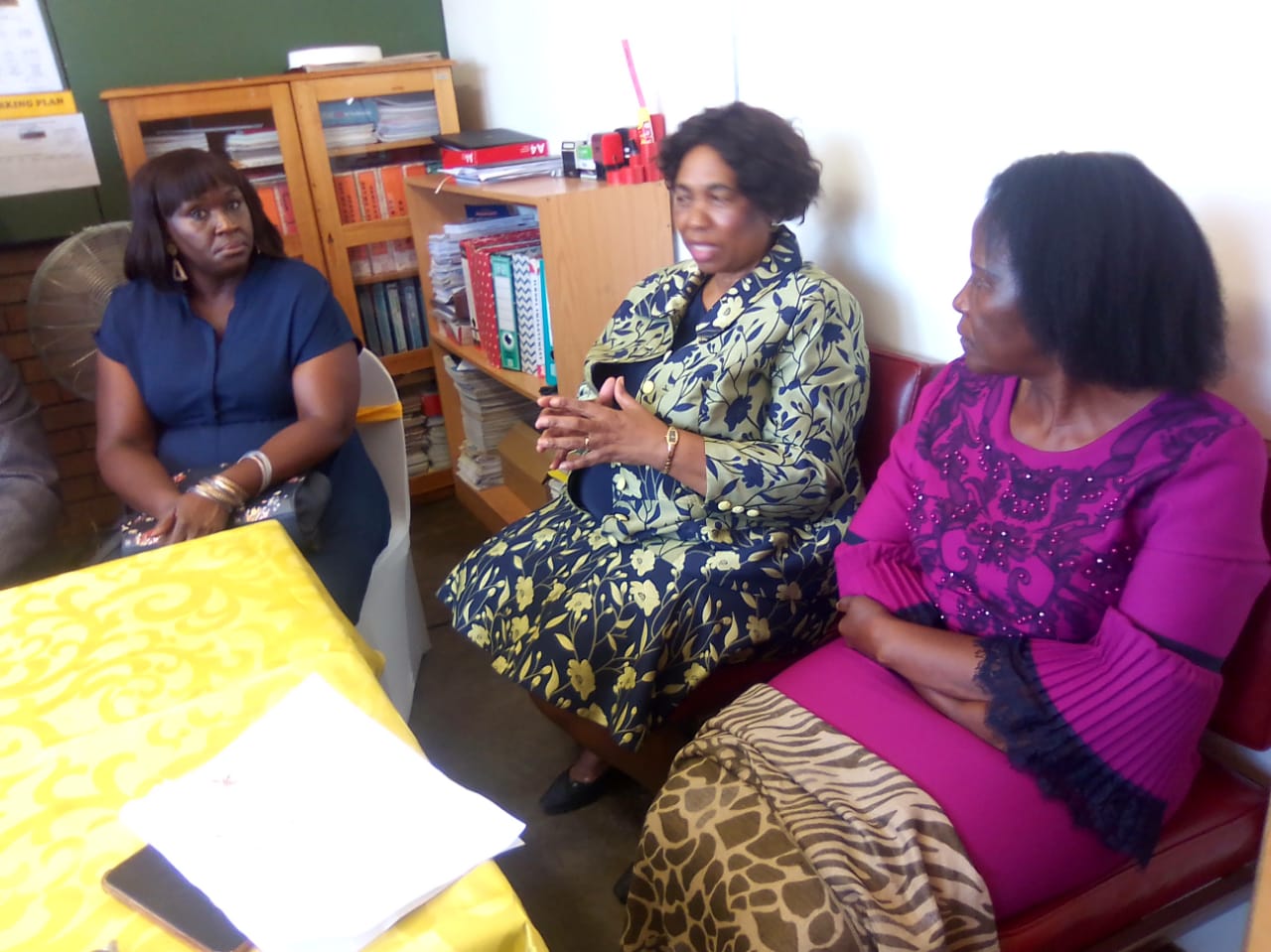
During a meeting with staff and the SGB late morning Motshekga commended them for their good work at the school and revealed that the department would be focusing as much on Early Childhood Development (ECD) as it will be on matrics.
President Cyril Ramaphosa has made repeated calls for emphasis and intervention in ECD, with responsibility now migrated from the social development to Motshekga’s ministry.
It’s estimated that over 700 000 children are currently accessing ECD services across the country. Although Limpopo registered a 3.8% increase in the 2019 matric pass rate it scored the lowest among the nine provinces with a 73.2% average.
Limpopo MEC for education Polly Boshielo is not fazed by the fact that her province scored the lowest in the 2019 Matric…
Limpopo education MEC Polly Boshielo pointed to a lack of development and poverty levels as some of the contributing factors to the poor results.
Her views are backed by findings of the 2018 General Household Survey by Stats SA which found that at least 91,2% of learners in Limpopo benefitted from school feeding schemes.
Hector Peterson Primary is the beneficiary of such a scheme which begins with a breakfast at 07h30 before classes commence.
Mahapa said learners at the school are still struggling with reading and spelling. A 2016 report of the Progress in International Reading Literacy Study found that 78% of grade pupils in SA could not read for meaning.
This means children did not understand what they are reading.
SA was placed last out of 50 countries that participated in the study, with Limpopo and Eastern Cape the poorest performers with scores below 300 points.
Mahapa said they have made a number of interventions which include enrolling in internationally recognised reading and literacy programmes.
These include the Partners for Possibilities programme which has been described as a co- action, co-learning partnership between school principals and business leaders to enable social cohesion through partnerships and empower principals to become change leaders in their schools and communities.
Mahapa said they have begun seeing “light at the end” since joining the programme and received donations of books for English reading from a private funder.
She said the main challenge facing the school was the lengthy project to build an additional block of classrooms. The project started in late 2017 and remains incomplete.
Learners at the Hector Peterson Primary School in Phagameng, Limpopo are forced to study in shipping containers due to a building project that has dragged for over two years. Photo: Lucas Ledwaba/Mukurukuru Media
This has forced a large part of learners to study in mobile classrooms in the form of shipping containers which presents challenges. “When it’s hot, they [containers] are hot. When it’s cold then we are also cold,” she said, adding that this affects learners’ ability to concentrate.
She said the containers need constant repairs as a result of wear and tear and this exhausts their meagre resources financial resources.
The school, located in a small rural farming town faces a unique challenge. Farm schools are being forced to shut down due to low enrolment caused by among others the agriculture sector shedding jobs due to mechanisation and former workers having to relocate to townships.
The Hector Peterson Primary School has now absorbed scores of learners who were previously enrolled at farming schools and this has added to the number of pupils.
The school doesn’t have a library or laboratory but still managed to produce a 89% pass rate last year. “It’s our wish to have those things. Infrastructure is very important. We know that if this improves then we can do even better,” said Mahapa.
She added that stationery was delivered on time last year which enabled teachers to commence with teaching on the first day.
Limpopo premier Chupu Mathabatha, education MEC Boshielo, and other members of the executive followed the national trend and were out in force across the province early Wednesday visiting schools.
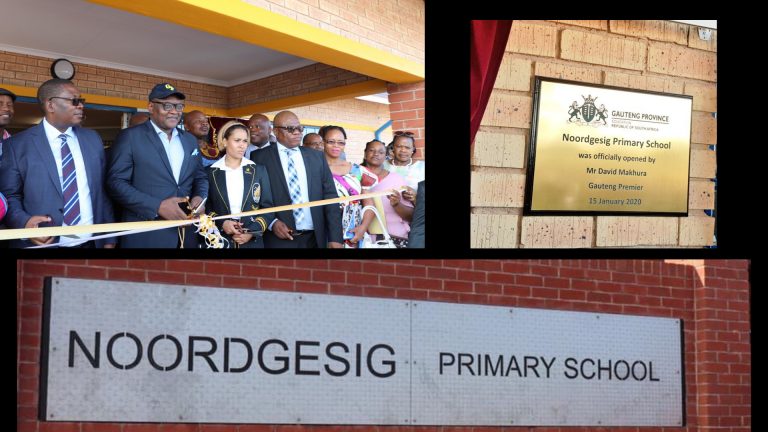
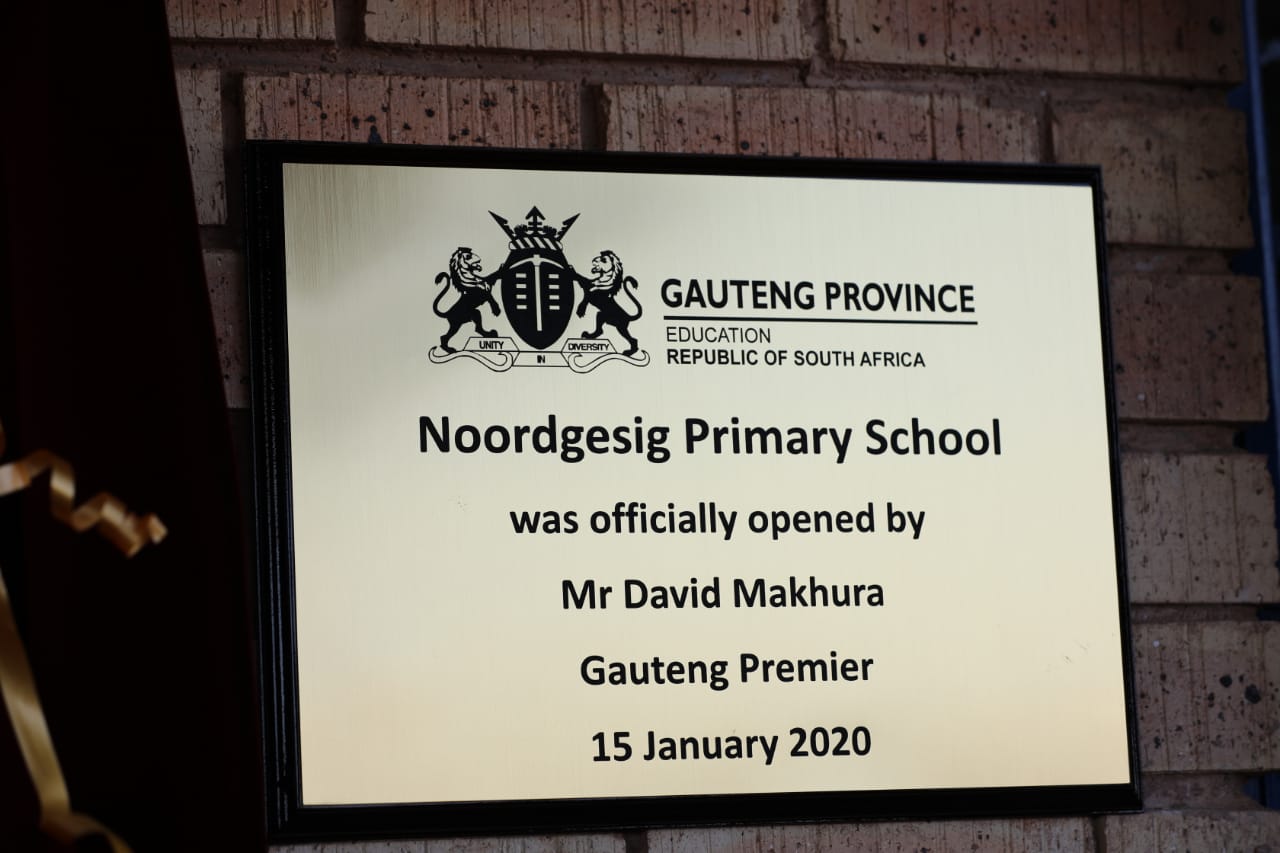
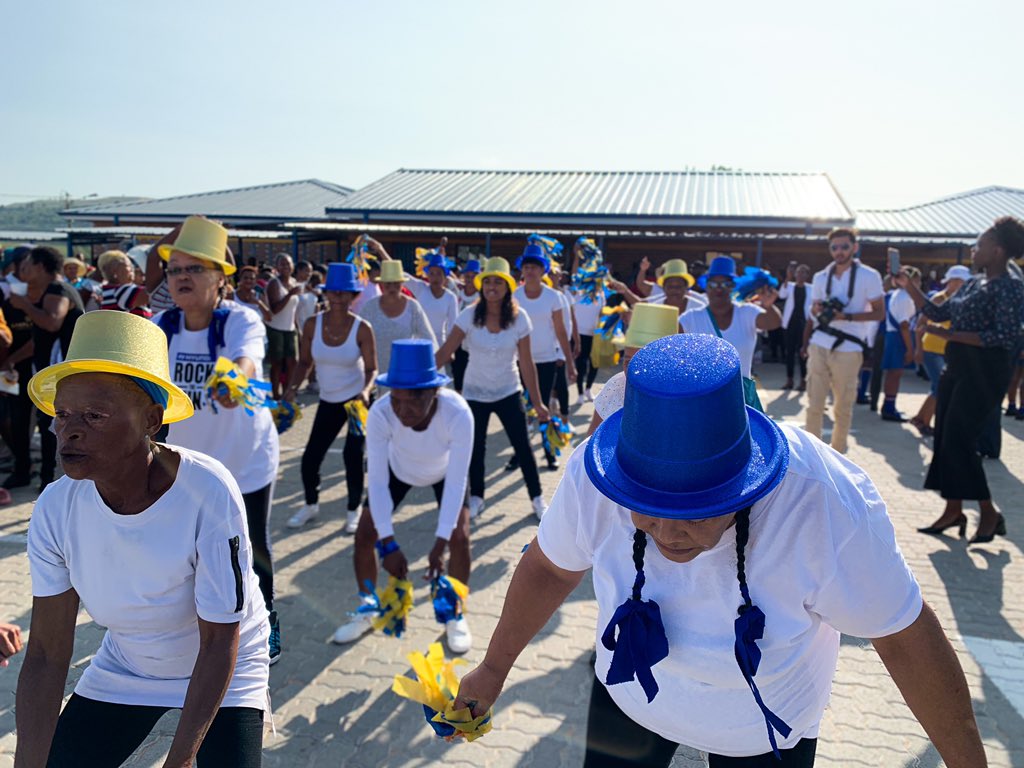
There was no mistaking the carnival-like atmosphere in Noordgesig, located on the fringes of Soweto, where parents and learners took charge of their new school, refurbished to the tune of R110 mil by the Gauteng Department of Education (GDE).
“This a major project for them as they aim to make a change in the education sector.
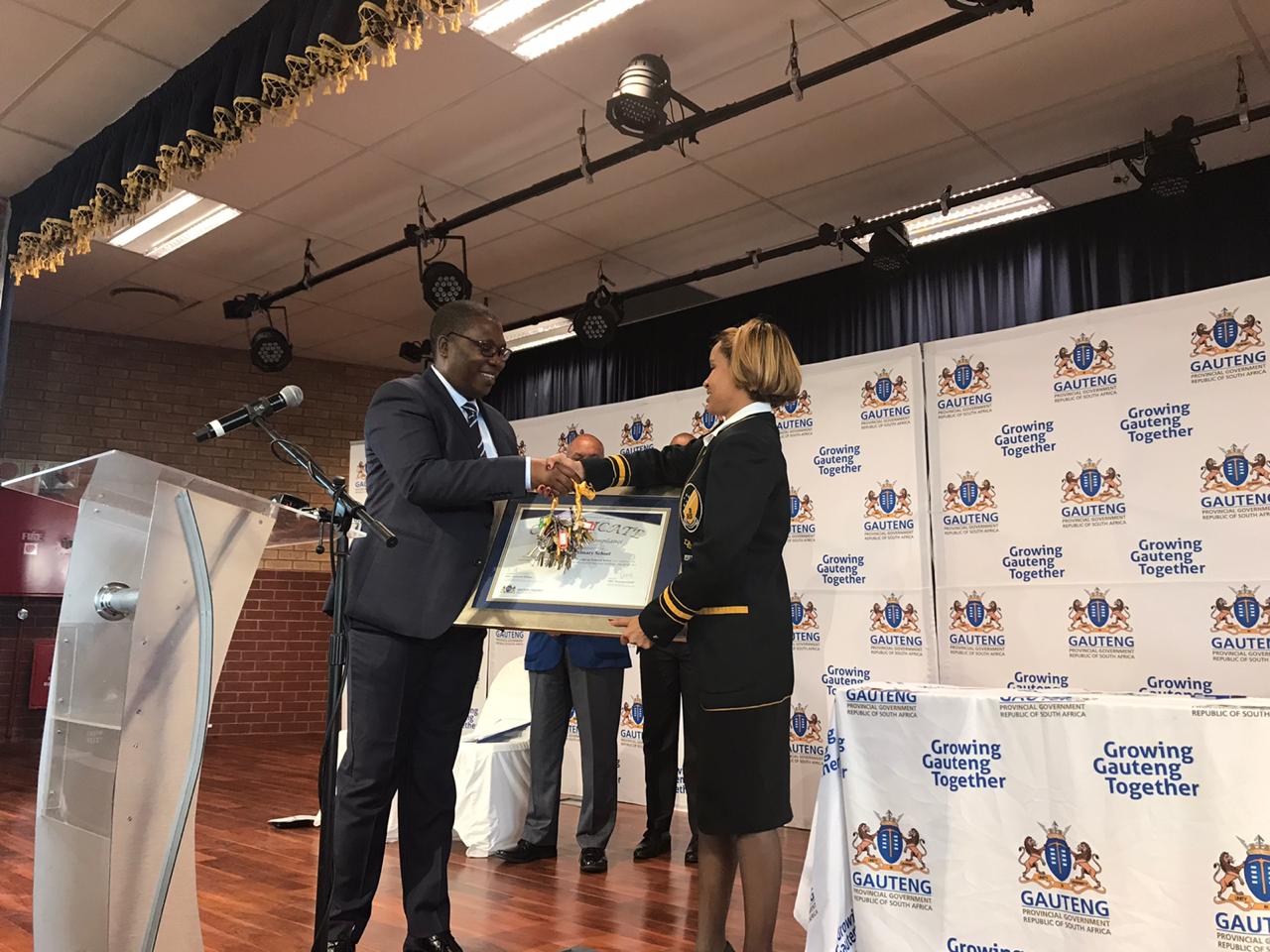
“Everything we were deprived off back then at school, our children will get, said Education MEC Panyaza Lesufi after being handed the keys to the school by Infrastructure and Development MEC Tasneem Motara.
Noordgesig Primary School was one of the schools identified by the GDE to be revamped as it moves to improve the quality of education in townships.
The Noordgesig community has been patiently waiting nearly 5 years for the old asbestos school to be demolished and rebuilt with a brick and a mortar structure.
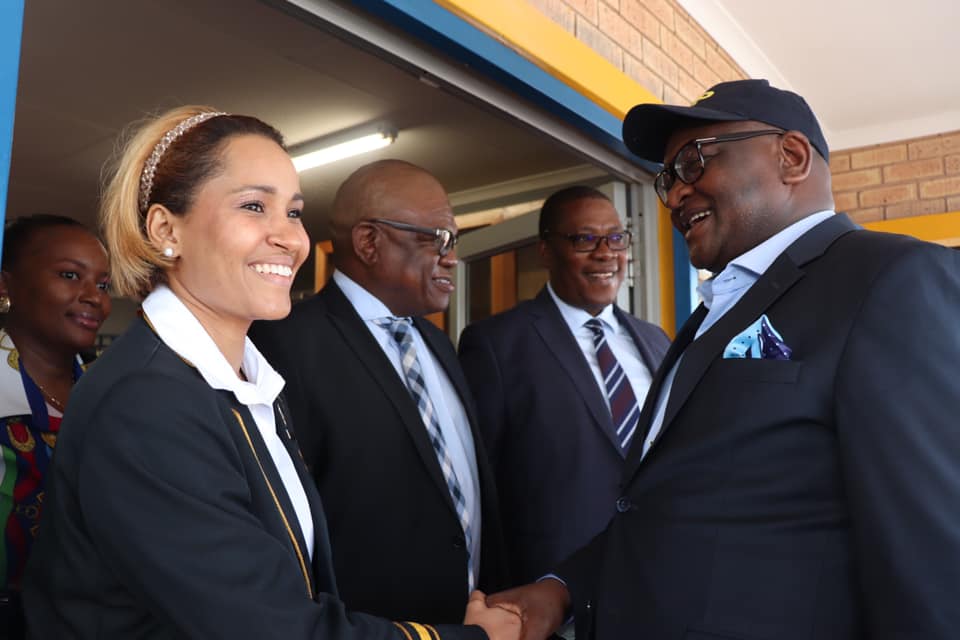
Premier David Makhura recalled when he first came to Noordgesig in 2015, the community complained about crumbling school infrastructure in the area.
“Today I return a happy man as the provincial government has delivered on their promise to the people.”
The school boasts state of the art facilities, 6 classrooms per grade, a Grade R block with 4 classrooms, 2 smart science labs, 2 smart multi-purpose rooms and a dining hall.
Over 1800 learners from Grade R to Grade 7 will be accommodated in the newly built school.
Parents entered the school hall singing and dancing as they expressed their gratitude to the GDE for acting on their concerns and demands for enhanced education facilities.
Motara said this is but one example of a project delivered in record time. The school took 72 weeks to build and the Department highlighted that 42 local subcontractors were enlisted in the facility’s construction which aligns with the criteria as outlined in President Cyrils Ramaphosa’s Kawuleza programme.
Lesufi said primary education is an important phase as it lays the foundation for learners, adding GDE will be releasing results of all primary schools this year.
“This is to keep track and to make sure pupils understand the importance of education.”
Johannesburg Mayor Geoff Makhubo was also present and said the City will support the GDE to protect the school’s infrastructure to ensure it’s kept clean.
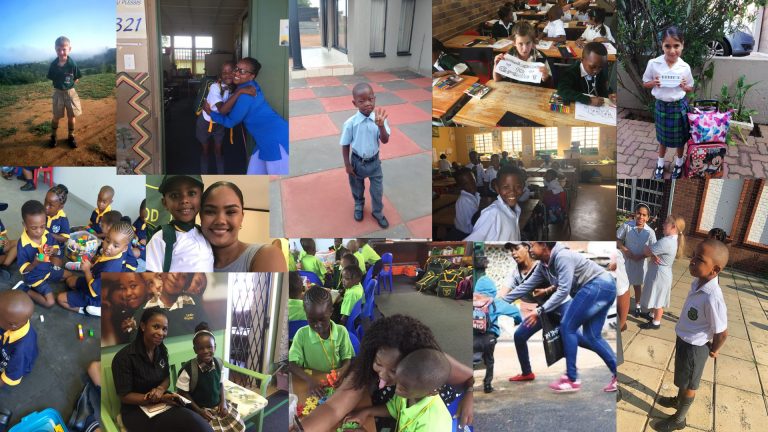
For some there were tears, others were anxious, and for the rest, pure excitement, as hundreds of thousands of learners across South Africa sounded in the new school year.
For many, it signaled a step up from pre-school to the ‘big school’ and they braved their school’ halls for the first time Wednesday.
At times, it was hard to determine who was more emotional, the learners or the parents.
This is how one parent summed up the first day.
“I gave him a quick hug, told him that he will be fine and that we love him stacks. I then had to get out of there cause I could feel the tears coming. I cried driving home. I’m crying while I type this.
“Guys this first day of school thing is hard. For me. Luke is so completely fine. I’m a mess.”
Some parents were frantically completing admission forms, while others reassured their little ones as they take their first steps in their respective ‘long walks to freedom,’ to borrow the title from Nelson Mandela’s biography.
There was a carnival atmosphere in Noordgesig where parents and learners to charge of their new school, refurbished to the tune of R110 mln by the Gauteng Education Department (GDE).
Gauteng Premier David Makhura, his Education MEC Panyaza Lesufi and Infrastructure and Development MEC Tasneem Motara were on hand to officially unveil the refurbished institution.
The school will service some 2,000 pupils from the community.
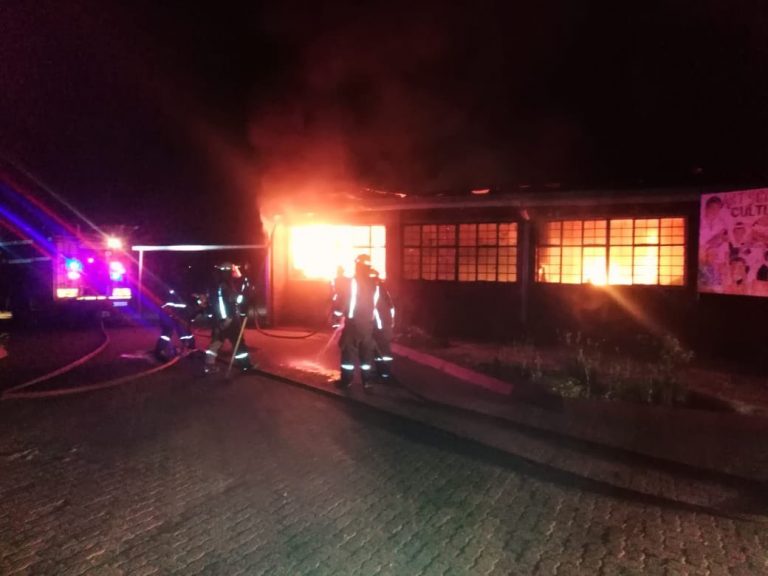
In the Vaal in Gauteng, the first day of school got off to tragic start at Khutlo-Tharo Secondary School in Sebokeng as a fire gutted the school’s administration block.
It’s not yet known how the fire started, and an investigation has been opened.
Premier Makhura dispatched his MEC cohort to various schools across the province to oversee the smooth running of the first day of school.
Gauteng MEC for Finance Nomantu Nkomo- Ralehoko present learners with school shoes to ensure they successfully step into the 2020 academic year. #Back2Schoolpic.twitter.com/cKoSLR677z
They assessed conditions in each of the schools to which they were deployed, as well as consulted with communities on education related matters.
As was the case in KwaZulu-Natal, where the Education Department said some 169 000 Grade 1s will start school in the province in 2020.
Members of the KZN Legislature visited Phembisizwe High School, Ntuzuma to monitor the state of readiness for learning and teaching. Teachers and pupils were encouraged to ensure that academics are prioritised throughout the year@KznLegislature@kzngov@GovernmentZApic.twitter.com/lozmSXKEto
The city of Witbank in Mpumalanga had big hitters from national government dropping in to help usher in the new school year.
Minister in the Presidency Jackson Mthembu addressed educators the at Elukhanyisweni Secondary School, and Energy Minister Gwede Mantashe made a stop at the Bonginsimbi Comprehensive School.
In the Northern Cape CoGTA MEC Bentley Vass today walked the talk at the Vuyolwethu High School in the Sol Plaatjie Municipality, where he helped clean the school yard.
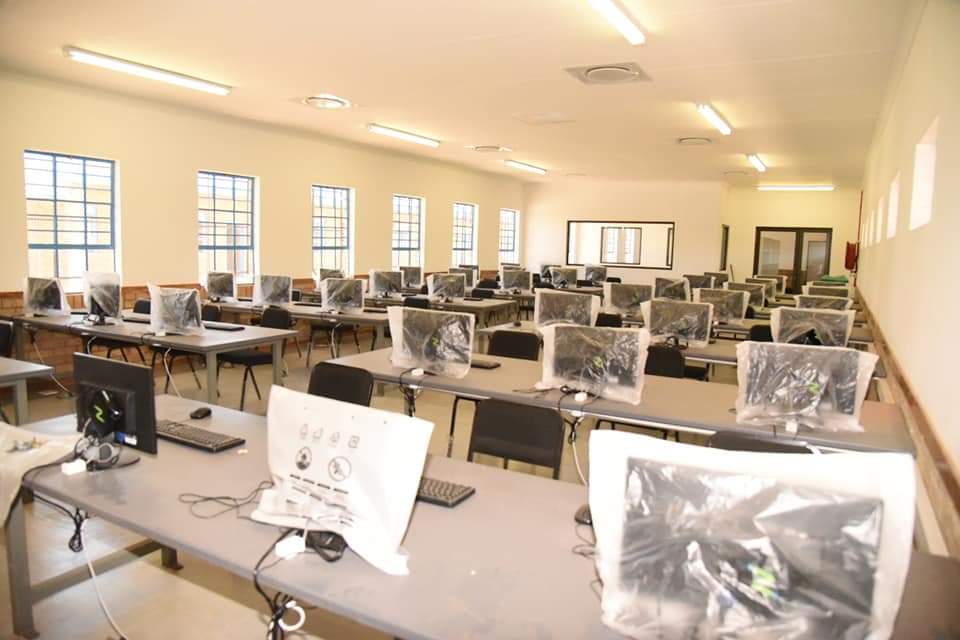
Northern Cape Premier, Zamani Saul, also officially opened the Steynville Primary School in Hopetown, saying the school, with its modern IT infrastructure, has brought opportunities for local jobs and local businesses in the area.
“We are placing learners by the hour,” said the Western Cape Education Department ahead of school opening rush.
Ahead of the new school year, the Premier of the Eastern Cape, Oscar Lubabalo Mabuyane, led his Provincial Executive on a province wide ‘Back-to-School’ drive in a call to young people to return to the classroom.
The start of the 2020 school year in Gauteng will be marked by the handing over of the newly constructed, R110mln Noordgesig Primary School in the Johannesburg North District.
“This is an important milestone, as the school is among our newly designed and constructed mega school infrastructure, aimed at improving the quality of education in township schools,” a statement from the Gauteng Education Department (GDE) said.
Gauteng Premier David Makhura will lead his Members of the Executive Council (MECs) in visiting various schools across the province to oversee the smooth running of the first day of school.
They will assess conditions in each of the schools to which they are deployed, as well as consult with communities on education related matters.
In addition, and for the first time, the MEC’s will also assess Early Childhood Development (ECD) Centre’s as this function now falls under the department of education.
On placements, the GDE said they have received and processed about 700 appeals which were compounded by implementation of the new Admissions Regulations. All appellants should receive their responses by 14 January 2019, it said.
“I have personally received overwhelming messages from frustrated parents, and indeed the pain is unbearable, on behalf of Gauteng government, I wish to convey our sincere apology for putting parents through this unbearable pain, I am so sorry,” said Education MEC Panyaza Lesufi.
“All appeals were carefully considered and fairly adjudicated. The outcome of each appeal is based on compliance with Admissions Regulations and availability of space at schools.”
The GDE added that their challenge is capacity rather than the system. “Parents are reluctant to accept offered spaces for different reasons. Unfortunately, we can only accommodate a certain number of Learners at our schools and as such call upon parents to accept placement offers by the as these are the only spaces available at some schools.”
To mitigate for capacity challenges, the said its finalising a partnership with Curro Schools to accommodate children at their schools.
@CURRO_SCHOOLS@mmbadi so Curro is given 30% discount. What about us, my kids are at your school. Curro offers help as Gauteng education dept opens late registrationshttps://t.co/NR3KBETwaw?
“These were looked at in line with the fee structure of Curro Schools compared to that of public schools, which in principle will be a discounted fee. The distance between the Curro schools and the public schools, and the possibility of using scholar transport.”
Regarding late applications, “The department will tomorrow, 15 January 2020 open the system for late online applications, and close on the 24th January 2020. ONLY schools with capacity will be availed in the system during this period.“
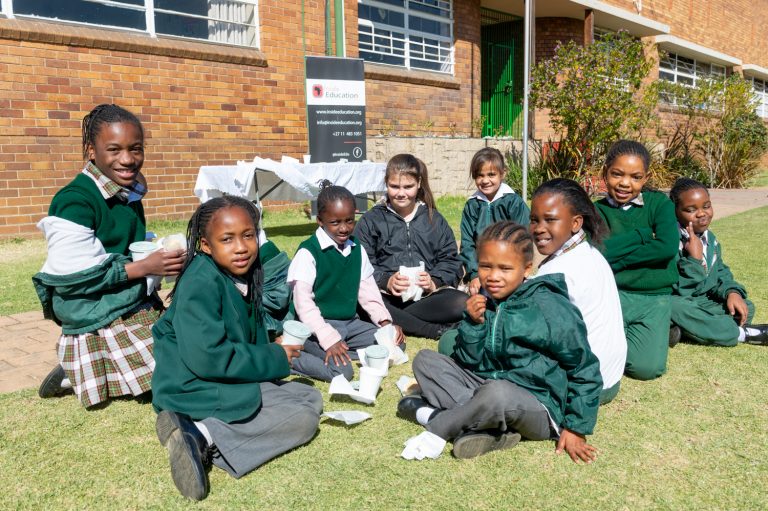
Members of Inside Education serve up soup to students of Benoni Junior Primary School in Benoni, Johannesburg, 18 July 2019. The school saw an outreach programme delivering soup and bread to children as part of a Mandela Day initiative by Inside Education.
The GDE said based on the statistics on their system, it has a total of 912 primary schools and 374 high schools with space available for late applications.
“We anticipate high volumes of late applications, and officials are making every effort to ensure that applicants are assisted, and that placement is facilitated without delay,” said Lesufi.
“Applicants will provisionally be placed, until they submit documents to the school accordingly. No objections or appeals will be entertained,” the GDE emphasized.
The Department conceded that it had “serious” capacity challenges in Tshwane West, Tshwane South, Johannesburg Central, Johannesburg East, Johannesburg North and Ekurhuleni South.
“As such, we are finalizing the process of providing temporarily accommodation in a form of mobile units at some affected schools as a matter of urgency, this will also be extended to some schools that were vandalized or burned by the community.
As another method of Intervention, we had to negotiate with some schools to increase their capacity to accommodate more learners and such schools, will be prioritized in provisioning of mobile units.”
The GDE made specific mention of Tokelo Secondary School which saw it’s classes and administration block burnt down in December.
It said to ensure readiness for the new academic year, 1200 learner chairs, 400 student desks, 6 teacher desks, 3 Oak desks and 3 high back chairs for principal and deputies and 36 chairs for the staff room were delivered to the school.
“However, we have identified a school in the neighbouring area to in the interim accommodate some of Tokelo Secondary learners,” the GFDE added.
“We, really engaged in thorough preparations to ensure that Schools are ready to commence with teaching and learning activities on Day 1 of the 2020 Academic Year, our senior management also conducted visits throughout the Province making sure schools are ready for teaching and learning accordingly” MEC Lesufi said.
The KwaZulu-Natal Education Department has stated it’s readiness to welcome 2.8-million pupils for the 2020 academic year which begins Wednesday, saying the over 100 schools damaged by violent storms will be operational.
“We want to state upfront that the province of KwaZulu-Natal is ready for the 2020 academic year,” declared Education MEC Kwazi Mshengu presenting the province’s state of readiness at Sivananda High School in KwaMashu, north of Durban Monday.
Mshengu said although the department was still on a high from the 5.1 percentage point increase in the national senior certificate (NSC) pass rate, they would not allow this to distract them from improving in 2020.
Today the MEC for @DBE_KZN, Mr Kwazi Mshengu presented the #StateOfReadiness2020 at the Media Briefing held Sivananda Technical School-KwaMashu under Pinetown District, where he touched on Admissions, PPN, LTSM, NSNP, Disaster Management Plan,Learner Transport and School safety. pic.twitter.com/OfrJf5XKyl
“As we alluded to during the presentation of the matric results, while it is tempting to wallow in self-congratulations at this glorious achievement for long, we in the province of KwaZulu-Natal will not allow that, for it can lead us into a state of complacency,” he said.
Contingency plans have also been made for the 144 schools that were damaged during the April and November 2019 storms.
“We want to announce that we have put in place contingency measures to ensure that by January 15, all schools that were damaged by violent storms are operational,” said Mshengu.
“The department has made arrangements to supply mobile classrooms. Procurement processes are at an advanced stage to provide material to rebuild the damaged schools.”
No class should be without a teacher on the first day of the school year. We expect that all our contingent of 86 000 teachers in KZN will be at school, in class and on time… KZN MEC for Education Kwazi Mshengu @TheMercurySApic.twitter.com/iVe0jt879i
The Competition Commission is calling on parents to sound the alarm if schools do not comply with the uniform guidelines issued by the Department of Basic Education (DBE).
This forms part of efforts to ensure school uniforms becomes more “reasonable and affordable” for parents.
The Commission said the Federation of Governing Bodies of South Africa – an association of largely public schools – as well as the Independent Schools of Southern Africa, has publicly pledged to comply with these guidelines.
“The success of the initiative to bring reasonable and affordable uniforms depends largely on involved and active patents. If governing bodies manage schools on behalf of their parents, it cannot be that parents must bear the brunt of expensive prices,” the Commission said.
In January 2017, the Commission opened an investigation into allegations of anti-competitive behaviour in the school uniform market as a response to complaints from parents and school uniform suppliers.
Sipho Ngwema, Head of Communications at the Competition Commission said the frequency of complaints from parents regarding the high price of uniforms spurred the organisation into action.
“We received complaints from parents about schools coercing them to buy from certain exclusively selected suppliers and at a very high cost,” he said.
– School uniforms should be as generic as possible, so that it is accessible from as many suppliers as possible. – Exclusivity should be limited to items that schools regard as necessary to obtain from pre-selected suppliers, for example badges. – Schools should follow a competitive bidding process when appointing suppliers. – Schools should appoint more than one supplier in order to give parents more options. – The concluded agreements should be of limited duration.
The Commission last year also signed agreements to curb high school uniform prices and anti-competitive behaviour with several private schools including Curro, Advtech and Reddam House.
“We reached a consent agreement with some schools, and we are working with national governing bodies and schools organisations,” said Ngwema.
As parents gear up for the opening of schools tomorrow, last-minute shoppers had to contend with the high prices of school uniforms and stationery throughout the country. pic.twitter.com/vyJbBayZMd
While parents had to contend with paying excessive prices for uniforms, some suppliers complained of market exclusion as some schools had entered into exclusive contracts with certain school uniform suppliers.
The regulator said it’s continuing engagements with relevant stakeholders, including private schools, school uniform suppliers, governing bodies and government to ensure there is compliance and adequate monitoring and oversight on the issue.
The Commission is currently working with various schools to assist them in building capacity needed to monitor and manage “anti-competitive conduct.”
These interventions include phasing out exclusive and evergreen contracts with suppliers.
The Commission added that introducing reasonable and affordable prices for uniforms will be a gradual process and urged parents and guardians to help in monitoring anti-competitive conduct in schools.
The Commission encouraged parents and guardians to insist that governing bodies implement the uniform guidelines.
We shall continue with our engagement with schools and suppliers to make sure that they are in line with the Competition Act. We will also continue to investigate and prosecute those who remain defiant,” said Ngwema.
South Africa’s Department of Basic Education recently released the country’s National Senior Certificate results for the class of 2019.
These are commonly known as the “matric results” and they determine school-leavers’ admission and placement into tertiary level study.
About 81.3% of those who wrote the matriculation exams passed. There has been much well-deserved celebration of this achievement of the highest post-apartheid national matric pass rate.
“What the country is not hearing about from the Minister of Basic Education, Angie Motshekga, is the drop in performance in mathematics.”
It is one of the “gateway” subjects, subjects which are considered critical for the country’s economic growth and development.
This decline can be measured in two ways.
There is a reduction in the number of students writing mathematics from 270,516 in 2018 to 222,034 in 2019. The second measure is the performance: only 54% of the pupils who wrote the exam passed it.
This pass rate is down from 58% in 2018. The minimum score for a pass is 30%.
“This means only 54% of mathematics exam candidates achieved a mark of at least 30%. Of all the maths candidates only 2% (4,415) achieved distinctions.”
A distinction is a score of 80%-100%. This is down from 2.5% in 2018.
Why does this matter?
The drop in numbers of pupils writing the grade 12 mathematics exam should be of great concern. Performance in mathematics matters for university entrance.
Without it, school leavers are not eligible for programmes at university in science or engineering or some in commerce.
A decline signals the closing of the doors of opportunity in these fields to a growing number of students. This will only increase inequality.
Economics researcher Nic Spaull’s research has shown that the top 200 high schools in the country produce 97% of the mathematics distinctions. The majority of these schools charge significant fees.
The deterioration in performance is also of great concern. Getting a pass (30%) may secure a diploma or university entrance but these low pass marks will not prepare students to succeed at mathematics at university level.
This development runs contrary to the needs of the fourth industrial revolution, which requires highly competent graduates in the science, technology, engineering and maths areas.
Strong performance in mathematics is essential for careers in computing, programming, finance and machine learning.
Universities need to shoulder the blame
Universities cannot absolve themselves of this national challenge. At the University of Cape Town data from the Courses Impeding Graduation project is being analysed to better understand incoming students’ challenges, specifically in courses like Mathematics 1.
In this course a worrying pattern of performance emerged. A minimum mark of 70% for maths in matric is needed to get into Mathematics 1 at the university.
Based on several years of data, an average of 33% of students fail this course. Those students who enter with a 90% mark for maths in matric score a pass in Mathematics 1 with an average mean of 64%.
Those students who achieved between 80% and 89% in matric fail the course with an average mean of 47%. Those who achieved between 70% and 79% in matric fail with an average mean of 43%.
Unless a student achieved a distinction for mathematics at school level they are at risk of failing it at university level. Students who fail Mathematics 1 will inevitably take longer to complete their degree and are at higher risk of being excluded from the university.
Dealing with the problem
The University of Cape Town is taking responsibility for its share in these dismal results. A number of interventions have been put in place over recent years to provide additional support to students.
These include “maths labs,” Saturday workshops, and even providing multilingual resources to support students who are not yet fluent in the medium of instruction.
Expert maths teachers have been appointed to lecture this challenging course. But the overall failure rates of approximately one third of the class have remained stubbornly in place.
A decision was taken in 2019 to revise the Mathematics 1 curriculum to ensure a greater alignment between schooling and university curriculum.
This kind of curriculum review raises a number of complex issues: what is the appropriate content to ensure a relatively seamless transition from school maths to university maths?
Do different disciplinary areas like actuarial science, chemistry and engineering need different kinds of mathematics courses? How can the pacing of the curriculum accommodate different learning needs?
How can educational technology support innovative forms of teaching and learning mathematics? These are global issues, not unique to South Africa.
The national euphoria around the national pass rate means nothing if it hides problems such as declining mathematics performance.