Home Blog Page 436

Why Kenya Is Failing To Integrate Technology Into Secondary Schools

Jo Tondeur, Vrije Universiteit Brussel

Kenyaโ€™s education ministry has proposed that information and communication technology (ICT) โ€“ such as computers, laptops, tablets and cameras โ€“ be used to help teach certain subjects and improve how students learn.

The technology can, for instance, stimulate creativity, help children understand complex topics and give them tools to learn more independently.

In 2011 the ministry created an integration team to coordinate and harmonise all initiatives. The team worked with a Flemish and Belgian non-profit organisation โ€“ VVOB (education for development) โ€“ dedicated to improving the quality of education in developing countries.

Part of the plan included a professional development programme which was carried out in four pilot schools and lasted two years.

It was designed to help teachers learn how to integrate technology into the curriculum. Because teachers are in control of the classroom settings, it was crucial that they were part of this collaborative experience.

My colleagues and I evaluated the programme. Our main focus was on how many teachers continued to use technology in their lessons after the programme ended in the four government-funded secondary schools. None of these schools had previous experience with ICT.

We found that teachers faced a wide range of challenges when it came to integrating technology into their classrooms. These included a lack of electricity, infrastructure and connectivity.

Moreover, the training needed was complex and the resources required to deliver it were scarce.

At the start of the intervention, teachers didnโ€™t know how to integrate technology in their classes. They also didnโ€™t have enough time to develop new lessons and had too many pupils to teach.

Our findings support the view that integrating technology into schools doesโ€™t automatically follow a simple placement of hardware and software. It involves understanding the dynamic relationship between technology, how itโ€™s used in the classroom and the content of the curriculum.

Our research also suggests that the professional development of teachers is a long term project. It needs constant reiterations of learning about emerging technologies and how to use them.

This must be in balance with the national ICT initiative but also, more importantly, be sensitive to the different school cultures and communities.

Integration is key

In the schools we evaluated, technology training sessions were developed under a professional development programme. These were designed to encourage teachers to identify challenging areas in their teaching and then brainstorm about how technology could offer an advantage in the classroom.

For instance, how technology could help them overcome the challenge of scarce or outdated textbooks. Trainers in the workshop would then train the teachers in teacher design teams on the skills they would need to accomplish the task.

We conducted teacher questionnaires and focus group discussions with a total of 64 teachers. The aim was to see how many teachers used technology in their classrooms two years after the programme had ended.

Based on the results it appeared that some teachers were just beginning to use technology to present information.

But most were using it to support their educational practice outside the classroom. For example, they used technology to prepare lessons or to email with colleagues.

This was due to a number of challenges, including:

  • Schools kept hardware, like computers, in labs. This physical separation of technology and the actual classroom meant that it was harder to integrate technology in learning activities. But labs were used because of poor security, power breakdowns and a lack of space in the classrooms.
  • At the beginning of the project, the schools didnโ€™t have clear goals on how to support technology integration after the professional development programme. This could be because a large number of people โ€“ from the principal to integration teams โ€“ were involved in decision-making processes. Also, participants only felt more clear about the role of ICT in education towards the end of the programme.
  • The teachers also needed additional support from administrative school leaders, like the headteachers. These leaders would have the authority to demand the installation of electricity and connectivity in each class. But in one school, the teachers said that they didnโ€™t feel they had support from the leadership, or good direction.

We also found positive outcomes.

For example, there was collaboration at the school as well as the regional level. In some schools, the teachers worked with others in different schools and passed on ideas. In turn, this contributed to the promotion of professionalism.

We concluded that the gains of the programme could only be sustained if schools and teachers felt a sense of ownership and were part of a process of evaluation so that they could understand what theyโ€™d learnt, and what goals they wanted to set.

This stresses the importance of professional development as a permanent process, aimed at extending and updating the professional knowledge of teachers in the context of their work.

Jo Tondeur, Assistant Professor, Vrije Universiteit Brussel

This article is republished from The Conversation under a Creative Commons license. Read the original article.

DBE Minister Motshekga Must Take ‘Personal Responsibility’ For Department’s Failure To Prevent Michael Komapeโ€™s Death – DA

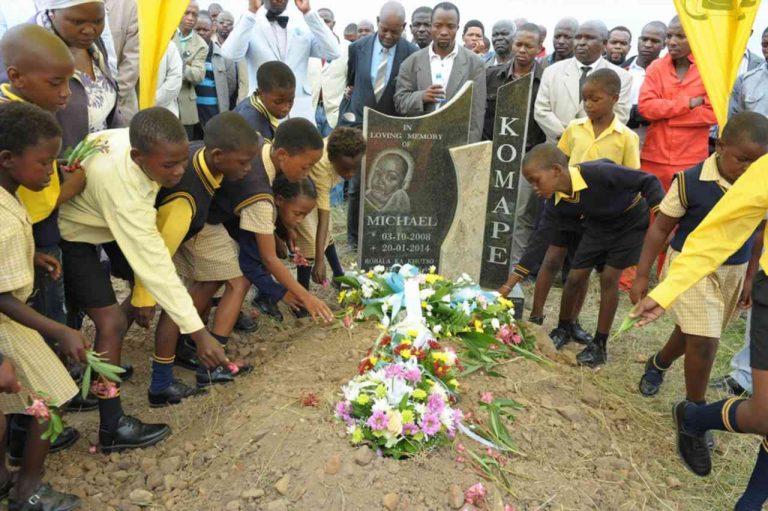
The Democratic Alliance (DA) has called on Minister of Education Angie Motshekga to โ€œtake personal responsibility for the failure of her department to preventโ€ the tragic death of five-year-old Michael Komape who drowned in a pit toilet at school five years ago.

This after the Supreme Court of Appeal (SCA) Wednesday awarded damages to Michaelโ€™s family.

The DA says the national and provincial education departments and the minister clearly donโ€™t care enough.

https://insideeducation.co.za/sca-awards-komape-family-damages-over-sons-pit-latrine-death-in-limpopo/

The Grade R learner died when a pit latrine at the Mehlodumela Primary School, outside Polokwane in Limpopo, collapsed while he was using it in 2014.

In 2015, his mother, father and siblings, represented by Section 27, sued the national department of basic education, the Limpopo department of education, and the school for failing Michael while he was under their care and supervision.

The Limpopo High Court dismissed the familyโ€™s claim for emotional shock and trauma as well as a claim for R2 million in damages for grief.

The court only awarded R6,000 to each of Komapeโ€™s siblings for medical expenses.

NGO Section 27 assisted the family in their legal challenge to approach the SCA to appeal sections of the Limpopo High Court in Polokwane judgment, which had dismissed some of their claims in 2018.

https://insideeducation.co.za/limpopo-education-departments-wasteful-expenditure-led-michael-kompes-pit-toilet-death/

The award includes future medical expenses for each member of the Komape family.

DA MP Dรฉsirรฉe van der Walt said it was โ€œdishearteningโ€ that Michaelโ€™s family had to โ€œwalk such a long and hard road.โ€

โ€œThe education departments, both national and provincial, and Minister Motshekga clearly didnโ€™t care enough and it is tragic that the family had to go to the courts to get justice,โ€ said Van der Walt.

Van der Walt said Michaelโ€™s โ€œheartbreaking caseโ€ was a clear reminder that many other families continued to suffer โ€œbecause they have lost a child in a pit toilet accident.โ€

โ€œEarlier this year it was revealed that there are more than 4,000 pit toilets still in use in South African schools. The department has been neglecting infrastructure at many schools for far too long and every day children are risking their lives by simply trying to access a basic human right.

โ€œOur children deserve better and it is time Minister Motshekga took a long and hard look in the mirror and admit that instead of educating our children, she is failing them,โ€ the DA added.

SCA Awards Komape Family R1.2M Damages Over Son’s Pit Latrine Death In Limpopo

The Supreme Court of Appeal (SCA) has awarded damages to the Komape family, whose the five-year-oldย son Michael died when he fell and drowned in a pit toilet in Limpopo in 2014.

The incident happened at the Mahlodumela Primary School.

“It’s been a long road, but for the Komape family, at last I think there can be a sense of closure and a recognition by the court at least of the suffering that they have endured,” said Section 27’s former executive director Mark Heywoodย who took the fight for justice for the family to the SCA.

The lobby group said it hoped the ruling would bring some “semblance of closure for the family and restore their dignity for the manner in which Michael died and the treatment of the family by education authorities in the aftermath of his death.”ย 

In 2018, a High Court judge dismissed the family’s case against the Department of Education.

Section27 appealed the dismissed damages claims, as well as the court’s refusal to grant a declaratory order.

The family was seeking a claim for damages for emotional trauma, as well as the second claim for grief suffered, constitutional damages and any future medical expenses for the family.

Remember Michael Komape? Today his family still seeks justice and reparations from Department of Basic Educaton for his…

Posted by Section27 on Wednesday, 12 September 2018

The Komape family was seeking R3 million from the state and further wanted the government to be compelled to provide decent, safe sanitation at school.

KZN Teacher Scoops Global Teacher Of The Year Award

South African maths and science teacher Khangelani Sibiya has beaten contenders from 79 countries to win the coveted teacher of the year award in Dubai.

Sibiya, who hails from Newcastle in KwaZulu-Natal, said his teaching have reached over 25,000 pupils across the country so far.

The global award recognises innovation and creativity in teaching and learning.

Sibiya believes he won the title because of his creative strategy, which involves using traditional music and indigenous languages to teach maths and science.

โ€œI am a teacher at a Richards Bay school. On weekends, I provide support to different schools on science and maths.โ€

The 33-year-old Sibiya runs an NPO called KWV Tutoring which he founded in 2008. On weekends, he grants extra classes to learners from different school.

He says heโ€™s reached over 25k learners since he started his NPO and hopes to attract sponsorships so he can hire more teachers to reach more pupils in 2020.

Register Now To Get Your 2019 Matric Results And Stand A Chance To Win R8.5K & A Smartphone

Inside Education has partnered with the Department of Basic Education (DBE) to bring you, the class of 2019, your matric results.

Register for our SMS notification service and stand a chance to win R8 500 and a smart phone.

All you need to do to register is to SMS your examination number to 47157 or dial * 120 * 1413# to register via USSD.

Registration opens 15 December 2019 and closes Wednesday 8 January 2020.

Your individual results will be promptly messaged to you fromย 6am on the day of their release.

If you are a member of the class of 2019, donโ€™t waste time, register now and get your results from the comfort of your own home.

Each SMS is charged at R2.00. USSD is charged at R5 per minute. Free SMSs do not apply.

For more information emailย info@insideeducation.co.za

Undocumented Children Have A Right To Free Education In South Africa, Makhanda High Court Rules

The Makhanda High Court in the Eastern Cape has ruled that all undocumented children, including children of illegal foreigners, are entitled to receive basic education in South Africa.

The Department of Basic Education (DBE) is now obliged to provide and fund the basic education requirements for all undocumented children, including those of illegal foreigners.

It is estimated that the judgment will affect over a million undocumented children who are either seeking admission to public schools or who have been warned to provide documentation to avoid being excluded.

Eastern Cape judge president Selby Mbenenge set aside sections of the schoolsโ€™ admission policy which in any way hindered undocumented childrenโ€™s access to school.

He also set aside an Eastern Cape education department 2016 circular warning that the department would fund only children at schools who had valid documentation.

Mbenenge said that all provisions of the Immigration Act had to be interpreted to be in line with the constitution.

This meant that it had to be read in a way that meant that it in no way prohibited the provision of a basic education to illegal foreign children.

Judge Irma Schoeman and acting judge SM Mfenyana agreed with Mbenenge.

The ground-breaking case, which will have national implications, kicked off when some 37 children in the Eastern Cape were denied access to school because they had no birth certificates, study permits or passports.

The Centre for Child Law and Phakamisa High School in Port Elizabeth, represented by the Legal Resources Centre (LRC), set out to challenge all the regulations and laws that inhibited undocumented children from accessing basic education.

They successfully argued that they constituted an unjustifiable limitation on childrenโ€™s constitutional right to basic education as well as their right to equality and dignity.

In a statement issued in response to the high court ruling, the LRC said a common yet false perception was that undocumented pupils must be โ€œillegal foreignersโ€ as all SA children have their births registered and are in possession of an identity document.

โ€œAccording to the department of basic education, 998,433 children are currently attending school in SA, are undocumented, and cannot be accounted for by the department of home affairs.

“Only 16.7% of these learners are foreign nationals, while 83.2% are SA children whose parents, guardians or caregivers have not managed to secure birth certificates for them.”

“This judgment is therefore predominantly affecting SA children who, through no fault of their own, are unable to secure the registration of their births.โ€

The Equal Education Law Centre hailed the judgment, describing it as a โ€œphenomenal victory for children across SA.โ€ย 

Donโ€™t Just Solve For X: Letting Kids Explore Real-World Scenarios Will Keep Them In Maths Class

Jill Fielding-Wells, Australian Catholic University and Kym Fry, Australian Catholic University

In real life, ordering pizza for a group of people involves having a conversation about what people like, how much they can eat, how much they want to spend and whether pineapple really belongs on pizza.

But in the context of a traditional maths class, the concept of ordering a pizza typically becomes a problem like this:

If one pizza serves four children, how many pizzas do we need for a class of 28 children?

An alarming number of Australian students donโ€™t choose mathematics in the senior school years.

Figures from 2017 โ€“ the most recent available โ€“ show only 9.4% of Australian students in years 11 and 12 were enrolled in extended mathematics. This is the lowest percentage in more than 20 years.

Surveys of senior students indicate they believe maths is too hard, too guarded by a rigid set of rules and not applicable to real life.

Clearly, the way we teach is turning students off mathematics. But an inquiry-based approach can make maths relevant and interesting.

So, what is inquiry-based learning?

According to the OECD, todayโ€™s children face an uncertain future due to technological disruption.

To meet these challenges, the report notes:

[โ€ฆ] students will need to develop curiosity, imagination, resilience and self-regulation; they will need to respect and appreciate the ideas, perspectives and values of others [โ€ฆ]

These skills canโ€™t be taught by rote learning or a series of procedures.

An inquiry approach in mathematics is when learning typically starts with a complex question. In the case of the pizza example, that question could be: โ€œWhat pizzas do we need to order for our class party?โ€


Read more: Explainer: what is inquiry-based learning and how does it help prepare children for the real world?


As students engage with the question, they work collaboratively โ€“ guided by the teacher โ€“ to develop an understanding of the mathematics in a more natural way.

Rather than the outcome being a single, correct answer (โ€œWe will need seven pizzas for a class of 28โ€), students put forward a potential solution. They then explain their reasoning and the mathematics they applied to justify their decisions.

In inquiry-based learning, students work in groups to find solutions to a complex question.

The question of what pizzas a class needs provokes an extended investigation that moves beyond simple arithmetic.

It requires decisions about how many and what pizza options should be considered (planning for data gathering), surveying of studentsโ€™ pizza preferences (data collection and recording), summarising of the responses (data cleaning and representing), and reporting findings (data summarising).

Students analyse the data to determine how many and what types of pizzas to order (fraction representation and arithmetic) while noting that, in the context, whole pizzas must be ordered.

Mathematical evidence collected by students is used to support, justify and convince peers of their conclusion. The class may then extend this investigation to consider drink purchases, total cost and so on.

In doing this, students develop a deeper understanding of both the mathematics used and when and how it is useful.

Inquiry more closely aligns with the real work of mathematicians. In practice, mathematicians identify, or are approached with, a problem. They must decide on the maths they can use to solve it. Then they come up with a procedure, solve using the mathematics and monitor the outcome.

In traditional classes, student mathematicians typically only solve the mathematics โ€“ ironically, this is the only step that can be handed over to technology.

Do we know it works?

Research supporting inquiry in mathematics is building. One of the most comprehensive reviews of the research evidence evaluating the inquiry-based approach to teaching maths and science from primary through to university was conducted in 2013.

It identified a number of benefits for students. These included an enhanced capacity to: transfer learning to new situations; seek challenges; tolerate failure; and build resilience to wrestle with challenging problems.

Inquiry was found to enhance the learning outcomes of both lower- and higher-achieving students and students with specific cultural backgrounds including First Nations peoples.

Students who learnt via this method also reported seeing mathematics as interesting and motivating.

Research shows the inquiry-based approach is effective in all year levels. Examples include children as young as 5-6 being able to make predictions using data, to more complicated concepts such as calculating and adjusting volume and proportion using a scaled house plan.

Answering a question about designing a paper plane requires students to use science, maths, technology and design skills.

The main constraint on implementing inquiry in secondary classrooms is the flexibility needed to engage in problems that often cross disciplines.

For instance, the question โ€œWhat is the best design for a paper plane?โ€ draws on science for the principles of flight, mathematics for statistics and measurement, and technology for design.

Rigid scheduling of classes compromises such learning. But it can be overcome with liaison between teaching teams.

Strict assessment regimes also put pressures on teachers to complete teaching units at certain times. But inquiry can mean more content is covered in deeper, more connected ways.

Importance of teacher skills

Although the inquiry method is student-centred, encouragement of independent, creative and critical thought must be driven and supported by a skilled teacher. This means recognising when to challenge the students and when to provide support.

The nature of inquiry lends itself to exposing what students donโ€™t know. During small group discussions, students put forward ideas and the teacher can identify roadblocks in their approaches.

At these times, a responsive teacher can work with students to develop the conceptual knowledge needed to move forward with their inquiry.

Likewise, students ready to be challenged can apply more advanced concepts as they push themselves to use and develop more complex mathematical solutions. As with all teaching, a balanced approach is key.

Jill Fielding-Wells, Senior Research Fellow, Institute for Learning Sciences and Teacher Education, Australian Catholic University and Kym Fry, Assistant researcher, Institute for Learning Sciences and Teacher Education, Australian Catholic University

This article is republished from The Conversation under a Creative Commons license. Read the original article.

How WhatsApp Groups Support Nigeria’s Nursing Graduates

Ademola Johnson Ajuwon, University of the Witwatersrand and Christoph Pimmer, University of Applied Sciences Northwestern Switzerland

Around 12,000 students are enrolled in Nigeriaโ€™s nursing schools each year. As it is in many health professions, these students often find it challenging after graduation when they search for and start their first job.

They feel unprepared and have difficulties to put their knowledge from school into practice. In addition, many feel unwelcome in their teams, which results in a sense of professional isolation and high drop-out rates. Yet, new graduates stand to gain a lot if they engage in networking groups.

These are are known to be effective in creating a support system for young graduates, finding jobs, sharing knowledge and resources, and making connections.

WhatsApp, a mobile instant messaging platform, is a potential platform for professional networking which has seen recent remarkable expansion in Nigeria and other African countries. The reasons for this development are the increased availability of smartphones and the relatively low costs of data in Nigeria.

The platform can also be used easily without much technological knowledge and the connective features of the app enable up to 256 users to exchange text, emoticons, pictures, video, and audio messages.

These developments have created unprecedented opportunities for health professionals to share clinical information and professional experiences. It also helps them stay connected with each other after graduation.

The availability of this technology and lack of existing structures for professional networking among young nursing graduates has presented an opportunity to show how WhatsApp can be used to address this need among recent graduates of schools of nursing in Nigeria.

The research

Our research was part of a larger initiative that examined the use of social and mobile media in health professional contexts. It was funded by the Swiss Programme for Research on Global Issues for Development.

We randomised five schools with new nurse graduates in Oyo state, Nigeria, into two groups. In the first group, 77 graduates from three schools participated in three moderated WhatsApp groups. A further 37 graduates from the two other schools served as the control group, which didnโ€™t engage in the moderated WhatsApp activities.

The two groups were comparable, as they had no significant differences on age, sex and the place of post-qualification practice.

The project team developed a script to guide moderators (group admins) whose responsibilities are to post messages, encourage full participation, respond to questions, and apply ground rules, in the facilitation and moderation of the group chat.

The moderators were experienced nurses who shared clinical knowledge and stimulated professional discussions in the WhatsApp-based โ€œonline classroomsโ€ for 6 months, December 2016 to May 2017.

The knowledge quiz โ€œfastest fingerโ€ was aimed at stimulating the participantsโ€™ engagement. The first person who correctly responded to the moderatorโ€™s weekly question received a small amount of airtime. The moderators also rewarded the most active participants in every month with airtime.

Participants didnโ€™t receive any other financial compensation; instead they used their own data bundles. At the end of the intervention, both groups completed an online survey that included knowledge tests. In addition, some participants from the WhatsApp groups took part in focus group discussions.

We found that participants in the moderated WhatsApp groups were more knowledgeable regarding the clinical topics discussed in the group chat and they expressed fewer feelings of professional isolation than their counterparts who didnโ€™t take part in the moderated group chat.

Similarly, those who engaged actively in the WhatsApp groups had more knowledge, experienced less isolation and showed higher levels of professional identification.

The positive quantitative results were affirmed in focus group discussion. Group discussants said that they learned from the interactions on WhatsApp and that they gained new knowledge about clinical topics:

I gained a lot. It also made me learn even though I wasnโ€™t reading textbooks.

It connects us as if we are still in school.

In addition, some participants said they got jobs through adverts that the moderators posted in the chats.

The findings provide evidence that moderated WhatsApp groups can be a source of learning. In addition, they permit togetherness of geographically distant professionals.

The experience of isolation and a lack of knowledge are two very common issues that many health professionals encounter when they start their first job after graduation.

The research points to the potential of instant messaging, which offers unique connective features, but is still an underused source of mobile learning in Nigeria.

Going forward

Health professional bodies may use the connective features of mobile instant messaging platforms to provide support for new graduates during their first few months of practice. Training institutions can also use these platforms to promote alumni activities that can enhance the development of the institutions.

The increasing use of WhatsApp by health professionals in Nigeria and elsewhere carries, however, considerable risks that also need to be considered. These include issues like the protection of privacy of both the health care provider and the patient and circulation of incorrect information.

To address these problems, health professionals need to be trained how to use social media apps responsibly and professionally. This kind of training and skills development should be included in pre-service and in-service education curricula.

Regulating agencies, such as the Nursing and Midwifery Council of Nigeria, also need to develop new or adapt existing guidelines on professional usage of mobile phones and social media.

Ademola Johnson Ajuwon, Visiting Professor at the School of Public Health, University of the Witwatersrand and Christoph Pimmer, Researcher, lecturer and advisor, digital learning, University of Applied Sciences Northwestern Switzerland

This article is republished from The Conversation under a Creative Commons license. Read the original article.

‘We Will Not Reward Anarchy’ Says KZN Education Department After Learners Torch School Over Low Marks

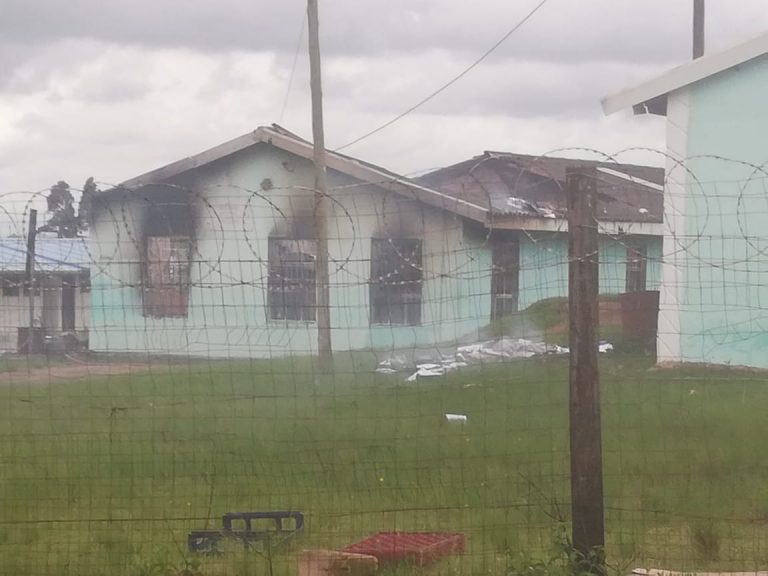
The KwaZulu-Natal Department of Education has condemned the burning down of Zwelinjani Secondary School in Durban, after pupils allegedly became enraged over poor marks they had received.

There are claims that the fire started after chaos erupted when school reports were issued to learners who felt that the results they had obtained were not what they deserved. The learners allegedly accused teachers of giving them bad marks,” departmental spokesperson Kwazi Mthethwa said Thursday.

“We appeal to the pupils not to resort to violence and crime or vandalising and destroying public property when addressing their concerns. We wish to also emphasise that we will not reward anarchy by building another school, when in fact it was destroyed deliberately,”‘ MEC Kwazi Mshengu said.

Mthethwa said “Emergency teams responded to fire at the school in Zwelibomvu, in the Pinetown District. Buildings that were destroyed by fire include the office of the school principal, the school kitchen and staff room.”

https://insideeducation.co.za/gauteng-education-department-to-bolster-security-at-schools-during-festive-season/

He added that no one was injured in the fire, but that the “property was destroyed badly.”

Gauteng Education Department To Bolster Security At Schools During Festive Season

Gauteng Education MECย Panyaza Lesufiย says they will step up security at schools in the province during the Christmas holiday period.

Lesufi said schools were prone to vandalism and break-ins during the festive season and called on community members to do their bit to help the Department protect schools and infrastructure.

Since the start of this year, more than 250 schools were affected by theft and vandalism with damage exceeding over R120 million.

https://insideeducation.co.za/when-schools-become-prisons-ct-school-in-battle-against-burglars/

The MEC said the money used to do repairs could be used to improve the quality of education for pupils.

Lesufi said this could not continue.

https://insideeducation.co.za/pe-school-for-the-deaf-burgled-4-times-set-alight-twice/

โ€œDuring school holidays, Iโ€™m saddened that our schools get vandalised and broken into and we have come up with measures to deal with this,โ€ he said.