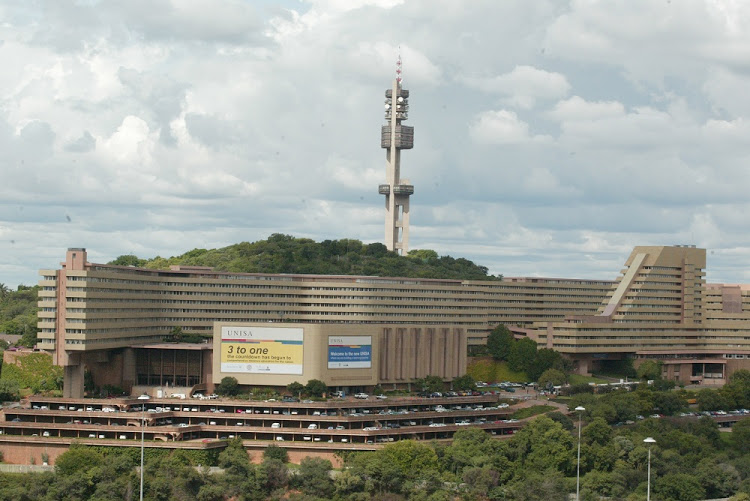
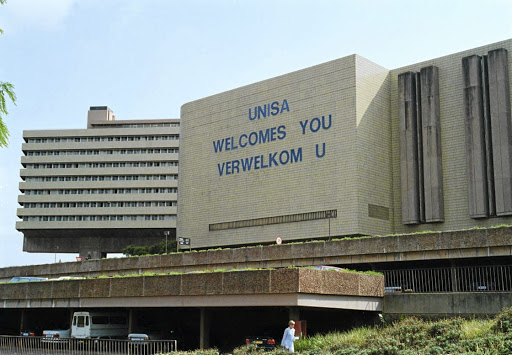
The University of South Africa (UNISA) has announced that is to rename one of its three historical buildings at the Muckleneuk campus after Struggle stalwart Winnie Madikizela-Mandela.
Three names of new buildings at UNISA’s main campus in Pretoria will be also unveiled this week.
UNISA Spokesperson Tommy Huma said the buildings will be named after the late Madikizela-Mandela, professor Simon Radipere and Anton Lembede, who all contributed largely to the shaping of the university and society.
As Chairperson of the Naming and Renaming Committee of Unisa, I have had the singular honour of participating, together with others; in this progressive process started by the university to rename and rebrand ourselves in a manner reflective says Dr Mokgobu #TransformationAgenda
Its Theo van Wijk building will now be known as Winnie Madikizela-Mandela building to coincide with the 63rd anniversary celebration of Women’s Month.
“As a champion of youth empowerment, Madikizela-Mandela has a long and intimate association with Unisa and she spoke at the institution on many occasions. Working with the Mandela Legacy Foundation, we have been able to ensure that her contribution is institutionalised to reflect this relationship,” Huma said.
The AJH van der Walt building will be named after Radipere, who “was a diligent academic committed to improving the lives of the people through education,” Huma said.
UNISA says the naming and renaming consultation process started last year.
Huma said Radipere’s research focused on addressing sociopolitical issues in South Africa. He contributed to Unisa’s academia by mentoring novice researchers across colleges and he was involved in the President Barack Obama’s leadership initiative, Yali (Young African Leadership Initiative).
He tragically died at the entrance of AJH van der Walt building, which housed his office and the department he headed in 2017.
The Samuel Pauw building will be named after Lembede, who was a student at UNISA and completed his master’s degree in the department of philosophy.
Lembede was a South African activist and a founding president of the ANC Youth League. He has been described as the principal architect of SA’s first fully fledged ideology of African nationalism.
He obtained his master’s from UNISA after submitting his thesis The Conception of God as Expounded by Great Philosophers from Descartes to the Present Day.
Lembede was a principal architect of Africanism and died unexpectedly in Johannesburg at the age of 33.
Huma said the renaming process started in June last year when calls to submit proposed names were extended to university stakeholders including employees, students and alumni.
“As a national and African treasure, UNISA takes seriously its duty to be representative of the diverse communities that it serves.“
“With this in mind, we have embarked on an exciting initiative of naming and renaming new and existing facilities in keeping with the spirit of renewal and transformation,” Huma said.
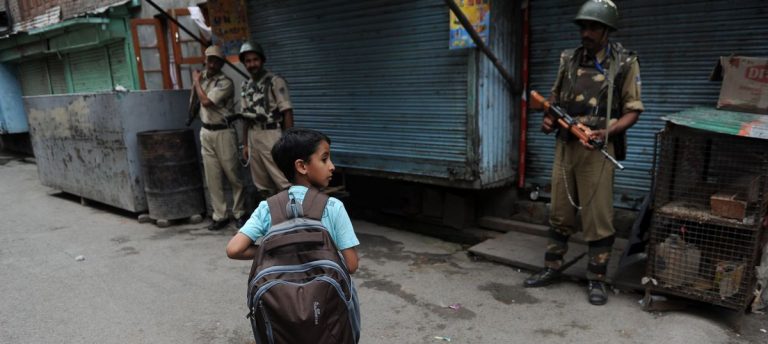
Some schools re-opened in Indian-administered Kashmir Monday, but few students turned up amid the ongoing tensions over the Indian government’s shock decision to strip the region of its special status two weeks ago.
A lockdown remains largely in place in the Muslim-majority Kashmir valley but authorities said they were re-opening nearly 200 primary schools in Srinagar, the largest city.
Classrooms were mostly empty, though, with parents anxious about safety.
Despite the security clampdown in Kashmir, there have been frequent protests against the loss of special status and some have turned violent.
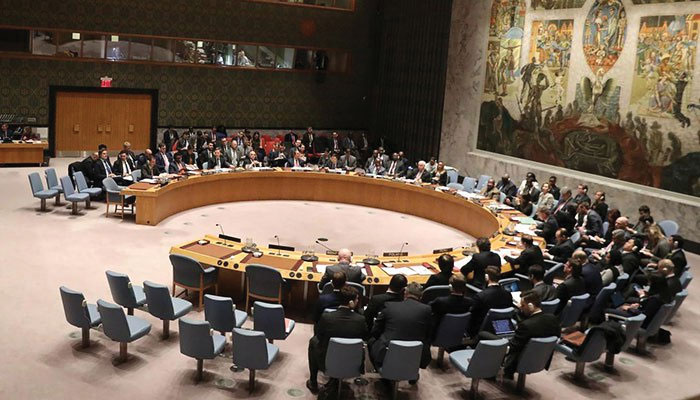
The UN Security Council convened to discuss the volatile situation surrounding Kashmir Friday.
The meeting to discuss Kashmir was the first in such a forum since 1965.
Speaking to reporters outside the chamber, Pakistan’s Ambassador, Maleeha Lodhi said the meeting had allowed “the voice of the people of the occupied Kashmir” to be heard “in the highest diplomatic forum of the world.”
She argued that “the fact that this meeting took place, is testimony to the fact that this is an international dispute.”
Speaking a few minutes later, India’s Ambassador, Syed Akbaruddin, said that “our national position was, and remains, that matters related to Article 370 of the Indian Constitution, are entirely an internal matter of India…The recent decisions taken by the Government of India and our legislative bodies are intended to ensure that good governance is promoted, socio-economic development is enhanced for our people in Jammu and Kashmir and Ladakh.”
The Department of International Relations and Cooperation (DIRCO), said in a statement that Pretoria “Notes with concern the escalation of tensions surrounding developments in Jammu and Kashmir. The issue of Jammu and Kashmir should be resolved bilaterally, and South Africa urges India and Pakistan to resolve their differences through peaceful means.“
“We have noted that demonstrations have taken place in South Africa. We reiterate that South Africa is a democracy, which allows the freedom to express different views, but all actions should still be in accordance with, and be observant of, the law,” the DIRCO statement added on the recent pro-India and protests as well as the gatherings in support of Pakistan in the country.
Kashmir is a Himalayan territory claimed by both India and Pakistan.
Each country controls part of the territory and the Indian-administered side – Jammu and Kashmir – has now been downgraded from a federal state and split into two union territories ruled by Delhi.
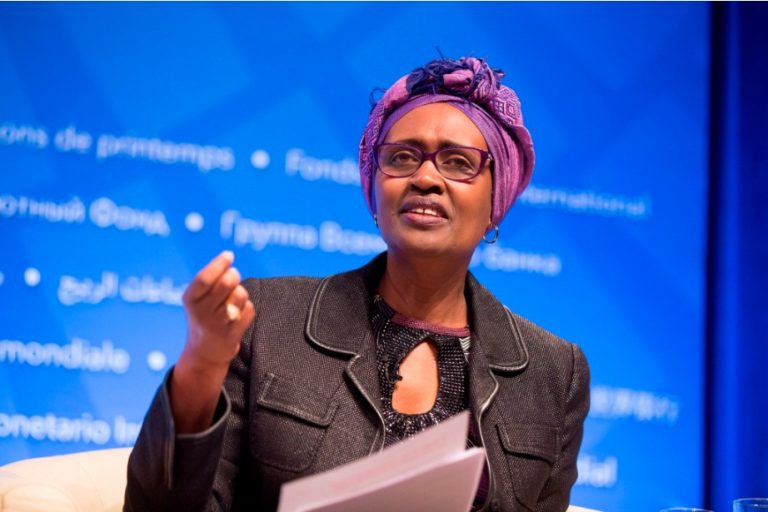
UNAIDS has welcomed the appointment of Winnie Byanyima as its new Executive Director.
Byanyima has more than 30 years of experience in political leadership, diplomacy and humanitarian engagement.
“I am honoured to be joining UNAIDS as the Executive Director at such a critical time in the response to HIV,” said Byanyima.
“The end of AIDS as a public health threat by 2030 is a goal that is within the world’s reach, but I do not underestimate the scale of the challenge ahead. Working with all its partners, UNAIDS must continue to speak up for the people left behind and champion human rights as the only way to end the epidemic.”
UN Secretary-General, António Guterres, appointed Byanyima as the UNAIDS Executive Director following a comprehensive selection process that involved a search committee constituted by members of the UNAIDS Programme Coordinating Board.
Byanyima brings a wealth of experience and commitment in harnessing the power of governments, multilateral agencies, the private sector and civil society to end the AIDS epidemic around the world, the UN said.
Byanyima has been the Executive Director of Oxfam International since 2013. Prior to that, she served for seven years as the Director of Gender and Development at the United Nations Development Programme (UNDP).
She began her career as a champion of marginalized communities and women 30 years ago as an MP in the National Assembly of Uganda.
In 2004, she became the Director of Women and Development at the African Union Commission, working on the Protocol on the Rights of Women in Africa, an international human rights instrument that became an important tool for reducing the disproportionate effect of HIV on the lives of women in Africa.
She holds an advanced degree in mechanical engineering (in energy conservation and the environment) from the Cranfield Institute of Technology and an undergraduate degree in aeronautical engineering from the University of Manchester.
The Joint United Nations Programme on HIV/AIDS (UNAIDS) has a mandate to achieve its shared vision of zero new HIV infections, zero discrimination and zero AIDS-related deaths.
UNAIDS unites the efforts of 11 UN organizations—UNHCR, UNICEF, WFP, UNDP, UNFPA, UNODC, UN Women, ILO, UNESCO, WHO and the World Bank—and works closely with global and national partners towards ending the AIDS epidemic by 2030 as part of the Sustainable Development Goals.
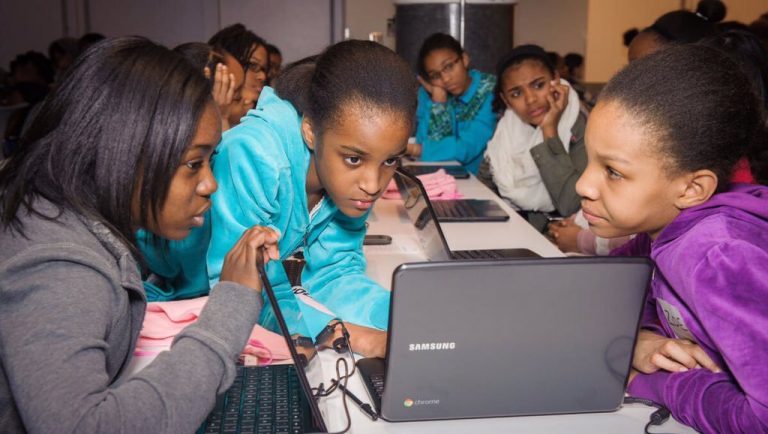
South Africa is training a group of teachers to learn how to code and how to teach coding. The subject will be piloted at 1000 schools across five provinces, starting in the 2020 academic year. The announcement has resulted in debates around the country’s ability to deliver on such a commitment, particularly when considering the low literacy and numeracy skills of learners.
The Conversation’s Nontobeko Mtshali spoke to Professor Ulrike Rivett to find out more.
What is coding? Are there African countries teaching it nationally at school level?
The Department of Basic Education describes coding as the writing of instructions for computation using a programming language to achieve a specific goal or to solve a problem. In simple terms, coding refers to using a language that a computer understands to develop computer programmes, mobile applications, websites etc.
Coding is therefore similar to introducing a new language in the school curriculum. The misconception has often been created that coding requires a talent in maths or physics, but that’s not necessarily the case.
ORT SA’s Coding project in Ivory Park. 5 schools with 12 Grade 6&7 learners from each congregate once a week to continue with their #coding projects. Teachers are taught too. Keeping up with #4IR in township schools. Thank you @AstronEnergypic.twitter.com/II3DV2kwsT
Coding, similar to any language we use, has certain structures and rules – like grammar – and these rules have to be learnt and practised. While the discussion around coding has been very closely linked to that of the maths curriculum, there is no reason to believe that students with subjects such as maths literacy cannot learn how to code.
The challenges of introducing coding as a subject are manifold, but maths education is not one of them.
There are a number of schools that have already introduced coding. Most are well-equipped schools or private institutions. This is also true for most African countries.
Countries like the UK have well-established national policies.
In the UK this was done in 2013. Others that followed included Austria, Bulgaria, the Czech Republic, Denmark, Estonia, France, Hungary, Ireland, Lithuania, Malta, Spain, Poland, Portugal and Slovakia. Some of these countries have included coding in their national curricula.
What are the challenges in the way of making this a regular subject in schools?
It’s great that South Africa has decided to roll out coding nationally. But the complexity is that the foundations are not in place for effective implementation.
Dr Mmaki Jantjies, a senior lecturer at the University of the Western Cape’s Department of Information Systems, cites five core elements that need to be in place for effective rollout. These include:
infrastructure,
teacher training and support,
localised learning content,
technical support, and
safety and security.
To provide a good foundation in digital skills, computers have to be available on the school premises together with the relevant IT infrastructure and internet connectivity.
This translates effectively into having an IT department at the school that can manage the equipment, keep it up and running and be able to support teachers and learners when problems arise.
This requirement translates directly into a cost factor that is not a once-off investment, but rather a regular addition to the annual budget in the form of a recurrent cost item.
South Africa to introduce ‘coding’ in its curriculum from 2020, staring with 1,000 pilot schools 👏🏽. It is time to review #Nigeria’s 🇳🇬 UBE curriculum to prepare the next generation for the digital revolution. https://t.co/5jaCY18zP6@TC_Africa@Bridge_Nigeria @Eduplana_NG
The second challenge involves teachers and a curriculum. Teacher training is expensive and currently teachers don’t learn how to code. To develop an integrated and sustainable curriculum, it will be essential to reflect on the current requirements for teachers, and to understand how they are trained.
“In an already crowded timetable, which subject do we remove or allocate less time to? Do learners have to spend more time at school?”
In the UK, a solution was found by integrating digital skills into other subjects.
In South Africa coding and robotics will be introduced through the existing technology subject taught until Grade 9, or through a new subject called “digital skills.”
The curriculum is expected to provide learners with the necessary knowledge and skills to become “inventors of new technologies to make a valuable contribution towards the global community.”
What are the risks if school children don’t attain this skill at the basic education level?
The need for coding is becoming ubiquitous. In the same way that employees are currently expected to have the ability to read, write and count, in the near future there will be an expectation to have the literacy of coding. This will allow learners to harness the power of computers.
Right now, the most sought after careers are in the IT space. From the retail sector to financial institutions, our world is becoming digital. Online shopping, online banking, online TV watching – the risk of not being able to attain the skill of coding will be a risk of not attaining a job.
What needs to be done going forward?
Throwing equipment such as tablets or laptops at schools without addressing the training of teachers hasn’t resulted in any sustainable solutions on the continent.
An opportunity that should be more widely investigated is the engagement of universities in the initiative. Many of the computer labs of higher education institutions are empty for 26 weeks of the year.
We took the opportunity to link up with CodeSpace during the June vacation to host a coding camp for high school learners on UCT campus – the labs were filled with excitement in an otherwise deadly quiet time and it gave us insight on the potential of using our resources to fill a real need.
With the experience of hindsight, South Africans know that curriculum changes have not always been as successful as had been hoped and that a radical change – such as making coding and robotics a school subject – might be too much for some schools. Will the country end up with another subject that creates “have and have-nots”?
This is an opportunity to engage, to grapple with a difficult challenge and for higher education institutions to draw alongside the Department of Education, our schools, teachers and learners.
This might be the one time where the lofty heights of academia can provide some insight and practical space to introduce a subject that will provide our children with a skill for future success.
More than R120m has been lost through theft at schools since the start of the 2019 academic year, the Gauteng Department of Education said Wednesday.
Theft, burglaries and vandalism have led to the loss of valuable resources that were meant to enhance the delivery of quality education to pupils, Education MEC Panyaza Lesufi said in a statement.
At 256 schools in the province, there had been 262 reported cases of theft and vandalism and 107 incidents related to violence and assault.
The department said out of 15 districts in the province, Gauteng East was the most affected, losing more than R10.5m, while Ekurhuleni North was second, with losses of R4.2m due to theft and vandalism.
Lesufi urged communities to take “ownership of their schools and declare war against criminals who are targeting schools. Learners must always focus on their education and avoid ill discipline.”
In January, a state-of-the-art primary school was robbed in Tsakane, Ekurhuleni just a week after Lesufi opened the facility.
Items stolen included 185 tablets, eight laptops, two projectors, three desktop computers, a plasma TV and R500 in petty cash.
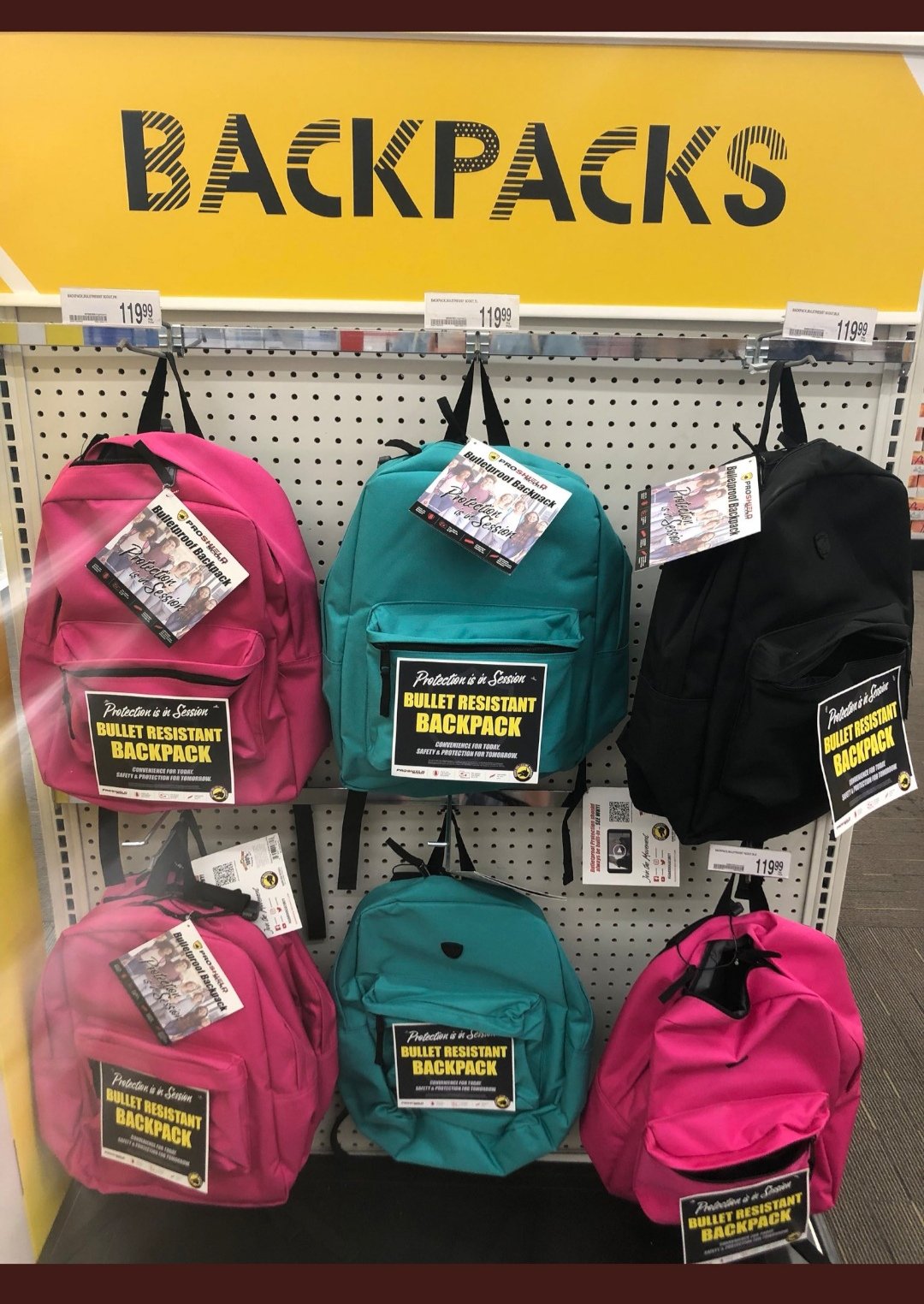
With the onset of the school year in the US, anxious parents are purchasing backpacks that double as shields in case children get caught in gunfire.
US companies that manufacture bulletproof backpacks say they’ve seen a spike in sales following three recent mass shootings around the country.
The sales come as parents, riddled with anxiety about the possibility that their own children will find their school under attack, and with little hope for meaningful gun control from politicians, are looking for anything they can do to increase their chances of surviving.
Most of the ideas around school shootings in the US – training dogs, drills, bulletproof backpacks, arming teachers – all rest on the assumption that school shootings are an inevitable feature of life.
Three such companies, Bullet Blocker, TuffyPacks, and Guard Dog Security all said “they saw a significant uptick in the aftermath of mass shootings” CNN reported.
Guard Dog Security began sales of their product after the Sandy Hook shooting in 2013.
Steve Naremore, the CEO of TuffyPacks told CNN his company saw an increase of 300% alone over the past week.
The Houston-based company recently removed Disney-themed products for sale, including ones covered in popular princess characters, because they were not authorized to do so by the company.
A fourth company, ArmorMe, began selling similar products this year.
“The backpack is designed first of all to be a very stylish and nice-looking backpack,” ArmorMe’s Gabi Siboni told the New York Times.
“And it has panels that protect you against bullets. It will increase your survival chances.”
There is little concrete evidence that such backpacks, which range in price from around $100 – $500, will actually be effective in the event of a shooting, and some of the companies who sell them have been criticized for claims about the advertised certified safety levels of the materials in question.
Yasir Sheikh of Guard Dog his his product would be less effective against a powerful semi-automatic rifle like those increasingly used in such shootings.
Grasping some of the absurdity of the gun epidemic in America that has lead to such a point, Democratic presidential candidate Kamala Harris summarized the feelings of many last week.
“Your back-to-school shopping list shouldn’t have to include a bulletproof backpack,” she said.
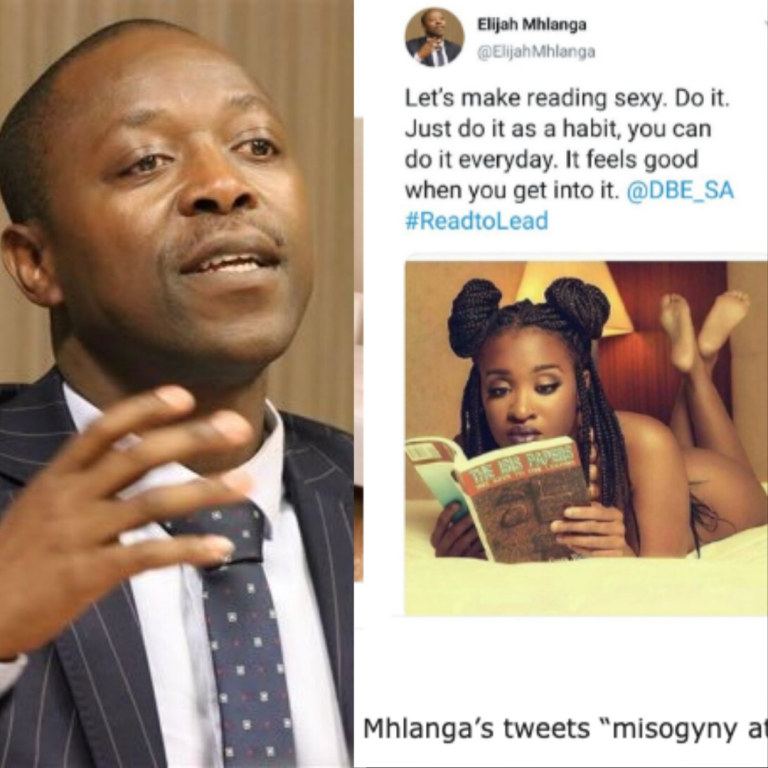
The Basic Education Minister has distanced herself and the department from a series of so-called “sexy” tweets in which departmental spokesperson, Elijah Mhlanga, used sultry images of women to promote the department’s Read to Lead campaign.
In his tweets, Mhlanga captions pictures of scantily clad women reading with comments that it is “therapeutic,” “relaxes the mind, body, and soul” and “feels good.”
Mhlanga tagged the Department of Basic Education (DBE) and hash tagged Read to Lead, which is a DBE campaign.
“I distance both the Ministry I lead and the Department of Basic Education from this naked display of male chauvinism. The objectification women has no place anywhere in our society let alone in our quest to promote reading,” Angie Motshekga said.
“As Minister of Basic Education, I didn’t authorise nor was informed of such a campaign involving semi-naked women. Even if I was informed, I wouldn’t have given any permission purely based on principle that women aren’t objects. The objectification of women is an affront in our battle against the pervasive nature of patriarchy and the scourge of gender based violence,” the Basic Education Minister added.
Motshekga said she has instructed her DG to institute “appropriate action in this regard to ensure that in future, no official engages in frolic of their own in the name of the department.”
“Thoughtless, sexist, and chauvinist” approach to a worthy and noble campaign.”
Bongiwe Mbinqo-Gigaba – chairperson, Parliament’s portfolio committee on Basic Education
Parliament’s Portfolio Committee on Basic Education also condemned the tweets and accompanying sultry images published by the DBE spokesperson.
Committee chairperson Bongiwe Mbinqo-Gigaba urged the department to take drastic action again Mhlanga for what she called a “thoughtless, sexist, and chauvinist” approach to a worthy and noble campaign.
Mbinqo-Gigaba said the tweets “objectify women” in a campaign that is meant to encourage learners to read in order to lead.
She said the committee would, as part of its oversight responsibilities, take up the matter with the department when it met again during its next scheduled meeting.
While Mhlanga has apologized, he, did so by defending his ‘sexy’ images, saying he’d posted similar images before without any backlash.
Mr Mhlanga we love you, but I think this is a bit off,how do I use this pic to encourage kids to read? Isn't this a bit on the phonographic side?
He added that by doing so, he had “started a discourse on reading.”
I have noted that one image in particular may have offended sensitive viewers. This however, was not the intention and we strongly reject any view to that effect. To those I disappointed and indeed those of you who are offended by the use of the images I apologize.
“While Mr Mhlanga apologised to ‘sensitive viewers’, his apology only served to highlight that he failed to grasp the substance of the complaints. It is deeply concerning that this patriarchal view is espoused by a government department spokesperson, particularly a department that has such power to shape young South Africans,” Christine Hobden, philosophy lecturer at the University of Fort Hare, told The Daily Vox.
Department of Basic Education (DBE) Spokesperson Elijah Mhlanga has apologized and, at the same time, defended his posting of various images of scantily clad women in an attempt to promote reading by making it “sexy.”
Mhlanga tweeted the images on Saturday as part of a DBE campaign called “Read to Lead,” drawing a swift and angry backlash from netizens.
In these tweets, Mhlanga captions pictures of scantily clad women reading with comments that reading is “therapeutic,” “relaxes the mind, body, and soul” and “feels good.”
While Mhlanga apologised to those who were offended by the images, he added that he’d posted similar images before without backlash, and that by doing so, he’d “started a discourse on reading.”
I have noted that one image in particular may have offended sensitive viewers. This however, was not the intention and we strongly reject any view to that effect. To those I disappointed and indeed those of you who are offended by the use of the images I apologize.
“On Saturday, I posted a series of tweets about the department’s Read to Lead Campaign aimed at promoting reading amongst young adults and people of school going age and society in general,” he said.
I have previously promoted this reading Campaign on Twitter using the same images in 2016, 2017 and 2018 however, there was no discontent or discomfort raised at the time. In fact it started a discourse on reading.
Mhlanga added that: “Contemporary audiences that consume media tend to be open about sex and sexuality. I therefore have a full understanding of representation and metaphoric content, and in this context, I pushed the boundary slightly in order to play around with meaning, and push a narrative about reading as an activity that can be done for fun and leisure.”
Debbie Schafer, MEC for Education in the Western Cape, also waded into the debate.
Really disappointed in this Elijah. Can’t believe this is actually you.
“We hope this issue will heighten interest in and sustain a conversation about the importance of reading and its significance in human development,” Mhlanga said, before concluding his Twitter statement with a thank you emoji and the greeting: “Yours in reading.”
Shocking to say the least!! How disappointing when an intelligent individual in a leadership position is unable to discern that the objectification of a scantily clad female veiled behind the smoke screen of promoting reading is in extreme poor taste!! Not on! #Women'sMonth?
“While Mr Mhlanga apologised to ‘sensitive viewers’, his apology only served to highlight that he failed to grasp the substance of the complaints. It is deeply concerning that this patriarchal view is espoused by a government department spokesperson, particularly a department that has such power to shape young South Africans,” Christine Hobden, philosophy lecturer at the University of Fort Hare, told The Daily Vox.
In 1991, following a civil war that led to the collapse of the Somali Democratic Republic, the northern part of the country declared itself as the Republic of Somaliland.
Though it still lacks recognition from the international community, Somaliland has many characteristics of a state, such as a parliament and an army. It’s also generally been highlighted as a rare success story in the Horn of Africa.
The 3.5 million people that live there live in relative stability. But little is known about how the country’s public services function and are organised.
During Somalia’s civil war in the late 1980s, more than 90% of schools were destroyed. But education in Somaliland went on to develop and continues to be delivered.
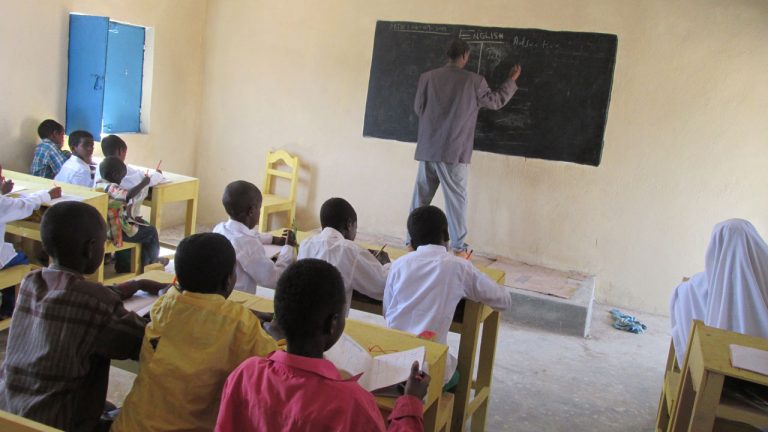
Today, there is a whole education system with public and private kindergartens, primary and secondary schools and universities. There are also vocational and Koranic schools.
The number of primary schools, the focus of our study, has grown steadily from virtually zero in 1990 to 935 in 2014.
But how does it keep them going? Somaliland has few economic resources because, due to its unrecognised status, it’s unable to receive bilateral aid and it also has a weak tax base.
We found that non-state actors – like the diaspora and international non-governmental organisations (NGOs) – are central to the delivery and expansion of the education sector.
This doesn’t mean that the state is redundant. It continues to be important for what the non-state actors do – like setting national examinations and providing salaries for some of the public school teachers through a government payroll.
The issue is that this hybrid system means that non-state actors have the power to decide whether state policies are implemented or not.
It also means that personal connections between members of the diaspora and officials in the ministry, rather than clear guidelines, can play a role in determining outcomes – like whether a school is recognised or not.
The importance of non-state actors
Our study involved eight months of qualitative field research carried out mainly in Hargeisa, the capital of Somaliland, between late 2016 and early 2017.
During this time we carried out 150 semi-structured interviews with donor representatives, teachers, government officials, school inspectors, head teachers, members of community education committee, and businessmen.
We saw how central the diaspora and NGOs are in rehabilitating, building and running schools.
For instance, in some towns or neighbourhoods new schools were built because networks of people from abroad had family living there. About one million Somalis live abroad and their remittances are widely known to have supported relatives “at home” over the past two decades.
The same goes for schools. In rural areas, schools are usually set-up by diaspora groups or international donors. All 20 public schools that we visited during our fieldwork in Hargeisa were funded by both the government and diaspora.
International Islamic charity organisations, like as Direct Aid and Munazzamat al Dawa al Islamiya, and local businessmen also develop the private education sector by importing a range of curricula and school books from elsewhere – such as Turkey or Sudan – which are in high demand by parents in Somaliland.
Looking for the state
Although diaspora actors finance and manage the schools – and in fact do not need the state as such – they still look for recognition as public schools. If they are recognised under the “public” banner, this gives them access to the state’s network of international aid agencies.
The state also provides materials – like schools books – and a national framework. For instance, in 2016 the state reformed the curriculum to unify the large number of curricula and schools books that were coming in from abroad.
While this reform went against the business model of private actors –- private schools are popular because of their foreign curricula –- they recognised the state as the overall regulatory authority and were involved in renegotiating the reform.
Why? Because, the state provides licenses, certificates and constructs exams needed to gain access to secondary education.
But since public services continue to be produced from the ground up –- by community organisations, parents and diaspora groups in collaboration with local actors –- it is also these actors that decide whether a rule is implemented or not.
For example, in 2011 the state wanted to abolish primary school fees to increase enrolment rates. But school fees are still collected today. Since the government didn’t cover running costs, which school fees previously did, it became difficult to pay the bills when schools stopped collecting fees.
For this reason head teachers, parents and parental committees agreed to begin collecting fees again, against the state policy.
This shows that whether policies are implemented or not is beyond the power of the state. They are instead decided through local negotiations.
A KwaZulu-Natal teacher is suing the National Prosecuting Authority (NPA) and the police minister after spending over a year in jail for a crime he was eventually acquitted of.
Patrick Buthelezi spent 13 months in jail after presenting himself at the Bhekithemba police station in 2011 and subsequently detained on a charge of raping a nine-year-old pupil at the school where he was teaching in Umlazi, Durban.
On 21 November 2011, Buthelezi went to the police station after having been informed that police had visited the school to look for him.
On December 12 of the same year, judgment was handed down by the presiding magistrate in which bail was refused, as he had been charged a with a Schedule 6 offence – rape in this case – in terms of the Criminal Procedure Act 51 of 1977.
Following the refusal of bail, “the plaintiff remained incarcerated until the conclusion of his criminal trial on December 14, 2012, when he was eventually acquitted of the charges against him,” Judge Mahendra Chetty’s judgment read.
The amount of Buthelezi’s damages and costs order for his legal expenses is yet to be determined.