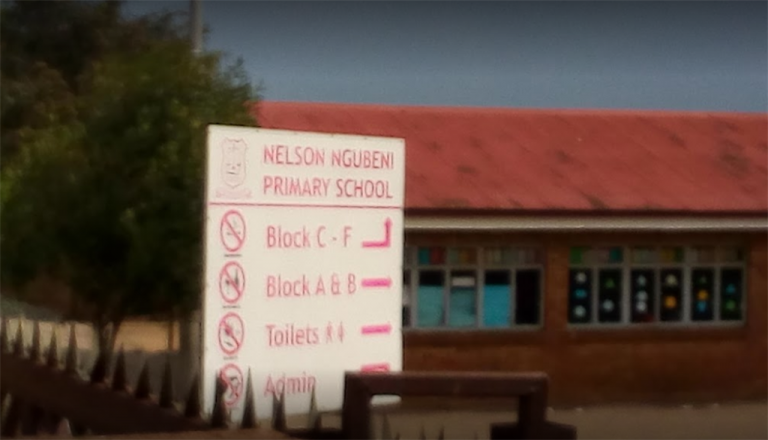
A feeding scheme at the Nelson Ngobeni Primary School in Mpumalanga has been suspended pending an investigation into the deaths of three pupils and the hospitalisation of 10 others from suspected food poisoning.
Provincial Education Department spokesperson Jasper Zwane says although the source of the poison has not been established, the food which is usually served at the school will be discontinued until the investigation is finalised.
“We would investigate the food they are eating but also to understand what might have happened on their way home,” Zwane added.
The DA in Mpumalanga intends laying criminal charges against the Mpumalanga Education Department, including Education MEC Bonakele Majuba, following the deaths of three learners from suspected food poisoning.
The three learners, from the Nelson Ngobeni Primary School in eMalahleni, died in hospital Monday after, the DA alleges, “being served food through the school nutrition programme.”
The DA is also calling for an emergency external audit of the food supplied through the feeding scheme.
Too many stories of school children, dependent on gov feeding schemes that get food poisoning. How competent are these people getting these tenders, in handling food to ensure it remains safe and meets the required food safety standards? https://t.co/LcbS8fLFcT
The DA said in a statement: “According to reports learners started vomiting and complaining of stomach pains after eating the food provided through the scheme.
They were taken to eMalahleni Hospital for observation where three of the learners died.” Ten other pupils are still being monitored in hospital.
The DA says its very concerning that this is the second case of food poisoning to be reported in a Mpumalanga school within the last four months.
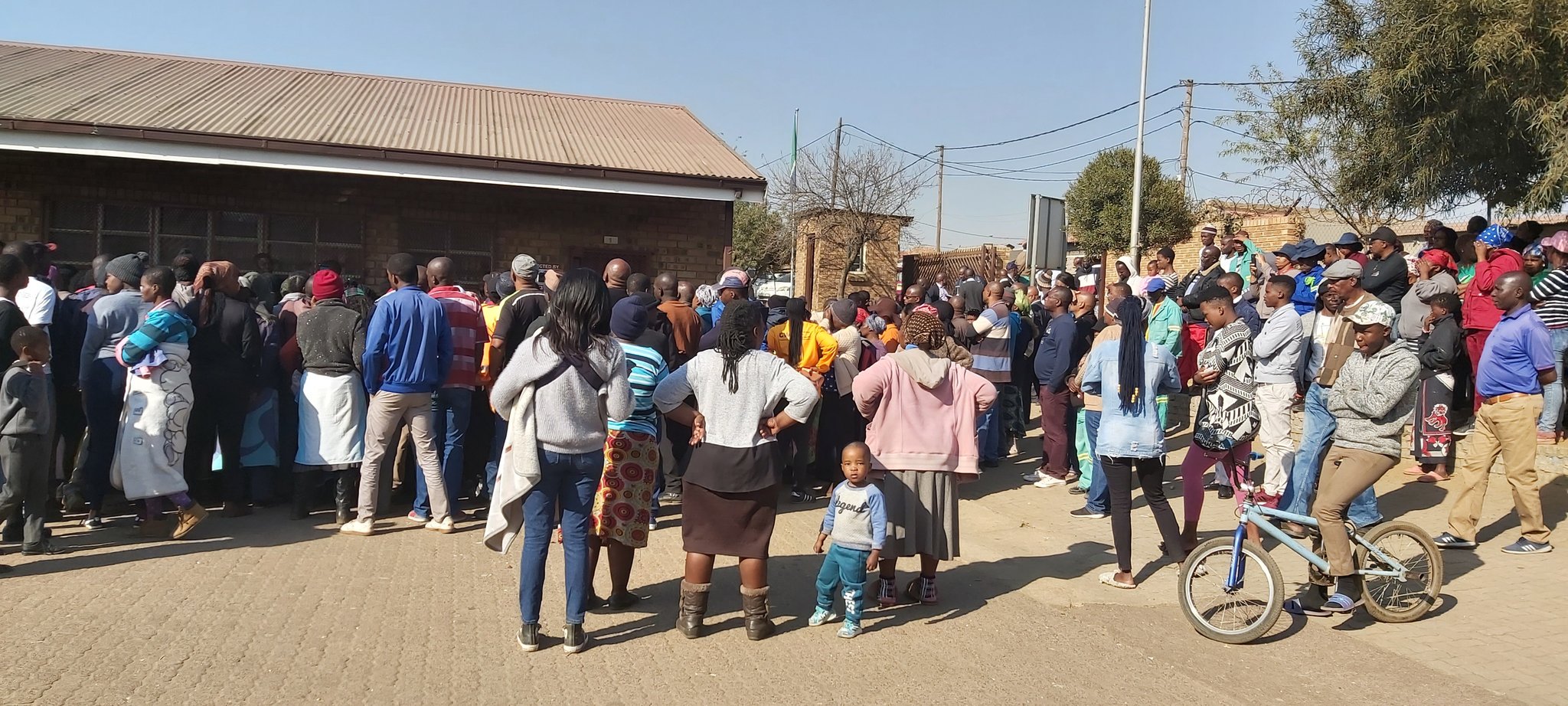
Parents gathered at the school to hear from Department of Education.
“In May this year 26 learners from Ndimande Primary School in Bushbuckridge had to be hospitalised after eating food from the school,” the DA said.
This prompted some parents to consider withdrawing their children from the school feeding scheme.
There are, according to the DA, nearly 1 million learners, specifically 910 978 from quintile-1 schools across the province who depend on the school nutrition programme.
It would be a disaster if parents take their children out of the programme because of fear of poisoning, the DA said.
The head of Sudan’s ruling military council has said there must be “immediate accountability” over an incident in which at least four school children taking part in protests were shot dead Monday, state news agency SUNA reports.
“What happened in El-Obeid is a regrettable and upsetting matter and the killing of peaceful citizens is unacceptable and rejected and a crime that requires immediate and deterrent accountability,” Abdel Fattah al-Burhan was quoted as saying.
It said three of the injured were in surgery and that four of the five protesters killed were students.
The UN’s children’s agency UNICEF said the protesting children were between 15 and 17 years old.
"Kein Kind sollte in seiner Schuluniform begraben werden." – Abdullah A. Fadil, UNICEF-Repräsentant im #Sudan
No child should be buried in his school uniform.” – Abdullah A. Fadil, UNICEF representative in the #Sudan We are shocked by the shooting of five students during protests in Sudan.
North Kordofan’s governor said a curfew would be imposed indefinitely from 9pm to 6am in four towns, including El-Obeid, starting on Monday, adding that all schools in the province had been told to suspend classes.
Protest call
Sudan’s main protest group has called for nationwide demonstrations on Tuesday to condemn the “massacre”.
“We call on our people to take to the streets. To denounce the Al-Obeid massacre, to demand the perpetrators be brought to justice,” the Sudanese Professionals Association said.
Negotiators for the Alliance for Freedom and Change, an umbrella protest movement, have also said they will not be holding planned talks with the country’s ruling generals on Tuesday because they are still in El-Obeid and will only return tonight.
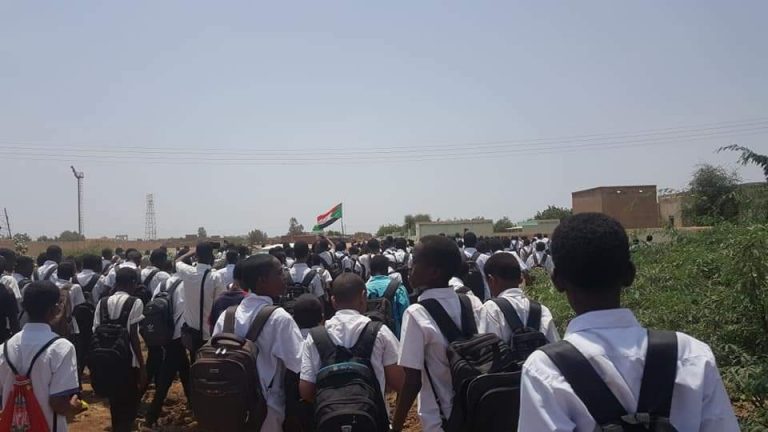
Hundreds of schoolchildren had been marching through the city’s main market on Monday morning.
A resident said the protests were prompted by fuel and bread shortages.
Today, they staged a rally and when it reached downtown there were shots fired,” the resident said.
A live-stream broadcast on Facebook shortly after the firing showed protesters carrying the body of a dead child to his family home and hundreds gathering for his funeral prayer.
They began chanting against Sudan’s ruling military council immediately afterwards.
Highschool students in Wad Medani stage a protest in solidarity with the highschool students in El-Obeid who were attacked and killed by RSF, yesterday.#SudanUprising#الأُبيض_تنزفhttps://t.co/o5EFrW8iu0
According to the activist-aligned Sudanese Doctors’ Committee, snipers from the Rapid Support Forces paramilitary fired on a march of secondary school students in El Obeid, the regional capital of North Kordofan.
Videos circulating on social media purported to show pupils protesting outside El-Obeid’s main hospital against the killings and injuries.
Human rights group Amnesty International has launched an innovative, some would say emotional campaign, aimed at fixing South Africa’s education system.
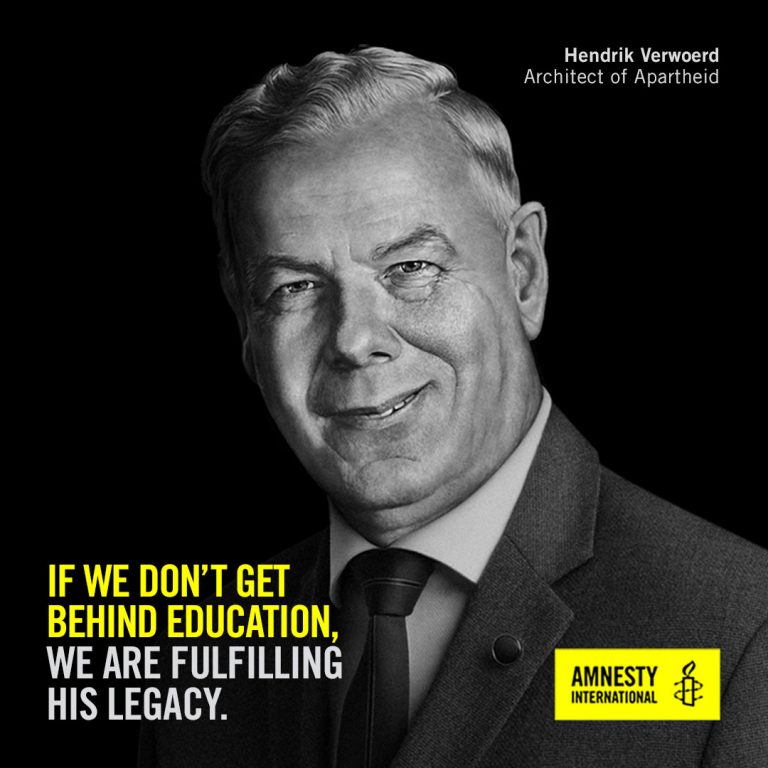
The campaign urges members of the public who care about the provision of quality education to “Sign the smile off Verwoerd’s face” by demanding that South Africa’s leaders urgently provide all children with the decent quality, basic education that is their birthright as enshrined in the constitution.
Amnesty will put up smiling faces of former prime minister and the so-called “architect of apartheid” Hendrik Verwoerd up around Johannesburg.
“If Hendrik Verwoerd, the architect of apartheid and apartheid education, looked back now, he would be smiling. Because unless we tackle the deep inequality he created in our education system, we risk fulfilling his legacy,” the group said announcing the launch of their #SignTheSmileOff campaign.
“The legacy of racial discrimination in the SA education system, characterised by poor outcomes, overcrowded classrooms, inadequate facilities and learning materials for tens of thousands of students, still looms large 25 years into freedom,” Amnesty said.
“SA’s education system “still mirrors the apartheid years.”
Amnesty International – SA Executive Director – Shenilla Mohamed
“Many schools serving our poorest communities rely on outdated and poorly maintained infrastructure and a dire lack of teaching resources that provides a wholly inadequate learning space for young people,” Mohamed said.
[ON AIR] Executive Director of Amnesty International South Africa, Shenilla Mohamed talks about Amnesty International’s “Sign the smile off campaign” as well education struggles today’s learners are faced with #BreakfastwithDavidpic.twitter.com/Yru8MXFmTE
“While South Africa has made progress in providing access to education, it has yet to tackle the deeply entrenched legacy of apartheid, left by Hendrick Verwoerd, that continues to result in massive inequalities in the country’s education system,” she added.
Amnesty International is urging people to sign the petition to force the government to act.
“Together, we will urge South Africa’s leaders to guarantee all children their constitutional right to a quality basic education,” the rights group said.
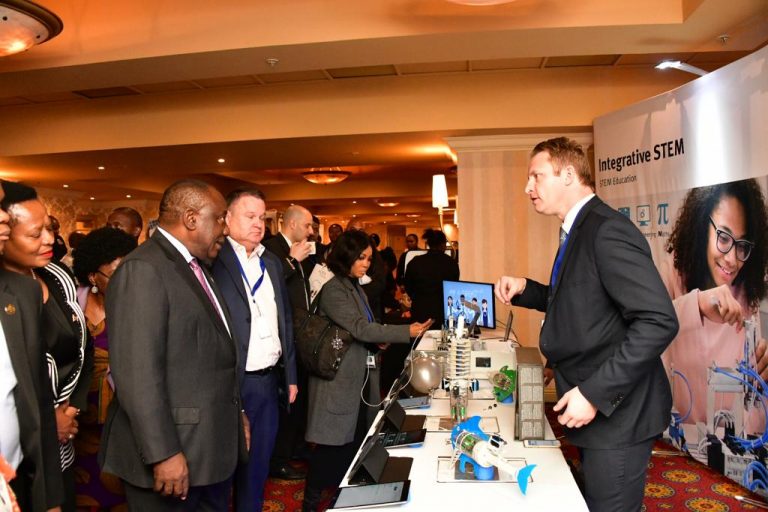
President Ramaphosa has warned that the mismatch of skills and the needs of the market in Africa will grow with the onset of the Fourth Industrial Revolution.
Delivering the opening address at the Association for the Development of Education in Africa (ADEA) dialogue on secondary education on the continent, Ramaphosa said, the skills deficit of African countries makes the continent ill prepared for technological change.
“We therefore need to change the direction of secondary school education if we are to develop relevant skills for the new type of economy,” he said.
“We see more jobless growth because of the use of technology to replace workers,” Ramaphosa said, adding that these changes have an impact on the nature of the skills required.
“Young people need foundational cognitive skills in science, technology engineering and mathematics – the so-called STEM skills – to be absorbed in the economy,” the president said.
As agreed in Agenda 2063, Ramaphosa continued, of those who enter tertiary education institutions, 70% ideally should graduate in STEM subjects.
Digital skills, such as coding, are essential to integration in the world of work, Ramaphosa pointed out.
“Our educators need to know how to develop a curriculum that is relevant to the economy,” Ramaphosa emphasised.
He called on policy makers to work in partnership with the private sector to design and implement a curriculum that augments basic foundational skills.
He said countries that ensure the skills they produce are appropriate for their industry have proved successful.
“Countries in which 50% of their learners enter technical colleges to develop artisan skills have lower youth unemployment rates than where the overwhelming majority enter tertiary educational institutions,” Ramaphosa explained.
He then called on secondary education systems to be restructured. “The assumption we often make that every learner is destined to enter a tertiary institution needs to be re-examined, and our secondary education systems restructured accordingly.”
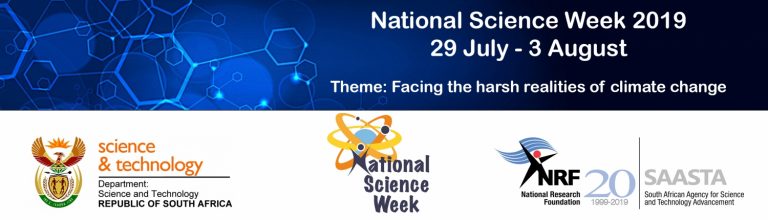
Science and Technology Minister has officially launched National Science Week (NSW 29 July-3 August), an annual event aiming to exhibit and communicate awareness in science in Kimberly.
The event is a countrywide celebration of science involving various stakeholders and role players conducting science-based activities during the week.
NSW is run across the country simultaneously at multiple sites.
SAASTA, the South African Agency for Science and Technology Advancement has been appointed as the implementing agency and plays the role of the National Project Management for the National Science Week.
South Africa’s migration from the resource-based towards the knowledge economy and space science & technology (SST) is one of the five grand challenges government has invested in to position our country as a meaningful player in the knowledge economy.
DAN MATSAPOLA: Manager- Science Advancement – South African National Space Agency (SANSA) :
Matsapola added;” I have personally cherished the idea of mining the unlimited resources of the human intellect as one of the most important economic activities in the knowledge economy and NSW has provided and continues to provide the platform through which this scientific mining process can be shared with diverse target publics.
The theme for 2019 is “Facing the harsh realities of climate change”
Each year a different theme is chosen and activities are offered around these themes to the target participants.
The NSW is a mass participation initiative within the context of the Science Engagement Strategy and its objectives are the following:
to popularise science to the broader SA society,
to serve as a vehicle for showcasing local innovations in science and technology, and the leadership role of the DST and other government departments in enabling research, development and innovation,
to make Science, Technology, Engineering, Mathematics, and Innovation (STEMI) appealing to learners, such that they consider STEMI as preferable career options, and
to familiarise targeted participants with the science linked to areas in which South Africa has knowledge and/or geographic advantage so as to contribute in making them informed and critically engaged citizens.
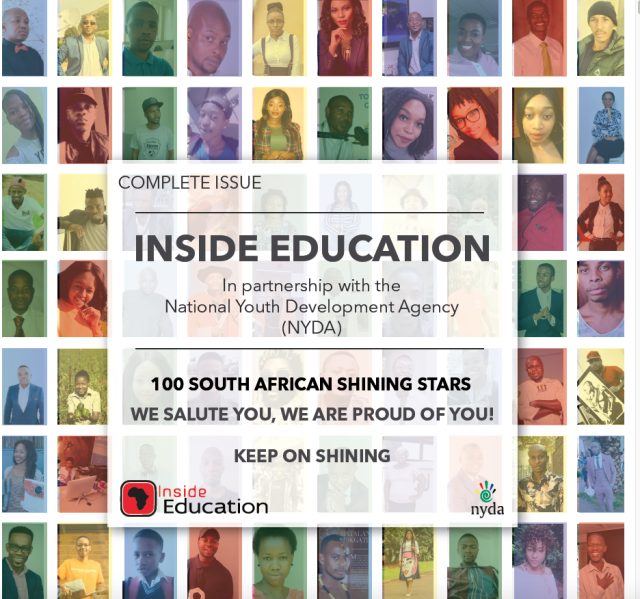
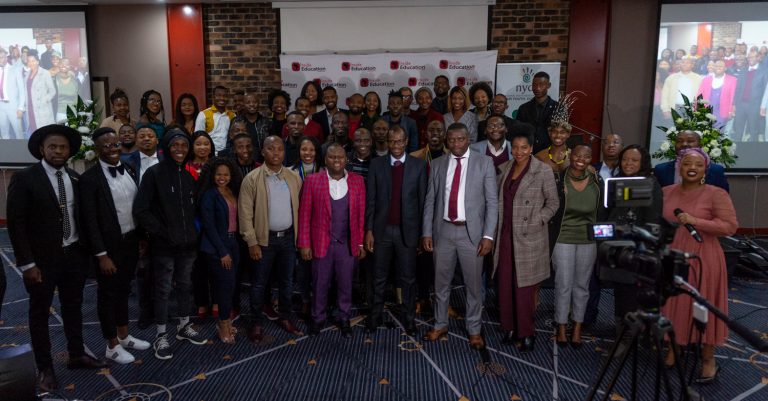
One hundred young, bright and determined game changers who are shaping the future of South Africa, and making a tangible difference to the lives of those around them, were honoured at a gala ceremony in Kempton Park Friday.
The inaugural 100 South Africa Shining Stars initiative, a partnership between Inside Education and the National Youth Development Agency, recognises young South Africans with a virtuous sense of civic action and public service while making significant contributions to the public good.
Deputy Finance Minister David Masondo said government is heartened by this initiative and these 100 South Africa Shining Stars will “serve as an inspiration to South African youth.”
Inside Education Managing Director Matuma Letsoalo (Right) is congratulated by Executive Director of the the NYDA Sifiso Mtsweni (Left) and Deputy Minister of Finance David Masondo (Middle) at the celebration of 100 South African Shining Stars at the Protea Hotel OR Tambo, Johannesburg, 26 July 2019.
“We at Inside Education, supported by the National Youth Development Agency (NYDA), have sifted through the sands and unearthed these bright game changers who are shaping the future of South Africa by doing extraordinary things with unwavering commitment and service to their respective communities against seemingly insurmountable odds,” said Inside Education MD Matuma Letsoalo.
NYDA Executive Chairperson, Sifiso Mtsweni said: “We are delighted as the NYDA to have partnered with Inside Education on this programme. It is of critical importance to always celebrate amazing young South Africans.”
“These 100 Shining Stars… These 100 timely interventions with far and wide impact, comes at a critical time in our post-apartheid quest to better the lives of millions of our compatriots suffering, enduring, surviving on the margins,” Letsoalo said.
Executive Director of the the NYDA Sifiso Mtsweni delivers a speech during a celebration of 100 South African Shining Stars event at the Protea Hotel OR Tambo, Johannesburg, 26 July 2019. The event, Inside Education in Collaboration with the National Youth Development Agency (NYDA), saw certificates handed over to young South Africans who have demonstrated excellence in many different fields including business and the arts.
Mtsweni added that “The centre of a successful youth development trajectory is the ability to partner with organisations that seek to achieve similar objectives as the NYDA, and Inside Education is one such organisation.”
“As history so very clearly illustrates, when challenges arise, it is the youth who act, perhaps not surprisingly, as it as their future, their very lives who are on the line,” Letsoalo said.
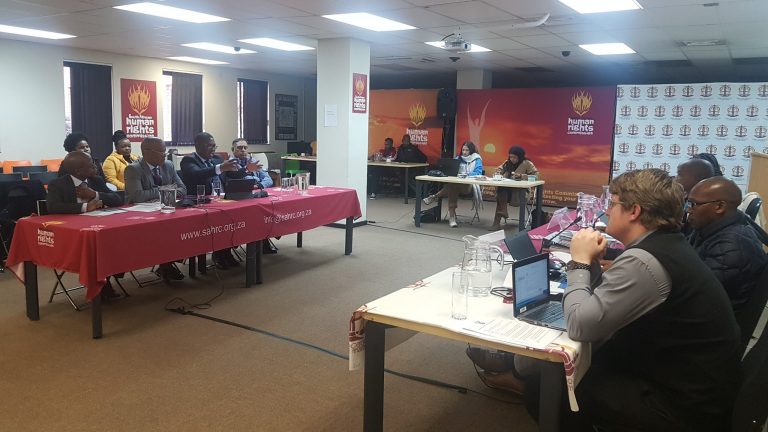
Provincial schools are catering for more than 250,000 undocumented learners, says Gauteng Education MEC Panyaza Lesufi.
He was appearing before the South African Human Rights Commission (SAHRC) inquiry looking into service delivery problems in Alexandra, as well as possible maladministration in the controversial multimillion-rand Alex Renewal Project.
Princess Ka-Siboto from the SAHRC asked Lesufi: “What’s the impact of undocumented learners on the education system?”
Lesufi replied: “The pressure on the system is immense, some of them [undocumented parents] want us to teach their children in their languages.”
“It’s R18,000 per learner, that is the amount that we spend. So, if you check 250,000 [learners] and times that by R18,000, that is the amount of money that we are losing,” Lesufi added, explaining how the admissions of non-documented learners affected his department’s budget.
Lesufi said he has no choice but to follow the law as all children has the right to education.
“No one must be chased; we’ll share whatever we have. We don’t want to expel them and then the SAHRC knocks at our doors. And the Department of Home Affairs would say we are breaking the law.”
The MEC added that pressure on resources was also huge and some foreign pupils were also demanding to be taught in their languages.
The sterling efforts of young South Africans who are contributing to positive change in the country, and making a tangible difference to the lives of those around them, is to be formally recognised at a handover ceremony at the Protea Hotel in Kempton Park tomorrow, Friday 26 July.
The Chairperson of the National Youth Development Agency (NYDA), Sifiso Mtsweni, and Managing Director of Inside Education, Matuma Letsoalo, will be handing over Certificates of Recognition to 100 South African Shining Stars, as we call these outstanding achievers who have gone beyond the call of duty in creating opportunities and a better life for themselves and their communities.
These 100 remarkable individuals have excelled in the fields of Arts, Culture, Media and Entertainment; Business & Entrepreneurship; Civil Society & Youth Activism; Education; Health; Justice & Law; Philanthropy, Politics & Governance; and Science & Technology.
We at Inside Education, supported by the NYDA, have sifted through the sands and unearthed these bright game changers who are shaping the future of South Africa by doing extraordinary things with unwavering commitment and service to their respective communities against seemingly insurmountable odds.
Deputy Minister of Finance, David Masondo, will be among the dignitaries attending the handing-over ceremony recognizing and applauding their outstanding contributions which impact on young people across South Africa and beyond.