Home Blog Page 451

Sol Plaatje University Education Head Tackles Tricky Language Debate

0

Research by the Head of Education at Sol Plaatje University has revealed that teachers are facing a complicated situation of whether to use English and/or other languages in teaching maths and science.

Dr Audrey Msimanga study drew on recent curriculum developments, policy, and language factors in the classrooms, and was conducted from 2014 to 2018 in different phases in the East Gauteng District.

The data showed that out of 144 pre-service teachers, 70 did not agree with permitting home language in the classroom, 58 said they would allow it, and the remaining 16 had no opinion.

In the case of student teachers in their fourth year in educational studies, only 20 out of 74 preferred to be taught in their home language while 54 preferred the co-switching medium of instruction and teaching.

Msimanga said her research presented two schools of thought:
• Learners do well if they are taught in their mother tongue as a foundation
in their early learning
• Learners must gain an understanding of English early in their education
life so that they do not struggle at a later stage.

To highlight this, she said in the Northern Cape’s Namakwa District, where the vernacular of the province – Afrikaans – is the predominant medium of instruction, the district recorded the highest pass rate percentage of 83,7% in the province.

It was also the fifth top performing district in the country.

The aim of her paper ‘Talking Science: Teaching and Learning Science in South Africa,’ is to create further understanding of the nature and role of classroom talk in the teaching and learning of science, Msimanga said. 

Helping Kids Learn To Evaluate Online Content

Amy Mascott
Educator, Author, Founder of teachmama.com

As a reading specialist and former high school English teacher, I’ve witnessed technology enhance our lives in and out of the classroom. But that comes with lots of challenges, like learning to communicate responsibly, being kind online and deciphering what is real and what is fake.

We need the right tools and resources to help kids make the most of technology, and while good digital safety and citizenship resources exist for families, more can be done for media literacy.

Helping kids be safe, confident explorers of the online world.

https://beinternetawesome.withgoogle.com/en_us/#

I’ve worked alongside dozens of educators who believe that media literacy is essential to safety and citizenship in the digital age, but agree that it’s a topic that can be tough to cover.

Fortunately, the new media literacy lessons developed for Be Internet Awesome make it easy and fun for kids to learn key skills for evaluating what they see online. These lessons complement the program’s digital safety and citizenship topics, which help kids explore the online world in a safe, confident manner.

Be Internet Awesome is like an instruction manual for making smart decisions online. Kids today need a guide to the internet and media just as they need instruction on other topics.

We need help teaching them about credible sources, the power of words and images and more importantly, how to be smart and savvy when seeing different media while browsing the web.

All of these resources are not only available for classrooms, but also free and easily accessible for families as well.

I encourage parents to take advantage of these resources and the new activities on media literacy. Let’s not only teach kids, but also inspire, educate and empower families to make tech work better for them as well.

Literacy Is A Human Right

Literacy should be understood within a rights-based approach and among principles of inclusion for human development.

The rationale for recognising literacy as a right is the set of benefits it confers on individuals, families, communities and nations.

Literacy is implicit in the right to education and is recognised as a right, explicitly for both children and adults, in certain international conventions.

Literacy has been recognised not only as a right in itself but also as a mechanism for the pursuit of other human rights, just as human rights education is a tool for combating illiteracy.

Apart from being a fundamental human right, it’s a foundation not only for achieving education for all but, more broadly, for achieving the overarching goal of reducing human poverty.

And yet, 140 million adults in sub-Saharan Africa lack the basic learning tools to make informed decisions and participate fully in the development of their societies.

In South Africa, lack of access to reading material and textbooks are two of the main reasons that 78% of South African children in grade 3 still can’t read for meaning.

Education expert, Mary Metcalfe says while government continues to spend billions on education, in 2018, only 29% of the poorest primary schools in South Africa had access to in-school libraries.

“Change is possible. We must focus on improving literacy and numeracy levels in the first four years of schooling.”

education expert Professor Mary Metcalfe 

In addition to being a right in itself, literacy allows the pursuit of other human rights. It confers a wide set of benefits and strengthens the capabilities of individuals, families and communities to access health, educational, economic, political and cultural opportunities.

These 17 countries in Africa still have literacy rates of 50 % and below.

Yet, on average, less than sixty per cent of the total adult population in sub-Saharan Africa can read and write with understanding – one of the lowest adult literacy rates in the world.

The rates are below forty per cent (the supposed threshold for rapid economic growth to take place) in Benin, Burkina Faso, Chad, Mali, the Niger, Senegal and Sierra Leone.

SA Youth Choir Rocks ‘America’s Got Talent’

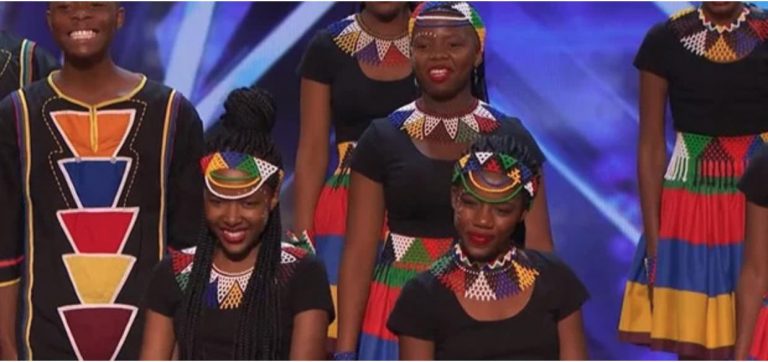
The Ndlovu Youth Choir from Limpopo drew a standing ovation after last night’s moving performance on the world’s biggest talent show, America’s Got Talent.

Judges Simon Cowell, Howie Mandel, Gabrielle Union and Julianne Hough were full of praise for the choir following a stirring rendition of Vicky Sampson’s ‘African Dream.’

“We’ve always been waiting for a choir like this, something we’ve never heard before. Your energy was literally bouncing off to me right there, it was great. You, I’m going to remember,” Cowell said.

Emotional choir director Ralf Schmitt shared that the kids come from one of the South Africa’s most impoverished communities and manage to uplift themselves.

For many of the kids, this was their first time travelling to the US and they all revelled in the moment.

The choir said they are humbled by the messages of support.

UJ Student handed 15 Year Sentence for Murdering Flatmate

A University of Johannesburg student who killed his flatmate by bludgeoning him with a hammer before stabbing him multiple times was sentenced to 15 years in the Gauteng High Court in Johannesburg Tuesday.

Siphamandla Gamede, 25, was also handed a two year sentence for obstructing justice after killing Nkosinathi Ngema at Cherry Manor Complex in Roodepoort in January.

National Prosecuting Authority spokesperson Phindi Mjonondwane in a statement said the Bachelor of Mathematics graduate was living with Ngema and Ngema’s brother in a flat. The day of the murder, the brother had gone to work and left Gamede and Ngema still asleep in their rooms.

“When the brother came back from work, he found blood inside the flat and the accused lied that the deceased had been robbed during a robbery,” Mjonondwane said.

Gamede pleaded guilty.

Judge Mohamed Ismail explained there needed to be compelling circumstances to warrant the court deviating form the prescribed sentence, Mjonondwane said, News24 reported.

Ismail said mitigating factors in the case was that Gamede had no previous convictions and had pleaded guilty.mitigating factors in the case was that

No Art Supplies? No Problem for SA’s Coffee Artist

Enoch Mlangeni can’t afford art supplies, so he uses coffee instead.

The 27-year-old from Sasolburg stumbled on this innovative form of art when he spilled coffee on a piece of art and could not get rid of the stain.

He has gone viral on social media since then for his portraits of famous people such as Trevor Noah and internationally acclaimed DJ Black Coffee.

“Coffee it’s a messy medium. You can do a lot of mistakes while you are working with it. But it teaches you something about art that each and every mark is important when you are doing art. There is no right mark there is no wrong mark. But you can always make a, turn a mistake into something beautiful,” he said with a smile.

https://twitter.com/KTNKenya/status/1139785881647243265

Mlangeni’s love for art goes beyond coffee. He dreams of going to art school, but doesn’t have the money.

“Art to me is my life, it’s who I am. It is something that defines me and being able to realize my talent, and being able to practice, it means a lot to me. It’s a gift that I can never exchange with anything,” the self-taught artist said.

While painting a portrait of President, Cyril Ramaphosa, Mlangeni said he hoped Ramaphosa’s term in office will bring the much-needed change the youth are looking for.

https://twitter.com/Andrew42768712/status/1139053824042196992

“As the new president of South Africa, we’ve, we’ve been having so many issues in South Africa, and we hope that…as he’s the new president, he’ll come, he’ll bring, he’ll bring some changes as he calls himself, ‘the new dawn’. So, we hope, we really hope that this is indeed the ‘new dawn’ cause we have so many issues in South Africa; the high unemployment rate,” he said while shading in his piece with darker mixtures of coffee.

Social media has helped Mlangeni’s overcome the lack of access to galleries and collectors that come with living in a Sasolburg township.

Mlangeni’s portraits and paintings range between R12,000.00 and R15,000.00.

He puts aside a portion of his sales for the art centre he hopes to start in his neighborhood. It will contain a studio where he can work and exhibit alongside other artists.

SA school system based on ‘dumbing down’ – Jonathan Jansen

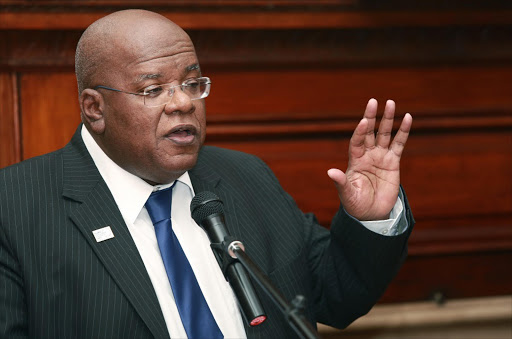
There is a lack of understanding in government about the extent of the country’s education crisis, says professor Jonathan Jansen of Stellenbosch University’s education faculty.

Jansen believes the entire South African school system is based on a “dumbing down” approach.

“The problem is that the SA government does not think there is a problem in the education system. Maybe President Cyril Ramaphosa is mainly focused on SOE challenges,” Jansen recently told the annual conference of the SA Property Owners’ Association (SAPOA) in Cape Town.

Jansen further questioned the subjects taught at schools. “SA is the only country with a stupid subject like ‘life orientation’ and mathematical literacy is just ‘maths for dummies’. Every child can do maths. There is nothing wrong with our kids and yet the entire school system is based on the basis that kids cannot do this,” Jansen said.

“Of course we must be clear: the first big problem in SA is inequality. We basically have two unequal school systems in SA. I am amazed that you can have a school with three astro turfs and a polo pool and 10km away a kid can drown in his own shit. How do we live with it? And yet the government says we are doing well because of our matric scores,” Jansen added.

“Inequality is one thing, but the SA education system is also very inefficient, getting very little at the output level. For every 100 kids starting in grade 1 only 37 pass matric, only 12 go to university.”

In Jansen’s view, this is wasteful in the extreme.

“Research indicates that 78% of grade 4 children in SA cannot read for meaning in any language. How can you expect graduates of quality?” asked Jansen.

“I am amazed that you can have a school with three astro turfs and a polo pool and 10km away a kid can drown in his own shit. How do we live with it? And yet the government says we are doing well because of our matric scores.”

Professor Jonathan Jonathan Jansen

Jansen said the first thing he would do if Minister of Education would be to ensure a massive investment to make sure every child gets a solid pre-school education. Then he would retrain all teachers on how to teach.

“If we do the basics right, the rest will follow,” he said.

A for dreams and F for actual plans – Ramaphosa #SONA2019

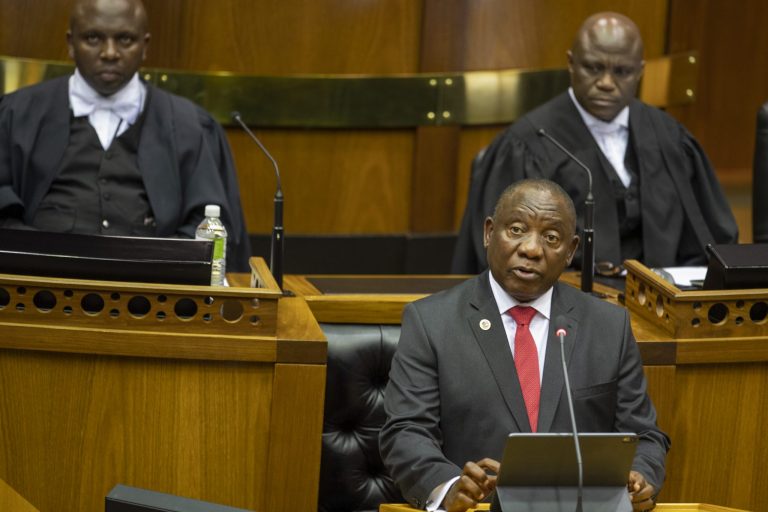
South African President Cyril Ramaphosa’s State of the Nation Address has drawn mixed reaction from netizens. While the speech scored an A for its dreams and visions it scored an F for education.

Here are the excerpts from President Ramaphosa’s speech on education, laced with reaction from stakeholders and ordinary South Africans.

If we are to ensure that within the next decade, every 10 year old will be able to read for meaning, we will need to mobilise the entire nation behind a massive reading campaign.”

“Early reading is the basic foundation that determines a child’s educational progress, through school, through higher education and into the work place.”

Read More:https://www.insideeducation.org/featured/nalibali-awarded-international-reading-prize/

“All other interventions – from the work being done to improve the quality of basic education to the provision of free higher education for the poor, from our investment in TVET colleges to the expansion of workplace learning – will not produce the results we need unless we first ensure that children can read.”

“It is through initiatives like the National Reading Coalition that we will be able to coordinate this national effort.”

“All foundation and intermediate phase teachers are to be trained to teach reading in English and the African languages, and we are training and deploying a cohort of experienced coaches to provide high quality on-site support to teachers.”

“We are implementing the Early Grade Reading Programme, which consists of an integrated package of lesson plans, additional reading materials and professional support to Foundation Phase teachers.”

Read more: https://www.insideeducation.org/featured/motshekgas-no-repeat-proposal-for-grades-r-to-3-under-fire/

“This forms part of the broader efforts to strengthen the basic education system by empowering school leadership teams, improving the capabilities of teachers and ensuring a more consistent measurement of progress for grades 3, 6 and 9.”

“We also have to prepare our young people for the jobs of the future.”

“This is why we are introducing subjects like coding and data analytics at a primary school level.”

South African teens attempt Cape-to-Cairo in homemade plane

Riyaz Patel

An aircraft built by South African teenagers is being flown from Cape Town to Cairo – and has successfully made its first stop in Namibia.

It will take six weeks to cover the 12,000km (7,455 miles) to Egypt.

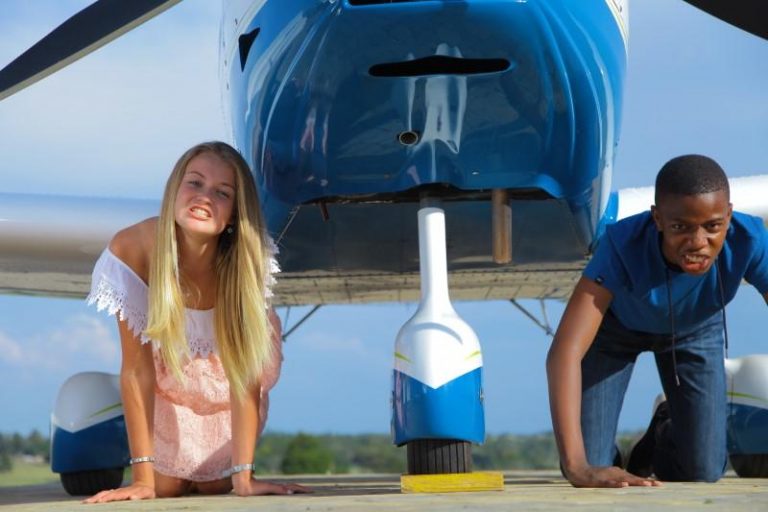
The four-seater Sling 4 plane was assembled by a group of 20 students from vastly different backgrounds.

We want to “show Africa that anything is possible if you set your mind to it,” said 17-year-old pilot Megan Werner who started the project.

The teenagers built the aircraft in three weeks, from a kit manufactured in South Africa by the Airplane Factory. The kit came with thousands of small parts that had to be assembled.

Werner’s U-Dream Global initiative was whittled down from more than 1,000 applicants. She is one of six in the group to have obtained a pilot’s licence, and the six will share flying duties in their silver aircraft, which is emblazoned with maps of Africa on both wings together with sponsor’s logos.

” I am so proud of myself, I can’t believe what we’ve done. I feel like this is my baby. I cherish her,” said Agnes Keamogetswe Seemela, a 15-year-old from Munsiville township in Gauteng.

The team’s first stop was in the southern Namibian coastal town of Luderitz. The plane has a six-and-a-half hour flying range and other stops on the way to Egypt will be in Zimbabwe, Malawi, Tanzania, Kenya, Ethiopia and Eritrea.

“It flies so smoothly and the views were breathtaking,” Seemela said of its maiden voyage, from Johannesburg to Cape Town, ahead of the official start of the trip.

https://twitter.com/localblogng/status/1140284450154131457

A support Sling 4 plane flown by professional pilots will accompany the teen flyers, who said they planned to do motivational talks for other teenagers along the way.

“It’s just awesome to see how inspired people are by what we’ve done,” said Werner. “It gave me goosebumps.”