
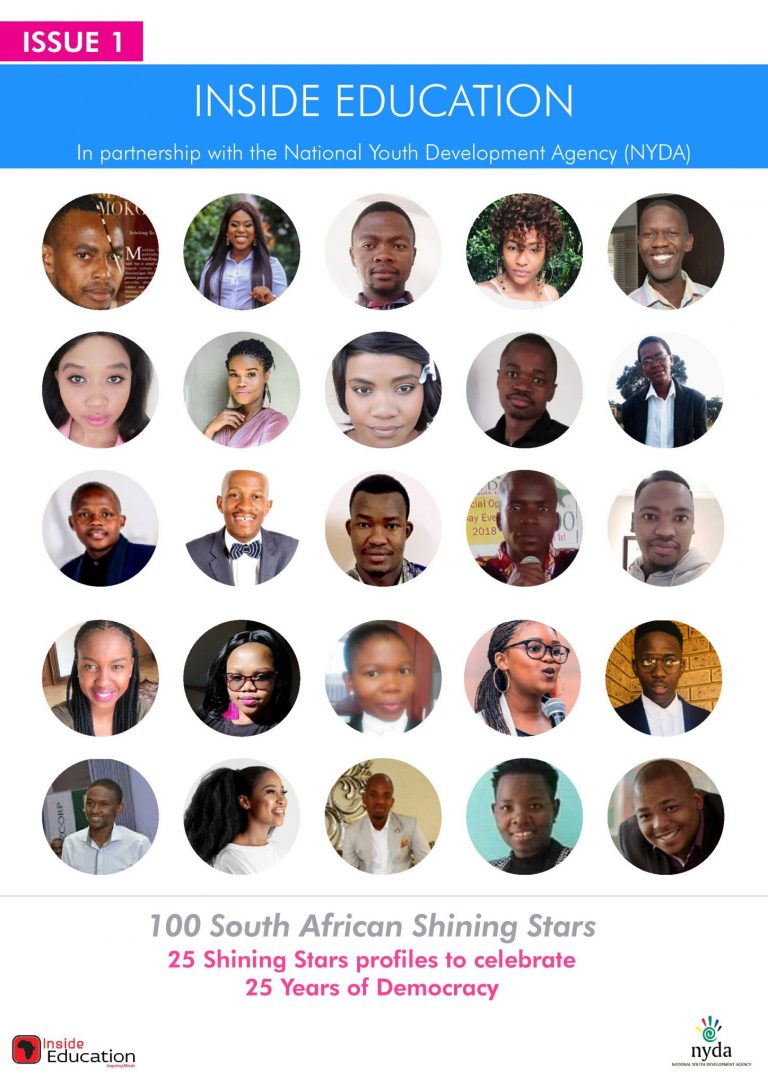
Click to download: https://www.insidepolitic.org/wp-content/uploads/2019/06/25-profiles.pdf
R900 million to settle student debt – Ramaphosa
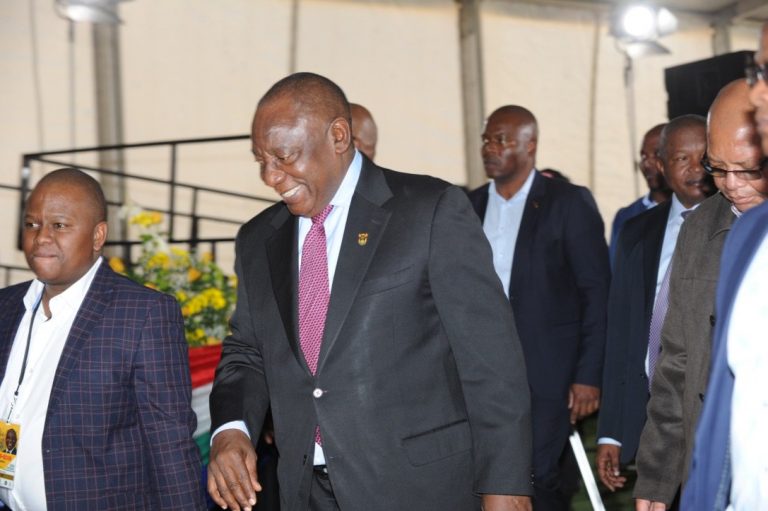
President Cyril Ramaphosa on Sunday marked the 43rd anniversary of the 1976 Soweto Students Uprising, urging the youth to wage a new struggle for economic freedom, access to land and free education.
“It is you who are the voice of our national conscience as we build a South Africa free of racism, of sexism, of xenophobia and other forms of discrimination,” Ramaphosa said in Polokwane, Limpopo.
“It is you, the youth of this country, who remind us that our liberation is not complete as long as millions of our people live in poverty, are jobless and remain on the margins of society.”
At last year’s Presidential Jobs Summit, Ramaphosa said the government agreed on a number of initiatives to accelerate the development of young people to take advantage of jobs in the tech sector, installation, maintenance, and repair jobs.
“But we don’t just need software engineers,” said Ramaphosa. “We also need car mechanics, electricians, plumbers, hydroponics specialists, tour guides and aquaculture farmers. These are all productive and growing areas of the economy into which our young people can be absorbed. Their stories are a harsh reminder that the social and economic marginalization of our youth is a stain on our country’s conscience.”
Ramaphosa also lauded the efforts of the National Youth Development Agency (NYDA) for continuing to provide support to young entrepreneurs and youth-led businesses across the country.
“The National Youth Development Agency continues to provide interventions to support young entrepreneurs and has over the past five years disbursed development finance to more than 6,000 start-up youth entrepreneurs and helped create more than 18,000 new jobs.”
READ MORE: https://www.insideeducation.org/featured/youth-unemployment-aluta-continua/
“In its efforts to break barriers for young people in the job market, the NYDA has trained almost 400,000 young people on job preparedness and life skills. Around 25,000 of these young people have now been placed in permanent jobs,” he said.
Ramaphosa also announced that the government will set aside over R900 million to settle the historical debts of continuing NSFAS-funded students. “It is for this reason that the budget of the National Student Financial Aid Scheme has grown exponentially from R70 million in 1994 to nearly R15 billion in 2018. We are phasing in free tertiary education for children from poor and working-class backgrounds,” he said.
Ramaphosa toured the National Youth Day exhibition center at the Peter Mokaba Cricket Club earlier where he interacted with young entrepreneurs from Limpopo, Gauteng, and Mpumalanga.
He was accompanied by Limpopo premier Stanley Mathabatha, Sports, Arts, Culture and Recreation Minister, Nathi Mthethwa, Minister in the Presidency Responsible for Women, Maite Nkoana-Mashabane and the Chairperson of the NYDA Sifiso Mtsweni.
Youth Unemployment – Aluta Continua!

As South Africa celebrates Youth Month, the country’s youth unemployment rates are now considered to be chronic. The latest figures show that about 55.20% of South Africans between 15 and 34 were unemployed in the first quarter of 2019.
Experts say if not addressed as a matter of urgency, the situation will increase levels of frustration, anger, and impatience among the youth.

As a consequence, the situation will contribute to a vicious cycle of lingering unemployment and poverty in that these young people are likely to become the parents of children who will then also grow up in poverty-stricken households.
But a deeper analysis of the numbers reveals an even scarier picture of large sections of the population suffering from chronic joblessness and worrying details about the country’s youth unemployment statistics that haven’t been sufficiently highlighted, says Derek Yu Associate Professor of Economics at the University of the Western Cape.

“These include the fact that 39% of all unemployed South Africans have never worked before. Among young people, this figure is even higher – at 60.3%. The numbers also highlight that many young people struggle to find their first job.”
If these trends persist, achieving the even more ambitious goal set out in the National Development Plan of dropping the unemployment rate to 6% by 2030 is in jeopardy, Wu warns.

President Cyril Ramaphosa abolished the work experience requirement for entry-level positions within the public sector from April; with the twin objectives of making a significant dent in SA’s stubbornly high youth unemployment rate and to attract new blood into the public service.
He also announced an across the board national minimum wage following the introduction of minimum wages in some sectors in 2000.
The DA voted against the bill saying it was rushed through parliament and would lead to 750,000 job losses. The EFF also rejected the bill saying the minimum of R3,500 a month was too low.
The SA Federation of Trade Unions (Saftu) has blasted it a “slave wage.” But Cosatu said 6.4 million workers would benefit and hailed it is as “a major cash injection into workers’ pockets.”

“Of particular concern is the about 400000 unemployed graduates,” says National Youth Development Agency chairperson Sifiso Mtsweni. “How to absorb these graduates into the economy remains a major challenge.”
Self-employment is a potential route for young people. But even that number is falling. It’s alarming that between 2008 and 2017 the number of youth employers or self-employed workers dropped from 390 000 to 340 000.
This suggests that entrepreneurial activities for young people deserve serious attention. This should include government accelerating support in entrepreneurship skills training, access to micro-finance and creating an enabling environment for business development.
However, the National Youth Development Agency (NYDA)–a merger of the Umsobomvu Youth Fund and the Youth Commission–tasked with accelerating programmes aimed at creating job opportunities and integrating the youth into the economy, has lurched from one crisis to another, culminating in the shambolic 17th World Festival of Youth and Students in 2010 which costs a staggering R100-million.

A decade on since its inception, the NYDA appears to have turned the corner, with chairperson Sifiso Mtsweni saying the past five years have been “fruitful and progressive” compared to the early reckless years.

“We have established the Solomon Mahlangu Scholarship Fund where we have given over 700 bursaries, with 500 awarded this year,” he told Inside Education. He added that the agency has also intervened in the critical area of skills development and pointed to the establishment of the Collins Chabane Youth Build School where it works with TVET institutions and municipalities” as positive interventions to creating employment and poverty alleviation.
Challenges young people face
The relationship between poverty and unemployment is startling. Data from 2014/2015 show that the poorest 40% of the population accounted for a mere 12.4% of total national income, but accounted for 71.9% of the unemployed.
It’s therefore possible that poverty and expensive transport costs are huge barriers to unemployed people finding work. These challenges must be taken as seriously as the wage issue, Leila Patel, Professor of Social Development Studies, at the University of Johannesburg.

The main challenges, she says, include a lack of both hard and soft skills as well as work experience. Hard skills are technical skills in, for example, computers and entrepreneurship, while soft skills relate to social skills that are important in the workplace.
The introduction of the national minimum wage has been widely welcomed, but “little is known about what its impact might be on youth employment and unemployment.”
Patel led a team to establish young people’s views on the subject. For their research, they conducted 16 focus groups with employed and unemployed youth. Ten were in urban areas, two in semi-urban areas, and four in rural communities. The conversations were conducted in four languages.
The research focused on young people’s experience of unemployment and work-seeking, their understanding of the national minimum wage and how the national minimum wage might affect those looking for work or those in low-wage jobs.
Their findings suggest that a national minimum wage could benefit young people who have jobs and that it could stimulate those who have given up trying to find work to do so.
However, the vast majority of unemployed young people probably won’t benefit from a national minimum wage. This is because disadvantaged young people face a range of challenges that prevent them from finding work. A majority of respondents indicated that the cost of seeking work was exorbitantly high

The most interesting findings were that:
- Many respondents expect employers to try to sidestep the minimum wage. This points to the urgent need for better enforcement of the minimum wage by the government.
- Many participants felt powerless to bargain for higher wages which they believe makes it unlikely they would be able to claim their rights
- There was evidence that the guarantee of a higher wage would encourage job-seeking among unemployed youth, and that it would not affect a young person’s decision to study further.
- An unemployed respondent from Hillbrow in Johannesburg said:
“For me, it’s an opportunity to advance myself. Maybe at home I’ve got no shoes, no toiletries. Sitting at home doing nothing, being hungry the whole day and no food… For me the minimum wage is a way out of that.” - Unemployed and employed youth have very different ideas of the lowest wage at which they are willing to work (reservation wage). But all indicated they would be willing to work for a lower wage than their reservation wage, even if it was unfair or below the cost of living.
At this stage, it’s not clear whether these issues form part of the broad remit of South Africa’s National Minimum Wage Commission. This is important because more than just a minimum wage is needed to create opportunities and safeguard the long-term job prospects of half of South Africa’s young population, Patel said.
Lesufi to move ECD from social development to education

Gauteng Education MEC Panyaza Lesufi intends to prioritise Early Childhood Development Centres (ECD) in his second term, by moving them from the Department of Social Development to GDE.
“The first priority of this political term is ECDs, which will migrate from the department of social development and come to the department of education.
Lesufi was outlining his plans for education in the province at a consultative meeting, which sought to share the priorities of his new term at the Nasrec Expo Centre in Johannesburg Friday.
READ MORE: https://www.insideeducation.org/featured/motshekgas-no-repeat-proposal-for-grades-r-to-3-under-fire/
“If we cannot get ECDs right, we will not get education right,” he said.
“We are building a very strong foundation that will allow the education of Gauteng to prosper, as well as allow the education of our children to be one that we will be proud of,” Lesufi said.
How controversial “racist” research opens door for a decolonisation drive

There has been justified outrage about a recently published – and hastily retracted – academic article written by academics from Stellenbosch University in South Africa.
The article suggested that “coloured” women in South Africa “present with low cognitive function and which is significantly influenced by education”. Coloured is a racial classification legalised during apartheid for people of “mixed race”. This allegedly low cognition was also linked to unhealthy lifestyle behaviours. A myriad of articles have been written that criticise the authors’ work, and take aim at their university’s ethics committee for allowing the study to be conducted. They have been accused of racial essentialism; of methodological flaws; and of connecting race with medical conditions.
“A reminder that race and racism are still deeply embedded in science, and must be exorcised.”
There’s one particularly important concept that’s been given a lot of attention in the debates – the notion of “race science”, which is also called scientific racism. The article and the opprobrium that followed are a reminder that race and racism are still deeply embedded in science, and must be exorcised.
This can only be achieved by decolonising modern western science. By “decolonise”, I mean “decentre” rather than destroy modern western science. It must be stripped of the epistemological and methodological privileges it enjoys. It must be placed on the same plane as other approaches to knowledge and research. In this way, it can be compared equitably with other ways of knowing.
If this approach becomes commonplace, then new knowledge spaces will be created. In these spaces, those from different knowledge traditions can produce new knowledge through the negotiation of trust. They can apply different lenses and ask different questions that won’t lead them to racialised ways of thinking and operating. But, this will require a willingness to accept that modern western science is one way and not the only way of understanding the natural world.
Over the years progress has been made to excise racism from science or to compensate those who were victims of scientific racism. One example is the compensation of the families of the African American men who were denied diagnosis and treatment for syphilis in the well-known Tuskegee study. Another is the universal acceptance of the principle in ethics that states “do no harm”. However, this has not arrested enduring racism in science.
Race science rising
Race science concerns the use of science as a vehicle to advance racist agendas, or where race is used as a variable in science for the purpose of labelling certain groups of people negatively or defining them in deficit terms.
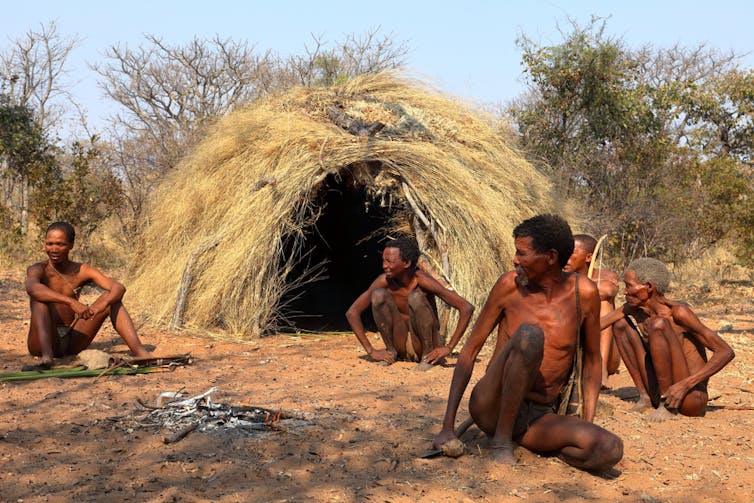
There are many examples of this in history. Carolus Linnaeus, who developed the modern system of classifying living things, classified Khoisan (first nations people of southern Africa) as Homo monstrosus: monstrous or abnormal people. And in 1937, scientists in the Zoology Department at Stellenbosch University used 80 measurements to confirm the category “coloured man” as distinctive from “white man”.
British science journalist Angela Saini points out that race science is on the rise again internationally. And, she argues, it’s being advanced in subtle ways by well-educated people who wear smart suits. This includes academics at leading universities around the world.
It’s important to be alive to the dangers of race science because it can be used to justify racism in broader society.
But it continues to exist because it is part of a system of thought that I call modern western science. I’m referring here to science embedded in Eurocentrism: a way of thinking that prioritised anything from the western world – and particularly from Europe – and that was spread and entrenched through colonisation.
Given its original site of production, this school of thought necessarily centres European history. Through its various incarnations, an ideal identity of human was formed that is male, white, heterosexual, able-bodied – and this is a screen against which others are declared different. Positing others as “different” (and inferior) opened the door to race science.
A new approach
Of course, modern western science did not develop free from the influence of other knowledges. Through colonising places, it picked up certain ideas and approaches from different countries or regions. For example, Indigenous peoples in North America helped settlers to treat life-threatening scurvy through the application of tonics made from conifer needles, which were rich in Vitamin C.
Read more: How Indigenous knowledge advances modern science and technology
However, such knowledges were absorbed into a western cultural archive and represented in western terms. For example, the pain-reliever Aspirin was first discovered by Indigenous people – they used willow bark, which contains the active ingredient from which Aspirin was created. More importantly, modern western science has not paid homage to the influence of other knowledge systems.
There is no denying that modern western science has brought some benefits to humanity. But this does not mean it shouldn’t be interrogated and, as I suggested earlier, de-centred. The upshot of this would be the democratization of science in two ways. First, by broadening who participates in the production of scientific knowledge; and second, by broadening what counts as science. This would help to root out race science.
Science has always been and will always remain the product of human will and intention. Scientific knowledge will always be culturally and historically produced. And if we are to speak in any sense about objectivity in science, this must be produced by science that is multicultural and not universal.
Lesley Le Grange, Distinguished Professor of Curriculum Studies, Stellenbosch University
This article is republished from The Conversation under a Creative Commons license. Read the original article.
Motshekga’s no repeat proposal for grades R to 3 under fire
Basic Education Minister Angie Motshekga’s proposed new progression and promotion policy has drawn criticism from educators; saying it’s a mistake that will have dire consequences far beyond the foundation phase.
If Motshekga’s plans are realized, learners aged six to ten who are struggling between grade R and 3 may soon be pushed through primary school without repeating a grade.
In her basic education budget vote speech for the 2018/19 financial year, Motshekga explained: “A number of education experts have opined on this matter, and the overwhelming message is that it does not make any educational sense to make young children aged six to ten years, to repeat a Grade. According to the experts, the children who repeat, on the whole, gain absolutely nothing.”
Motshekga added that repeating a grade does nothing but negatively influence the individual on an emotional level. “For many affected children, repetition is a powerful early signal of failure – a signal that lasts through the individual’s life.”
Creative parenting expert Nicky Bush says the Department of Education’s proposed no repeat policy for grades R to 3 will do more harm than good to the state of education in SA.Bush criticized the department’s “quick fix solution” of “automatic progression” for the foundation phase.
She says South Africa is currently experiencing the highest level of repetition of grade 1– 15-20%– and believes “the question isn’t how do we get rid of this bottleneck, but rather, what is causing so many children to not be able to cope.”
“For school readiness, children need to acquire strong perceptual skills in the preschool years through concrete learning and guided play experiences that will provide them with the foundations for numeracy and literacy to enable them to cope with the demands of Grade R.
Problem: most children in our country do not have the luxury of a preschool education and so the 6-year school readiness journey is squashed into one year of grade R. It is no longer a miraculous and exciting learning journey, but is rather a destination to an assessment that many of them are failing.”

Bush says the no repeat policy will shift the bottleneck to grade 4 where remediation will become ever more difficult as children then have different subject teachers, and those most affected will be expected to apply skills they haven’t yet mastered. “I believe this is most unfair on the child and will have lifelong ramifications on their self-esteem and future employability due to lack of fundamental numeracy and literacy,” she added on her Facebook post.
Bush says while keeping children back to repeat a year to consolidate skills is better than pushing them to the next grade with missing bricks in the wall of their foundations, this in itself, is not addressing the real problem of:
- Lack of preschool education for most of South Africa’s children.
- Lack of sufficient and suitably qualified staff in the preschool arena.
- Lack of parental education
She believes that with the correct training in perceptual skills development, adults (parents together with teachers) can prepare children for grade R without sophisticated schools and equipment.

“Children are wired to learn, naturally. We need to be harnessing their curiosity and raising their energy to learn. Instead, we miss the moment by creating an education system which is essentially a power play, rather than developing a powerful learning journey that celebrates the child, their brilliant ability to learn, and supports teachers.”
Bush goes on: “What does South Africa want to be known for other than entrenching illiteracy and robbing the disadvantaged children (the majority) of a future because of it? What narrative do we want to write as a country? It’s time we started telling a different story… But from a leadership perspective, this story is very unclear.”
While this proposal is unfair on children, teachers will also struggle to cope with classrooms filled with children who are struggling. the parenting expert adds.

But it does not end with the Grades R to 3. Motshekga wants to go further. “To improve the efficiency of the system, we are also focusing on Grades 9 to 11, as repetition and drop-out rates are also high in these Grades,” the Basic Education Minister said.
Read More: https://www.insidepolitic.org/lobby-group-slam-reappointment-of-basic-education-minister-angie-motshekga/
Bush believes Motshekga’s proposal to focus on grades 9 to 11 could therefore very well be in vain, if learners do not have the basics to get them to that point – even though there is already a policy in place that pushes learners through to the next grade after repeating a grade once – and teachers are overwhelmed and unable to focus on so many learners in need of extra attention.
Bush says the key to the high level of repetition is a combination of 3 things:
- Education at home in which parents focus on school readiness
- Qualified staff at the foundation – particularly preschool – phase
- Focus on every child getting a quality preschool education.
Nal’ibali awarded international reading prize
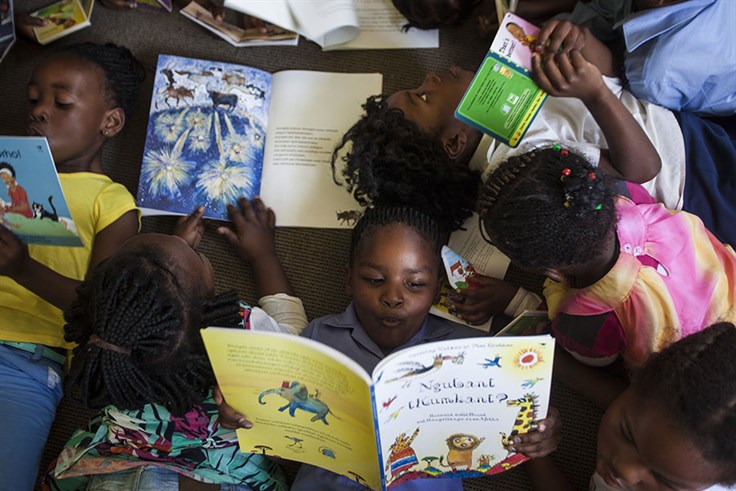
Nal’ibali, the national reading-for-enjoyment campaign has been awarded The International Joy of Reading Prize in Aarhus, Denmark.
The judges applauded Nal’ibali for its long-term impact and influence on local communities in South Africa.
They highlighted Nal’ibali’s framework that creates a nurturing environment, as well as generating a variety of multilingual reading materials so that children from all age groups learn to love reading in the many mother tongues spoken in South Africa.

“Children are influenced by their parents’ focus and habits in everyday life. Nal’ibali is doing a wonderful job helping families to establish good reading habits as part of their everyday lives. Implementing storytelling and the joy of reading at home will benefit the children greatly throughout their lives,” said judge chairperson Marian Morgan-Bindon, who is also the head of the libraries in Oxfordshire County Council in the UK.
Nal’ibali means “Here is the story” in isiXhosa – one of the 11 official languages of South Africa.
The initiative is based on the reality that everybody has a story to tell – regardless of whether you know how to read or write. And such storytelling is the key to building a strong reading culture. and focuses on storytelling and reading as natural parts of everyday life.

Winning the Joy of Reading Award was a welcome opportunity to reflect on the results that the many hours, long days and the good teamwork have resulted in,” explained Nal’ibali director Jade Jacobsohn, after receiving the award.
Apartheid gave rise to widespread illiteracy
Nal’ibali produces and distributes stories for children in different languages and enables children to participate in one of the 3700 reading clubs established in all nine of South Africa’s provinces.
At the end of 2018, more than 140,000 children had participated in Nal’ibali reading clubs and nearly half a million books have been distributed to children and families.
The latest study of South African children’s reading skills shows that 78% of all fourth-grade children are unable to read and understand the meaning of a text in any language. Jacobsohn says a big part of the reason lies in the legacy of the apartheid regime’s oppression of the African population, including the repression of those cultures and languages.
Nal’ibali was chosen ahead of 28 other similar themed projects from around the world and picked up $10,000.00.
What made the jury agree on the Na’libali project as the winner of the award?
The jury especially liked the way this project:
- Focuses on the parent as a role model for reading
- Creates conditions for children to develop a love of reading
- Focuses on all ages, from babies to older high-school children
- Features a broad conception of material that can stimulate the joy of reading (games, songs, and oral storytelling)
- Recognises the power of communities to make a difference
- Ensures a sustained impact across a broad spectrum of contexts
- Focuses on the impact that the social and physical environments have on reading.
Forest High School murder accused granted bail
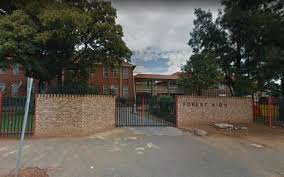

The 19-year-old schoolboy who allegedly stabbed a fellow Forest High school pupil to death has been granted R5000 bail.
Muhammad Mawela made his first appearance on Wednesday after he allegedly stabbed three boys at the school last Monday.
He is facing a charge of murder and two counts of attempted murder.
It’s understood that Mawela allegedly got involved in a fight between two groups at the school which left one dead and two wounded after writing last week Monday.
Ahead of the bail hearing, the family of the deceased grade 8 pupil said they hoped the grade 11 suspect would be denied bail.
Security concerns have been also raised that should the learner be granted bail, there may be a backlash from the community.
The Justice Minister, Ronald Lamola, said he was concerned by the rising levels of violence among young people, and added that his department would consider reviewing the Child Justice Act in light of the murder at Forest Hills High.
Joy, regrets as NYDA marks 10 years
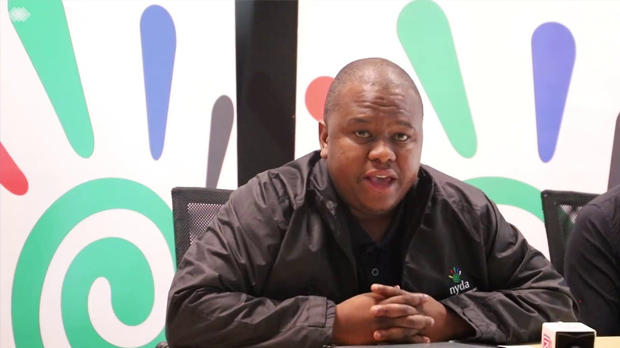
On 16 June 2019, the National Youth Development Agency (NYDA) is celebrating its 10th anniversary in Polokwane, Limpopo.
The NYDA’s official anniversary celebrations will be addressed by President Cyril Ramaphosa. Since its formation, the NYDA has been plagued by rampant corruption, patronage and the abuse of power by its former managers with close links to the ANC Youth League.
Criticism against the NYDA included questions whether it was carrying out its mandate to develop the youth despite their political affiliations, even inducing calls from opposition parties in Parliament for it to be shut down.
In 2010, the NYDA made the headlines for spending over R100 million at a youth festival held at the Pretoria show-grounds. The youth event was dubbed, The Kissing Festival, after delegates were seen playing kissing during the first day of the programme.
During the 2011-20112 financial year, the auditor-general also raised concerns about irregular expenditure amounting to R160 million. The agency’s board and its management were also increased of hiking their salaries.
On Tuesday, NYDA chairperson Sifiso Mtsweni said the youth development agency has turned the corner and it was now strategically positioned to address youth issues such as unemployment, lack of small business funding, the expensive undergraduate system at universities and various other social problems – drugs, teen pregnancies and school drop-outs, among others.
Mtsweni was speaking at the launch of the NYDA Youth Month Programme at the Hector Pieterson Museum in Orlando West, Soweto.
Minister of Sports, Arts and Culture Nathi Mthethwa, Minister in the Presidency for Women, Youth and People with Disabilities Maite Nkoana-Mashabane and MEC for Sports, Arts and Culture Mbali Hlophe were among those who attended.
“There were many challenges including how monies were used at the NYDA in the past ten years. There was also a perception that the NYDA exists to serve the interests of the Youth League. In 2010, we also hosted a festival attended by 128 countries, but it was reduced to a Kissing Festival because of a few spin-a-bottle games on the first day of the event,” said Mtsweni.
“However, we’ve turned the corner. We have received five consecutive clean audits. We’ve appointed the best candidates for the senior positions in the company. We are opening new offices in Limpopo, Mpumalanga, Eastern Cape and KwaZulu-Natal in order to reach as many young people as possible.”
Mtsweni said in the financial year under review, the NYDA Board has met all its set targets by reaching 100% of its annual objectives, among them 1 103 grants to youth-owned enterprises from a target of 840 grants, thereby creating over 1 000 new business owners in less than 12 months.
He said people running a small business need government support, but young entrepreneurs are often pushed from pillar to post. “We have stopped giving out loans to young people. We realized that instead of growing their companies they have to start paying back the loan. We have introduced mentorship and training. We need to make it easier for black business to thrive. Our business development support services have supported 25 425 young people from an annual target of 18900. Thus, we have contributed over 5000 direct jobs and a further 5481 through placement in job opportunities,” Mtsweni said.
“The NYDA has embarked on a rigorous outreach programme that has seen us reach 1 882 243 young people who were provided with youth development information. We have embarked on 68 programs targeted at rural and township youth. We have set ourselves an objective of ensuring that the NYDA reaches far and wide, to date in just 2018/2019 we have opened 17 new centres, in the month of June we are launching 6 new centres in the Eastern Cape, KwaZulu-Natal, and Western Cape rural areas.
We have always raised sharply the issue of the budget of the NYDA which is not enough. To date, we have raised close to R100 million from partner organizations as well as Provincial and National Departments. As part of Youth Month, we will be launching in the following areas, George, Alfred Nzo and the Oliver Reginald Tambo.”
Mtsweni said the NYDA commends president Ramaphosa for appointing young people in his Cabinet, however, he said, the agency will also lobby for a Youth Ministry, independent of the Presidency.
Mtsweni said during the 10th-anniversary celebrations this month, the entity will also give an account of the road traveled, including highs and lows of the NYDA.
“We will look at the successes and failures on youth development issues. Our celebrations will look at how far we have gone as far as the following is concerned: the merger of the National Youth Commission (NYC) and Umsobomvu Youth Fund (UYF), the signing of the Youth Employment Accord, the recent commitments made at the Jobs Summit and Investment Conference,” said Mtsweni.
Mtsweni said the recent statistics released of high unemployment by STATS SA was a huge concern to the NYDA.
“South Africa like many countries in the world has a youth bulge. A phenomenon that presents both an opportunity and a great threat to our young democracy … Statistic South Africa (StatsSA) Quarterly Labour Force Survey (QLFS) for the First Quarter of 2019 painted a gloomy picture about the future. Young people remain the hardest hit by challenges of unemployment, inequality, and poverty. Of the 10.3 million people aged 15-24 years, 33% were not in employment, education or training (NEET),” said Mtsweni.
“However, we congratulate with jubilation that youth focus is at the center of government work. I take this time on behalf of millions of young people to send our gratitude and hope on the reconfigured cabinet seeing the establishment a Ministry of Employment and Labour to respond to lack of employment opportunities for youth,” Mtsweni added.
Unemployed youth use stokvel payout to start business
Statistics paint a dreary picture of youth unemployment on the eve of Youth Month, but some are finding ways to beat the odds writes Katlego Sekwati
After being plagued by unemployment for years, Nqobile Nkosi decided to join a stokvel with the hope of raising money to start his own business.
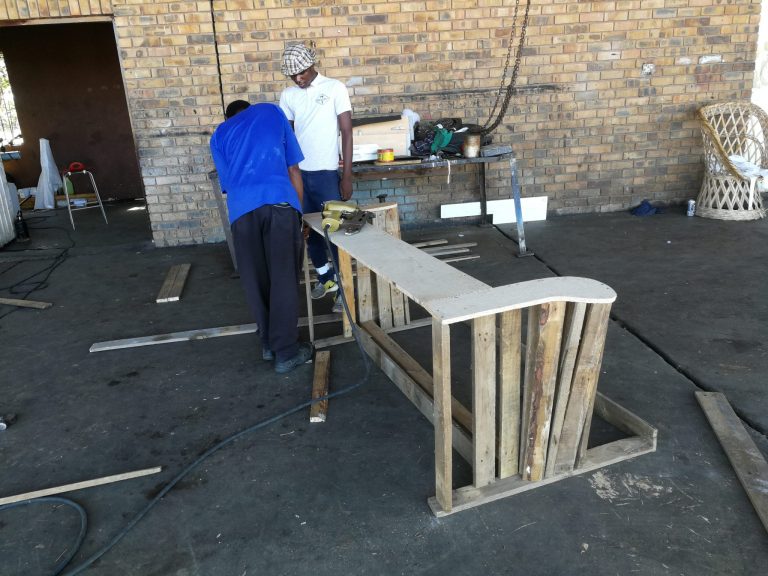
After months of investing in the scheme Nkosi, 25, received a R15,000 return on his investment which he used to start an upholstery business in the Limpopo village of Elandskraal. The village is located in the Ephraim Mogale municipality.
Together with Patrick Kgaphola, 24, and Joe Chisale, 28, they now run Mapholoba and Joe Upholstery.

They specialise in manufacturing furniture from scratch, carpet cleaning and they also cover car seats and couches. The company started in September 2016.
Nkosi says he decided to start the business because he was unemployed and couldn’t find a job and wasn’t lucky in getting apprenticeships.
“But when I started doing business it gave me hope that it’s not about working for someone. I can also create opportunities for other people,” says Nkosi.
The results of the quarterly labour force survey (QLFS) by Statistics SA for the first quarter of 2019 indicate that the official unemployment rate increased by 0.5 of a percentage point to 27.6 compared to the fourth quarter of 2018.
Stats SA says there are approximately 10.3-million unemployed persons aged between 15 and 24 years old in the first quarter of this year.
The authority also says between the fourth quarter of 2018 and the first quarter of this year, the percentage of youths aged 15-24 years who were not in employment, education or training increased by 2.1 percentage points to 33.2% (3.4-million).
Of the 20.3-million young people aged 15-34 years, 40.7% were not in employment, education and training (NEET).
Nkosi knew that starting a business was going to be challenging but it was a risk he was willing to take.
“I did not have enough money but I was motivated to take the risk since it is something I want and it will help feed me and my family,” says Nkosi.
He says the scourge of unemployment brought the trio together.
“A business comes with challenges. We were honest with ourselves coming into business that it might not be glamorous but we know the value of hard work and that encourages us to wake up every morning and head to work,” Nkosi says.
The venture was later fortunate to get partial funding from the National Youth Development Agency (NYDA). Nkosi received a cash injection of R50,000 from the NYDA which was established to take on the challenges faced by the youth.
“One must have a registered business [to qualify for funding]. You have to attend the business training or have any business training certificate. The NYDA will check if you meet the requirements, but it is not something that can happen over a few months. It took me three years to get the funding,” he says.’
When they started they encountered challenges in terms of the material needed to manufacture the furniture so they turned to family for assistance. Another challenge is that people do not pay on time so they are sometimes behind schedule in terms of manufacturing.
Nkosi says his wish is for the business to expand so that he can hire more people.
“There are only three of us who work here. We are short of hands but I cannot hire more people when the business is still so small. They will need to be paid and the budget does not cover that,” says Nkosi.
Their customers are independent people who previously had to travel long distances to have their furniture fixed or buy new ones.
