Home Blog Page 468

Matric results: 98.9% of pupils pass 2018 IEB exams

Jenna Etheridge

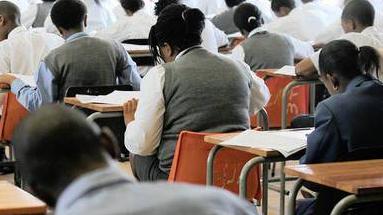
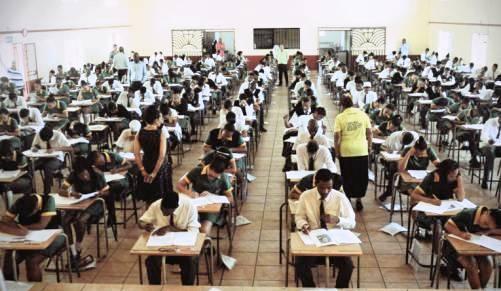
A total of 98.92% of pupils passed the 2018 IEB national senior certificate exams, it was announced on Thursday.

The Independent Examinations Board (IEB) pass rate was up from 98.76% the previous year, its CEO Anne Oberholzer said in a statement.

– Get your IEB results here

Writing examinations in October and November were 11 514 full-time pupils and 858 part-time pupils.

Oberholzer said 90.65% had qualified for entry to study a degree, up from 88.5% the previous year.

READ: IEB 2017 matric pass rate hits 98.76%

This could be attributed to the removal of the list of designated subjects.

Previously, students had to get 50% or more in a minimum of four designated subjects. In 2018, this was changed and pupils could obtain 50% in any four or more subjects, except for Life Orientation.

“Umalusi has monitored all aspects of the 2018 examination process and has declared the results to be fair and valid,” said Oberholzer.

“There is a clear realisation among IEB learners, their parents and teachers that having the knowledge and understanding that lies behind the results on the certificate is far more important and meaningful for success after one’s schooling.”

The closing date to apply for re-marking is January 10. Results from re-marking will be released on February 6. The closing date for pupils who qualify to enrol for the supplementary exam is February 15.

News 24

South Africa: Afrocentric history curriculum gets the nod

Sne Masuku

Basic Education Minister Angie Motshekga has approved the reappointment of the history ministerial task team to overhaul the curriculum to make it more Afrocentric and relevant to South African pupils.

The announcement was welcomed by teachers’ unions and teachers in KwaZulu-Natal.

The reappointment follows the key recommendations of the ministerial task team report released last December that found there was a need for a complete overhaul of the history curriculum from grades 4 to 12 to ensure multiple perspectives were covered.

The reappointment, according to the department, was the next step towards the decolonisation of the education system.

Bheki Shandu, of the SA Democratic Teachers’ Union, said KwaZulu-Natal had the richest history of leaders who fought colonialism and activists who stood up against apartheid.

“In one way or another, pupils would now be reading about the history of their great grandfathers who were involved in the history of the country, the formation of political parties, what they went through and what led to the freedom they are enjoying today,” he said.

The team comprises the same people who had conducted the feasibility study of making history a compulsory school subject.

It is set to develop a new history curriculum, conduct provincial consultations in the education sector and obtain input and comment for consideration on the new curriculum.

The task team has also been tasked with the screening of textbooks to ensure they are aligned with the new curriculum, and propose development programmes for history teachers.

Shandu called on teachers to contribute by making submissions on how history could be rewritten to tell the country’s history accurately.

“Teachers had difficulty teaching the old history. We are also calling for the task team to consider teaching history in the vernacular,” he said.

The department said the team had conducted research before making its recommendations.

It extended the study to countries such as China, Russia, Brazil, Nigeria, Rwanda and Zimbabwe, and identified areas of weakness and ways to strengthen the curriculum content.

Motshekga said she had faith in the team of experts that would forge the way forward.

Task team leader Professor Sifiso Ndlovu said he believed a comprehensive, well-rounded and accurate teaching of history would help pupils understand themselves better and assist the country in moving forward together.

Vee Gani, chairperson of the South Durban Parents’ Association, said in the past pupils were taught the history of the world. He said as much as it was also important to educate pupils about global history, young people needed to know where they came from to know where they were going.

“A lot of the young people do not know about the history of people like Ahmed Kathrada and Nelson Mandela, and as a result they take their own country for granted,” said Gani.

Five Kenyan universities ranked among the best in the world

0

Hilary Kimuyu

Five Kenyan universities have made it among this year’s world’s leading 2,500 institutions of higher learning.

A total of 111 African universities (from 21 countries) made the list, compared to the 955 Asian universities (30 countries), 817 European institutions (37 countries), 440 from North America (seven countries), 129 from South America (10 countries) and 47 from Oceania (three countries).

This figure is a slight improvement as four Kenyan universities were on the list compiled by the University Ranking by Academic Performance (URAP) in their previous edition covering the 2017-2018 period.

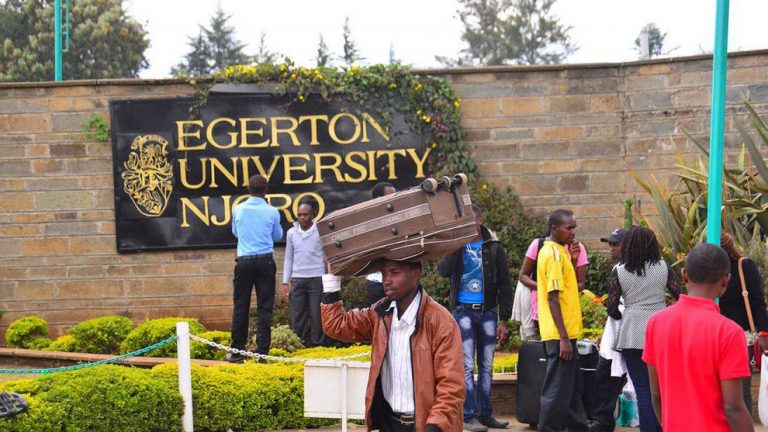
Joining the list of Kenyan universities in the latest ranking is Egerton University at position 1,794 globally and at 64th in Africa.

Egerton University is at second position in Kenya, behind the University of Nairobi (UoN) which is the highest ranked Kenyan university at position 1,317 globally and number 39 in Africa.

Jomo Kenyatta University of Agriculture and Technology (JKUAT) retains its ranking as the third best varsity in Kenya, ranking 2,248th in the world and 94th in Africa.

MOI UNIVERSITY DROPS

Moi University drops from being ranked second in Kenya and falls to fourth, ahead of Kenyatta University which drops down one place to fifth.

Moi University is at number 2,269 in the world and 95th in Africa while KU places 2,354 globally and 104th on the continent.

All Kenyan Universities dropped in their ranking as per last year, with UoN dropping 53 places globally, JKUAT falling 35 spots, Moi a massive 263 positions and KU falling 72 places.

In terms of category rating, UoN has a B+ score, with Egerton and JKUAT managing a B. Moi and KU are rated B-.

The rankings see Havard University (USA) top the list, with the University of Toronto (Canada) and Oxford University (UK) following respectively.

This top three order is unchanged from the previous ranking. All these universities, as well as the 105 that follow them, are rated A++.

American universities make up 10 of the top 15 institutions, with the first non-North American, non-European institution being China’s Tsinghua University at number 18.

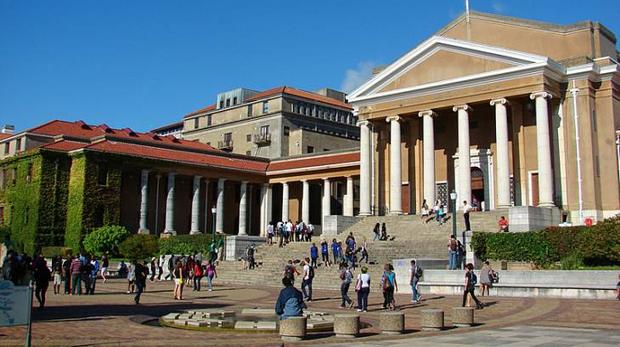
The first African university on the ranking is the University of Cape Town (South Africa) which ranks at position 241 on the planet.

The URAP ranking is an academic performance ranking, and is compiled after six indicators that scope the quantity and quality of publications of a university are assessed.

Hope for matriculants as 200 varsity scholarships for 2019 are up for grabs

0

Staff Reporter

The unemployment rate in South Africa has risen to 27.5 percent in the third quarter this year, according to the most recent statistics.

This effectively means there are now about 6.2 million unemployed South African citizens, making it even more difficult for those leaving Matric – with little to no experience – to enter the job market.

The economic situation in South Africa means that it is somewhat difficult for students to attain decent employment after their studies. However, due to a scholarship initiative, some will have a helping hand.

In an aim to lessen the strain for many students who are unable to afford a tertiary education, Pearson Institute of Higher Education (PIHE) has launched an initiative that offers 200 Scholarships worth more than R10 million.

Academic Director of the Pearson Institute, Dr Nhlanhla Thwala, said: “In the current economic climate a good basic education is simply not enough to secure a well-paying job. Even though a degree does not guarantee a job, it will give applicants a better chance of securing that job over those who just have a Matric.”

Initiatives such as the PIHE scholarship are vital in providing a greater portion of school leavers with quality tertiary education. The socio and economic challenges in South Africa results in many high performing, passionate young people not receiving the opportunities they deserve. Thus, PIHE attempts to assist in this regard, and this particular initiative plays an important role, he said.

This initiative funds studies in any of the foundation’s courses on offer (including Higher Certificates and Pre-degree Foundation Programmes) to grade 12 learners with an admission to bachelor degrees, diplomas and higher certificates.

“Our wide range of scholarship options means that applicants now have a means to be exposed to a higher education that was previously never available to them,” said Thwala. “The number of bursaries on offer is limited to 200, so those interested need to be motivated and serious about their chances at a brighter future”.

How to apply:

  • Applicants need to have a means of transport to travel to and from their chosen campus around South Africa on a daily basis – details of the campuses can be found on Pearson Institute’s website: https://www.pearsoninstitute.ac.za.
  • Furthermore, the applicant needs to be able to buy textbooks and be able to pay the full R800 application fee.
  • Applicants also need to ensure that all scholarship forms from the PIHE are fully and accurately completed. Additional documents requiring certification need to be correctly certified.
  • All application forms must be dropped off at a Pearson Institute campus by no later than 17h00 on 31 January 2019.
  • A good performance in terms of school results will definitely count in their favour. Applicants also need to ensure they meet the application criteria which can be found on the website.

“Things are probably going to get more difficult in the current economic space in South Africa and it is up to those companies with the means to offer the youth a stepping stone in the correct direction. Pearson has definitely set a good example and I can only hope that many companies in both the private and public sector follow their lead,” says Maps Maponyane, ambassador for the Pearson Institute of Higher Education.

Five young economists to listen to

0

Johan Fourie

Ideas, and the people that give birth to them, shape our future. So with this final issue of 2018, let us look at five young economists, and their ideas at the frontiers of the field, that will shape our lives, consciously or otherwise, in 2019 and beyond.

One of the most vexing questions social scientists grapple with is how to build a society where everyone has an equal opportunity of reaching the top. Inequality is not in itself unfair: we all know that rare skills, like those possessed by soccer star Lionel Messi or Tesla founder Elon Musk, should be rewarded better. But what we deem unfair is when someone with those skills or abilities cannot, for whatever reason, realise their potential.

In the US, as in South Africa, there are too many children without equal opportunities for success. How to give these children better chances of succeeding is, in short, the research programme of Raj Chetty, professor of economics at Harvard University and director of US think tank Opportunity Insights.

Somewhat of a child prodigy, receiving his PhD from Harvard in 2003 (at the age of 23), his most recent project, together with several other colleagues, uses big data to map the US neighbourhoods that offer children the best chances of climbing the income ladder. Their freely available interactive mapping tool shows how outcomes like poverty and incarceration can be traced back to the neighbourhoods in which children grew up. It also helps to develop customised solutions that will improve the outcomes of children in those “bad” neighbourhoods.

One of Chetty’s younger colleagues is Melissa Dell. Graduating with a PhD from MIT in 2012 Dell spent time at Harvard and Stanford before joining Harvard in 2018 as a tenured professor. Dell is fascinated by the factors that underpin long-run development. For her PhD, she investigated the Mita – a system of forced labour several hundred years ago – to assess its persistent effects on levels of Peruvian income today. She has since worked on the persistent differences between north and south Vietnam, the long-run effects of the Mexican revolution and the consequences of the Dutch cultivation system in colonial Java.

Dell has a severe visual impairment, yet this has not prevented her from, aside from asking fascinating research questions, starting a foundation in Peru or running ultra-long-distance races, including the Comrades.

Claudia Olivetti, professor of economics at Boston College (with a PhD in 2001 from the University of Pennsylvania), is one of several scholars who wants to understand which factors prevent women from entering the labour market, and why they move up the corporate ladder at a slower pace. Olivetti’s latest research shows that the best thing governments can do is to spend more on early childhood care and education as this has the largest improvement in women’s employment rates, salaries and even fertility, decreasing the gender pay gap.

The benefits of more parental leave and flexible schedules, she finds, are smaller. Why? Because access to good early childhood caretakers that makes it easier for young mothers to work allows women to return to the labour market quicker after childbirth, boosting their lifetime earnings. In short: the policies that matter most to women are those that help mothers work – not those that help them take breaks from work.

This type of research aims to identify which policies are best in improving the outcomes we hope for.

An area where such policies are desperately needed, in SA and elsewhere, is the health sector. Marcella Alsan, associate professor of medicine at the Stanford School of Medicine, with a PhD in economics from Harvard in 2012, plans to do exactly that: use research to identify which health policies improve health outcomes most.

One key concern in health, for example, is how to get patients to use their prescribed medicine. Alsan, in a new study, provides one tantalising clue: pair the patients with doctors that share a similar ethnic background. She and her co-author run an experiment where several hundred black patients are randomly allocated white and black physicians.

They find that those patients that consulted a black physician are more likely to ask for preventative services, particularly if those services are invasive. They argue that this is because of better communication and trust. The implications are profound: they argue that more black doctors could reduce cardiovascular mortality by 16 deaths per 100 000 per year, leading to a 19% reduction in the black-white male gap in cardiovascular mortality.

It’s not only human health that is the subject of economic research. The health of the planet is under threat, with climate change affecting our sustainable future. Solomon Hsiang, professor of public policy at UC Berkeley, and principal investigator of the Global Policy Laboratory (with a PhD in Sustainable Development from Columbia University in 2011) is one of the leading thinkers on the topic.

In a recent Science letter, he weighed in on the ivory-ban discussion. But it is the interactions between the economy and the ecology that is at the heart of his research. In a 2018 Journal of Economic Perspectives overview paper, Hsiang urges his fellow economists to take the lead on climate change research: All climate change forecasts, he says, rely heavily and directly on economic forecasts for the world. “On timescales of a half-century or longer, the largest source of uncertainty in climate science is not physics, but economics.”

Johan Fourie is associate professor in economics at Stellenbosch University.

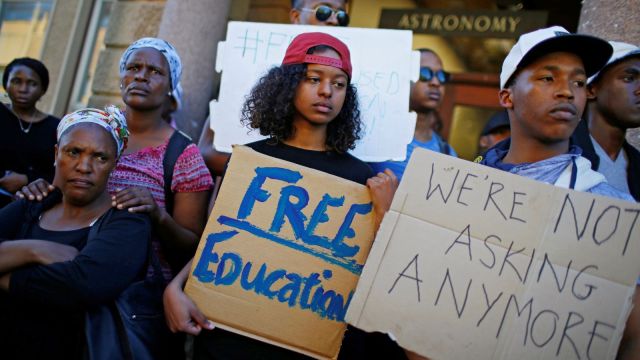
Nehawu slams IMF rep for questioning South Africa’s free higher education policies

0

Staff Reporter

The National Education, Health and Allied Workers’ Union (Nehawu) said on Tuesday it was concerned by the “official queries” made by the International Monetary Fund (IMF) representative in South Africa on the policies of free higher education in the country.

This comes after reports that  Montfort Mlachila, IMF senior resident and representative in South Africa, queried the country’s move to offer free tertiary education, saying instead more money should be spent on primary and secondary education.

“Spending a lot more money at the tertiary level through free tertiary education is missing the crucial issues. A lot of the students who do get to tertiary education and get it for free can definitely afford it, even if they can’t afford it immediately they can in future by getting jobs,” Mlachila was quoted as saying.

At the beginning of this year, South African government introduced fee-free tertiary education for all students from homes whose income is less than R350 000 per annum.

Zola Saphetha, Nehawu general secretary, said the IMF regurgitated the Verwoerdian doctrine and was stating that the South African government must merely spend on basic education, which is another way of saying that it must keep the university education elite and predominantly white.

“Mlachila betrays his ignorance of the fact that until the 2015-2017 students’ uprisings in higher education, budgetary allocations to universities generally remained stagnant whilst demands for access increased. This was part of the Neoliberal dogma, assimilated by the post-1994 government from the same institutions such as the IMF,” Saphetha said.

“He doesn’t even try to make his proposals on any empirical grounds, let alone showing some awareness of the long-term socioeconomic destructive effects of such policies and this has even been appreciated by some IMF economists in 2017.”

Bridging programmes for under-prepared college students

0

Bongani Nkosi

In its bold bid to assist students entering technical colleges under-prepared, the Department of Higher Education and Training will introduce bridging programmes at the institutions from next year.

For the same reason of under-preparedness, there are also plans to increase the number of students in foundation programmes at universities from 22200 to 36000 next year.

The Council on Higher Education, a statutory body that advises the minister of higher education, recommended a foundation year in 2013 for students starting university.

The report, which also looked into Technical and Vocational Education and Training (TVET) output, said “student under-preparedness was the dominant learning-related cause of the poor performance patterns in higher education”.

The department’s foundation programme at TVETs will kick off with 5000 students next year, it revealed in its annual performance plan. It said foundation education at the colleges would focus on science, technology, engineering, maths, languages and life skills.

Lunga Ngqengelele, the education spokesperson, said on Tuesday that he could not yet comment on the move because relevant officials were not available to provide information.

Responding to criticism that social media users made on Monday against TVETs’ output, a senior curriculum official at the department, Masilu Modiba, maintained that most students entering TVETs needed bridging courses.

“It is a fact that a majority of students coming from high school need support to go through vocational education. The (department) from 2019 will be implementing pre-vocational learning programme (foundation year) (so) we accommodate students who need support before enrolling.

“Therefore, the pre-vocational learning programme will have foundational maths, science and English. The truth is that students need support,” Modiba said.

Yonke Twani, president of the SA Further Education and Training Student Association, said foundation programmes at TVETs were sorely needed.

“Imagine being taken from Grade 9 to a TVET to do NCV public administration. That student does not have a background of that course because in Grade 9 you’re still doing basic education subjects,” Twani said.

This move was originally recommended by a task team that handed over its report to former higher education minister Blade Nzimande.

Chaired by Dr Charles Sheppard, the task team said the government had no choice but to shoulder the costs of foundation education to assist under-prepared students. “In a perfect system, no under-prepared students enter TVET colleges. As South Africa is nowhere near such a state, it is still necessary to remediate some of the failures of the school system,” he said.

South African households spend more on entertainment than on children’s education’

Staff Reporter

There is no doubt about it. Right now in South Africa, times are tough and about to get tougher. The increase in the price of petrol and diesel and the knock-on effect it has had on everything else, means hard decisions need to be made about how the average family divvies up its monthly income.
 
And while there are areas about which there should be no debate in terms of spend – health, education, housing – it would seem many South Africans are happy to spend more or equally on entertainment than they are on education.
 
Although an increasing number of South Africans are factoring their children’s education into their monthly household budgets there are still many who do not see schooling as an important and integral part of their monthly budget.
 
Indeed, the Living Conditions Survey from Statistics South Africa, released last year, gives insight into how South Africans spend their income. According to the LCS, on average, a South African household spends R2 531 per annum on education which accounts for 2,45% of the total household consumption expenditure.
 
In comparison, households spent on average R2 181 per annum on restaurants and hotels, which accounted for 2,11% of the total household consumption expenditure and 3.81% on recreation and culture.
 
But education does not need to take a back seat or be sacrificed in favour of more hedonistic pursuits. Even with the current tough economic situation in South Africa, parents should – must – allocate a meaningful percentage of their monthly income to schooling for their children even if it is at the expense of foregoing that visit to the newest restaurant, going to the latest movie or attending that costly event or party.
 
Surprisingly there are a number of schools in SA that are actually cheaper than many public offerings.

South Africa: Budget shortfall puts independent schools under threat

Msindisi Fengu

One of Gauteng’s best-performing independent schools may be forced to shut down next year.

This is because the Gauteng department of education, which has a R61 million budget shortfall, could not pay subsidies in full to more than 200 such schools this year.

Masibambane College, located in Orange Farm, has produced a 100% matric pass rate since 2013 and has assisted several underperforming schools in the area.

The college’s headmaster, Ernest Fingxa, said the department approved a subsidy of almost R10.3 million for 2018/19, but has paid only R7.7 million for the last three quarters, having promised to pay the remaining R2.6 million last month. The department disburses funds to schools in four tranches a year.

“To our surprise we were told that the last tranche would be cut by R790 000, but it has not been paid as we speak. If the situation remains as it is we will only survive January 2019. I do not know whether we will still be open in March,” Fingxa said.

His school has 39 teachers, who are paid from the subsidy and school fees.

We have seen letters to the department written by Fingxa and Reverend Roger Cameron, the Anglican Board of Education in Southern Africa CEO and council chairperson of Masibambane. Their pleas seem to have fallen on deaf ears.

Gauteng education spokesperson Steve Mabona said the department had a R61 million budget shortfall which had to be taken from the R731 million approved budget for independent schools.

The shortfall, he said, resulted from an increase in the number of pupils moving to Gauteng from other provinces.

Last year, the department allocated just more than R691 million to independent schools.

In a letter to the Gauteng education department on October 25, Fingxa detailed how the school had also been able to help residents of the poor Johannesburg township.

“Masibambane College is running an aftercare programme for community pupils from different schools (Leshata, Aha-Thuto and Mphethi-Mahlatsi), who are unable to pay fees at Masibambane College,” he said.

Fingxa described the school as a “beacon of hope” and begged: “Please do not kill this hope and leave our pupils and parents destitute. Orange Farm is faced with the serious plight of poverty and socioeconomic challenges.”

In a letter sent to the department the following day, Cameron said any move to reduce the college’s subsidy would prejudice pupils and prevent them from receiving quality education.

“Masibambane does not have any large donors and is dependent on school fees and the subsidy to be sustainable. There is absolutely no excess in the school’s budget to allow it to recover the loss.

“It will enter next year with no money in the bank and the school will not be able to pay salaries in February/March 2019. The school will then close and at that stage the Gauteng Department of Education will need to find places for approximately 1 100 children.

“This will be multiplied by the many others who rely on subsidised independent schools.”

National education department spokesperson Elijah Mhlanga said: “Those independent schools that qualify for subsidy are provided with an indication of how much they are likely to receive next year and should plan accordingly. The economic conditions of the country come with making hard decisions and, as such, affect everybody and all the sectors.”