Home Blog Page 469

South Africa: Tornado damages 26 schools in Eastern Cape

Staff Reporter

At least 26 Eastern Cape schools have been hit by a tornado, the provincial department of education said on Thursday.

The vicious tornado ripped opened roofs, demolished buildings and caused severe damage to school infrastructure. Most of the affected schools are in the OR Tambo Coastal education district.

Eastern Cape education MEC Mlungisi Mvoko, speaking at a media briefing on the province’s readiness for the 2019 academic year,  said a team from the infrastructure section of the department has been sent to assess the extent of damage in all the affected schools.

He said the damage to infrastructure was a blow to the province which is lagging behind when it came to infrastructure development.

“We are sitting at an infrastructure backlog of R70.1 billion and the amount we allocate each year is nowhere closer,” said Mvoko.

He said the work to repair the schools affected by the tornado would be carried out during the festive season.

On school nutrition, Mvoko said the provincial education department would be ready to deliver from the first day of the school term next year.

“The department will feed 1.6 million learners in 5,164 schools from the first day of the 2019 academic year in Quintiles one to three and identified special schools,” said Mvoko.

In addition, the department said it was ready to deal with the late registration of pupils by establishing a call centre to deal with a last-minute influx of learners who are seeking to be placed to various schools in the province.

The call centre will be operational when the school term commences.

The department said it will strengthen its scholar transport programme to ensure that learners who need to be transported to attend schools benefit.

Mvoko said the department has cut the red-tape to speed up the process of appointing educators.

“Schools must speed up the appointment of teachers to ensure that vacancies are filled in time,” he said.

More students pursuing post-graduate degrees, because a Bachelor’s doesn’t cut it anymore

0

Athina May

More people are opting for post-graduate studies in order to cut it in the dog-eat-dog working world.

More than ever, having a Bachelor’s Degree is simply not enough to secure a job, according to the city’s top universities.

Stellenbosch University’s graduation saw a record number of degrees this year with an increase in doctoral graduates and Master’s degrees.

According to Stellenbosch University vice-rector of research, innovation and postgraduate studies, professor Eugene Cloete this increase is partly due to pressure in the work field for graduates to be up-skilled.

“Students now go for Honours and Masters, they know the Bachelor is (the) bare minimum requirement to secure a job. It’s a worldwide trend.

“In the US, they talk about the demise of the Bachelor’s Degree.

“Higher level of expertise is required in the market place, as it’s not just a generalised job any more. Lots of independent thinking is needed.

“Master’s will become the norm, lots of people are entering university wanting to do their Master’s and higher.” Cloete said the unemployment rate is 32% for those without a degree, less than 6% for those with a Bachelor’s Degree and less than 3% for those who have their PhD.

The PhD therefore doubles a students chances of getting a good job and allows students to skip a few promotions and jump to a higher job level, exceeding their peers.

UWC head of research in the school of Business and Finance, professor Pradeep Brijlal said: “In past 10 years there has been a huge increase in Master’s and PhD applicants. Ten years ago we didn’t have any PhD applications, but now every year we receive about two or three on average in the school of finance and it’s increasing.”

In Nigeria more than 13 million school-age children out of school

0

Timothy Obiezu

A survey conducted by the United Nations Children’s Fund (UNICEF) indicates that the population of out of school children in Nigeria has risen from 10.5 million to 13.2 million, the highest in the world. Most of these children are in Nigeria’s northern states of Borno, Yobe and Adamawa, where Boko Haram insecurities have disrupted academic activities.

The indistinctive chatter of young children playing outdoors is very familiar. The boys are playing football while the girls are jumping around.

Most of the children are out of school while some have never been to school.

Favour Shikaan a mother, is not left out of the fun. She joins the children’s play.

But sometimes she worries about her children’s future.

“They are four in number and… two are going to school. The other one is small actually, but even though she’s small, she has grown to the stage whereby she can go to school if not the financial…like the two that are going to transport from here to Apo resettlement everyday is not easy because there’s no money due to our economy today,” Shikaan said.

Shikaan and her four children fled a Boko Haram onslaught in Borno in 2015 to settle here, in Abuja.

But she can only afford to send two of them to school. The other two help her at home with cooking and cleaning.

Bright Shikaan is eleven years old and has never been to school, yet she says she wants to be a doctor.

“I want to be a doctor in the future,” Bright says. “But now I’m not going to school, I don’t know how I’ll be a doctor.”

According to the United Nations Children’s Fund, UNICEF, more than 13 million children like Bright here in Nigeria are out of school.

Most of them are in Nigeria’s northern states of Borno, Yobe and Adamawa, where Boko Haram has been waging a campaign against Western education since 2009.

The group abducted 110 school girls from a school in Dapchi, Yobe State in February this year, but returned the girls one month later and warned their parents never to take their children back to school.

Education psychologist Mayowa Adegbile explains that increasing numbers of out of school children in Nigeria adversely affects economic growth.

“Sixty percent of that population are girls only, and you know when you bring it back home, every girl becomes a mother or a woman who would in turn take care of other children. And for a woman who goes to school it has a ripple effect, an economical ripple effect. When she goes to school, she has education, she gets a job, even if she doesn’t have a job… even if it’s just basic secondary school education, she can communicate basic English and mathematics,” Adegbile said.

Boko Haram is a major factor contributing to the increase in out of school children in Nigeria, but not the only factor. Some cultural beliefs and practices also play significant role.

Nigeria’s budgetary spending on education is not enough to quell the widening gap – only seven percent of Nigeria’s $24 billion 2018 budget is earmarked for education.

And so far, there appear to be no new policies to boost education spending.

Picture books: A great way to encourage children to read

Athol Williams 

Win mini-libraries

Nal’ibali, South Africa’s reading-for-enjoyment campaign, is giving away 20 mini-libraries containing 30 to 40 books for primary school children. To enter, email info@nalibali.org by December 21 with your name, physical address, contact number and the languages you’d like to receive your books in. The first 20 entries will receive their libraries in early 2019.

The power of picture books is evident in the multiple options they offer a child.

There are five ways children can use them, in effect, making a picture book five books in one. These include children reading on their own and interacting with others.

First, children can focus only on the pictures in the book. This is a powerful way for a child to ignite their imagination. For children too young to read or those learning to read, going through the pictures allows them to develop their own story or piece together their best guess at the story of the book, even imagining the ­dialogue.

The developmental benefits of exercising their imagination helps children to become active readers and thinkers. Picture reading develops children’s ability to formulate their own stories and to structure and organise their thinking and communication. The pictures can be valuable to children struggling to read, including those with learning difficulties or learning to read in a new language. The pictures help them to grow in confidence because they can still appreciate the story, which in turn promotes inclusivity in the classroom.

A second way that picture books can be used is for a child to read the text only with little focus on the pictures. These might be children who don’t feel the need for ­pictures or older children, although few children can resist indulging in bright colourful illustrations, even if only for a few seconds.

Third, a child could combine the reading of the text with the pictures. Often the child is attracted first by the illustrations on the page. In this way, the pictures either augment the text, or the text is seen to ­augment the pictures.

The combination of pictures and text helps to accelerate reading ability and com­prehension because it enables the child to ­associate the visuals of the pictures with the words and sounds of the text.

The fourth way a picture book comes to life is when the book is read aloud to a child. This way the child actively participates in the reading of the story. Having the pictures offers the parent the opportunity to interact with the child about what they see and how they connect what has been read with the pictures. This interaction serves not only to help the child read, but is also a way to strengthen the parent-child relationship.

Pictures books are valuable in the classroom where the teacher can read aloud while showing the illustrations to the children, which brings the text alive. Children often observe fine detail in pictures that help to connect them to the story, and often they will conjure up stories from the pictures that are not present in the text, thus adding greater richness to the ­reading experience for both child and parent or teacher.

A fifth use of picture books is shared reading among children. Sharing the same book among a few children who cannot yet read allows them to create their own stories and to learn from each other while doing so. Often children build on each other’s stories, sparking new ideas and imaginary creations, and enhancing their vocabulary.

Athol Williams is the chairperson of Read to Rise and author of the Oaky series of children’s books. He is a senior lecturer at the University of Cape Town

Graça Machel stands up for girls’ education at Hong Kong summit

Ra’eesa Pather 

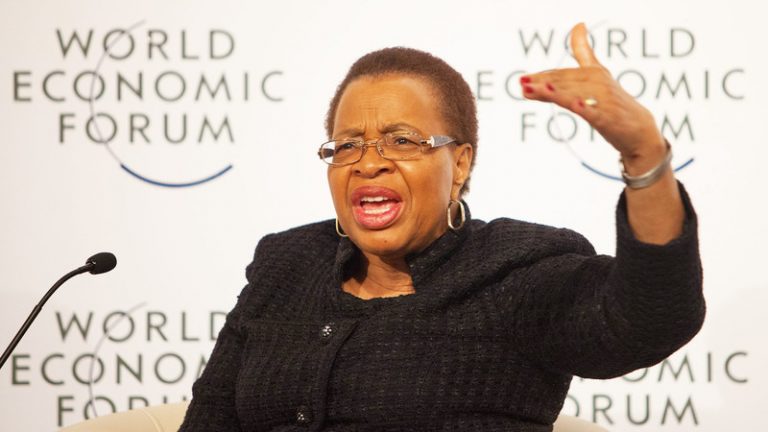
At the Yidan Prize Summit in Hong Kong, former Mozambican education minister and a humanitarian in South Africa, Graça Machel, delivered a keynote address in Hong Kong advocating for girls’ education to be urgently prioritised.

The Yidan Prize Foundation, which hosts the summit, is a Hong Kong-based education initiative that recognises research and development in the education sector in order to help improve education around the world. It honoured two laureates — Professor Larry Hedges from the United States and Professor Anant Agarwal from India — for their work in the field.

Hedges founded a scientific methodology for analysing research studies to inform education policy, while Agarwal is the founder of edX — a free open-source online platform that delivers free college courses for all students around the world.

The foundation invited education stakeholders from across the globe to speak at the summit, which has become an annual event.

Machel was tasked with speaking about education in the developing world. At the heart of her speech was the need for children to be given proper nutrition in order to be able to learn. She said that investment is needed in child nutrition during a youngster’s first three years of development. She emphasised that there is a particular need when it comes to helping girls.

“Clearly there are few better investments we can make to ensure children reap the benefits of education provided to them, and break cycles of poverty in developing countries,” Machel said.

“And given that I am a women’s rights activist, permit me to emphasise that it is particularly strategic that girl children in the developing world are adequately nourished, educated and valued,” Machel added.

Machel, who is also the chairperson of the Graça Machel Trust, is considered a leading figure in advocacy for women’s and children’s rights. In her speech, she took the time to focus on child marriage and how it impacts on girls’ education.

On the African continent and in South Asia, child marriage still occurs at exorbitant rates despite international condemnation.

According to the United Nations International Children’s Fund (Unicef), four in 10 girls are married by the time they are 18 in southern Africa.

In southern Asia, three in 10 girls are married before they are 18, according to Unicef’s data collected from 2010 to 2017.

Machel said that the persistently high rates of child marriage are “heartbreaking”.

“From Cartagena to Cairo, to Calcutta, girls are victim to child marriage where they are often perceived as an economic burden, and many parents marry off their children in the hope of improving their financial security,” Machel said.

Sour Africa has struggled to deal with child marriage. The Commission of Gender Equality told Parliament in July that 91 000 South African children are victims of child marriage.

There remains a gap in legislation to legally forbid child marriages in the country. The Centre for Child Law has advocated for legislation to be improved so that children can be protected.

“Legislative reform is but one step towards protecting girl children from child marriages, the centre is of the view that the gaps in the current legislation, which still provides for different ages of marriage for boys and girls – with that of girls being the lowest — need to addressed and be supported by community engagement focused on educating communities about the harmful effects of child marriage,” said Karabo Ozah in a statement in July.

Currently, KwaZulu-Natal has the highest incidence of child marriage with 25 000 girls between 12 and 18 reported to be victims. The act of ukuthwala — where girls are abducted and forced into marriage — has been seen as a reason for the high rates of child marriages. Gauteng has the second highest rate of child marriage with more than 15 000 children affected.

Machel called on governments around the world to take action to protect children globally.

“Knowing what we know, we must demand that governments fully meet their commitments to the investment in education, and work in partnership with civil society and the private sector to do so,” she said.

Education Minister Naledi Pandor who was also in attendance at the summit, she spoke about the importance of technical and vocational education training (TVET) colleges.

“That’s where the jobs are,” she said.

She added that the government is working to make TVET colleges as attractive to young South Africans as universities in the country, which are still regarded with more “prestige”. The colleges, she said, would help to upskill young unemployed people and give them access to apprenticeships to assist with finding jobs.

The Yidan Prize Summit will conclude on Monday, and Pandor and Machel are set to return to South Africa on Monday.

South Africa: Judge acquits Soweto school patroller of rape, sexual assault

Khaya Koko

The school patroller accused of raping and sexually assaulting young girls at a primary school in Soweto has been acquitted of all charges by a judge who slammed investigations into the matter as “a comedy of errors”.

After a year behind bars, Johannes Molefe was released immediately on Wednesday and left the court a free man.

Molefe, 58, had been accused of three charges of rape and eleven of sexual assault which he is alleged to have committed in 2017.

Delivering the judgment at the South Gauteng High Court sitting in the Palm Ridge Magistrate’s Court on Wednesday, Judge Peet Johnson chastised the manner in which the case had been handled as well as investigated.

Although Johnson said there was no way of proving whether the accused’s version was true, he said the onus to prove the case lie with the State.

“If the accused gives any version that is reasonably possibly true, they must be given the benefit of the doubt,” Judge Johnson said.

Johnson also took issue with the manner in which the evidence was collated, which included charges being drawn up without statements, and teachers and police contaminating evidence. The conduct of the Teddy Bear Clinic was also called problematic.

Advocate Lumka Qoqo, Molefe’s lawyer, had argued throughout the trial and in her closing arguments that the girls laid the complaints as part of a factional plot against principal Maria Mthimkhulu. Certain staff members, parents and the school governing body allegedly resented Mthimkhulu, Qoqo told the court.

The mother of the first rape complainant could not hold back her tears as Molefe was acquitted, asking social workers and police why they had betrayed her 9-year-old daughter.

But Molefe’s older sister, Mitta Buthelezi, said she was very happy and relieved with the verdict.

“People said all sort of things about my brother. But I always knew that God knows the truth. I never believed that my brother had done all these things that people said he did,” 72-year-old Buthelezi said.

Holidays, a great time to relook your career path

Gillian Mooney

Few of us can afford to make a clean break at work and then start on a new path from scratch.

What you need to do is use your downtime effectively to start working towards your goal.

The first step for those wanting to go in a new direction is to determine what that direction is.

But that is easier said than done. Many people know that they are not in the right field or in the right position, but feel stuck because they don’t know what to do instead.

If that is the position in which you find yourself, the holidays provide a great chance to start researching potential new fields of interest, without the pressure of having to commit.

Use this time to dream freely. Look at advertised positions online and find those that excite you. Then look at the job requirements. Would you need to qualify in a new field? Would you be able to match your transferable skills to those required in the position and then perhaps just supplement your qualifications with a short or part-time course?

Determine how you can leverage your experience and qualifications while working towards your new goal. The research part of the strategy is crucial because many people who have been in the workplace for a year or five might not be aware of the numerous new and exciting fields of study that are constantly emerging.

In addition to checking what is in demand in the job market, you should also investigate courses and qualifications on offer at good higher education institutions.

Particularly in the private sector, where there is more agility and responsiveness to what is in demand in the workplace, you will find fresh new fields and qualifications that might not have existed when you achieved your first qualification.

Young people in their mid- to late-20s, who have been working for a few years after graduation, are often disappointed and disillusioned – even despondent – about their futures. If you look around you and think “is this really it?”, then you need to know that the answer is an emphatic “no”.

You are not married forever to your initial choice of qualification which you pursued after matric. Things change. You have changed. And there are always ways to find a career that excites you.

There is also evidence that it is becoming more common to change careers. The idea that we educate ourselves in one career for life is no longer the norm.

This is typically ascribed to the impact of technology on jobs and the workforce, and millennial thinking.

You don’t have to live the rest of your life wondering how things would have turned out if you pursued a different field.

Building a career that you love takes time, perseverance and constant strategising until you find the right fit.

It might also be helpful to find outside assistance to determine the way forward.

Any higher education institution worth its salt should have graduate assistance available to guide you in terms of suitable qualifications to supplement your existing ones and to close the gap between where you are and where you want to be a year or two down the line.

Don’t just lounge around this month, but rather start taking small, low-stake actions which will get you going in the direction of your dream.

Commit to ending the year with a clear understanding of which new skill or competency interests you, so that you have a head start on your new path when you see in the new year.

Mooney is the dean at the academic development and support at The Independent Institute of Education, South Africa’s largest private higher education institution.

South Africa: Pupils prepare for the digital age by building their own robots

0

Chante Schatz

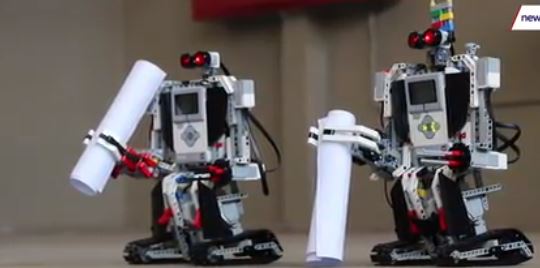
Meet Bongani and Mbali – two robots built by nine pupils involved in the robotics course of the Melisizwe Computer Labs Project in Johannesburg.

Decorated with different colours and lights, these small-sized machines moved up and down the red carpet at their official unveiling at Missourilaan Secondary School in Eldorado Park on Thursday.

Bongani and Mbali are equipped with motion sensors to recognise objects in their paths and a mobile phone can be used to control them.

Despite their similar functions, Mbali is topped with a colourful headpiece that separates her from her male counterpart, Bongani.

The robots formed part of the various programmes Melisizwe offered to unemployed youth and young people who sought skills in robotics, computer literacy, coding and media studies.

“The primary intention of the project is to ensure that learners have the tools that they need in order to have basic computer literacy skills as well as additional skills to prepare them for the fourth industrial revolution,” said Melisizwe director Candice Kern-Thomas.

Kern-Thomas and her team started the project in 2012 and have already provided 11 computer labs to schools in Gauteng, the Eastern Cape and the Western Cape.

“We decided to turn the computer lab project into a sustainable model by introducing these courses for the learners,” she said.

Fifteen-year-old Anastasia Moon was overjoyed as she went onto the stage to receive her certificate for an eight-month course in programming.

“It’s really exciting when you are able to perfect your code and see it work. Programming has really shaped my future,” she said.

Watch the video here

This SA start-up that automatically matches learners with universities just landed R3.5 million from Google

0

Timothy Rangongo

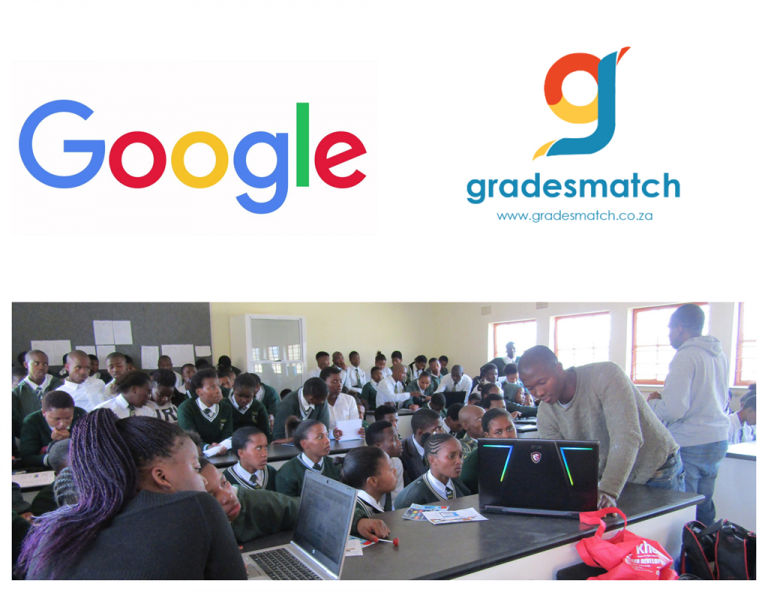
After gruelling questions and scrutiny into whether their social startup created 1) economic opportunity, 2) improved the lives of South Africans, 3) presented unexpected solutions to unmet needs, 4) showed potential to serve as a model for other communities and most importantly 5) whether the project plans were well-thought out – Gradesmatch was recently named one of the Google Impact Challenge SA winners, walking away with R3.5 million in grant funding from Google.

Gradesmatch is a local tech start-up that seeks to solve the problem of poor career guidance across Africa. It started tackling this through the Gradesmatch app, where learners can simply enter in the subjects they’re taking and marks received. The app, which now boasts about 84,000 users in SA and Namibia, then automatically matches them with suitable tertiary institutions and qualifications.

Kitted out in school uniforms, co-founders Lebogang Diale and Unathi September highlighted the lack of career guidance counsellors at schools in previously disadvantaged communities as the reason why they should get the cash.

gradesmatch

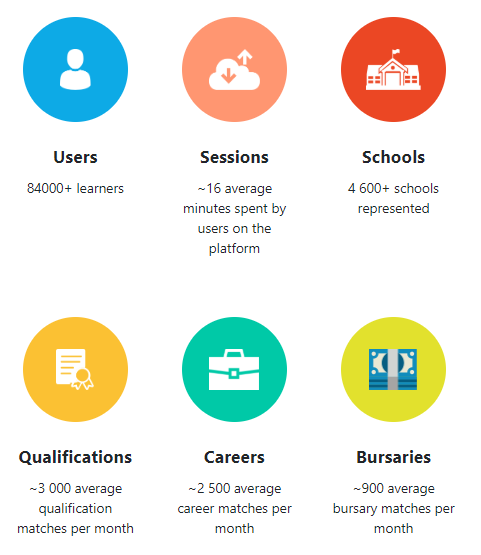
Gradesmatch has over 84,000 learners using the platform, Consuming career guidance advice for 16 mins on average and matching them with about 3,000 qualifications and 2,500 careers per month. (Gradesmatch)

Learners are also linked with young corporate mentors via the app. And on submitting marks, pupils are matched to bursary opportunities.

Diale and Unathi tell Business Insider SA that they intend to use the R3.5 million cash prize from Google to reach a further 125 million learners through an expansion to 25 African countries by 2023, and become a primary source of career guidance and financial aid.

Tanzania: Pros and cons of fee-free education three years on

Salome Gregory

Last month marked three years since the introduction of fees-free education policy in Tanzania. The policy, which meant to remove all forms of fees and contributions in government schools came along with the immediate release of Sh18 billion to support its implementation.

However, indirect costs such as school and sports uniforms and other scholastic materials remain a parent’s duty to provide. A recent survey conducted by Success to explore some of the headways made since the introduction of the policy has uncovered some pros and cons of fees-free education in Mbeya.

The survey also aimed at exploring the presence of the capitation guidelines, understanding them and uncovering whether there’s proper adherence to these guidelines. It further aimed at finding out how much parents, communities and the government contribute under the fees-free education policy.

Majority of the visited schools in Mbeya confirmed receiving capitation grant as well as understanding its guidelines. However, there still remain a lot of challenges that impede the government’s efforts to improve education standards in the country.

Challenges range from lack of clear understanding on the fees-free education policy by parents and the general community, to inadequate funding from the capitation vis-a-vis the number of pupils and students at a particular school, to finally the delay by the government to finalize construction of school buildings, leading to poor infrastructure, or lack thereof.

Keneth Amon is the headteacher at Mwangaza Primary School. He says, the school has 1,200 pupils but it gets Sh460,523 per month, far from the Sh720,000 required to cover all pupils.

“The amount of money given monthly by the government is not enough compared to the number of pupils we have. This is due to the fact that the government doesn’t give capitation grants to pupils who are under complimentary education programme,” says Amon.

He says the fees-free policy has contributed to the increase in number of enrolment, yet at the same time parents have stopped making contributions to schools to cater for some academic expenses.

Commenting on parents and community participation in connection to fees-free education, he says majority of parents do not have a clear understanding of what fee free education entails. As such, some have altogether abandoned their parental duties of following up on their child’s progress at school.

Mariana Njaudi is a parent whose child studies at Hayombo Secondary School. She says when the fee free education policy was introduced parents were happy that the heavy burden of paying school fees has been lifted off their shoulders.

The drawback to such progress is that some parents turn their attention to other activities and forget all about their children’s development at school.

Commenting on the prospects of parents contributing funds for school development, she says majority of parents are under the assumption that the government provides for everything, including books, uniform and other school-related requirements.

Julius Baraka, another parent whose child studies at Mwasanga Primary School, says before fee free education he used to contribute school fees, money for watchman, stationery, school and sports uniform. But since the introduction of fee free education he only buys stationery and uniforms.

“Despite being given guidelines on how to spend the capitation grant, it is still a challenge to take care of all expenses. Some pressing areas like rehabilitation of school infrastructure remain untouched for so long,” says Nandi.

The headteacher reveals that his school is short of 2 classrooms, tables and chairs, as well as well-functioning toilets for both boys and girls. The school has 9 classrooms but majority of them do not have windows and doors.

He further says since the school has no electricity, the available security personnel cannot manage to guard the whole premises in the dark, as a result school property gets stolen.

But even with such persistent problems, Nandi expects to get around 174 new students this year who’ve been selected to join his school. He wonders how the newcomers will be accommodated at a school that is already struggling as it is.

Increase in enrolment, decline in truancy

Keneth Amon says his school has a deficit of 21 classes. Before the fee free policy they used to enrol not more than 110 pupils a year. In 2016 they enrolled 194 pupils, in 2017 they enrolled 252 pupils and in 2018 they enrolled 174 pupils.

Apart from inadequate classrooms, desks are also an issue. Currently the school has 296 desks, while it needs 398 desks. This forces four to five pupils to seat on one desk while in class.

Nelusigwe Kajuni, Headmaster at Iwambi Secondary School, also says school enrolment has increased since the introduction of fee free education. He applauds the policy, however, he also points out that the success of such an arrangement requires good collaboration from all education partners.

He says the fee free education policy has helped cut back on the level of truancy,. Previously, a class with a total number of 80 registered students would see only 55-60 students attending classes. Presently, the same class sees an attendance of 70-75 students. “The fee-free education policy has contributed to the positive performance among students, a result attributed to good class attendance. However challenges remain, some of them are as a result of parents not attending school meetings to discuss matters concerning their children’s academics,” says Kajuni.

Mr Kajuni suggests that the government should focus more on providing equipment needed for teaching and learning rather than providing inadequate funding.

For example, he points that costs incurred during exams do not reflect those provided for in the guideline. This makes it difficult for schools to accommodate more students in each intake as required.

Esther Elias, a form 3 student at Iwambi Secondary School, says the introduction of fee free education has reduced pressure on students as they are no longer suspended from classes due to failure to clear school fees.

She says she is glad that finally no one bothers them with demand for school fees, however, she confirms that majority of parents do not make a follow-up on their children’s education.

Speaking to Success, Mbeya City Council Director, James Kasusura, says the introduction of fees-free education policy has resulted in so many positive outcomes as pointed out by teachers, however a lot still needs to be done by parents to make the learning environment conducive for their children.

“I have witnessed parents refusing to pay for food expenses for their children at school, some would give the money to the student rather than contributing to the school management,” says Kasusura.

Among the six visited schools in Mbeya, all teachers and pupils admitted to having a challenge with parents’ participation in school-related matters.

But also, all of the surveyed schools didn’t have enough classes, good toilets, good infrastructure, good accommodation as well as enough teachers.

Unfinished school structures

The burdens facing public schools under the fee free education era go beyond issues of limited manpower, parents not involving themselves in their children’s education, or limited understanding of the fee free education policy. One of the biggest challenges is lack of enough classrooms to accommodate the growing number of students enrolled in each intake.

Parents used to mobilise themselves to build school structures, but they lacked enough support from the government.

Nelusigwe Kajuni, headmaster at Iwambi Secondary School, says that his school, which has 13 classes, has a deficit of four rooms.

He says, before the fee free policy parents teamed up following government directives, to build classes up to renter level, and the government was supposed to finish the rest of the construction. This was done as a way of working together to improve the quality of education.

“Parents worked hard to construct classes in different schools up to the agreed level, but most structures still remain unfinished to date due to the government’s failure to complete construction. Efforts to follow up (from the government) on why they haven’t finished construction of these structures were in vain,” says Kajuni.