Home Blog Page 474

South Africa: Pupils tell court of their interaction with ‘rapist’ school patroller

Pertunia Mafokwane

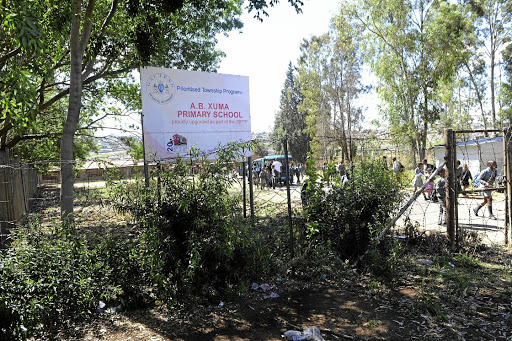
A 15-year-old grade seven pupil at AB Xuma Primary School in Soweto said she was walking back to her classroom when she met a school patroller who touched her left breast.

The girl was among several girls who gave evidence before the South Gauteng High Court sitting in Palmridge Magistrate’s Court where Johannes Molefe stands accused of three counts of rape and 10 counts of sexual assault.

Molefe, 58, known to the children as Mkhulu, allegedly abused the girls at the school last year.

The girl said she was walking from the toilet to her class when she bumped into Molefe.

“Mkhulu touched my breast. I said Mkhulu what are you doing and he said he was fixing my tunic,” she said, adding that she did not tell anyone about the incident because she felt no one would believe her.

Molefe’s lawyer Lumka Qoqo said Molefe denies that he ever touched her breast. However another victim, a nine-year-old girl, said Molefe touched her in her private parts without her permission.

She said the incident happened in the school guardroom where Molefe worked. The girl said she was with her friend whom Molefe touched her.

“Mkhulu lifted my tunic, put his hand in my panty and touched my private part. I then left and waited for my friend outside,” she said.

The trial continues.

South Africa: Irvin Khoza opens new live-in Ajax football academy

0

Mark Gleeson

Premier Soccer League (PSL) chairman Irvin Khoza opened Ajax Cape Town’s new academy‚ the Ajax Lambda Institute‚ on Friday and hailed the boarding school facility as a pathway to excellence.

Ajax‚ despite struggling in the National First Division after their controversial relegation from the PSL last season‚ have embarked on the ambitious project and already have seven boys living fulltime in the club’s newly-built academy‚ complete with schooling and a hands-on matron‚ or house mother.

Next year the number will be increased by another seven boys‚ including the first two scholars from outside the Cape‚ one of whom is from outside South Africa.

“Our mission is to prepare and nurture young African talent to take them to the top European leagues‚” said Ajax chairman Ari Efstathiou.

“We aim to annually produce at least six players who go on to play professionally. Our dream is to have two or three them good enough to go to Europe and the rest to the PSL. There is no room for failure at the academy.”

The school is unique in that the boys live and go to school at the facility‚ with their days divided between training and schooling plus a whole host of other activities to build and mould their character.

“We’ve decided to look at a more holistic approach and the five attributes are talent‚ education‚ physicality‚ nutrition and mental development‚” added Efstathiou.

“Talent is an obvious criteria and we believe that professional athletes must be properly educated. As far as physicality is concerned‚ we are cognisant that South African players are generally small and can be bigger.

“In the past we’ve had kids who have come to train without eating a meal and so we will ensure proper nutrition.

“On the mental side we will prepare the kids to become professionals. This must be done from an early age‚ 14-15‚ sometimes even younger.

“The boys at the academy are aged between 13 and 16 and they have been selected in terms of a rigorous criteria‚ which is obviously their talent‚ their ability to learn and their physical attributes.”

Khoza said it was “remarkable” what Ajax were doing considering the challenges they faced trying to get out of the NFD.

“Anything that you do to help the youth of this country is visionary‚” the PSL boss told Ajax.

“Kids who grow up with purpose go on to become engaged citizens. Ajax have set the standard on which other PSL clubs can follow by seeking to arm and train kids well beyond their playing days.”

Edwin van der Sar‚ the former Netherlands World Cup goalkeeper who is now CEO of Ajax Amsterdam‚ and who funded most of the project‚ was also at the launch in a clear signal that the Dutch club will continue to back Ajax Cape Town despite their current woes.

Kenyan government forms team to probe mass failure of teachers

Ouma Wanzala

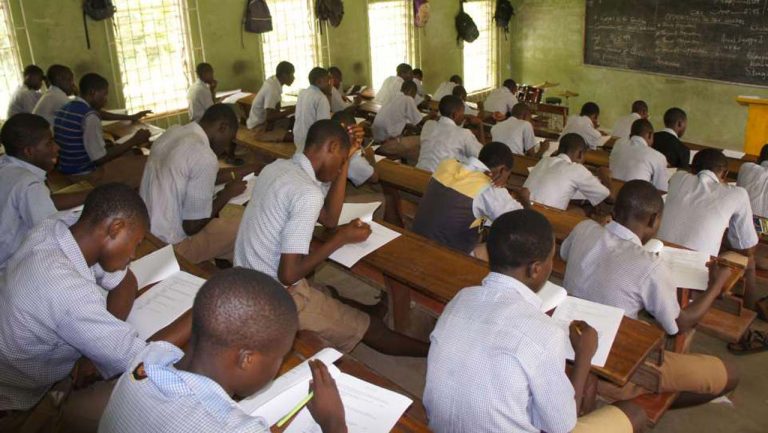
The Ministry of Education has set up a team to investigate the mass failure of primary school teacher trainees in national examinations for the last five years.

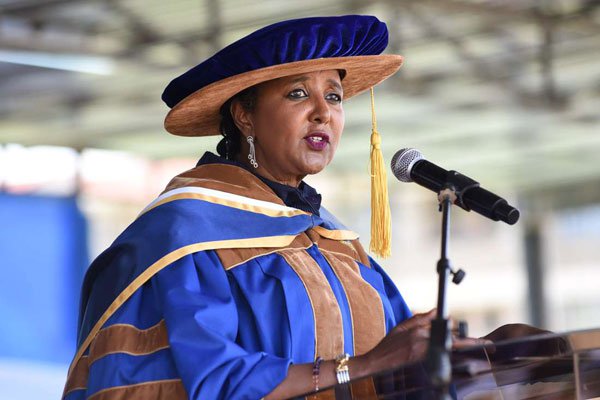
Education Cabinet Secretary Amina Mohamed said the team from the Directorate of Quality Assurance will look into the reasons for the mass failure, which she said is worrying.

“I cannot speculate what is happening in teachers training colleges for now until I get the report so that we can understand where the problem is,” said Ms Mohamed while briefing journalists on the ongoing national exams at the Kenya National Examinations Council (Knec) headquarters in Nairobi.

However, Knec chairman Prof George Magoha has a reason why more than half of candidates who sit Primary Teachers Education (PTE) examinations fail every year.

RESIT EXAMS

“These candidates are not reading and that is why they are failing in mass,” said Prof Magoha, noting that what Knec sets for candidates is in the syllabus.

The data for the past five years indicate that 2017 had the highest number of candidates who failed at 12,438. In 2016, some 6,267 trainees failed, 2015 had 4,358 while 2,074 failed in 2014.

This year, 10,457 out of 29,530 candidates failed in their examinations and will have to resit the exams next year.

In 2017, some 24,454 candidates sat the exams, while the number was 19,142 in 2016, some 18,662 trainees sat the exam in 2015 while 2014 had 17,291 candidates.

The mass failure of candidates has raised concerns on the quality of teachers at primary schools.

TEACHING PRACTICE

The PTE examination covers 14 subjects which are tested in 21 papers and teaching practice.

Only 21 candidates attained distinction in this year’s exam.

Kenya National Qualification Authority director-general Dr Juma Mukhwana said the future of teacher education in the country needs stakeholder discussion.

Dr Mukhwana said what the country needs in view of changing trends and curricular is how to motivate and bring teachers up to to speed with new technologies and how to improve training, the training environment and quality of candidates admitted.

ROBUST ACCREDITATION

“Our view has been that all over the world teacher education is a vocation. Hence, teacher education in Kenya needs to be moved to the TVET (Technical and Vocational Education and Training) sector so that it benefits from a robust accreditation and regulatory framework, move to competence-based training system which is currently being implemented in the TVET sector, and benefit from the funding that has been set aside for TVET students,” said Dr Mukhwana.

Shock increase in fake credentials in South Africa

0

Mayibongwe Maghina

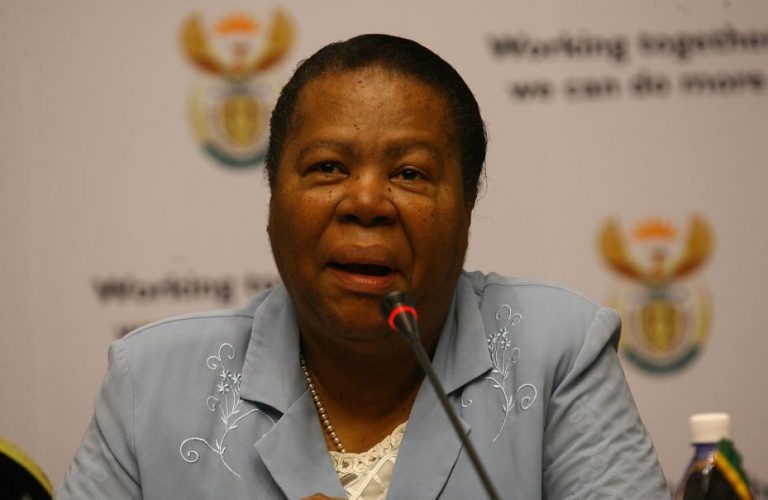
Higher Education Minister Naledi Pandor says there has been an increase of fraudulent qualifications reported to regulatory bodies over the past five years.

In the 2017/18 financial year alone there were 982 fraudulent qualifications uncovered, with 385 since April this year.

“There is an upward trend in the number of misrepresented qualifications that have been detected,” Pandor said.

She was responding to a parliamentary question from the ANC’s Juli Kilian, who asked about the role of the South African Qualifications Authority (SAQA) in safeguarding the integrity of the national qualifications framework.

Pandor said that in 2010/11 there were 47 reported fraudulent qualifications, 37 in 2011/12, 76 the following year and 62 in 2013/14.

The number grew to 106 in 2014/15, only to drop to 92 in 2015/16, then 24 in 2016/17, 982 in 2017/18 and 385 since April 2018.

Pandor said SAQA had been tracking qualifications since 2005.

“Up until 2015, SAQA paid Umalusi for every school-leaving record that was verified. There was no agreement in place between Umalusi and SAQA in 2015 and 2016, and this led to a relatively high number of school-leaving qualifications not being confirmed as misrepresented qualification in 2017.

“The relatively high number in 2017/18 is due to those qualifications being confirmed as misrepresented qualifications to SAQA in August 2017.

“Furthermore, the Quality Council for Trade and Occupations began submitting their misrepresented qualifications to SAQA in August 2017.

“This also accounts for the higher number of misrepresented qualifications in 2017/18,” Pandor said.

She also said that despite the relatively high number of fraudulent qualifications detected in 2017/18, it was still less than 1% of the qualifications that were verified by SAQA and the Quality Council for Trade and Occupations.

Pandor also revealed that the total number of fraudulent foreign qualifications and SAQA certificates of evaluation was 2 263 over the past five years.

There was a total of 892 fraudulent qualifications, with 201 reported in 2016/17 and 444 in 2017/18.

“The 444 misrepresented foreign qualifications reported in 2017/18 include 89 qualifications (revealed) by a whistle-blower.

“These purported to originate from a university in Ghana, and SAQA representatives personally visited the university to check the authenticity of these qualifications.” Pandor also said the high number of forged SAQA certificates of evaluation that were detected by the Department of Home Affairs was alarming.

The department began reporting on these certificates in 2015. “SAQA responded to the trend by piloting the SAQA certificates of evaluation, and has rolled out the project as a permanent feature in this financial year.

“It important to note that the Department of Home Affairs can identify forged certificates of evaluation because the foreigners are unable to bypass all the security features on the certificates,” Pandor said.

“Furthermore, SAQA provides access to its database via its internet so that the Department of Home Affairs officials can verify the SAQA certificates of evaluation easily and quickly.”

Asked whether the government had taken the necessary steps to verify qualifications before appointing public servants, Pandor said all provincial and national departments were required to verify the qualifications with SAQA.

“Some government departments are utilising the services of SAQA to verify the qualifications of the public sector employees,” she said.

IOL

Violence at South Africa’s schools: Stories that shocked us in 2018

Riaan Grobler

South African schools have seen a number of violent incidents this year.

In September, the government called on stakeholders to come together and address the escalating levels of violence in schools.

“Violence in schools is a societal problem which requires all stakeholders to play their part to create a safe schooling environment,” acting director of the Government Communication and Information System Phumla Williams said in a statement.

This violence includes stabbings, rock throwing, assault and bullying – that have led to the deaths of both pupils and teachers – as well as sexual assault.

Here are some of the violent incidents at schools that shocked us in 2018:

Grade 1 pupil stabbed to death

A North West high school pupil was arrested for allegedly stabbing a 7-year-old Grade 1 pupil to death in Makapanstad on November 20.

The incident happened at the Dikeledi Makapan Primary School which the Grade 1 pupil attended.

It is alleged that the Grade 11 pupil, 17, stabbed the younger pupil multiple times after a fallout with the child’s older sister, with whom he apparently had a romantic relationship.

Stone thrown at teacher

On November 16, the Gauteng education department expelled a Soweto pupil who threw a stone at a teacher, causing the teacher to suffer minor injuries.

The incident occurred at Albertina Sisulu Special School on a day when a Commonwealth ambassador had come to donate wheelchairs.

In a video of the incident, the teenager can be seen chasing the teacher out of the hall. The teacher runs away, while other pupils and teachers try to stop the pupil.

A teacher can be heard asking what his problem is.

The pupil replies: “I have been patient with him for too long. Today, he will k*k himself.”

Water in teacher’s face

Also in November, a Kimberley Boys’ High School pupil, seen throwing water in his teacher’s face in a viral video on Twitter, was suspended and will attend a disciplinary hearing, the Northern Cape education department said.

The video shows the young man with a water bottle in his hand. He says: “You’re a good teacher, ma’am.”

He then throws the water in her face as his classmates crow in the background.

Attempted stabbing

On October 24, Ekurhuleni metro police arrested a Grade 11 pupil at Fumana High School in Katlehong after he allegedly attempted to stab fellow pupils.

The pupil faces charges of attempted murder, assault with the intent to commit grievous bodily harm and intimidation.

Ekurhuleni Metro Police Department spokesperson Chief Superintendent Wilfred Kgasago told News24 that the teen chased five fellow pupils around the school premises, trying to stab them.

Fearing for their lives, the five pupils ran into the principal’s office and locked themselves inside.

Taking bodyguard to school

On October 22, it was reported that a 16-year-old Grade 10 pupil at Grey College in Bloemfontein would complete his studies at home after showing up at school with a bodyguard to protect himself from being bullied.

This followed two incidents of violent bullying – one in March and another on October 12.

In the first incident, his head was bashed against a wall and he was hit against his ear, causing damage to his eardrum.

The boy’s mother told Netwerk24 that during the second alleged attack, he and his family were sworn at by Grade 11 pupils, using the Afrikaans slur “p**s” and telling him: “You must leave this f*cking school.”

Bus driver assaulted

In September, a pupil was filmed assaulting a bus driver. The video went viral and the pupil faced disciplinary action.

Mpumalanga education MEC Sibusiso Malaza said he was horrified that a school pupil could place others at risk through his violent actions.

“One cannot imagine that a learner can conduct himself in such a horrible manner. It’s really so unfortunate and heartbreaking. There is nothing that can justify violent conduct and disregard for the safety of other learners,” he said.

Murdered over cellphone

On September 24, a teenager was arrested for the murder of a fellow pupil at an Eastern Cape school, following a stabbing during a fight over a missing cellphone.

Police spokesperson Captain Khaya Tonjeni said a 16-year-old pupil had been arrested after the 18-year-old victim died at a local hospital.

The incident took place at a high school in Peddie.

Stabbing teacher to death

On September 13, a 17-year-old boy who attended a high school in Zeerust, North West, was arrested after allegedly stabbing a teacher to death.

Education department officials visited the school after the incident, basic education spokesperson Elijah Mhlanga said.

“It seems there was an altercation regarding feeding the boy.

“He was in a queue and was reprimanded by the teacher. He took it personally and went home and came back today and found the teacher inside the classroom where he stabbed him,” Mhlanga said.

Toy gun pointed at teacher

Also in September, a 15-year-old pupil from Eldorado Park, Johannesburg, was arrested after he allegedly pulled out a toy gun, pointed it at his teacher and threatened to shoot.

According to police spokesperson Captain Thinandavha Lufhugu, a teacher had confronted the Grade 8 pupil the day before (a Tuesday) for wearing a beanie at school.

“On Wednesday, he wore the beanie again and the teacher confronted him again, asking him to take it off. Instead of taking it off, he pulled out a gun…” Lufhugu said.

Stabbed to death by schoolmate

In August, the provincial department of education suspended classes at Kwamasakhane High School in KwaZulu-Natal after two pupils were stabbed to death.

Two friends, Sihle Mngadi and Mangaliso Mbatha were allegedly stabbed to death by a schoolmate.

Sihle had allegedly been involved in a fight with the suspect. On the following Monday, when they came back to school, they continued with their fight at the school.

Mangaliso, who was in Grade 10, was killed while trying to stop the fight.

Culture of sexual assault

Also in August, a report into allegations of sexual assault at Parktown Boys’ High School in Johannesburg blew the lid off a number of disturbing practices at the school.

These practices include “sexually predatory behaviour” by senior pupils against junior pupils, a culture of assault and sexual assault under the guise of “initiation practices” and “profoundly shocking” utterances made by teachers in the presence of pupils.

A former Parktown Boys’ High School assistant water polo coach was found guilty of 114 counts of sexual assault and 12 counts of common assault.

The hostel master initially faced 327 counts, but pleaded guilty to 144 counts of sexual assault, while the court also acquitted him on some charges.

Pupil killed at school

In July, a 38-year-old man was arrested for allegedly murdering a Grade 10 pupil on school grounds in the Northern Cape.

Lieutenant Colonel Dimakatso Mooi said the shooting occurred at Mokgolokwe Middle School near Batlharo.

“I can confirm that a 17-year-old boy was shot and we have opened a preliminary investigation to determine the surrounding circumstances,” Mooi said.

Own son shot dead

In June, a man shot and killed his teenage son, apparently by mistake, outside his school in Ennerdale, south of Johannesburg.

Soweto West cluster spokesperson Captain Mpande Khoza said the father, 50, was charged with the murder of his 14-year-old son.

“The father dropped the boy [off] and he locked his vehicle and waited inside… he then fell asleep. The boy [later] came back and knocked on the passenger window of his father’s vehicle.

“The father, who was asleep in the car with his firearm on him, got scared by the knocking of his son [and] he pulled out his firearm and shot towards the direction of the person who was knocking,” said Khoza.

He then realised that he had shot his son.

News24

South Africa: Pregnant students kicked out of varsity residence

Karabo Ledwaba

University of Zululand has kicked out pregnant students off its residences as a consequence of being pregnant.

The commission for gender equality announced yesterday that their investigations had found that expectant women were expelled from varsity premises.

Mlondolozi Vava from the legal department at the commission for gender equality (CGE), said members of the student representative council (SRC) at the university had reported this to the commission.

“The SRC advised the CGE that when a student is pregnant while residing at the university residence, the university expels the students from the residence when they are approaching their last trimester of the pregnancy,” Vava said.

He said the commission was also told the university clinic does not provide prenatal care and that the ambulance does not assist students who are having pregnancy-related medical issues.

Vava was speaking at the commission for gender equality hearings which aimed to aide transformation in institutions of higher learning.

Yesterday, the commission released its findings on the University of Zululand and the University of Mpumalanga.

University of Zululand vice-chancellor, Professor Xoliswa Mtose, said she was shocked about the findings.

“I would never tolerate that, it is possible that people are malicious and want to create trouble,” she said.

Mtose admitted the university had had issues of unwanted pregnancies with a large population of female students getting illegal abortions.

“It could be true [that students have been expelled from residences]. I would need to go back and investigate.”

Vava said although the university had a large number of female employees with 534 female employees and 526 male employees, it had little female representation in top management.

Vava said the university did not have a sexual harassment policy but a draft policy that has been recently introduced.

Zimbabwean Professor Tawana Kupe appointed vice-chancellor at South Africa’s University of Pretoria

Virgilatte Gwangwa

There is a new helmsman to steer the University of Pretoria ship from the next academic year.

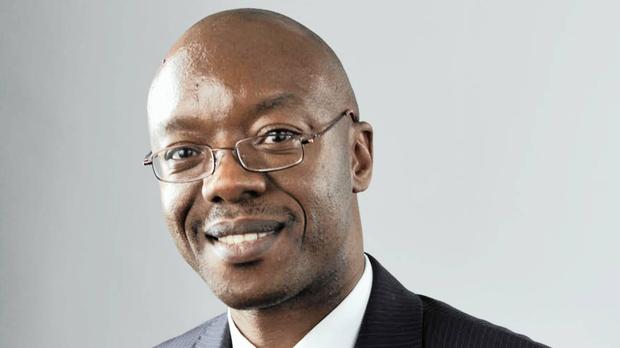
The university announced the appointment of Zimbabwean Professor Tawana Kupe, 54, as the new vice-chancellor and principal.

His appointment is historic in that he becomes the first black vice-chancellor and principal of the University of Pretoria in more than 100 years.

Kupe wasted no time declaring his intention to steer the university up to the No 1 spot in rankings.

Kupe said he was humbled, grateful and excited to be joining such a large community of people producing excellent research.

He said he always knew the university, also known as UP and Tuks, was one of the most interesting, but did not know much about it.

He said that was until he was asked by those who believed in him to look into the position available following the resignation of Professor Cheryl de la Rey.

After serving the university since 2009, De la Rey resigned and has since been appointed vice-chancellor of the University of Canterbury in New Zealand.

Kupe said: “I have been to the university’s premises a few times, and I knew that UP was one the top five universities together with Stellenbosch University and Wits, among others.

“But when I looked further I found out that it actually has very good academic fundamentals and the exciting thing is that it has the largest number of students at 53000 at the moment,” he said.

Kupe said the number of students was important, considering the country’s history and that of the continent; more people needed access into higher education.

He said there was a great need for people in higher education to become anything they aspired to be, in order to develop the continent economically.

“I found that UP is producing the largest number of research units as accredited by the department of higher education and training.

“That is a tough balancing act to keep so many students to produce so much research.

“As I was reading about it and talking to people, I also found that there was great praise regarding its quality of education.

“Even employers are also proud of the graduates who come to work at their companies,” he said.

Kupe said what attracted him most to the university was its focus on the African continent at large, rather than just South Africa.

Kupe is no stranger to leadership positions at a top university; he was vice-principal at Wits University responsible for the institution’s daily running and the co-ordination of operations across all executive portfolios.

Under his leadership, he hoped to work well with all structures within the university in order to move UP to the number one spot among other universities.

Africa’s largest nation is slowly embracing women in STEM fields

Festus Iyorah

Virginia Odor’s plans for a college education weren’t different from those of thousands of other young Nigerian women. She would study theater art, staying away from the science, technology, engineering and mathematics (STEM) fields that men have long dominated in this West African nation.

But in 2014, the 14-year-old joined Odyssey Educational Foundation, a coding initiative based in Abuja, the capital. Her dreams have changed, and she isn’t alone. Odor is part of a silent revolution shaking Africa’s largest economy.

Odyssey is among a growing number of initiatives sprouting up across Nigeria that is teaching young women and girls coding and other software skills, opening doorways to careers in STEM fields. Unsurprisingly, many of these efforts are led by women motivated by a combination of their relative privilege and a desire to take on the deep-seated gender stereotypes that have defined previous generations.

Girls Coding, an initiative of the nonprofit Pearls Africa Foundation, came up in 2015 after its founder, Abisoye Ajayi-Akinfolarin, left her job with an information technology audit firm in Lagos, upset with the minuscule number of Nigerian girls in STEM careers.

Girls Coding trains girls between the ages of 10 and 17 in programming, user interface design and animation. Odyssey was founded in 2013 by Stella Uzochukwu-Denis after she left a high-paying job at an Abuja telecommunications firm.

The Women’s Technology Empowerment Centre (WTEC) started in Abuja in 2008. Now, it has expanded across Nigeria and has trained more than 5,000 women and girls in tech skills. And Women in Technology, a Lagos-based initiative, has grown from its launch in 2009 to a presence across 36 Nigerian states, educating and equipping girls to pursue — and hold onto — STEM careers.

It organizes hack-athons and camps to nudge high school girls to join STEM courses in college, and runs a program designed to help Nigerian women in rural and underserved communities grow their businesses using information and communication technology (ICT).

That these initiatives are expanding points to the growing demand to which they are catering. And the women signing up to learn at these organizations are now themselves emerging as agents of change in a deeply conservative society.

“I’ve learned how to create mobile apps, how to program robots. I want to become a computer engineer, inventor and programmer,” says Odor, the Odyssey student.

For some of the founders of these initiatives, the drive to motivate girls to join STEM professions came from experiences outside Nigeria.

Uzochukwu-Denis was studying for a master’s degree in telecommunications management in India a decade ago when she saw girls there enrolling for after-school coding classes. “I was really inspired when I saw young girls building software, animations,” she recalls.

“Then I told myself this has to happen in my country, Nigeria.” On returning home, she began visiting high schools in Abuja to encourage girls to join similar after-school programming classes.

That her drive was sparked outside Nigeria isn’t surprising.

Research shows that women make up only 17 percent of Nigerians pursuing science-related careers. That’s part of a larger challenge too. According to UNICEF, there are half, or even a third, as many girls as boys in schools in many Nigerian states. Early marriages are prevalent among girls, and 23 percent of all Nigerian mothers bear their first child before the age of 19. Cultural biases are key too, and parents often end up reinforcing these stereotypes, suggests Oreoluwa Lesi, the executive director of WTEC. “Parents do say, ‘Our boys will become engineers and our daughters will become something else,’” Lesi says.

But there’s change in the air.

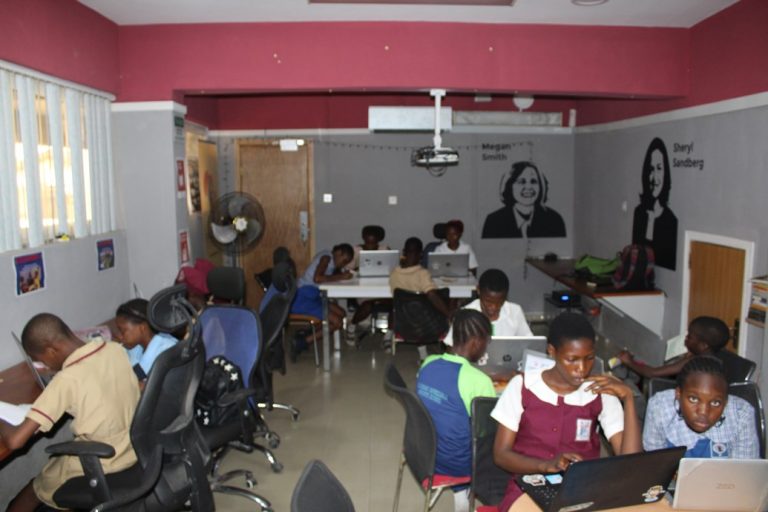
On a sweltering Wednesday afternoon, I visited the Girls Coding office in Yaba, Lagos’ Silicon Valley that hosted Mark Zuckerberg during his last trip to Nigeria. I was welcomed with quick gazes from high school girls still in their uniforms, otherwise peering at their laptop screens, performing programming tasks in the after-school classes.

Here, there’s no lack of inspiration. On the wall behind the girls are images of Facebook chief operating officer Sheryl Sandberg and former Google vice president Megan Smith, global trailblazers in the IT world.

At school, says 17-year-old Sharon Okpoe, they’re taught theory but no practical coding skills. At Girls Coding, she says, she learns both for free. “This place is my second home,” she says, grinning.

Sustaining these initiatives and transforming Nigerian society are far more complex than coding, of course. Ajayi-Akinfolarin, the Girls Coding founder, finances the initiative on her own, and teaches and mentors the girls for free. Across Nigeria, most private high schools do not have the facilities to train girls in STEM-related subjects or programming. In government schools, STEM-related subjects are often taught by rote.

Nuela Adanna Ononiwu, an IT consultant and the founder of InspireIT — another initiative that encourages girls to join STEM careers — says rote-based teaching and learning of subjects like math, physics and chemistry discourages girls from taking STEM-related subjects. “These subjects have a role to play in STEM,” she says. “If the foundation is faulty, there’s no way they would learn programming.”

But the first ripples from these initiatives are being noticed, suggest Uzochukwu-Denis and Lesi — including by Nigeria’s government. The International Telecommunication Union (ITU) celebrates a Girls in ICT Day on the fourth Thursday in April every year.

Prodded by Nigerian women programmers, the country’s government has begun to observe the day too. And in 2017, the Federal Ministry of Communication Technology celebrated women in ICT through an event in Abuja — the country’s women coders were again the brains behind that initiative. Companies, says Lesi, are increasingly talking about hiring more women in their engineering and technical departments. The shift is hard to measure, but it’s clear.

“We now have more people talking about it,” she says. “We now have more people who are aware of it.”

Zimbabwe schools told not to expel pupils without uniform

Zimbabwe Economic Freedom Fighters (ZEFF) has urged government to issue a directive compelling all schools in the country to allow learners without uniforms to attend classes.

In a press statement released yesterday organization’s president Innocent Ndibali said due to the harsh economic situation currently facing the country, schools should stop punishing and expelling students who attend classes without uniforms.

“As Zim EFF we are worried that schools are interpreting school uniform policies very narrowly and this is now a cause of major and often unnecessary problems for learners and their unemployed, economically disadvantaged parents. Schools must not be allowed to compel the wearing of uniforms when they have no legal power to do so and worse off in such economic hardships prevailing in our country where parents cannot find jobs or afford basic needs such as cooking oil, paraffin or bus fares,” said Ndibali

“Such schools are risking learners’ education by imposing sanctions in pursuance of a policy which does not have a clear legal basis. There is no conclusive empirical evidence to say whether uniforms are beneficial for formal learning, given the prevailing economic crisis, high levels unemployment and unprecedented cost of basic commodities including school uniforms,” he added.

Ndibali urged government to issue an official directive to stop schools demanding uniforms.

“Zim EFF urgently demands that the Government through its Ministry of Education immediately issue an official statement directing schools not to expel or punish learners for attending school without uniforms until the economic situation improves. Learners and parents have a right to know what school’s uniform aims to achieve and learners have education rights enshrined in the constitution,” said Ndibali.

Project in Seychelles hopes to inspire careers in science, technology, engineering

Seychelles News Agency

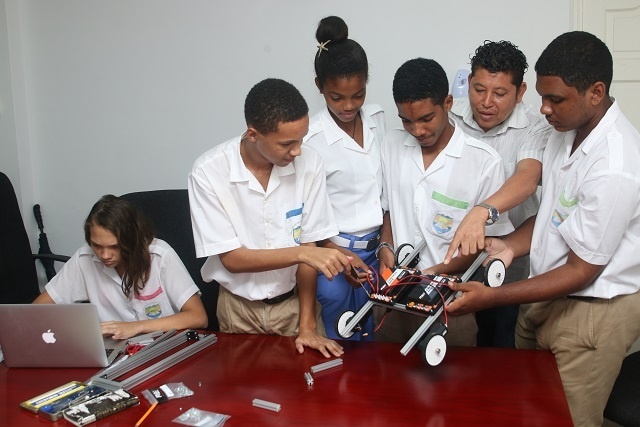
The STEM Extra is an eight-month after-school programme to empower the youth towards pursuing STEM career opportunities by offering an interactive and inspirational programme held after school hours.

The project, expected to start in January, is one of six local projects which has this year received grants from the United States Ambassador’s Special Self Help Programme. Implemented by not for profits organisations, these projects are targeting different groups in the communities including the youth, women and people with disabilities.

The grantees met with the US Ambassador to the island nation, David Reimer, last week. “It’s a fantastic program with a lot of positive impact for a country like Seychelles and we hope to be able to do it again next year. We do not have a budget yet but am hopeful we can do it again,” said Reimer.

The United States Ambassador’s Special Self Help Programme targets projects which should improve basic economic and social conditions at the grassroots level.

Preference is given to proposals for projects that benefit the community rather than proposals that benefit or equip not-for-profit organisations.

Kalsey Belle from the SIDS Youth AIMS Hub (SYAH) Seychelles said that STEM Extra will target students from secondary schools.

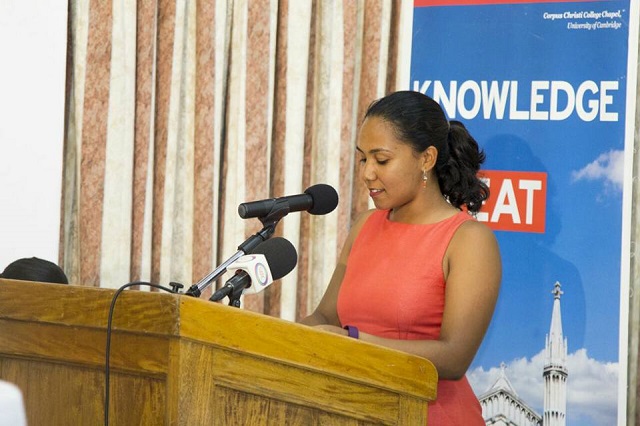
Belle, a mechanical engineer, addressing last year’s Ocean Youth Summit. (Kalsey Belle) Photo License: CC-BY 

Beryl Payet who works in Information Technology explained that through the project SYAH Seychelles will provide mentorship and on-the-job work experience. “The programme will follow the secondary school academic calendar and will begin in January 2019 until August 2019 and will target Secondary 3 to Secondary 4 students,” added Payet.

According to Belle, the students who graduate from the programme will have obtained international recognition for participating in an international mathematics competition.

“The cohort would have also improved their STEM knowledge while simultaneously obtaining on-the-job experience and a letter of recommendation, gaining a lifelong mentor, the opportunity to interact and network with like-minded individuals and future employers,” added Belle.

The US Ambassador Special Self Help Programme is calling on civil society to come up with more innovative projects targeting and benefiting the different group of people in Seychelles — a group of 115 islands in the western Indian Ocean.

“It will tackle Sustainable Development Goals 4 and 8, which ensure inclusive and equitable quality education and promote lifelong learning opportunities for all, whilst goal 8 is promote sustained, inclusive and sustainable economic growth, full and productive employment and decent work for all,” said Belle.