Home Blog Page 477

South Africa: New feeder zones for public schools will ‘cross the colour line’

Canny Maphanga

Gauteng Education MEC Panyaza Lesufi is hoping that new feeder zones for public ordinary schools will be inclusive of all South African learners irrespective of race, background or creed.

“We are thrilled to announce this today. It is a groundbreaking way of opening all our schools to all our children and a radical shift in addressing the negative impact of apartheid spatial planning,” Lesufi said at a media briefing on Thursday.

This comes after the Constitutional Court – on May 20, 2016 – ruled that the MEC had to determine feeder zones for all public schools in the province, in the manner required by regulation 4(1) of the Admission of Learners to Public Schools, by November 20, 2018.

Approximately 2 067 feeder zone maps had been finalised and would be published in the government gazette for consultation. According to the department, 334 schools had contested their proposed feeder zones and their concerns had been addressed.

These feeder zones will enable learners from previously disadvantaged areas to access schools that were previously reserved for white learners.

“We are closing a chapter in our history that was left unattended for too long.

“There must be no one that is told you are born in the wrong area and, therefore, you cannot come to this school,” Lesufi said.

He said he believed this would address the issue of transformation with respect to public schools.

“The feeder zone will incorporate white areas with black/Indian areas. It will cross the colour line.”

Speak up within 30 days or keep quiet’

“They will never oppress our children or our children’s children. We are handing over now a non-racial society, where no one will be judged based on the colour of their skin,” Lesufi explained.

The publication of the new feeder zones dictates that schools will have to resubmit their policies to the head of the Gauteng education department within three months.

“Every school policy must now be resubmitted to department, whether it be uniform, hair, language etc, but in particular their admissions policy.

“They have 90 days to submit and the department has 90 days to respond,” Lesufi said.

The provincial education department also clarified that feeder zones would be up for review every year for all schools and that, only in the event of dramatic changes in demographics, should a school apply for a review of their feeder zone.

“I delegated this to the HOD, Edward Mosuwe, and I have removed myself just to have a separation of powers, because you know my views,” Lesufi added.

The department said it would be ready to implement the proposed feeder zones as law in 2020 and has urged school governing bodies to speak up within “30 days or keep quiet”


News24

Ghana raising $500m in loans to fund education pledge

Moses Mozart Dzawu

Ghana is raising $500m in loans to help finance President Nana Akufo-Addo’s pledge to provide free secondary education at public schools.

The Ghana Education Trust Fund, also known as the GETFund and governed by the Ministry of Education, will use the financing to build new schools and upgrade facilities after admissions soared since the implementation of the policy more than a year ago, said Mark Assibey-Yeboah, chairperson of the parliament’s finance portfolio committee.

“The policy has increased enrollment at all educational levels, requiring that more school buildings be put up nationwide, all the way down from kindergarten to tertiary,” Assibey-Yeboah said Thursday in an interview in the capital, Accra. “We know there are infrastructure challenges.”

CAL Bank is leading a consortium of local banks that will offer the loan at a rate of 19%, subject to parliamentary approval, Assibey-Yeboah said. The government will use 2.5 percentage points from value-added tax receipts to repay the loans, he said.

Budget increase

Ghana budgeted 9.3 billion cedis ($1.9bn) for all levels of education in 2018, an increase of more than two-fifths since 2016, the year before Akufo-Addo and his New Patriotic Party came to power. The West African nation is in the final year of an almost $1bn debt bailout program with the International Monetary Fund.

The finance will not add to Ghana’s sovereign debt burden as the GETFund borrowings are not backed by state guarantees, said Assibey-Yeboah. As much as 40% of the income of the fund, which was allocated 928 million cedis this year, will be used to service the loans, he said.

The GeTFUND may raise a further $1bn over the next five years to expand the building program.

Rwanda outlines reforms to improve teacher training colleges

Emmanuel Ntirenganya

Best performing students from Teacher Training Colleges (TTCs) will be given scholarships to pursue Bachelor’s degree after  two years of teaching in primary schools.

This is one of the proposals being mooted by the Ministry of Education as it seeks to scale up the number of Rwandans enrolling in TTCs and attract more people to pursue a career in teaching.

Isaac Munyakazi, the State Minister in charge of Primary and Secondary Education, revealed this on Tuesday during a session with senators where he briefed them on government activities and the implemention of the competency-based curriculum.

The minister said that facilitating Teacher College graduates to obtain Bachelor’s degrees was one of the strategies to attract and retain the best brains to support the education sector, which is struggling with poor remuneration and high labour turnover among other challenges.

“TTC graduates have been faced with the challenge of being unable to advance their studies,” he said.

Fixing the gaps

Senator Narcisse Musabeyezu said some TTC produce poorly trained teachers because some of them don’t have laboratories and yet they teach science subjects.

“Instead of having half-baked teachers, why can’t we think about an arrangement whereby students who are going to pursue sciences enrol in TTCs, which have laboratories and arts students in TTCs which don’t have laboratories?. That will help us produce competent teachers,” Musabeyezu said.

TTCs should also be given competent teachers who are fluent in English to address the challenge of poor language proficiency among educationists, he added.

Recently, the ministry conducted an inspection into the capacity of the 16 TTCs in the country.

The exercise, which was concluded last week, revealed some gaps in the TTCs such as poor infrastructure characterised by lack of laboratories and school demonstration centres which limits students from engaging more in practical education.

The ministry is preparing a policy paper which will inform its interventions in terms of planning and budgeting, the minister said.

“Even in terms of budget, you realise that a minor portion was being allocated to TTCs,” he asserted.

Munyakazi said that the Government wants to increase the number of students enrolling in TTCs.

“We want to make sure that students who enrol in TTCs are not those who have failed. We will accompany them such so they feel they have government support and when they graduate they will give us the results we want,” Munyakazi said.

For teachers, the state minister said, “We are going to give them the special training they need because we have identified the gaps.”

“We do not want to dismiss them because we know their performance and gaps they have. But, in the future, you advised us that we will take on the best teachers to train those who will teach our children. That is true, that is a good point that we will take as a recommendation that we will include in the vision we have to reinforce TTCs to be able to deliver the desired result,” he told senators.

According to the 2017 UNESCO data, the 16 TTCs across the country have an annual intake of approximately 4000 pre-service teachers.

South Africa: Learners take a knee during Israeli national anthem

Kim Reynolds

Last Thursday during a ceremony at Herzlia Middle School in Cape Town, two learners knelt in protest during the playing of Hatikvah, the Israeli National Anthem.

The event was a graduation ceremony for grade nine learners. The two grade nine students “took a knee” when the Middle School Vocal Ensemble began to sing Hatikvah. It is quite common for Herzlia events to include the singing of both the South African and Israeli national anthems. It was also not unusual in the past for students opposed to the school’s Zionist stance to either sit or stay silent during the singing of the Israeli anthem.

Following the ceremony and the learners’ protest, an email was sent by the school’s Director of Education Geoff Cohen, to all parents. He wrote that kneeling during the schools’ “formal and prestigious event” was “inappropriate” and “demonstrated deliberate and flagrant disregard for the ethos of the school”. He described the students’ actions as “blatant flouting of the School Rules, Herzlia’s Zionist values and the values of Herzlia’s Menschlichkeit [humanity] pillar”.

Cohen went on to write that the school does not take issue with “an individual pupil’s right to question or hold an opinion which differs from the mainstream ideologies of the school” but rather “the time, place and manner in which such views were displayed…”.

Herzlia is taking disciplinary and “educational” action against the students. Cohen was asked to clarify what the “disciplinary and educational” actions would be, but there was no response at the time of publishing.

It also remains unclear which “school rules” were broken by their actions.

Daniel Linde, a lawyer with Equal Education Law Centre and a Herzlia alumnus, told said he had “much admiration for the Herzlia pupils who bravely knelt during the the singing of Hatikvah at prize giving.” He said he was “disappointed but not surprised at the public admonishing of them by the school.”

The names of the learners are known  but we have been unable to reach their parents for comment.

Take a Knee is a a protest movement started by American football player, Colin Kaepernick, in 2016 when he knelt during the United States national anthem to protest against police brutality against black people. Kaepernick was not given a contract at any NFL team following his protest and has experienced harsh criticism, including president Donald Trump referring to him and others that kneel as a “son of a bitch”.

GroundUp

US astronaut welcomed to the Cape Peninsula of Technology University

0

Sukaina Iishmail

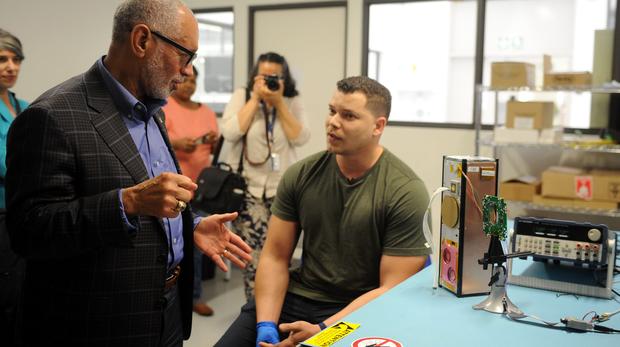
The Cape Peninsula of Technology Space programme on Tuesday hosted former Nasa head and astronaut Major-General Charles Bolden at its Bellville campus, where he gave a motivational speech to the students at the CPUT laboratory.

Bolden spoke to a large crowd of students and staff, telling them some of Nasa’s history before focusing on four areas of study.

He discussed their current and future projects, including experimental aircraft, research of the human body on the International Space Station, the James Webb telescope, Transiting Exoplanet Survey Satellite and the Parker Solar Probe, which is on its way to the outer corona of the sun.

Bolden was chosen by the US State Department to travel around the world for 12 months on a year-long programme. The department annually selects five people to travel in selected countries for an entire year and create relationships.

“We think this is an opportunity for promoting collaboration with the US in science, engineering and technology. In my case, it gives me the opportunity to come and meet with school kids from kindergarten to graduate school and talk about education, in addition to trying to promote commercial agreements and collaborations. It’s a kind of multi-purpose trip to South Africa,” said Bolden.

Bolden’s visit caps a busy year for CPUT’s space programme F’SATI. It’s about to launch its second nano-satellite into space at the end of the year.

The programme is becoming the southern African arm of Pan African University and a post-graduate training network of African universities.

CPUT also recently launched Amaya Space, a completely local company that can deliver fully functional CubeSat constellations. The technology currently being studied at CPUT is the driving force behind all future endeavours, explained Bolden.

South Africa: Cassper Nyovest’s “Fill Up” internship programme

0

Staff Reporter

Cassper Nyovest is once again allowing fans the opportunity to apply for his Fill Up Internship Programme.

The rapper first launched the programme in 2017 with his #FillUpFNB concert as a means to pay it forward and equip young people with tangible skills across various event disciplines.

Now, with #FillUpMosesMabhida  fast approaching, Cassper has opened up the programme once again.

The 2018 Fill Up Internship will be open to Durban residents only. The following departments will interview for interns: operations, talent operations, logistics, accreditation, hospitality & catering, merchandise, marketing, PR and sponsorship.

 Interviews will take place on 17 November at Moses Mabhida Stadium between 10:00 and 15:00.

The internship runs from 28 November to 30 November, with all interns being required to attend the #FillUpMosesMabhida show on 1 December to apply their training.

South Africa: Naledi Pandor opens R244m UWC health centre

Dominic Adriaanse

Higher Education and Training Minister Naledi Pandor says the apartheid architects, who dreamt up a university for coloured people only and stuck it on the Cape Flats, could never have imagined their spirit and resilience.

She addressed guests at the unveiling of the University of the Western Cape (UWC) Community Health Sciences (CHS) building in Bellville yesterday.

Costing in the region of R244.622 million, the old 10-storey Jan S Marais Hospital was acquired by the university and transformed into a state-of-the-art health-care training facility.

Pandor said former National Party Prime Minister Hendrik Verwoerd must be turning in his grave to see this state-of-the-art facility, where future nurses and other health professionals would be trained.

“When I look around, I see a young and ebullient university that is flourishing through strategic expansion and outgrowing it’s apartheid footprint.

“Through prescient investments over the years, UWC is transforming itself into a multi-campus institution.

“UWC offers lessons for our universities and one of those lessons is that you don’t have to let your past determine your future,” she said.

Pandor said the national government had contributed R124.268m towards the cost and with capable leadership and the right support all universities could play a vital role in providing higher education to generations of young people.

UWC’s CHS building will house four nursing laboratories that simulate hospital ward environments, a rehabilitation gym for the occupational therapy and physiotherapy departments, and natural medicine laboratories with treatment rooms and dispensaries.

In addition, there are top-of-the-range computer laboratories, a staff canteen and multi-faith prayer rooms.

The building, in one of the Greater Tygerberg Partnership’s priority areas, will make an invaluable contribution to the urban renewal of the Bellville city centre.

UWC Rector and Vice-Chancellor Professor Tyrone Pretorius, said: “Our move to Bellville serves a dual role. The first is to strengthen the student experience by offering a facility conducive to enhanced learning, teaching, research and innovation. The move also allows UWC to be a catalytic agent for social change by being part of the reinvigoration of the Bellville CBD.”

Community Health Sciences dean Professor Anthea Rhoda recalled, as an alumnus of the university, how they were taught in sub-standard facilities during her studies as a physiotherapy student during apartheid.

“Despite the new building several classes will still take place on the main campus on Robert Sobukwe Road. Our new facility house nearly 2000 students, undergraduate and postgraduate, and now we have dedicated spaces for theory and practice, ” she said.

Rhoda said that for now the new facility was an educational training resource only, but hoped to offer health-care services in the near future.

NPO boss’s long walk to raise funds for online business school

Staff Reporter

The chief executive of non-profit organisation StreetBiz Foundation, Dr Nico de Klerk, is walking across the country to raise funds to start an online business school catering for high school pupils and unemployed South Africans.

De Klerk, 59, from Pretoria, started his Long Walk Project, covering more than 2750 km, at the statue of Nelson Mandela at the Union Buildings on Mandela Day, July 18, and will end the walk at the houses of Parliament in Cape Town on November 24.

He has set up a donations campaign on crowdfunding platform BackaBuddy, for South Africans to support phase one of his long-term plan, the online business school aimed at pupils in Grades 10 and 11 and the unemployed.

“I decided to embark on this journey to make contact with present and future entrepreneurs, and to raise awareness around a changing mindset needed at a grass-roots level for entrepreneurship to thrive in our country,” said De Klerk.

By the end of his mission, he would have visited more than a hundred local communities, met community leaders there and hosted empowering workshops at schools.

“This long walk is a gift to all South Africans, intended to reboot our mindset for a positive outlook, reboot our perceptions and to cross boundaries like never before,” he said.

“This is a gift to highlight the enormous potential we have, especially among the youth and unemployed. It is exciting stuff to experience the drive and ambition at grass roots levels. But we need to change our strategy and create access for them (to education).

“I have been inspired by the stories I’ve heard along the way and the hospitality I have experienced, sleeping in townships, guest houses and family homes across the country. This has been a unique and life-changing experience.

“As a nation we have so much potential and so many good people who want to be a part of the solution and bring about meaningful social change. I hope the public will continue to support my BackaBuddy campaign to empower the next generation of entrepreneurs.”

The campaign has thus far raised R35514.10 of his target of R450 000.

Anyone wishing to donate can visit: https://www.backabuddy.co.za/the-long-walk-project.

Women in rugby challenge the sport stereotypes

GCIS Vuk’uzenzele

Zinhle Ndawonde recently scooped the Sport Personality of the Year Award at this year’s KwaZulu-Natal Sport Awards held in Durban.

“Winning this award means a lot. I didn’t expect it because I was competing with the best. I would like to thank everyone who voted for me and everyone who supported me,” she said.

When Ndawonde joined the school rugby team at Parkhill Secondary School she had no idea that the sport would change her life.

Ndawonde’s Rugby career began in 2006 when she represented the province at the South African Games.

She went on to join the Jaguars Rugby Club based in Sydnehem. The talent she possesses made the Sharks women’s Senior Team to notice her skill.

“In 2008 I joined the Sharks Women’s Senior Team and the same year I was also selected to represent the country in the Springbok Women’s U20 against the United States in Nelspruit.”

“It meant a lot to me to be part of the final squad because wearing the green and gold jersey is not about the team but also about representing the country which is important to me.” she said.

She adds that even though playing rugby has its own stereotypes and is perceived to be a men’s sport she believe she is making inroads in the game.

“I played the sport because I have a passion for it. I love the sport as it has taught me discipline. If it was not for the sport, maybe I would have fallen to social ills as a teenager. This sport saved me from all of that,” she said.

Ndawonde said one of the highlights in her rugby career was when she scored the winning trial against China while playing for the Springbok 7s.

R28m Thyssenkrupp technical academy opens its doors for training

0

Yoliswa Sobuwa

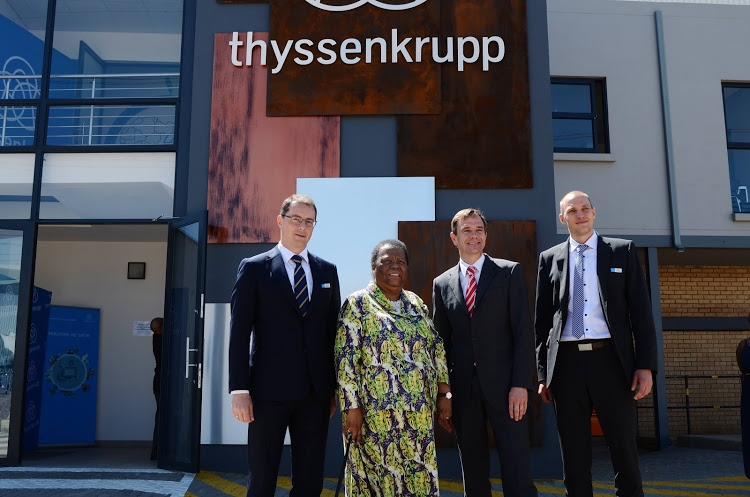
Mutshinya Phindulo is one of the beneficiaries of the new state-of-the-art R28m Thyssenkrupp technical training academy.

The academy in Edenvale, east of Johannesburg, was officially opened today by minister of higher education and training Naledi Pandor.

Thyssenkrupp Industrial Solutions South Arica is a company which is part of the construction sector education and training authority.

It offers apprentices training in boiler making, mechanical fitting and welding.

Phindulo, 22, from Tembisa, is doing a three-year apprenticeship with the academy.

“I joined the academy in September and I have already learnt a lot of things I did not do in college. I am getting training in the practical side of mechanical engineering. After three years I will be a qualified artisan and I will then do my diploma in mechanical engineering,” Phindulo said.

Pandor said the partnership between technical training and vocational education (TVET) colleges and Thyssenkrupp is most encouraging.

“Recently the department launched an initiative that focuses on the teaching of 13 trade occupations at 26 TVET colleges. This initiative known as the centres of specialisation programme  is designed to address the growing demand for the skills needed in our current state infrastructure build. The list of priority trades that have been identified include those for bricklayers, electricians, boilermakers, plumbers, welders, fitters and turners, and riggers,” Pandor said.

She said she hoped the academy would be part of this initiative because of the trades it offers.

“The status and profile of artisans is being elevated through this campaign. The department will continue learning from academies like Thyssenkrupp and encourage employers to open up their workplaces as training places.

“You have already indicated to me that at Thyssenkrupp you are familiar with the challenges that South Africa faces, particularly in manufacturing and skills development,” Pandor said.

Pandor said there was a need to create jobs for young people through not only providing workplace-based learning opportunities but also by exposing them to new digital skills.

“Economic growth in South Africa has slowed down. Mining and formal manufacturing have been particularly hard hit by the slowdown of the past years. We have identified policies to incentivise growth in the agriculture, mining and manufacturing sectors,” Pandor said.

In return the academy said it would not compromise on quality and would deliver the accredited best in class training programmes to rigorously screened students.