Home Blog Page 484

Western Cape schools embrace transgender learners

Christina Pitt

Western Cape schools are starting to embrace transgender learners and are encouraged to protect members of the LGBTQI community from bullying, thanks to the Department of Basic Education.

Western Cape Education Department spokesperson Bronagh Hammond said that a couple of Cape Town high schools have allowed transgender learners to wear the uniforms that they are more comfortable in.

“Student Governing Bodies (SGB) are dealing with this issue on a case-by-case basis,” she said.

“So far, we have only heard from Westerford High School in Rondebosch, where transgender students are allowed to change uniforms.”

A booklet published in 2015 entitled Challenging Homophobic Bullying in Schools provides guidelines to teachers, learners and SGB members that promote an inclusive school environment.

The booklet contains definitions for words used when “talking in an affirming way about gender and sexual minorities”. These words include “intersex”, “transgender” and “coming out”.

“Given the linguistic diversity of South Africa, the language used in homophobic bullying may include some of the following terms: st*bane in isiZulu; m*ffie in Afrikaans; f*ggot and queer in English; and the term gay is also sometimes used in a derogatory way,” reads the booklet.

According to the booklet, learners who experience homophobic bullying may experience higher rates of anxiety, depression and suicide and they may remain silent about the bullying.

“This silence and invisibility are a distinctive aspect of homophobic bullying. Young people who experience homophobic bullying may:

  • Have higher levels of absenteeism and truancy and be less likely to enter higher/further education
  • Be more likely to contemplate self-harm/suicide and have low self-esteem
  • Show signs of physical ill health
  • Underachieve academically or leave school early
  • Engage in risk-taking behaviours, such as unprotected sex”

Hammond clarifies that the booklet provides guidelines for all learners who form part of the LGBTQI community.

“This is not only about transgender learners, it’s about the LGBTQI community. The booklet lists a number of anti-bullying strategies,” she said.

“No learner should be discriminated on the basis of race, religion, gender or sexual orientation.”

TVET colleges key ‘to building skills’

Virgilatte Gwangwa


Higher Education Minister Naledi Pandor regards Technical and Vocational Education and Training (TVET) colleges as the new hope in South Africa, she said yesterday.

Pandor was speaking during the soft launch of the Gandhi Mandela Centre of Specialisation for Artisan Skills in South Africa at Tshwane South TVET College.

It comes three months after South Africa and India signed a memorandum of understanding to co-operate with one another in setting up the centre.

The centre is a further step in promoting quality vocational education and training for young people, as well as meeting the need for artisan skills in the country.

Officials in the education sector and technical experts gather to witness what is regarded as a milestone project.

Pandor said she regarded TVET colleges as extremely important armour in the fight against poverty. “For me, the TVET colleges are the hope in South Africa and I’m very serious about them becoming part of the critical edge of skills development in the country.

“I want to increasingly see the TVET sector becoming a confident, able and visible part of the skills institutions,” she said.

Pandor told those gathered that the intention for the centre was to build high-level competent skills in the country which would respond to the need to diversify and build the economy. “This is also to encourage young people to become involved in creating new, small- and medium-sized companies.”

Indian High Commissioner to South Africa Ruchira Kamboj said the project was named after two immortal personalities who link the two countries. “This is a project which many people have put their hearts into, and we are confident that we are headed towards a beautiful conclusion,” she said.

The multi-skilled centre of specialisation at the college will be imparted in four areas: electrician, boilermaker, mechanical fitter and millwright.

The centre is aimed at promoting quality vocational training in the sectors to meet the requirement of unskilled and semi-skilled youth in South Africa.

Last year, a survey conducted by Xpaweb showed that 75% of the country’s companies required international talent to fill positions.

Among the skills companies struggled to find necessary local candidates for were artisans, and so the Artisan Training Institute encouraged young people to enrol in colleges to acquire the skills.

Botswana: Association grows hockey in schools

Keswetseng Samokunda

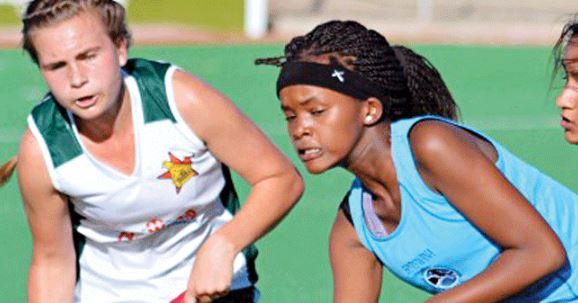
Botswana Hockey Association (BHA) has introduced development programmes to grow the sport.

The targeted areas include Kanye, Lobatse and Jwaneng in the southern part while in the northern part, the association targeted Maun, Kasane and Francistown.

Speaking during the Maun Hockey Club schools tournament held in Maun recently, BHA president, Unaswi Matebu, said the association worked to promote, develop and facilitate hockey throughout Botswana with emphasis on participation, interaction and enjoyment from a larger base of players.

The tournament brought together public and private schools.

Matebu said BHA also provided an opportunity for skills development through sport. “Because of limited resources, we have started in Maun schools where we introduced the sport. We want to attract more students and stakeholders so that they appreciate the sport code,” she added.

Matebu noted that in Maun, they managed to attract few schools of Moremi and Botswelelo Primary School as well as Leapotswe English Medium School.

She said they wanted to start from the roots hence, engaging primary schools.

She also appreciated that young people were falling in love with the sport, something that gave them hope that the sport would grow with time.

Matebu encouraged parents to let their children decide which sport they wanted to join, adding that hockey was as good as any sport.In addition, she said, hockey was also a high paying sport like football and athletics.

Matebu said they were working around the clock to meet  requirements of affiliating to Botswana Integrated Sports Association (BISA), which is an affiliate of Botswana National Sports Council (BNSC), and the Confederation of Schools Sports Associations of Southern Africa (COSSASA).

BHA was formed in August 1992 and affiliated to the Botswana National Sports Council, the Botswana National Olympic Committee, the African Hockey Federation and International Hockey Federation..

Matebu said they implemented sustainable programmes that promoted development of playing facilities, provision of equipment for development and provide opportunities for players to improve their performance levels.

Bopa

South Africa: Condolences pour in for late Eastern Cape education MEC

Staff Reporter

Basic Education Minister Angie Motshekga sent condolences to Eastern Cape Education MEC Mandla Makupula’s family on Monday.

Makhuphula died at an East London hospital in the early hours today after a long illness.

Motshekga said: “MEC Makupula was a dedicated and hard-working public representative who was committed to turning the education system around in the Eastern Cape.

“It is incredibly sad that he will not live to see the fruits of the hard work he has put in, however his legacy will live on through the education initiatives he put in place to improve the quality and efficiency of education in that province.”

Eastern Cape government spokesperson Sizwe Kupelo said Makupula served the people of the Eastern Cape with integrity and ethical leadership.

“On behalf of the executive council and the entire provincial government‚ the premier (Phumulo Masualle) expresses his heartfelt condolences to friends‚ colleagues and family of the late MEC.”

Details of his funeral will be announced in due course.

Financial literacy: Don’t take credit

Capitec Bank

“Don’t take credit” – a seemingly contradictory message coming from a bank. Understanding some of the financial and societal pressures faced by consumers, Capitec Bank has launched an unconventional campaign, featuring Vusi Thembekwayo, that asks South Africans to rethink credit as part of responsibly realising their dreams.

Using credit to fund a flashy lifestyle to show that you’ve arrived won’t help you live better.  What is new today is old tomorrow and you’ll be left with the debt to pay. Rather take credit for the right reasons, such as buying a car or house. It’s the difference between good and bad credit.

What is good credit? Let’s first understand it:

To GET credit, you first have to get credit (meaning, understand it). The starting point is to appreciate the types of credit, their different roles and whether they may be appropriate for you:

The two major types of credit are:

  1. Secured Credit: this is a loan based on borrowing against an asset (a car or house, for example) that you own, which makes it less risky for the lender.
  2. Unsecured credit: this is not secured by an asset. Rather, it’s based on an assessment of the applicant’s consistent income, your banking history and credit behaviour, and ability to afford monthly instalments. In this case, your income acts as the asset.

Here are the different types of secured credit:

  • A mortgage bond: Your credit is secured by the house you’re financing
  • Home equity loan (a type of mortgage bond):  Your credit is secured by your equity in your home.
  • Line of credit: Usually a revolving line of credit (always available credit) that’s secured against your bank funds, house, etc.
  • A car loan: Your vehicle serves as your collateral for a loan.
  • Secured credit card: To get a secured credit card, you put down a cash deposit upfront which usually equates to your credit limit. If you show a good payment history, you could have this increased without adding extra backing funds.

Here are the different types of unsecured credit:

  • Always available credit: this is a revolving line of credit offered by a bank or merchant for an undetermined time. It includes credit like:
  • Credit card: Check the bank fees before you commit. Many credit cards advertise low interest rates on a negative balance, but the real cost is hidden in the fees. Opt for a credit card that lets you earn high interest returns from the first positive balance. Capitec’s credit card links to four savings accounts and lets you earn 4.85% interest per year on a positive balance.
  • Store card: Check the interest rates – store cards often charge you high interest – and look out for hidden fees.
  • Credit facility: Great for unplanned expenses or emergency situations, a credit facility immediately furnishes the applicant with funds.
  • A personal loan (also known as a signature loan): This is usually a fixed instalment loan (meaning you’ll pay a set agreed-upon amount every month) which is based on your credit profile – aka your credit score, current income and behaviour and your ability to manage credit.
  • Student loans: These loans often have grace periods, interest subsidies and flexible repayment options. But not always – sometimes the interest can be quite high. Also, only students qualify. You must prove your acceptance to an accredited tertiary institution. Someone will need to sign surety for the loan (often a parent), and in most cases repayments start once studies are completed.

Olana Bodlo is one such example, where her father could apply for a more affordable option, a low interest rate from 12.9% on a personal loan to fund her through her studies; her story can be watched here:

Once you know what credit you need, check that you’re good for it by getting hold of your latest credit report. For more info on this, check out the first article relating to Give Credit Some Credit Series. On the Capitec banking app, available on Androidand IOS, you can check what you could qualify for. Also make sure you have all the other documentation you need to apply.

Before you apply for credit, think about whether it’ll have a sustained positive outcome:

Ask yourself, are you taking good or bad credit?

If you need useful assets like a car, home improvements, self-development through education or starting a small side business. This may benefit you in the long-term.

Bad credit may bring momentary pleasure but could be financially harmful down the line.

A flashy, unaffordable car; a ‘social-media-worthy’ holiday that’ll be amazing, or a beautiful wedding that’s way beyond what you can afford will have negative consequences for your bank account for the next few years.

A good rule of thumb is to ask yourself, “will the item I’m using credit to buy hold its value for longer than the credit repayments?”

Rethink credit. Don’t take credit unless credit is due.

South Africa: NSFAS CEO resigns

0

Staff Reporter

The CEO of the National Student Financial Aid Scheme (NSFAS), Steven Zwane, has resigned on the first day of his disciplinary hearing.

On Friday, NSFAS said in a statement that a “termination agreement” had been reached between Zwane and his employer.

His term came to an end on October 2, the organisation said.

In August, Inside Education reported that NSFAS suspended its executive officer Steven Zwane with immediate effect. The suspension followed allegations of maladministration against Zwane.

At the time, NSFAS spokesperson Kagisho Mamabolo said Zwane was relieved from his duties pending the outcome of the investigation. The suspension was carried out to ensure fairness and allow the process to proceed uninhibited.
Zwane’s suspension came two weeks after Sizwe Nxasana,  NSFAS’ former chairperson resigned.

At the time, Nxasana said: “While the last few years have been extremely challenging, I am grateful for the opportunity to have been able to immerse myself in education and contribute to finding sustainable solutions for the higher education sector. I am passionate about helping our youth access education and want to recognise the many thousands of students whose success inspire all of us and give us hope for the future.”

He added that former president Jacob Zuma’s announcement in 2016 that government would subsidise higher education for poor and working-class students.

However, the calls for  both Nxasana and Zwane to resign were pushed by student organisations and some unions.

The South African Students’ Congress (Sasco) called on Higher Education and Training Minister Naledi Pandor to fire Zwane over “inefficiencies and lack of leadership” after NSFAS halted 2019 applications that were expected to commence on August 1 due to payment backlogs from 2017 and 2018.

In July, the National Health and Education Workers’ Union also called for Zwane’s head as well as that of Sizwe Nxasana, claiming that Zwane — a former chief operating officer at Barclays Africa — was hired illegitimately. The union accused Zwane of nepotism and demanded his resignation.


South Africa: Tshwane University of Technology campuses reopen

Virgilatte Gwangwa
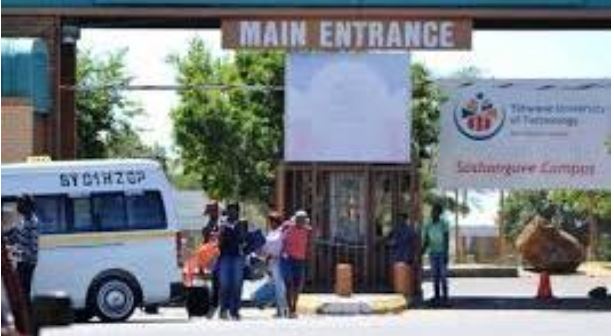
Students at both Tshwane University of Technology campuses in Soshanguve were scheduled to return to classes on Monday after six weeks of unrest.

The university announced on Friday that academic activities at the Soshanguve North and South campuses would resume today.

Management of the university had suspended academic activities at both campuses after students protested following the fatal shooting of student Katlego Monareng in August, allegedly at the hands of police.

The third-year student was killed during demonstrations that followed allegations that the SRC election at the Soshanguve North campus had been rigged. Both the killing and election rigging allegations are under investigation.

Since Monareng’s death, there had not been peace at the two campuses. Students protested, demanding justice for their comrade.

“The first week of sitting at home was fun, but as time went by it became frustrating,” she said.

Makonyana said as much as it was sad that they had lost one of their own, they had to be realistic about things and go back to school to graduate.

Lindokuhle Ndlandla shared the same sentiments and said it was about time they went back to classes.

However, the first-year education student said she was not sure there would be enough time for them to catch up before they write their final exams.

However, the university spokesperson Willa de Ruyter said faculties would arrange catch-up programmes and tests with students.

De Ruyter said violent protest action and damage to property that posed a serious risk to the safety of students and staff at both campuses had left the university no choice but to suspend activities in order to restore normality.

Students were allowed to return to residences from yesterday in order to prepare for the resumption of normal activities.

“A security contingency plan was implemented which will require students to use only designated entrances to the campuses.

“ All students will be vetted before they can access the campus and only registered students will be allowed on to campus.

“Students will have to show a valid South African ID, student card and proof of registration for the 2018 academic year,” she said.

Final examinations at other campuses – except Soshanguve North and South campuses – will commence on November 12. Detailed information about exams for Soshanguve would be communicated upon their return to classes, De Ruyter said.

Zambia: Police torch UNZA hostel after throwing teargas

Staff Reporter

Zambia Police officers on Thursday night burnt a hostel at October block which houses female UNZA students during a student protest.

The protest which started around 22:00hrs on Thursday, continued until the early hours of Friday.

The students blocked the Great East Road as they burnt tires and brought down booths belonging to mobile service providers.

Students are demanding their meal and accommodation allowances which have been delayed since August.

The police officers were chasing after some students who had run towards the new residence for female students.

The officers continued firing teargas and in the process, one of the blocks at October hostels caught fire.

The female students, who hid in the block, scampered in all directions as others fell down and injuring themselves in the process.

The fire which started around 01:30, lasted for about 30 minutes.

Around 02:00 Hours, two Lusaka City Council fire trucks arrived on the scene but students had managed to quench the fire.

Lusaka Times

South Africa: Mom of bullied schoolgirl hits back at education department

Carla Coetzee

The mother of a six-year-old girl who’d been bullied at a Cape Town school has hit back at the Western Cape education department over claims they tried to help her daughter.

In an open letter to YOU (27 September), Bianca* wrote about how her daughter, Nellie*, had been emotionally and physically bullied by a classmate.

Bianca said her Grade 1 daughter’s self-esteem had been shattered, and Nellie had even told her she “didn’t want to live anymore”.

Bianca accused the school of not reporting any incidents of bullying to them as parents.

“We only found out about it when another mother phoned me and told me the bully had her hands around my child’s neck,” she said.

She approached the Western Cape education department but says no real solutions were put forward.

The department denied this, saying they had arranged for Nellie to see an educational psychologist and remedial specialist, and that Nellie had been observed during class and breaks. They stated Nellie had also been given sessions with an occupational therapist and trauma specialist at discounted rates.

But Bianca says the department is lying and that they didn’t “go the great lengths to address the situation”.

“They didn’t provide a remedial specialist for the bullying and definitely not twice a week,” Bianca says. “She wasn’t observed during breaks as they claimed.

“They observed her for one break and that is after we requested it after Nellie was booked off due to stress. That break they only observed her for 10 minutes. No occupational therapist or trauma therapist was arranged for Nellie as they claimed,” she adds.

Bianca also claims the bully wasn’t punished according to the school’s code of conduct and only received demerit points.

The department didn’t want to respond in detail to Bianca’s further accusations.

“The department will not comment further on this matter,” said the department’s spokesperson Bronagh Hammond.

“We have provided our version of events and will not comment on he-said/she-said allegations. The department wishes Nellie the best at her new school. It’s unfortunate that the mother continues to try to discredit the department after all the interventions that were put in place to assist her child.”

Nellie has since been removed from the school and is being home-schooled.

*Names have been changed.

YOU

Nigeria: ASUU, NANS warn against hiking tuition fee to N350,000

Muyiwa Adeyemi and Kanayo Umeh 

The Academic Staff Union of Universities (ASUU) has warned the Federal Government against increasing tuition fees in public universities to N350,000 per session.

The Ibadan Zone of the union alleged that the government has concluded plans to effect the increase, urging Nigerians to kick against it.

At the Correspondents Chapel office in Ibadan yesterday, the Zonal Coordinator of ASUU, Dr. Ade Adejumo, alleged that increase in tuition was the position of the Federal Government team led by Dr. Wale Babalakin, which the union has rejected. He urged Nigerians to join in the struggle to make the government do the needful to public education.

ASUU said it was kicking against government’s plan to establish education bank where students will beg for loans to attend public universities.

Flanked by the Chairman, University of Ibadan ASUU, Dr. Deji Omole, Osun State University ASUU Chairman, Dr. Femi Abanikanda, and the Investment Secretary of the University of Ibadan Chapter, Prof. Ayo Akinwole, Adejumo warned that unless the Federal Government is prevailed upon to honour the Memorandum of Action it signed with the union in 2017, it could not guarantee industrial peace and harmony on university campuses.

According to the Union, the issues in the 2017 Memorandum of Action that may lead to another strike include collapse of the renegotiation of 2009 FGN/ASUU agreement, non-release of over N2 trillion meant for the revitalization of decayed infrastructure in public varsities (2014-2018), failure to release the forensic audit on the disbursement of Earned Academic Allowances covering 2009 to 2017, failure to pay arrears of shortfall in accrued salaries in universities that have been verified under PICA, failure to release operational license of NUPEMCO, and needless proliferation of state universities.

ASUU said instead of the Muhammadu Buhari led-government to inject funds into the universities, its agents were busy indulging in propaganda that it has released N20billion to ASUU when in actual fact the funds were released to the management of the universities.

ASUU said it was laughable that a government could be happy releasing N20billion to about 64 public varsities in the country, wondering how significant this could be.

Also yesterday, the National Association of Nigerian Students (NANS) cautioned against hiking of school fees.

NANS President, Denielson Bamidele advised the government to live up to its responsibility of making education accessible to all Nigerians irrespective of class, improve the take home pay of Nigerian workers and provide basic amenities to improve the well being of millions of impoverished Nigerians.

“We reject the proposed idea of sharing cost of university education while claiming government alone cannot fund education as allegedly proposed by government’s chief negotiator.

“I wish to reiterate and remind the Federal Government of its order forbidding charging of tuition fees in Nigerian universities in May 2002, while urging it to maintain its constitutional responsibility of funding education in the country.”

The Guardian

Ads Blocker Image Powered by Code Help Pro

Ads Blocker Detected!!!

We have detected that you are using extensions to block ads. Please support us by disabling these ads blocker.