Home Blog Page 485

Botswana: Tertiary Education ministry fights corruption

Bakang Tiro

In an effort to combat what seems to be a continuous increasing level of corruption across almost all government departments and entities, the Ministry of Tertiary Education, Research, Science and Technology (MOTE) has laid down anti- corruption strategies and policies with the aim of monitoring and dealing away with corrupt outrages within the newly established Ministry.

This was revealed by the Ministry officials during a capacity building corruption prevention workshop this week aimed at sensitizing different heads and senior officials of the ministry’ sub divisions and the workshop also focused the strategies formulated by the ministry in an endeavor to create at least a free  corrupt entity.

Deputy Permanent Secretary in Ministry of Tertiary Education, Dr Kekgonne Baipoledi noted that corruption is a major source of concern hence there is a need to draw good initiatives for the implementation of anti-corruption hence the leaders and heads of departments should lead a key role in facilitating the effectiveness of the strategies for the fight against corruption.

He also said that the MOTE has formulated policies signed and endorsed by the leadership of the ministry. “There is a need to minimize the incidents of economic corruption crimes in the ministry and mitigate against the risks that may allow corruption to occur and capacity building when dealing with the issue of corruption must with due diligence be exercised” he charged.

The Deputy Permanent Secretary further hinted that for the well capacitated compliance purposes, Corruption Risks Assessment (CRA) at all departmental level should be implemented with regular checks on the operations of each and every division, citing that if not this is done the tendencies of indulging in corruption dealings might be rampant hence the ministry will be in crisis as it has been evidenced on some.

He also cautioned that the employees of the ministry should not find themselves caught in crossfire with regards to the tendering processes and encouraged that the declaration of possibilities of conflict of interest should be paid attention as this will ensure transparency, Openness and accountability in the instances where it realized that something fishy has occurred in the running of affairs.

Meanwhile the anti-corruption committee coordinator in the ministry Peter Mafokate alluded that the ministry has so far registered four (4) cases of corruption allegations since 1st of April this year  and three of such cases have been successfully investigated with one case is still pending with investigations are still on-going. He noted that three (3) cases were recorded in the Human Resource division and one (1) under the Finance and Administration.

Mafokate indicated that the Ministry’ Anti-Corruption Policy has been rolled out to the Ministry staff and Corporate Services and with all the corruption prevention committees initiating capacity building for the leadership on corruption fighting strategies.

“A total of 667 out of target 770 employees have been sensitized on corruption and this constitutes 86% of the efforts to drive the fight against corruption within the ministerial levels. The Transactional Monitoring and evaluation which is done four times a year has so far been done twice in departments such as DTEF and this a form of internal auditing ‘’ he said.

MOTE, DCEC collaboration

To effectively ensure that the efforts of corruption crackdown becomes more successful, the ministry of tertiary education is working hand in hand with the corruption agency, the Directorate of Corruption and Economic Crime (DCEC) to help in investigating and rolling out of the Corruption Risk Assessment and Management (CRAM) which is a model that taps on risks that may lead to the potential harm due to    the excessive amount of corruption which may left unrecognized and cracked down.

Corruption Prevention Committees within MOTE have forged relationship with the DCEC’ Corruption Prevention Division and the representative from DCEC Lincoln Diteko contended that Corruption Risk Assessment and  Management helps in identifying gaps that may allow corruption to occur and it conducts risks in risks such as bribery and fraudulent activities.

Diteko echoed that CRAM is very important to be actively and seriously implemented in the ministry as this will make it easier to early detection of any corrupt related scandals.

The Patriot 

#JobSummit: Experience a major barrier for young job seekers

0

Lameez Omarjee and Tehillah Niselow

Experience as a requirement for job applicants is one of the biggest challenges for youth seeking to enter the labour market, according to the National Youth Development Agency (NYDA).

The two-day Presidential Jobs Summit which kicks off on Thursday in Midrand, Gauteng will see different stakeholders come together to find solutions for SA’s growing unemployment, the current rate is at 27.2%.

According to Statistics South Africa’s Quarterly Labour Force Survey for the second quarter of 2018, youth unemployment was 38.8% compared to the 17.9% rate for adults.

NYDA has put forward its proposed solutions for youth unemployment. NYDA spokesperson Lerato Gambu pointed out that “experience” of as much as five or 10 years is a hindrance for youth seeking to enter the labour market.

For this reason government, business and organised labour set up the Youth Employment Service (YES) initiative which will place one million unemployed youth in paid internships over three years.

However, Gambu said that these internships should result in the youth being employable once the internship is over, as opposed to them becoming unemployed once again and “languishing in poverty”.

“We welcomed the YES initiative. In as much as we agree with it, it should be turned into an employment agent,” he said.

There are hopes that the YES initiative will be expanded after its pilot.

Isobel Frye, director at the Studies in Poverty and Inequality Institute and member of the financial sector campaigns coalition, said members of the Nedlac community constituency have recommended a National Youth Service which envisions a year-long placement programme to assess young people’s skills and give them experience in the world of work. This was not a military service campaign necessarily.

Frye said the community sector, which represents jobless people at Nedlac, is deeply concerned by the youth unemployment trends and suggested that de-skilling is taking place if one considers how many young people are not in work or education or training.

Among proposals from NYDA include having private sector companies actively seek to employ youth and ring fence advertised jobs for those aged between 18 and 34, according to Gambu. There should also be greater mentorship in the workplace, to prevent dropouts and to increase retention.

The agency also called for the experience gained in internship programmes to be recognised. Further, the Expanded Public Works Programme – which provides temporary work for the unemployed – should be converted to permanent employment.

NYDA also proposes that informal skills, other than matric or tertiary qualifications, be recognised by the job market. Gambu explained that a lot of youth work with their hands – skills which do not necessarily require formal qualifications.

Lower data costs, meanwhile, would ensure broadband access for job seekers. NYDA also wants transport costs to be subsidised and funding through the form of grants and not loans, to be provided for youth embarking on small enterprises.

Gambu explained that government revive local industry to create more jobs, instead the most recent statistics show that the greatest amount of job shedding took place in the manufacturing sector in the last quarter.

The agency is hopeful that the summit will yield “tangible results” that will benefit young people, according to executive chairperson Sifiso Mtsweni.

EFF student movement claims SRC victories across SA

Okuhle Hlati

The Economic Freedom Fighters Student Command (EFFSC) have claimed victory over the DA Student Organisation (Daso) after securing eight out of 15 seats during the hotly contested Student Representative Council (SRC) elections at UCT.

Daso secured three seats, followed by the South African Students Congress with two seats and VI (independents) two seats.

The EFFSC claimed victory at the Cape Peninsula University of Technology (CPUT) Mowbray campus at the weekend, saying they were confident they would also dominate the elections on their two biggest campuses, the Cape Town campus and Bellville campus, this week.

The student organisation also came up tops in KwaZulu-Natal’s Durban University of Technology, University of Zululand and Mangosuthu University of Technology.

Universities across the country are holding SRC elections. “On Sunday we woke up to the exciting news that we won the elections (at UCT). Eight of our people contested and all got in.

“We were in charge of the campus in the middle of 2017 as well, but Daso took nine seats in the elections after that. We are excited that we will have an opportunity to implement our policies again and advocate for the policies of the EFF,” said EFFSC provincial chairperson Sinawo Thambo.

Thambo said they ran a campaign which promised to address issues of graduates, suicide, sexual harassment and rape culture which were prevalent across all universities.

“We are involved in developing a mental health policy and getting the clinic at the institution to be well facilitated and capacitated with qualified professionals.

“The medical interventions will be free and a policy on sexual harassment and rape culture on how the institution deals with them.

“We will also be challenging the National Benchmark Test (NBT) system which requires pupils to write an exam to be able to get access to UCT.

“We feel that the NBT is very exclusionary especially to students from disadvantaged high schools. Our aim is to leave long-lasting policies at UCT,” Thambo said.

EFF national leaders, including its president, Julius Malema, and his deputy, Floyd Shivambu, as well as party spokesperson, Mbuyiseni Ndlozi, congratulated the student members.

UCT spokesperson Nombuso Shabalala said: “Preliminary results of UCT Students Representative Council elections indicate that the EFF Student Command has won.

“Out of the first 15 candidates duly elected, there are nine women and six men. The final results will be released pending the finalisation of outstanding issues by Wednesday.

“It is important to add the elections went smoothly with a total 41 candidates and a higher voter turnout than in the 2017 elections.

“In the last five years, UCT has worked well with a number of student political formations who have won the SRC elections. Similarly, we are looking forward to working with and engaging with the incoming entire SRC.”

Daso could not be reached for comment. Unhappy CPUT students at Cape Town and Bellville campuses accused the institution of playing delay tactics after SRC elections did not go ahead in both campuses yesterday.

“There have been delays with regards to the format of the voters roll. The Independent Electoral Commission confirm the elections will start tomorrow (today) and continue Wednesday at the two campuses,” said CPUT spokesperson Lauren Kansley.

Sweden cuts funding to universities

Stephen Otage

The Swedish government yesterday announced that it is discontinuing funding research at public universities and re-directing its resources to promote democracy, human rights and the rule of law.

“The issue of funding universities is a matter of development of and for a country, and needs to be steered nationally,” Mr Per Lindgard, the Swedish ambassador to Uganda, said.

“We expect the government of Uganda and the universities shall allocate more local funding to post-graduate training and research and that new ways of partnership shall be promoted,” he added.

News of the announcement caught Education ministry and universities’ executives off-guard, with the former unable to respond to our inquiries on whether the government stood ready to step in and fill the gap.

Sweden has over the past 15 years injected $101m (Shs374b), an average of $6.7m (Shs25b) per year, in public universities-led research.

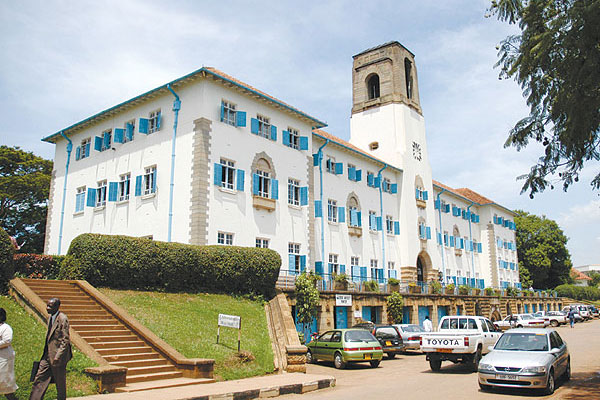
Uganda currently has nine public universities, although Makerere, the country’s oldest and largest university, has been the biggest recipient of the Swedes’ cash.

Beneficiary

Prof Barnabas Nawangwe, the Vice Chancellor, acknowledged yesterday that the Swedish government support for research had helped the institution to hone the skills of its upper-tier academics and their published works have lifted Makerere on global ranking.

The institution is ranked 14 in Africa, according to the 2018 Webometrics Ranking of World Universities, an initiative of the Spain-based Cybermetrics Lab owned by Consejo Superior de Investigaciones Científicas (CSIC).

Prof Nawangwe said money from Stockholm had helped the university train 220 doctoral students and double graduate students over the past 15 years.

“This contribution has been tremendous and it has had a major effect,” he said, unsure where the institution will find an alternative.

Significant government funding for research is currently under presidential initiatives which are available for scientists in banana research and other prospecting local car assembling under Kira Motor Corporation.

Mr Patrick Muinda, the Education ministry spokesman, declined to respond to our inquiries on whether they were prepared to take over university research financing.

Speaking at Monday’s annual joint review between public universities and Swedish International Development Agency at Makerere University main hall, ambassador Lindgard said their new development cooperation framework with Uganda for 2018-2023 has necessitated resource realignment for greater “respect for human rights, rule of law, a stronger democracy and greater gender equality.”

“The lesson learned from the cooperation [with public universities] so far is that funding universities cannot only be left to international donors. This would indeed not be sustainable,” he stated in a speech.

Prof Buyinza Mukasasi, the director for graduate training at Makerere, said growing cases of diabetes, high blood pressure and cancer require scientists to have a fully-equipped modern laboratory to research and find solutions to such non-communicable diseases.

Sadtu blames assaults on teachers on Cosas’ call for pupils to retaliate if beaten

Bongani Mthethwa

The SA Democratic Teachers Union (Sadtu) in KwaZulu-Natal has blamed the escalation in attacks on teachers by pupils on a call by the Congress of SA Students (Cosas) for school children to retaliate if beaten.

The teachers’ union has called on Cosas to take full responsibility and do something about a spate of recent incidents which included the murder of a North West teacher who was allegedly stabbed to death by a pupil while another teacher in Gauteng was threatened with a gun by a pupil.

Sadtu’s KZN provincial secretary Nomarashiya Caluza said the surge in violent incidents in schools where “brutality amongst pupils and also gruesome attacks directed to pupils by outsiders and pupils to educators is both unbelievable and unfortunate”.

While Caluza mainly attributed violence in schools to societal problems‚ she reserved a hard stick for Cosas after they issued a statement six years ago calling on students to retaliate when if they were beaten by teachers.

“We call on all students to fight fire with fire‚ when teachers hit you‚ you must hit back‚” said Cosas’ Ntsako Mogobe‚ who defended his statement‚ saying teachers were failing in their duty to teach.

But at a Sadtu media briefing in Durban on Tuesday on various issues‚ including violence in schools‚ Caluza took issue with Cosas and asked them to withdraw that statement.

“We think Cosas must do something because if we look back‚ since Cosas issued a statement that children must beat teachers and that was when this thing escalated. So Cosas itself has a job to do by talking to the children because the majority of them are Cosas members‚” she said.

“Cosas must take responsibility and talk openly and withdraw that statement‚ then we think something can happen.”

She said society also had a responsibility because violence in schools was a reflection of what was happening in society. She also called for a return to the old ways of an African proverb that says “it takes a village to raise a child”.

“It’s a societal problem. Society itself must have programmes to resolve this thing. If we can go to the times when a child belonged to everyone in society‚ that would be better. When we grew up we knew that our parent was not only our biological parent.

“So even the way you behaved you did not behave just for your parent. Every parent and elder in the community had a responsibility of reprimanding a child who misbehaved. And parents should not shirk their responsibility to teachers because that’s the most serious problem teachers are faced with‚” said Caluza.

She said while the teachers’ union had called for the protection of teachers by providing schools with security guards‚ they had observed that these very people could not prevent killings in schools.

“They don’t have capacity and we have been raising this thing. Security guards can be appointed‚ they must be there just to control access to the school but they can’t search what you’re carrying because they do not have that mandate‚ which then exposes not only pupils and teachers‚ but even security guards themselves.”

But Cosas president John Macheke hit back at Sadtu‚ accusing the teachers’ union of being the cause of violence in schools by allegedly beating pupils despite corporal punishment being outlawed in the Schools Act of 1996. “Teachers are the ones who created monsters through corporal punishment. The violence that we’re having today is a result of corporal punishment. We are also having learners being sexually assaulted by teachers who are Sadtu. Teachers who beat learners in our schools are members of Sadtu.

“It cannot be then that we are the ones who are the cause of violence in schools. There is no parental care in schools. When we are in school we regard teachers as our parents but a person who disrespects me in the classroom is not a parent. They are the reason we are having violence in schools because they started ‘moering’ [beating] learners and we had to fight fire with fire‚” said Macheke.

He added that education was a societal issue and every one‚ including parents‚ teachers and learners‚ must come on board to deal with the issue of violence in schools.

“Education is a societal issue and everyone must come on board. We cannot be blamed because a learner has killed a teacher in North West. Sadtu must stop lying and they must go back to the drawing board as they are the cause of what is happening in schools‚ he said.

Rwandans urged to embrace e-learning

Diane Mushimiyimana


The Minister for Education, Eugene Mutimura, has encouraged students and the public in general to embrace eLearning opportunities to evolve better in the digital era, which he said is increasingly transforming the world.

He was speaking at the eLearning Africa Conference in Kigali which started yesterday, bringing together different stakeholders in the education sector from different countries.

It brought together high level policy makers, decision makers, business and government officials from across the continent to look at how technology can break barriers, enabling Africans to share knowledge, learn and prepare for the future together.

In total, over 900 delegates from Africa and beyond are taking part.

Mutimura said that with improving connectivity, and growing use of digital technologies in Rwanda, there are many opportunities for people to get training in the Learning and Development domain.

“Online learning most especially appeals to strike a balance between family, work and education; this can be their best option for it offers a flexible way to follow lessons from anywhere and anytime. What matters is for them to organise themselves effectively and choose the right programme,” he said.

He pledged the government’s support to ensure that existing challenges, mainly internet connectivity and its cost, are tackled.

On the other hand, the conference organiser and the founder of eLearning Africa, Rebecca Stromeyer, said that Africa is full of opportunity and promise. However, in order to seize the opportunity, Africans must come together and ensure that the whole continent is fit for the future.

“We hope that this conference will offer the means of sharing knowledge and experience, breaking down barriers to communication, giving all Africans a chance to learn and acquire the skills they need to succeed,” she said.

Besides the conference, an exhibition was organised as part of the meeting and it has attracted leading international manufacturers of eLearning aids, as well as suppliers and service providers who are using the platform to present their latest products and services.

The New Times

Sundowns academy coach Isaac Shai aims for another Percy Tau

Gomolemo Motshwane

Mamelodi Sundowns legend and academy coach Isaac Shai believes it won’t be long before they produce the next Percy Tau.

Shai coached Tau at under-15 level at the club’s academy which is housed at Clapham High School in Pretoria.

Tau went on to become the most expensive player in SA history following his R50m-plus move to English Premiership club Brighton & Hove Albion.

Clapham are currently competing to defend their Copa Coca-Cola title taking place in Kwazakhele in Port Elizabeth. The tournament kicked off yesterday.

“At the moment we have a good group of players who are very talented and there is potential for one or two to follow in the footsteps of Percy,” Shai said.

“But I also think that they can make their own history and make their own names. Football has shown us that it is a career that can take you places so Percy going overseas has opened the players’ eyes and made them be able to dream.”

There are nine teams taking part in the competition with each province represented. Clapham are one of the favourites to lift the title but they face tough competition from Durban’s Glenwood High School.

Playing in their home province, Malcomess High wanted to make an impression in front of their supporters. Their coach, Tieho Rantho, said his team was confident of beating the odds against the best schools in the country.

“I find these players from our area in Aliwal North and I can say that there is a lot of talent in our region. There is a bit of pressure on us as we are the home team but I have no doubt that we will do well and represent our people well.”

Earlier in the day, Malcomess drew 2-2 with Moroka and weer later defeated 1-0 by Seiphemelo.

Sowetan

South Africa: Teachers demand protection

Kamogelo Senna

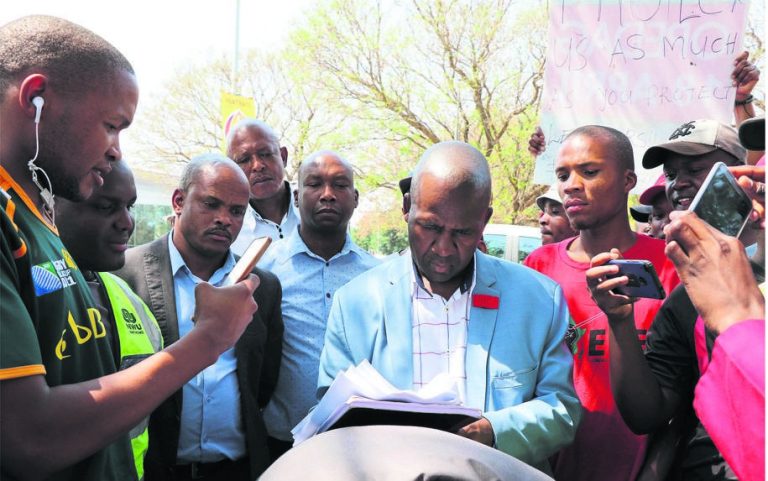
Student teachers from North West University in Mahikeng marched against the killing and abuse of teachers by pupils on Thursday.

Joined by many community members and teachers from local schools, they called for protection.

They started at the university and proceeded to the North West Department of Education offices.

Amogelang Mokanyane, co-ordinator of the safety awareness campaign at schools, said they needed a police presence in schools during working hours. They also wanted pupils’ rights to be limited.

One of the organisers Paseka Molete, who is an education student, said they were taking action with heavy hearts.

This comes after many incidents of teachers being abused, attacked and killed by pupils in schools.

In the latest incident, teacher Gadimang Mokolobate was stabbed and killed by a 17-year-old pupil who is now in a place of safety.

“We are the most discouraged, yet expected to be motivated. We wrote this memorandum with tears because of the reluctance of those who are supposed to protect us.”

The marchers asked for harsh sentences and action against pupils who abuse teachers.

They said searches must be conducted and school governing bodies needed more power to run schools with teachers and to develop their own disciplinary measures.

They said the SA Council of Educators should not act only when it teachers were in the wrong.

They also wanted social workers and psychologists employed at schools to help troubled kids.

North West MEC for Education, Sello Lehari, accepted their memorandum and promised to respond.

Dunoon youths get opportunity to become film-makers

Peter Luhanga

A Cape Town non-profit film training organisation was selected out of hundreds of organisations worldwide to receive a United Nations Youth Solidarity Fund grant. The grant is administered by the United Nations Alliance of Civilizations.

MyDunoon was one of only two organisations from Africa who applied for the grant. It has paid off well, with beneficiaries of the programme being nominated for an audience award in an international film project.

With the experience of seasoned filmmakers working for the organisation, MyDunoon used the funds to train youth in digital film production and introduce them to opportunities in the film and acting industry.

35 youths from Dunoon, some South African and some from neighbouring countries, were recruited to take part in the training that began in June and ran for three months. Lessons took place on weekends at Dunoon Sophakama Primary School. After lessons the participants went to locations within the township to film.

After learning film language, and the technical and creative skills required to produce films, the trainees shot six films in the township’s streets and informal settlement alleyways.

Of the six films, which are between seven and nine minutes long, three were submitted to this year’s annual 48 Hour Film Project. This is when people across the planet are given a weekend to make a film.

One of the trainees, 21-year-old Zizipho Gontsi, said that a short film her group produced was nominated for the best use of props and the audience award.

The film is titled Uhambo [The Journey]. It is about two people who get to know each other when they are faced with the challenges of being on a mountain together.

Participating in the creation of this short film has resulted in Gontsi receiving a scholarship to study a three-year film production course at City Varsity next year, she said.

Gontsi said the MyDunoon training taught her how to operate a camera, write a movie script, production management, cinematography, and design. The training, she said, focused on practical aspects rather than theory.

The training has also seen Tanzanian Nicas Pillu awarded a scholarship. “I feel good to have won a scholarship to study an eight-week course in acting,” said Pillu.

“I have been in South Africa since 2009. It is great to do what I have always wanted to do, but due to lack of funds I was unable to pursue my dreams,” he said.

The MyDunoon founder is Christine Fyvie. “We challenged them on prejudice and bias and told them the benefits of working with diverse people,” said Fyvie. “Through that we created films around the topic of diversity. The aim was to challenge the xenophobic attitude within the community. We did this through making powerful stories.”

Fyvie did not want to disclose how much funding MyDunoon received from the UN grant but according to the UNAOC website, the Youth Solidarity Fund awards grants up to $25,000 (approximately R350,000).

The short films were given a public screening in the Dunoon community hall on Heritage Day.

GroundUp.

Botswana: Association grows hockey in schools

Keswetseng Samokunda

Botswana Hockey Association (BHA) has introduced development programmes to grow the sport.

The targeted areas include Kanye, Lobatse and Jwaneng in the southern part while in the northern part, the association targeted Maun, Kasane and Francistown.

Speaking during the Maun Hockey Club schools tournament held in Maun recently, BHA president, Unaswi Matebu, said the association worked to promote, develop and facilitate hockey throughout Botswana with emphasis on participation, interaction and enjoyment from a larger base of players.

The tournament brought together public and private schools.

Matebu said BHA also provided an opportunity for skills development through sport. “Because of limited resources, we have started in Maun schools where we introduced the sport. We want to attract more students and stakeholders so that they appreciate the sport code,” she added.

Matebu noted that in Maun, they managed to attract few schools of Moremi and Botswelelo Primary School as well as Leapotswe English Medium School.

She said they wanted to start from the roots hence, engaging primary schools.

She also appreciated that young people were falling in love with the sport, something that gave them hope that the sport would grow with time.

Matebu encouraged parents to let their children decide which sport they wanted to join, adding that hockey was as good as any sport.In addition, she said, hockey was also a high paying sport like football and athletics.

Matebu said they were working around the clock to meet  requirements of affiliating to Botswana Integrated Sports Association (BISA), which is an affiliate of Botswana National Sports Council (BNSC), and the Confederation of Schools Sports Associations of Southern Africa (COSSASA).

BHA was formed in August 1992 and affiliated to the Botswana National Sports Council, the Botswana National Olympic Committee, the African Hockey Federation and International Hockey Federation..

Matebu said they implemented sustainable programmes that promoted development of playing facilities, provision of equipment for development and provide opportunities for players to improve their performance levels.

Bopa