Home Blog Page 49

NSFAS in top gear for 2026 applications

By Thebe Mabanga

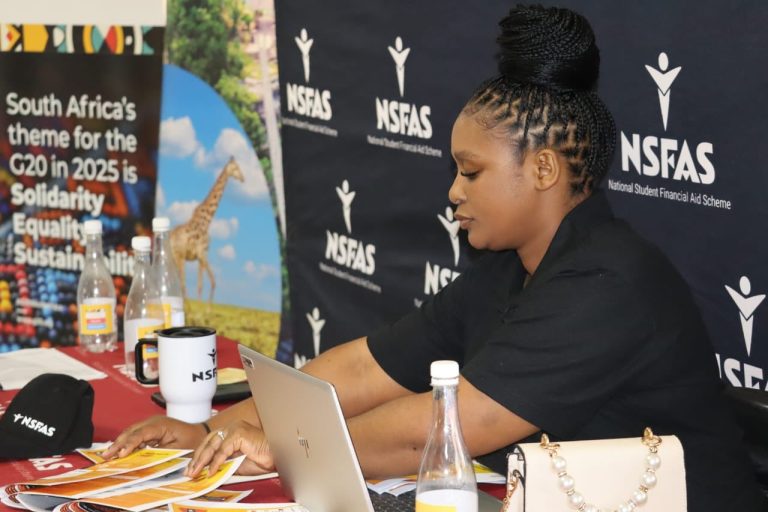
The National Student Financial Aid Scheme (NSFAS) is geared up for the 2026 academic year, with digitisation and the introduction of biometrics at the heart of the application process. 

The application cycle for a new academic year is the first under the leadership of a new board, led by Dr Karen Stander, and an executive, led by acting CEO Waseem Carrim.

Applications are set to close on November 15.   

“The application process is robust, user-friendly and supported by strong front-end and back-end functionality,” says Carrim.

“The larger challenge is the sustainability of NSFAS and its ability to provide ongoing medium-term funding to all qualifying, financially and academically eligible beneficiaries.” 

In mid-October, at the midway stage of the application process, over 420,000 applications had been received for the 2026 academic year, with thousands more expected before the closing date.

Carrim says NSFAS has introduced innovations such as digital signatures and storage of all forms and agreements.

They have also introduced biometrics for processes such as change of password and bank details, as well as physical identification of applicants and linking them to their institution.

This is particularly important for curbing fraud in instances where an applicant has applied through multiple institutions.  

Support is available by telephone, email, social media and walk-in applications, and a total of 80 consultants are available to assist with incoming calls. 

Applicants can apply at walk-ins at NSFAS offices, the National Youth Development Agency, TVET college campuses and youth desks at municipalities.

The Minister of Higher Education and Training, Buti Manamela, points out that learners and their families must be confident that if they apply for NSFAS and they qualify, they will get the funding, or if they are allocated accommodation, it will be decent. Rebuilding trust will be key. 

“The halfway mark on the NSFAS application window is upon us, and all prospective students who dream of studying at a university or TVET college next year must apply now. Don’t wait until the last minute; this is your chance to secure your future,” he said.

The Department of Higher Education and Training, together with NSFAS, has noted strong participation from matriculants, gap-year students, and returning learners. The department notes that many eligible applicants have yet to apply, especially from rural and township areas.

Manamela says there will be no extension or reopening of the applications and urged applicants who do not have their matric results to use their Grade 11 results and update these later. The minister called on teachers, university students, and community leaders to help learners apply. 

NSFAS funds studies to all public universities, universities of technology, and TVET colleges, and Manamela urged students and parents to explore all options, including TVET colleges, which he says offer a pathway to employment with the range of technical and vocational skills they offer, as well as artisan, technical, and entrepreneurial careers. 

“I would like to urge parents to look at their local TVET colleges. See where their children will study and inspect facilities such as workshops for engineering studies. If you want to become a fitter, a welder, a solar technician, or a cybersecurity analyst, this is your moment. Apply to NSFAS today and take the first step toward your qualification.”

He added that NSFAS teams, in collaboration with the Department of Higher Education and Training and SETAs, are visiting schools, community halls, and youth centres to provide on-the-spot assistance with applications and queries.

The department also announced that during this application window, it will be setting up an NSFAS War Room that will operate into the new academic year “until the last query is sorted and the last appeal is addressed,” according to Manamela.  

Beyond the application process, NSFAS is also grappling with challenges, including student accommodation as well as payment of allowances. 

Carrim says the structural challenges with accommodation relate to the availability of suitable accommodation, especially in rural areas. The construction of student accommodation in suitable areas is part of the government’s infrastructure drive.  

He says institutions must also look into how accommodation is allocated and not accept more learners than they can accommodate. NSFAS is reviewing which functions can be handed over to institutions and which can be handled by NSFAS in relation to accommodation and allowance payments. 

NSFAS is reviewing all contracts, including those with intermediaries for their services. 

INSIDE EDUCATION
Class of 2025: Grade 12 learners share their exam hopes, challenges, and strategies

0

By Lebone Rodah Mosima, Charmaine Ndlela and Thapelo Mpatlanyane

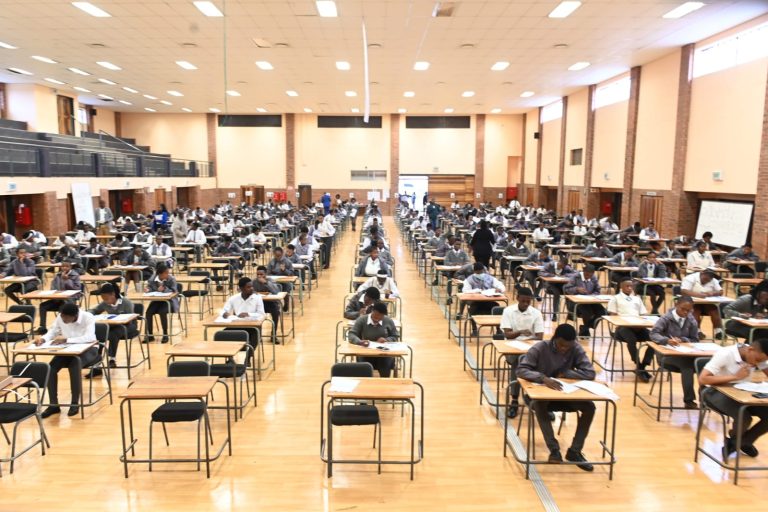
Ahead of the start of the final matric exams, Grade 12 learners across South Africa were putting in long hours to make this final stretch count.

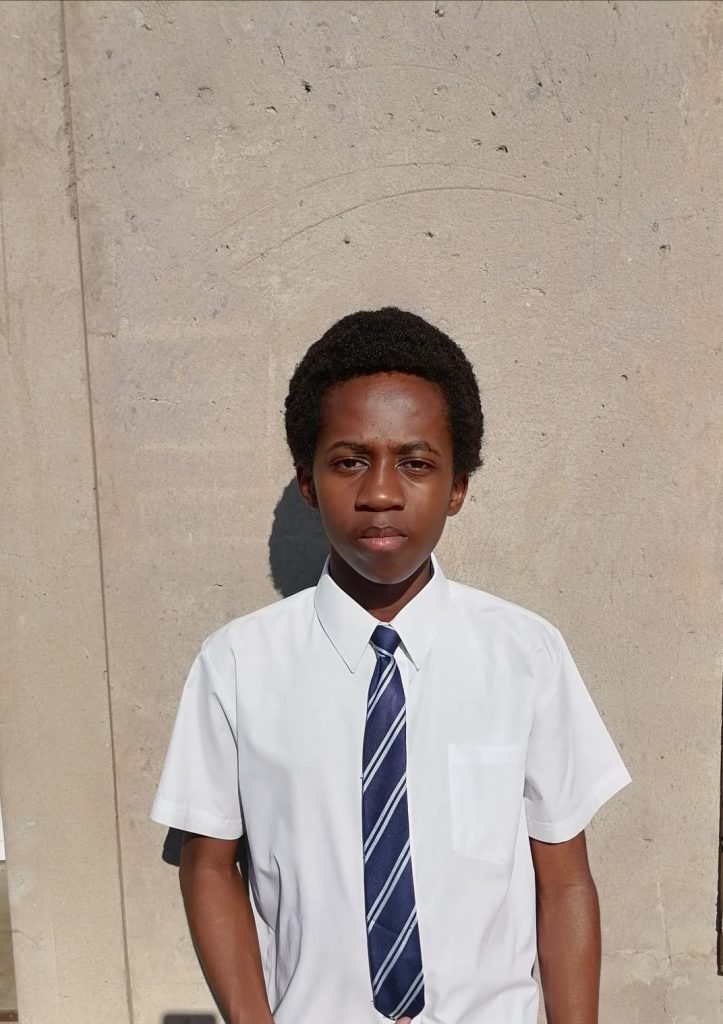
Mhlonishwa Hlatshwayo, from Kwa-Mahlobo Secondary School in Soweto, Johannesburg. PHOTO: Supplied

Mhlonishwa Hlatshwayo, 18, from Kwa-Mahlobo Secondary School in Soweto, Johannesburg, said he is giving his all to ensure a strong finish to his matric year.

“I follow a study timetable that helps me balance all my subjects,” he said. 

“I use past exam papers to test myself, attend extra classes at school, and also use online resources and summaries.”

Mhlonishwa is writing English, isiZulu, Mathematics, Life Orientation, Physical Sciences, Life Sciences, and Geography. 

He said Mathematics and Geography are his favourites “because they help me understand how things work and how people interact with their environment.”

Like many learners, he faced challenges along the way. 

“Load shedding is one of my biggest challenges where I stay,” he said. 

“Sometimes it’s hard to concentrate when there are power cuts at home. I also get anxious before big exams, so I’m learning how to manage stress better.”

Looking ahead, Mhlonishwa hopes to study Chemical Engineering or Architectural Studies. 

“I’m passionate about creating spaces that inspire people and shaping cities for the future,” he said.

He added that his school has been very supportive. 

“My school is giving us extra classes, past exam papers, and motivational talks, which really inspires me because they care about our success,” he said.

“Schools should provide time management and exam technique sessions to help us handle stress and improve performance. Organizing mock exams under real exam conditions would also boost our confidence.”

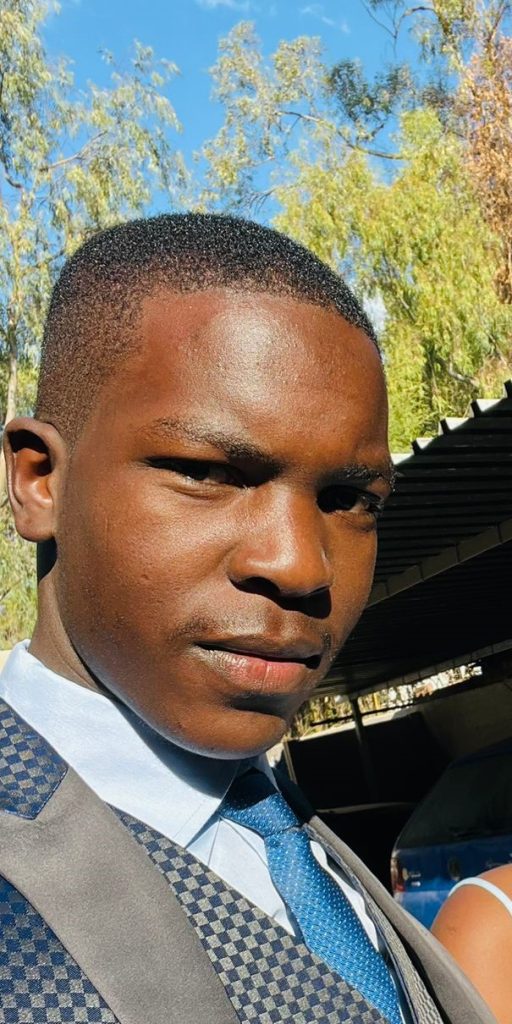
Asimbonge Bhengu, from Winners Academy in Blairgowrie, Randburg. PHOTO: Supplied

Asimbonge Bhengu, 17, from Winners Academy in Blairgowrie, Randburg, shared his study strategies as he prepares for his final matric exams in November.

“One of my strategies is to make a study plan and tackle my challenging subjects by practicing them every day,” he said.

His biggest challenge has been not having an Economics teacher for part of the year.

“Our school had to get a tutor to help us catch up,” he said.

After matric, Bhengu plans to take a gap year to do casual work and help his parents with tuition fees before enrolling at Richfield, where he hopes to study Supply Chain Management.

“I went to Richfield on one of their open days, and I saw that they offer courses related to supply chain management — something I’ve always wanted to study,” he said.

He admitted to being nervous about the upcoming exams.

“On a scale of 1 to 10, I’m at about a 6,” he said.

“My grades have dropped a little, so I need to push harder.”

Bhengu hoped that after completing his studies, he would be able to secure an internship in supply chain management to gain practical experience.

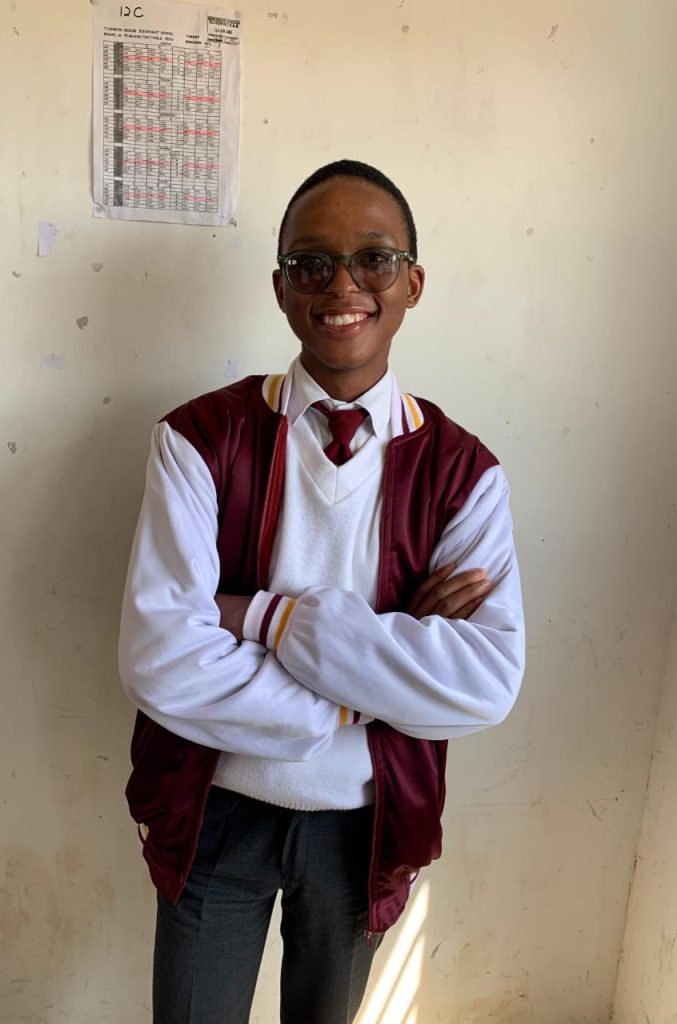
Bonolo Sibotho from Tlokweng Senior Secondary School in Makalakaleng, Sterkspruit, Eastern Cape. PHOTO: Supplied

On the other hand, seventeen-year-old Bonolo Sibotho from Tlokweng Senior Secondary School in Makalakaleng, Sterkspruit, said he was preparing for her exams by sticking to a study timetable and working through past papers.

“I’ve been reviewing my notes to understand concepts better and to focus on my weak points,” he said.

His biggest challenge is academic pressure.

“There’s a lot of work to cover in a short time, and it can get overwhelming,” he admitted.

“But I manage the pressure by taking short breaks.”

After matric, Bonolo plans to pursue a degree in Nursing. 

“I chose nursing because I love the healthcare field, I enjoy working with people, and it’s a profession that’s always in demand,” he said.

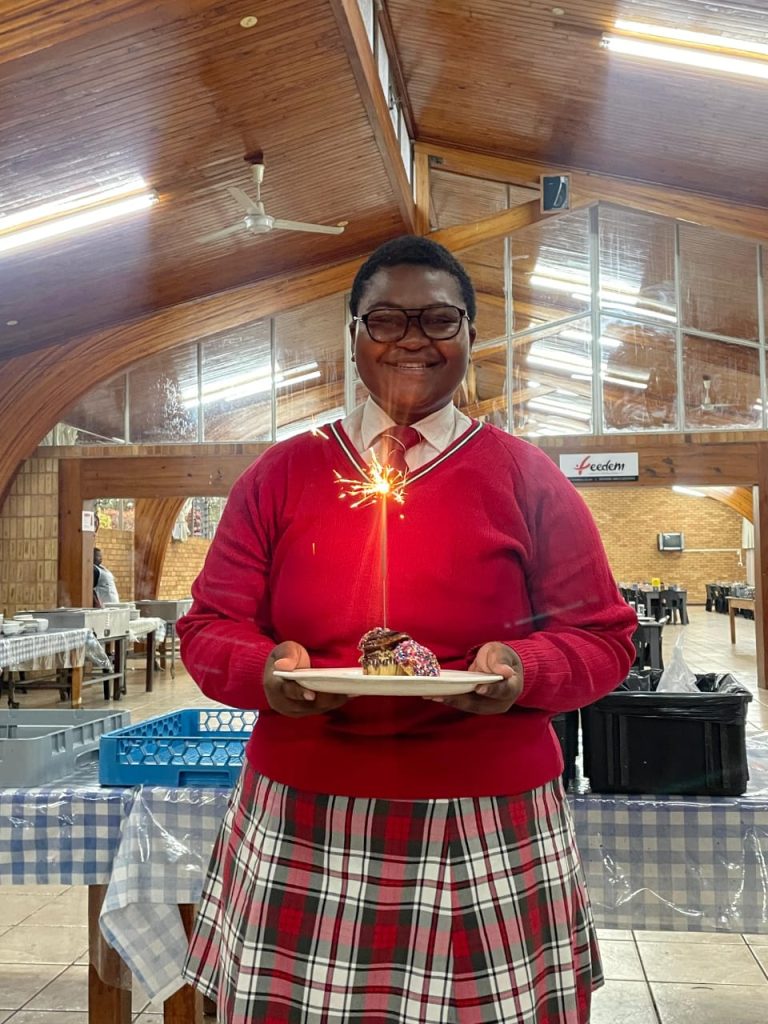
Hlamalani Sono from Hoërskool Ben Vorster in Tzaneen, Limpopo. PHOTO: Supplied

Eighteen-year-old Hlamalani Sono from Hoërskool Ben Vorster in Tzaneen said she managed her preparation by attending extra classes and writing her own notes.

“For subjects like Geography and Physical Sciences, I write down key terms while listening to music — it helps me remember better,” she said.

She admitted that her environment can be noisy, making it hard to concentrate, but she stays focused on her goals.

After matric, she plans to either study a Geography-related field or pursue pilot training at a flight academy.

“I want to improve my knowledge and experience and explore careers that connect with my interests,” she said.

Piletji Michael Thai from Hoërskool Akasia in Pretoria. PHOTO: Supplied

Eighteen-year-old Piletji Michael Thai from Hoërskool Akasia in Pretoria said he had a detailed and disciplined study plan.

“I follow a structured schedule from Monday to Sunday to stay consistent and focused,” he said. 

“Every morning, I start my day with daily devotion and quiet prayer before beginning my study sessions.”

Thai rotates between his main subjects — Mathematics and Physical Sciences — spending about six hours each day focusing on one of them.

As an Engineering Graphics and Design (EGD) student, he also practices drawing for two hours daily to sharpen his technical and design skills.

For his remaining subjects, such as English, Afrikaans, and Business Studies, he dedicates three hours a day.

“This balance helps me make steady progress across all my subjects,” he said.

He takes regular breaks, goes for walks to refresh his mind, and ends his study sessions by 10 p.m.

On Sundays, he focuses on church and family time.

He admits to facing financial difficulties.

“Being raised by a single mother, things can get tough, but I try to make the best of what I have,” he said.

Thai also struggles with procrastination when he feels overwhelmed, but he’s working on improving his discipline.

After matric, he plans to study Aeronautical Engineering at the University of the Witwatersrand.

“Since I was young, I’ve been fascinated by how planes and spacecraft work,” he said.

“Aeronautical engineering isn’t just a career for me — it’s a way to turn imagination into innovation.”

INSIDE EDUCATION

King Edward VII School crowned 2025 Inanda Hoops champions after thrilling final

0

By Johnathan Paoli

The 2025 Inanda Hoops Classic Challenge (IHCC) has come to an exhilarating end after four days of high-octane basketball that showcased the very best of South Africa’s young talent.

The tournament, hosted at St David’s Marist Inanda, concluded with a gripping finale on Sunday as King Edward VII School (KES) edged out St Benedict’s College 29–27 to claim their first-ever IHCC championship title.

KES team captain Siya Ndlovu, who was later named the tournament’s Most Valuable Player, said the victory was the result of months of dedication and belief.

“It’s an incredible win, we’ve worked tirelessly for this. Every game demanded focus and heart, and I’m proud that we delivered when it mattered most,” Ndlovu said.

For the Red Hoops of KES, it was a defining moment, one that crowned an unbeaten campaign built on resilience, tactical precision, and unrelenting teamwork.

Sixteen of the country’s top basketball schools competed across four pools, and early results made it clear that no team was safe.

Defending champions St Stithians College suffered an early and surprising exit after defeats to St Benedict’s and Michaelhouse, signalling a shift in the competitive landscape.

Hosts St David’s Marist Inanda started strong with victories over Redhill and Sacred Heart but fell short in their quarterfinal clash against Michael Mount Waldorf School.

Throughout the pool stages, several teams made bold statements.

King’s School Linbro Park remained unbeaten, while Hilton College impressed with decisive wins over St Peter’s College and Inanda Invitational.

Pretoria Boys’ High bounced back from a difficult start to dominate their later games, and Parktown Boys’ High displayed formidable composure in edging out St David’s by a narrow three-point margin.

The level of play was consistently fierce, setting the stage for a weekend of gripping knockout basketball.

Saturday’s quarterfinals provided both drama and heartbreak.

KES cruised past Hilton College in a performance that underlined their growing confidence, while St Benedict’s outplayed King’s Linbro in a fast-paced, physical encounter.

Michael Mount Waldorf continued their solid run by eliminating St David’s, and St John’s College overcame Parktown Boys’ in another hard-fought contest.

KES secured their spot in the final with a commanding win over St John’s, driven by sharp shooting and disciplined defence.

On the adjacent court, St Benedict’s edged out Michael Mount 31–29 in one of the tournament’s most intense games, setting up a highly anticipated Johannesburg showdown for the title.

The championship match was a spectacle of passion and precision.

Both KES and St Benedict’s traded baskets in a contest that swung back and forth until the final seconds.

With the score tied at 27–27, KES guard Bradley Moyo produced the decisive moment, stealing possession and finishing on the fast break to clinch a 29–27 victory.

Moyo’s performance, along with that of teammate Tim Fanny, earned both players recognition among the tournament’s All-Stars, while Ndlovu’s leadership throughout the four days earned him the MVP award.

By the end of the weekend, KES stood proudly as U19 champions, with St Benedict’s taking second place and Michael Mount Waldorf finishing third.

In the U15 category, St Benedict’s also enjoyed success, finishing ahead of St Stithians College and St John’s College.

INSIDE EDUCATION

Ramathuba rallies Limpopo matrics to break into top-five ranks

0

By Akani Nkuna

Limpopo Premier Phophi Ramathuba has called on the province’s matriculants to aim for a top-five national ranking in this year’s National Senior Certificate (NSC) examinations, urging learners to surpass last year’s performance through dedication and community support.

Speaking during the annual provincial virtual prayer session on Sunday, hosted by the Limpopo provincial government, Ramathuba said the Class of 2025 had the talent and support needed to excel.

“We know we can do better, and we will do better. This year, 2025, our province has registered a total of 127 000 learners, both full-time and part-time, who will be sitting for exams across 1 648 examination centres. Our target is very clear: Limpopo must break into the Top 5 performing provinces in South Africa and we remain committed to supporting every learner to succeed,” she said.

The prayer session united local and provincial officials, traditional and faith-based leaders, parents, and Grade 12 learners, offering encouragement ahead of the final exams, which begin on Tuesday, 21 October.

In the 2024 NSC examinations, Limpopo recorded an 85.1% pass rate (up from 79.5% in 2023), ranking sixth nationally. Ramathuba described the result as progress, crediting strategies introduced by the provincial education department, but she said the province was “not yet satisfied” and must keep striving for better outcomes.

The premier praised the province’s investment in e-learning tools, weekend camps, and revision programmes, calling them vital steps in addressing educational inequalities and improving performance in under-resourced communities.

But she cautioned that social ills, exam stress, and community disruptions continue to hinder learner success. She appealed for collective action to ensure a supportive environment during the examination period.

“To parents, we ask you to walk this journey with them. To law enforcement, we request strict action against any distractions that may undermine exam preparation. To teachers, we thank you. To communities, we urge unity and support,” she said.

INSIDE EDUCATION  

Chiloane instructs matrics to stay off social media until exams end

0

By Johnathan Paoli

Gauteng Education MEC Matome Chiloane has called on the province’s matriculants to disconnect from social media until the conclusion of the National Senior Certificate (NSC) examinations, saying it poses a serious risk to their emotional well-being and academic focus.

Speaking at the 2025 Grade 12 NSC pledge signing ceremony at Hoërskool Vorentoe in Johannesburg, Chiloane urged learners to exercise discipline and resist online distractions.

“I urge you to disconnect from social media during this critical period. These platforms, which can be wonderful tools for connection, too often become breeding grounds for anxiety, false information, and cyberbullying during exam time. I am not asking you, I am instructing you: stay off social media during your examinations. Your emotional well-being depends on it,” he said.

The MEC’s warning came as over 192,000 candidates across Gauteng took part in pledge signing ceremonies held at 1,040 examination centres, at which the committed to honesty and integrity ahead of the final exams.

At Hoërskool Vorentoe, where 221 candidates joined 169 learners from neighbouring Westbury Secondary School, Chiloane reminded the Class of 2025 that their educational journey was bound by a unique sense of destiny and shared purpose.

“In 2013, two significant events occurred. First, the Council of Education Ministers established this pledge requirement. Secondly, you, the Class of 2025, entered Grade 1, beginning a journey that brings you here today. Somehow, it is as if destiny aligned your educational path with this commitment to integrity,” he said.

The MEC praised the cohort for demonstrating resilience and adaptability through years of disruptions and change.

“Class of 2025, you carry a special distinction. As the 18th cohort to write the NSC examinations, you have navigated unprecedented challenges. You adapted to online learning, returned to modified classrooms, and still managed to master not just traditional subjects but new offerings like technical mathematics and sign language. Your resilience has already been tested and proven,” Chiloane said.

He emphasised that the NSC examination was a defining national milestone that could unlock future opportunities.

Chiloane reiterated the department’s zero-tolerance stance on exam irregularities, warning candidates that any form of cheating or misconduct would be met with serious consequences.

“No cellphones or watches in examination rooms, not in your pocket, not in your bag, nowhere. No disruptive behaviour. No unauthorised materials or devices. No giving or receiving assistance. No writing on behalf of another candidate,” he cautioned.

He further called on learners to play an active role in safeguarding the credibility of the exams by reporting wrongdoing.

The MEC also commended teachers, parents, school governing bodies, and community and religious leaders for supporting learners through their educational journey.

He said the collaboration between schools and communities demonstrated the power of collective effort in nurturing academic excellence.

“Be the cohort remembered not only for the highest pass rate, but for the highest integrity rate. Be the generation that made cheating obsolete. I want a 100% pass rate from you,” he said.

The 2025 NSC examinations will begin on Tuesday.

INSIDE EDUCATION

Operation Dudula says it won’t disrupt final exams, but anti-foreigner campaign at schools will continue 

By Lebone Rodah Mosima 

Anti-illegal immigrant group Operation Dudula has said it will not disrupt final matric exams, which start on Tuesday and run until the end November. 

But National Executive Committee member Thami Madondo told Inside Education that the group will continue its campaign to prevent the enrolment of undocumented foreign children at township schools, starting in January 2026. 

Earlier this month, Operation Dudula members visited a handful of schools in Soweto, saying that local children should be prioritised over foreign children. 

The schools were given “warning letters” saying the same, and “reminding” them of the status of foreign children under the BELA Act. 

“No foreign child should be accepted at [public] schools,” Madondo told Inside Education

He justified the school campaign under sections 32, 42 and 44 of the Immigration Act. 

Under Section 32, any person who is in the country illegally is required to leave the Republic unless the Director-General of Home Affairs has formally authorised them, in the prescribed manner, to remain while they apply for legal status. 

If an illegal foreigner fails to leave, an immigration officer may arrest, detain, or deport the person without the need for a warrant, provided it is done in accordance with the Act’s procedures and within prescribed time limits.

Section 42 of the same Act makes it an offence to knowingly assist, enable, or conceal an illegal foreigner, or to aid a foreigner in conduct that violates their visa or permit conditions, except when the assistance is necessary for humanitarian reasons.

These provisions apply only to individuals who have no legal status under the Act. They do not extend to asylum seekers or refugees whose applications are recognised under the Refugees Act, nor to documented foreign nationals who are lawfully in South Africa.

Madondo said the Immigration Act does “not exclude minors”. 

“[Illegal foreigners] should not be in the country in the first place,” he said.

Last week, the group accused basic education minister Siviwe Gwarube of breaching the Immigration Act by promoting the inclusion of illegal foreign nationals in public schools.

Operation Dudula’s claims came after a post on X (formerly Twitter) by the department, where it said it had “noted with concern information being circulated on social media about public school requirements,” and that under “the South African Schools Act (SASA), amended by the BELA Act of 2024, no child may be denied access to education because of missing documents”.

“All public schools are required to admit learners and provide education without unfair discrimination of any kind,” the department said. 

The department in the same post urged parents to verify school admission requirements through official department of education channels for South African nationals as well as foreign nationals, alerting them to stay informed and help stop the spread of fake news. 

But Madondo dismissed this, saying that Gwarube was breaching the Immigration Act, which places a legal obligation on government departments to report illegal foreigners to the Department of Home Affairs. 

Gwarube was also breaching the BELA Act, he said. 

“Even the BELA act itself specifies requirements that need to be followed in registering children of illegal immigrants in our public schools, including children who are South African born but don’t have IDs,” he said. 

He said the Immigration Act makes it “compulsory” for foreign learners to have the necessary documents, and for the law to be implemented.  

The Immigration Act, he said, was being violated by the entire South African government. 

The South African Constitution guarantees the rights of all children, irrespective of their nationality or immigration status, stating in Section 28 that the best interests of the child “are of paramount importance in every matter concerning the child”. 

The landmark 2019 Phakamisa Judgment also confirmed that undocumented learners must not be denied access to schools and education because of their status. 

But Madondo said various sections of the Constitution and the Acts were “misplaced” and “misused” or even deliberately “misinterpreted”. All of the country’s laws should be upheld, he said. 

“We are basically talking about these things daily because it’s not one section of the Constitution, and it’s not one section of the Immigration Act that has been violated,” he said.

He said that the Department of Home Affairs, in particular, has misinterpreted and misrepresented the Immigration Act and the Constitution. 

Operation Dudula has not confined its “activism” to schools. 

It has, together with anti-foreigner group March for March, previously also blocked access of undocumented foreign nationals to public health facilities in Johannesburg and Durban. 

Section 27 of the Constitution guarantees all individuals in the country access to healthcare, irrespective of their nationality or nation of birth. 

INSIDE EDUCATION

Warnings of ‘education apartheid’ as nearly 500 schools deny learners the chance to write mathematics

0

By Thapelo Molefe

Build One South Africa (BOSA) has sounded the alarm ahead of next week’s matric exams, warning that thousands of learners will be “robbed of opportunity” as nearly 500 public schools across the country still do not offer mathematics, a subject the party calls essential for South Africa’s future workforce and innovation prospects.

The warning comes just days before the Class of 2025 begins writing their National Senior Certificate (NSC) exams on Monday.

In a statement on Thursday, BOSA spokesperson Roger Solomons said the latest data, disclosed by Basic Education Minister Siviwe Gwarube, confirms that 476 public schools do not offer mathematics, effectively locking thousands of pupils out of career pathways in science, technology, engineering and commerce.

The minister’s written reply to parliament further revealed that 873 schools do not offer physical science, 1 534 do not offer accounting, 1 503 do not offer business studies, and 1 925 do not offer economics.

“This is a national crisis that exposes the deep inequities in our education system,” Solomons said.

“Without access to these subjects, learners are being set up to fail before they even begin. It’s a form of academic exclusion that limits their future and undermines the country’s potential to compete in the modern economy.”

The figures mirror concerns raised earlier this year in parliament, when MPs reacted with outrage to a departmental report showing that 462 public high schools had no mathematics classes.

As reported in May by Inside Education, the basic education department told the portfolio committee that most of these schools were small, under-resourced, or located in rural areas where low enrolment made it “impossible to offer both mathematics and mathematical literacy”.

KwaZulu-Natal, the Eastern Cape and Limpopo were identified as the most affected provinces.

At the time, the department’s director-general, Mathanzima Mweli, acknowledged that the problem was structural, citing “migration patterns and low enrolment” that led to teacher shortages and limited subject offerings.

Gwarube described the situation as “deeply concerning,” promising parliament that her department would deliver a full list of affected schools and accelerate interventions such as scholar transport and school mergers.

Despite these assurances, BOSA said that the issue remains unresolved, and has in fact worsened.

“This crisis has persisted for years, and learners in rural and township schools continue to be denied the same educational choices as their peers in better-resourced areas,” Solomons said.

“We cannot talk about equality or transformation when half the country’s children don’t even have the option to study mathematics.”

Education experts and government officials have repeatedly stressed the central role of mathematics in South Africa’s development.

At the Mega Maths Festival held at the University of the Western Cape earlier this year, Higher Education Minister Nobuhle Nkabane described mathematics as “the invisible engine powering visible progress,” calling for renewed investment in maths education and teacher training.

“Mathematics is a gateway to many professions, from artificial intelligence to energy, finance, and data science,” Nkabane said at the conference.

“We must reverse the upsurge in mathematical literacy, which we know does not assist in tertiary education enrolments in STEM fields.”

In its statement, BOSA said the shortage of qualified teachers, outdated infrastructure, and poor accountability systems have compounded the crisis.

The party announced that it will table detailed proposals before the newly established National Education and Training Council (NTEC) aimed at transforming the education system and addressing long-standing inequalities.

Among its key recommendations, BOSA is calling for the scrapping of the 30% matric pass mark, which it argues “entrenches mediocrity” and lowers academic standards. The party also wants the establishment of an independent education ombudsman to ensure accountability where schools and officials fail learners.

In addition, BOSA is pushing for improved teacher salaries and recruitment efforts to attract and retain qualified professionals, the introduction of a school voucher system to give parents the freedom to choose better-performing schools, and a nationwide teacher skills audit to ensure educators are properly aligned with the subjects they teach.

“For South Africa to thrive in the 21st century, every child — regardless of their postal code — must have access to the subjects that underpin innovation, entrepreneurship and economic growth,” Solomons said.

“We owe it to our children to fix this broken system.”

INSIDE EDUCATION

Gwarube, Manamela to launch teacher survey results at G20 education meeting

By Charmaine Ndlela

Basic education minister Siviwe Gwarube and higher education minister Buti Manamela will on 23 October officially launch the latest Teaching and Learning International Survey (TALIS) results.

TALIS is a large-scale international survey led by the Organisation for Economic Co‑operation and Development (OECD). It gathers detailed self-reported data from teachers and school leaders on their working conditions, teaching practices, and learning environments, which can be used in formulating policy.

The latest results were released earlier this month. Among the findings were that in South Africa, 63 % of lower-secondary teachers “agree” or “strongly agree” that the teaching profession is valued in society, compared with an OECD-average of 22 %. South African teachers also reported a heavy administrative burden, with the most common sources of stress including excessive marking (72 %), being held responsible for student achievement (70 %) and too much administrative work (66 %).

South Africa participated in the TALIS survey for the first time in 2018, and was the only African country to submit information on its schooling system at that time. Morocco joined in submitting data for the 2024 survey.

For the latest survey in South Africa, data was collected from 2 046 teachers at 169 schools across all provinces.

TALIS sampled about 280 000 teachers from 17 000 schools across 55 education systems worldwide.

The launch of the survey will be the culmination of the fourth G20 Education Working Group (EdWG) meeting that will take place on 20 and 21 October.

According to both departments, the EdWG will “bring together global education leaders to advance collaboration on key priorities shaping the future of learning”.

The Department of Basic Education said that discussions will centre on “quality foundation learning through strengthening Early Childhood Care and Education (ECCE) to improve learning outcome; mutual recognition of qualifications to promote global mobility, and alignment of skills and education professional development to empower teachers and leaders to adapt to the evolving world of work and innovation”.

UNESCO’s 2024 Global Report on Teachers found there was a critical shortage of teachers, with 44 million needed by 2030 in order for universal primary and secondary education to be advanced.

INSIDE EDUCATION

KZN education scrambles to pay subsidies as some special schools forced to close

0

By Levy Masiteng

The KwaZulu-Natal Department of Education has said that long-delayed subsidies to special schools will finally be paid on Monday, with affected institutions expected to receive the funds by Thursday.

In a statement issued on Thursday, the department attributed the delay to unforeseen technical glitches that disrupted its payment processing system.

According to the department’s 2025/2026 budget vote speech, there are 77 public special needs schools in the province, in which 22 077 learners are enrolled.

“The Department acknowledges the vital role that special schools play in providing quality education and essential support to learners with special needs. We extend our sincere apologies for the inconvenience and distress caused by the delayed payments,” the statement said.

Several special schools in the province were forced to close due to the department’s repeated failure to pay subsidies on time, including Truro Prevocational School in Chatsworth, which has officially closed due to insolvency, and Pro Nobis School for learners with special needs in Dundee, which is on the brink of closure after months of delayed payments.

As previously reported by Inside Education, the schools have been struggling to pay staff and cover essential expenses such as electricity, security, transport and insurance.

This week, the Democratic Alliance (DA) in KwaZulu-Natal released a statement calling on Premier Thami Ntuli and Education MEC Sipho Hlomuka to urgently address the funding crisis.

“This is not an administrative oversight – it is a violation of the rights and dignity of KZN’s most vulnerable learners,” said DA education spokesperson, Sakhile Mngadi.

Said Hlomuka in the department’s statement: “We value the dedication of special schools and their staff, and we appreciate their patience, understanding, and cooperation as we work to resolve this matter.”

INSIDE EDUCATION

Gwarube calls on matrics to uphold integrity ahead of final exams

0

By Johnathan Paoli

Basic Education Minister Siviwe Gwarube has called upon the Class of 2025 to approach their final examinations with honesty, integrity, and accountability.

Leading the National Senior Certificate (NSC) pledge signing ceremony at Harry Gwala High School in Makhaza, Khayelitsha, on Friday morning, Gwarube welcomed learners, educators, parents, and community members, saying the event was a final symbolic step before matric candidates begin their NSC examinations this month.

“To the matric candidates across the country, as you take the pledge today, remember that you are not just promising to be honest in your exams, you are promising to be honest in all that you do in life. May you go forward with pride, and may your efforts shine as brightly as your dreams,” she said.

Gwarube said the pledge was not a mere formality but a collective act of protecting learners’ futures, the credibility of the NSC examinations, and the integrity of South Africa’s education system.

The NSC pledge, introduced in 2011, requires all Grade 12 candidates to publicly commit to ethical conduct during their examinations.

It is intended to curb irregularities such as cheating, impersonation, and the sharing of exam content on social media.

Gwarube praised the resilience of the Class of 2025, acknowledging the challenges they faced over twelve years of schooling, particularly in a period marked by economic and social instability.

She urged learners to recognise that their achievements were not only individual but also communal.

“When you walk into that examination room, you carry the hopes of your teachers, your families, and your communities. Your success is a reflection of their effort as much as your own,” she said.

The minister linked the theme of integrity to the broader transformation goals of the basic education sector, saying that education must shape both intellect and character.

Gwarube said honesty and fairness were essential for the kind of society South Africa hopes to build, adding that the department’s focus extended beyond academic achievement to cultivating learners who embody empathy, respect, and responsibility, qualities that will define the future of the continent.

She encouraged learners to approach their exams with pride, confidence and self-belief, reminding them that their future success must be earned.

Gwarube also thanked teachers and parents for their continued dedication.

The NSC examinations will officially begin on 21 October, with more than 740,000 full-time and part-time candidates expected to sit for the national papers.

The department said that stringent measures remain in place to safeguard exam integrity, including electronic surveillance, improved question paper tracking, and closer collaboration with law enforcement agencies.

INSIDE EDUCATION