Home Blog Page 492

Violence plagues South Africa’s places of higher learning

Msindisi Fengu


Campuses of higher education are increasingly becoming violent places where students and staff are sexually assaulted.

The lack of clear policies makes it difficult for most universities and public colleges to deal with the scourge.

As a result institutions at times rely on the criminal justice system to deal with such cases.

Trends developed from academic studies and other sources by the Higher Education and Training HIV/Aids Programme, a think-tank of the higher education and training department, dating from the 1970s to 2016, recorded growing sexual and gender-based violence on campuses, with the emergence of sex for marks as another form between 2010 and 2016.

Between 1970 and 1980, the programme study reveals that gender-based violence was rife.

From 1991 onwards studies recorded more sexual harassment on campuses; more than half of the student population at 17 universities felt unsafe and 12% did not walk alone after dark. But there was activism.

Between 2000 and 2009 activism declined because of university mergers and the emergence of public colleges, which resulted in diminished attention to gender-based violence by staff. At the time, helping victims of gender-based violence was not seen as a legitimate use of time, the programme study reveals.

However, a study conducted by Wits University this year shares critical data of gender-based violence on campus. Although researchers warned that the Wits study should not be taken as a general picture of the situation in the country, the study shows a dire picture.

As a result, the programme is set to gazette a policy that would assist universities and colleges to deal with cases of gender-based violence on campuses.

Its work focuses on 26 universities and 50 public colleges, totalling 420 campuses.

As part of its contribution towards the development of the policy framework, Universities SA (USAf) – an organisation represented by 26 university vice-chancellors – found that at least five universities had gender-based violence policies in place.

The SA College Principals’ Organisation (Sacpo), which represents 50 colleges, revealed that four colleges reported having a policy specifically to address sexual violence, with a further 12 relying on the general student code of conduct to guide their handling of these matters.

In addition, Sacpo said three colleges referred these cases to the police; four referred cases to student support services, NGOs or social workers.

According to the Wits study, 26.9% of students, 17% of academic staff and 13.2% of the administrative staff had experienced at least one incident of gender-based violence, ranging from being subjected to unwanted displays of sexual material to being forced to have sex.

The study indicated that:

Women were more likely to experience gender-based violence (74.2% of students, 90.5% of administrative staff and 84.3% of academic staff);

Men were more likely to be the perpetrators, responsible for 86.2% of the incidents experienced by students, 88.8% of the administrative staffs’ experiences and 78.3% of incidents experienced by academics;

Academic and administrative staff experienced far fewer violent incidents than students (22 versus 206). Half of these incidents were intimate partner violence and the other half fell into one of three rape scenarios; and

Stigma was a challenge because when a perpetrator was drawn from the Wits community, the perpetrator was typically harmed by other students and the staff by their colleagues.

Programme researchers revealed that the effect of gender-based violence could lead to the victim having physical injuries, pregnancies, miscarriages, complications, emotional problems relating to suicidal thoughts, depression, alcohol and drug abuse, low graduate competencies and lack of concentration resulting to many dropouts.

Programme researchers also found that a high proportion – about 76.5% of 194 female students, who were sex workers from different universities and colleges, and were doing so to pay for their education and clothing.

Researchers found there were students involved in transactional sex and both these activities exposed students to high levels of gender-based violence.

According to the programme, research showed the prevalence of sex for marks was associated with lecturers threatening to withhold students’ notes or denying them the opportunity to write tests and exams.

Students who complained about a lecturer to another staff member were warned to stay out of trouble and avoid the lecturer’s office instead of being told about complaints procedures.

The study indicated that, when a student had been raped or assaulted by another student, his or her attempts to obtain justice and to feel safe were frustrated by campus security. Instead of detaining suspects or refusing them access to campus or residences, security guards were informing suspects about the allegations against them and allowing them to evade the consequences.

Faced by this lack of response, students would deregister from courses, leave campus, or fail and would not be able to obtain a study loan again.

Programme chief executive officer Dr Ramneek Ahluwalia said a study conducted between 2008 and 2009 showed a similar pattern of behaviour of students having multiple sexual partners, engaging in transactional sex and intergenerational sex.

“There’s no black, coloured or white. The pattern is similar at previously advantaged and disadvantaged universities. The epidemic is very high because of the freedom students have. Young people need to be careful,” said Ahluwalia.

But, he said, awareness interventions made by the think-tank programme had helped to curb the scourge.

Universities SA’s special projects technical adviser Managa Pillay said universities referred cases to the criminal justice system.

“The policy framework must address the gaps in the system and aims to strengthen university responses, making them victim-friendly, decisive and comprehensive, with high levels of accountability placed on the institution.

“USAf has played an integral role in the development of the framework, both as a lobbying agency and as a key member on the technical task team,” said Pillay.

Research showed that one of the challenges of gender-based violence was the lack of documented evidence and underreporting, Pillay said. The factors that contributed to underreporting included lack of trust in university structures and victims being dissuaded from pursuing formal complaints.

Read original article here.
Sport: From ‘no strategy’ to a youth strategy

Marc Strydom

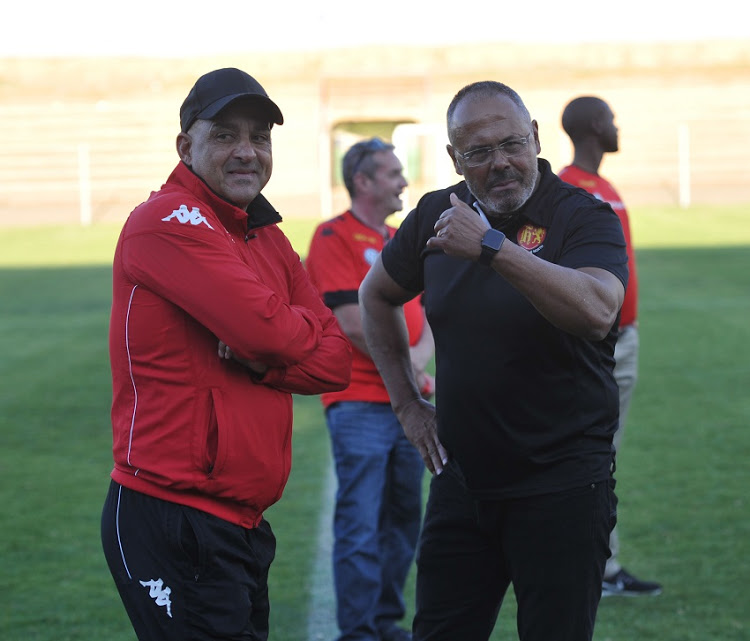
Highlands Park wanted to bring in youthful players with a hunger to prove themselves‚ who could serve the club with longevity‚ CEO Larry Brookstone has said explaining the promoted Premier Soccer League team’s signings.

Highlands‚ who have bounced back to the PSL a year after relegation as runaway champions of the 2017-18 National First Division (NFD) under Owen Da Gama‚ announced 12 signings this week.

Centrebacks Bevan Fransman (34) from Maritzburg United and Namibian Denzil Haoseb (31) from Jomo Cosmos‚ provide leadership and experience.

Most of Highlands’ signings are talented youngsters from the NFD‚ in a break from the strategy the club had when they were promoted via the playoffs for the 2016-17 season – where Park finished last – when they bought PSL clubs’ ageing rejects.

“OK‚ well‚ the last time we had no strategy‚ to be frank with you‚” Brookstone chuckled.

“Because‚ what do you do? You find yourself in the PSL via the playoffs and the fixtures are out the next day.

“So you kind of say‚ ‘OK‚ well‚ we’d better get what we can get. Who’s available? Come and sign’.

“And I’ll take full responsibility for that – it’s just a fact of life‚ it’s a setback that we’ve got to live with.

He continued: “This time we wanted to get a mixture of experience‚ youth‚ enthusiasm‚ athleticism.

“And also we needed to bring in players with whom who we weren’t going to have to sign another 12 players at the end of this season. We had to look at the longevity of this group.

“There were older players who were available. But our strategy‚ really‚ was that we wanted to get Bevan Fransman‚ because we felt he would be an integral part of what we wanted to do going forward.”

Among NFD players brought in are sought-after playmaker Mlungisi Mbunjana and left-back Ricardo Williams‚ both from Cape Town All Stars.

Nedbank Ke Yona talent search team right-back product Ricardo Versuur and Ivan Mokoena arrive from Super Eagles‚ attacking midfielder Siphesihle Zwane from Mbombela United and centreback Sello Motsepe from Real Kings.

Brookstone said that from competing in the NFD last season Highlands were able to identify the league’s leading talent.

“The players that we brought in from the NFD‚ we’ve monitored them for an entire season. At least half the season‚ or from whenever we played against them.

“So it’s not like we tried to do something on the cheap. We knew what those players were‚ and we knew what we were looking for.

“There was a specific strategy. And I think most players today that are in the PSL did play in the NFD at some stage.

“For example‚ Percy Tau was loaned to Witbank Spurs – and the nest season he was a top player at Mamelodi Sundowns.

“These young players have a hunger to prove themselves. So I’m satisfied with the approach.”

Asked what lessons Highlands learnt when they were first relegated‚ Brookstone replied: “Don’t get promoted via the playoffs.

“That’s why our explicit goal was to win this league [the 2017-18] NFD outright. We put the money and the resources there for that.

“The relegation to me‚ was not a failure. I think it was a blessing in disguise.

“The club had grown too quickly‚ too soon. We didn’t have the foundation‚ the infrastructure and what was required.

“And quite frankly‚ if we had survived‚ we would have just carried on battling each year because we wouldn’t have had the chance to get all our ducks in a row.”

Read original article here.

Kenya: Many teachers are quitting the profession

Winnie Atieno

More than 100 teachers have quit the profession following a government policy, implemented since last year, barring them from serving in their home counties, says the Kenya National Union of Teachers (Knut).

Speaking on the sidelines of the African Confederation of Principals at Pride Inn Hotel in Mombasa, Knut Secretary-General Wilson Sossion claimed that the so-called delocalisation policy is breaking many families whose kin are employed by the Teachers Service Commission (TSC).

Sossion said many teachers who were transferred have opted to resign or seek employment in county governments.

“A number have opted to take early retirement, others have moved to county governments and some are thinking what to do. Don’t force any policies, it is dangerous and worse than poison,” he said.

There are about 23,000 headteachers in primary schools and about 8,600 principals in secondary schools.

STRIKE

“We will strike on September 1, to oppose or rectify any policy formulated without our involvement which we feel shall injure the teaching profession,” Sossion warned.

He called on Education Cabinet Secretary (CS) Amina Mohamed to call a crisis meeting with the teachers union to avert the impending strike which could paralyse operations in third term when thousands of candidates are expected to sit their Kenya Certificate of Primary Education (KCPE) and Kenya Certificate of Secondary Education (KCSE) exams.

The CS is expected to officially close the continental conference on Thursday.

The Knut boss said there must be extensive consultation before implementation of any policies that might affect the sector.

“We are questioning certain policies where we have not been adequately involved. We want promotion of teachers. It is a right, it is not negotiable or reducible,” he said.

APPRAISING TEACHERS

Knut also wants TSC to do away with Teacher Performance Appraisal and Development (TPAD).

“Teachers are against TPAD, it is a big issue globally, it can’t work and it is not a good system of appraising teachers. Europe has dropped it, who are we to adopt it in Africa? It is interfering with teaching, it is de-professionalising teaching,” Sossion said.

Sossion called on the teachers employer to agree with their employees on an acceptable method of appraising them.

“Closed appraisal system is good, but the open appraisal system is too laborious, too extensive and the tools being used are hurting teachers. This time we are on a policy war with the government, we want to protect and preserve the freedom of this profession,” he said.

SAME UNIFORM

Meanwhile, Knut has warned the government against its plan to have all students in Kenyan schools wear the same school uniform.

Education Principal Secretary Belio Kipsang recently said plans are underway to have all students wear the same uniform from January next year.

But Sossion said schools have a mandate to choose their uniforms.

“It is impossible; you can’t use school education system to rehabilitate Rivatex Mills which had died. This is purely business just like the free primary schools class one laptops project. I wonder whether class one pupils are ICT wizards. There is a lot of business in education,” Sossion said.

TEACHER SHORTAGE

He said the same school uniform proposal must be disregarded by all players in the education sector.

President Uhuru Kenyatta is expected to officially open the African Confederation of Principals as the Knut expects issues affecting the profession are addressed.

Sossion urged Mr Kenyatta to recruit some 104,000 teachers to address the shortage in primary and secondary schools.

“We agree with TSC on employment of teachers. Torching of schools is because of delocalisation it is not instigated by teachers, it is students who are reacting,” he said.

Read original article here.

5 African countries with advanced space programmes

Fredrick Nugi

Who said space technology is a preserve of the well-to-do economies like America, Europe and Asia? If this is your line of thought, then you are in for a big shock. African space programs have been in existence for more than 50 years.

The first attempt by an African to land on the moon was made in 1964 by a Zambian high school teacher Edward Mukuka Nkoloso, who attempted to outdo America and the Soviet Union in the race to land on the moon. Although he did not succeed, his ambitious idea gave rise to the numerous space programs that Africa boasts today.

Here are the top five African countries that are currently running advanced space programs.

South African Astronaut

South Africa

Since 2010, South Africa has had its own space agency called the South African National Space Agency (SANSA), whose mandate is to utilize data acquired from local and international satellites to avert natural disasters like droughts and perform scientific explorations. In fact, South Africa has the largest and most active space technology on the continent.

The program is funded by both government and private entities and uses several satellites to remotely sense potential disasters such as droughts and floods, as well as carrying out environmental studies. South Africa is the first African country to have real astronauts.

Nigerian astronaut

Nigeria

On top of being the largest economy in Africa, Nigeria has a highly advanced space program operated by its own space agency, the National Space Research and Development Agency (NSRDA), which was established in 2001. The West African nation has so far launched five self-made satellites that are used for various tasks, including performing environmental and scientific studies in the larger Niger delta and locating terrorists from the region’s terror group Boko Haram.

Nigeria’s first telecommunications satellite known as NigComSat-13 was launched in May 2007 and was designed to offer phone, television and internet coverage across West Africa, but it was later shut down due to lack of substantial solar power. Its replacement, NigComSat-1R was launched in December 2011 and utilizes a DFH-4-band to bring telecommunication services to the larger West Africa.

Ghanaian space technology

Ghana

The Ghanaian space program is the youngest in Africa, only having been established five years ago. Despite its dawdling progress, the program is a representation of the country’s big ambitions.

It is operated by the Ghana Space Science and Technology Center (GSSTC), whose main tasks is to coordinate research across the West African country in key areas such as satellite communications and remote sensing. Ghana plans to launch its first satellite in 2018.

Algerian Astronaut

Algeria

Established in 2002, the Algerian Space Agency (ASAL) helps the government to come up with space strategies, including the use of the country’s four satellites in the facilitation of scientific research and telecommunication.

The North African country hopes to use its space technology to improve its social and economic development. Recently, ASAL signed treaties with various space agencies from international partners such as France, Ukraine, Argentina, Russia, China and the United Kingdom.

Egyptian astronaut

Egypt

In an attempt to take its space ambitions a notch higher, Egypt recently partnered with neighboring Sudan to launch several space programs as it endeavors to build an overall African space agency.

Egypt has four satellites, the first of which was launched in 1998. These satellites are used for ground analysis, mainly for agricultural purposes in the Nile region. They observe the country’s mainland and coastal line by taking high resolution pictures of the land for environmental, scientific and security purposes.

Despite its meager resources in the technology sector, Africa appears to have a budding appetite for advanced space technology, with experts now advising that a concerted effort among African countries could help the continent realize its ultimate goal of an African space program.

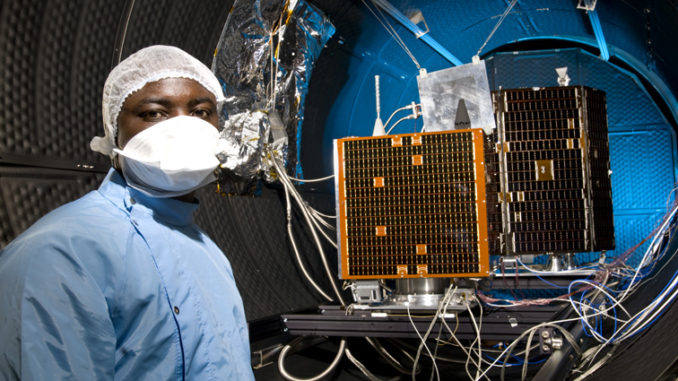
Featured Image credit: Surrey Satellite Technology

TVET colleges are not inferior, says Manamela

Ngwako Modjadji 

Higher education and training deputy minister Buti Manamela wants to change the perception that Technical and Vocational Education and Training (TVET) colleges are for stupid people.

This is because TVET colleges are seen as inferior compared to universities by many.

Manamela, who studied electronics engineering at Tshwane North College, formerly Mamelodi College, after completing his matric in 1997, says the department has embarked on a massive campaign to encourage youngsters to register at TVET colleges, previously known as further education and training colleges.

However, TVET colleges are underfunded and many of them have leadership and infrastructure problems and the department has set up a task team to address some of the challenges facing them.

Manamela has invited former TVET college students who are doing well in their careers to accompany him when he visits TVET colleges.

“I go with an artisan to motivate them. TVET colleges are not for stupid people,” he says.

Manamela insists we sit outside at a restaurant in a shopping mall in Bedfordview, east of Johannesburg.

The 39-year-old deputy minister had on running shorts.

He had just finished jogging.

“I have just run 6kms,” he says as he drinks lemon water.

He joined thousands of enthusiastic international and local runners at this year’s Comrades Marathon in KwaZulu-Natal, which he finished for the first time. Talking about that experience, Manamela says it was a good feeling.

“There is no greater feeling compared to being a Comrades Marathon finisher. I’m not sure I will do it again, but the journey was a great lesson in many regards. I run for girls, so for every kilometre in every official race I have participated in, we raise 1000 sanitary pads and school shoes together with some people in the private sector,” he says.

He also tells me that he believes in the power of fasting as it is good for one’s health.

Manamela has moved out of his official residence in Waterkloof, Pretoria, because he wants to have his own property.

“JZ [former president Jacob Zuma] was reshuffling.” he says jokingly.

I ask him why the department has declared the month of August TVET Month?

“At that time when I was studying at the TVET college there were a lot of challenges, which I still identify with now. But, of course, there are certain improvements,” he says.

The department is using TVET Month as a platform to encourage young people to consider college programmes. It has embarked on programmes such as Khetha that it uses to expose colleges to young people.

SA has 50 TVET colleges, with close to 200 campuses, and only 26 universities.

Manamela was the Young Communist League national secretary when the league started the campaign for free sanitary towels.

“I still continue to insist that government should provide free sanitary towels to those in need,” he says.

He says the government made a mistake by shutting down teacher training colleges.

“We should not have closed them, closing them was a mistake” Manamela says.

The government shut down training colleges between 1996 and 2000 and merged them with other institutions.

Former higher education and training minister Blade Nzimande announced plans to reintroduce teacher training colleges in 2013 but nothing has happened.

Manamela reveals that the department is constructing new TVET colleges in Thabazimbi in Limpopo and Nkandla in KwaZulu-Natal.

He says TVET colleges are important and could play a vital role in transforming the skills shortage in the country.

TVET colleges produce skilled carpenters, welders and boilermakers. The National Development Plan has identified TVET colleges as crucial in addressing skills shortages in the country.

Asked if he still enjoys his drink, Manamela confidently says: “I still drink.”

Manamela, who has a master’s degree in policy and development management, says his political career began in his home town of Phagameng in Limpopo.

“I studied further because my work requires me to have some understanding of policy development and implementation process, therefore the Wits master’s [degree] was crucial in this regard.”

He was re-elected as an ANC MP after the general elections in 2014 and subsequently appointed by Zuma as deputy minister in the presidency for national planning, performance, monitoring and evaluation.

Manamela is married to Vuyo Mhlakaza and they have two children.

His wife was recently elected onto the ANC Gauteng executive committee and was previously a board member at the SABC.

Read the original article here.

NSFAS applications for 2019 on hold due to backlog

Yoliswa Sobuwa

About 20 000 Students have yet to return their agreements with the National Student Financial Aid scheme (NSFAS).

As a result of this backlog, Minister of Higher Education and Training Naledi Pandor has asked NSFAS to pause the applications for 2019. Applications for the next academic year were supposed to open on Wednesday.

NSFAS spokesperson Kagisho Mamabolo said this happened after government announced that it would phase in fully subsidised free higher education and training for students from poor and working class households, which meant the scheme had to change its initial plans, systems and processes.

“To date NSFAS has disbursed allowances to more than 365 000 students through the [tertiary] institutions and sBux channels. However, applications with no supporting documents have not yet been finalised.

“To finalise this process, an online platform has been opened to allow these specific students to upload the missing documents,” Mamabolo said.

According to Pandor’s office, South Africans and students who qualify for the state funding will be fully funded next years.

A reliable source from the minister’s office said since she came into the office, she has openly raised concerns about the challenges being experienced at NSFAS, which resulted from the introduction of the student centred model in 2017 and also the introduction of the new bursary scheme in 2018.

“The completely unacceptable state of affairs in which some deserving students have not received funding confirmation have prompted Pandor to write to NSFAS, directing them to put the processing of applications for 2019 on hold until all funding have been finalised for 2018,” the source said.

Department’s spokesperson Lunga Ngqengelele said they have been made aware that there are students who still need to update their information on the system.

“It won’t make sense to open the 2019 applications whereas there are students who are still waiting for payments from the financial aid scheme. As soon as the backlog is cleared, then the applications for 2019 will be opened,” Ngqengelele said.

Read original article here.

Walter Sisulu University law faculty hangs in the balance

Lubabalo Ngcukana

The future of the law faculty at Walter Sisulu University (WSU) looks bleak as the institution is failing to attract highly qualified law experts.

The university, which is known for producing some of the best legal minds in the country, has lost its shine and could see the closure of the faculty.

Last year the institution lost accreditation for the LLB law degree programme, and with no new intakes, this year’s LLB intake will perhaps be the last.

This is due to the lack of professors and doctors of law teaching at the university’s Nelson Mandela Drive Campus in Mthatha, formerly known as University of Transkei, which offers an LLB programme.

The university is the only one that can boast of having two judges currently presiding at the Constitutional Court, namely Justice Chris Jafta and Justice Mbuyiseli Madlanga.

Some prominent products of WSU’s law faculty include Judge Mandisa Maya, president of the Supreme Court of Appeals, and Eastern Cape Division Judge-President Selby Mbenenge.

University spokesperson Yonela Tukwayo said nothing had changed since the Council on Higher Education (CHE) withdrew their LLB programme.

“They withdrew accreditation, and that was official. As I indicated last year, for 2019 we will not be able to take in any new students for the law programme,” said Tukwayo.

But SRC president Siphelo Mkhuzangwe blamed university management for the problem.

Mkhuzangwe believes the decision to withdraw the accreditation was too harsh.

“All we are appealing and hoping for is that we restart the course so at least law at WSU does not completely die.

“It’s one of the courses that has produced some of the best minds in the legal fraternity,” said Mkhuzangwe.

According to the president of WSU convocation, Zincedile Tiya, the CHE listed a number of reasons when withdrawing the accreditation, including issues around junior staff and the fact that the university had to employ doctors and professors of law to comply, among other factors.

But, said Tiya, to date not a single professor or doctor of law has been appointed.

“The CHE has complained about infrastructure, including lecture halls that are dilapidated and outdated. They also complained about lecturing staff who are junior, and said the university must employ at least four professors and doctors of law,” said Tiya, who is a former law student and SRC president.

The Mthatha-based lawyer disclosed that the university had been trying to address the issue of finding more senior staff, but most candidates were reluctant to leave their comfort zones at more established universities in big cities to settle in Mthatha.

Tiya said the other challenge raised was that most of the lecturers at WSU were full-time practising lawyers who did not necessarily have sufficient time to interact with students.

“The university tried to headhunt some professors and doctors of law to come for interviews, but the recent strike by unions disrupted the process. Interviews were due to be held some time in June, but due to the strike they could not happen,” he said.

Tiya said it would be a sad day if the law faculty were to be completely shut with the bachelor of laws programme already discontinued at WSU.

“It would be very bad if the faculty of law were to be closed. We are doing well in our legal practice and I have been deployed many times to represent young lawyers in the SADC region. That tells you that even today WSU is still able to produce the best lawyers. Look at Advocate [Tembeka] Ngcukaitobi, who is a product of WSU and is doing wonders in the practice,” said Tiya.

Professor Narend Baijnath, chief executive of CHE, said they were not at liberty to share the institution’s review report and improvement plan but confirmed that WSU has put together a plan that had been submitted to the CHE.

“The improvement plan addresses each recommendation in the report, including the issues raised. The university is currently busy with implementation of the improvement plan to improve the quality of its LLB provision,” said Baijnath.

The professor said since accreditation had already been withdrawn, the university had been asked to put together a teach-out plan for the pipeline students, and also to develop a new LLB programme and submit it to the CHE for accreditation.

Read original article here

An explainer to the longest full eclipse of the moon this century

Daniel Cunnama

On July 27th, 2018 most of the world was treated to an extraordinary evening of activity in the sky. First, there will be a total lunar eclipse and although uncommon, this one is special because it’s going to last a lot longer than usual – in fact the longest this century.

But that’s not all. Mars will shine brighter than it has in 15 years.

Dr Daniel Cunnama explained the significance.

Why was the total moon eclipse such a big deal?

Yes, it’s a total lunar eclipse, so the moon will be entirely in the Earth’s shadow.

Although total lunar eclipses happen relatively often, the one that took place on Friday 27 July 2018 was particularly special because it will last for the longest time of any such eclipse in the 21st century. Totality (the part of the eclipse when the moon is entirely in the Earth’s shadow) will last for a full 1 hour and 43 minutes. This is much longer than standard lunar eclipses which last for only around one hour.

The next time a similarly extended eclipse will happen again is in 2025. That’s due to last for 1 hour and 22 minutes.

Who saw it around the world?

Friday’s total lunar eclipse was visible across large parts across Africa, Australia, Asia, Europe, and South America.

Near to the reddish lunar eclipse, Mars will also be looking fairly spectacular. It will be at opposition, which means that it’s at the opposite side of the Sun to the Earth. This means it will be very bright – even brighter than Jupiter. It will also be nearly three times brighter than Sirius – the brightest star in the night sky. The Sun, the moon and Venus will be the only (natural) objects in the sky brighter than Mars.

It was also called a “blood moon”. What was that about?

As a scientist I don’t like the use of the description “blood moon”. Its associations are more superstitious than scientific. But let me explain what happens.

A reddish tint is, to some degree, common in all lunar eclipses, even partial ones. This eclipse is a total lunar eclipse, which means it will be particularly red.

During an eclipse, most of the light from the Sun is blocked by the Earth as the moon travels through the Earth’s shadow. But a small amount of light does actually pass through the outer parts of the Earth’s atmosphere and reflect off the moon. Only red light makes it through the atmosphere. This is why the moon will appear red during the eclipse, and is therefore sometimes nicknamed a “blood moon”.

Can astronomers learn anything from these events?

By observing the Moon with infrared cameras, such as the one on NASA’s Lunar Reconnaissance Orbiter, scientists get a chance to see what happens when the surface of the Moon cools quickly. This can help them understand some of the characteristics of the regolith – the mixture of soil and loose rocks on the surface – and how it changes over time.

What did people see?

The moon will begin to move into the penumbra – the fuzzy outer edge of the Earth’s shadow – at 17:14 GMT. A dark wedge will begin to appear on the surface of the moon. The moon will begin to appear reddish around 18:24 GMT as it moves into the main part of the Earth’s shadow. Totality will begin at 19:30 GMT and last until 21:13 GMT. This is when the moon is completely inside the Earth’s shadow and is the most spectacular part of the lunar eclipse. It will appear as a dark, reddish disk in the sky.

Aviation high school launched in Ekurhuleni

Yoliswa Sobuwa

The Gauteng department of education has launched the 29th school of specialisation, this time in Kempton Park on the East Rand.

Rhodesfield Technical High School outside OR Tambo International Airport has been relaunched as a school of specialisation.

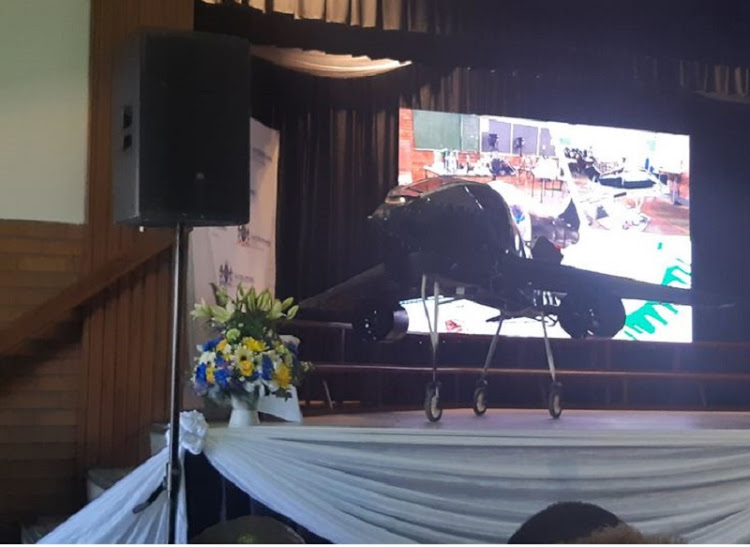
African-based global aerospace and defence company Paramount Group donated a Mirage V airframe  to mark the official launch of the  school which will now focus on aviation, engineering and maths.

The school curriculum will focus on core subjects and courses of specialisation linked to aeronautical and industrial engineering.

These learning opportunities will be provided through extended class times and after-school programmes.

Rhodesfield pupils also demonstrated an airplane that they built themselves. One of the  pupils, Nomsa Mboneli, spoke about what it takes to build an aircraft.

“I am truly honoured to say that we were selected for the Molo Africa project to build an airplane from scratch. That plane will take flight from Cape Town to Cairo (Egypt)  in December and it will be flown by teenagers from this school,” Mboneli said.

Education MEC Panyaza Lesufi said the department is bringing new opportunities to Rhodesfield. “We are planting the seed of aviation because we want you to contribute to the economy of the country,” Lesufi said.

Lesufi said the budget of RDP houses must go down while the budget for education should go up so that no pupil from this generation will queue for RDP houses.

He added that Gauteng will be the first province in the country to launch a school of maritime studies in two months’ time.

“Ocean economy is growing, and because we (in Gauteng) don’t have an ocean we will covert Vaal River into an ocean,” Lesufi said.

Zimbabwe on knife edge after deadly post-election violence

Clement Manyathela 

Zimbabwe remains on a knife edge on Thursday morning after post-election violence which saw at least three people dead, scores injured and police invoking the Public Order Security Act.

The act, which forbids public gatherings, was enforced after clashes broke out in Harare between soldiers and civilians who had been protesting the ruling Zanu-PF’s majority win in parliament.

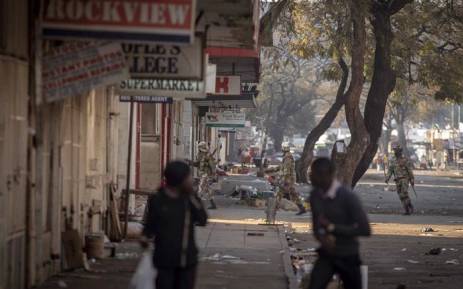
Live ammunition was used to disperse the crowds, leading to pandemonium in the capital.

Army patrols continued into the night on the streets of Harare.

Wednesday’s the violence, which also saw the destruction of property and bloodshed, has been blamed on supporters of opposition leader Nelson Chamisa.

This is because on Tuesday, one of the MDC Alliance leaders, Tendai Biti, declared at a press conference that Chamisa had won the election, prompting celebrations outside the party’s headquarters.

But things took a different turn on Wednesday when the country’s electoral commission announced that Zanu-PF had in fact secured a two-thirds majority in Parliament.

The news did not go down well with opposition supporters who asserted that results were rigged in favour of the ruling party.

There was violent confrontation between them and the army.

The confrontation quickly escalated and soldiers carrying rifles could be seen assaulting civilians.

President Emmerson Mnangagwa addressed the nation last night, blaming the violence on Chamisa.

Police say they are viewing video footage to determine who incited the violence.

VIDEO: Zimbabwe army uses live rounds against protesters

POLICE DEFEND ARMY DEPLOYMENT

Zimbabwean police have defended their decision to call for army back up to deal with Wednesday’s violence in Harare, saying they did not have enough officers.

The US Embassy in Harare has urged the military to exercise restraint while diffusing tensions, saying it is deeply concerned about how it dealt with civilians.

The police’s Charity Charamba says the police chief requested the backup.

“It’s not a secret that our police officers are currently deployed throughout the entire country and the level of lawlessness in Harare has actually led to this decision.”

But it’s been argued that this decision led to the chaos and the subsequent deaths of at least three people.

Meanwhile, while the opposition MDC Alliance says it is not taking responsibility for the violence while in his address to the nation on Wednesday night, President Emmerson Mnangangwa called on political parties to accept that in any electoral process there are winners and losers.

Blood could be seen on the streets of Zimbabwe after police used live ammunition on civilians and protesters who accused the electoral commission of rigging results. Members of the media have also been assaulted and some had their equipment broken.

A man, who was bleeding from the mouth after being hit, said: “I was beaten by the soldiers, okay. I was hit during the demonstration.”

Protesters here have called for intervention from Southern African Development Community and the African Union, calling this a war between citizens and the Zanu-PF led government.

BRUTAL FORCE

Gunfire crackled in the streets while troops, backed by armoured vehicles and a military helicopter and some with their faces masked, cleared the streets.

One person was shot dead near a bus rank, witnesses at the scene told a Reuters photographer.

The deployment of soldiers and their beating of unarmed protesters is a setback to Mnangagwa’s efforts to shed Zimbabwe’s pariah status after decades of repression under Robert Mugabe, who was ousted in a coup in November.

Even before the violence, European Union observers questioned the conduct of the presidential and parliamentary poll, the first since Mugabe’s forced resignation after nearly 40 years in charge of the Southern African nation.

The violence started soon after opposition Movement for Democratic Change (MDC) leader Nelson Chamisa claimed he had won the popular vote.

Scores of his supporters who had been burning tyres in the streets then attacked riot police near the Zimbabwe Election Commision headquarters. Officers responded with tear gas and water-cannon.

“I was making a peaceful protest. I was beaten by soldiers,” said Norest Kemvo, who had gashes to his face and right hand. “This is our government. This is exactly why we wanted change. They are stealing our election.”

Justice Minister Ziyambi Ziyambi said the army had been called in to ensure “peace and tranquility”, although the legal basis for the move looks dubious, especially so soon after the military’s unconstitutional move against 94-year-old Mugabe.

Without the stamp of approval of the international community, Zimbabwe’s next leader will struggle to unlock the billions of dollars of international donor finance needed to get the shattered economy back on its feet.

The EU observers expressed concern about delays in releasing the results of the presidential contest, a two-horse race between Chamisa and Mnangagwa, head of the ruling Zanu-PF party.

As gunfire echoed through downtown Harare, Mnangagwa called for calm and urge patience while results were collated.

Many protesters accused the army of unprovoked brutality.

“We had no weapons. Why are the army here beating us? shooting us? This is not an election it is a disgrace on our country,” one young man, Colbert Mugwenhi, said.

A Reuters witness saw soldiers with sticks beat two people and counted at least five trucks full of soldiers.

“We are tired of them stealing our votes. This time we will not allow it, we will fight,” said one protester who wore a red MDC beret in central Harare.

“ONE-SIDED”

The electoral commission had said it would start announcing results for the presidential race from 10.30 GMT but that was then pushed back at least 24 hours.

With three seats yet to be declared in the parliamentary contest, Zanu-PF had 144 seats compared to 61 for the MDC, meaning the ruling party achieved the two-thirds majority that permits it to change the constitution at will.

Chamisa said the early release of the parliamentary results was a deliberate ploy to prepare Zimbabweans for a victory by Mnangagwa, a former national security chief nicknamed ‘The Crocodile’ and commonly referred to by the initials ED.

“The strategy is meant to prepare Zimbabwe mentally to accept fake presidential results. We’ve more votes than ED. We won the popular vote (and) will defend it,” Chamisa said on Twitter.

Before the violence, EU Chief Observer Elmar Brok said he did not yet know if the shortcomings would have a material effect on the outcome of the vote, but criticised the electoral commission for being at times “one-sided”.

The EU’s assessment is critical in determining whether Zimbabwe can repair its image and attract the foreign investors needed for an economic revival.

The EU did not understand why the release of the presidential result was taking so long, Brok said.

“The longer it lasts that the results of the presidential election is not known, the more lack of credibility it provides,” he said.

Zimbabwe was once one of Africa’s most promising economies but became descended into corruption, mismanagement and diplomatic isolation in the latter stages of Mugabe’s administration.

Its population of 13 million is struggling amid shortages of foreign currency, unemployment above 80% and lack of foreign investment. – EWN

Additional reporting by Reuters.