Home Blog Page 493

Did UCT kill Bongani Mayosi?

Lukhona Mnguni

Questions surrounding the role of the University of Cape Town (UCT) in the death of Professor Bongani Mayosi may appear unnecessarily dramatic until you understand the perilous environment in which black academics operate in South Africa.  It is after all not the first time the passing of an academic has prompted such scrutiny.

A similar question was asked by Professor Jonathan Jansen following the death of Professor Russel Botman who was still serving as Vice-Chancellor at the University of Stellenbosch at the time of his death, just over four years ago.

Jansen wrote, then, movingly: “When the first black vice-chancellor of the University of Stellenbosch died suddenly last weekend, the question commonly asked by academics across the country was: “Who killed Russel Botman?”

Others, including senior black colleagues at this century-old university, were more direct: “They [white people of Stellenbosch] killed him.”

Jansen went on to qualify this “more direct” response asserted by some academics. He said, “Those who do not read the Afrikaans papers would be blissfully unaware of the role of gossip, rumour, insult, intimidation, sidelining and sheer slander this gentle theologian had to bear for the past few years.

“The more he pushed for transformation, the more he was mercilessly vilified by right-wing alumni, aided and abetted by the Afrikaans press, in blogger postings, in alumni associations, and in formal gatherings of the institution.”

The moment I heard of Mayosi’s death my mind went straight back to this piece by Jonathan Jansen. I wondered if academia in South Africa has become a deathtrap for committed trailblazing black academics. These academics build their careers in an environment that still frowns upon black success.

Once it became clear that Mayosi had taken his own life after suffering severe depression in the past two years, the rumour mill went into overdrive. We can never know the true facts but this does give a moment for us to talk about the plight of academics in general and black academics in particular.

Mayosi should be celebrated for his work, for the accolades he gathered, and the research breakthroughs he achieved.  He was a leader in his field and he handled himself with humility and grace.  His death has opened a flurry of conversation about the plight of depression and its stigmatisation among black people.

Thus, even in his death Mayosi has continued to be a force of moving society, teaching, forcing us to reflect and allowing us to own up to our inefficiencies and vulnerabilities as a society.

The greatest task for us in higher education is to confront the elephant in the room – the uncaring and untransformed nature of our institutions. The universities in South Africa are in serious need of an unburdening process, to open up space for frank conversations on how to turnaround conditions in these institutions.

The recently appointed Vice-Chancellor UCT, Professor Mamokgethi Phakeng, has come out to categorically state that “all of us at UCT failed him [Mayosi]”. This was in an interview on Cape Talk with Koketso Sachane.

She went on to detail that she has come to learn that a number of academics at UCT have had heart attacks, some are on all sort of pills and others are divorcing because they have changed. Phakeng herself admitted that she now walks around with anxiety tablets in her bag. Apparently she used to take these daily during the recruitment process for the current post she holds.

Of course some racist and anti-black forces at UCT had even questioned her academic credentials and the authenticity of her qualifications, all in an effort to discredit her and render her unworthy to ascend to the vice-chancellor position. UCT and many other spaces are still no places for black academics with agency and voice. To survive easily in these institutions you must be reticent, “see no evil and hear no evil” and pretend that you are happy while you die a slow gentle death inside.

What caught my attention the most is the revelation that Mayosi attempted to resign from his position as Dean of the Faculty of Health Sciences not once but twice: first at the end of 2016 academic year and secondly on the November 3 2017.

The university management refused Mayosi’s attempts to resign even though at the start of 2017 he had been off work for three months due to depression. In that moment the university should have done more for Mayosi, if indeed he was this treasured star they claim he was to them.

Administrative leadership in our institutions of higher learning is burdensome. Very few people actually aspire towards it, especially among black academics. Those that go into it do so because they have been convinced enough that “someone needs to put up their hand to change the system”. Often these words mean becoming the sacrificial lamb in pursuit of transformation — perhaps this is what Mayosi became.

READ MORE: Dear Professor Phakeng, you owe students an apology

Phakeng suggests Mayosi’s resignations were refused because it would not look good to have a black dean resign. No surprise here. Whiteness appreciates “good blacks” that help it sugarcoat its inadequacies and failures.

Black professionals are numbers for affirmative action scorecards and not human beings; hence even with severe depression UCT felt it needed Mayosi for its image and “prestige” at the expense of his health. Mayosi had to endure these disgraceful institutional logics.

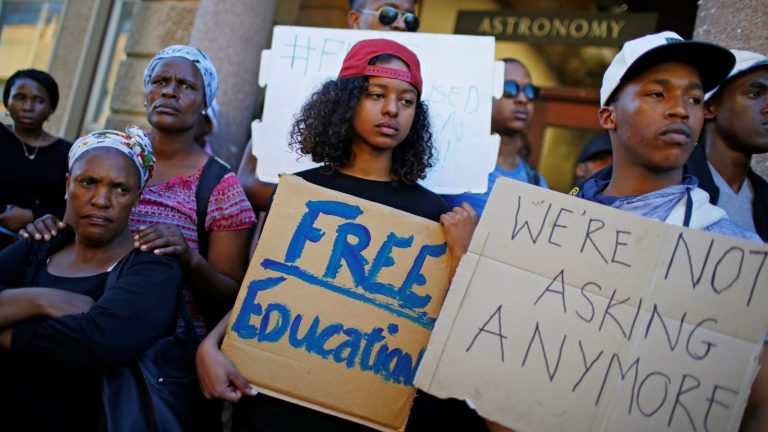
What I find discomforting in Phakeng’s tracing of Mayosi’s trials and travails is tracing matters squarely to the “time of conflict” she refers to between 2015 and 2017. This is the moment wherein our universities were gripped by massive protests from students seeking decolonisation of universities and the working class seeking improvement to their working conditions and insourcing. Many deep dark things happened during this period and indeed people like Mayosi were at the heart of the crossfire. He decided to play a more active role, marshalling the faculty of health sciences to be on the side of students and even joining them during the protests.

Even though some students may have called him a coconut and a sellout, this did not stop him from siding with the injustice of institutional racism, patriarchy and discrimination felt majorly by black students. Mayosi must have understood well the plight of students.

By siding with the downtrodden in an institution of privilege, pomp and ceremony such as UCT, Mayosi was always going to suffer institutional backlash from colleagues that believed students were misbehaving and denigrating the good name of UCT.

That Mayosi was a leading cardiologist and clinician and therefore could be making rational decisions to highlight the plight of students in a positive manner would not matter to his colleagues. White privilege — at its most vile and punishing mode — cares not for the credentials of the black person seen as a transgressor.

All black people are the same deserving equal treatment. No doubt, for siding with students Mayosi earned himself equal disdain and disrespect as that which was meted out against students yet to earn an undergraduate degree. He must have been infantilised by some of his colleagues hell-bent at refusing that UCT should be decolonised.

Indeed Phakeng revealed that some colleagues would call Mayosi “incompetent and throwing them under the bus”. This is because many senior leaders in universities never got and still do not get the necessity for decolonisation of our public higher education institutions.

The protests have not died because change has happened, people have simply retreated out of need for some normalcy in their lives. It may not be too long from now before the next phase of protests.

However, to begin at 2015-2017 is to misdiagnose the beginning of institutional trauma experienced by Mayosi.

This can be seen on a social media post by one Joseph Raimondo who said, “In a medical tutorial with him [Mayosi] in 2004, I’m embarrassed to admit that his blackness initially made me doubt his ability. During the tutorial though, he quickly blew me away with his insight, knowledge and clinical acumen”. It is this kind of institutional racism that killed Mayosi.

It is this situation where a black academic, no matter how accomplished must continue to prove themselves to whiteness at every moment of encounter.

In 2004 Mayosi had been elected to the fellowship of the European Society of Cardiology and he had just completed his DPhil at the University of Oxford in 2003. Yet, here was a minion white student doubting his credentials and knowledge simply because he was black.

I have no doubt there are many others, senior academics, that made Mayosi feel that his brilliance and accomplishments were nothing but a fluke propelled by his collaboration with other scholars. I am certain that even in his death, some still doubt Mayosi’s brilliance. Such is the existential battle of black professionals in this country facing emboldened, enduring and resistant institutional racism.

When the decolonisation student movement said “we cannot breathe” referring to the oppressive and suffocating institutional cultures of many of our universities, what was not said is that black academics are worse off, suffocating while trying to eke out new life.

Many more will die of depression, heart failure, stress and many other chronic illnesses for enduring disastrous environments that appear rosy to the unsuspecting public.

In honour of Bongani Mayosi, a human being of outstanding intelligence and humility, black academics must find their voice and speak out in order for us to change the face, texture and substance of the South African academy.

Ulale ngoxolo Radebe, 
Ngelengele, ndlebentle’zombini

Lukhona Mnguni holds a Bachelor of Community and Development Studies (cum laude) and a Honours Degree in Conflict Transformation and Peace Studies (cum laude), both from the University of KwaZulu-Natal. Mnguni holds an MSc in Africa and International Development from the University of Edinburgh in November 2015 after having received the Commonwealth Scholarship to pursue his studies. He currently serves as a PhD intern Researcher in the Maurice Webb Race Relations Unit at the University of KwaZulu-Natal, South Africa. He believes in the promotion of dialogue as a tool to foster inclusive and sustainable solutions to development. Through various forms of writing and commenting in South Africa’s mainstream media, he contributes significantly to the national discourse on a range of issues from politics to sport to research-oriented subjects.


Western Cape education MEC calls for army to protect schools from gangs

Canny Maphanga

Cape MEC for education Debbie Schäfer has called for specialised gang units and the army to be brought in to protect schools, following an increase in gang warfare.

“The only solution to this ongoing gang violence that is negatively impacting the education and safety of our learners would be to increase the SAPS presence on the ground, and especially around our schools; bring back the specialised gang units, and deploy the army to gang-ridden areas on a temporary basis to stabilise the areas,” Schäfer said in a statement issued on Tuesday.

READ: WCape Education MEC demands answers on promised gang unit

The Western Cape education department has also issued a circular requesting all schools to review their safety plans.

“The safety of our learners and educators is paramount and we ask that all schools take the necessary precautions in order to prepare for any emergency,” Schafer said.

Schäfer said that a safety plan should, however, not compensate for the lack of police presence within the community.

“Last week in Scottsdene, shots rang out continuously around our schools. One police van arrived with one police officer who was unable to enter the area until backup arrived, which it never did,” Schäfer said.

The MEC reiterated that there was a chronic shortage of police in Western Cape.

READ MORE: Cele says no to army deployment for Cape Town’s crime-ridden streets

“We support the premier’s calls for the national minister of police to request the deployment of the army. This is necessary to support SAPS (South African Police Service) operations, as an interim peace-keeping measure in gang-ridden areas,” Schafer said.

“The reality is that without more police presence, gang violence cannot be brought under control,” she added.

The department said it saluted those officers in the Western Cape who are doing their best “under difficult circumstances”.

South African National Defence Force (SANDF) chief General Solly Shoke, speaking at a media briefing in Pretoria, said the SANDF would deploy when called on, but reiterated that “crime [was] not our domain”.

He said the military “skop en donner” when they go into a situation and they “don’t want to be seen in a position where we are fighting our citizens”.

Panyaza Lesufi: Language used as a ‘false shield’ for exclusion

Panyaza Lesufi

One of the basic tenets of racism is the notion that an individual is meaningless and that membership in a collective, particularly the race, culture and even language, are the source of identity and value.

To the racist, the individual’s moral and intellectual character is the product, not of his own choices, but of the genes he or she shares with all others of his race, language and culture.

This philosophy of racial division, and cultural and language individualism remain entrenched in our education system. That is why Hoërskool Overvaal’s legal victory in keeping out 55 grade 8 English learners from the Afrikaans school in Vereeniging was a major setback for transformation and the struggle for a non-racial society.

Believe me, I am the first to admit that there has been a huge transformation in schools since the dawn of democracy. Gone are those monochrome school classes, in are multi-coloured, multi-ethnic schools that reflect the changed composition of our society.

Of course, many schools reflect their catchment areas and their composition can be determined by patterns of settlement and housing policies over which schools have no control.

The Gauteng Department of Education (GDE) believes that in order to promote and encourage a truly multi-cultural, diverse education, the public education system must advocate an authentic multilingual curriculum with competent instructors and administrators committed to the agenda.

This includes an ethnic self-identification process that goes beyond the use of appropriate ethnic labels, but one that explores intrinsic idiosyncrasies of a non-racial society and a genuine, multi-cultural education that promotes ethnic constancy.

What our Rainbow Nation urgently needs is a ruling that recognises a language policy for what it is: a malignant policy that harms everyone and is the very essence of racism. Unlike the policy of racial integration, some language policies propagate all the evils inherent in racism.

The value of racially integrated schools lies entirely in the individualism it implies. It implies that the learners were chosen objectively, with skin colour, language or culture ignored in favour of the standard of individual merit.

But that is not what advocates of language policies want. They sneer at the principle of colour-blindness. They use language as a proxy for racism. They want admissions to some schools to be made exactly as the vilest of racists make them: by bloodline.

They insist that whatever is a result of your own choices – your ideas, your character, your accomplishments – are to be dismissed, while that which is outside your control – the accident of skin colour – is to define your life.

It is time our society identifies language policies as nothing more than crude forms of racism.

Racism is pernicious, a behaviour which some may like to dress up as language policy but is, in fact, too low to be accorded that degree of respectability.

Believe me, the job market and the educational field have influenced and altered societal trends. It is not a secret that professionals capable of mastering two or three languages have an edge in the job market. Paradoxically, our School Governing Bodies (SGBs) have been sending mixed messages through language policies.

On the one hand, multi-lingualism is seen as an asset for educators and business people. On the other hand, second-language education has been systematically suppressed by some SGBs in favour of mono-lingual education.

So, in the light of the recent court ruling on Hoërskool Overvaal, it seems appropriate to ask what our schools can do to ensure a more stable, diverse society with an inclusive ethos and robust anti-racism policies.

Our schools need an inclusive ethos and practice in both their formal programmes, a real inclusive practice as part of the school’s culture in all activities, including sports games, clubs and other extracurricular activities.

That is why the GDE supports the Department of Basic Education’s South African Schools Act of 1996 (Act No. 84 of 1996), and the Employment of Educators Act of 1998 to promote social inclusion, create social consciousness and foster a strong sense of belonging to all of us and seek to:

– Give the Head of Department the final authority to admit a pupil to a public school;

– A public school must take into account the diverse cultural beliefs and religious observances of the learners;

– Limit the powers of a School Governing Body in recommending candidates for admission;

– Empower the Head of Department to dissolve an SGB that has ceased to perform functions allocated to it in terms of the Act;

– Prohibit educators from conducting business with the state or from being a director of a public or private company conducting business with the state; and

– Require the SGB to submit the language policy of a public school, and any amendment thereof, to the Head of Department for approval.

As role models teachers should be involved in mentoring through open relationships between teachers and learners. Teachers need continuing professional development particularly in cultural and linguistic knowledge.

Learners need to be given the opportunity to socialise and learn in an open, tolerant and supportive environment where high standards are set and all and everyone is treated with respect and dignity.

Language cannot be viewed as an isolated construct but must be analysed as an extension of culture.

In this global world, the idea supporting the total suppression of one language against the other is inconsistent and detrimental to a non-racial society.

That is why no school should exclude a learner on the basis of language. The right to education is one of the most fundamental rights in the Constitution and if any school, in applying its language and admissions policy, acts contrary to the Constitution, that policy must be disregarded.

The Hoërskool Overvaal and other cases before have actually disregarded language rights. Language rights are protected in the Constitution and will be respected by the department, as they have in the past.

The issue is about access to education and the question of language is being used as a false shield to exclude those who are entitled to education at a school in which they qualify, in terms of the legislation.

At the centre of our non-racial crusade is how much equal opportunity we as a nation are willing to sacrifice as we pursue diversity and a non-racial culture. The point is, if we want the virtue of our kids being exposed to kids of different races and backgrounds, then we have to be willing to accommodate any pupil, irrespective of language, culture and race.

Protecting a language such as Afrikaans as the sole basis of communicating not only hinders progress, but places this country in jeopardy of losing its justified title as an emerging economic giant.

Few people of open mind and good heart would deny that social cohesion and non-racialism are not just an admirable goal but a necessary one for schools that aim to prepare learners for life in the real world.

Lesufi is Gauteng MEC for Education.

Nigeria: Lagos bans Hijab in schools, pending Supreme Court decision

Gboyega Akinsanmi

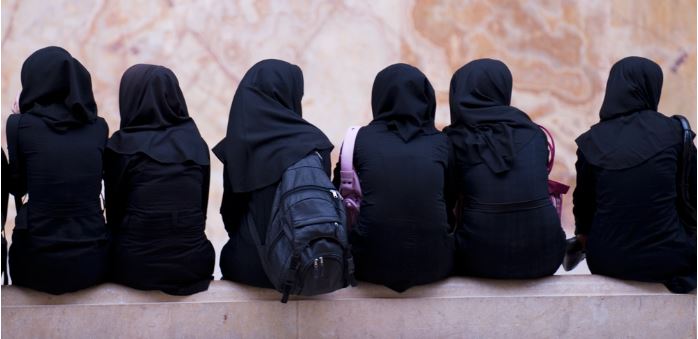
The Lagos State Government yesterday noted that it would not allow the use of Hijab in all its public schools until the Supreme Court “determines an appeal seeking to upturn the decision of a Court of Appeal.”

The state government equally clarified that religious institutions were exempted from paying taxes, according to the state laws, though any religious institution engaging in commercial activities was liable to pay taxes, accordingly.

The State Commissioner for Home Affairs, Dr. Abdulateef Abdulhakeem on a Television Continental (TVC) programme, ‘YourView’ yesterday, said the state government would not enforce the appellate court’s decision on the use of Hijab.

A Court of Appeal sitting in Lagos had in July 2016 unanimously set aside the judgment of a Lagos High Court, which banned students in public schools in the state from putting on the Hijab with their school uniforms.

The court presided over by Justice AB Gumel held that the appeal was meritorious and should be allowed. Gumel held that the use of the Hijab was an Islamic injunction and also an act of worship, hence it would constitute a violation of the appellants’ rights to stop them from wearing it in public schools.

Dissatisfied with the decision of the appellate court, the state government approached the apex court, challenging the court decision, which reinstated the use of Hijab in the state’s public schools on July 21, 2016.

Confronted with a question on the refusal of the state government to enforce the court decision on the use of Hijab, Abdulhakeem noted that the state government “firmly believes in the rule of law and will continue to uphold it.”

He explained that the state government did not enforce the judgment of the appellate court, which reinstated the use of Hijab in the public schools on July 21, 2016 until the state government had already appealed the judgment.

According to the commissioner, the state government is awaiting the decision of the Supreme Court on this matter. We cannot enforce the decision of the lower court until the Supreme Court determines the appeal before it.

He also clarified the position of the law that exempted religious institutions from paying taxes, noting that all religious institutions were exempted, though those involved in commercial activities was liable to pay taxes.

“Religious institutions are not taxable under the Lagos laws. If religious institutions engage in business transactions, they are liable to pay taxes. But as far as the institution is concerned, it is exempted from paying tax,” he said.

He explained that the law was not applicable “to those who convert their buildings into mosque to avoid paying taxes,” adding that we have made it abundantly clear that they are not allowed to convert residential premises into religious centres.

“So, people should just respect God the way the state government has respected God and do not come under that arena to avoid payment of taxes,” he said.

He debunked reports that it was planning to commence paying salaries to religious leaders in the state, saying the claim was totally untrue and misleading.

He said the reports did not contain any iota of truth, thereby urging the residents “to disregard it in its entirety. Contrary to the reports, we have no plan to employ imams and pastors. We are not willing to delve into a private realm.

“There is a symbiotic relationship between the state government and faith-based organisations. It is a mutually beneficial relationship which has contributed to the growth and development of the state,” the commissioner said.

Abdulhakeem had been quoted to have said the state government would soon place religious leaders on the State salary structure to encourage them to use their Pulpit and the Minbar to re-orientate citizenry to shun corruption and immorality.

He however clarified that he was misunderstood or misquoted, explaining how he encouraged religious leaders “to be advocates against corruption because religious leaders have millions of adherents and they enjoy the allegiance of millions of followers.

“We expect them to advocate good governance and selflessness so that they can influence their members positively. In Lagos State, our success is that we have cutting-edge approaches to relating with religious leaders.”

Read original article here.

Kenya: Schools ‘to close early’ as cash crunch bites

Collins Omulo and Faith Nyamai

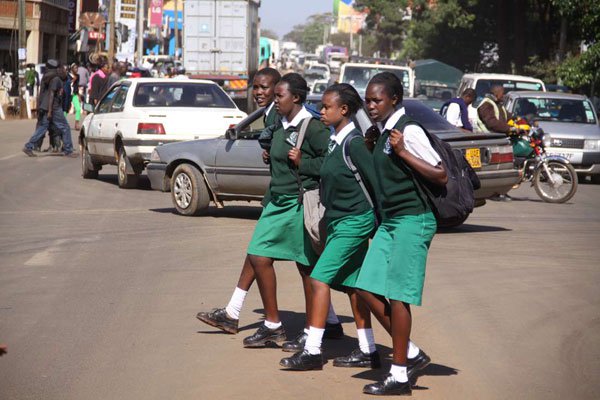
Public secondary schools are in a rush to close following a delay by the government in releasing funds. Some have already sent their students home despite the official closing date being August 2.

The government had promised to release the remaining Sh6.3 billion (63 million USD) for second term by Friday.

Last evening, Education Cabinet Secretary Amina Mohamed said the money had already been disbursed.

“The government has sent 30 per cent of the disbursement to school accounts. The ministry has cleared 11 per cent of the outstanding free day secondary education amounts out of the Sh22,240 owed to every student,” she said.

Delays

Related Content

The statement was echoed by the director of education in charge of secondary schools, Paul Kibet.

However, Kenya Union of Post Primary Education Teachers Secretary-General Akello Misori on Sunday said no school had received money by Friday.

He added that workers and teachers employed by school boards had not been paid.

Kenya Secondary School Heads Association chairman Kahi Indimuli said the delay in releasing the funds was worrying.

“I cannot confirm if the money was credited to school accounts. I will get a full report on Monday,” Indimuli said on Sunday.

He added that the most affected are day schools “which rely on the government for almost everything”.

Second Term
A principal told the Nation that his school had not got the money.

“We have not closed but creditors are on our necks,” the headteacher said, adding that the situation is more dire for recently transferred headteachers.

Primary schools have received all their funding for second term.

Schools are supposed to get 50 per cent of the government funding in first term, 30 per cent in second term and the rest in third term.

Early this month, Education PS Belio Kipsang told headteachers that the remaining Sh6 billion would be released before the end of last week.

It is not the first time schools are in a financial crisis.

In May last year, a union wrote to the ministry, saying the delay in releasing cash had inconvenienced school programmes.

Read original article here.

School sport and coaching football

Mosibodi Whitehead

As we continue to celebrate the centenary of our late former President Nelson Mandela people around the world were called upon to do just 67 minutes of good in commemoration of the life of a man who spent 67 years fighting for a democratic South Africa.

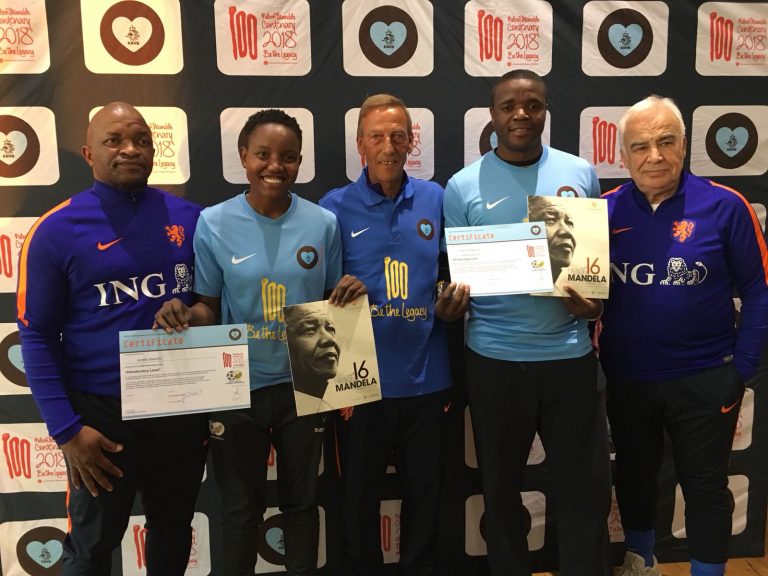
The Dutch ministry of Foreign affairs and the Royal Dutch Football Association teamed up with the South African Football Association to coach the coaches.

100 coaching hopefuls were selected by SAFA to receive training.

The first 34 were put their paces by the Dutch World Cup finalist Johan Neeskens in Johannesburg last week, with 66 more to be trained in Pietermaritzburg and Cape Town before the year is out.

The young coaches spent the week learning the basics of coaching and ended the week by receiving their SAFA D Licence which is essentially an introduction to football coaching.

Neesken,  who scored the opening goal of the 1974 World Cup final against West Germany before going on to coach at Barcelona as an assistant had one important message for the young coaches.

“They have to learn how to train with the younger kids. How and why? Because you have different age groups and every age group requires a different emphasis. Different age groups are coached differently,” explained the former Mamelodi Sundowns coach.

Neeskens comments are telling, especially when considered in light of the football success that the Dutch have been able achieve over the last half a century.

All too often in South Africa well-intentioned but undertrained teachers are left in charge of coaching of 6 to 12 year olds. That is the critical age group because that is where the foundation is laid for future football success.

“What is important for very young boys from 6 to 12 years is the technique. So the coaches have to know that they are doing. Not a carpenter, with all the respect, who coaches just because he has free time. In Holland a coach can’t coach kids if he doesn’t have a licence,” said Neeskens.

As detailed in the 2016/2017 Eminent Persons Group report, one of the most significant challenges facing school sport in South Africa is the lack of qualified coaches. And when one considers that there are just less than 8000 football coaches in the country with over 25 000 schools it is clear that less than a third of South African school children are being coached by qualified coaches.

If the department of Sport and Recreation and the department of Basic Education are to achieve their collective goal of reviving school sport in South Africa then urgent attention must be paid to those that will be working with especially our primary school kids. These coaches must be well paid and well trained.

Mandela Day may have come and gone but the efforts of Neeskens, SAFA and the Mandela Foundation will surely leave a lasting impact on the future of South African football. Madiba’s love for children was celebrated, a love which surely stemmed from an understanding of the need to invest in future generations.

My hope is that by the time the 18th of July rolls around again some of the 100 coaches trained by Neeskens and SAFA will be employed in schools to coach the next generation of Bafana Bafana stars to represent South Africa at the 2038 FIFA World Cup.

Whitehead is a sport broadcaster and writer.

ConCourt dismisses Gauteng education department’s appeal in Overvaal language case

Alex Mitchley

The Constitutional Court on Thursday dismissed an appeal by the Gauteng Department of Education against a high court judgment that found Hoërskool Overvaal does not have capacity to enrol English-speaking pupils.

In January this year, Hoërskool Overvaal, a high school where the medium of instruction is Afrikaans, approached the North Gauteng High Court after the department attempted to place 55 pupils, who would have to be taught in English, at the school.

At the time, Judge Bill Prinsloo set aside the department’s decision to admit 55 pupils to the Vereeniging school, saying that the school had no capacity to receive the pupils, let alone to do so on such short notice and effectively convert to a dual medium school.

Department spokesperson Steve Mabona confirmed in February that the department had filed papers with the Constitutional Court to appeal the high court’s decision.

On Thursday, the Constitutional Court dismissed the appeal with costs on the grounds that there was no prospect of success.

This was due to the fact that the department failed to consider the available capacity at two English medium schools that share the same feeder zone as Hoërskool Overvaal, the court noted in its order.

In the high court judgment, Prinsloo also found that the two schools, General Smuts and Phoenix High, had capacity for the 55 pupils.

Following the Constitutional Court’s decision to dismiss the department’s appeal, Mabona said the department was still studying the judgment and would comment at a later stage.

In a statement on Thursday, Trade union Solidarity welcomed the Constitutional Court.

“The hands of public schools, and more specifically Afrikaans public schools, have been strengthened by this court order and it enables governing bodies to apply their admission policies with confidence,” said Solidarity deputy chief executive Johan Kruger.

Read more on Hoerskool Overvaal

#FeesMustFall activists blame UCT anti-black environment for professor’s suicide

Staff Reporter

UCT’s new VC Mamokgethi Phakeng says #FeesMustFall protests may have contributed to the death of UCT health dean and world-class cardiology researcher Professor Bongani Mayosi.

Mayosi, 51, committed suicide on Friday.

Addressing the media on Sunday, UCT Vice-Chancellor Professor Mamokgethi Phakeng said Mayosi’s office was occupied for two weeks by protesting students in 2016.

“He went on three months’ leave and early this year collapsed because of a psychological attack. Protests in 2016/17 weren’t kind to him as a dean.

“Students were angry at him, called him a coconut – out of anger. He experienced pressure from staff, students and black students,” said Phakeng.

She said the university was aware that Mayosi was suffering from depression.

Phakeng said Mayosi tendered his resignation to then Vice-Chancellor Max Price in November.

“It’s a pity that we as an institution didn’t listen to him then draw on his strength. Make sure he is happy.”

However, student activists say the hostile environment at UCT against black academics and black students should be blamed for the professor’s death.

Chumani Maxwele,South African political activist best known for his involvement in the Rhodes Must Fall (#RMF) and the #FeesMustFall movements wrote on his Facebook post: “Professor Bongani Mayosi is killed by the University of Cape Town”.

He added that, “Professor Mayosi’s passing away comes after more than four black UCT students killed themselves just last year alone. And we knew that the university killed them. It is a well known reality that UCT environment is not friendly to Black people.”

“It must be said that Prof Mayosi worked in the most hostile environment and this is Health Sciences at UCT. This faculty is dominated by old white people largely from the apartheid regime. And it is the least transformed faculty at UCT,” said Maxwele.

He added that in 2015 and 2016 student political protest “did not make it easy for this white old apartheid establishment” and  actively lobbied for Professor Mayosi to take over the leadership of Health Sciences.

“The old apartheid establishment have been avoiding to be led by a Black talented scholar. But as #Fallist we made it clear to White people that they have no choice but Professor Mayosi,” said Maxwele.

Mayosi will be buried on Saturday. The university is yet to announce a date for the memorial service this week.

He leaves his widow Nonhlanhla Khumalo and two daughters.

Read: SA’s top cardiologist Professor Bongani Mayosi has passed


SA’s top cardiologist Professor Bongani Mayosi has passed

Staff Reporter

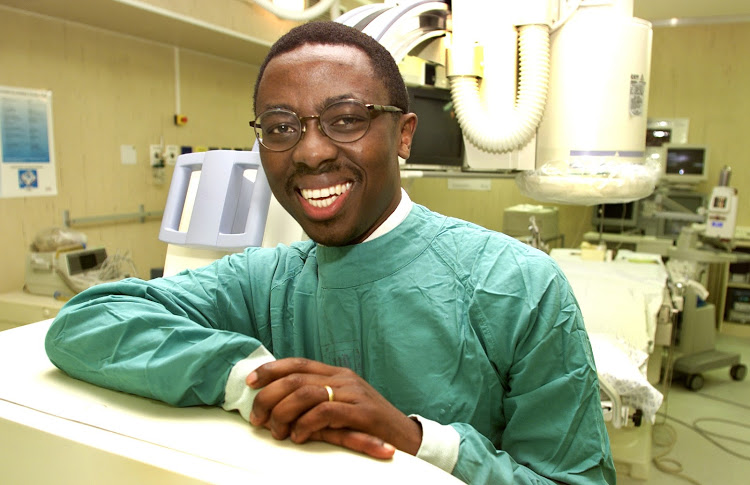
The University of Cape Town (UCT) ‘s Dean of Health Sciences Professor Bongani Mayosi has passed.

It’s understood the 51-year-old cardiology professor passed away in Cape Town on Friday. It is reported that Mayosi took his own life.

The statement released read: “In the last two years he has battled with depression and on that day took the desperate decision to end his life.”

The statement‚ the authenticity of which was confirmed by family spokesperson, Advocate Ncumisa Mayosi‚ added: “We are still struggling to come to terms with this devastating loss. Kindly respect our wishes as the family that beyond this statement‚ we will not discuss or entertain any further questions on this matter.

“We ask that you understand our need for privacy during this difficult time. We welcome you to join us for daily prayers at the family home in Pinelands between 18:30 and 19:30.

Mayosi was the country’s top cardiologist and became a dean at UCT two years ago.

He discovered the genetic mutation that causes heart failure.

Since 2011‚ Mayosi had been advising Health Minister Aaron Motsoaledi on policy and strategy for health research.

Mayosi spent years working tirelessly to improve the health of people in developing countries. In 2017 he was elected to the US National Academy of Medicine, one of the highest honours in the fields of health and medicine, awarded to individuals who have demonstrated outstanding professional achievement and commitment to service.

The same year, he made international headlines for identifying a new gene that is a major cause of sudden death by heart failure among young people and athletes.

Professor Mayosi’s involvement in this research included spending 20 years monitoring a South African family that was affected by this disorder. This is a testimony to his tenacious pursuit of pioneering research that can help save lives.

Professor Mayosi took up the position of Dean in September 2016. His A-rating from the National Research Foundation (NRF) counted him among the ranks of leading international researchers in the view of the NRF.

His numerous honours include: election to the Fellowship of the World Academy of Arts and Science (2013); South African Medical Association/Bonitas Medical Fund Merit Award for Health Research (2013); National Science and Technology Foundation – BHP Billiton Award (2012); National Research Foundation Award for Transforming the Science Cohort in South Africa (2011); and the Order of Mapungubwe, Silver (2009).

In pursuit of his research he developed valuable collaborations with academics in other countries (and especially across Africa) in researching the management of TB pericarditis, prevention of rheumatic heart disease, and genetics of heart disease. He also held numerous editorial responsibilities over his distinguished career and published more than 250 papers in peer-reviewed journals.

In 2009, he was awarded the country’s highest honour, the Order of Mapungubwe.

He earned two medical degrees with distinction at the University of KwaZulu-Natal and worked as an intern at Livingstone Hospital in Port Elizabeth before joining UCT in 1992. He was admitted to the Fellowship of the College of Physicians of South Africa in 1995 and earned a doctoral degree at the University of Oxford in the UK in 2003. He was appointed Head of the Department of Medicine at UCT in 2006.

Professor Mayosi was born on 28 January 1967 in Mthatha, Eastern Cape. Mayosi was inspired by his father‚ also a doctor‚ to help others. He studied at what is now the Nelson Mandela School of Medicine at the University of KwaZulu-Natal‚ and it was there that he met his dermatologist wife‚ Nonhlanhla Khumalo.

He leaves her and their two daughters.

UCT Vice-Chancellor Professor Mamokgethi Phakeng said, “Mayosi’s passing has shocked us as a campus community. I know many colleagues and students will feel the effects of this loss over the time ahead.”

Phakeng added that this is a very sad time for the UCT community.

Teacher points out 14-year-old girl’s HIV status in class

Mpho Lekgetho

Fourteen year old Dineo (*not her real name), born with HIV and a member of the Future Leaders movement, says she hates teachers using her as the example when discussing HIV positive people at school.

“Yes the school knows about my HIV status, but I feel humiliated when every now and then I am pointed out as the example – especially in Life Orientation class,” she said, with tears in her eyes.

Positive attitude

Speaking at a support group meeting, she told how unhappy she was about her teacher regularly pointing her out as an example of a child doing well despite her HIV positive status.

 Dineo was diagnosed HIV positive after her mother, who was very sick, decided to have her and her child tested.

According to Dineo, her mother is also on treatment and doing well. But while Dineo is happy for the most part, she is worried that the regular commenting on her status may spread the information to her community. Yet she does not feel able to speak out about the situation.

The facilitators of the workshop encouraged children to remain positive in their attitudes and assured the group that they will take Dineo’s matter forward. They also encouraged Dineo to think of her teacher’s words as a compliment and an encouragement that was not intended to harm or upset her. The facilitators said they would also report the matter to the Northern Cape Department of Education.

The National Department of Health has memorandum of understanding with Y+, a movement for youth between the ages of 15 and 24 who are living with HIV.

Not adhering to ARV treatment

According to the People Living with HIV sector in the district, the establishment of these kinds of youth support groups will decrease the burden of the sector by assisting adolescents dealing with stigmatised conditions.

Future Leaders is a movement of boys and girls born with HIV who usually come together to discuss their challenges, funded and supported by the John Taolo Gaetsewe District Social Development department.

The movement was initiated three years ago after NGOs and departments working with HIV programmes realised that some HIV positive young people were not adhering to their ARV treatment and some of their parents and guardians were struggling to tell them the truth about why they needed to regularly take pills and be on treatment.

The programme has proven to be successful, with one 12-year-old commenting, “The only thing I know about ARV’s is that they are my life.”

The group participants share their experiences and worries, and their thoughts and confusions about one day wanting to start dating or maybe having children when they are grown up.

Future sessions

Workshops are held regularly to educate youngsters about the importance of adherence, how ARVs works in their bodies and what will happen when they default on their treatment.

During their support group meetings members are given an opportunity to share their personal challenges.

Like any other children they complained about not being given enough attention at home, sometimes being left in charge of smaller kids while adults are away – the kind of issues common to most households.

The facilitators agreed on future sessions to engage more on HIV and dating specifically for the group, and the Department of Education would be invited to discuss school policies on HIV and Aids, as well as disclosure and the rights of the child. – Health-e News