Home Blog Page 498

Nigeria: Girls need at least 12 years of education

Ernest Chinwo

Port Harcourt — The British High Commissioner to Nigeria, Mr. Paul Awkright has said that for any country to develop, girls must be given access to education, insisting that they need at least 12 years of education. This came as he commended Rivers State Governor, Nyesom Wike for investing in girl-child education.

Speaking while inaugurating Government Girls Secondary School, Rumuokwuta, Port Harcourt, which Wike reconstructed as part of activities marking his administration’s third anniversary, Awkright called for greater investments in girl-child education.

“There is no reason why we should neglect half of our population who can help ensure the prosperity of the country. That is why girl-child education is important. Without girl-child education, this country cannot thrive.”

While thanking the people of Rivers State for their warm reception, he said he is genuinely pleased to be in the state which is the heart of the Niger Delta Region.

“I am particularly pleased that I am here for the commissioning of a girls’ school. I have a daughter; I know how important it is to see girls educated: that they receive a minimum of 12 years of quality education.

“When they are educated, they marry later. When they marry later, they have fewer children. They can contribute to the economy. They can fulfil themselves.”

The joy in the air was contagious. Hundreds of students and old girls of the school celebrated Wike’s “golden touch” to their school. They sang pro-Wike songs, danced and urged the governor to sustain the delivery of quality education for all students.

In his remarks, Wike said his administration is committed to quality education, hence the transformation of selected schools. He noted that critical investments have been made to improve the quality of teaching and learning in the interest of the state’s development.

He announced that the school would return to its old uniform, while the primary school would be fenced off from the secondary section.

“We will contract the maintenance of this school to members of the host communities; they will cut the grass and clean the environment of the school. We shall provide security in the school. Beginning Monday, nobody is allowed to trek across the school premises. This is a girls’ school and their security is paramount.”

The governor warned the principal of the school against hiring out its facilities for conferences, saying that boys would no longer be allowed to play football in the school.

In a project description, the Commissioner for Education, Dr, Tamunosisi Gogo-Jaja said the school, which was established in 1972, was allowed to decay beyond measures by previous administrations.

He said all the structures in the school were dilapidated, pointing out that the Wike administration demolished them and built new ones.

He said the school has four new hostels, a major 960-seater assembly hall, sick bay, several science and other laboratories, sports facilities and new internal roads.

In a welcome address, the Chairman, Obio/Akpor Local Government Area, Prince Solomon Eke, said the people are proud of the transformation of the school with modern facilities, newly equipped laboratories, modern teaching and learning aids. – This Day

Gauteng schools city region mini World Cup

Mosibodi Whitehead

It’s being hailed as the most entertaining World Cup in two decades. Many will watch 32 nations fight for the right to be crowned world champions. But it is the quality of football at the quadrennial competition that has captured the imagination of most football fans.

85 goals have been scored in the first 32 matches alone, making Russia 2018 a goal fest for soccer lovers around the world.

One of those goals was scored by 19 year-old France’s Kylian Mbappe, who wasn’t even born when Le Bleu won their one and only World Cup as hosts in 1998. The teenager’s meteoric rise from a schoolboy to an international star with his French club Paris St. Germain reminds me of South Africa’s Steven Pienaar back in 2002.

Skeelo, as Pienaar is affectionately known, was just 20 years and three months old when he was selected to represent South Africa at the World Cup in Japan and South Korea in 2002 making him one of the youngest players at the tournament.

At the time of his Bafana selection, the laaitie from Westbury was playing football for Ajax Amsterdam after joining them from PSL side Ajax Cape Town.

That Bafana coach Jomo Sono included Pienaar in his World Cup squad before he had made his international debut speaks volumes about the quality of the player. It is also testament to the excellent training Skeelo received as a schoolboy at the Transnet SAFA School of Excellence before moving to Holland.

South Africa has struggled to produce players of Pienaar’s calibre. However, there is a new drive to revive school football which was the foundation of a successful Bafana Bafana team that qualified for consecutive World Cups in 1998 and 2002.

Last week a provincial 32-team 6 – a – side schools World Cup took place at The Balfour Park Alexander Football Club grounds. The mini-World Cup featured two host schools plus 15 u-10 primary school district champions and their 15 runners up all who qualified by way of a district level mini world cup.

The Gauteng Department of Sport, Arts, Culture and Recreation’s Thabang Ramaboya says they chose 8 year-olds and 9 year-olds to play in this tournament for a reason: “Your 10-year old now, if he’s not playing any sporting code right now, what are his chances of becoming an elite football player.”

Clearly the work begins at the school level.

Ramaboya says they have been working with the Gauteng chapter of the South African Football Association to upskill the teachers by sending them on biennial SAFA-instructed coaching courses.

“This is our biggest challenge when it comes to school sport, especially in townships. Our teachers have too much work. So what we do is that during the school holidays we call about 90 to 100 educators for a coaching course,” says Ramaboya.

SAFA Gauteng also provided referees for the tournament and deployed scouts to identify those talented boys who can follow Pienaar’s path from schools football to the World Cup. Perhaps the next Skeelo will come from WC J Mpengesi Primary School in Daveyton that won the mini World Cup.

Whitehead is a sport broadcaster and writer.

Ethiopia: Conflict disrupts school for tens of thousands

Sora Halake

Conflict in Ethiopia’s vast Oromia region has disrupted formal education for tens of thousands of youngsters, authorities there say.

Violent attacks on mostly ethnic Oromo communities have forced 159 schools in five regions to close at least temporarily in the past two years, said the Oromia Educational Bureau’s head, Tola Bariso.

He said about 65,000 students — at least half of whom fled to Oromia from Ethiopia’s neighboring Somali region — have been displaced, along with their families. He did not say how many of those youths were enrolled in other schools.

Fear of violence is keeping some students out of school, and even for those who do attend it compromises the ability to learn, officials and local residents told VOA’s Horn of Africa service.

“I can count many neighbour children who are staying home in fear for their lives,” said Abdule Jima, a 27-year-old local government employee living in the eastern Oromia town of Chinaksen. There, 27 schools have closed, with the acting mayor estimating that 22,000 youngsters have missed classes for at least six months.

“What kind of generation are we going to have?” Jima asked.

“You can imagine a kid growing up in a village where every day you hear shots and [see] people fleeing,” he said.

In a joint report issued last week, Ethiopia’s government and the United Nations said “inter-communal violence” along the winding border between Oromia and eastern Somali state region has displaced more than one million people since 2012. Most have fled since last September.

Bariso and other Oromia officials blame much of the violence on the Liyu police, a paramilitary force based in the country’s Somali region. As in the past, the Liyu police administration did not respond to repeated interview requests by VOA.

Sporadic attacks by the Liyu began at least five years ago, escalated in December 2016 and subsided before a renewed wave of attacks began in late May. Some officials and residents said the Liyu police are seeking territorial expansion and economic advantage on behalf of the Somali state government.

Its president, Abdi Mohamud Omar, also known as Abdi Illey, started the paramilitary force in 2007 when he was the state’s security chief, according to OPride, a website run by citizen journalists in the Horn of Africa diaspora.

Earlier this month, the rights group Amnesty International called upon Ethiopia’s government to “immediately disband the Liyu Police unit” based on what it alleged “may amount to extrajudicial executions” of at least 14 people in several attacks.

In Moyale, a major market town that straddles the Ethiopia border with Kenya, violence has left at least 20 people dead since March. But the tensions, which go back for years, feed anxieties in school-age children and their families.

“One day, they are in school. The next day, they are out,” Godana Bule said of students such as his 10-year-old son, who goes to Arbale Elementary School in Moyale.

Bule has four other children. “We, as a family, and the children themselves are so scared to go to school,” he said. “We used to take them to school on a motorbike. Now, the [Liyu] force is shooting people on a motorbike almost every day.”

Bule said he had sought help from the federal military command post in Moyale but was turned away. He and other residents said the military usually does not protect civilians from Liyu police, even though the force is operating outside its Somali jurisdiction.

Aschalewu Yohanis, Moyale’s mayor, estimated that more than 4,000 children in his town missed school this year because of violence. He said despite that disadvantage, “even the students who didn’t attend schools properly decided to take the [national university entrance] exam” earlier this month.

They’ve reasoned that even if they’re unprepared now, the situation could worsen in the future and they might be even less prepared for testing, he explained. Test results are expected later this summer.

In and around Gumi Eldallo, a town in the southern Oromia region, most youngsters from pastoralist or herding families have big gaps in school attendance, said the town’s mayor, Wario Golicha. He said seven schools have closed in the region as families fled conflict.

Bariso, the Oromia region’s education chief, said conflict also has driven ethnic Oromo teachers out of Somali region — including 437 from the regional capital of Jijiga. “They are assigned to various schools in Oromia,” he said.

Some students, too, have been reassigned. But that creates another challenge: overcrowding. After absorbing displaced students, a single classroom might have as many as 80 students, Bariso said.

The education chief said the regional government is working to reopen schools. But for now, many Oromo families feel vulnerable and inconsistently send youngsters to school.

“I wouldn’t call that an education,” said Bule, “but that is the only option we have.”

Story by VOA’s Horn of Africa service

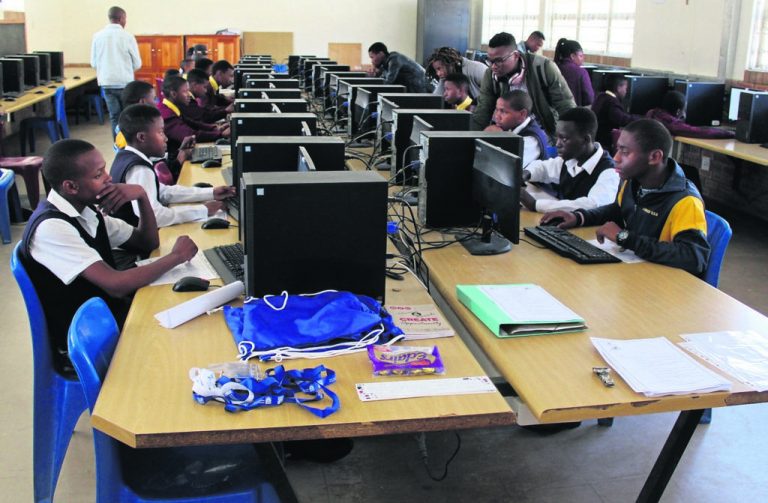
Embrace fresh methods of learning for new generation

Yoliswa Sobuwa

Traditional approach to education needs to be revolutionised to ensure best outcomes for the current generation of school children.

Jenny Coetzee, career educator and founding member of the Crawford School La Lucia, said schools must adapt to the Generation Alpha approach.

Generation Alpha represents children born after 2010, who are at the beginning stages of their school careers.

“It is imperative that schools nurture a global outlook and develop critical thinking and problem solving skills, while also focusing on entrepreneurship and new technological fields,” Coetzee said.

She said today’s generations lived in an open book environment a few clicks away from any information.

“They can connect in a border-less world across countries and cultures and they communicate in a post-literate community where texts and tweets are brief.”

“Schools should put special emphasis on developing critical thinking and problem-solving skills so that students are equipped to see problems from different angles,” Coetzee said.

She said even though technology must be embraced, what is important is that it should be effectively used to improve learning outcomes.

“In order to achieve this, schools must be equipped with high speed internet and embrace the value of social platforms. Students must also be exposed to new technologies such as 3D printing, drones and robotics,” she said.

She said teachers must be trained in the latest strategies.

“Children come to us naturally curious about their world and wanting to explore it. As teachers we need to continue to nurture them to develop their curiosity,” Coetzee said.

Coetzee said people may not know exactly what lies ahead for their children but at least they know what skills and tools they will need.

“They need to think critically, to work as a team but most of all to be curious and excited about learning in this world that is so different from the world in which we were raised,” Coetzee said. – Sowetan

Wits to have its first black female Chancellor

Nonkululeko Njilo

Wits University has confirmed that its next chancellor will be a black female for the first time in its history.

The announcement was made on Monday morning after the university made a call for nominations to fill the chancellor vacancy in April 2018.

Following the call‚ Dr Judy Dlamini and Dr Anele Mngadi emerged as the chancellor hopefuls to replace former Deputy Chief Justice Dikgang Moseneke‚ whose term ends in November 2018.

“Of the two candidates‚ it is guaranteed that one will be the next chancellor,” said Peter Maher who is the Director of Alumni Relations at the university.

Around 160‚000 graduates‚ full-time academic stuff‚ and retired academics with 10 consecutive years of service with the university‚ make up the university’s largest statutory body of persons eligible to participate in the election process.

This is according to Maher and Shirona Patel‚ a senior communications officer at the university.

Maher could not give a specific date as to when the new chancellor would be named‚ but revealed that she would assume duties in November 2018.

Dr Judy Dlamini is a businesswoman‚ entrepreneur‚ author and philanthropist. Her long list of accolades include: MBChB (Natal)‚ DOH (UFS)‚ MBA (Wits)‚ DBL (UNISA)‚ Stanford Innovation & Entrepreneurship Certificate (Stanford University)

Dr Anele Mngadi is an academic and renowned turn-around strategist. Her long list of qualifications include: BCom (Hons); Baccalaureus Legum; MCom‚ MBA‚ PhD. – TimesLive

Protesting teachers detained in Sudan’s El Gezira

Staff Reporter

Teachers in Wad Madani, capital of El Gezira in east-central Sudan, carried out a sit-in on Sunday, in protest against the government’s decision to close more than 200 schools in the state.

The teachers also demanded a salary rise and payment of their delayed allowances since 2013.

Policemen, aided by agents of the National Intelligence and Security Service (NISS) arrested a number of protesting teachers.

According to the Sudanese Teachers’ Committee, Osman Hamad, Abdallah Hassan, Adel Babu, Ibtihaj Ahmed, Tawfig Khalil, Abubakr Mohamed Ali, Manal Ahmed, Mona Ibrahim, Hindi Mohamed Ahmed, Mutaz Atta, El Daw Mohamed Ahmed, Khalid Salah, Anji Mohamed Ahmed, Abubakr Mahdi and Raya Elias were detained.

The opposition National Umma Party (NUP) strongly condemned the decision of El Gezira state Ministry of Education to close more than 200 secondary schools at the beginning of the 2018-2019 school year that will start next Sunday.

In a statement on Sunday, the NUP held “the entire regime fully responsible for the consequences of the decision, which was taken “arbitrarily and hastily, and exposes the country to more tensions in addition to the difficult economic and living conditions”.

The party expressed its solidarity with the residents of El Gezira state and called on them “to continue their struggle and never give up the right to education”. – Dabanga

Uganda Catholic Church rejects sex education in schools

Frederic Musisi

The Catholic Church leadership in Uganda has slammed the government’s National Sexuality Education policy and said they will not allow it to be “introduced nor taught” in their Church-founded schools.

The bishops under the Uganda Episcopal Conference (UEC), the apex assembly of Catholic leaders in the country, said they have rejected the policy and shared their position with the Anglican and the Orthodox Churches.

“Contrary to what many people think, the Church is in favour of a positive, age appropriate, culturally and religious sensitive sex education which holds moral and Christian values. This is the task and shared responsibility of the family, Church, and the State through the schools,” Archbishop John Baptist Odama, the UEC chairman, said in a statement of the bishops’ resolutions.

The bishops made the resolution during a four-day plenary before travelling to Rome, Italy on June 12 to meet Pope Francis.

They said a team of experts from the Church was tasked to “contribute remarks and suggestions” to the policy but their “contributions have been substantially ignored”.
The clerics said the policy as it stands now contains “some valid ideas and guidelines” but “fails to answer some crucial questions in an adequate manner”.

Some of the critical issues they say were ignored include the vital role of family, children in early childhood (from three to five years) and in lower primary from (Primary 1 to 4) who will be exposed to content and life skills which are not appropriate for their age.

They say the policy contains information and life skills foreseen for higher levels being open to interpretation and practices contrary to Christian values and nonexistence of provisions or guarantees that the teachers are prepared to teach in a balanced and proper way on such emotionally charged topics.

The bishops also said they are currently waiting for their “experts to give a final evaluation of the document with further suggestions for its amendment by the competent authorities” but should it be unchanged, they will not allow it in Church-founded schools.
According to UEC’s website, there are more than 800 Catholic Church-founded schools in the country.

When contacted yesterday, the Ministry of Education Permanent Secretary Alex Kakooza said he has a private life and would not comment on office matters on a Sunday.

At the launch of the policy in March, Education minister Janet Museveni said she was “deeply disturbed to discover that sexuality education initiatives were unregulated”, exposing schools as recruitment grounds for homosexuality and other perversions.

Meanwhile, the bishops returned from Rome on Saturday. Lira Diocese Bishop Joseph Franzelli, who is on the UEC’s communications team, said most of what was discussed was “private” but said Pope Francis urged them to continue their service towards the faithful.

About Sexuality Education Policy

In March, the Ministry of Education approved the National Sexuality Education framework, which officials said was developed over two years through consultations with relevant stakeholders. The policy categorises sex education messages into five: early childhood group between the ages of three and five who will recognise forms of unacceptable body touch to develop self-awareness and refusal skills. Lower primary level of children between six years to nine will discover their talents and appreciate the changes in their bodies.

Pupils of upper primary aged between 10 and 12 are expected to be able to define their purpose and commit to sexual abstinence. The fourth category looks at lower secondary with students of 13 to 16 years old where they should be able to cope with risky behavioural vulnerability during puberty. The last category targets children aged 17 and above and emphasis is put on the role of gender and power in relationships. – Daily Monitor


Algeria goes offline to stop students cheating

AFP

Algeria went offline on Wednesday for the start of high school diploma exams, the first in a series of internet blackouts to stop students cheating.

Mobile and fixed internet lines were cut across the country for a total of two hours, to coincide with the start of two separate school tests, AFP journalists in Algiers said.

A third hour-long internet shutdown was planned for later on Wednesday, according to a schedule issued by public operator Algerie Telecom.

Internet services were cut “in compliance with instructions from the government, aimed at ensuring the high school diploma tests run smoothly,” Algerie Telecom said.

The pre-planned blackouts are due to continue for the whole period of exams, until Monday, to combat cheating among more than 700,000 students.

Ali Kahlane, president of telecoms association AOTA, said operators were required to conform to the government’s demands.

The 2016 exam season was marred by widespread cheating, with exam questions published on social media before or at the start of the test.

Last year, authorities requested operators shut down access to social media, but the move did not entirely end the problem.

Latecomers were banned from taking the exam and instead had to attend a specially organised test.

Electronics with internet access, such as mobile phones and tablets, were this year banned from Algeria’s more than 2,000 exam centres.

Metal detectors have meanwhile been set up at the entrance to the centres, Education Minister Nouria Benghabrit said.

In a further move to prevent questions being leaked, the minister said mobile phone jammers and surveillance cameras had been installed in locations where the exam papers are printed.

South Africa: Teachers to be vetted for sex predation, violence and racism

Thuletho Zwane

“As a former Parktown Boy, the culture of Parktown Boys is very patriarchal,” said Max a caller on 702 on Monday morning.

“When I was in Standard six (Grade eight) in the 90s, part of the initiation, we would have to have sex on the school lawn,” said Max

“I was hung upside down from the first floor and shaken until all my tuk [tuck shop] money fell out.

“For one week I was put in a box during the entire break. Its impact on the psyche is profound,” said Max who was in tears as he recalled these school memories from his childhood.

Max had called into 702 FM on the Eusebius McKaiser mid-morning show. The MEC for Gauteng Education, Panyaza Lesufi, was in studio to discuss the issues faced by the Provincial Department of Gauteng Education.

Sexual predation, racism and violence at schools were some of the issues covered.

In April, Lesufi called the meeting in order to discuss the findings of a report by the department following the allegations of sexual assault, rape, racism and violence at Parktown Boys.

One parent, who had been given carte blanche by the headmaster and School Governing Body (SGB) to investigate the allegations, said that when her evidence was presented to the headmaster and the SGB, they allegedly tried to conceal the information.

The Rosebank Killarney Gazette reports that the woman said: “I was here from 2014 and I have witnessed first-hand what has happened to our boys. One child was too much. Thirty-two were evidenced, properly damaged, anally penetrated every night,” alleged the parent.

She added that the impact the abuse had had on the learners had been severe.

“We have suicidal boys, wanting to jump off of buildings because they have to smile and wave, put on the boater [hat] and uphold the Parktown way.”

Nine teachers were implicated in allegations of racism and sexual assault in the department’s report presented. Law firm Fasken Martineau compiled the report.

“There were nine teachers that were implicated‚ but four we’ve got evidence against them. Of the four‚ two are employed by the department and two are employed by the school‚” Lesufi said.

In 2017, the school’s assistant water polo coach appeared in the South Gauteng High Court in Johannesburg for sexually grooming more than 20 pupils. The 22-year-old, who was also an assistant boarding master, faced 160 charges, including sexual assault and attempted murder.

The complainants were all child victims, aged 15 and 16.

Max tells Lesufi and McKaiser that he had buried the memories of what happened to him very deep in his psyche.

[Max starts at time 21:42]

“They are only coming out now because of what has been happening over the last few months,” siad Max.

Lesufi says Max’s story is part of the reason his department has banned orientation programmes and initiations rituals at boy schools.

“We have instructed the SGB to ensure these don’t happen We have closed the mechanism that says, “boys will be boys and what happens in Parktown Boys stays in Parktown Boys,” said Lesufi.

This was in reference to the culture of silence at the school.

In May, Lesufi instructed Parktown Boys’ SGB to review the culture of silence and expressed the need for the establishment of a new code of conduct.

He declared in front of learners and educators that the code of silence no longer exists but a new code will be formulated.

“If anyone is aggrieved they have a right to complain,” Lesufi said.

During the 702 interview, Lesufi said the education system must make sure that our children are free from harm and violence.

He added that his provincial department just won a battle last week with the teacher unions.

“From 1 July, every teacher that becomes appointed must go through a vetting process. This is a four-step vetting process to vet: sexual conduct, violence, racism and issues that will not harm our children,” he said

Lesufi added that his department would work together with government institutions and agencies that deal with human rights, gender commissions, security and the criminal justice system to ensure the perpetrators are pegged before they get into the system as educators.

Mckaizer added that there was a designed and institutional cultural problem that has been going on for a long time at Parktown Boys and other boy schools.


Izikhothane task team acts against Uitenhage’s flashy spenders

Thamsanqa Mbovane

Ward councillors, residents and the police in KwaNobuhle, Uitenhage, have taken action against the cult of flashy spending by izikhothane which costs their parents enormous amounts of money.

A task team was launched earlier this year by SAPS, metro police, the community policing form, church officials, teachers and ward councillors, to take action against the trend, which involves young people who buy goods such as whisky and clothes, spit whisky at each other, pour baking powder on each other, and even burn clothes or banknotes.

Some of the groups have names such as Smarttenders, Ugly Kids, Top Spenders.

The groups used to meet at the weekend on Mabandla Road in KwaNobuhle. Members of the task team say the situation has returned to normal. But some of the young people say they have just moved to new venues.

Fifteen-year-old Aviwe (name changed) who is in Grade nine at Nkululeko Secondary School in KwaNobuhle, said the izikhothane had been chased away from Mabandla Road by the task team every weekend.

“Our audience was getting smaller every weekend, because the police would come and threaten us. We are now doing it in parks far away from houses. We have people who often want to cheer us and we can’t let them down by quitting.”

He said he liked wearing expensive clothes. “My mom supports me by buying trousers that start from R700, shoes which are always Carvela that cost from R1,500, while my Uzzi jersey is R900 upwards,” he said.

“I love being isikhothana. It makes me feel like a celebrity.”

“We no longer burn clothes or money – we tear them! This is because when we kindle fire in public the flames attract the authorities and people who see fire at gatherings often report us to the police.”

Ward 50 councillor Lunga Nombexeza (ANC) said the trend was “satanic” and the team wanted to “wipe it off” the streets.

Another task team member, ward 44 councillor Nomsa Booi (ANC), said the township was quiet again on Saturdays. “The trend declined every weekend because the children knew we didn’t approve of this hobby. It was madness.”

“My own child was once an isikhothana but I beat him hard until he stopped it.”

She said attention would now be on soccer, netball and other sports and she would urge all councillors of Kwanobuhle to fund sport. “We will fund the activities to let children enjoy the games than wasting time torching money.”

CPF official Monica Mbatsha said awareness campaigns had been launched in schools and meetings had been held with parents warning them about the dangers of the trend. She said izikhothane caused a disturbance to other residents at night, and children under 18 drank alcohol.

Eastern Cape Provincial Department of education spokesman, Malibongwe Mtima said izikhothane was not a problem in schools, since the learners wore uniforms. – GroundUp