Home Blog Page 499

Zimbabwe: Minister slams Dokora’s new curriculum for producing “hopeless” graduates

Staff Reporter

Primary and Secondary Education Minister, Professor Paul Mavima has admitted the country’s education system was deteriorating after it has, in the recent past, allegedly been churning out a “generation of hopeless” citizens who could not positively contribute to their country’s economic progress.

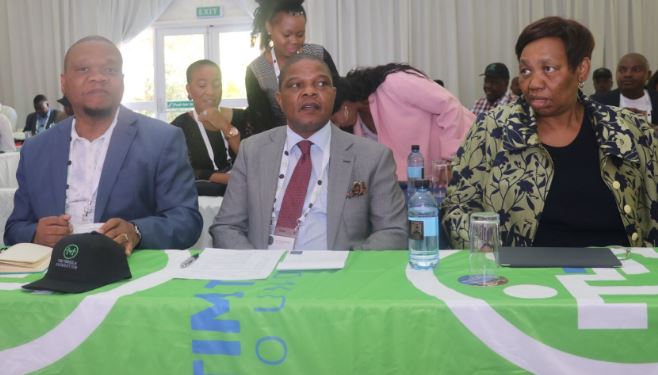
Mavima was speaking while officially opening the National Association of Secondary Heads (Nash) conference in the resort town on Thursday.

He was responding to concerns by school heads about the new education curriculum which they said did not properly prepare learners for tertiary education or employment in the industry.

Mavima partly blamed the demise of the education system on school teachers as he implored them to play their own part in socioeconomic transformation of the country.

“I want Nash to spearhead better ways and make suggestions on the way we can unlock some of the problems we face in implementing the new curriculum.

“I am calling for transformation because the country lost a decade of economic development. We created a full generation of hopeless people who can only realise value in themselves outside and not here,” said Mavima.

He said government and the education sector had collectively failed the country, hence the need for closer cooperation.

Zimbabwe, under then Primary and Secondary Education Minister Lazarus Dokora, last year introduced a new schools curriculum.

The controversial learning regime was strongly resented by educators who saw it as overburdening them with extra responsibilities which had no relevance to the country’s learning environment.

The new education curriculum was introduced ostensibly to equip learners with lifelong skills and prepare them for the future.

However, the new Emmerson Mnangagwa administration has initiated a process of reviewing the same new curriculum.

Mavima said the kind of education had been outdated and producing people who cannot add value to the economy.

He said: “When you see a majority of Zimbabwe applying for birth certificates and passports, don’t think they want to get documents to visit and come back. They are trying to secure lives of their children outside the country.”

The Minister urged teachers to play a leading role in transformation of an education system tailored to produce pupils who are marketable to business and industry.

The three day conference ends this Friday. – New Zimbabwe


South Africa: Teachers’ union Sadtu concerned over school robberies

Jenni Evans

The SA Democratic Teachers’ Union (Sadtu) is “deeply concerned” about a spate of robberies at Cape Town schools over the past month. The Western Cape Education Department has offered a R10 000 reward for information that will lead to the arrest of the perpetrators.

“Schools are supposed to be a place of safety,” said Sadtu Western Cape secretary Jonovan Rustin.

Five schools have been hit since May 16, starting with Ummangaliso Primary School in Site B, Khayelitsha.

On May 24, Inthshayelelo Primary School in Lingelethu West was burgled and days later on May 29, robbers struck at Lwandle Primary School, also in Lingelethu West.

READ: 3 teachers hijacked outside Cape Town primary school

On May 30, Vukukhanye Primary School in Gugulethu was robbed and on Monday morning, June 18, three teachers from ACJ Phakade Primary School in Nomzamo, Strand, were hijacked at gunpoint as they arrived at school.

Western Cape Education MEC Debbie Schäfer said five armed men entered the school premises via the vehicle entrance and held the three teachers at gunpoint. The robbers stole three vehicles.

CCTV footage shows them slipstreaming into the gate behind the teachers’ cars.

“Thankfully, no one was physically hurt during the incident, however, the educators involved, as well as those who witnessed the incident, are deeply traumatised. Counselling is being provided,” said Schäfer.

Police probing the robberies

In the meantime, Police Minister Bheki Cele assured the department that police were investigating the robberies, and the Safe Schools Directorate had deployed security to the school, she said.

But Sadtu said that at the moment, teachers feel as though they are “sitting ducks”, waiting to become the next targets.

He called for visible policing outside schools, particularly during winter mornings, when pupils and teachers arrive in the dark.

Rustin said education department officials were well protected in their own offices, but that schools only have a gate which had to be opened to let pupils and teachers in.

He said none of the victims would be allowed to speak to the media, because it would be against department policy.

READ: Fear at schools after robberies

Paul Colditz, CEO of the Federation of Governing Bodies of SA Schools, said they were worried that schools were being targeted.

“Children may be affected and we are always very concerned about it,” he said.

Colditz added that schools were soft targets because they could not afford property security, and he echoed the call to make schools safer.

In the meantime, anybody with information on the robberies can send a tip-off to the toll-free number 0800 454 647.

The R10 000 reward is for information that leads to the arrest and conviction of the robbers. –News24


Nigeria: OAU sacks sex-for-marks professor

Joshua Dada

The authorities of the Obafemi Awolowo University, Ile-Ife has dismissed Professor Richard I. Akindele of the Department of Accounting, Faculty of Administration from the service of the institution for indulging in gross misconduct bothering on sexual harassment of female students.

Akindele, a senior lecturer was dismissed after he was found liable to all the allegations of sexually harassing his student among others, Miss Monica Osagie.

Addressing journalists at the institution yesterday, the Vice Chancellor, Professor Eyitope Ogunbodede disclosed that the university arrived at the dismissal option following the recommendation of the Joint Committee of Council and Senate constituted to probe the allegation.

The Vice-Chancellor disclosed that the erring professor had an inappropriate relationship with Osagie as established through their conversations in the audio recording.

According to Ogunbodede, Akindele acted in a manner that is seen to have compromised his position as a teacher and examiner, in that, his conversations with Osagie were about examination scores and inducement of favour for the alteration of examination scores.

“He offered to change Miss Osagie’s purported 33 per cent result to a pass mark in consideration for sexual favours, this was established in the audio recording which he admitted.

“His claim that Osagie knew that she had passed with a score of 45 per cent but was seeking to score an A and that this led to him being sexually harassed by Miss Osagie cannot be supported by any evidence.

“Professor Akindele’s action in requesting sexual favour from Osagie to change her examination score was scandalous behavior that has brought ridicule to the name of the University and have tarnished the reputation of the University, as it portrays the university as an institution where its teachers and examiners trade marks for sex,” said Ogunbodede.

Ogunbodede disclosed that the University is creating awareness and disseminating information on what constitute sexual harassment within the University and noting the veracity of sexual harassment concept which include sexual solicitation, sex exploitation among others.

According to the Vice Chancellor, OAU is fully committed to the eradication of sexual and any other harassment from tertiary institutions and will do all that is possible to nip the menace in the bud. – Leadership

Top referee Victor Hlungwani gives hope to rural kids

Tiyani wa ka Mabasa

Former Baroka goalkeeper Oscarine Masuluke has used his past life experiences to motivate schoolchildren in Limpopo over the past week.

Masuluke, 25, is trying to turn his life around after being dismissed by Baroka a few months ago.

Masuluke, Olaleng Shaku and coach Kgoloko Thobejane were shown the door at Bakgaga for allegedly drinking on duty earlier this year.

The 2017 Fifa Puskas Award finalist was part of the Limpopo Sports Wise team that visited a few schools last week.

The NGO was established in 2008 by PSL referee Victor Hlungwani and former top-flight players, Tonic Chabalala and David Mathebula, who also hail from the province.

“It was good to hear Oscarine relating to the learners how his contract was terminated by Baroka. He encouraged learners to stay away from alcohol as it can ruin your career like it did with him,” Hlungwani told the Sowetan.

Masuluke could be joining newly promoted National First Division side, TS Sporting. He couldn’t be reached for comment.

Other players who spoke to the learners included Justice Chabalala (Orlando Pirates), Nyiko Mobbie (Free State Stars) and Wiseman Maluleke (Polokwane City), as well as social worker Nyiko Mabunda.

The emphasis was on education and staying away from substance abuse under the theme “You are a star”.

The group visited schools such as Vuswayi Secondary and Jim Yingwani High around the Collins Chabane, Makhado and Greater Giyani municipalities.

“Players presented on topics under education and finance, drugs and alcohol abuse, teenage pregnancy and HIV/ Aids,” Hlungwani explained.

“I would like to thank my company Rand Water who donated school bags and presented on how learners can apply for bursaries to fill the shortage of skills in water industries.

He said the Premier Soccer League also providing T-shirts, caps, soccer balls and vuvuzelas that we used as prizes during the roadshow.

The show was concluded over the weekend with Youth Day celebrations at Giyani Stadium on Saturday. – Sowetan

South Africa: Schools ignore the law when enforcing payment of school fees

Sipho Mzakwe

“The school sold my lounge suite, microwave and fridge… it’s now threatening to sell my house too”. The household items of the parent who phoned the Equal Education Law Centre earlier this year had just been confiscated by debt collectors seeking to settle a R25,000 outstanding payment for school fees.

When her child was admitted to the school, the parent ran a spaza shop and was making enough money to afford the payment of school fees. Her financial situation changed drastically after her store caught fire and she lost everything. From then on, as a single parent, she had no income other than the child support grant. For two years she could not afford to pay fees.

During this period, she received phone calls from the school demanding payment and threatening to attach her property. She was never told that she had the right to apply for a fee exemption, to which she would have been entitled.

Fearing that the child would be excluded, the parent did not inform the school about her changed financial situation. Towards the end of the year, the school made good its threats, attached some of her household items and sold them to settle her debt.

The legal framework

Schools do have a right to enforce school fees. Parents also have a right to apply for a fee exemption. For this reason, the South African School Act sets out the procedure which schools are obliged to follow before exercising their right to enforce payment of fees against defaulting parents.

Before taking action against a defaulting parent, a school must find out whether the parent qualifies for fee exemption. If so, the school must exempt the parent. Further, in order to take action against a defaulting parent, the school must have written proof that the parent was notified of his/her right to apply for a fee exemption and failed to do so. These provisions seek to harmonise and balance the competing rights of the school to enforce payment and of a parent to be exempted from payment of fees if he or she qualifies.

Lack of accountability

In the case of our client, due to lack of knowledge and the school’s failure to provide the relevant information, she had not applied for a fee exemption and was faced with having to hand over her home in order to ensure that her child had access to education.

This is not the only case of this sort which has been brought to the Equal Education Law Centre. Schools disregard the procedures set out in the Schools Act. In some cases, schools unlawfully threaten to withhold learner reports if parents do not sign an acknowledgement of debt for fees, even when they may be entitled to a fee exemption.

The schools’ continuous disregard of the procedures set out in law may be attributed to a lack of accountability. As it stands, the law does not require schools to account to provincial departments of Education about the enforcement of fees against defaulting parents. And the departments are not required to monitor the enforcement of fees against defaulting parents. Although provincial departments issue circulars from time to time to schools on fee exemptions, it is unclear whether follow ups are made by the departments to ascertain and ensure compliance with the procedure.

Unless parents can get legal assistance, it is unlikely that schools will be called to account for their failure to comply with legislation. As with our client, this problem disproportionately affects poor and uneducated parents who are sometimes not even aware of their right to fee exemption.

It may be necessary to introduce mechanisms requiring schools to report on their compliance or to consider penalties for non-compliance. Debt collectors also have a responsibility to ensure that the law is not disregarded.

Certain information in this article has been deliberately omitted for purposes of confidentiality.

Sipho Mzakwe is a first year Candidate Attorney at Equal Education Law Centre.

Rwanda: Parents, teachers welcome ban on cell phones in schools

Jean d’Amour Mbonyinshuti

Both teachers and parents have welcomed the ban of cell phone use by students in primary and secondary schools that was announced recently by the Ministry of Education.

Martin Masabo, the head teacher of Lycée de Kigali, said students should not be allowed to use mobile phones in anyway and the decision to ban them in schools was a necessary one.

“It is a very good decision because it causes distraction not only for students but also for adult. Doctors and nurses are not allowed to use mobile telephones during working hours, why should kids in schools?” he wandered.

“I know this is a technology era but if everyone cannot afford mobile phones then they need to use laptops as they are connected to the internet and the government is promoting smart classrooms. Teachers should be monitoring; first of all they have to sensitise and tell them that while telephones are good if they want to concentrate on their studies they have to do away with them,” said the seasoned educationist.

According to Pierre Damien Nshuye, the head teacher at GS Kitabura in Musanze District, the move will not only boost quality education but also decrease interactions with the outside world where some of girls are exploited and them in the process.

“In my opinion, the move is positive as we have been experiencing cases of indiscipline associated with the use of cell phones,” he said

The issue of use of mobile phones in schools has been hot and rather controversial.

In 2010, the then State Minister for Primary and Secondary Education, Dr Mathias Harebamungu, came up with a strict ‘no-phone-at-school’ policy. He was photographed using a hoe to smash phones that had been seized from students at GS Zaza in Ngoma, which attracted public uproar.

His successor, Olivier Rwamukwaya, was more flexible saying that students could use mobile phones but in a controlled environment as it could help them in their studies.

Parents speak out

Jean Bosco Sibomana a father of three whose two children are in secondary said that parents worry about the use of cell phones and it was hard to control whether children leave them home or go to school with them.

“It is a difficult issue and we always disagree with children whenever we ask them to leave their cell phones home. It is therefore a good move for me to ban cell phones in schools,” he noted.

Students face dismissal

According to Isaac Munyakazi, the State Minister for education the decision was taken to ensure that children concentrate on studies without distractions.

He said that punitive measures would be taken that include confiscation of the phone and a warning which will be followed by dismissal in case the culprit is caught again.

“Schools also need to put control measures in place and in case it fails to implement them, they will be accountable,” he added.

He said students should not worry because if they want to communicate with their relatives, there is a visiting day every month while those in need to call are facilitated with the school management. – The New Times

Banyana’s Janine van Wyk opens academic doors for girls

Staff Reporter

Banyana Banyana captain Janine van Wyk announced on Monday the launch of an academic and football curriculum for a select group of elite girls.

The programme will run at the newly formed specialist sport and cultural school, ESCA Wanderers (the Elite Sporting & Cultural Academy), and will start in October.

The students will be offered a range of curriculum options from Cambridge, National Curriculum and Assessment Policy Statement, to the American GED School Leaver’s Certificate.

The elite development squad is a goal of holistically developing young players for the future for Van Wyk’s ambitious ladies football club, JVW.

The programme will be a collaboration between the selection of successful candidates both from a football skills set and academic background.

ESCA School Wanderers is headed by Margie la Grange, who will manage the academic needs of the girls.

“I am extremely excited to share all my knowledge and experiences to help young athletes prepare for their life journey to become pro athletes – both mentally and physically,” said Janine, who is currently playing for Houston Dash in the US.

“Education is absolutely key to preparing players in the new era of professional football and my aim is that this group of 20 players will all go onto furthering their careers in the professional game – both in South Africa and overseas.”

La Grange said: “We will support and facilitate each individual learner’s specific programme to achieve her personal best.” – Sowetan

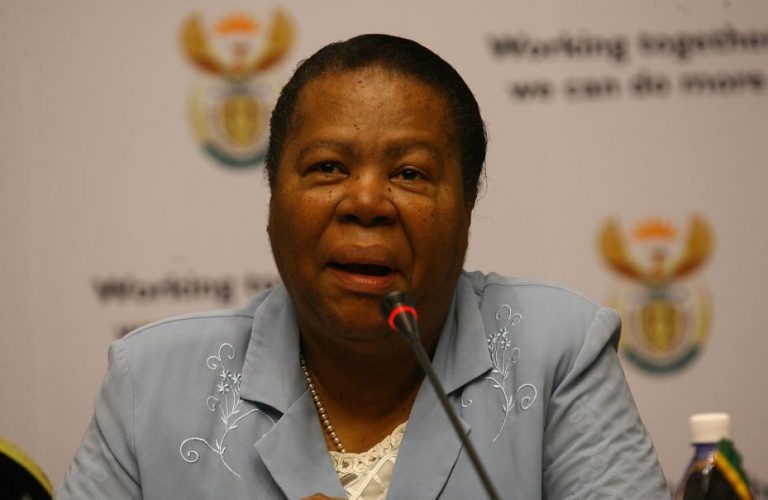
Naledi Pandor probes varsity graft

Yoliswa Sobuwa


Two KwaZulu-Natal universities and an Eastern Cape university have received a stern warning from Higher Education and Training Minister Naledi Pandor to clean up their act or face the music.

Pandor said one of the crises she had encountered on her appointment included difficulties at the University of Zululand. She was talking about her 100 days in office.

“There were lots of allegations and that R11-million was fraudulently disposed [of] to a particular individual and other sums of money.

“Contracting was done without respect for procedures and rules of the institution,” said Pandor.

“So I decided to spend time and [to] meet with stakeholders as this university has been a concern for the department for several years with investigation after investigation. We are not seeing a full improvement.

“It was a very valuable exercise for me. After that process, I then decided that I don’t want to interfere with the current council and remove it again. I told the council to show me that they are competent to be the governing body in the institution.”

She told the council to institute an independent forensic audit on all alleged issues.

“They must give me a proper audited account of what happened to the R11-million. A proper investigation should be conducted. If I am not satisfied with their report, then I will institute my own forensic investigation,” Pandor said.

With regard to problems at Mangosuthu University of Technology, Pandor said an independent assessor has been appointed to work on the challenges.

Pandor is also concerned about the Walter Sisulu University. The problems continue to cause anxiety, particularly among workers and student body, at the Eastern Cape institution.

“We will give close attention to that institution and ensure that adequate support for resolving the problems is found. The too many reports on student protests, stoppage of teaching, waste of resources and fraudulent use of funding, should come to an end. I want the leadership to understand I expect leadership from them.” – Sowetan


Strengthening science and agriculture in Africa

Esther Ngumbi

In late March, Africa’s leading scientists, innovators, and policymakers met in Kigali, Rwanda, to brainstorm solutions to an increasingly pressing problem: the low quality of science on the continent.

Any good leader knows that scientific discovery and innovation fuels progress, facilitates development, and can help tackle issues like food insecurity, water shortages, and climate change. And yet most African governments are failing to fund research and development adequately in their countries.

According to the UNESCO Institute for Statistics, countries in Sub-Saharan Africa spend, on average, just 0.5% of GDP on research and development. In the West, the share is closer to 3%.

This disparity underscores the development challenges that Africans face. Africa is home to 15% of the world’s population and 5% of its GDP, but accounts for a paltry 1.3% of total research spending. Moreover, African inventors hold just 0.1% of the world’s patents, meaning that even when money is spent on science, innovation, and research, the findings rarely translate into solutions for the continent’s most immediate challenges.

To be sure, these trends are not universal; some African governments are investing heavily in science-led innovation. In South Africa, for example, authorities have pledged to double R&D spending by 2020 – to 1.5% of GDP.

This follows a 2016 commitment by African heads of state to increase science and technology budgets to at least 1% of GDP by 2025. A handful of countries – including Kenya, Rwanda, and Senegal – are working hard to reach this funding threshold.

Africa also benefits from generous research-related aid and international support. One of the top donors, the Bill & Melinda Gates Foundation, has invested more than $450 million in African science initiatives over the last decade.

Projects include a $306 million program to boost crop yields and a $62.5 million grant to improve health outcomes. These and other funding streams have helped African researchers develop drought-resistant crops, produce vaccines for infectious diseases like Ebola, and expand opportunities for science and technology education.

Unfortunately, many African governments lack the resources to fund programs that could build on these gains. Simply put, a new, more collaborative approach to African science is urgently needed.

Africa’s leaders have pooled their science resources before.

In 2003, the African Union and the New Partnership for Africa’s Development began implementing a continent-wide strategy “to develop and use science and technology for the socioeconomic transformation of the continent and its integration into the world economy.” It was an ambitious goal that yielded early results. Between 2005 and 2014, continent-wide spending on R&D increased, while research output more than doubled in many countries.

Since then, however, progress has stalled. The recent meeting in Rwanda, hosted by President Paul Kagame and organized by the Next Einstein Forum, was designed to help get the agenda back on track. But summits are only part of the solution; governments must also commit to improving research quality, and they can start by focusing attention on three key areas.

First, Africa’s leaders must engage with CEOs, philanthropists, and donors who understand the long-term value of investing in science. Innovation is expensive, and seed money will be needed to help strengthen the continent’s scientific capacity.

Second, African universities and institutions should align their research agendas with national and regional goals. For example, given that one of Africa’s most pressing challenges is feeding its growing population, schools specializing in agricultural research should ensure that their work contributes to solutions.

Last but not least, countries should encourage entrepreneurship within research organizations. One way to do this is by establishing commercialization offices, which could help scientists bring their research to market.

Scientists everywhere need help navigating bureaucracy when turning an idea into a commercial venture, and this process is particularly challenging in a region where R&D pipelines are in their infancy.

Boosting Africa’s scientific capabilities will require the continent’s leaders to do more than ask tough questions at summits; they must also allocate more funding and forge new partnerships. To overcome Africa’s human development challenges, African governments must invest in the people who can overcome them.

Esther Ngumbi is a post-doctoral researcher at the University of Illinois, Urbana-Champaign, and a senior fellow at the World Policy Institute.


South Africa: #FeesMustFall Student Activists Reflect On Their Own Legacy

Nkateko Mabasa

On June 16, #FeesMustFall student activists gathered at the Apartheid Museum to hold a debate reflecting on the contested legacy of the Fallist movement.

It was unanimously agreed among the panelists and on the floor, that although #FeesMustFall did not achieve everything it had planned, it did not mean it failed. The free education pronouncement made last year by then-president Jacob Zuma was a seen as a huge accomplishment despite differing views on what went wrong.

The debate, hosted by the Apartheid Museum at the George Bizos Gallery, to commemorate the 42nd anniversary of the 1976 Soweto Youth Uprising on Youth Day invited #FeesMustFall student activist Busisiwe Seabe, a Fallist and honours student at Wits University, Ntokozo Qwabe, a Rhodes Must Fall activist at Oxford University, and Funzani Mtembu, a University of Johannesburg financial investment graduate and Pan-Africanist. Journalism lecturer at Cape Peninsula University of Technology, Asanda Ngoeseng was also a panelist, reflecting on the significance of the movement as an academic.

The debate’s aim was to highlight the “many objectives” of the “decolonisation project” and the shared ideals with the youth of 1976, stated as: increased access to affordable if not free, quality, higher education; rethinking curriculums; dismantling exclusionary institutional norms and cultures; effecting staff and leadership changes to reflect society-at-large; and connecting this activism with a range of economic and political struggles for a more just South Africa.

The panelists were each given seven minutes to argue whether ‘Fees Must Fall’ failed and where the student leaders are now? Were they outsmarted by crafty hegemonic powers resisting talk of decoloniality? Have they have been co-opted and fragmented? And what happened to the sense of urgency of yesterday?

According to Seabe, the question of whether “Fees Must Fall” has failed is problematic because it assumes the student movement is different from the struggles of the youth of ‘76: it was a continuation. And it is language that binds the two movements together: lpupils fight against being taught in Afrikaans and the contemporary language of decoloniality.

She said the movement through protests and university shutdowns, fulfilled its promise with the free education pronouncement last year being phased in. The contradiction of the movement is not that it failed the public nor the coming generation but the activists who bore the brunt of the state’s response and still carry the weight of the movement. .

“Khanya Cekeshe is serving eight years and Alma Monageng is under one-year house arrest. We have failed the activists,” said Seabe.

Furthermore, the march to the Union Buildings was a momentous moment for Seabe as she realised that students started to see their current struggle as a moment in history and not an actual revolution. And when they got back to university, she recalls a meeting where some politically affiliated comrades started encouraging students to go back to class because it was exam time.

“The students thought the parties wanted to help but soon realised that they were being overtaken so that they could be used as a campaign strategy in 2019 on free education. It became centred around political parties and not the genuine call to free education.

“We found out that many of our leaders among us are being paid to be in the movement. We thought we could do it outside of politics,” said Seabe.

For Qwabe, it was important to distinguish between “#FeesMustFall” and the “Fallist movement”. The Fallist movement is a call for decolonisation beyond free education and has similar movements that have emerged at Harvard, Oxford and other places. It is a Pan-African movement that comes out of a deep disgrutlement among black students, not only in how universities operate but also in how they alienate black bodies.

When the students went back to university, says Qwabe, they started interrogating other schools of thought to understand their own experiences. They started connecting with Black Consciousness, Pan-Africanism and black radical feminism.

“What Biko was telling me is that we were not fighting to be integrated into white society, we are authorities of our own struggle, we must not feel like we need to be accepted, said Qwabe.

He contends that this freedom for black people without land is false. And that since the dawn of the white and black encounter, the point of contention has always been about defending land and resources. And that was why 1994 did not end this war, it only placed black people in a situation that they felt that they were free.

Mtembu, agreed with Qwabe’s distinction of the Fallist movement and #FeesMustFall protests. The movement, according to Mtembu, goes back back to Rhodes Must Fall, when Chumani Maxwele threw human waste on the statue of Cecil John Rhodes at the University of Cape Town. The act was a protest against the colonial crimes of Rhodes and the transgenerational trauma his statue represents.

This cumulative, sustained psychological effects, said Mtembu, was a legacy of the social and economic disparities which carry throughout generations in a post-apartheid Rainbow Nation.

And depending on which group controlled the economy and had overall hegemony, black people were integrated into the white system. Apartheid spatial planning severely disadvantaged the poor when they had to commute in and out of the townships to affluent white suburbs to seek work opportunities.

“White youth received the liberty to recreate themselves while black youth had the burden to go back home and deal with the burden of life,” said Mtembu.

Ngoeseng conceded that she came from a slightly different background and did not consider herself a Fallist but a supporter. She said the key thing to highlight was how the movement had failed the people who gave their lives. As an educator she makes sure she conscientises her students about decolonial thought and creates a space where they can be free to speak about their black experiences.

“We must begin decolonisation at high school. The challenge is how do we give students the capacity of thinking of the curriculum as something they own and are participants in creating,” said Ngoeseng

After a lively round of questions to the panelists, Qwabe objected to the moderator’s decision to give the closing remarks to advocate George Bizos, who was in attendance. The brief debate on whether he should be allowed to speak was only settled by the compromise that the former Struggle stalwart would only be allowed to speak before the panelists’ closing remarks.

Bizos cautioned the panel that although black people had been done wrong, there must be some caution in calling everybody who is not black a colonialist. There were others, like himself, who came into the country as refugees.

“Am I a colonialist. What are you going to do with the white people, kick them out?” asked Bizos.

It was at this moment that an uproar erupted as the panelists were grabbing for a mic to respond to what seemed like a provocative question from Bizos. After the moderator calmed the roomed down, each panelist was given a chance to respond to Bizos.

“My thinking revolves around blacks and the black condition,” said Mtembu, “Why do I have to think about whites? And how do I mobilise blacks who have been stripped of their land”.

“It is ok for us blacks to huddle up and love each other, it will assist with the femicide we are experiencing,” said Seabe.

As the youth reflect on their impact on the country’s political scene, one wonders what the country will look like, when these leaders of tomorrow take over the nation. DM