Home Blog Page 502

Police used live ammunition on protesting pupils, admits Gauteng community safety MEC

Amanda Khoza


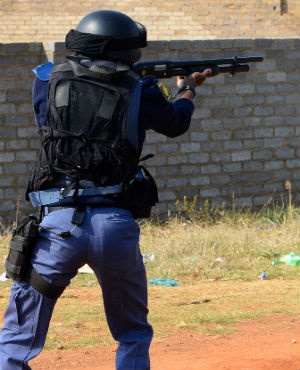
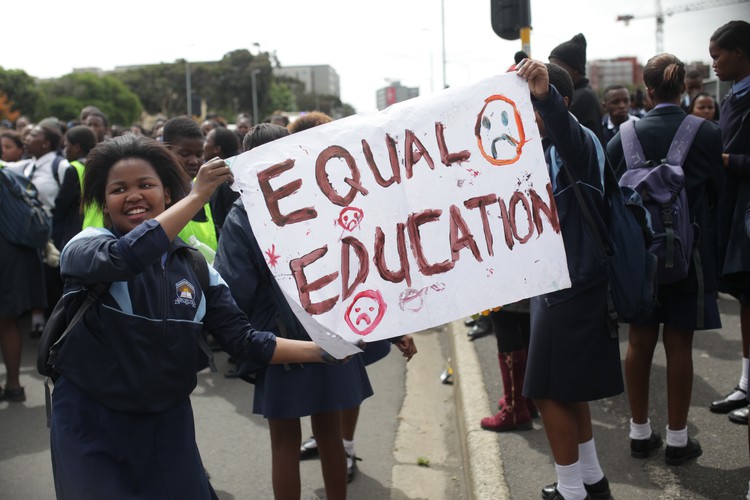
Gauteng community safety MEC Sizakele Nkosi-Malobane on Tuesday admitted that the police used live ammunition on protesting pupils from Thuto-Kitso Technical School in Fochville on May 16, the DA said in a statement.

DA Gauteng legislature spokesperson on finance Ashor Sarupen said, according to Nkosi-Malobane’s response to a question asked by the DA in the legislature, the police were not authorised to use live ammunition.

“The situation only escalated when the SAPS called for backup, at which point learners were aggravated and some SAPS officers from the K-9 unit used live ammunition on protesting learners for throwing stones in their direction,” explained Sarupen.

He said Nkosi-Malobane admitted that one pupil was shot with live ammunition and hospitalised. The pupil survived.

 The pupils were protesting against a shortage of teachers at the school since the beginning of the year and the reduction of the number of teachers.

“The school continued to offer subjects for which they did not have teachers and a lack of communication from the district meant these learners were without teachers up to their mid-year exams,” said Sarupen.

DA to monitor probe

He said the pupils resorted to staging a protest after consistently being ignored by officials at the Department of Education.

“It is ironic that the ANC condemns the abuse of children in society while denying children their right to education and then shooting them for demanding their right.

“The use of live ammunition in this case was unwarranted, unacceptable and had the potential to descend into another Marikana situation,” said Sarupen.

Nkosi-Malobane has indicated that an investigation and disciplinary action are underway, said Sarupen.

The party said it would be monitoring the processes closely. – News24

Ghana: University of Mines and Technology to Run Courses in Railway Engineering

Ghanaian Times

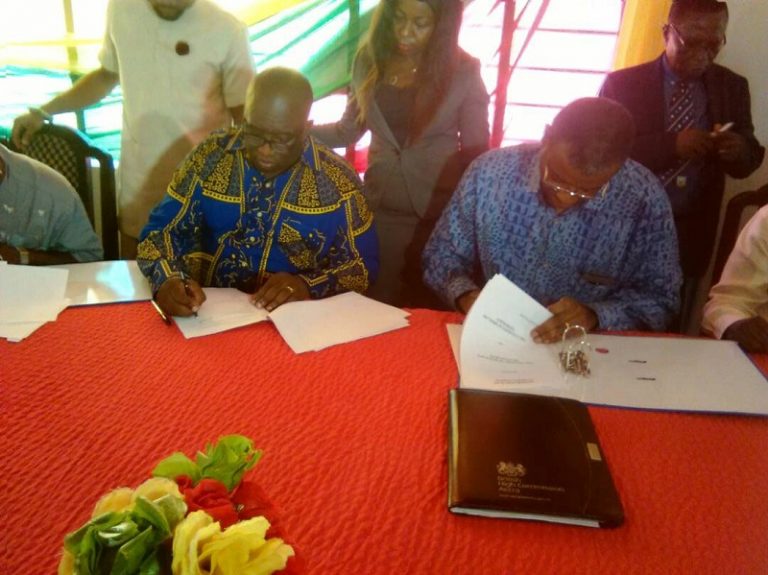
The Ministry of Railways Development and the University of Mines and Technology (UMaT), Tarkwa last week signed a Memorandum of Understanding (MoU) for a proposed railway engineering courses at the University.

The move is also expected to revive the Railway Training School at Ketan in Essikado, in Sekondi-Takoradi Metropolis of the Western Region.

Although, the date for the commencement of the courses has not been disclosed, courses such as BSc in Railway Engineering, BSc Civil Engineering, BSc Aerospace Engineering, BSc Mechatronic Engineering, BSc Transport Management and Dip. in Electrical Engineering, after approval from the National Accreditation Board and National Council for Tertiary Education.

However, the University will from the 2018/19 academic year, run the following courses MSc Engineering Management, MSc Business and Technology Management, BSc in Mechanical Engineering, BSc Electrical and Electronics Engineering, BSc Computer Science and Engineering, BSc Environmental and Safety Engineering, BSc Geodetic Engineering, Certificate in Railway Engineering (Plant and Maintenance Option) and Certificate in Railway Engineering (Welding and Fabrication).

Highlighting the importance of railway to Ghana’s development, the Vice Chancellor of UMaT, Prof. Jerry S.Y. Kuma, said the partnership was a long-term deal would revive the railway sector.

He stressed “This will be the only Railway University in West Africa. This partnership is a serious one and we would ensure that the vision of the President to transform this country to become an industrial is realized.”

Speaking at the ceremony, the Minister for Railways Development, Joe Ghartey, hoped the partnership with UmaT would lead to the development of tertiary degree awarding programmes and eventually the establishment of a University of Railways and Infrastructure Development.

He said “We need to make this a success not just in Ghana but also in the West African sub-region.”

The Minister said the railway sector needed the human resources to become a centre of excellence.

Ghartey noted that the Railway Training School and workshops have been overtaken by rodents and weeds and described the situation as very bad.

Expressing worry about the wanton dissipation of railways assets, he said that, by the last half of 2016, railway assets have been sold as scrap.

“Some assets of railway similar to what has been refurbished today were sold at a pittance. The right of way became the personal property of workers in the sector and their collaborators who overnight became real estate owners and agents selling and disposing of the real estate that belonged to the state as their personal property,” he lamented.

The Minister said the Western Line would be redesigned and extended to Awaso and Nyinahin leading to rich bauxite reserves and also transport cocoa in the northern part of the Western Region, Ashanti and the southern part of the Brong-Ahafo Region.

The Omanhene of Essikado, Nana Kobina Nketsiah V, described the MoU as good news that would propel the railway sector in Ghana, stressing “we need not rest on our oars.” – Ghanaian Times

Angola: Education Ministry to Expand Adult Education

ANGOP

The Ministry of Education (MED) intends to encompass the adult education into the secondary education to secure the continued training of the pupils involved in the literacy process.

This was announced on Monday in Ondjiva city, southern Cunene province by the Secretary of State for General and Pre-school Education, Joaquim Felizardo Cabral.

The official, who briefed on the current state of the education of the province, said the implementation of the secondary education for adult education will serve to combat illiteracy.

Cunene province has currently a total of 243.353 students enrolled for the present school term, at pre, primary and secondary education, secured by 6.336 teachers. – ANGOP

Western Cape Education Department offers reward after spate of school robberies

Jan Bornman

The Western Cape government has condemned attacks on schools following four separate armed robberies at schools across the province.

MEC for education Debbie Schäfer said the attacks were timed to take place just after the school day had ended, with pupils and educators still participating in after-school activities and meetings.

“Educators and staff were threatened at gunpoint and were robbed of personal items. School ICT equipment was stolen and, in one case, a vehicle was hijacked on the premises,” Schäfer said.

“I am just extremely grateful that no learner or educator has been fatally harmed during these attacks.”

The first incident occurred at Ummangaliso Primary School in Khayelitsha, followed by attacks at Intshayalelo and Lwandle primary schools in Lingelethu West, and at Vukukhanye Primary in Gugulethu.

Schäfer said staff had been left traumatised and in fear for their safety.

“I do not blame them,” she said.

R10 000 reward

“It is not yet certain if the attacks are related but there is a clear indication that our schools are being targeted for specific reasons and at a certain time of the day.”

She said the criminals needed to be stopped before another attack took place and offered a R10 000 reward for information that will lead to the arrest and conviction of the criminals.

Schäfer said she had engaged with other structures in the province, including the City of Cape Town’s special investigations unit to track down the perpetrators.

“The WCED (Western Cape education department) is not a security agency and we cannot investigate and make arrests ourselves – but we are determined to do what we can to assist in securing convictions to prevent similar attacks on our schools.

“We have been left with no choice. The safety of our educators and learners is a priority to us, but we cannot always protect our schools when it comes to armed attacks of this nature,” she said.

Gauteng schools robberies

“I want these criminals to also know that we are looking for them. We will not put up with this blatant show of violence against our learners and their teachers.”

There had also been a number of robberies and thefts at schools in Gauteng in recent months.

News24 reported earlier this year that Gauteng education MEC Panyaza Lesufi was left devastated after the latest break-in at a school in the province.

“We are under siege. How can criminals be allowed to target our schools in this manner?” he was quoted as saying.- News24

Equal Education and MEC Debbie Schäfer reach agreement

Tariro Washinyira    

The Western Cape Education Department will wait before taking any action following allegations of sexual misconduct against three people in Equal Education, MEC Debbie Schäfer said in a statement.

On 21 May MEC Schäfer instructed Equal Education (EE) to stop operating in the province’s schools until her department held a meeting with the organisation. (A subsequent article by GroundUp pointed out that a Cape Town school teacher continued to teach while on trial for sexually abusing a learner.)

In a statement on Sunday Schäfer said that her department had agreed to wait for the outcome of investigations that EE hopes will be finalised within the next few weeks before her department took any action. This follows as meeting in which EE explained that none of the men accused of misconduct had regular direct interaction with Western Cape learners. The two parties plan to meet again once the investigations are concluded.

“EE briefed us on all three cases that have been raised in the media and the processes of investigation that are being followed in each case. The investigations will be done by people completely independent of the organisation, and will be conducted as speedily as possible,” said Schäfer’s statement.

“They explained to us the processes they have in place to train and sensitise their members at all levels of the organisation regarding matters of sex and power abuse. We all agreed that sexual misconduct is unacceptable and have agreed to work together on a new policy for organisations working in schools.”

Concurrently EE released a statement saying that it stops school-based activities during exams anyway. The organisation also wrote that the meeting with the MEC had been “positive” and that it had explained the “seriousness with which EE has approached issues of sexual harassment”. EE also said that there should “at this stage be no obstacle to EE members continuing to organise in the Western Cape”.

The EE statement said that the organisation would meet the provincial education department once the sexual harassment investigations had been concluded. – GroundUp

Michael Komape’s family to appeal Limpopo High Court’s decision

Ciaran Ryan    

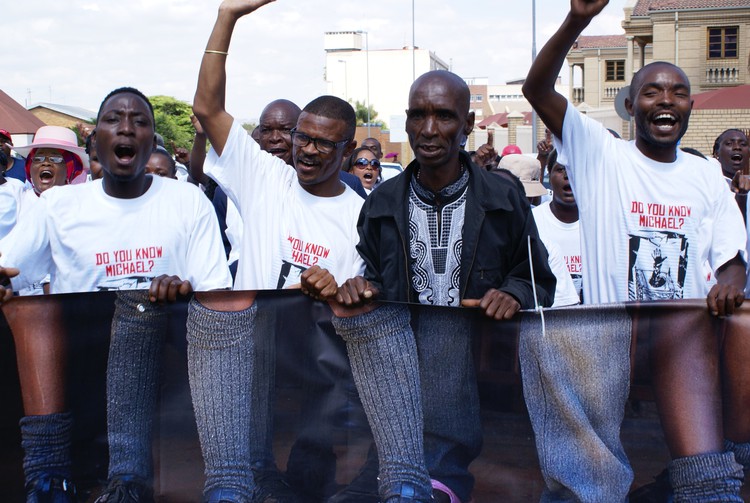
The Komape family is asking for leave to appeal the Polokwane High Court’s rejection of its claim for nearly R3 million in damages. The claim is against the Limpopo government following the death of five-year-old Michael Komape in a school pit latrine in 2014.

The family, represented by public interest law firm SECTION27, is asking that the appeal be heard in the Supreme Court of Appeal due to the importance of the legal and constitutional matters raised in the case.

Should this fail, it wants a full bench of the Polokwane court to hear the matter. SECTION27 will be presenting its argument to the Limpopo High Court on Friday 1 June at 10am.

The case went to trial over two weeks in the Polokwane High Court in November last year. In April this year Judge Gerrit Muller delivered his verdict, dismissing the family’s claim for R940,000 in general damages and R2m in Constitutional damages.

The only financial relief for the family was the award of R12,000 each for future medical expenses for two of Michael’s surviving siblings, Oniva and Maria.

Just before going to trial, the Limpopo Department of Basic Education offered the family R450,000 in full and final settlement of its claims. This was rejected as an “insult” by the family, which was pushing for close to R3m.

It the end it got nothing, except the R12,000 for medical expenses for each of Oniva and Maria. A third sibling, Moses, received no award for medical expenses. SECTION27 is also appealing this.

There was one major victory for SECTION27 and the family: the judge then gave the Limpopo education department until 30 July to come up with a plan for the installation of “safe and secure” school toilets across the province.

Evidence presented during the trial established that until 2011, 73% of schools in the province were using pit latrines.

In its appeal application, SECTION27 is arguing that Judge Muller erred in not awarding damages to the family as it was conceded by the state that the family had suffered emotional shock as a result of Michael’s death.

All that should have been decided was the quantum of damages. The amount being claimed by the family was neither excessive nor unreasonable, and is consistent with damages awarded in previous comparable cases.

The appeal application also suggests the judge confused two different claims made by the family: one for emotional shock, and the other for grief (it also asked for the judge to develop common law on this claim). It was not contested by the state that the family had suffered emotional shock, which was the subject of extensive cross-examination during the trial.

The family relied on an earlier 2016 case heard in the Supreme Court of Appeal, Mbhele v MEC for Health Gauteng Province, where “proof of psychiatric lesion or illness by expert evidence was a precondition for compensation”.

SECTION27 produced expert evidence at trial to prove the emotional shock suffered by the family, and argues that the judge was bound to follow this precedent set in the Mbhele case.

The family is also appealing the court’s decision not to develop common law surrounding a second claim for grief.

The common law, as it stands, “fails to distinguish claims based on serious breaches and violation of fundamental rights, and prevented the vindication of constitutional rights and as well as the granting of appropriate relief in terms of section 38 of the Constitution,” says the appeal application.

The Komape family are marginalised members of society lacking the skills and resources to assert their rights, and for this reason the court’s failure to establish common law “had a chilling effect” their right of access to court and their constitutional rights, argues SECTION27.

“The respondents were no ordinary delictual (wilful) wrongdoers, but were state actors who had the unmistakable constitutional obligations to protect, promote and fulfil the applicants’ constitutional rights,” says the appeal.

It also says the Judge erred in finding that recognition of the family’s claim for grief would result in “bogus and unwarranted proliferation of claims for psychiatric injuries.”

The judge declined to recognise the development of the common law claim for grief on that basis. There was no evidence before the court to justify this conclusion, says SECTION27.

It also says that in refusing the family’s claim for constitutional damages on the grounds that this would amount to over-compensation, the judge failed to heed the different purpose behind the different claims for damages.

SECTION27 contends that it has reasonable prospects of success on appeal.

previous article by GroundUp explains the judge’s reasoning.

Nigeria: Global Standard in Banking Education Introduced

Nume Ekeghe

As part of efforts to promote ethical standards as well as provide the foundation for high-quality and consistent education for bankers worldwide, the Global Banking Education Standards Board (GBEStB) has announced the release of the first banking standard for banking practitioners across the world.

The standard, according to the Registrar/Chief Executive Officer of the Chartered Institute of Bankers of Nigeria (CIBN), Seye Awojobi, was made public by the Chair of the GBEStB Education Committee and Chief Executive of the Chartered Banker Institute, Simon Thompson.

Thompson was quoted in a statement to have explained that the new standard consists of seven key recommendations, which all GBEStB member bodies must comply with.

“This first standard on Ethics Education and Training for Professiona l Bankers sets out our expectations of and guidance for GBEStB member bodies in terms of general recommendations and recommendations for the content, delivery and assessment of ethics education for professional bankers,” he said.

The recommendations, he added, included the general recommendations regarding ethics education and training; key ethical principles for professional bankers; content of ethics education and training programmes; delivery of ethics education and training programmes; assessment of ethics education and training programmes; impact measurement (of the Standard) and public declaration.

He further disclosed that a consistent approach in the promotion of ethical standards and education of professional bankers worldwide would help develop a strong ethical culture within the banking industry, thereby improving financial stability.

Thompson asserted that the Board, which brings together more than 20 banking institutes, will commence the implementation of the Ethics Education and Training standard from June 1, 2018.

Thokozile Xasa will tackle the difficult and enormous problem of school sport in South Africa

Mosibodi Whitehead

One of the most serious criticisms of Fikile Mbalula’s term as minister of Sport and Recreation was his lack of focus on fixing school sport. Razzmatazz did well to shine the spotlight on elite sport, particularly by raising the profile of the SA Sports Awards.

However, his apparent lack of desire to tackle grassroots issues in favour of the glitz and glamour left some of us with a school sport system that is in need of a complete overhaul.

The recent Fifth Annual Eminent Persons Group Report that monitors the progress of transformation in South African sport revealed that less than 10% of the 25 000 schools in the country participate in organised sports programme.

This is a problem that needs urgent attention.

The new minister of sport and recreation, Thokozile Xasa, is said to have made all the right noises especially when it comes to tackling the difficult and enormous problem that is school sport in South Africa.

Last week Xasa tabled her 2018/2019 budget vote in parliament much of which focussed on school sport.

The National Treasury allocated just over R1 billion to the Department of Sport and Xasa received praise for announcing that around R400 million of that would go to school sport.

The Ministry of Sport has divided its budget into four parts: promoting national participation in sport and recreation; supporting the delivery of sport infrastructure; fostering transformation in sport and recreation; and nurturing talent and supporting excellence.

School sport is housed under the promotion of national participation in sport and recreation which is known as the Active Nation programme.

In the 2018/2019 financial year the Active Nation programme has been allocated almost R700 million approximately R400 of which is dedicated to school sport.

The strategy is simple. Through the Active Nation Programme the department aims to increase participation in and access to organised school sport for thousands of South African learners.

This is a two-pronged strategy. First, money has been set aside to support the national school sport championships by ensuring that 5 000 learners attend these championships in 2018/19. Second, funds have been ring-fenced to provide equipment and attire to 2 500 schools hubs and clubs around the country.

If implemented according to plan, this increase the number of children that have access to school sport and also improve the quality of school sport by catering to some of the resource limitations that had hitherto crippled our efforts to deliver quality school sport to South African learners.

There is one potential stumbling block to the successful implementation of this plan.

In order to work the plan requires the both the Department of Sport and Recreation (SRSA) and the Department of Basic Education to work together.

Already a Memorandum of Understanding (MoU) exists between SRSA and DBE going back to 2011. However, as Xasa noted, the MoU must be reviewed as “it has only been partially implemented and the main role players – SRSA, DBE, provincial departments, national and provincial federations – operate in uncoordinated and non-aligned silos.”

Xasa said a new MoU between the SRSA and DBE has been drafted and is close to being signed.

“We hope to sign our memorandum of understanding by end of the month because we believe it is the bedrock of transformation and the sustainability of our efforts. It is important for the early identification of talent that will be nurtured up to the high-performance level.”

“We want to build a pipeline and this MoU will assist us,” said Xasa when she addressed Parliament in Cape Town last week.

If this MoU results in the SRSA and DBE singing in concert, then my only criticism is that the budget doesn’t go far enough in trying to fix school sport.

Providing equipment for only 10% of the schools in the country and supporting those talented few that qualify for the national championships still potentially leaves millions of South African children without access to good organised sport in our schools.

What is encouraging though is the thought that seems to have gone into this budget. Xasa and her Director-General Alec Moemi seem to have given considerable thought to solve the school sport problem with one of the smallest budgets all the South African government departments.

The scaling down of the costly SA Sports Awards coupled with reluctance to spend on sport infrastructure in favour of partnering with municipalities through the provision of expertise to manage existing facilities speaks to a shift in the current SRSA’s attitude towards money.

It is now about prudence and the adoption of a long-term view that necessarily focuses on the future by placing emphasis on school sport.

The SRSA 2018/2019 budget is bold step in the right direction because it reflects an earnestness to tackle the seriously dysfunctional school sport system that still resembles a South Africa built on the principles of racial exclusion.

And if successfully implemented it will provide a blueprint on which future budgets can be based and scaled up so that we can finally level the playing fields.

Mosibodi Whitehead is a broadcaster and a sports writer.


Botswana, South Sudan sign MOU on tertiary education

Benjamin Shapi

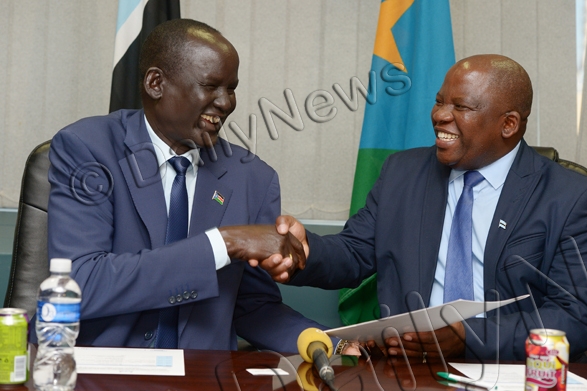
Higher education ministries of Botswana and South Sudan on May 30 signed a Memorandum of Understanding (MoU) in the field of tertiary education.

The Minister of Tertiary Education, Research, Science and Technology (MoTE) Ngaka Ngaka signed on behalf of Botswana while his South Sudanese counterpart Minister of Higher Education, Research, Science and Technology Yien Oral Lam Tut signed on behalf of his country.

Speaking at the signing ceremony, which was also attended by various stakeholders, Minister Ngaka noted that Botswana acknowledged that South Sudan had a shortage of teachers and was prepared to assist where possible.

He therefore said the MoU would help come up with modalities and guidelines of how to go about the agreement.

Meanwhile, the Assistant Minister of Tertiary Education Fidelis Molao noted that Botswana understood that South Sudan was undergoing reconstruction in various aspects hence needed to be assisted.

He noted that in this regard, Botswana would take pride in a future prosperous South Sudan.

Molao said while Botswana had her own problems, among them youth unemployment, he was positive that the MoU would avail opportunities for the two countries to exploit for the betterment of the lives of their people.

He further called on the South Sudanese government to harness the Botswana education spectrum by sending their students to both public and private tertiary learning institutions here and further invite them to set up in their country.

 In the meantime, he said his ministry would consider the request by South Sudanese minister of higher education for 100 slots of scholarships for vocational training. Earlier on, Tut said his country would be pleased if Botswana could offer them 100 scholarships for vocational education.

Currently there are some South Sudanese students at Botswana University of Agriculture and Natural Resources and institutes of health sciences across the country.

He noted that the signing of the MoU was a historic milestone, which should be hailed as it cemented the relationship between the two countries in the area of tertiary education.

He said while in the past they used to look to Egypt for tertiary education, they had since spread their focus to other African countries and identified Botswana as an ideal partner in this regard.

Tut said three quarters of South Sudan’s cabinet ministers were graduates of Egyptian tertiary institutions. The South Sudanese minister noted that education was an investment on the nation, which could not be ignored and therefore hoped the agreement would last and bring more positive rewards for the two countries.

In his welcome remarks, the permanent secretary of Ministry of Tertiary Education,
Research, Science and Technology Dr Theophilus Mooko said the signing of the MoU was a continuation of their engagement with their South Sudanese counterparts in the field of tertiary education. – Botswana Daily News

Agriculture: We must bring back school holiday camps

Dr Sam Motsuenyane and Paul Ntshabele

“Black people cannot farm Paul, even if we gave you all the farms what are you going to do with them? You guys have never been farmers, you are not good at farming…” my soil science professor in 2004 at the University of Pretoria said when I was studying Agronomy during a land reform debate in one of my lectures.

This statement sparked confusion and curiosity in my teenage mind, to dig deep and do research to prove this old white man wrong.

A few weeks ago, the nation watched in pain and horror when the truth about one of its most iconic daughters finally surfaced about the murder of Stompie.

Watching this unfold, It dawned on me that South Africa suffers from a delusional account of its history.

The extent of the power of those who create content and the ability to recreate lies as facts was fully revealed.

The lack of voice from the majority to give account of its history.

The danger of a single narrative especially from those with narrow interest that drives the national agenda, the false facts that finally gets printed in books as true accounts and filters as history to future generations who will accept the lies as their history.

This is all possible because those who know the truth remained silent while the incorrect facts were peddled.

I am descended from the Motsuenyane family which originates from the Bakwena ba Modimosana tribe and whose ancestral home is Molokwane, situated about 30 kilometres west of the town of Rustenburg. Around the 1820s this farming community was driven from its ancestral home at Molokwane.

They moved to the Orange Free State where they worked for Afrikaner farmers. Prior to the Anglo-Boer war in 1899 they moved back to the old Transvaal.

Some went west and some of my father’s brothers who had experienced farming with the Afrikaners in the Free State bought their own farms in the Lichtenburg and Potchefstroom areas. This was around 1903.

I am among those who support the ideas of freehold individual ownership of land.

I was born on February 11 1927 on the farm Eignaarsfontein, where my parents worked as sharecroppers on the system called “derdedeel”.

Under this system which operated over large parts of South Arica in 1930s, the big landowners who could not make use of their land organised black people with a strong work ethic to run the farms and then share the crop.

A third of the harvest went to the owner of the farm. The system was abandoned when some Afrikaners became apprehensive that it was creating very rich and highly independent black farmers.

We must debunk the myth that black people cannot farm and refresh our erased institutional memory of our highly skilled forefathers.

For the best part of the 19th century the agrarian revolution missed the black farmers. Would you expect a technology company whose developmental advances were only allowed to progress until 1913 to compete with a modern-day Space X which plans to set up a million-person city in Mars?

While The Natives Land Act 27 of 1913 debate has resurfaced in the furnace of a burning land question, it is important to reflect on the historical facts and not make a mistake of alternative facts and distorted history.

The Land Act 18 of 1936 made provision for the establishment of the South African Native Trust.

The South African Native Trust Fund was created to acquire land for natives with a maximum cap of 13% of the total land. The trust was to own the land and not the natives.

It is important to note that the act created reserves for natives and increased the 8% of land reserved by the Native Land Act to 13%.

The trust made reserves, not that it acquired the 13% of the total land. This is historically significant to note.

In order “to achieve the objectives of the act, section 13 empowered the trustees of the trust to expropriate land owned by natives outside a scheduled area”.

The miscalculation risk was counting the land owned by natives outside the scheduled area twice.

If one follows the current public debate one naturally concludes that blacks own 13% of the total land. This is not a historical fact, regardless of the popular narrative.

After the 1913 Land Act the South African National Native Congress delegation paid visit to the minister of native affairs, the governor-general of South Africa, Lord Gladstone, and the British parliament in London to lay a complaint.

The Natives Land Commission 1913-1916 led by Sir William H. Beaumont was set up to look at the possibility of giving more land to black people after the 1913 Act.

The commission “was appointed in 1913 to delimit areas to be reserve exclusively for European and areas to be reserved exclusively for African ownership”.

Unfortunately, the commission was created before the First World War from July 28 1914 to November 11 1918. This shifted the focus of the government.

This meant that the report was never looked at until 1936 when the amendment was made to make available additional seven and a quarter million morgen which was to be added to the scheduled native areas.

This would have pushed the total reserves to 17 500 000 morgen which is about 13% of the area of the whole country.

However, post the Land Act 18 of 1936 when the government was supposed to go ahead with the allocation of additional land, the Second World War, which lasted from 1939 to 1945, broke out.

This interrupted the process of allocating the 13% total land reserved for natives. After the war, land values went high. The Great Depression of 1929 to 1939 also negatively affected the process.

Three years after the war in a general election which took place on 26 May 1948, DF Malan’s National Party won the election.

The Tomlinson Commission 0f 1956 dealt with utilisation of existing land and not expansion of scheduled territories.

It made recommendations that £104 486 000 (about R10 billion in 1998 value) be made available which the minister of Native Affairs Dr HF Verwoed rejected.

It is therefore highly questionable that the government did indeed reach the 13% land target. Dr Edward Roux made a deduction that it was 9% and not 13% of total land that was eventually allocated to natives.

In 1953 I was tasked by the National Veld Trust to establish The African National Soil Conservation Association. Its mission was to conserve land for the future in the homelands and prevent overgrazing.

It was formed to inculcate the conservation and proper land use for cultivation so that land became the source of wealth and development.

The organisation had luminaires like the Paramount Chief Cyprian ka Bhekuzulu, Dr JS Moroka, Ms T Soga, Chief Pilane, Chief Sekwati Mampuru, Chief Frank Mmaserumula, Dr WF Nkomo, Lady Selbourne, Rev SS Tema, Chief CK Sakwe, Prof Jabavu, Mr DB Ngakane, Dr JM Nhlapo and Chieftainess Mantshebo.

It operated by showing films demonstrating the dangers of soil erosion to show conservation work.

It published a monthly journal called Green Earth and arranged land camps during school holidays where children were taught agriculture.

The school holiday camps were important because it introduced kids to agriculture as a career option at an early age. We know we have a pending crisis because of the lack of interest in agriculture as a career in our country and the average farmer is more than 60 years old.

It also held an annual conference with chiefs and leaders to discuss issues relating to land. The National Party wanted the organisation to be split according to its segregation Bantu policy.

The government became suspicious of the organisation and eventually shut it down. They didn’t want chiefs of different ethnicity to meet, that posed a threat to their segregation agenda.

The organisation took a moral decision to suspend the organisation instead of yielding to government’s proposal.

It was decided that a time will come when the African National Soil Conservation Association will be resuscitated fully supported by a government with reasonable policies.

One of the biggest problem is land that is already available that is lying fallow which is not productively cultivated. The black farmer situation in this country is dire.

The conditions are no more different from that which necessitated the 1932 Carnegie Commission which evaluated the Poor White Problem in South Africa. We ought to draw lessons from the report.

How was the poor white problem defeated?

Black farmers virtually have no dedicated financial institution to assist them. The Land Bank and The Agriculture Credit Board historically were used to provide cheap funding to white farmers.

In its current structure the land bank does not and cannot serve emerging farmers.

Even if it allocates more to emerging farmers (the bank plans to increase its allocation to R3 billion for emerging farmers out of a R39 billion book which is largely for white farmers).

The problem is that it operates like a commercial bank, therefore it remains largely inaccessible for the majority of black farmers.

We also cannot ignore the issue of title deeds which our people can leverage to access capital. One of the most important resource in our country that is not shared properly, is water for irrigation.

The government only owns 350 out of 4000 dams. The problem is also the water rights allocation process. To this day the irrigation scheme infrastructure mimics that of the apartheid era.

If you look for example at the Hartbeespoort dam, the canals go through white-owned farms and end where black farms begin in areas like Bapong, Jericho and Segwelane where there is fertile land for irrigation.

Seeds to farming is like a foundation to a house. The Agricultural Research Council needs to play an integral role in developing agriculture particularly in rural areas like it did in the past, however it cannot do this when its budget continues to diminish yearly.

We procure through the tender system outdated open pollinated seeds which we distribute to our emerging farmers.

This is tantamount to giving a white driver a Bugatti Veyron Super Sport car and a black driver a 1953 VW Beetle and expect them to race.

As if that’s not enough we then celebrate the Bugatti Veyron Super Sport car driver for finishing first and being a good driver!

If we want black farmers to commercially compete we need to seriously look the issue of open pollinated vs hybrid seeds with higher yields and disease resistance.

To finally respond to my soil science professor, albeit 13 years later, black people have always farmed this land even prior to the colonisers’ arrival in 1652.

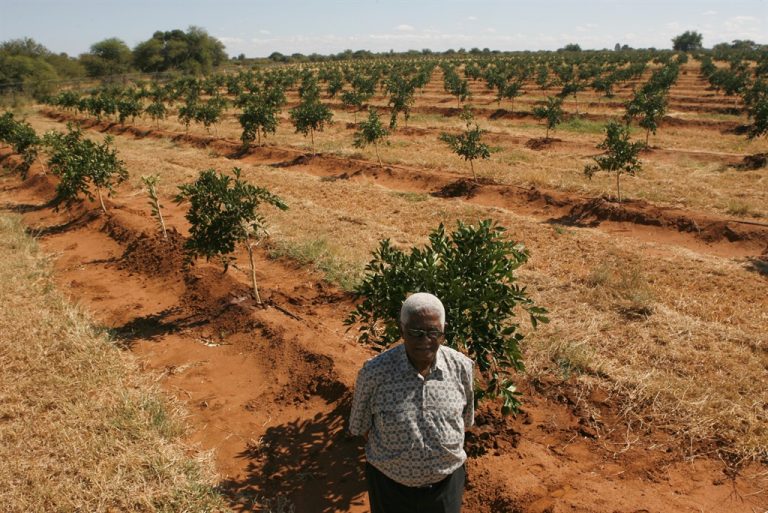
I supposed it will please my professor to know that I’ve just enjoyed oranges from Dr Sam Motsuenyane’s farm from Dennilton which he sends to Marble Hall for processing!

He is a brilliant 91-year-old farmer and agronomist.

The future of this country hinges on all of us working together to sort out the land issue.

• The Dr Sam Motsuenyane Rural Development Foundation is hosting the Inaugural Agricultural Development Lecture at the TUT Tshwane Campus on June 1.

Dr Sam Motsuenyane (Agronomy 1960: North Carolina State University) is a patron of The Dr Sam Motsuenyane Rural Development Foundation. Paul Ntshabele (Agronomy 2004: University of Pretoria/ USDA Cochran Fellow) is a trustee of The Dr Sam Motsuenyane Rural Development Foundation. – Voices, CityPress