Home Blog Page 503

New school of thought: exit-level exam for Grade 9 planned

Prega Govender

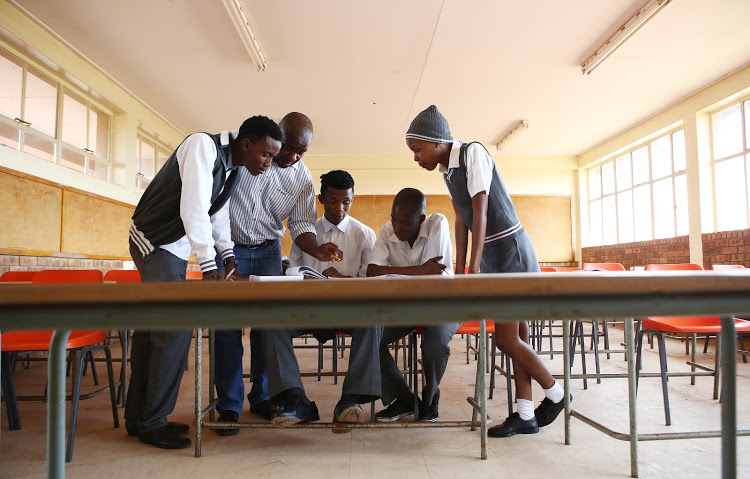
High school pupils will soon be able to write an exit-level exam in Grade 9 which, if they pass, will get them a national qualification similar to the matric certificate.

The Department of Basic Education plans to implement the certificate to help pupils choose a “curriculum stream” for grades 10 to 12. They can opt to follow either the academic, technical vocational or technical occupational stream.

Technical vocational and technical occupational streams refer broadly to skills training for the labour market. Technical vocational includes construction, woodwork, electronics, automotive, fitting and machining, welding and metalworking.

The technical occupational stream includes agricultural studies, arts and crafts, office administration, hairdressing and beauty care, as well as hospitality studies. This stream, aimed mainly at disabled pupils, is being piloted at 74 schools this year, with plans to expand to more schools.

But Umalusi, which is responsible for the development of the general and further education qualifications sub-framework, has warned that the exam should not be regarded as a school-leaving certificate, but rather a chance for pupils to decide how they want to spend the last three years of their schooling.

The date for the implementation of the exam has not yet been confirmed.

Currently, most pupils choose the academic stream after Grade 9, which has led to a high failure, repetition and dropout rate.

Being awarded a certificate would also make it easier for Grade 10 pupils to seek admission at one of the country’s 50 Technical and Vocational Education and Training (TVET) colleges.

Although pupils who complete Grade 9 can enrol at a TVET college, this does not generally happen because the colleges insist on enrolling only pupils who have passed matric.

Basic Education director-general Mathanzima Mweli said the plan was to “activate” the implementation of the General Education and Training Certificate (GETC), which had always been in the department’s policy document.

“It will help guide parents and pupils. The GETC will be able to say to you, it’s better to follow the academic or technical vocational or technical occupational pathway. You will be able to see the subjects  you are good at.

“There are also critics who are saying this [exit-level exam] is going to discourage pupils from proceeding to Grade 10, but this is not true. I had a certificate in Standard 4 but I did not leave school; I went up to Grade 12.”

“There have never been public exams at the end of Grade 9 before. There are still discussions around when this public exam will take place because that requires resourcing. Running public exams is very expensive,” he said.

Philip Reddy, principal of Glenhaven Secondary in Verulam on the KwaZulu-Natal North Coast, applauded the department’s move: “It will augur well for education and future development. At the end of Grade 9 the pupil will receive a certificate, which has not happened before.”

Of the 737 pupils in grades 10 to 12 at his school, 600 are pursuing technical vocational courses.

A senior lecturer in the electrical electronics field at the Ekurhuleni West TVET College in Gauteng, who spoke on condition of anonymity, endorsed Reddy’s view and said South Africa’s 50 TVET colleges rarely enroll pupils who leave school after Grade 9.

“For the national curriculum: vocational (NCV) level two course, which is the equivalent of Grade 10 at school, we only take in pupils who have completed matric. We hardly ever take a Grade 10 pupil.”

Lara Ragpot, a professor in the department of childhood education at the University of Johannesburg, quoted the example of the German schooling system where pupils were offered the academic or vocational stream.

“It’s not seen as elitist if you’re going into the one stream or the other. It depends on where you want your future to be.

“There should be a future for these kids so they don’t just leave Grade 9 [and drop out]. The articulation into some other qualification needs to then be made much more accessible and available for them, like these TVET colleges, so that we can get a skilled workforce.”

Umalusi spokesman Lucky Ditaunyane said they would evaluate the GETC once it had been formally submitted by the department.

If it met the requirements of the qualifications on their sub-framework, it would be recommended to the South African Qualifications Authority for registration on the national qualifications framework.

“Umalusi is of the view that this common exit-level exam at the end of Grade 9 should not be primarily a school-leaving certificate but one designed to help 15- and 16-year-olds gain insights into how they envisage the last three years of their schooling and how they wish to proceed.”

Read original story here
 

Zimbabwe: Unlocking Potential for Girls Education in Zimbabwe

Project Syndicate

Glen View 8 is a community like any other in Harare, Zimbabwe’s capital.

It is a densely populated settlement, full of life and activity, where the sight of a girl accompanying her grandmother to market on a weekday, selling vegetables or serving customers in the family tuck shop, is not unusual.

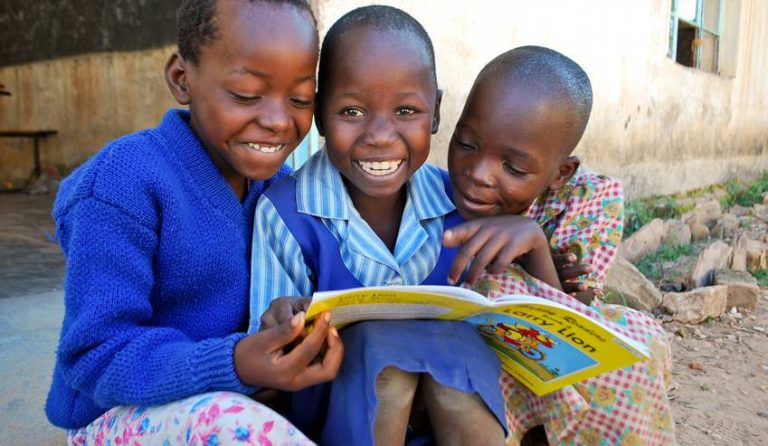
Shantel Marekera was once one of these girls. The kind of girl whose grandmother struggled to pay for preschool fees while her mother was away finishing her college education — but also, a girl with a dream.

Raised in Glen View 8 by her grandmother until she was nine years old, Shantel intends to flip the script on the girls’ early education in her community. As the founder of The Little Dreamers Foundation, Shantel is determined to help girls in her native community go to school.

Shantel won the Resolution Social Venture Challenge at the Mastercard Foundation Baobab Summit in Johannesburg in 2017, a competition that rewards compelling leadership and promising social ventures led by youth.

These young leaders earned a fellowship that includes seed funding, mentorship, and access to a network of young global change-makers to pursue impactful projects in their communities. A collaboration between the Mastercard Foundation and The Resolution Project, the Resolution Social Venture Challenge provides a pathway to action for socially responsible young leaders who want to create change that matters in their communities.

In 2005, Zimbabwe’s government ushered in changes to its education system, making it compulsory for every child to graduate from preschool before enrolling in primary school.

The implementation of Statutory Instrument 106 of 2005 started this year, putting primary education out of reach for the daughters of poor families, who often favour the education of sons. In Glen View 8 alone, more than 40 girls are unable to attend preschool, and figures could be higher.

For most families, however, costs for a child to attend preschool are steep, and particularly prohibitive for families headed by single parents or grandmothers without steady sources of income.

Shantel is determined that these disadvantaged girls will have their chance at a primary education. “When I went home over the summer recently, I realised how preschools in Zimbabwe have become so pricey.

They are even more expensive than formal education itself,” she said. Shantel is a 20-year-old pursuing justice studies at Arizona State University (ASU) in the Mastercard Foundation Scholars Programme, which supports students chosen specifically because of their academic talent, social consciousness, and leadership qualities.

She said the idea to create the Little Dreamers Foundation came to mind after she realised that many children in Glen View 8 could not access primary education simply because they were being left out of preschool.

“This is when I realised that I needed to do something, but it remained only an idea. Then I won the Resolution Social Venture Challenge,” she said.

The Little Dreamers Foundation is expected to open in June 2018 with 12 children in a pilot that will prepare the ground for the whole country, allowing the children to attend preschool for up to two years.

“We are only starting with a cohort of 12 children, but we hope to increase the numbers over time and even spread to other high-density areas in Harare, and ultimately the whole country,” said Shantel.

Most preschools charge between $70-200 per month for each child, but Shantel’s program will see them paying less than US$30 for their tuition, meals, and scholastic materials. The parents or guardians will be allowed to pay the money in installments throughout the month. Reduced rates will be made possible through volunteers, fundraising, and a poultry project.

“The preschool is created to serve the community and it should be operated by the community,” explained Shantel. “Chickens will be sold in the community and other nearby communities to raise money for the preschool’s operations. Additionally, the Little Dreamers Foundation will partner with local companies and organizations to host four major fundraisers every year, with proceeds invested in the preschool.”

While the Little Dreamers Foundation will emphasise enrollment of girls, accepting one boy for every three girls, boys will not be left out. When families experience economic hardships, parents are often forced to invest in a single child, often preferring to educate a son over a daughter.

Daughters, some believe, can learn a skill such as sewing and wait for an early marriage. Yet, girls are falling behind, and the Little Dreamers Foundation wants to redress this gender inequity.

“I am passionate about empowering the girl child. Girls have so much potential, and with the right mentorship, resources, and efforts, girls can do anything,” said Shantel.

The news about the Little Dreamers Foundation has excited the community, especially grandmothers who have borne both the joys and burdens of looking after these children, many of whom have lost parents to Zimbabwe’s elevated rates of HIV and AIDS. Sixty-year-old Fairness Bechintein is one of the grandmothers in Glen View 8.

“In this country, we have a lot of children who do not attend preschool or primary education and I know they will benefit a lot from this program,” she said. “I am grateful for Shantel’s initiative and I know it will help a lot of other grandparents to provide an education to our grandchildren.”

Miriam Makanda, also from Glen View 8, agrees with Bechintein.

“Many families will benefit from this program. As a widow and grandmother, it is hard to provide food on the table every day, clean clothes, and still be able to send them to school. I do not work, so there is no way I can afford these expensive preschools,” she explained.

Already, Ntombizodwa Makuyana and Lovender Phiri, both Mastercard Foundation Scholars at ASU, as well as Tanyaradzwa Chauruka and Luann May Gwanzura at the University of Zimbabwe, have joined Shantel to run the Little Dreamers Foundation. Others are Chisamiso Tinorwirashe at Midlands State University and Yvette Muzhona, who is currently not in school.

Shantel believes she has found the right platform to give back to her community.

“I am where I am today because people believed in me. They believed in my dreams and aspirations — now, it’s my turn to be the person who believes in the dreams and talents of children,” she said. – Project Syndicate –The Source

Gauteng government urges youth to attend annual youth expo

LINDI MASINGA

As part of Youth Month celebrations, the Gauteng provincial government has urged high school learners, unemployed youth and graduates to attend the fourth Annual Youth Expo in order to get connected to jobs and business opportunities.

The Expo will take place between 9-17 June at the Nasrec Expo Centre in Johannesburg.

“The Youth Expo is a multi-event with 140 exhibitors to provide information and live services to youth on careers, jobs and work exposure, as well as how to start, run and operate a business,” Gauteng Provincial Government spokesperson Thabo Masebe said during a briefing on Wednesday.

The governement said the expo will also have sports activities, including daily aerobics, football and netball, with popular soccer clubs, Orlando Pirates and Sundowns among the teams set to interact with the youth.

“The Expo forms part of commemorating the 42nd anniversary of June 16 which coincides with the centenary of struggle stalwarts, former president Nelson Mandela and Mama Albertina Sisulu. The Youth Expo is part of the provincial government’s commitment to respond to the development of young people in the province.”

The Gauteng province will also host the National Youth Day celebrations on 16 June, where President Cyril Ramaphosa will address young people at the Orlando Stadium after participating in the Thuma Mina Walk from Morris Isaacson High School to the Hector Peterson Memorial.


The government said other services and activities that can be expected at the expo include registering for jobs and skills development via the Tshepo 1 Million Programme, exposure to the film industry and screening of Inxeba (The Wound) and Black Panther.

“Some of the dialogues to be hosted include Premier David Makhura and Education MEC Panyaza Lesufi.” ANA

Police used live ammunition on protesting pupils, admits Gauteng community safety MEC

Amanda Khoza


Gauteng community safety MEC Sizakele Nkosi-Malobane on Tuesday admitted that the police used live ammunition on protesting pupils from Thuto-Kitso Technical School in Fochville on May 16, the DA said in a statement.

DA Gauteng legislature spokesperson on finance Ashor Sarupen said, according to Nkosi-Malobane’s response to a question asked by the DA in the legislature, the police were not authorised to use live ammunition.

“The situation only escalated when the SAPS called for backup, at which point learners were aggravated and some SAPS officers from the K-9 unit used live ammunition on protesting learners for throwing stones in their direction,” explained Sarupen.

He said Nkosi-Malobane admitted that one pupil was shot with live ammunition and hospitalised. The pupil survived.

 The pupils were protesting against a shortage of teachers at the school since the beginning of the year and the reduction of the number of teachers.

“The school continued to offer subjects for which they did not have teachers and a lack of communication from the district meant these learners were without teachers up to their mid-year exams,” said Sarupen.

DA to monitor probe

He said the pupils resorted to staging a protest after consistently being ignored by officials at the Department of Education.

“It is ironic that the ANC condemns the abuse of children in society while denying children their right to education and then shooting them for demanding their right.

“The use of live ammunition in this case was unwarranted, unacceptable and had the potential to descend into another Marikana situation,” said Sarupen.

Nkosi-Malobane has indicated that an investigation and disciplinary action are underway, said Sarupen.

The party said it would be monitoring the processes closely. – News24

Ghana: University of Mines and Technology to Run Courses in Railway Engineering

Ghanaian Times

The Ministry of Railways Development and the University of Mines and Technology (UMaT), Tarkwa last week signed a Memorandum of Understanding (MoU) for a proposed railway engineering courses at the University.

The move is also expected to revive the Railway Training School at Ketan in Essikado, in Sekondi-Takoradi Metropolis of the Western Region.

Although, the date for the commencement of the courses has not been disclosed, courses such as BSc in Railway Engineering, BSc Civil Engineering, BSc Aerospace Engineering, BSc Mechatronic Engineering, BSc Transport Management and Dip. in Electrical Engineering, after approval from the National Accreditation Board and National Council for Tertiary Education.

However, the University will from the 2018/19 academic year, run the following courses MSc Engineering Management, MSc Business and Technology Management, BSc in Mechanical Engineering, BSc Electrical and Electronics Engineering, BSc Computer Science and Engineering, BSc Environmental and Safety Engineering, BSc Geodetic Engineering, Certificate in Railway Engineering (Plant and Maintenance Option) and Certificate in Railway Engineering (Welding and Fabrication).

Highlighting the importance of railway to Ghana’s development, the Vice Chancellor of UMaT, Prof. Jerry S.Y. Kuma, said the partnership was a long-term deal would revive the railway sector.

He stressed “This will be the only Railway University in West Africa. This partnership is a serious one and we would ensure that the vision of the President to transform this country to become an industrial is realized.”

Speaking at the ceremony, the Minister for Railways Development, Joe Ghartey, hoped the partnership with UmaT would lead to the development of tertiary degree awarding programmes and eventually the establishment of a University of Railways and Infrastructure Development.

He said “We need to make this a success not just in Ghana but also in the West African sub-region.”

The Minister said the railway sector needed the human resources to become a centre of excellence.

Ghartey noted that the Railway Training School and workshops have been overtaken by rodents and weeds and described the situation as very bad.

Expressing worry about the wanton dissipation of railways assets, he said that, by the last half of 2016, railway assets have been sold as scrap.

“Some assets of railway similar to what has been refurbished today were sold at a pittance. The right of way became the personal property of workers in the sector and their collaborators who overnight became real estate owners and agents selling and disposing of the real estate that belonged to the state as their personal property,” he lamented.

The Minister said the Western Line would be redesigned and extended to Awaso and Nyinahin leading to rich bauxite reserves and also transport cocoa in the northern part of the Western Region, Ashanti and the southern part of the Brong-Ahafo Region.

The Omanhene of Essikado, Nana Kobina Nketsiah V, described the MoU as good news that would propel the railway sector in Ghana, stressing “we need not rest on our oars.” – Ghanaian Times

Angola: Education Ministry to Expand Adult Education

ANGOP

The Ministry of Education (MED) intends to encompass the adult education into the secondary education to secure the continued training of the pupils involved in the literacy process.

This was announced on Monday in Ondjiva city, southern Cunene province by the Secretary of State for General and Pre-school Education, Joaquim Felizardo Cabral.

The official, who briefed on the current state of the education of the province, said the implementation of the secondary education for adult education will serve to combat illiteracy.

Cunene province has currently a total of 243.353 students enrolled for the present school term, at pre, primary and secondary education, secured by 6.336 teachers. – ANGOP

Western Cape Education Department offers reward after spate of school robberies

Jan Bornman

The Western Cape government has condemned attacks on schools following four separate armed robberies at schools across the province.

MEC for education Debbie Schäfer said the attacks were timed to take place just after the school day had ended, with pupils and educators still participating in after-school activities and meetings.

“Educators and staff were threatened at gunpoint and were robbed of personal items. School ICT equipment was stolen and, in one case, a vehicle was hijacked on the premises,” Schäfer said.

“I am just extremely grateful that no learner or educator has been fatally harmed during these attacks.”

The first incident occurred at Ummangaliso Primary School in Khayelitsha, followed by attacks at Intshayalelo and Lwandle primary schools in Lingelethu West, and at Vukukhanye Primary in Gugulethu.

Schäfer said staff had been left traumatised and in fear for their safety.

“I do not blame them,” she said.

R10 000 reward

“It is not yet certain if the attacks are related but there is a clear indication that our schools are being targeted for specific reasons and at a certain time of the day.”

She said the criminals needed to be stopped before another attack took place and offered a R10 000 reward for information that will lead to the arrest and conviction of the criminals.

Schäfer said she had engaged with other structures in the province, including the City of Cape Town’s special investigations unit to track down the perpetrators.

“The WCED (Western Cape education department) is not a security agency and we cannot investigate and make arrests ourselves – but we are determined to do what we can to assist in securing convictions to prevent similar attacks on our schools.

“We have been left with no choice. The safety of our educators and learners is a priority to us, but we cannot always protect our schools when it comes to armed attacks of this nature,” she said.

Gauteng schools robberies

“I want these criminals to also know that we are looking for them. We will not put up with this blatant show of violence against our learners and their teachers.”

There had also been a number of robberies and thefts at schools in Gauteng in recent months.

News24 reported earlier this year that Gauteng education MEC Panyaza Lesufi was left devastated after the latest break-in at a school in the province.

“We are under siege. How can criminals be allowed to target our schools in this manner?” he was quoted as saying.- News24

Equal Education and MEC Debbie Schäfer reach agreement

Tariro Washinyira    

The Western Cape Education Department will wait before taking any action following allegations of sexual misconduct against three people in Equal Education, MEC Debbie Schäfer said in a statement.

On 21 May MEC Schäfer instructed Equal Education (EE) to stop operating in the province’s schools until her department held a meeting with the organisation. (A subsequent article by GroundUp pointed out that a Cape Town school teacher continued to teach while on trial for sexually abusing a learner.)

In a statement on Sunday Schäfer said that her department had agreed to wait for the outcome of investigations that EE hopes will be finalised within the next few weeks before her department took any action. This follows as meeting in which EE explained that none of the men accused of misconduct had regular direct interaction with Western Cape learners. The two parties plan to meet again once the investigations are concluded.

“EE briefed us on all three cases that have been raised in the media and the processes of investigation that are being followed in each case. The investigations will be done by people completely independent of the organisation, and will be conducted as speedily as possible,” said Schäfer’s statement.

“They explained to us the processes they have in place to train and sensitise their members at all levels of the organisation regarding matters of sex and power abuse. We all agreed that sexual misconduct is unacceptable and have agreed to work together on a new policy for organisations working in schools.”

Concurrently EE released a statement saying that it stops school-based activities during exams anyway. The organisation also wrote that the meeting with the MEC had been “positive” and that it had explained the “seriousness with which EE has approached issues of sexual harassment”. EE also said that there should “at this stage be no obstacle to EE members continuing to organise in the Western Cape”.

The EE statement said that the organisation would meet the provincial education department once the sexual harassment investigations had been concluded. – GroundUp

Michael Komape’s family to appeal Limpopo High Court’s decision

Ciaran Ryan    

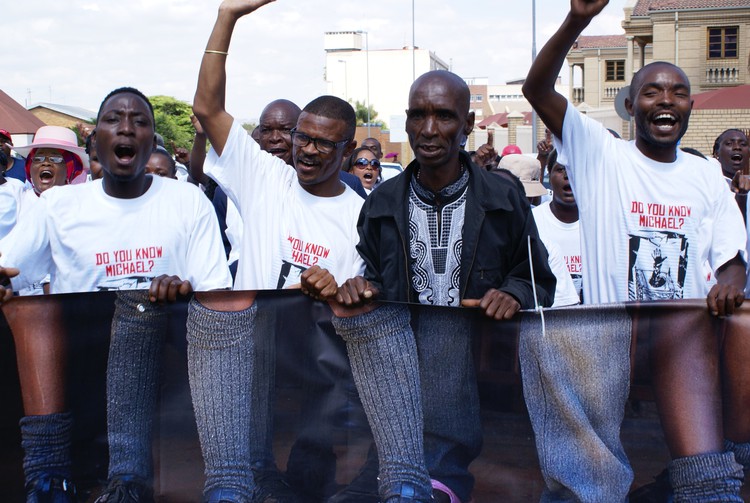
The Komape family is asking for leave to appeal the Polokwane High Court’s rejection of its claim for nearly R3 million in damages. The claim is against the Limpopo government following the death of five-year-old Michael Komape in a school pit latrine in 2014.

The family, represented by public interest law firm SECTION27, is asking that the appeal be heard in the Supreme Court of Appeal due to the importance of the legal and constitutional matters raised in the case.

Should this fail, it wants a full bench of the Polokwane court to hear the matter. SECTION27 will be presenting its argument to the Limpopo High Court on Friday 1 June at 10am.

The case went to trial over two weeks in the Polokwane High Court in November last year. In April this year Judge Gerrit Muller delivered his verdict, dismissing the family’s claim for R940,000 in general damages and R2m in Constitutional damages.

The only financial relief for the family was the award of R12,000 each for future medical expenses for two of Michael’s surviving siblings, Oniva and Maria.

Just before going to trial, the Limpopo Department of Basic Education offered the family R450,000 in full and final settlement of its claims. This was rejected as an “insult” by the family, which was pushing for close to R3m.

It the end it got nothing, except the R12,000 for medical expenses for each of Oniva and Maria. A third sibling, Moses, received no award for medical expenses. SECTION27 is also appealing this.

There was one major victory for SECTION27 and the family: the judge then gave the Limpopo education department until 30 July to come up with a plan for the installation of “safe and secure” school toilets across the province.

Evidence presented during the trial established that until 2011, 73% of schools in the province were using pit latrines.

In its appeal application, SECTION27 is arguing that Judge Muller erred in not awarding damages to the family as it was conceded by the state that the family had suffered emotional shock as a result of Michael’s death.

All that should have been decided was the quantum of damages. The amount being claimed by the family was neither excessive nor unreasonable, and is consistent with damages awarded in previous comparable cases.

The appeal application also suggests the judge confused two different claims made by the family: one for emotional shock, and the other for grief (it also asked for the judge to develop common law on this claim). It was not contested by the state that the family had suffered emotional shock, which was the subject of extensive cross-examination during the trial.

The family relied on an earlier 2016 case heard in the Supreme Court of Appeal, Mbhele v MEC for Health Gauteng Province, where “proof of psychiatric lesion or illness by expert evidence was a precondition for compensation”.

SECTION27 produced expert evidence at trial to prove the emotional shock suffered by the family, and argues that the judge was bound to follow this precedent set in the Mbhele case.

The family is also appealing the court’s decision not to develop common law surrounding a second claim for grief.

The common law, as it stands, “fails to distinguish claims based on serious breaches and violation of fundamental rights, and prevented the vindication of constitutional rights and as well as the granting of appropriate relief in terms of section 38 of the Constitution,” says the appeal application.

The Komape family are marginalised members of society lacking the skills and resources to assert their rights, and for this reason the court’s failure to establish common law “had a chilling effect” their right of access to court and their constitutional rights, argues SECTION27.

“The respondents were no ordinary delictual (wilful) wrongdoers, but were state actors who had the unmistakable constitutional obligations to protect, promote and fulfil the applicants’ constitutional rights,” says the appeal.

It also says the Judge erred in finding that recognition of the family’s claim for grief would result in “bogus and unwarranted proliferation of claims for psychiatric injuries.”

The judge declined to recognise the development of the common law claim for grief on that basis. There was no evidence before the court to justify this conclusion, says SECTION27.

It also says that in refusing the family’s claim for constitutional damages on the grounds that this would amount to over-compensation, the judge failed to heed the different purpose behind the different claims for damages.

SECTION27 contends that it has reasonable prospects of success on appeal.

previous article by GroundUp explains the judge’s reasoning.

Nigeria: Global Standard in Banking Education Introduced

Nume Ekeghe

As part of efforts to promote ethical standards as well as provide the foundation for high-quality and consistent education for bankers worldwide, the Global Banking Education Standards Board (GBEStB) has announced the release of the first banking standard for banking practitioners across the world.

The standard, according to the Registrar/Chief Executive Officer of the Chartered Institute of Bankers of Nigeria (CIBN), Seye Awojobi, was made public by the Chair of the GBEStB Education Committee and Chief Executive of the Chartered Banker Institute, Simon Thompson.

Thompson was quoted in a statement to have explained that the new standard consists of seven key recommendations, which all GBEStB member bodies must comply with.

“This first standard on Ethics Education and Training for Professiona l Bankers sets out our expectations of and guidance for GBEStB member bodies in terms of general recommendations and recommendations for the content, delivery and assessment of ethics education for professional bankers,” he said.

The recommendations, he added, included the general recommendations regarding ethics education and training; key ethical principles for professional bankers; content of ethics education and training programmes; delivery of ethics education and training programmes; assessment of ethics education and training programmes; impact measurement (of the Standard) and public declaration.

He further disclosed that a consistent approach in the promotion of ethical standards and education of professional bankers worldwide would help develop a strong ethical culture within the banking industry, thereby improving financial stability.

Thompson asserted that the Board, which brings together more than 20 banking institutes, will commence the implementation of the Ethics Education and Training standard from June 1, 2018.