Home Blog Page 507

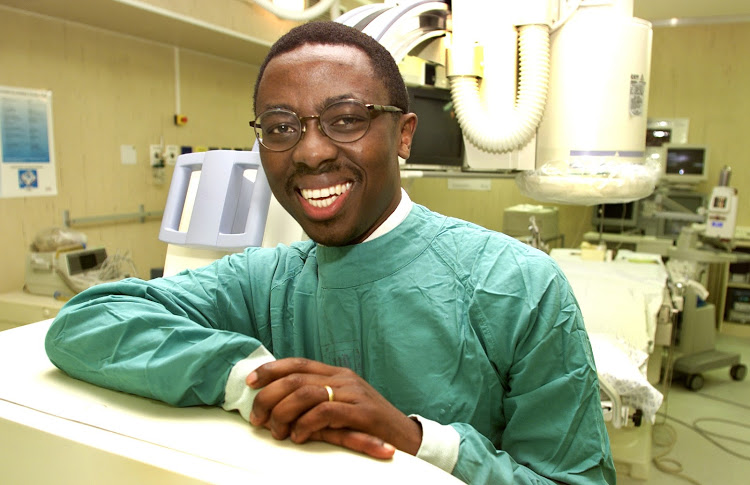
SA’s top cardiologist Professor Bongani Mayosi has passed

Staff Reporter

The University of Cape Town (UCT) ‘s Dean of Health Sciences Professor Bongani Mayosi has passed.

It’s understood the 51-year-old cardiology professor passed away in Cape Town on Friday. It is reported that Mayosi took his own life.

The statement released read: “In the last two years he has battled with depression and on that day took the desperate decision to end his life.”

The statement‚ the authenticity of which was confirmed by family spokesperson, Advocate Ncumisa Mayosi‚ added: “We are still struggling to come to terms with this devastating loss. Kindly respect our wishes as the family that beyond this statement‚ we will not discuss or entertain any further questions on this matter.

“We ask that you understand our need for privacy during this difficult time. We welcome you to join us for daily prayers at the family home in Pinelands between 18:30 and 19:30.

Mayosi was the country’s top cardiologist and became a dean at UCT two years ago.

He discovered the genetic mutation that causes heart failure.

Since 2011‚ Mayosi had been advising Health Minister Aaron Motsoaledi on policy and strategy for health research.

Mayosi spent years working tirelessly to improve the health of people in developing countries. In 2017 he was elected to the US National Academy of Medicine, one of the highest honours in the fields of health and medicine, awarded to individuals who have demonstrated outstanding professional achievement and commitment to service.

The same year, he made international headlines for identifying a new gene that is a major cause of sudden death by heart failure among young people and athletes.

Professor Mayosi’s involvement in this research included spending 20 years monitoring a South African family that was affected by this disorder. This is a testimony to his tenacious pursuit of pioneering research that can help save lives.

Professor Mayosi took up the position of Dean in September 2016. His A-rating from the National Research Foundation (NRF) counted him among the ranks of leading international researchers in the view of the NRF.

His numerous honours include: election to the Fellowship of the World Academy of Arts and Science (2013); South African Medical Association/Bonitas Medical Fund Merit Award for Health Research (2013); National Science and Technology Foundation – BHP Billiton Award (2012); National Research Foundation Award for Transforming the Science Cohort in South Africa (2011); and the Order of Mapungubwe, Silver (2009).

In pursuit of his research he developed valuable collaborations with academics in other countries (and especially across Africa) in researching the management of TB pericarditis, prevention of rheumatic heart disease, and genetics of heart disease. He also held numerous editorial responsibilities over his distinguished career and published more than 250 papers in peer-reviewed journals.

In 2009, he was awarded the country’s highest honour, the Order of Mapungubwe.

He earned two medical degrees with distinction at the University of KwaZulu-Natal and worked as an intern at Livingstone Hospital in Port Elizabeth before joining UCT in 1992. He was admitted to the Fellowship of the College of Physicians of South Africa in 1995 and earned a doctoral degree at the University of Oxford in the UK in 2003. He was appointed Head of the Department of Medicine at UCT in 2006.

Professor Mayosi was born on 28 January 1967 in Mthatha, Eastern Cape. Mayosi was inspired by his father‚ also a doctor‚ to help others. He studied at what is now the Nelson Mandela School of Medicine at the University of KwaZulu-Natal‚ and it was there that he met his dermatologist wife‚ Nonhlanhla Khumalo.

He leaves her and their two daughters.

UCT Vice-Chancellor Professor Mamokgethi Phakeng said, “Mayosi’s passing has shocked us as a campus community. I know many colleagues and students will feel the effects of this loss over the time ahead.”

Phakeng added that this is a very sad time for the UCT community.

Teacher points out 14-year-old girl’s HIV status in class

Mpho Lekgetho

Fourteen year old Dineo (*not her real name), born with HIV and a member of the Future Leaders movement, says she hates teachers using her as the example when discussing HIV positive people at school.

“Yes the school knows about my HIV status, but I feel humiliated when every now and then I am pointed out as the example – especially in Life Orientation class,” she said, with tears in her eyes.

Positive attitude

Speaking at a support group meeting, she told how unhappy she was about her teacher regularly pointing her out as an example of a child doing well despite her HIV positive status.

 Dineo was diagnosed HIV positive after her mother, who was very sick, decided to have her and her child tested.

According to Dineo, her mother is also on treatment and doing well. But while Dineo is happy for the most part, she is worried that the regular commenting on her status may spread the information to her community. Yet she does not feel able to speak out about the situation.

The facilitators of the workshop encouraged children to remain positive in their attitudes and assured the group that they will take Dineo’s matter forward. They also encouraged Dineo to think of her teacher’s words as a compliment and an encouragement that was not intended to harm or upset her. The facilitators said they would also report the matter to the Northern Cape Department of Education.

The National Department of Health has memorandum of understanding with Y+, a movement for youth between the ages of 15 and 24 who are living with HIV.

Not adhering to ARV treatment

According to the People Living with HIV sector in the district, the establishment of these kinds of youth support groups will decrease the burden of the sector by assisting adolescents dealing with stigmatised conditions.

Future Leaders is a movement of boys and girls born with HIV who usually come together to discuss their challenges, funded and supported by the John Taolo Gaetsewe District Social Development department.

The movement was initiated three years ago after NGOs and departments working with HIV programmes realised that some HIV positive young people were not adhering to their ARV treatment and some of their parents and guardians were struggling to tell them the truth about why they needed to regularly take pills and be on treatment.

The programme has proven to be successful, with one 12-year-old commenting, “The only thing I know about ARV’s is that they are my life.”

The group participants share their experiences and worries, and their thoughts and confusions about one day wanting to start dating or maybe having children when they are grown up.

Future sessions

Workshops are held regularly to educate youngsters about the importance of adherence, how ARVs works in their bodies and what will happen when they default on their treatment.

During their support group meetings members are given an opportunity to share their personal challenges.

Like any other children they complained about not being given enough attention at home, sometimes being left in charge of smaller kids while adults are away – the kind of issues common to most households.

The facilitators agreed on future sessions to engage more on HIV and dating specifically for the group, and the Department of Education would be invited to discuss school policies on HIV and Aids, as well as disclosure and the rights of the child. – Health-e News

Catch up with reality, Cosas

0

Tutu Faleni 

The Congress of South African Students (Cosas) has, for the first time in its history, made daring proposals on the specifics of the content of the public school curriculum. It wants agriculture to be declared a compulsory school subject.

This public stance comes hot on the heels of the government’s decision to introduce history as a compulsory school subject for all public secondary school pupils.

The stance taken by the congress cannot be dismissed, given the historical and political role that Cosas has played both in our communities the public education milieu. It has also been a breeding ground for successive generations of leaders in the governing party.

Like other political organisations, Cosas has had its own fair share of controversy. In June the eThekwini branch invited former president Jacob Zuma to deliver an address on the subject of free education.

Cosas denied that doing so indicated it was taking a position in the ANC’s ongoing factional battles. This is the same Cosas that protested outside Parliament in support of the former president when — while he was still in power — he was faced with yet another motion of no confidence.

 Whatever we make of Cosas as a political player, it remains a force to reckoned with, given its historical alliance with the governing ANC. But history has taught us that political fortunes change with the times, depending on how a political formation adapts to the rapidly changing political environment.

Whether Cosas will retain its influence in politics and education is anybody’s guess. But the declaration by Cosas that the teaching of agriculture as a school subject will help prepare pupils for working on farming land, which may be appropriated by the government without compensation, is a rather a short-sighted view of the complexities of school curriculum change.

The management of curriculum change is a complex transformative process which cannot be influenced by knee-jerk political responses to dominant political issues of the day. The history of curriculum change in South Africa has taught us that its content, form and pace cannot be determined by any single agent.

When the government abruptly opted for the infamous outcomes based education, it was only a matter of time before it conceded that OBE was not working. It then commissioned several processes that aimed to ensure curriculum change was managed in a more responsible, efficient and effective manner.

The government then dropped OBE and opted for a revised school curriculum, which took almost 10 years to implement.

 The previous, misguided approach to curriculum change cost the country a lot of money and a substantial loss of goodwill from other stakeholders in public education. Quite a few teachers deserted the classroom because of their inability to cope with the impossible demands imposed on them by the unrealistic approach to curriculum change.

Business doubted and questioned the capacity of government to manage curriculum change. One could argue that, as a result, business became reluctant to invest capital in the failing, government-driven curriculum change experiment. There was also a decline in public confidence in the ability of government to manage curriculum change effectively.

The sooner Cosas realises the complex nature of curriculum change, the better for the country as a whole. My limited research on curriculum change highlights the intensity of contestation in the management of the curriculum change process.

After government abandoned the OBE curriculum, there were significant initiatives by other education stakeholders, aimed at influencing the government curriculum change initiatives.

For example, major teacher unions prepared their members for the ongoing curriculum change process by driving 
their own teacher training programmes, which helped their members to cope with the stresses of curriculum change. Perhaps Cosas should take a leaf out of the unions’ books and begin to secure resources that will enable it to train its members on the complexities of curriculum change.

I tend to be sympathetic to Cosas’s venture into the pertinent debates on curriculum change but, like many others, I am disappointed by its politically ambitious stance of linking the teaching of agriculture to how it envisages the outcomes of land appropriation.

Cosas’s stance also tends to oversimplify the idea of appropriation of land without compensation. Surely agriculture as a school subject does not necessarily imply that a large number of pupils, upon graduating from school, will be scattered in the farming fields of South Africa, ploughing their newly-found land. Cosas’s stance seems to be a desperate political posturing, with a view to finding some space in the rapidly unfolding processes associated with land appropriation.

There seems to be a dominant view, not only in Cosas but also in the governing party, that the determination of school subjects is a fundamental aspect of the effective management of school curriculum change. There is actually more to the process of curriculum change than “nicely” packaging school subjects for teachers and pupils.

Recent trends in curriculum change, by contrast, indicate a move towards the elimination of school subjects as the core of the curriculum. These trends indicate that governments can offer public school education without compartmentalising education into fragmented subjects.

The debate on curriculum change should have its focus beyond the unfolding social, economic and political drama about appropriation of land without compensation. Such crucial debates should rather prepare pupils for the inevitable demands of the Fourth Industrial Revolution.

Such agendas should rather seek answers to deep questions on issues of technological skills, artificial intelligence, the individual’s capacity to manage change, challenges of globalisation and reclaiming our African-ness, just to mention a few issues.

Given these complex macro challenges of curriculum change, surely the issue of the compulsory teaching of agriculture will be lost in the greater scheme of more compelling debates on school curriculum change.

Dr Tutu Faleni is a DA member of the North West provincial legislature. He was previously a lecturer in curriculum studies at the Potchefstroom campus of the North-West University. These are his own views

Kenya: School in Laikipia closed over poor sanitation

Staff Reporter

Pupils from Gatirima Primary School in Laikipia West Constituency have been forced to learn under rented tents at a local church after their institution was closed indefinitely by public health officials over poor sanitation.

Class seven and eight pupils are now studying at Gatirima AIC Church where parents and the school management board found a temporary place to host them as they look for other solutions.

However, learners from class six and below will have to remain at home for now.

The parents are hiring the tents at Sh1,000 each daily and will have to do so for the next few days until schools go for the August holidays.

A week ago, public health officials from Nyahururu Sub-County recommended that the school remained closed over poor sanitation and lack of a conducive learning environment for the pupils.

A report seen by this reporter indicates that the Public Health Department cited clogged toilets that has forced the waste to spill into the playing field, water logged classrooms and poor drainage systems.

Several pupils have been taken ill due to the hazardous conditions while others had shown signs of illness connected to water borne diseases.

On Monday, members of the board had met at the school to chat the way forward since the pupils were losing while at home, while even those learning under the tents still had challenges especially when it starts raining.

The Board Chairman Simon Kiptisia said the school that hosts over 400 pupils and 13 teachers was facing a myriad of challenges that require urgent attention.

He says there was urgent need to dig trenches to enable them divert running water that was spilling into the classes.

He added that the cementing the classes, putting up a septic tank were also necessary to create a conducive learning environment.

The parents have taken issue with the local leadership, whom they said had shown little interest in supporting the public school yet there were monies and emergency funds that can be pumped in to aid in addressing some of the critical issues.

The administration block is in a deplorable state and the semi-permanent class-rooms, which have earth floors, are always muddy occasioned by a foul odour that hangs over the compound and the filthy latrines pose a major health risk to the pupils and teachers.

The school has seven blocks of classrooms, five of which were built by parents while two were donated by the local CDF office in the 2014/15 financial year.

According to the BOM Chairman, the pit latrines have started overflowing, exposing the pupils to more health risks.

His sentiments were echoed by Anne Wangari a parent and a BOM member who said some pupils have been missing classes after falling ill.

An early childhood development and education (ECDE) teacher, who sought anonymity said absenteeism has been a challenge since many pupils frequently miss classes after failing ill.

Pastor Wilson Tiong’, of the Gatirima AIC Church said the school infrastructure needs a total overhaul to ensure that pupils learn under a conducive environment.

He said parents had only sought for a temporary solution but observed that a lasting one needs to be found a soon as possible.

Read original article here.

Government accused of trying to silence teachers

Nico Gous

Government can classify basic education as an essential service once every school has a laboratory‚ library and a teacher in every classroom.

That is the view of National Teachers Union (Natu) deputy president Allen Thompson who believes government is trying to silence teachers and keep itself “busy” by investigating if basic education should be deemed an essential service.

On June 15‚ the Department of Labour’s Essential Services Committee (ESC) gazetted a notice to announce it was looking into classifying basic education as an essential service under the Labour Relations Act (LRA).

The LRA defines an essential service as “a service the interruption of which endangers the life‚ personal safety or health of the whole or any part of the population”.

Education movement Equal Education (EE) is opposed to this‚ because government can then prohibit teachers from striking.

EE added that the move by government would not solve the problems of poor infrastructure‚ insufficient resources and overcrowding.

“Declaring education an essential service undermines the legitimacy of the grievances that teachers try to raise‚ through the right to strike‚ including poor working conditions‚ lack of teaching resources‚ and low remuneration.”

National Professional Teachers’ Organisation of South Africa (Naptosa) executive director Basil Manuel agrees and believes the investigation is detracting from challenges regarding resources.

“It doesn’t give more money. It doesn’t give more resources. It doesn’t assist with upgrading of teachers. It is just a statement on paper.”

Manuel believes education is not an essential service‚ because no lives and properties are at risk when teachers strike.

“More has been done in damages by service delivery protests.”

EE said it was aware that teachers carried a tremendous responsibility towards learners‚ but could not ignore that the teaching profession was faced with challenges, such as teacher absenteeism‚ poor subject content knowledge‚ and “corruption in the appointment of principals”‚ among others.

“As a country‚ we need to interrogate and address the causes that leave teachers dissatisfied with their income‚ their work environment and with the Department of Basic Education‚ to the detriment of learners.”

EE said that if education became an essential service‚ government could fire teachers in large numbers.

“The mass dismissal of educators will have negative consequences on the education of children and their best interests.”

EE added that other essential services’ employees such as doctors‚ nurses and police officers have gone on strike despite government’s deterrents.

Read original article here.

Wits University adds gender-neutral ‘Mx’ title to its list of options

Staff Reporter

In an effort to make the institution a safer and welcoming space, Wits University has now given students the added option of using the gender-neutral title “Mx” alongside more traditional titles.

In an email to the university community, Wits registrar Carol Crosley said the senior executive team agreed to add the designation as an option after a proposal to the registrar’s office.

“This decision affirms those who are transgender, non-binary or gender non-conforming within the university community, who wish to hold a title that affirms their identity,” the statement said.

“The university recognises that it is invalidating and distressing for a person who, for an example, was born female but identifies as male to be constantly addressed by a non-affirming title in university correspondence and systems.”

The move has been seen as an attempt by the university to become more inclusive.

“Wits reaffirms its commitment to human rights and freedom and opposes all public and private discrimination on the basis of gender identity and gender expression and all attendant benefits, rights, and privileges.

“We celebrate the valued and unique contributions made by members of our transgender community, as well as those who continue to work towards keeping our university a safe, welcoming and affirming space for all members of the LGBTIAQ+ community.”

Read original article here.

The hidden value of a teaching qualification

Dr Naresh Veeran

What do Desmond Tutu, Oliver Tambo, Athol Fugard and Robert Sobukwe have in common, apart from their dedication to freedom in South Africa?

They were all once teachers.

At some point in their lives, so too were J.K. Rowling, Sting, Hugh Jackman and, more recently, Oprah.

In fact, a cursory desktop search of teachers who went on to thrive in other professions reads like a veritable ‘who’s who’ from around the world. Think American politicians like Jimmy Carter and Lyndon Jonson, to game changers like Socrates, Confucius and Einstein, to CEOs and leaders of tech giants.

So, why do so many teachers who opt to work in other sectors, thrive?

The answer, after researching industry thoughts such as those espoused by Marcel Schwantes, founder of Leadership from the Core[1]probably lies in the fact that it is ultimately people who drive industry, and leaders who understand people can effect efficiencies and innovation at a granular level – 2 key value drivers for growth and development.

So, what makes teachers such good leaders?

Integrity

 In his online discussions around successful leadership[2], Schwantes quotes Warren Buffett, chairman and CEO of Berkshire Hathaway, who states that all of his most successful hiring decisions were based on values, the most important of which was ‘integrity’. “Integrity is what makes it hard to question a person’s decisions. His or her actions are open for everyone to see and you can rest assured that he or she will use good judg[e]ment”.

In tight, collaborative spaces, colleagues of such hires will quickly see them as dependable and accountable for their actions, which is a laser path to developing team trust.

“Hiring people with integrity also addresses the leadership void. A person who walks-the-walk of integrity eventually becomes a role model who commands respect and exercises great influence. These are the type of leaders that people desire and whom you want to promote to management roles.”

Against Schwantes’ framing of Buffett’s thoughts, integrity is also the key value driver in teacher education programmes the world over. In fact, Dr Colleen Thatcher, Dean of the Faculty of Education at the Embury Institute for Higher Education, says that her institution considers ‘integrity’ an organisation-wide value and it is in fact a strategic imperative of her Rector’s office.

Dedication

If there’s one descriptor that epitomises the lay perception of a teacher, it would have to be ‘dedication’. Teaching in South Africa requires study over 4 years towards a qualification like a Bachelor of Education degree. The degree also incorporates months and months of integrated training in live classrooms where students perfect their craft long before they’re given carte blanche to manage a classroom of some 30-strong 10-year-olds.

Teachers then spend hours and hours each evening preparing for the next day’s lessons, marking homework from the previous day’s efforts and still finding time to spend with their own priorities and loved ones.

In dedicating themselves to their task, teachers shape the leaders of tomorrow. They do this by training these young minds to solve problems, inspire them to become the best version of themselves and, most importantly, equip them to become future entrepreneurs with the core thinking skills requisite for careers that have yet to be invented.

‘Dedication’, then, is the pivot on which the career decision to become a teacher swings and is the key value driver that sustains teachers throughout their lives, even when they opt to change professions.

Caring

 There’s probably no more than a handful of professions that train for ‘caring’. Much like their counterparts in the health profession and, of course, across most service-oriented industries, teachers are trained to carry-out their daily tasks with care as a natural and organic part of service delivery.

In a recent Forbes.com article about value drivers and employee perceptions[3], David Sturt and Todd Nordstrom state that the highest levels of employee engagement and, consequently, productivity, are found in teams where employees know intrinsically that their leaders care about them. Engaged and productive teams drive growth and, ultimately, business success.

The Post-Matric Study Decision

 With matric finals just months away, and a post-matric study decision to follow soon after, students have more options than ever before. A teaching qualification, although geared towards a respected and value-driven profession, opens many other doors as the skills learned are easily transferable across sector.

In fact, many teaching graduates go on to successful careers in both the entrepreneurial and corporate spaces. Some choose to position themselves in corporate training, communications and skills development project work, while others choose to use their youth travelling and to use their teaching qualification much like an international visa to secure short-term work during their journey.

Most importantly, the hidden value of a teaching qualification is the way in which it creates leaders who then go on to shape other leaders.

Few other qualifications pay it forward like a teaching qualification does.

Dr Naresh Veeran, Chief Commercial Officer of the Embury Institute for Higher Education

Podcast: Learnership to counter high unemployment and high school drop-out rate

Thuletho Zwane

Inside Education’s weekly feature on Kaya FM

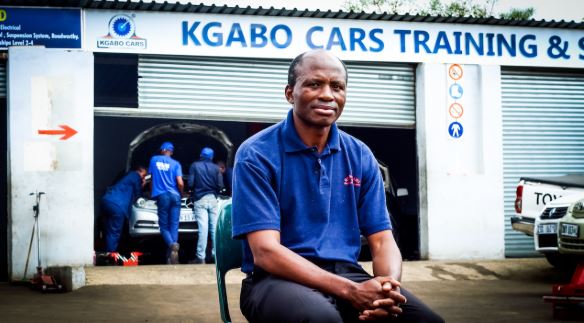
Kgabo Cars is involved in skills development in the automotive sector. They empower aspirant motor mechanics with the necessary motor skills through their Automotive Repair and Maintenance Learnership Programme.

This is of particular importance given the high high school drop out rate which leads to unemployment and staggering economic growth.

Kgabo Cars Training Services uplifts youth within the Gauteng community in Soshanguve and Bok sburg. Co-founder Isaac Boshomane saw the need for jobs among the youth within the community and came up with a programme to train them.


Tanzania: Udom students display high notch novelties

Christina Mseja

University of Dodoma (Udom) students have created a computer system to monitor progress of pre-mature babies in incubators and another for automatically counting people entering and exiting busy buildings.

The other innovation by the country’s largest university is the computerised system for detecting toxic gases in homes and at working places.

In an interview at the 13th Exhibitions on Higher Education, Science, Technology and Innovation, the hopeful scientists showcased their inventions to people who visited the fair in Dar es Salaam.

A third-year student pursuing Bachelor of Science in Physics, Prosper Mshama, explained that the Premature Babies Incubator Computer System will enable health practitioners to monitor the progress of the premature babies even if the nurses are out of ward.

“Health practitioners have been facing a great challenge in taking care of premature babies in health facilities… this system will enable them to monitor the progress and conditions of the babies in incubators without physically being there,” he explained.

Mshama said there are many advantages of the computerised system, including timely notification when the baby is having a problem because it will immediately alert the nurses and doctors. The innovator was optimistic that the system will significantly improve handling of pre-mature babies and reduce deaths.

“The system will also make record and identify all premature babies in respective wards. It is our call to other stakeholders to support young people to make more innovations,” he urged. Another Udom student Pius Mwikola pursuing Bachelor of Science in Physics explained that they have created the Auto Digital Count Display System, which is capable of digitally counting people entering and exiting congested areas.

“This system will enable users to avoid physical counting in areas with many people,” the upcoming scientist said. Adding: “We are proud to design this system since we believe it will improve safety of people in buildings… it will ably store data that will give the exact number of people in the meeting or building in case of any emergency.”

The student mentioned another invention as phone detector Jammi device, which will be used in schools, universities and banks to monitor movements of people. “The device will be placed in classrooms to monitor students using phones particularly when writing examinations,” he said.

He explained that in case a student is using the phone, it will automatically send alert and if the phone will be in airplane mode it will automatically block it. Another student studying Bachelor of Physics John Massawe talked of his invention of Toxic Gas Project device capable of detecting harmful gasses in the environment.

“This device will play an important role in curbing air pollution which is mainly responsible for climate change,” he explained. He added; “The system will be capable of recording and alerting people in the householdsand factories in case there is toxic gas in the area.”

The student said they decided to create the system to support the country’s industrialisation drive, which will result into many factories emitting harmful gases to the environment. “It will therefore enable the government to understand the factories producing toxic gases and take precautionary measures,” he explained.

Apart from curbing air pollution, Massawe said they have come up with the project to help reduce cancer and lung diseases, which result from harmful gases.

Read original article here.

Driven by love for boxing

Bongani Magasela

Former amateur boxer Charles Mtshali, 50, is so in love with children and boxing that he has started a makeshift gym in his yard in Tsakane Extension 19, on the East Rand.

The gym – home to about 48 children, the youngest of whom is seven – is called Bigger Walker Boxing Club.

Mtshali says he trained as an amateur at Geo Maroon Boxing Club in Springs. According to Mtshali, the gym was started by his uncle Gideon Tshabalala in 1976.

That gym is now under trainer Themba Zulu.

Mtshali did not achieve greatness but says he won many diplomas before he stopped fighting in 1984.

The father of three (one boy and two girls), said: “I noticed that our children have nothing to do after school and on weekends, so before they got involved in wrong things, I decided to start my gym here at home in 2014.

“I walked around bothering people with unused things like poles and basically anything that would be useful.

“I assembled all these myself to make things like a punching bag, and even the boxing ring. I am a handy man.

“Children love what they see and I also love what I see in my yard because at the end of the day, it enables me to train these children.

“My fighters are invited to amateur tournaments all the time because they are good.”

Mtshali has one set of worn out pads, and about four pairs of torn boxing gloves. He says they have one gum guard that his boxers share when they fight – an unhygienic practice.

“When a boxer is finished fighting, we quickly rinse it and give it to another boxer,” he said.

“We do not have head guards, skipping ropes, protectors and even bandages but my fighters do not notice all that.

“What drives them [and keeps them] happy is the love we all share for boxing.”

Mtshali’s biggest dilemma is when they must travel to boxing tournaments, due to lack of funds.

“We go around asking for donations so that we can hire a minibus to transport us,” he said, adding that parents love to see their children being active but assisting financially is another story.

“I am unemployed myself and my wife is also not working. I survive on piece jobs which include painting people’s houses and fitting tiles.”

The saddest moments come for Mtshali and his fighters when it is raining. They cannot train due to their facility being outdoors.

“We cannot train because we are exposed to rain, cold and wind,” he said.

“We have not produced a professional boxer but we will soon. My son [Manqoba]; my two neighbours’ sons – Sifiso Malinga and Nhlanhla Mtshali – will be good professionals,” he predicted.

Mtshali and his soldiers have appealed for help.

Read original article here.