Home Blog Page 508

Uganda: Government launches sex education in schools

Stephen Otage

The Ministry of Education has said it has started carrying out adolescent health and sexuality education in schools to equip students with information to manage themselves.

In an interview last Friday at the inaugural session at Kololo Senior Secondary School, Henry Ssemakula, the officer-in-charge of counselling and guidance at the Ministry of Education, said some of the core objectives of introducing sexuality education in schools is to show the students how habits such as drug and alcohol abuse can lead to school dropout, early pregnancies, prostitution and acquiring HIV/Aids.

“We have not been sensitising young people about the dangers of alcohol and drug abuse in schools yet we know that some young people outside school and even those at school are taking drugs,” he said.

He also explained that young people are introduced to such habits during adolescence out of peer influence but they can avoid the traps if given the proper information.

Implementation

Asked how the programme will be implemented, he said the Uganda Health Marketing Group (UHMG) is coordinating the activities and they are partnering with World Health Organisation (WHO), United Nations Fund for Population (UNDP) and Unicef.

“UHMG came up with the concept which the Ministry of Education approved and wherever they go, they are required to go with someone from the ministry to ensure that they are teaching what is contained within the framework of sexuality education,” he said.

Dr Annet Nagudi, the head of resource mobilisation at UHMG, said they are targeting schools because such habits are introduced to young people at their prime age but when they grow up and are expected to be productive, cancers set in.

She affirmed that they are working with ministries of Education and Health to deliver the services in schools.

Grace Bikumbi, the clinical and addiction specialist at Butabika National Mental Referral Hospital, said more than half of the patients they receive are victims of drug abuse.

Sexuality education in schools has been a contentious subject with religious leaders majorly opposed to it saying it will corrupt the minds of young children.

Read original article here.

Students shut down Unisa’s Pietermaritzburg campus

Nompendulo Ngubane

Students at Unisa (University of South Africa) locked the gates of the Pietermaritzburg campus in Langalibalele Street on Thursday. They threatened to shut down all Unisa’s campuses in KZN if management does not address their issues.

Student say they are concerned about a shortage of staff and resources, safety and security, and delayed payments to students by Nsfas (National Student Financial Aid Scheme).

Deputy secretary of the Unisa KZN Student Representative Council Khetha Mthethwa said, “If they don’t respond [by Monday] we are taking to the streets.” He said all campuses in the province would then be shut down on Tuesday.

“Students are having a problem with Nsfas … Students have no money to buy books. Their registration has been finalised but they have not been paid. The list has been sent to Nsfas but they have not responded. Some are still owed last year’s funds. We don’t know how that is happening,” said Mthethwa.

“There are no study resources … The whole university [campus] has no photocopying machine. It’s a disgrace that such a big institution in Africa has no photocopying machine. Even last year we were complaining about the same thing. Students are not safe. There is only one security guard. We demand that they sort this out,” said Mthethwa.

Fourth-year student Amanda Thompson said, “There is no space in the library. On weekends they open at 1pm and that is not enough. We need the hours extended … This campus is the worst. They don’t listen to us.”

Sasco (South African Student Congress) treasurer at the Pietermaritzburg campus Philani Madonda said, “They have no staff in the library department. There was one employee. The employee went on leave. They replaced the employee with a person from the funding department. That person is clueless about the library services. There is a problem even with the funding office. They have no idea about the procedures of that office. We need qualified staff,” said Madonda.

University Registrar Dr Faroon Goolam said management had received a memorandum from the students and are currently attending to the matter.

Read original article here.

Court orders end to mud schools

Chris Gilili

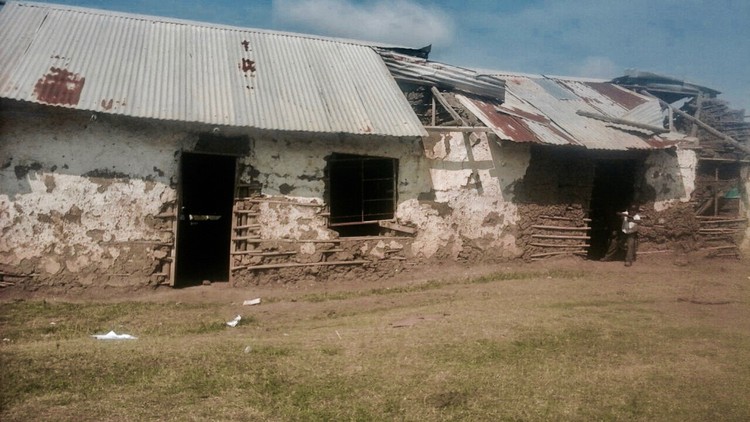
The Bhisho High Court has found parts of the government’s norms and standards regulations for schools to be unconstitutional. The court has ordered that schools substantially built from mud as well as asbestos, wood or metal, be replaced with buildings that meet the National Building Regulations.

Judge Bantubonke Tokota read the judgment — written by Acting Judge Nomawabo Msizi — in court on Thursday morning. The case was brought by social movement Equal Education against Minister of Education Angie Motshekga. It was heard in March. The court also awarded costs to Equal Education.

The court order says that where the Regulations Relating to Minimum Uniform Norms and Standards for Public School Infrastructure 2013 refer to “schools built entirely out of” mud, wood, asbestos or zinc, the wording must be replaced with “schools built entirely or substantially out of” these materials.

The court also found that the regulations compel government to provide water, power and sanitation in schools. Plans and reports on progress towards schools meeting norms and standards must also be made available to the public, the court found.

Much of the Education Department’s argument was based on a clause in the regulations that place responsibility for school repairs on other state or parastatal entities (e.g. Eskom for electricity). But the court found that this “escape” clause — as Equal Education has called it — was unlawful and invalid.

The court also found that plans for upgrading schools that were in place before the norms and standards regulations were published have to be made consistent with the regulations. The court also found that schools with no access to water, electricity and sanitation have to be prioritised.

The regulations committed to a three-year period for schools to meet norms and standards, but since they were published in 2013 this period has long since passed. It is unclear what time frame the state now has to implement the norms and standards.

Two representatives of Equal Education were at court. Provincial leader Luzuko Sidimba told GroundUp that the judgment was a big victory for the organisation and those who had stood by it throughout the campaign.

Equal Education subsequently published a statement saying, “Victories such as this validate the necessity of organising young people to demand rights that would otherwise not be freely afforded to them. Armed with an improved infrastructure law, EE will continue to keep a very close eye on the [Education departments].”

Spokesperson for the Department of Education, Elijah Mhlanga, was also in court. He said that the department welcomed the judgment. “We have made mistakes in our regulations, so the judgment will help us resolve them,” he said.

Read original article here.

Zimbabwe: Tertiary institutions close for election day

Staff Reporter

Tertiary institutions will close the second term on Friday to pave way for the harmonised elections set for July 30, Secretary for Higher and Tertiary Education, Science and Technology Development Dr Desire Sibanda has said.

In a statement yesterday, Dr Sibanda said the institutions will open for the third term on September 3 to compensate for the early closure.

“This circular serves to inform you that the closing date for the second term for all tertiary education institutions under the ministry’s purview is now Friday July 20, 2018.

“This has been necessitated by the harmonised elections that are scheduled to take place on the 30th of July 2018.”

Dr Sibanda said the institutions will be used as polling stations and most of the staff will be participating in the elections.

The development comes after Ministry of Primary and Secondary Education announced that primary and secondary schools will close the second term on July 26 to pave way for the harmonised elections.

Primary and Secondary Education Secretary Dr Sylvia Utete Masango said the third term had been brought forward to September 4.

Read original article here

100 minutes of Coding for Mandela

Emmanuel Tjiya

A crop of Mzansi A-listers yesterday paid a visit to Diepsloot, north of Johannesburg, with a random act of kindness, proving in Mandela Day that they are much more than their oversized bank balances.

Basetsana Kumalo, Carol Bouwer, Khanya Mkangisa, Celeste Ntuli, Thembi Nyandeni and Bujy Bikwa surprised school children in the middle of their computer programming class at Diepsloot Skills Centre.

Hosted by the Do Good Circle in collaboration with the Gauteng department of social development and the Nelson Mandela Foundation, the theme for the Mandela Day activity was “100 minutes of Coding for Mandela”.

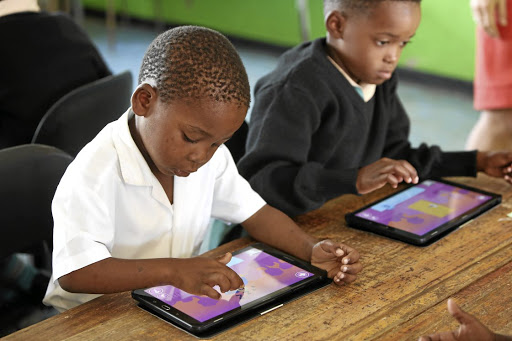
The aim was to introduce schools to the futuristic world of Information and Communications Technology (ICT) – coding, robotics and gaming. This follows a call by the department of education earlier this year for SA schools to prioritise coding.

Before celebrities gave inspirational words of encouragement to the pupils,
Kumalo opened the function with a powerful prayer that sent vibrations through the class.

“I think there was an important message when President [Cyril] Ramaphosa said Thuma Mina earlier this year, it did not only apply to him but it was also a message that applied to us,” Bouwer said.

“What am I doing as a South African that says I can build this nation? South Africa is becoming a more empathetic nation and we should all be grateful for. It was something that was ploughed when Madiba took to the Union Buildings.”

American comedian Chris Rock’s ex-wife Malaak Compton-Rock later made an appearance with her two children.

They have been in the country since Sunday. Last night, through her charity organisation The Angel Rock Project that has educational and micro-finance programmes in Diepsloot and Soweto, Compton-Rock took 150 girls for a night of festivities at Lesedi Cultural Village, about 50km northwest of Johannesburg, .

“I’m here to serve Nelson Mandela’s honour and his desire for all of us to serve humanity – not just today but everyday,” she said.

Gauteng school placements for 2019 will be available in August

Staff Reporter

Gauteng parents who applied for 2019 admissions for grades 1 and 8 pupils will know next month about the placement of their children.

The Gauteng education department opened an online application system for grades 1 and 8 in April. At end May, the department had received more than 569 302 applications

Education spokesman Steve Mabona said parents will be informed about their applications on August 3 as more time is required to finalise the waiting list with the schools and districts.

“Parents will receive a message advising them on the outcome of their applications. They can also log-on to gdeadmissions.gov.za to check the status of their application. They can also visit the nearest district office or public schools for any admission-related matters. We urge parents to accept offers of placement within seven working days of receipt of the offer,” Mabona said.

He warned that failure to respond to the offer within seven working days will result in the forfeiture of the offer to the next applicant on the school’s waiting list.

“Placement will be conducted on a first-come first-served basis. It must be noted that space availability is the key determinant of learners to be placed in a school. Those parents who failed to submit the required documents to schools during the allocated timeframe can submit their documents at district offices from September 10  till September 14,” Mabona said.

Nigeria has 12th highest number of foreign students in U.S., says envoy

Vincent Obia

United States Consul General F. John Bray disclosed yesterday in Lagos that Nigeria had the highest number of students from sub-Saharan Africa studying in the US and ranked 12th among the over one million foreign students in the country.

Bray spoke at the Consulate General in Lagos during a pre-departure orientation for Nigerian students heading to US to study.

He said 35,364 of the international students in the US were from sub-Saharan Africa.

According to Bray, “There are currently 11,710 students from Nigeria studying in the United States. 49.5 per cent undergraduate; 36.2 per cent graduate students, 2 per cent are non-degree candidates, and the remaining 12.3 per cent are on Optional Practical Training.

“Compared to last year, this represents a 9.7 per cent increase. The number of Nigerians studying in the US has been going up for the past seven years.”

He said students from Nigeria attended about 800 institutions in each of America’s 50 states. “The most popular state is Texas, with 1,540 students, while the most popular college/university is Houston Community College, with 220 students.”

Bray said the US Department of State had granted scholarships to about 250 Nigerian students from the Lagos centre of its EducationUSA programme to study at institutions in the US.

He explained that EducationUSA was a US Department of State network of over 425 international student advising centres in more than 175 countries promoting higher education in America to students around the world by offering accurate, comprehensive, and current information about opportunities to study at any of the over 4,700 accredited post-secondary institutions in the US.

“EducationUSA is your official source on US higher education,” the consular general stated. “To date, about 250 student-members of the Lagos EducationUSA Center studying at U.S. institutions in the fall of 2018, have received scholarships from US institutions totalling over $4 million.”

He added, “One-12th grader got a full ride scholarship to Harvard to study Political Science. Many of the graduate students with whom EducationUSA worked were admitted to fully funded doctoral programs in the STEM fields.

“Six Opportunity Fund Program grantees will be going for their fully funded PhD programs in STEM fields.

“I am very proud of EducationUSA Lagos for reaching approximately 25,000 students this year, through various means, such as at the centre, on-line, at fairs, etc. information on studying in the US (Source: EducationUSA Lagos).”

Read original article here

40-minute video to be used as evidence in EFF student activist’s trial

Kaveel Singh

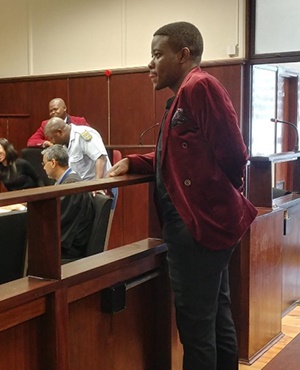
A 40-minute video that purportedly captured violence during the Fees Must Fall protest in 2016, will be used as evidence against Economic Freedom Fighters Students Command activist Bonginkosi Khanyile on Wednesday.

Khanyile appeared in the Durban Regional Court on Tuesday where his trial is set down for at least three days this week.

A smartly-dressed Khanyile, who appeared calm, faces a string of charges, including inciting public violence, possession of explosives, the contravention of the Gatherings Act, possession of a dangerous weapon, failure to comply with police orders, common assault and hindering traffic.

Warrant Officer Shaun Robins, a police videographer who works out of the Public Order Policing division in Marianhill, apparently recorded Khanyile and his cohorts performing acts of violence on September 27, 2016.

The video could not be played on Tuesday because court proceedings for the day had been completed. Instead, it is expected to be screened on Wednesday when Robins’ testimony continues.

Giving evidence, Robins described violence police were allegedly subjected to just outside the ML Sultan Campus at Durban University of Technology (DUT), where Khanyile studied.

“They pulled the main gate closed behind them and started pelting us with stones. There appeared to be building rubble and bricks that they threw at us. They were also using slingshots to attack police.”

Robins said he had recorded the mayhem in the 40-minute video.

Khanyile was previously denied bail on several occasions and was only released after he took his case to the Constitutional Court.

Despite spending six months in jail during this period, he graduated with a National Diploma in Public Management and Economics summa cum laude at DUT.

In May, he graduated with a degree of Bachelor of Technology in Public Management at DUT, following his suspension from the institution.

Read original article here.

A big moment for Africa: Why the MeerKAT – and astronomy – matter

Vanessa McBride

‘Students must learn science in a way that allows them to build their repertoire of transferable skills.’


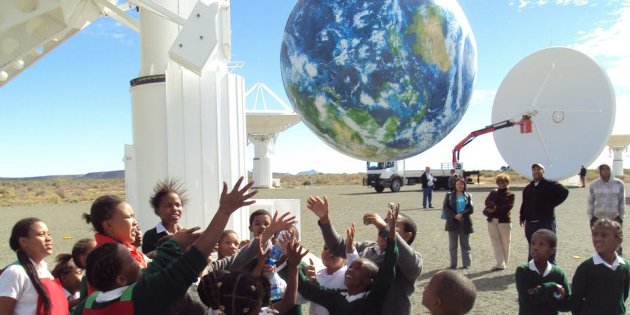
Astronomy in Africa will take a giant leap forward with the unveiling of the 64-dish MeerKAT array in South Africa on July 13. The MeerKAT will be the largest and most sensitive radio telescope in the southern hemisphere until the Square Kilometre Array (SKA) is completed.

Why is this such a big deal? After all, Africa has many challenges more pressing than exploring the universe. But, as my colleagues and I recently argued in an article for Nature Astronomy, astronomy occupies a special place among the many efforts to address development challenges. It has a unique ability to stimulate thoughts of “what is possible” in the minds of marginalised communities, women and children.

Astronomy connects philosophical, cultural and inspirational elements with the cutting edge of science and technology. This affords the discipline a unique advantage to foster socioeconomic development. For instance, astronomy has been used in Sierra Leone to improve middle school pupils’ literacy. It worked because they loved what they were learning.

Astronomy techniques are also used across sectors from conservation to medical imaging.

The International Astronomical Union’s Office of Astronomy for Developmentuses astronomy to drive positive developmental change. It has ten regional and language centres. Three are in Africa, in Ethiopia, Nigeria and Zambia. The global coordinating office is situated in South Africa.

Our challenge as astronomers is not only to grow the discipline in Africa. We also need to ensure that this growth is accompanied by the educational, technology transfer and societal engagement initiatives that can drive the continent’s development priorities.

Skills training

The funding we disburse has been used to run a number of programmes aimed at developing skills among school and university students.

One of these was the Madagascar Astronomy Python Workshop in 2017. It focused on practical coding in the Python programming language for university students and lecturers. The aim was to build on astronomy tools that participants can develop for their own research and teaching, not necessarily in the field of astronomy.

At school level the Girls Astronomy Camp was held in Abuja, Nigeria earlier this year. This not only dealt with education. It also tackled the large gender disparity in science, technology, engineering and math fields, which can be a complex, socio-cultural issue in many regions.

It’s crucial for educational interventions to address the fact that astronomy students often find employment outside the field. Students must learn science in a way that allows them to build their repertoire of transferable skills.

So the Office of Astronomy for Development has funded a number of Joint Exchange Development Initiative workshops in NamibiaMozambique and Mauritius. These workshops focus on the direct transfer of specific skills in an informal but intense learning environment. They’re also excellent for data science skills, which are particularly important for economic growth and jobs in emerging markets.

To support this need and bridge the data science and astronomy communities, the Office of Astronomy for Development hosts a repository for data science resources and code examples.

Beyond disciplinary boundaries

Astronomy can also be put to use in perhaps surprising ways to boost development.

One of our projects, Accessible Citizen Science for the Developing World, has married health issues with astronomy skills through running a proof-of-concept type intervention. Retinal defects are common but curable. Peek Vision, a social enterprise that works to bring better vision and health to everyone, developed a retinal imaging device that can be easily used, even in rural Kenya, with an Android phone.

But there weren’t enough qualified ophthalmologists at hand to use the app to diagnose retinal problems. So Peek Vision teamed up with astronomers at a citizen science portal called the Zooniverse. In the same way that the citizen scientists had previously worked to classify thousands of galaxies, they were called on to learn how to identify retinal problems on the Zooniverse portal. Such partnerships are quintessential examples of working together across disciplinary boundaries to achieve development outcomes.

Creating spaces

There are numerous other initiatives that contribute to development through astronomy. Large astronomical infrastructure investments like MeerKAT aim to stimulate the technology industry and advance the development of technical skills. International aid initiatives with a science focus like Development in Africa with Radio Astronomy (DARA) and its sister project, DARA Big Data, are using the momentum generated through the SKA programme to develop skills and train more astronomy students for the continent.

Of course, the few examples illustrated in this article hardly begin to address the myriad challenges facing Africa and the world. Technology and science can only do so much: these challenges have solutions that are, at least in part, driven by human values.

That’s why conversations that span natural and social sciences are key to making development progress on the continent. The Office of Astronomy for Development is one of the spaces hosting these conversations. We’re challenging astronomers and other scientists to reach across the disciplinary boundaries to explore how their skills can help Africa meet its development goals.

Vanessa McBride is an Astronomer, International Astronomical Union’s Office of Astronomy for Development

Author’s note: the article on which this piece is based first appeared in Nature and was co-authored by Ramasamy Venugopal, Munira Hoosain, Tawanda Chingozha & Kevin Govender.

Honour Mandela by improving the education system

Paul Herman

Political parties, Parliament and Archbishop Emeritus Desmond Tutu have shared their special messages this Mandela Day, marking former president Nelson Mandela’s centenary birthday celebrations.

On Wednesday, Tutu said good leaders knew when and how to say sorry.

“Madiba had this quality in abundance. During the Truth and Reconciliation Commission, I once had an occasion to be quite annoyed with him, but I found his honest apology quite disarming,” he said in a video message.

Mandela’s most important quality was his ordinariness, Tutu continued.

“He was just a particularly fine example of humanity. The principles by which he lived his life are universal principles of love, fairness and respect for others.”

He also praised Mandela’s sense of humour.

“We did not agree on everything. His dress sense for example: I once told him he should wear a proper suit and tie on important State occasions, rather than those colourful shirts.

“His retort was typical of the man: It was ‘rich criticism’ coming from a man who appeared in public in a purple frock!” he laughed.

Tutu’s wife Leah said Mandela had given people a sense of pride and made them feel special. She praised the “extraordinary, ordinary man”.

‘Education needs to be improved’

Democratic Alliance leader Mmusi Maimane on Wednesday said the best way to honour Madiba’s legacy was to “save our children from a failed education system”.

“Today, across the country, we remember the life and sacrifice of our first democratic president and the father of our nation, Nelson Rolihlahla Mandela,” Maimane said in a statement.

“But if we are to truly honour his legacy, then we have to go beyond our symbolic 67 minutes of service on this day. We must fight, every day, for the values he stood for.”

Maimane said one thing that mattered to Madiba more than anything else was looking after children and preparing them for a better future through education.

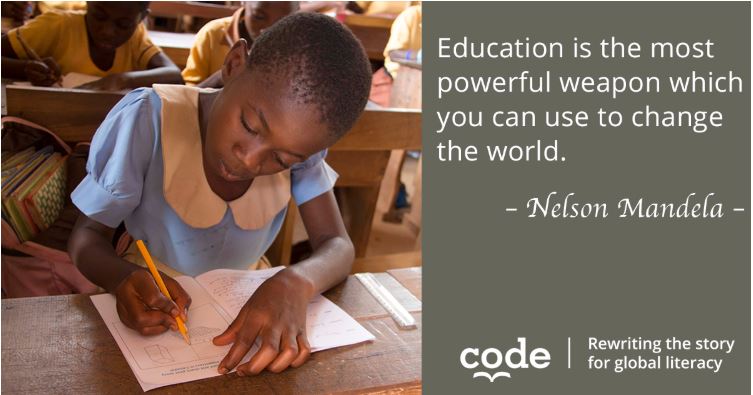
“We all know Mandela’s well-known quote where he said, ‘education is the most powerful weapon which you can use to change the world’. But if we are not prepared to arm our children with this weapon, we cannot claim to be upholding the Mandela legacy.”

Maimane hoped to see safer schools, better school-feeding programmes, scholar transport, and reduced classroom sizes, among other things.

‘Returning the land’

The Economic Freedom Fighters (EFF), meanwhile, said they were “delighted” that the Mandela Day centenary celebrations had coincided with the public hearings on amending the “property clause” in the Constitution.

Parliament’s provincial hearings on the emotive issue resumed in the North West and KwaZulu-Natal on Wednesday.

“The leadership of the EFF commemorates Mandela Day by listening to the people, many of whom are landless and still have no access to the means of production in this country. We are committed to doing everything to ensure our people get back the land.”

The EFF said it would hold up some of Mandela’s core values – freedom, service and dignity – by striving to achieve the economic emancipation of the people in their lifetime.

“The most urgent of all is to restore the dignity of our people by returning back the land. We call on all South Africans to mark this day by making their voice heard at the public hearings.”

Meanwhile, in Mvezo, former president Jacob Zuma and President Cyril Ramaphosa shared the limelight at a function hosted by the Royal House of Mandela.

Ramaphosa was due to address the event later on Wednesday, hosted by Mandela’s oldest grandson, Chief Mandla Mandela.

‘It’s in your hands now’

Parliament’s presiding officers acknowledged the centenary celebrations of both Madiba and struggle stalwart Albertina Sisulu.

“It was Ms Sisulu, who, on May 9, 1994, nominated Nelson Rolihlahla Mandela as democratic South Africa’s first President – at the inaugural sitting of the democratic Parliament.”

Parliament reaffirmed its determination to continue building an activist people’s Parliament, responsive to the needs of the people and driven by the ideal of a better life for all.

“Restoring dignity and redressing apartheid injustices are necessary for the healing of the wounds of a long and brutal past – to realise the freedom from want and discrimination, which our Constitution appeals we should work towards, for actual freedom.”

The presiding officers also acknowledged the public hearings on land currently taking place.

“The people are their own liberators and, through this process, they are making bold submissions to the legislature regarding how restitution of property… can be achieved.

“They are speaking out regarding how land reform and social justice can be speeded up, so that we truly heal the wounds of the past and build the national cohesion to free up factors inhibiting our common desire for economic growth and prosperity.”

They called on the younger generation, in particular, to rally behind achieving a common goal of building a better South Africa.

“As Madiba once remarked: ‘It’s in your hands now’.”

Read original article here.