Home Blog Page 523

Financial literacy should be taught in schools

0

Mduduzi Luthuli

I listened in on the radio as two women spoke about their financial woes. These women, both educated and both black professionals, spoke of the lack of financial literacy in the black community. Their stories were personal. One said she got her driver’s licence 12 years ago and has since driven 11 cars.

“They were beautiful cars,” she quipped, “and I could ‘afford’ them. But now when I look back at the R10 000 – R15 000 a month spent over the last 11 years, with nothing to show, I become extremely frustrated with myself,” she said.

She also spoke of her friend who drove her sweet small Polo.
“She would get promotions. We all grew up and moved into fancier rented spaces. She didn’t. We would say,’Haau friend just buy a car,’ move into a bigger house.”

“You know she would laugh and just say no. Now I’m on car number 11 and she just bought her first brand new but not fancy car.”
“She owns six properties.”

I know many stories like this one and this is why I believe financial education should be part of a coordinated national strategy. It should be taught in schools.

Many young people can be empowered and equipped with the knowledge, skills and confidence to take charge of their lives and build a more secure future for themselves and their families. More needs to be done and it starts by changing our education system.

Why Personal Finance Belongs in Schools

Learning about personal finance may be the most important subject you didn’t study in high school. In fact, financial literacy is as important as mathematics, science or language skills, the 3 pillars of our education system. Imagine finishing high school and already being in the habit of budgeting, saving regularly and spending wisely. By now, you would have thousands of rands invested and you would be more financially savvy making decisions that would positively contribute towards your future.

However, most of us have been forced to learn the hard way.
We have routinely used the over-draft banking facility offered by our banks; we have overspent on credit and have short-changed our retirement savings.

During my career, I’ve come to appreciate one fundamental truth and that’s Personal finance informs everything in your life. Without mastering this skill, you’re simply wasting your own time. A few wrong moves – such as a series of missed credit card payments or purchasing a house you can’t afford – can dramatically narrow your options and make it next-to-impossible to live the life you imagined. Financial literacy is also crucial for avoiding the marketing tricks and gotcha fees that banks and other lenders are notorious for charging less-than-savvy customers.

Financial literacy is a core life skill for participating in modern society. Children are growing up in an increasingly complex world where they will eventually need to take charge of their own financial future. As young adults learning to live independently they will need to know how to budget, make wise financial choices for everyday living and manage risks. Who’s teaching them to do this? Financial products and services vary widely and, in the case of credit, can be almost too easily accessible for many of today’s young people. At the same time, these products and services are becoming more complicated and the choices more difficult.

Adding to this complexity are economic and technological developments which have brought greater global connectedness and massive changes in communication and financial transactions, as well as in social interactions and consumer behaviour.

Parents also struggle with financial literacy

South Africans don’t understand the basics. Many adults, struggle with simple concepts like spending less than they earn. It is this shame, this crippling failure or lack of understanding of money management that continues to make this subject a taboo in so many homes. I believe that we can realise and recognise that parents haven’t done a very good job of teaching their children. Our rising debt levels help prove my point. This growing consumer debt reflects a laissez-faire attitude to borrowing, and with many adults failing to manage their money well, it’s hardly surprising that most kids don’t grasp the fundamentals of spending, saving and sharing.

We spend too much money we don’t have. Economists have been sounding the alarm about consumer debt for the last few years. It is also a recurring mantra from our finance ministry. We’re quick to judge the negligence of the state with regards to their finances yet many of us would be ashamed if our financial life was published on the front page of any newspaper. Forgive yourself for not knowing what you don’t know but this proves my point of why financial literacy should be taught in schools.

What can be done

One must first admit that there are significant barriers to overcome: lack of political will, lack of resources and materials, overcrowded curricula and insufficient expertise. There is no single recipe for success, but we need to start. Countries that have made the most progress have adopted the guidelines supported by the Organisation for Economic Co-operation and Development (OECD) and its International Network on Financial Education (INFE): Financial education in schools should be part of a co-ordinated national strategy.

Sadly, we are not one of the countries who have adopted to adopt their guidelines and I really don’t understand why. Our education system continues to become more archaic each year and we must question what we’re offering the world apart from natural resources. We should also be aware that we may not be able to form part of this 4th industrial revolution we always hear of.

The strategy proposed by the OECD says that a learning framework which sets out goals, learning outcomes, content, pedagogical approaches, resources and evaluation plans must be created and adhered to. The framework must be national and needs a sustainable source of funding which should be identified at the outset. The OECD also emphasises that financial education should start as early as possible, ideally from the beginning of formal schooling, and carry on until the end of the students’ time at school. Teachers should be adequately trained and resourced, made aware of the importance of financial literacy and relevant pedagogical methods, and they should receive continuous support and training to teach financial literacy.

A life without financial literacy is a regretful one

As a country, we’ve seen where a lack of personal finance education can lead. Millions of South Africans struggle every day with their money, living pay-cheque to pay-cheque and relying on credit cards for necessities. Beyond that, many South Africans are finding that they can’t buy homes, invest for retirement, or save for their child’s education because of their own personal debt, massive car payments, and general lack of financial planning.

But it doesn’t have to be that way.

A lot of the money problems South Africans face can be avoided if financial literacy was taught earlier, in school. That’s why I believe all schools should offer financial literacy courses as part of their graduation requirements. This should be made a human right.

Anyone who’s ever struggled with a difficult class in high school has asked the question, Will I ever actually use this stuff after I graduate? Financial literacy is very relevant to your current quality of life and the question to, “Will I ever actually use this stuff after I graduate,” is yes.

Handling money is a skill. Your quality of life will be highly dependent on using your money wisely, rich or poor. So why is it not being taught in schools? Why is it not a fundamental requirement for you to receive a pass in Matric?

Mduduzi Luthuli is an Investment Manager at Luthuli Capital, a Pan-African multi-specialist firm that offers an independent global approach to a wealth-management portfolio. He specialises in building Equity, Fixed Income and Balanced Portfolios.
DUT impasse ends after department intervention

Bonile Khanyi and Thabo Mohlala

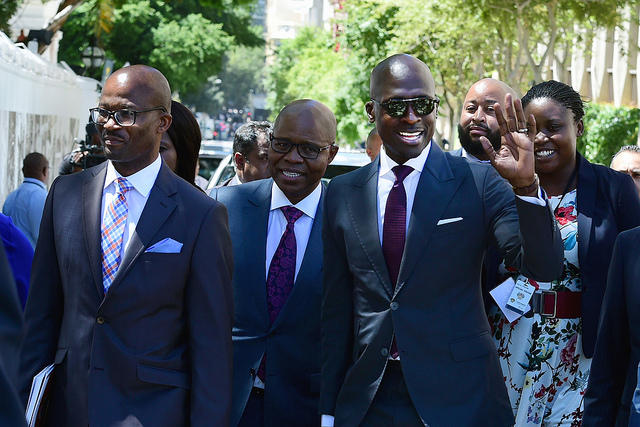
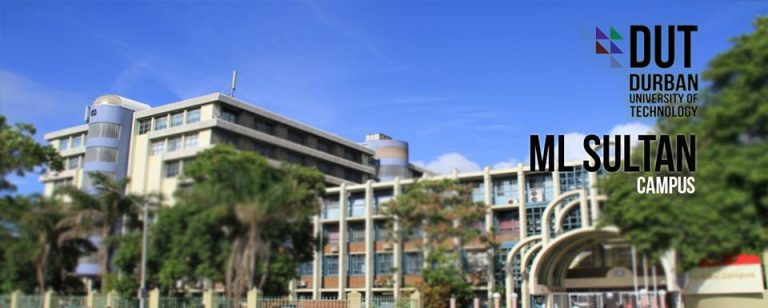
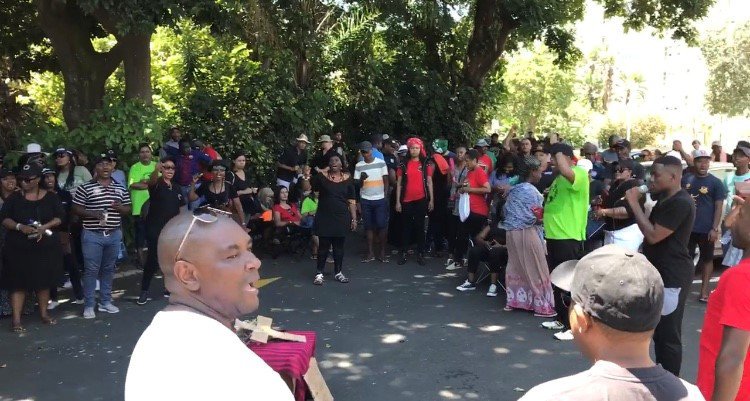
The Deputy Minister for Higher Education, Buti Manamela, took to Twitter on Tuesday to announce there had been a breakthrough in the Durban University of Technology (DUT) strike.

“DUT and the Unions agree to go back to negotiations after a five-hour meeting. The parties will resume talks tomorrow morning. Classes will resume by the end of the week and registration will be finalised ASAP,” said Manamela.

The deputy minister was asked to intervene after the university implemented a lockout last Friday. His involvement came after calls were made from the public that DHET should mediate to end the protracted strike which is entering its 7th week.

The spokesperson for the National Health, Education and Allied Workers Union (Nehawu), Khaya Xaba, said they welcomed the interaction between the unions, DUT management and DHET. He said they were optimistic that the involvement of the deputy minister would assist in finding a solution.

Manamela said his biggest worry was that, even though there was a strike, there were no negotiations at all. He said the parties were not talking to each other.

There are three unions with active members at DUT with Nehawu commanding strong support among the striking workers. The other two unions are the Tertiary Education National Union of South Africa (Tenusa) and the National Tertiary Education Union.

“We wanted 8.25% salary hike and R9 000 once-off bonus payment to our members and employer offered 6.25% which we refused.”

“They employer pleads poverty and we don’t believe they cannot afford to meet our demand. We tried to engage them further but to no avail. Two mediation talks under the CCMA collapsed. But we hope that given the impact the strike is having on the academic programme, we should be able to sign an agreement tomorrow,” said Xaba at the time.

The head of Universities South Africa Professor Ahmed Bawa said their main concern was that the whole academic year would be lost if the matter was not successfully addressed.

Nehawu’s General Secretary Zola Saphetha announced their commitment to resume talks with management in a bid to stop the seven-week strike that has resulted in the suspension of DUT’s academic programmes.

“An immediate suspension of the strike is needed as a matter of urgency so that tuition can begin as soon as possible. As Nehawu, we are committed to engaging all concerned stakeholders in ending the strike and we welcome the commitment by the University Council to return to the negotiating table,” said Saphetla.

However, even with the protracted strike, the university’s management said it was able to register 22 980 students for the 2018 academic year.

Manamela wrote on Twitter, “I can happily say that tomorrow (Wednesday) negotiations will be resuming and the unions will be reporting back to their members.”


Gauteng SOPA: A new dawn or more of the same?

Bonile Khanyi and Thuletho Zwane

“Overcrowding, overcrowding, overcrowding,” this is what Gauteng MEC for Education Panyaza Lesufi said when asked about the biggest challenge facing township schools in Gauteng.

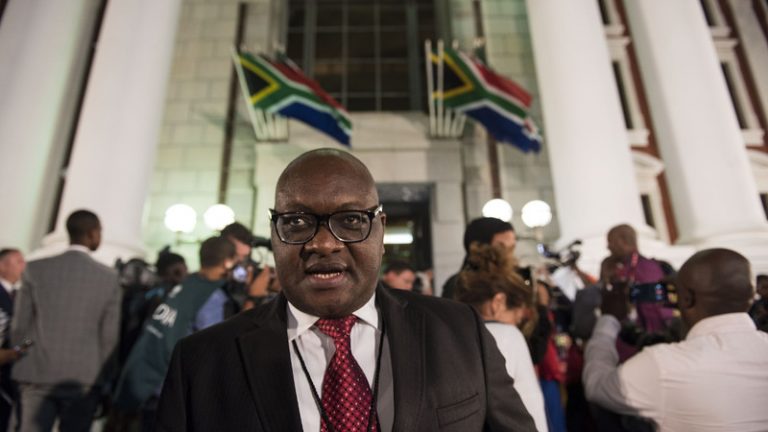
Lesufi spoke to Inside Education after Premier David Makhura gave the State of the Province Address on Monday. He said the migration of families to Gauteng, which they [the families] considered more economically viable, has created a situation where there are more learners than schools or teachers.

In his speech, Makhura said Gauteng ran the second largest public education system after KwaZulu-Natal.  He added that enrolment had grown from 1.3 million in 1994 to 2.3 million in 2018 emphasising that the Gauteng Provincial government has achieved 95% universal access to Grade R.

This was Makhura’s fifth State of the Province Address which he gave at the Gauteng Provincial Legislature.

With regards to higher education, Makhura said the Gauteng government spent R1-billion on bursaries over the past five years which have benefitted more than 20 000 graduates.

“We will continue to invest more resources in the training and development of young people in Gauteng,” said Makhura.

He also welcomed the introduction of free higher education for students from working class and poor family backgrounds.

“This is truly the dawn of a new era for many parents and young people who have been denied access to higher education simply on the basis of the circumstances of their birth,” said Makhura.

This was in reference to the announcement made by former Minister of Finance, Malusi Gigaba, whose department allocated R324-billion expenditure for higher education over the next three years, including an additional R57-billion to cover fee-free higher education. Gigaba has now been replaced by Nhlanhla Nene who previously led the finance ministry but was fired by former president Jacob Zuma.

Even with all this progress, however, the province still faces severe challenges.

Youth unemployment remains the most acute and primary problem of Gauteng province. Makhura said there are close to 2-million young people who are neither in employment, in education nor in training (NEET).

“Some of them are on the verge of losing hope, while others have drifted into crime and other social ills such as drug and substance abuse,” said Makhura.

To counter NEET and the potential social ills youth stuck here may encounter, the province has come up with a few programmes: The Ke Moja campaign, Tshepo 1-million, Harambee Youth Employment Accelerator and the eKasiLabs Innovation Centres.

Makhura said the Ke Moja campaign had reached over 1-million people now encouraged to live clean, drug-free lives. He said nearly 460,000 young people have benefited from Tshepo 500,000, which has now been upgraded and rebooted into Tshepo 1-million which will open opportunities for young people based on, “demand-led skills development, job placement and entrepreneurship.

Township economies

With regard to the revitalisation and mainstreaming of the township economy, Makhura said the Gauteng government had increased its spending on the township economy from R600,000 to R17 billion between 2014 and 2017.

He also said the number of township enterprises doing business with the Gauteng government increased from 642 in 2014 to 4182 in 2017.

“Our work, as the champion of the township economy, has given rise to a serious wave of entrepreneurial activity in the townships, especially among the youth,” said Makhura.

“Accordingly, the 2017 Ventureburn Tech Start-up Survey shows that 44% of tech start-ups list Gauteng as their home, as compared to only 26% in 2015. The survey also indicates that 53% of start-ups owned by Black young entrepreneurs are Gauteng-based while most of the Western Cape start-ups are owned by older white entrepreneurs.”

Makhura also announced the township stock exchange and its progress. “We have completed a feasibility study on the establishment of a provincial state bank which will enable us to mobilise the funding of SMMEs, township enterprise, women and youth businesses as well as infrastructure development,” he said.

He spoke of critical barriers facing township businesses. Makhura said the mushrooming of unregulated businesses owned by foreign nationals. He said he will send inspectors to visit townships and inner-cities to conduct inspections and shutdowns of illegal businesses.

“This is a matter we must address boldly and decisively to enforce by-laws and trading. Many township entrepreneurs are being squeezed out of businesses by unlawfully operating a foreign-owned business,” he said.

In 2012, the ANC made similar pronouncements. Ahead of the ANC’s Mangaung conference, the party proposed that non-South Africans should not run spaza shops without adhering to certain rules that would not apply to locals in a party discussion document called for a “strengthening and proper enforcement of municipal bylaws”. ANC economic policy head Enoch Godongwana said that, although the proposal was shelved, it was again being raised by party structures, and was “going to be a major issue at the national general council next year”. At the time, refugee rights group Passop (People Against Suffering, Oppression and Poverty) described the “anti-immigration” proposals as “unconstitutional” and “foolish”. Passop’s Braam Hanekom said he was shocked that the ANC had indicated it would support the document.

“The spaza shop owners feed these communities; their prices are the cheapest,” said Hanekom. He added that “the ANC seems to be more concerned about the businessmen and elites in the townships and not the poor families who depend on the foreign-owned spaza shops for cheaper loaves of bread and cups of rice”.

The African Centre for Migration and Society at the University of the Witwatersrand has done extensive research on the treatment of foreign shop owners. Attacks on foreign entrepreneurs are almost always triggered either by business cartels or business owners who want to get rid of the competition or by local leaders who want the goods in those shops to be distributed to their supporters, said the centre’s director, Loren Landau. 

Elephants in the room: Life Esidimeni and E-tolls

Makhura said the death of 144 Life Esidimeni mental health patients is a tragedy that has left deep wounds and pain in the collective memory of our democratic nation. It is something that should have never happened and should never happen again. “The tragedy has exposed deep institutional problems within our public health system and public service in general. It cannot be business as usual,” he said.

He conceded the controversial e-tolls system has failed.

“It is loud and clear for all to see that e-tolls have not worked. I will engage President [Cyril] Ramaphosa in order to find a new and more equitable funding model to support the continued expansion of Gauteng’s road networks.”

Hopes high as Buti Manamela meets with unions and management to break the impasse at DUT

0

Thabo Mohlala

The protracted labour strike that has crippled academic activities at the Durban University of Technology (DUT) may end tomorrow if all goes well; this is according to Khaya Xaba, spokesperson of the National Health, Education and Allied Workers Union (Nehawu).

There are three other unions but Nehawu commands strong support among the striking workers at the institution. Xaba told Inside Education this morning he was optimistic the strike would end tomorrow following a scheduled meeting between Deputy Minister of Higher Education and Training (DHET), Buti Manamela, the unions and DUT’s management.

Manamela’s involvement follows calls from the public that DHET should mediate to end the protracted strike which is entering its 7th week. The unions and the DUT management have failed to reach an agreement after several meetings.

“We welcome the interaction between the parties and we are optimistic that the involvement of the Deputy Minister will have us to find a solution,” said Xaba.

Xaba said the main sticking point was about salary increases which the employer refused to accede to.

“We wanted 8.25% salary hike and R9 000 once-off bonus payment to our members and employer offered 6.25% which we refused. They employer pleads poverty and we don’t believe they cannot afford to meet our demand. We tried to engage them further but to no avail. Two mediation talks under the auspices of the CCMA collapsed. But we hope that given the impact the strike is having on the academic programme, we should be able to sign an agreement tomorrow,” said Xaba.

Universities South Africa’s head, Professor Ahmed Bawa said they were concerned that if the matter was not resolved soon, the whole academic year would be lost. He called on the parties to resolve the impasse in the interest of the students who had never been to classes since the 2018/19 academic year started early this month.

Addressing the media last week Thursday, Professor Thandwa Mthembu, DUT’s vice-chancellor, expressed the same fears.

Said Mthembu: “Sadly, we are still deadlocked after months of one-on-one negotiations. Many of our students come from poor and working-class backgrounds and this staff strike is having a very negative effect on them and their families.

“We also have thousands of students whose parents and guardians have worked very hard to save money for their studies. Many have taken loans to register at DUT. International students, for example, have very limited time to complete their course credits and return home. This strike compromises their studies and affects our responsibilities towards our students.”

Manamela has been dispatched to some troubled institutions before and has been successfully managed to resolve them.  He mediated between the universities management and the Economic Freedom Fighters who encouraged students to storm university campuses to register in-person at the institutions of their choice following the announcement of the fee-free higher education. Universities had banned walk-in registrations at campuses. Manamela also dealt with the situation at the Capricorn TVET College following a stampede during registration where some students got hurt.

Teacher unions welcome the budget with guarded optimism

Thabo Mohlala

Teacher unions have joined scores of trade unions and some civil and NGOs in slamming Finance Minister, Malusi Gigaba’s increase of the VAT and personal income taxes. They said the impact of this would be more severe on the poorest of the poor. VAT will increase by 1% percentage point from 14% to 15%.

South African Democratic Teachers’ Union (Sadtu)’s General Secretary, Mugwena Maluleke said they rejected the VAT increase because it would affect the poor, adding it was not just about food but it also included travel and other related basic needs. Gigaba increased fuel levy by 22 cents per litre while the Road Accident Fund levy will rise by 30 cents a litre with effect from early April.

“So, in the end even if some food items are zero-rated the poor would still be affected in this other areas,” said Maluleke. He said Sadtu is also concerned about the rise in personal tax while the corporate tax has been left untouched.

Maluleke said, however, they welcomed the increase in the School Infrastructure Backlog Grant, Education Infrastructure Grant, National School Nutrition Programme Grant and the increase in the number of Funza Lushaka bursaries.

National Professional Teachers’ Organisation of South Africa (Naptosa) commended the budget saying it is “inclusive” and “progressive”. It expressed its support for the outlined intervention measures government that government undertakes to turn the country’s economic fortunes around.

The union’s president, Nkosipendule Ntantala said in the statement that Naptosa looks forward to seeing visible and speedy action from the government on these commitments and that these would not “just be another case of hot air to appease the public”.

He said while some aspects of the budget were praiseworthy, Gigaba “ignored the fact that the VAT and fuel levy increases will impact them nonetheless”. Naptosa said the budget would impact negatively on all middle-income earners as 80% of personal income tax is paid by just over 25% of the citizens and this included teachers who did not derive pleasure from the budget.

Naptosa also welcomed the grants allocated to build new schools and infrastructure as well the nutrition programme and the Funza Lushaka bursaries to train more young teachers in critical subjects such as maths, science and technology.

Universities South Africa (USAf) welcome the budget saying it reflects government’s commitment to fund fee-free higher education.

USAf’s Professor Ahmed Bawa said: “although it is still early, from what we can tell there is substantive commitment on the part of the government. We are encouraged by the new sense of re-awakening by government to allocate resources to fund student education.”

We trust the Department of Higher Education and Training and Treasury have done the calculations correctly and that the funding will be for three years. We welcome that because our concern was to have funding that would last for a limited period. So, three years is enough,” said Bawa.

He said the other critical issue at the moment was to assess whether the subsidy levels were the same and would not be cut. Bawa said they were concerned about the strike by National Students Financial Aid Scheme staff because funding cannot be processed if Nsfas’ employees are not working.

He also expressed hope that Durban University of Technology can resolve its dispute with the unions as this threatened to disrupt the academic programme at the institution.

Money won’t fix education, we need skills development, says expert

Thabo Mohlala

The most critical test for making the best use of the funds allocated for education is to re-engineer our education system in such a way it helps to develop the skills that our economy needs, said Raymond Parsons, a professor based at the University of the North-West business school.

Parsons was reacting to the Budget Speech in which education – both at basic and tertiary levels – received a combined R792 billion. Department of Higher Education benefited handsomely as it was allocated R57 billion over the medium term to implement fee-free education. Treasury was compelled to reallocate its resources after delivering the medium term budget following former President Zuma’s surprise announcement about the implementation of the fee-free higher education.

Speaking to the SABC yesterday, Parsons said the decision to fund tertiary education to students from poor and working-class families was a step in the right direction. He also welcomed the fact that this would be phased in, saying this was good because we could absorb the cost over time. We could also, he said, monitor how it is going to be implemented.

“I believe the taxpayer will say I am happy to pay tax for fee-free higher education but I also want to see value for money; that it is well invested and it is not going to be wasted. More importantly, those who are going to get it will be held accountable and show outcomes,” said Parsons.

He said the other area that government needed to focus its attention on was fixing the foundation, primary education.

“Things will go wrong at tertiary level if you have not gotten them right at primary level. So I hope in our desire to make a success of the money we want to put in tertiary education, we don’t overlook that the foundation of our primary education is essential to make a success of all the other things we want to do at the higher level,” said Parsons.

Asked if the money would be enough to deal with the challenges the education system faces, Parsons said the problem was not money.

“We, as a country, spend among the largest proportion of our GDP on education. We need to ask as to what is it in our structure that is not giving us sufficient returns; why is it that the more money we put in, the more complaints we get about the quality of education system. This points to something structural there and so we must use this watershed decision to look at the education system in such a way that we will restructure it to give us better value,” said Parsons.

He said Treasury’s decision to fund free education was an indication that Treasury had its back to the wall and that it was not sustainable to increase tax or re-allocate resources every year. Therefore, we need to quickly sort out our education system, said Parsons, either at the primary or tertiary level such that we get value for our money.

Malusi Gigaba raises tax to make fee-free higher education a reality

Thabo Mohlala

Finance Minister Malusi Gigaba presented a budget clearly designed to stave off the possible implosion of the higher education sector as well avert further credit downgrading.

S&P and Fitch have already downgraded South Africa’s credit rating to sub-investment status while the third one, Moody delayed its decision has placed the country on review for downgrade.

He announced the VAT tax increase to boost government’s revenue shortfalls and also generate sufficient capital to fund fee-free higher education. From April 1 this year VAT tax will increase by one percentage point to 15%. This is expected to generate R22.9bn more for the fiscus. The last time government increases the VAT was in 1993.

Gigaba said the immediate government interventions to stabilise the state-owned enterprises bedevilled by serious governance challenges and the introduction of austerity measures to curb government spending are good enough reason to avert a second credit downgrade.

He sounded generally optimistic despite the subdued economic growth that the country experienced in the recent years. He said the optimism is informed by the improving global economic outlook, adding that government will be able to deliver key social priorities by growing the economy and creating new sustainable jobs.

Gigaba said this is a tough budget but also hopeful one. “This is a tough, but hopeful budget. It required us to make difficult but necessary trade-offs, important to ensure that this budget is a platform for renewal, inclusive growth and job creation. It directs spending to our most pressing national priorities: educating our youth, protecting the vulnerable and investing in enablers of inclusive growth. It moderates spending and raises the revenues required to contain the growth in national debt, whilst trying to minimize negative effects on growth.”

He said the lacklustre economic growth which saw revenues eroding; the government will increase its consolidated spending from R1.67 trillion in 2018/19 to R1.94 trillion. This, he said, represents “a nominal annual average growth of 7.6 percent or 2.1 percent in real terms”.

As is in the past, the Department of Basic Education (DBE) continues to be a major recipient of the budget allocation. It received R792 billion, while the Department of Higher Education and Training will get an additional amount of R57 billion over the medium.

DBE will, over the medium term, be allocated R3.8 billion for its ‘School infrastructure backlogs Grant’ to fulfil its ‘National Minimum Norms and Standards for Schools’ obligations. This will enable it to refurbish “82 inappropriate and unsafe schools, and provide water to 325 schools and sanitation to 286 schools,” Gigaba said.

A further R31.7 billion is allocated for ‘Education infrastructure Grant’ so that the department can build new schools, upgrade and maintain existing infrastructure, and provide school furniture.

DBE’s National School Nutrition Programme Grant is allocated R21.7 billion to provide meals to about 9 million learners each school day at 19 800 schools. According to DBE, provision of meals to children not only helps to boost learner attendance but it also leads to improved academic performance.

Funza Lushaka bursary scheme also received a financial injection of R 3.7 billion. This will see 39 000 bursaries issued to prospective teachers in priority subject areas such as Mathematics, science and technology will be provided over the next three years.

To avoid possible student revolt, the government was forced to re-allocate its resources to make room for the implementation of the fee-free higher education.

Last year during the 54th ANC Elective Conference in Nasrec, former President Jacob Zuma surprised the nation by announcing the implementation of a fee-free higher education after the Heher commission found that it was not feasible at this stage. This was despite the medium-term budget having already been delivered, forcing Treasury to re-prioritise its finances amidst growing concerns that this will worsen the fiscus ballooning deficit.

Gigaba said this represents a major and progressive step forward as it will enable government to guarantee easy access to tertiary education for all South Africans who qualify based on merit, not class position.

This will be phased in over time and all first-year students from poor and working-class families with a family income below R350 000 per annum at universities and TVET colleges in the 2018 academic year will be funded for the full cost of study, Gigaba said.

In terms of the funding model returning NSFAS students at university will have their loans for 2018 onwards converted to a bursary, said Gigaba, adding this was crucial as it would break the cycle of poverty and confronting youth unemployment.

Meet the top mathematics teacher in the country

1

Bonile Khanyi

Mishael Tafadzwa Matonhodze is now South Africa’s top Mathematics teacher.

The Witbank High School teacher scooped the National Teaching Award for Excellence in Teaching Mathematics at the awards ceremony held at the Sandton Convention Centre in Johannesburg on Saturday.

She walked away with a brand-new Renault Kwid and a cash prize of R5000.

Speaking to Inside Education, Matonhodze said she was overwhelmed with joy and excitement and that it was through God’s grace she won the award.

“I am honoured and flattered because when I do what I do every day, to me this is normal, I did not think it was anything exceptional until they said to me what you are doing is exceptional, and I really feel honoured by it, humbled and grateful to them for recognising what I myself could not see,” said Matonhodze.

“I feel very much blessed and the grace of God is really sufficient.”

Matonhodze, who started her teaching career in Zimbabwe for two years before she could return to teach in South Africa, has been teaching for 11 years.

She studied a BSc degree as her initial dream was to become a doctor, however, that dream soon took a turn in a different direction after she realised she was too sensitive to bear looking after ill patients.

Matonhodze said she was glad she chose to teach as her profession because she finds it fulfilling.

When asked how she managed to teach a subject viewed by many as difficult, Matonhodze said that it all depended on the manner in which a teacher approached the subject.

Matonhodze said negativity affects how learners view the subject. 

“I convince my learners that mathematics is not difficult because everything you do is mathematics. I show them that you need it for the simplest things that you are doing like sport. And when they realise how much Maths is in their everyday lives, they get motivated to learn the subject,” said Matonhodze.

She also said that she conducted one on one sessions with her learners to help her bring those who are running behind up to speed. She also carries out group discussions where learners are able to help each other understand the school work better.

When it comes to ill-disciplined learners, Motonhodze puts learners through detention where they study and submit work for marking.

She also works with other teachers in her neighbourhood to share their different skills and techniques on teaching maths, through a programme called “1+4”.

“We have a programme called 1+4 where we iron out the misconception about maths, we share our experiences while teaching and how we deal with various issues about the subject,” said Matonhodze.

The best advice that Matonhodze could give to her fellow educators is to approach the subject with a positive attitude.

“My advice to the upcoming teachers is that you’ve made the right decision, run on with it. To the class, take with you the right attitude, humanity because you have influence, be disciplined to lay your expectations to learners but be humble enough to engage with you on a personal level so that they may open to you and you may better help them,” said Matonhodze.

Siphesihle Mabaso from Asibemunye High School in KwaZulu-Natal was placed second in the Mathematics category and Francois Nicholas Bischoff from the High School for Girls Potchefstroom in the North West was placed third.

Eastern Cape Department of Education determined to improve its grade 12 pass rate

0

Thabo Mohlala

The Eastern Cape Department of Education (ECDE)  is working hard to shed its underperformance status by introducing an initiative that aims to provide sustained and targeted interventions to ensure schools improve their marks.

The Learner Attainment Improvement Strategy (LAIS) programme seeks to enhance the delivery of quality classroom instructions.

Over the past few years, the province has been rooted at the bottom when it comes to the annual National Senior Certificate results. Although other provinces such as Limpopo and Mpumalanga also fared badly, the Eastern Cape has struggled to shift from the 9th spot.

This chronic poor performance has been attributed to a range of deep-seated problems such as poor curriculum delivery, weak administration and poor financial mismanagement.

So severe were the problems Basic Education Minister, Angie Motshekga had to dispatch a team of experts to intervene as she also placed the department under partial administration.

But according to the ECDE’s top officials, the situation is set to change for the better as they identified key problems that have hampered effective curriculum delivery. Last year, the province attained a 65% pass rate, compared to 59.3% in 2016.

According to Dr Soyisile Nuku, one of the senior officials driving the programme, they want to maintain the upward trajectory. He said the purpose of the programme is to primarily strengthen teaching and learning at school level on a daily basis. He said provision of morning, afternoon and vacation classes will be central to the programme.

Nuku said they aimed to improve the 2018 Class pass rate by at least 5% and with LAIS they are confident they would achieve this target. He said the programme was targeted at the whole school system covering all grades in the General Education and Training band but with the emphasis on the grade 12 class.

Nuku said they were looking at improving numeracy and literacy Foundation Phase while also introducing effective ways of teaching subjects such as maths, science and accounting at higher grades.

Commenting on their matric pass rate last month, Education MEC, Mandla Makupula sounded elated even though they were still at the bottom, saying overall they were the most improved province.

“The number of Bachelor passes increased from 19 percent in 2016 to 23 percent in 2017. This phenomenal improvement to the previous year as the portion of learners obtaining a Bachelor pass has never surpassed 20 percent since 2014,” said Makupula.

He added that a number of learners who passed with distinction have also increased from 2.1% in 2016 to 2.7 in 2017.

Makupula echoed Nuku’s sentiments saying his department would provide the services of trained tutors and study materials to assist learners who lagged behind in any learning area.

He said it was a national programme that has been tailored to fit the specific needs of the Eastern Cape.

“In the Eastern Cape we place emphasis on the following areas amongst others, numeracy and literacy for the foundation phase, focus on certain subjects, your high enrolment subjects; your maths, science, accounting, agriculture because these are subjects that are very important for the province. We’re placing emphasis on these subjects.”

Fedusa calls for the minister’s intervention in DUT wage issue

Bonile Khanyi

The Federation of Unions South Africa (Fedusa) last week urged Higher Education and Training Minister Hlengiwe Mkhize to intervene in a strike by workers at the Durban University of Technology in KwaZulu-Natal.

Speaking to Inside Education, Fedusa’s spokesperson Frank Nxumalo said the union had written an urgent letter to the Higher Education and Training Minister asking her to intervene in the wage negotiations between three unions and the institution.

“Last week, we sent an urgent letter to the Minister asking her to intervene, because the strike has been going on for far too long, and the longer it takes, the longer it takes for the academic programme to begin, which is affecting students,” said Nxumalo.

Nxumalo also said staff members were also affected because of the no work, no pay policy.

“Yesterday, one of the staff members showed me his pay slip and a certain amount had already been deducted, because of the no work, no pay policy,” said Nxumalo.

Nxumalo said the minister responded to their request and delegated the Director General of Higher Education and Training, Mr Gwebinkundla Qonde to assist them. 

The strike entered its sixth week on Monday, after the negotiations between the university management and the Unions reached a deadlock with the university’s management offering a 6.5% increase in basic salary and a 6.5% housing allowance‚ without a once-off bonus, while the unions are demanding an 8% increase and a R350 hike in the housing allowance.

The university has since announced it has suspended all its academic programmes until further notice.

DUT’s executive committee of Senate made the announcement last week Friday.

In a statement issued by the university, DUT’s spokesperson Alan Khan said the university will announce its revised 2018 academic calendar this week and that although the academic programme was suspended, the institution remains operational.

The university apologised for any inconvenience caused and urged the students who have not registered to do so online or at the Riverside campus in Pietermaritzburg and at any of the Durban registration venues.

“DUT would like to apologise for any inconvenience caused during this challenging time. The University would like to thank all its stakeholders for their continued understanding, support and patience. DUT remains committed to resolving the current salary deadlock. Both staff and students are urged to keep checking the DUT website for all official University announcements,” said Khan.

“Students who have not yet registered, can still register online, via the DUT website, www.dut.ac.za or alternatively, in person, at the Riverside Campus in Pietermaritzburg or at any of the Durban registration venues. Students can email info@dut.ac.za for assistance with registration or call 0313735005 during office hours.”