Home Blog Page 524

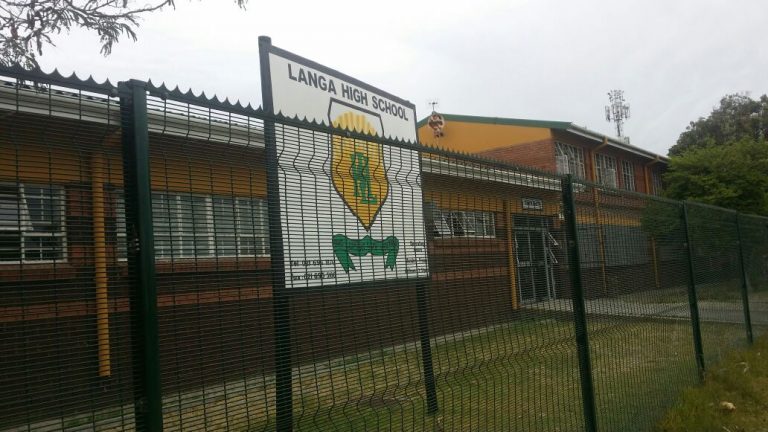
Unflushed toilets threaten children’s health at Langa High School

0

Thuletho Zwane

It is Monday afternoon and the temperature sits at a steady 35 degrees Celsius.

Langa High School is built on white sand. There is uncollected rubbish on the sand and plastic bags fly about as the wind blows. Grime covers the corridors, stairs and windows. Dust enters the mouth and settles on the back of the throat with every spoken word. Gravity pulls harder here in Langa and the sun beats one into submission.

“I had to send some children home early today because they were dehydrated. There is simply no water. There is no water to drink; no water to wash our hands. Nothing. Some of our children are forced to come to school without bathing,” says Luce-Lynn Fondling, a sports coach at the school.

Inside Education is in Langa Township, located 11 km south-east of the centre of Cape Town, to see how the water crisis has affected the students’ well-being and to investigate the impact on learning. The City of Cape Town implemented Level 6 Water Restrictions aimed at reducing water usage in preparation for Day Zero.

Fondling walks us around the school. She takes us to the second floor where the toilets became so filthy and dangerous to students’ health they had to be locked. You can smell the stench from the stairs. When we reach the second floor, we immediately use our hands to cover our mouths and noses, but the dust becomes too much to bear forcing us to cough.

“This is how you get TB [tuberculosis],” says Fondling.

A combination of old urine and faeces smell covers the whole floor. There’s grunge on the toilet walls. There is no door separating us from the latrines, but only a gate, locked to block access to the putrid lavatories.

“We’ve had to supervise how the toilets are being used. They [students] are not allowed to flush. This is not good for my girls. Can you imagine being on your period, using a toilet that can’t be flushed and then not being able to wash your hands after,” says Fondling.

The students can’t flush the toilets because there is no water to flush. This has caused a backlog on the drainage system. When the school does get a little water, it gives it to the students to drink.

The City of Cape Town is aware of these challenges. Premier Helen Zille announced plans to support schools in the event of day zero. In a statement released in January, Zille said the Western Cape Education Department tasked the Department of Transport and Public Works (DTPW) with the installation of reticulation systems to connect all tanks as well as ground water supplies to the school facilities. She said a key priority was to ensure that all schools dependent on the Western Cape Water Supply System had at least water storage facilities which would be plumbed to the reticulation system of the school. In this way, water can at least be tankered to schools to ensure fire security and basic hygiene requirements.

With regards to clearing out the drainage system Zille said a senior city engineer confirmed schools can use sea water for ablution purposes where necessary as a short-term solution.

She said the Western Cape Government would consider sea water in cases where schools cannot access borehole or recycled water for sewage purposes.

However, this has not happened for Langa High School.

Inside Education sent a list of questions to Paddy Attwell, Director of Communication at the Western Cape’s Department of Education. Attwell says the district office is aware of the maintenance issues at the school.

“Our circuit manager is investigating your claims. This includes taking photographs of the areas concerned,” he says.

Attwell says the department allocated more than R170 000 to the school for maintenance and that the toilets were deep cleaned in January 2018 and repainted.

“The school has to manage these resources while also implementing water saving measures. Our information shows the school has experienced the same water pressure issues surrounding the community, especially when the city was repairing pipes in the area,” he says.

The classes next to the abandoned toilets are still in session.

“Health-wise, this is a strain on us teachers and students. We all become uncomfortable because of the smell. The smell from the toilets but also the smell from being forced to come to school unwashed due to there being no water,” says Fondling.

There is one working tap for close to 600 students. It is located at the centre of the school. While there, we see students wash their cups and fill them with water; some students directly drink from the tap placing their mouths on the opening of the tap; others let the water run on their cusped hand and drink. Fondling tells us this is the busiest part of the school when the water is not shut.

“And this very place has been responsible for many communicable diseases,” she says.

In an interview on infectious diseases, Dr Jo Barnes of the Department of Global Health at Stellenbosch University says clean water and the safe disposal of faeces and perishable foods are needed to avoid the outbreak of waterborne diseases in any community. Barnes says the most important factors in determining outbreaks of communicable diseases are the quality and quantity of the water supply in a community, the sanitation facilities and standards, and the quality and cleanliness of food.

Four boys wait to fill one bottle of water at the tap. Their shirts are neatly tucked in. They have on their school jerseys and wear their green and yellow ties with pride. Between them they have one pink bottle filled with water. The bottle is passed from one to the other. They say that when there is no water at the school, or at home, they go to a close by water source to wash their hands. They know the water is dirty but sometimes Langa goes days without water.

“I walk to the squatter camps and there is no water. You will hear them talk of 87 litres and 50 litres but there is no water,” says Fondling.

“We are tired. My students are tired. We all sit there, with all the smells and you expect children to learn. They are tired. How do I teach Life Orientation? How do we teach Chemistry? We must also limit all movement because we are all tired and they have no energy. They are thirsty. There is no food, there is no water,” she says.
Design thinking can make kids see science – and themselves – differently

0

Keneilwe Munyai

One of South Africa’s many complex challenges involves fixing and improving its education system. As part of this, the government has come up with a national strategy for three crucial teaching and learning areas: mathematics, science and technology. The aim is to strengthen how the subjects are taught using curricular methods and learning support materials.

The establishment of science centres for young people is one of many initiatives that it’s hoped will contribute to the strategy. The Inkcubeko youth and science centre in the Southern Cape town of George is one such space. It aims to provide a “safe, supportive learning and play environment for the youth and children of Thembalethu [the area’s largest township] and the greater George area”.

Traditionally, these kinds of projects are designed by architects who barely engage with the people who’ll eventually use the space. Everything from the way the centre looks to the programmes it offers is developed without consulting the end users. This approach neglects the local context and the needs of the people who will actually spend their time in such a centre.

Inkcubeko is funded by the Hasso Plattner Trust, which also established the Hasso Plattner Institute of Design Thinking at the University of Cape Town, where I work. So when it came to creating the new centre, we decided to try something different. We applied design thinking to what it would look like and how it would operate.

This approach encourages critical thinking, creativity, collaboration and empathy. It also means that possible solutions are prototyped and tested with the users – the young people who will spend time playing and learning at Inkcubeko.

What we’ve been able to achieve is powerful evidence that developmental strategies in Africa need to be driven by designing “with”, rather than “for” people. Involving the users from the beginning ensures there is a shared understanding of the problem and that the solution is relevant to the context. This applies whether you’re creating a science centre in South Africa or a community hall in Malawi.

Getting kids thinking about design

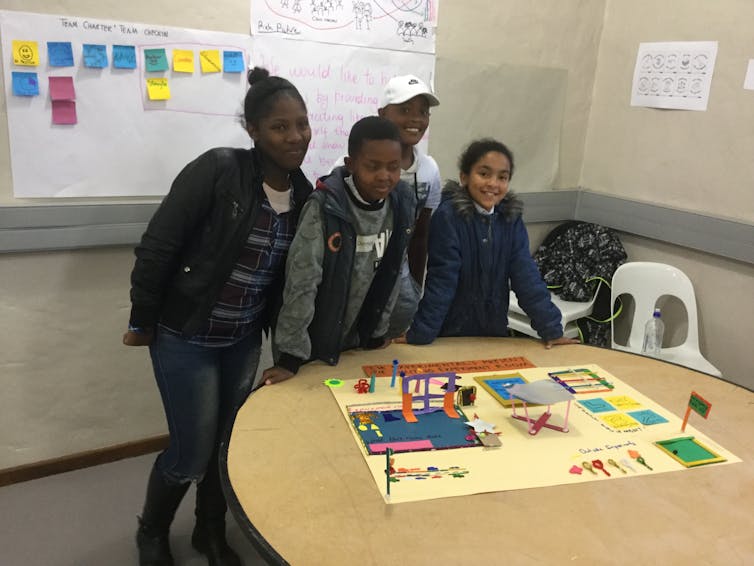
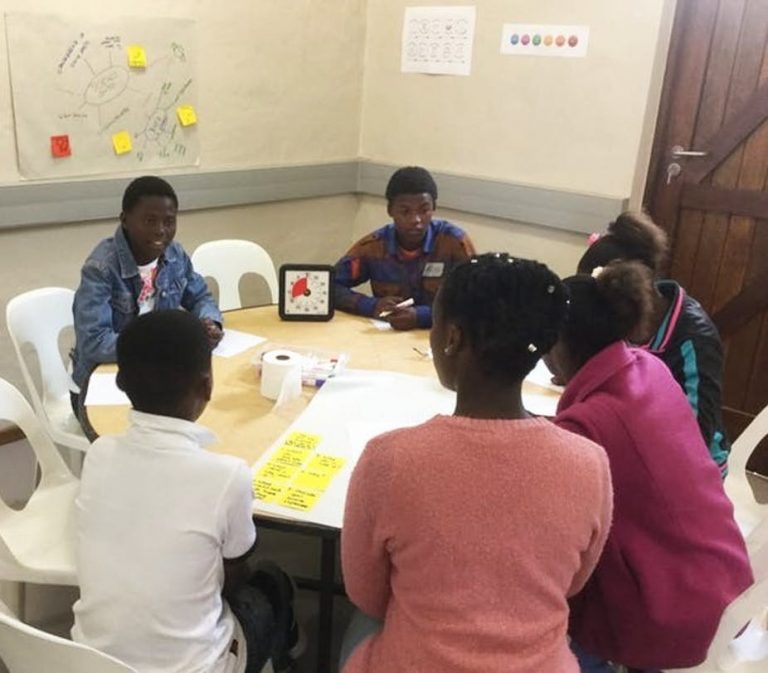
We brought together 117 kids from 16 different schools in Thembalethu and surrounding areas. Their ages ranged from 7 to 18, and we put them in teams of five or six that reflected their diverse backgrounds and the kinds of schools they attend. The project lasted over four days and involved all-day intensive workshops.

Each team created its own charter, which clarified norms and values. It also established basic etiquette for working together, like respect and helping each other. This was developed after each team member had shared what they valued, such as listening to each other and being heard.

Then we assigned different tasks to each team. Ultimately, the idea was for the youngsters to really immerse themselves in imagining what a science centre in their community could look like.

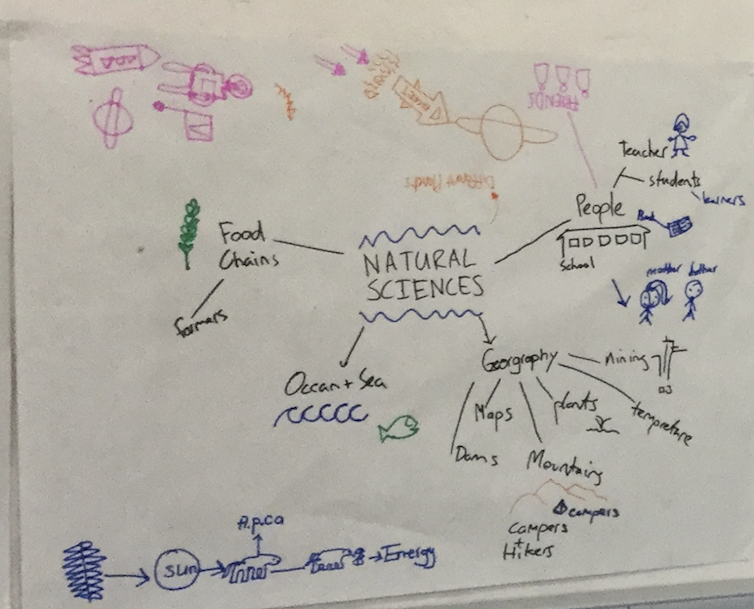
The teams were asked to create a shared understanding of what science is, and what things they associate with science.

Unpacking science.
HPI at UCT

This section proved very interesting. The children surprised themselves: they realised they knew more about science than they thought, and found it exciting to visualise their thoughts and understanding. They also mapped out the stakeholders who operate in the systems in which science exists. This helped us as facilitators to see who they viewed as being important within the science education space.

The children were also asked to interview other young people to gauge their ideas about “science” and what a science centre might look like. The facilitators then helped the teams to make sense of the information they’d gathered so they could identify specific needs. Some of these included wanting to feel safe, wanting to learn more about different aspects of science and wanting to find mentors.

Identifying real needs allowed them to transition from finding problems to finding solutions.

Bringing the centre to life

Now it was time for the children to prototype an idea. Each team developed their own prototype; these will be synthesised by those who will actually run the science centre. In this way, their ideas will be incorporated into the eventual science centre, making it a real community space.

Prototyping is one of the key components of design thinking. It is a simple experimental model of a proposed solution – a way for the teams to make their idea tangible. Some were common to all teams, like ensuring the science centre was a “safe space”. Other ideas included different spaces – one for watching experts conduct science experiments; one for reading; another for watching science videos.

Prototyping different components of the science centre.
HPI at UCT

.The ConversationThe children loved how active all of these workshops were. This kept them engaged throughout the process, and showed how creative teaching and learning strategies – like those exemplified in design thinking – could trigger more interest in science.
Keneilwe Munyai, Programme Manager, University of Cape Town

This article was originally published on The Conversation. Read the original article.

The 18th National Teaching Awards continue to be a source of inspiration to teachers

0

Thabo Mohlala

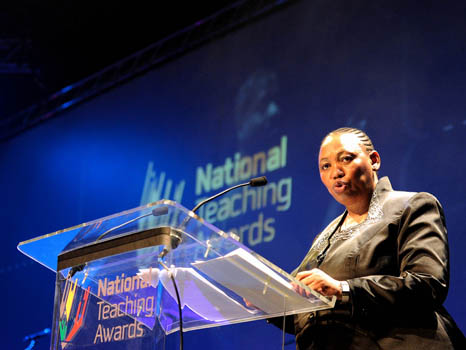
Thousands of teachers filled the Sandton Convention Centre’s Pavillion room on Saturday afternoon to take part in the 18th annual National Teaching Awards (NTAs) festivities.

The NTAs are the equivalent of the Oscars except, in this case, teachers are the stars of the night. Finalists from the 11 awards categories turned up dressed in their finest to celebrate the winners and the teaching profession in general.

The venue was tastefully festooned with an assortment of colours and the lighting also created a matching magical and electric ambience. Teachers were serenaded with soulful music by various school traditional dancing groups, Afro Tenors, and solo opera artists backed by a live orchestra band.

Virtually every speaker who took to the podium heaped praises on teachers and underlining the role they play in guiding and nurturing young minds through their selflessness and passion for education.

SABC recorded the proceedings for later broadcast with a 702 radio personality, Kelebogile Mabotja and SABC2’s Morning Live host, Leanne Manas, compering.  

The event was graced by high profile politicians, dignitaries and education officials including; Basic Education Minister, Angie Motshekga, her Deputy, Enver Surty, Director-General, Mathanzima Mweli; Louise Asmal, Graca Machel, the Nelson Mandela

Foundation, the Sisulu family, OR Tambo Foundation and the Tambo family, Members of the Portfolio Committee and the Select Committee and Gauteng Education MEC, Panyaza Lesufi and his Western Cape counterpart, Debbie Schaffer.

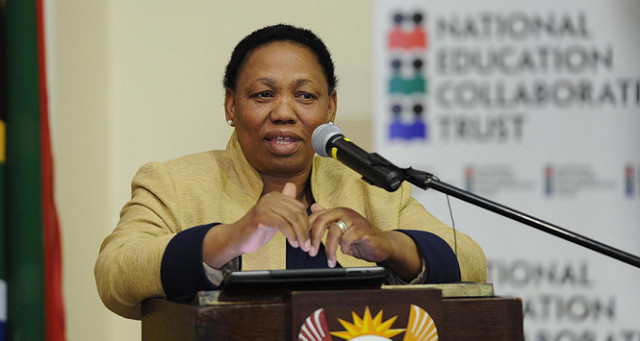
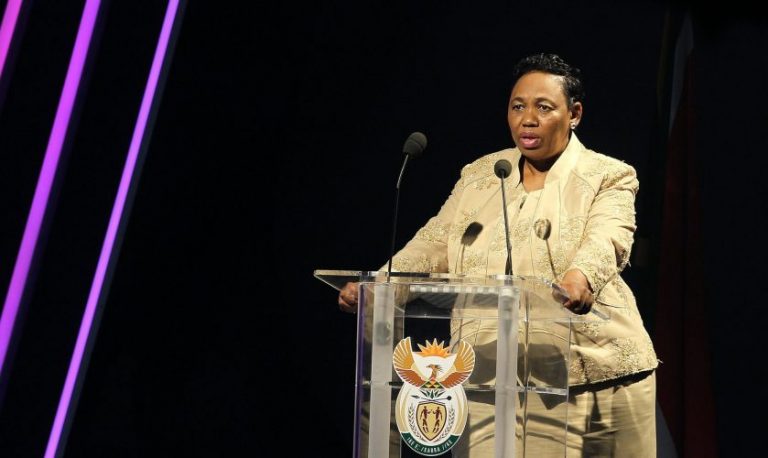
In her welcome address, Minister of Basic Education, Angie Motshekga, noted the fact that the awards “mark an important milestone in the calendar of her department”. Said Motshekga: “Through these awards, we acknowledge and encourage dedicated and caring teachers in their efforts to develop each learner, in the basic education system, to be a true and complete citizen of the democratic, non-racial, non-sexist and prosperous South Africa.”

She said the awards are not a stand-alone project but are an integral part of the department’s named, Teacher Appreciation and Support (TASP), which is aimed at ensuring that the celebration of teachers is not a once off event.

In fact, said Motshekga, the National Teachers’ Awards (NTAs) should be considered as an act of restitution. “Through this prestigious event we pay homage to the men and women whose selfless dedication to the profession of teaching outshines the rest,” said Motshekga, adding teachers are in the frontline of the war against ignorance, poverty and backwardness.

They are the torchbearers of hope and light, continued Motshekga, saying “Without the teaching profession there would be no other profession”.  

Motshekga said teachers are the backbone of any functional democratic society. She applauded teachers for having achieved a lot of milestones despite the huge challenges the country and the basic education system faces. Some of the challenges, include but not limited to, increased levels of poverty, unemployment, violence and abuse of all forms, lack of proper infrastructure especially in rural communities, low morale and societal ills, all of which affect the learning and teaching outcomes in our basic education system.

She told the packed venue that awards take place in the context of the celebrations of the 100th anniversary of the birth of the late Nelson Mandela. “As we confront the challenges of the present we continue to draw lessons and inspiration from his life. We shall use this historic occasion to unite, rebuild and renew the basic education sector, so that it can leapfrog into the 4th Industrial Revolution, said Motshekga.  

She said Mandela dedicated his life to the betterment of the children of South Africa including building “more state-of-the-art schools while President of the Republic of South Africa”.

As we celebrate Madiba’s achievements as a freedom fighter, a leader, a democrat, and the founding father of our modern nation, said Motshekga, we must among others, all agree that basic education is at the heart of building a South African nation build on the principles of Ubuntu and social cohesion; and that the teaching profession plays a pivotal role in building a cohesive society.  We dare not fail, said Motshekga.

Winners of the each category drove away with brand new Renault Kwid cars, courtesy of the O.R. Tambo International Airport. Runners-up also scooped some cash prizes such as ICT training vouchers and ICT packages sponsored by Avob, Future Foundations, SchoolNet, Via Afrika and Vodacom Foundation.

President Ramaphosa lifts country’s dejected mood as he highlights some successes in education

Thabo Mohlala

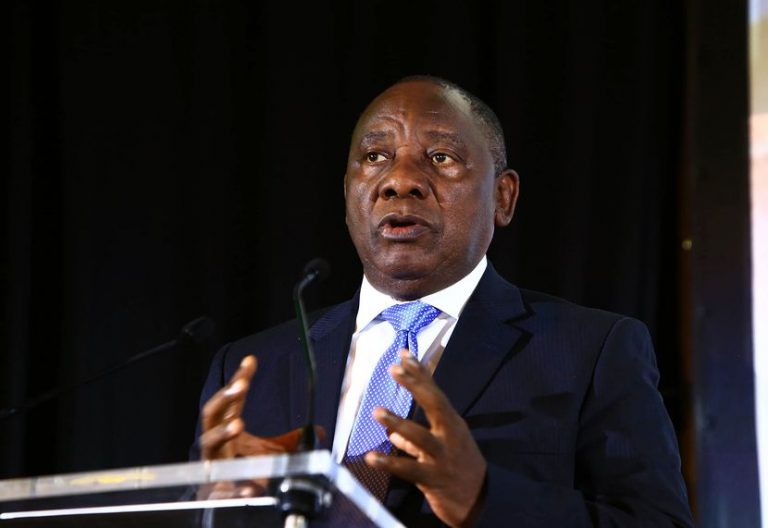
President Cyril Ramaphosa delivered a stirring State of the Nation speech that ticked all the boxes as he promised to deal decisively with corruption, create sustainable jobs, particularly for the youth, and to create policy certainty and consistency to grow the economy by attracting more investors.

Education also got a mention albeit in general terms. It is anticipated that, as part of government’s apex priority, education will still receive more funding when Finance Minister, Malusi Gigaba, delivers his budget speech on Wednesday.

Ramaphosa said education is the most vital tool that can be used to break the back of the widespread poverty in the country. He said currently more than 17 million of social grants are paid each month benefitting nearly a third of our population and also alleviated a great deal of poverty among the people.

But he said one of the effective ways of alleviating poverty was to provide quality Foundation Phase to children from impoverished backgrounds.

“We know, however, that if we were to break the cycle of poverty, we need to educate the children of the poor and we have insisted that this should start in early childhood. Today we have nearly one million children who are participating in Early Childhood Development facilities.

Remarking on the state of the current state of education, Ramaphosa said: “We are seeing improvement in outcomes of our basic education system; the matric pass rate has increased from 60.6% in 2009 to 75.1% last year and that is phenomenal progress,” he said.

He said there were currently almost one million students enrolled in higher education up from 500 000 in 1994.

He re-affirmed government’s commitment to free higher education to deserving poor students. Ramaphosa said the Minister of Higher Education and Training, Hlengiwe Mkhize, will drive the implementation of the funding plan while Gigaba, will provide further clarity next week.

Ramaphosa said the department of basic education will increase the Funza Lushaka Bursary to fund more trainee teachers. Ramaphosa said since the beginning of the year all schools offer African Languages and that the department has also introduced NSC Sign Language for the deaf learners.

Ramaphosa also touched on the significance of technology saying the country needs to keep pace with its counterparts by leveraging the latest available technologies. He undertook to help accelerate the freeing of more spectrums to ensure the country becomes part of the 4th Industrial Revolution. He said he would set up a Digital Industrial Revolution Commission to drive digital revolution.

The department of basic education has already adopted the ICT policy with a view to integrating it into the curriculum. Gauteng and the Western Cape Departments of Education are streets ahead of their peers in revolutionising their classroom through the use of technology.

Members of the Economic Freedom Fighters (EFF), who walked out on Thursday during his swearing-in ceremony, kept to their promise and sat through Ramaphosa without disruption.

He drew murmurs of disapproval from some section of the audience when early in his speech he thanked his discredited predecessor, Jacob Zuma, for his “service to this nation during his term as the President of the Republic”.

He said they have dedicated this year to the memory of the late Nelson Rolihlahla Mandela whose 100 birthday will be celebrated in the next 150 days. He said they “will devote every action, every effort and utterance to the realisation of his vision of a democratic, just and equitable society”. 

“Guided by Madiba’s we will use this year to reinforce our commitment to ethical behaviour as well as ethical leadership,” Ramaphosa said. 

He vowed to deal decisively with corruption.

“We are determined to build a society defined by decency and integrity; that does not tolerate the plunder of public resources nor the theft by corporate criminals of the hard-earned savings of ordinary people”, he said.

Ramaphosa said he would ensure there was policy certainty and consistency, undertaking to take on board the concerns of the various key stakeholders. He said he would introduce raft of measures to prioritise Job Creation. One of these interventions was a convention of a Job Summit that will address the imperative of job creation by involving both labour and business.

In three months’ time, Ramaphosa said, he would organise Investment Conference as well revive the declining manufacturing sector which impacted jobs; would create Special Economic Zones to attract strategic foreign and domestic investment and also build Economic Hubs.  

National Teaching Awards: This profession is the most critical to building society, says Jeff Radebe

0

Bonile Khanyi

Basic Education Minister Angie Motshekga honoured the nations top performing teachers at a gala dinner for the 18th Annual National Teaching Awards (NTAs) at the Sandton Convention Centre in Gauteng.

On behalf of President Cyril Ramaphosa, Minister in the Presidency Jeff Radebe delivered the keynote address at the prestigious event highlighting the important role teachers play in developing a society.

“Teaching is arguably the most critical profession in our endeavour to build a new society,” said Radebe.

“In a normative sense, we all know that teaching is a profession, but those who take the plunge and train as teachers, are actually answering a higher calling to bring light to the nation,” Radebe said. 

He said the contribution of teachers was “immeasurable” and urged the teachers honoured at the NTAs to continue working hard in building the nation.

“I urge all the school leaders to continue working hard through encouraging, recruiting, training, and retaining new teachers by acting as good examples to the new generation,” said Radebe.

“At the same time, how we recognise, honour, and show respect for our experienced educators will reaffirm teaching as a profession of nation-builders and social leaders dedicated to our highest ideals.”

Among the winners, was Ms Mokhudu Machaba from Nganamago Primary School in Limpopo, who won the Excellence in Primary Teaching.

Speaking to Inside Education at the event, the Primary school teacher said she felt overwhelmed with joy and dedicated her award to her learners and her community back home.

I love working with children and as a girl child, it was not easy for me going to school so I really do my best for the learners out there because I know what it feels like not to get an education,” said Machaba.

“This award goes back to my learners and my community.”

Education looks set to score big under Ramaphosa’s presidency

1

Thabo Mohlala

Despite attaining high social status Matamela Cyril Ramaphosa has never turned his back on his humble beginnings. This was the common theme that emerged when people close to the new President of South Africa reflect on his personality.

Teachers at Tshilidzi Primary School where his early education journey started were full of praises for his humility and generosity. They described him as calm, peaceful, eloquent and assertive person and more importantly, as someone who practised to the letter the meaning of “ploughing back in the community”.

“He always passes by when he is around the area. He asks about how things are going, about our school needs and he will make sure he contributes something to the school,” said Agnes Mapila, a grade one teacher at the school.

Tshilidzi’s principal, Thinwanga Takalani, said he asked his predecessors about Ramaphosa and all of them have described him as a respectful learner who took his studies seriously.

“I know him to be a generous person and since I took over here, our school has benefitted a great deal from his generosity. And we are not the only school which benefitted but even most schools across the country have. He has helped build us spanking new classrooms, library, laboratory and an administration block,” said Takalani.

When his Shanduka Group business empire burgeoned, Ramaphosa launched the Shanduka Foundation to carry out its corporate social investments. And he identified education as one of the key focus areas by setting up by a Cyril Ramaphosa Education Trust. Other initiatives that he established as part of his community investment project include Black Umbrellas and Shanduka Internships all formed to cater for disadvantaged segments of the community.

In 2011 the Cyril Ramaphosa Foundation joined forces with Kagiso Trust which boasts an established track record of community involvement, particularly in the education space. The two organisations formed a new bespoke group called Kagiso Shanduka Trust (KST) after they noticed their shared vision and passion on how to help improve the quality of the education system specifically in black communities.

What drew the organisation even closer was the realisation that by pooling their resources they can have greater impact and reach more schools that are in dire need of basic facilities. They adopted a Whole School Development model, which aims to address a whole range of challenges schools face instead of singling out a specific one.

Research conducted by various NGOs including the department of basic education has shown that lack of resources such as proper classrooms, basic infrastructures such as ablution facilities, laboratories and libraries have a direct negative effect on the overall academic performance of the learners. The new model adopted by KST looks at a range of interventions at impoverished schools by working closely with districts.

The programme was first implemented in 2013 in the Free State where KST works closely with the provincial education department and targeted 428 schools in the Fezile Dabi and Motheo districts.

Last month three schools based in the Fezile Dabi district in the Free State yesterday scored big following their good performance in the 2017 grade 12 results. They have each been rewarded with renovated science and computer laboratories.

This is part of the KST’s “Incentivised Infrastructure Award” awarded to schools that have attained or exceeded 90% pass rate benchmark in the province.

Recent outstanding matric results which catapulted the Free State to the number one spot nationally is attributed to the partnership between the education MEC, Tate Makgoe and the KST. Tate heaped praise on the Fezile Dabi as one of the districts that have contributed more passes and thus helped put the province on the pole position.

Better literacy can help improve performance in maths and science, says expert

0

Thabo Mohlala

Most learners fail maths and science primarily because of the academic language in which the subjects are written and taught. This is according to Catherine Snow, a Distinguished Visiting Professor and Harvard Graduate School of Education.

Professor Snow was delivering a public lecture this week at the University of Johannesburg (UJ) in Auckland Park on the importance of reading competence for learning science and maths and other school subjects. The lecture was titled: Improving Literacy by Focusing on Science and Social Studies.

Professor Snow said academic language is designed to use sophisticated and complex grammar that is likely to present a serious barrier to learning and comprehension. She said learners need assistance to navigate this challenge and how to master the academic vocabulary as well as process difficult concepts used in the subjects.

“A major challenge to students learning science is the academic language in which it is written. Academic language is designed to be concise, precise and authoritative. To achieve these goals, it uses sophisticated words and complex grammatical constructions that can disrupt reading comprehension and block learning. Students need help in learning the academic vocabulary and how to process academic language if they are to become independent learners of science,” Snow said. 

If learners, said Snow, struggle to read they will most probably find it difficult to learn science and mathematics in primary school when they are expected to work from textbooks, worksheets and technology-driven devices.

South African learners perform badly at the global benchmark tests notably Trends in International Mathematics and Science Study (TIMMS), compared to their counterparts in developing countries. The Human Sciences and Research Council noted that in the last TIMMS test written in 2015, “the proportion of the South African learners who attained ‘intermediate’, ‘high’, or ‘advanced international benchmark levels is worryingly low”.

It also noted, however, that 54% of Singaporean grade eight mathematics learners achieved an advanced level, a very high value compared to 1% of South Africa. The observation echoes the fact most experts have consistently highlighted that countries whose learners perform well in maths and science use mother tongue as a medium of instruction at lower grades of their education system.

Professor Snow is a member of the research team under the leadership of another decorated academic, Professor Elizabeth Henning, who holds the South African Research Chair in Integrated Studies of Learning Language, Mathematics and Science in the Primary School at UJ. 

The research team is looking at developing reading tests in which the vocabulary of science and mathematics will feature prominently. The tests will be in English and will use the terminology of the science and maths school curriculum

The research community, according to Professor Henning, needs to know much more about how the English language is learned and used as a medium of study in school – specifically from grades 4 to 7.

She said: “The majority of our learners at primary school don’t speak English at home. They go to school and are confronted with new concepts in mathematics and science in the English language, which may be their second or third language.

“Therefore, for many children, not only the concepts are new, but also the words and the sentence structure of English. The goal is for learners to understand textbooks, worksheets and apps. Children cannot infer meaning from the text if they do not have some basic vocabulary and some sense of word order and typical phrases in the English language.”


National Teaching Awards give the teaching profession respect and recognition

0

Thabo Mohlala

The National Teaching Awards (NTA) have become a significant and memorable event on the calendar of the department of basic education (DBE). They represent the single most gesture through which the DBE expresses its gratitude to educators who displayed passion, commitment and selflessness to the teaching profession.

In one of her past welcoming speeches, basic education Minister, Angie Motshekga, described teachers as the vital cogs in the wheel of transformation. She said in an ideal world, teachers should be accorded universal respect in recognition of the fundamental role they play not only as educators but also as nurturers and agents of change.

“The awards are one of the essential instruments we have employed both to incentivise teachers and to impress among the people, with the people, consciousness of the educators’ role in the production of skills and knowledge,” Motshekga said.

According to the DBE the main objectives of the awards are to:

  • Focus public attention on the positive aspects of Basic Education, thereby raising the public image of the teaching profession;
  • Recognise and promote excellence in teaching performance;
  • Honour dedicated creative and effective teachers and schools;
  • Encourage best practice in schools; and
  • Afford South Africans the opportunity to publicly say thank you to all outstanding teams or individual teachers in schools.

Pioneered in 2000 by the late Professor Kader Asmal, the awards have also grown markedly given that in the beginning, they used to be held in small and crowded venues drawing crowds of no fewer than 500. But the numbers have grown phenomenally and nowadays the awards attract 1000 and more guests in bigger and prestigious venues.

The awards also generate excitement and healthy competition among teachers and schools prompting them to work hard and produce excellent academic results.

Since their inception, the awards have gone through several innovations and changes to enhance their quality and accommodate more deserving teachers. Winners of some of the big categories also walk away with grand and fabulous prizes such as brand new car attesting to the phenomenal growth in stature of the awards.

In 2016, Motshekga announced that the 2017 Lifetime Achievement Award will be known as the Nelson Mandela Lifetime Achievement Award. A new criterion has since been developed to align and reflect the values and attributes of Nelson Mandela.

Perhaps the biggest coup for the organisers of the awards was securing a deal with the national broadcaster to beam the awards live during prime time to millions of SABC2 viewers.

To add gravitas to the events, the country’s heads of state are invited to deliver keynote address to the finalists. Government also uses this platform to highlight its commitment to education as one of its apex priorities.

Metrorail is failing us, say school children who miss classes daily

0

Tariro Washinyira

Cape Town learners are missing school lessons daily because of problems with trains. But there’s no “quick fix”, says Metrorail.

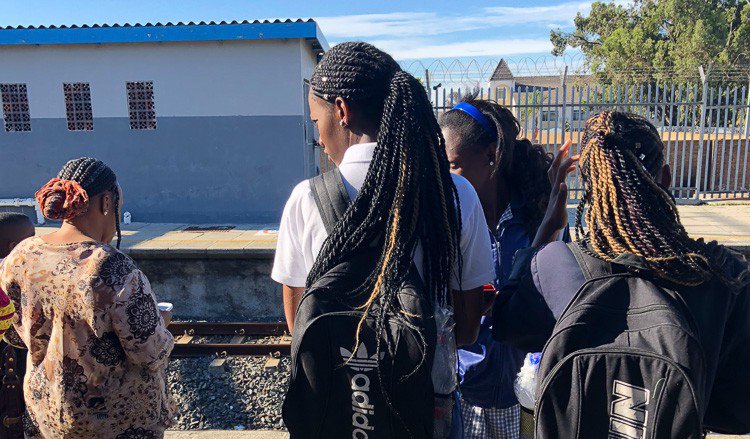
On the Northern line at Parow station learners wait from 6:30am to get to schools in Maitland, Salt River, Cape Town and the southern suburbs. They are often late. Trains are cancelled, delayed and often stop between stations. Sometimes when the trains come after a delay the carriages are so full that the children are unable to board.

Questioned by GroundUp on Tuesday, four learners from Salt River High School said most of the time they missed at least the first two periods of their school day. They had to borrow other learners’ books to copy work they missed. On Tuesday, they arrived at Salt River at 9:30am though they had been waiting for a train since 7am.

A grade 8 learner said she was scared to go to her teachers to ask questions on the subjects she missed. She said the teachers seemed not to understand the problems with the trains. Learners were scolded for being late and sent to detention in the afternoons after school.

A grade 12 learner said she had been late for school every day of last week.

She said she did not feel safe on the train and had seen people being robbed.

“My parents are concerned about the way trains have been operating on the Northern line but we do not have a choice. Trains are affordable. I pay R150 for the whole month for a train ticket as compared to a taxi fare of R13 daily per trip.”

“My parents can’t afford busses or taxis. I am also embarrassed that as Head Girl I need to be exemplary but I am doing the opposite… all because of the trains. Metrorail have let us down.”

When GroundUp took the Northern Line from Salt River on Tuesday afternoon there were people drinking, playing cards and smoking marijuana. There were no security guards or police to be seen.

Commuters using the Century City line and the Southern line also complained about bad service.

GroundUp asked Metrorail spokesperson Riana Scott if Metrorail was fixing problems on the Northern, Southern and Century City lines. (The train service on the Central line is suspended.)

Scott answered: “Western Cape is operating at 60% capacity having lost 101 carriages to arson and vandalism since October 2015. As a result punctuality and reliability have declined, forcing many desperate commuters to spill into MetroPlus carriages. The region has only 54 train-sets to service a timetable designed for 84 train-sets hence the many cancellations”.

“There is no quick fix to repair a system left to deteriorate over 50 years.”

Scott said R172 billion had been allocated to modernise the entire rail system over 20 years. New trains for Cape Town were expected by 2019-2020.

“We have recognised that trip durations are longer due to safe operational alternatives that have to be instituted,” she said.

“Like motorists, train users will unfortunately have to rise earlier to get to work/school on time.”

On security, Scott said Metrorail was collaborating with police. “Police/security cannot be everywhere at once – instead they are posted according to predetermined priority areas,” she said.

Noncedo Madubedube of Equal Education (EE) Western Cape and Sinekhaya Mbengo (EE City Bowl) say the organisation is collecting testimonies from learners. “What we can say from engaging with learners is that there are a lot of learners affected. This becomes a financial burden for their families because trains are the cheapest and most convenient mode of transport.”

“Metrorail does not seem to have adequate security personnel which means learners travelling too early or late because there aren’t enough trains running can be robbed and assaulted while waiting for trains.”

“Learners also get home late and are unable to effectively do their homework and catch up on missed class time.”

Published originally on GroundUp.

Afrikaans-speaking parents threaten to close school

0

Joseph Chirume

On Monday, about 80 disgruntled parents, learners and community members attempted to close Sandisulwazi Secondary School in Paterson, Eastern Cape. The protesters are demanding a teacher to teach Afrikaans as a subject.

Sandisulwazi has nine teachers, eight of whom are Xhosa-speaking and one English-speaking. There are 303 learners at the school, 65 of whom are Afrikaans-speaking.

Police arrived and the principal locked the gates to keep the protesters outside of the school grounds. The protest was peaceful with demonstrators singing and waving placards.

Isaac van Louw, a member of the School Governing Board (SGB), said, “There is no Afrikaans teacher since last May. We have held talks with the Department of Education on six occasions. Sadly, the talks have yielded nothing. It’s only promises and promises.”

He said the parents were going “to close the school so as to create an equal playing field for all learners.”

SGB chairman Alfred Salters said Afrikaans-speaking learners who wrote matric last year had failed because there had been no Afrikaans teacher. “We had a total of 121 Afrikaans-speaking children attending the school last year, but at present we are left with 65.”

Salters said people had sent their kids to schools in Port Elizabeth and Uitenhage, but many parents could afford the boarding fees at those schools.

Irene Billet, a parent, said, “We want the former principal back because he doubled as an Afrikaans teacher. Since he left last May, the school has been dogged by mismanagement and victimisation of the Afrikaans-speaking learners.”

Grade 12 learner Aloma Gouza said, “We are only four Afrikaans-speaking learners in my grade. We sit in an empty classroom when it is time for Afrikaans lesson. Our education system demands that learners have to pass their mother tongue language in order to proceed. I don’t see this happening.”

Ridley Cupino, who is repeating grade 11 after he failed Afrikaans, said, “I am very angry … It is discouraging that the conditions that made me fail last year are still the same … We play rugby when it’s time for Afrikaans lessons.”

Eastern Cape Department of Education spokesperson Mali Mtima said the department was aware of the situation. “We are talking with some retired educators to come out of retirement and assist us. We had the same problem with Sotho and Agriculture, but it was solved. We have students who are training in the Afrikaans language at colleges but they are not yet qualified to teach.”

“We are not giving parents and learners at Sandisulwazi School a timeline but we are hoping the problem will be resolved. We are also appealing to parents not to close the school.”

Published originally on GroundUp.