Home Blog Page 533

Matric results given the green light

0

Ido Lekota

Quality assurer uMalusi is delighted that there has been a steady improvement in the marks obtained by the matric class of 2017 for Mathematics‚ Mathematical Literacy‚ Physical Science and Life Sciences.

Over 800 000 candidates are awaiting the release of their matriculations results expected to be released by the Department of Basic Education on 5 January. This class of 2017 is the fourth cohort to write final examinations under the Curriculum Assessment Policy Statements (CAPS) introduced in 2013.

UMalusi has also revealed that 104 001 learners who sat the 2017 Matriculations examinations have been progress compared to the 108 942 progressed in 2016.

UMalusi Council chairperson John Volmink said this positive improvement in these key subjects could be attributed to a number of factors such as the learner support provided by the Department of Basic Education in the 11 high enrollment subjects‚ support for progressed learners and support for top achievers.

Volmink has also described this year’s matric examinations as being “incident free “adding that there was also a marked improvement in the quality of the question papers.

The progression of learners is department of Basic Education policy in terms of which learners who have failed grade 11 twice are promoted to Grade 12. This is to ensure that such learners are not kicked out of the school system without any official qualification.

There has previously been criticism that this amounted to promotion of learners who lacked the intellectual capacity to do well in matric.

However uMalusi spokesperson Lucky Ditaunyane has dismissed such criticism arguing that there is evidence that the Department of Basic Education has support mechanisms in place which have previously seen some of the progressed learners obtaining bachelor’s degree passes – i.e – a pass allowing tostudy for a university degree.

Ditaunyane has also shot down the questions raised by the Democratic Alliance about uMalusi’s upward adjustment of 16 matric subject written this year.

Umalusi revealed on Friday that of the 58 subjects written this year, 20 had their marks adjusted – 16 upwards and 4 downwards.

“The adjustment of marks is part of standardisation process which mitigates against any factors that may have affected the learners performance, such as, the difficulty in the question paper, the learner misunderstanding the question, or a questions that may favour a group of learners to the disadvantage of others ( e.g rural vs urban). Adjusting the marks does not necessarily mean there is something wrong with marks”, he explained.

The DA claims that the continuing upward adjustments suggested there was a very serious problem somewhere in the schooling system that must be identified and addressed‚ particularly as it was a trend over a number of years.

“Until the DBE admits that there is a problem‚ no steps can be taken to identify and solve it. Sticking our head in the sand won’t improve the quality of the basic education our learners receive‚” added DA shadow deputy minister of basic education Nomsa Marchesi

Ditaunyane has questioned the DA’s bona-fides in questioning the quality of the matric results. This because the DA has accepted the non-adjusted marks of 38 subjects – which is over 55% of the total written subjects.



We welcome free education but we’re sceptical: Wits, UCT and UKZN SRCs

Bonile Khanyi

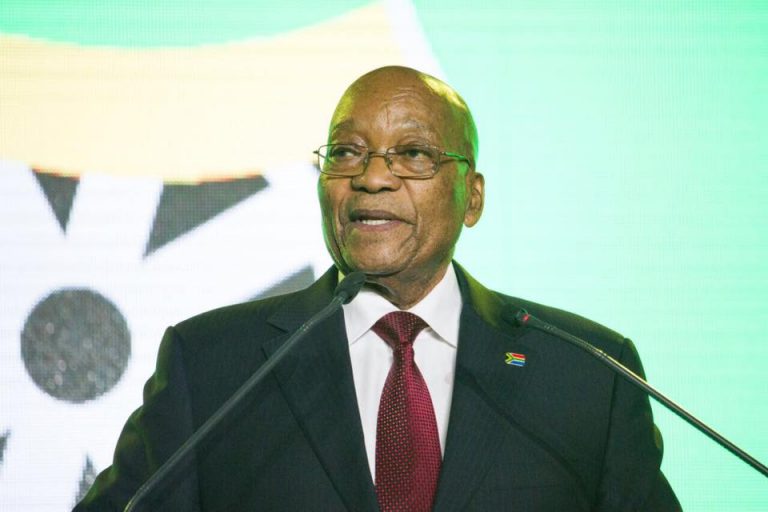
President Jacob Zuma’s announcement for free higher education has elicited mixed reactions among student activists from various institutions in South Africa.

Speaking to Inside Education, Wits Student Representative Council (SRC) President Oridiretse Masebe said he was sceptical about the real will of the ruling party to implement the free higher education model that they’ve announced.

“We are very sceptical, because of the experience we’ve had with government. The ANC has always said they are for free education but they’ve never really sat down and presented a model on how their going to fund this model,” said Masebe.

Masebe said students weren’t sure who exactly the proposal made by the president would cater for.

“For example, we’re not clear on whether or not this model will cater for all students or it will only cater for first year students who are going to be entering the tertiary system in 2018,” he said.

Masebe also said it was unclear whether this intervention would assist those with historical debt.

In his announcement on Saturday Zuma said that all first-year students from poor and working-class background with a combined annual income of less than R350 000 would qualify for free tertiary education and said that deserving students will be funded and supported through government grants, not loans.

“All poor and working class South African students enrolled at public technical and vocational education and training (TVET) colleges will be funded through grants not loans,” Zuma said.

Masebe said that despite the uncertainty, the Wits SRC would engage with the university’s management to prepare its systems to allow for a smooth sailing process if and when the model kicks in next year.

“All that we’re doing now is that we are engaging the university, we’re trying to make sure that if and when it happens, the systems that the university have are positioned to best serve that process if it will ever be introduced.”

Zuma’s announcement was also denounced as nothing more but “something that’s been extremely reckless” by SRC President at the University of Cape Town’s (UCT’s) Karabo Khakhau.

“The President’s announcement towards free education is something that’s been extremely reckless, because of it being un-costed.”

Khakhau warned the President to stop making empty promises, and said he feared his plan would not materialise.  

“We’re entering into 2018 and students will be required to register, what happens when the model doesn’t kick in at the right time and how does one make a promise to the South African youth without a proper execution?” Khakhau asked.

Also speaking to Inside Education, the Central SRC President at the University of Kwa-Zulu Natal Sandile Zondi said that they welcome the President’s announcement, but also questioned the funding model.

“We welcome the announcement, but the President must provide clarity on a lot of issues regarding his plans for free higher education for students from poor and middle glass backgrounds,” said Zondi.

“For instance, what about students who incurred debt during their first year and those whose results are with-held by the university because they still owing the university?” he said.

“A f**king ka**ir stole my phone”: Racist students expelled from University of Pretoria for two years

Bonile Khanyi

The two University of Pretoria (UP) students who were seen saying “A f**king ka**ir stole my phone” on camera, have been expelled from the university for two years.

The students, Bodene Benade and Catherine Reynders, both in their final year of university, were suspended at the end of October when Benade accidentally shared a video of the two repeatedly using the racial slur: ka**ir. 

In a statement to Inside EducationUP spokesperson, Jocelyn Newmarch said the students were expelled after an investigation. 

“They will need to re-apply if at any point they wish to study at UP in the future. Admission is not a given but will depend on the academic criteria laid down by the relevant faculty at the time,” said Newmarch.

Newmarch also said as both students were in their final year, they would not be allowed to attend their graduation ceremonies or to enrol for their honours degrees or the equivalents in 2018. Inside Education has requested clarity on whether the students will receive their degree certificates.

“The University will not provide them with a Certificate of Good Conduct during the time of their suspension if they wish to transfer to another university. Whether they will be entitled to such a certificate beyond this time period will be determined by the University should they submit an application,” said Newmarch.

For the physiotherapy student Benade, however, an honours would not be the next step in her career. She needs to get a recommendation from the university that will allow her to enrol for community service work with the Department of Health.

While the university said it will not give the students their certificates of good conduct, it is unclear whether Benade will get her recommendation from the university. Follow-up questions requesting clarity on the matter were unanswered at the time of publication and this story will be updated if Inside Education receives a response.

Newmarch said if the students wished to be re-admitted, they would have to re-apply to the university after a year, and the second year of expulsion would be suspended for the duration of their studies on condition of good behaviour.

“If the students in future act in any manner that can be construed as racist or acting in a manner that brings the University into disrepute, the University can execute the suspended part of the disciplinary sanction.”

In the short video that went viral on social media, one of the students shouted: “a f*****g k****r stole my phone” into the camera and then the second added: “did you hear that? A f*****g k****r stole her phone”.

At the time of the video going viral, the university condemned the actions of the students.

It also caused massive outrage on social media with students calling on the university’s management to take immediate action.

Reynders lost her bursary from the Ramaphosa Trust in October.

Ebrahim Patel stresses importance of economic inclusion

0

Bonile Khanyi

Minister of Economic Development Ebrahim Patel said South Africa must achieve a more inclusive economy as it is very critical to our country’s success.

Patel was addressing business leaders at the Progressive Business Forum breakfast briefing, on the sidelines of the 54th ANC national conference in Nasrec, Johannesburg.

“We’ve got to increase the rate of growth; the economy is not growing fast enough and even though we’ve avoided a deep and damaging recession this year our growth rate continues to be below that of population growth,” said Patel.

“We need to at least achieve a growth rate higher than population growth so that every South African can grow more prosperous and better off each year as the economy grows in a more inclusive way.”

During his presentation, the minister reflected on the global economy, its growth and the impact it has in South Africa.

“Global growth has picked up slightly over the last period. For this year global growth is projected to be about 3.5 percent and for next year its projected at 3.7 percent. It’s what the international monetary fund chief economist calls a firming recovery,” said Patel.

“If you recall growth rates before the economic crisis they were significantly higher than 3.5 percent. The global crisis essentially brought down possibly the structural rate of global growth. And it matters to our economy because we particularly trade exposed.”

He also outlined the economic situation in the country as well as the challenges of low growth and high levels of youth unemployment, among other things.

“We’ve had the modest economic growth, earlier this year the economy went into a technical recession and it emerged from that recession but whilst growth has recovered somewhat in the last quarter we’ve seen two percent growth per quarter principally off the back of much agricultural performance,” said Patel.

“Our growth rate remains below the level that South Africa needs to be able to create more jobs and ensure greater economic inclusion and we have high levels on unemployment even though we’ve grown the number of jobs, sometimes quite robustly.

Patel said this calls for an increased growth of employment levels at a much higher rate than most countries in the world.

“Since the global economic crisis, the economy has added 2.5 million additional jobs but at the same time, the number of young people looking for work has increased. That means that we need to grow our employment levels at a much higher rate than most countries in the world,” said Patel.

He said despite the huge progress our country has made, South Africa also faces huge challenges.

“We have a lot going for us, we have a lot of challenges, and that’s the complexity of the modern South Africa. Huge progress and big challenges,” he said.

Patel said that there are four things our economy needs to do, to drive further progress.

“We need to have a credible growth story that identifies the sectors of the economy where we can grow fast and where we can create jobs on scale, and do this in a very practical way,” he said.

“We need to transform the economy and by transformation, it means bringing young people, the energy of any nation, into the economy in larger numbers. Ensuring that black South Africans are part of the economy, not only for equity purposes but also because there is a compelling, economic advantage to expanding the talent pool of the economy to cover every South African.

“It means addressing the governance challenge that we have in state-owned companies and in the private sector. Dealing with corruption and state capture, we must talk openly about these things and deal with issues of corporate collusion.

“The challenge I think is impressed so starkly that we sit today with a storyline that we can change. A storyline on the one hand points to state institutions that are currently under investigation for probity issues, for whether they have ensured integrity in tender processes and how they deal with the private sector. Issues of state capture are important.

“And then finally, the issue of partnerships, getting South Africans, business, labour and government to work together to achieve higher levels of growth.”

Calls for a recount shake up the ANC’s 54th elective conference

0

Thabo Mohlala
A spanner has been thrown into the works at the ANC’s 54th elective conference following a dispute related to voters who were unaccounted for when the results were announced last night.

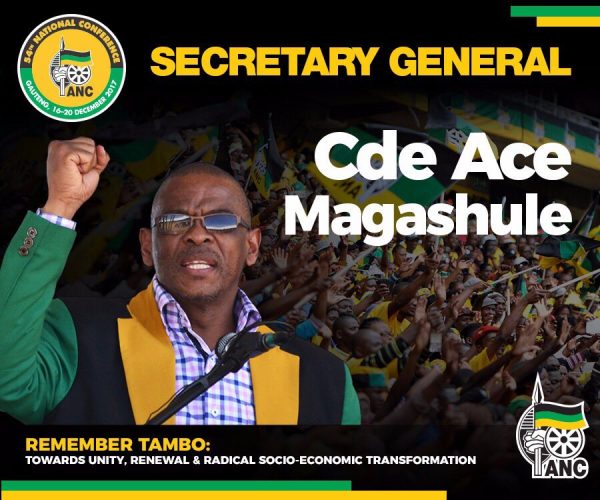
Delegates were expected to continue with the elections of members of the National Executive Committee (NEC) but it has emerged that Cyril Ramaphosa’s camp has raised objections about 68 voters who did not vote across the board but could potentially impact the results of the Secretary-General position, which pitted Senzo Mchunu against Ace Magashule. Magashule pipped his rival, Senzo Mchunu, by a slender margin of 24 votes.

The conference’s Steering Committee is currently locked in a meeting to resolve the conundrum.

Observers said this is likely to revive the tensions that characterised most of the conference before the poll results yesterday. But Supra Mahumapelo, North West provincial chairperson, warned that the delegates are taking a “slippery road” by entertaining the call to recount the votes asking why it should apply to one position. He said if they allow the recount the same should apply for all positions, not just the party’s top administrative post.

It is believed that the Steering Committee would have to report to plenary and this is where it is feared that things may get out of hands. This brings into question whether the conference would get to discuss policy issues – another crucial component of the conference – when it wraps up tomorrow.

Markets respond positively to a Cyril Ramaphosa win

0

Thabo Mohlala

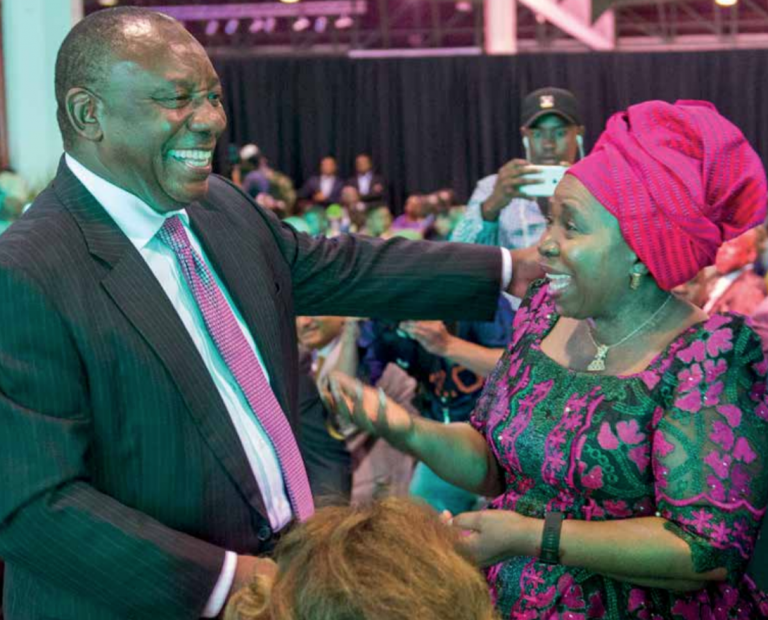
The announcement of Cyril Ramaphosa as the new president of the ANC not only sent his supporters in delirious excitement but also saw the markets reacting positively. There has always been a concern among the local business community and the global financial investors and markets about who will ascend the top post of the oldest liberation movement.

Standard Bank released the results of a study it commissioned recently and whose results heralded Nkosazana Dlamini-Zuma’s victory as bad for the country that needed urgent economic growth. Similarly, the report said if Ramaphosa wins the ANC presidency, this will represent a positive and necessary development because of his business friendly “New Deal’ campaign manifesto and his understanding of how markets operate.

Markets observers said the rand has firmed to the strongest level against the dollar in more than three months while bond yields fell and bank stocks surged to a record because traders bet on Ramaphosa’s victory. According to analysts this was a gamble for the traders considering the results were still not known then.

And after Ramaphosa was confirmed as the new mandarin of ANC, the rand moved significantly to firmer territory notching almost 4% against the US dollar to R12.55. Market analysts said the last time the rand hits such strong levels was in early September and this impacted positively on the bonds as well. Other reports indicated that the South African sovereign dollar bonds gained as much as 1.2 cents after the news of Ramaphosa’s win.

Ramaphosa is a trained lawyers and a chief architect of the powerful mining trade union juggernaut, National Union of Mineworkers. He retired from politics – amid speculations that he felt snubbed to take senior leadership position in government by the Mbeki administration – to concentrate on his business interests which saw him become one of the wealthiest black business men. He has pledged that under his leadership he will resuscitate the country’s ailing economy and tackle the rampant corruption that stymied the state’s ability to deliver basic services to the poor.

Goolam Ballim, Standard Bank Economist was quoted as saying: “In the essence, after [the country’s economy] having been adrift for a decade and after having growth slump for many years, it is now the expectation that with Cyril Ramaphosa at the helm, growth will be reinvigorated.”

Ramaphosa’s immediate task is to reassure the jittery markets and sceptical investors that South Africa is still an investment haven. More significantly, he would have to ensure he introduces credible stimulus measures to steers the ship from hitting another possible downgrade iceberg. Moody is the only rating agency that has put South African under review while both S&P and Fitch have already downgraded the country to sub-investment status.

Manik Narain, a strategist at UBS, told Moneyweb that: “Markets are taking the view that ratings downgrades in late February to early March, when the Moody’s review is due, may not happen, at least at that review, and there is a greater chance of political reforms as Ramaphosa does have a strong market track record.”

But other key global investors held back at the excitement that greeted Ramaphosa’s election to being Luthuli House new head honcho. While they sounded positive and see his elevation to the top position as a significant development, they say he is not panacea to the deep economic crisis South Africa was plunged into by the inept Jacob Zuma administration. They still harbour fears that with Zuma still hovering around he may prove to be a stumbling to Ramaphosa’s efforts to fix the economy.

Moneyweb sampled the views of some of the top market investors who are all agreed there is great potential things can change for better under Ramaphosa’s helm.

“Financial markets probably would anticipate Moody’s holding off on a ratings downgrade in March next year. If the election results in a mixed slate with the top six new ANC leaders drawn from both the modernist and traditionalist camps, such expectations could be muted or indeed absent,” said Said Sonja Keller, strategist at JPMorgan, Johannesburg.

Burkhard Varnholt, deputy chief investment officer of Credit Suisse Group AG, Zurich, said there is a need to “re-install a strong and credible finance minister and monetary policy”. He said: “those were always the hallmarks of South Africa’s economic policy. South Africa has certainly lost a lot of its punching power in recent years under the Zuma government, and most of that is most probably behind us.”

Added Nigel Rendell, a senior analyst at Medley Global Advisors, London: “He’s not the answer to all of South Africa’s problems. The government needs to reverse corruption that has impacted the nation over the past 10 years.”

Business Leadership South Africa (BLSA) congratulated Ramaphosa and called upon his new leadership to prioritise the task of dealing with inequality, unemployment and poverty in the country.

It called for a stable policy and regulatory environment that would boost the economic growth and foster inclusive economy that creates sustainable jobs. In its statement, the business body called for a “focused, ethical and moral leadership” from the ANC and a commitment to defeat the state capture and corruption in both the private and public sectors.  BLSA said “when the economy is strong, South Africa is strong. When business does well, society does well too”.  

Said BLSA’s chief executive, Bonang Mohale: “Our call is a simple one: we cannot shatter the hopes of millions of South Africans. Government, business and civil society must work hard together to fundamentally change South Africa from a land in which the majority still live with little hope to one in which they can now live and work with dignity, with a renewed sense of self-esteem and confidence in the future.”

Mohale said the business community under the aegis of BLSA is committed to work with Ramaphosa’s leadership. He said they undertake to work towards “faster, inclusive growth, transformation of our workplaces, growth of small business and, most importantly, job creation – especially amongst our youth”, as set out in their ‘Contract’ with South Africa.


7 stand-out quotes from Gwede Mantashe’s last press briefing as SG

2

Inside Education Reporter

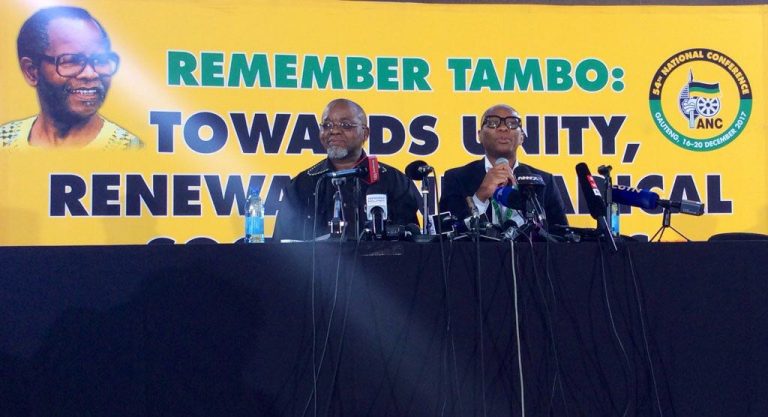
Outgoing African National Congress (ANC) secretary-general Gwede Mantashe addressed journalists for the last time at the ANC National Conference in Nasrec on Monday morning.

Mantashe sat alongside Zizi Kodwa who also had his last sitting as the ANC’s national spokesperson.

Here are some of Mantashe’s best quotes from the briefing:

1. Mantashe will need a new job soon 

“The main purpose of today’s press is to say thank you very much, goodbye, farewell, I am not going to be secretary general in few hours. When I step out of that conference I will be unemployed, if you want an editor I will be available.”

2. On the negative effect of slate politics

“Slate politics weaken an organisation. Slate politics marginalise good activists. Slate politics make the organisation have a narrow pool to fish for leadership.”

3. On his respect for Jacob Zuma

“You can have all the problems with President Zuma, but you will not have of the ability to talk to the masses of our people. Even when there is problems, if you throw him into a meeting with the masses of the people that changes. And that is a rare gift. Sometimes you can be an intellectual  and lose that aspect of work. Very critical for the ANC.”

4. On state capture 

“The issue of state capture is one issue that continues to divide us but it imposes a responsibility on the leadership of the ANC to engage in that debate. State capture is there, it is facing us, we can hide our head and say it does not exist but it exists.”

5. Advice for new SG

“Talk to journalists. Others are going to irritate you. If you’re getting angry they’re going to provoke you deliberately. Avoid being angry. And that’s the advice I gave the incoming seceretary, I said: If a journalist writes something that is wrong, pick up the phone.”

6. Biggest challenge during tenure

“My biggest challenge is people who do not engage in the organisation take us to court. That is my biggest challenge. I want people to engage the ANC, the ANC must fail to resolve the issue and people must have the right to take us to court.”

7. Government affects ANC and vice versa

“All we are saying is that anything that happens in government impacts directly on the ANC. Whether the ANC is part of it or not.”

Voting is done and counting is underway and analysts maintain that it is too close to make a call on who will take the top spot.

Kodwa declared his support for Deputy President Cyril Ramaphosa earlier.

D-Day for NDZ and Ramaphosa: Who will take the top spot?

0

Inside Education Reporters

Despite efforts by ANC chairpersons from several provinces to broker a deal in a bid to end up with a lesser divisive, uncontested elective conference, several leaders in the ruling party’s top brass forged ahead and accepted nominations to contest for the party’s top six positions.

While voting was delayed shortly after the nominations list was consolidated to allow for ballot papers to be printed,results from the vote that commenced late last night are expected to be announced
today.

With nominations reflecting leadership slates – one headed by Deputy President Cyril Ramaphosa while the other is headed by former African Union (AU)Commission Chair Nkosazana Dlamini-Zuma – it looked like the contestation between the two factions would go down to the wire despite both camps claiming
victory.

For leaders to qualify as nominees for the Presidential post, 25% of the 5000 voting delegates needed to nominate their preferred candidate.

Ramaphosa received 1469 branch nominations from six provinces for the position of President, while his counterpart Dlamini-Zuma was nominated by 1094 delegates across six provinces.

The faction that wants Ramaphosa to succeed outgoing President Jacob Zuma has over the past few months voiced its concern over a possibility of his counterpart Dlamini-Zuma taking over as President.

Despite Dlamini-Zuma’s track record in the public service before being appointed as the Chairperson of the AU, her endorsement by a faction seen to be heavily influenced by the Gupta family – who are faced with allegations of state capture – has seen many within the ANC publicly discrediting her campaign ahead of the elective conference.

Ramaphosa has been seen as a leader who, should he win, would come in and rid the Cabinet of Ministers believed to have been captured by the Gupta family.

The Ramaphosa faction has been circulating a slate of its preferred top six plus 80 NEC members over the weekend.

The slate consists of a mix of veteran ANC leaders like former Deputy President Kgalema Motlanthe, sacked former Finance Ministers Pravin Gordhan and Nhlanha Nene and Gauteng Education MEC Panyaza Lesufi, among others.

For the position of Deputy President, three candidates received the nod from branches.

Current ANC Mpumalanga chairperson David Mabuza, who came into conference branded as the ruling party’s “unity candidate” belonging to Dlamini-Zuma’s slate, received 1128 nominations from six provinces, while the ANC’s outgoing Treasurer General Zweli Mkhize received 193 branches in one province and NEC member Lindiwe Sisulu received 619 nominations from four provinces.

Both Mkhize and Sisulu initially ran for the Presidential post but Sisulu later agreed to be Ramaphosa’s running mate. Mkhize rose from his seat to decline his nomination.

He said after several consultations with ANC leaders and delegates, he felt in was in the best interest of the ANC for him to withdraw from contesting the position for the sake of unity.

Outgoing Secretary General Gwede Mantashe received 1499 nominations for the position of Chairperson. Mantashe will against ANC’s NEC member Nathi Mthethwa, who received 807 nominations.

For the position of Secretary General, ANC Kwazulu-Natal’s former Chairperson Senzo Mchunu got the nod from 1479 branches and his opponent, ANC Free State Chairperson and Dlamini-Zuma backer Ace Magashule received 930 nominations.

ANC’s Deputy Secretary General was nominated for the same position by 845 delegates while Cosatu’s Second Deputy President Zingiswa Losi received 361
nominations.

Two other candidates – former ANC Youth League Secretary General Vuyiswa Tulelo and SABC Board Deputy Chair Febe Potgieter-Gqubule declined nominations.

ANC Gauteng Chairperson Paul Mashatile accepted nomination for the position of Treasurer General along with NEC member Maite Nkoana-Mashabane. Water and Sanitation Minister Nomvula Mokonyane decline her nomination.

Ahead of the announcement of the consolidated nominations lists, there was a stand-off between the Electoral Agency and branch delegates. The electoral Agency proposed to the conference that for the vote of the 80 NEC members, delegates should not be allowed to walk into voting booths with a list of
people they want to vote for to discourage slate politics.

Branch delegates raised objections from the floor, with most of them saying that they could not remember all the names of their preferred candidates.

Earlier in the day, ANC Northern Cape Chairman Zamani Saul told journalists that he and chairpersons from some provinces have been meeting and will continue to meet behind the scenes with an aim of averting a contest.

The race for the party’s President at the 54TH ANC Conference, which started a few months ago with eight candidates announcing their Presidential ambitions, ended with a majority of delegates nominating the current Deputy President Cyril Ramaphosa and former African Union (AU) Commission chair Nkosazana Dlamini-Zuma for the party’s top post.

Credentials and how factions called the race

Earlier in the day, Duarte told journalists during a press briefing that after a brief delay, a plenary had adopted credentials of who and how many delegates were eligible to vote.

She said a total tally of 4 766 delegates were eligible to vote, and that a Presidential candidate would need 2389 or more votes to emerge victorious.

A faction backing Ramaphosa claimed that he would, come results day, edge his contender out by just over 300 votes.

Despite a stumbling block that has seen courts nullifying two PECs – KwaZulu-Natal and Free State – and a region in the North West – all sympathetic to Dlamini-Zuma – her faction still believed that they would trump Ramaphosa by a similar
margin.

Duarte said the results from the vote would be released on Monday.

Uncertainty on how to fund free education deepens

Thabo Mohlala

The perception that President Jacob Zuma made the announcement of free higher education to poor students without consulting key stakeholders is gaining traction.

Sizwe Nxasana, the chairman of the National Student Financial Aid Scheme (NSFAS), confirmed during a Talk Radio 702 interview this morning that his organisation does not have information on how free education will be funded.

Finance Minister, Malusi Gigaba, was also caught off guard and released a terse statement that he would share more details on the matter in February next year.

He said NSFAS will continue to play its role in disbursing funds to students who meet the requirements. He acknowledged that the lack of details on how government is going to fund free education will worry ratings agencies.

“Ratings agencies are obviously watching which way the country is going especially in terms of fiscal discipline. The statement that came out on Saturday from Treasury indicates that while government will increase financial aid to students in the form of free education for those who come from poor backgrounds they committed to do this within fiscal consolidation and discipline. Obviously, the proof of the pudding is still yet to be seen,” said Nxasana.

Universities South Africa chief executive, Professor Ahmed Bawa, also said they were not consulted about how the plan will be funded. Wits’ Adam Habib said vice-chancellor met with the Department of Higher Education and training (DHET) to discuss 2018 fee increases for poor households but they did not discuss free education.

In Pictures: The 54th ANC elective conference

0