Home Blog Page 532

Matric Results: Top achievers hail from Limpopo

3

Ido Lekota

Limpopo has produced some of the country’s 2017 top achievers in matric, five of whom were among the 22 matric pupils who on Thursday received over R3 million in bursaries, laptops and sponsorships for their outstanding academic achievement.

According to the Matric results released by the Department of Basic Education, Limpopo has the highest number of top national achievers, followed by the Eastern Cape with four top achievers. KwaZulu-Natal, Gauteng and Western Cape came third with three top achievers each. Mpumalanga, Northern Cape, Northwest and the Free state have one top achiever each.

Included in the Limpopo top achievers are Takalani Bambela (18) from Tshivhase Secondary School in the Vhembe district who came out as the number one national achiever in Mathematics and Physical Science. He is followed by another Limpopo pupil -19-year-old Khodani Wonderful Nemalamangwa from Thengwe High School in Mutale. The area was previously part of the Vhembe district but is now part of Thulamela and Musina Local municipalities. Both schools are no-fee schools situated in poor rural communities.

The Vhembe district – a very poor rural area – has previously shown its resilience despite the problems it has gone through. In 2015 the area was swept by violent protests against the decision by the Municipality Demarcation Board to incorporate it into a new municipality including Malamulele. The protest saw the burning down of at least 24 schools and a complete standstill in learning. This led to the Limpopo Department of Education organising study camps for matric pupils in preparation for the final exam. A school in the area – Nesengeni Secondary School – then shocked everyone by attaining a 100 % matric pass that year.

Included in the top five achievers is 17-year-old Musiwalo Kutuma from Sinthumule Secondary School a rural no-fee school in the Makhado district.

Another top achiever from a poor rural school in Limpopo is none other than 17-year-old Boitumelo Ngoepe who the top national achiever from Dendron Secondary School – a no-fee school in the Capricorn district municipality.

The 17-year old told Inside Education before the matric results announcement on Thursday that her strategy for being a top achiever included using past question papers to revise her work and assess her readiness for the final exam.

With her favourite subjects being mathematics, Physical Science and Accounting, Boitumelo intends studying actuarial science at the University of Cape Town this year.

Included in the national top achievers from Limpopo is also Anza Tshipetane from the famous Mbilwi Secondary School – also in the Vhembe district. Mbilwi is well-known for its 100% passes in Maths and Science and has since been dubbed “the breeding ground for future scientists.”

Anza who loves Maths and Lifes Sciences intends to study medicine at the University of Cape Town. Her strategy for achieving high marks in her favourite subjects included ensuring that she completed all the tasks given to her as part of the syllabus and then consulting with the teacher to close any knowledge gaps that she may have discovered.

Representing Western Cape as top achievers in Physical Science are Matthys  Carsten (18)  from Durbanville High School and Janke Van Dyk from Belville High School. Not only is Matthys also a Maths and Accounting enthusiast – he also studied music. He intends becoming a rare soulful actuarial scientist from Stellenbosch University. Janke intends studying Chemical Engineering also at Stellensbosch University.

Representing the lush Mpumalanga province is the confident and lanky 18-year-old Thalente Ngobeni from Acorn Oaks Comprehensive High School. Thalente – who disclosed to Equal Education that his learning strategy was to wake up early in the morning and get stuck into his books.

“Many people believe in staying up the whole night reading. This does not work for me. I prefer studying early in the morning.”

Thalente also wants to move to Cape Town to study actuarial science at the University of Cape Town.

Matric Results: Angie Motshekga says her department is on track to meet its NDP goals

0

Thabo Mohlala

The 2017 National Senior Certificates (NSC) results improved slightly by 0.3% to 76.5%, compared to the 2016 pass rate of 76.2%, excluding progressed learners.  

The pass rate represents a total of 401 435 candidates, who had passed the 2017 NSC examinations.

The Free State province maintained its pole position by attaining 86%, a 2.2% decline from last year. Its fierce competitors, Gauteng and the Western Cape scored 85.1% and 82.7% respectively. The latter declined by 3.2% from its 2016 performance while Gauteng maintained its last year achievement.

But with the progressed learners included, the overall pass rate dips slightly and stands at 75.1%, a 2.6% improvement from the 72.5% achieved in 2016.

The department introduced progression policy in 2013 as a special dispensation to encourage provinces to pass or condone over-aged learners or those who repeated Grade 11 more than once to write NSC examinations. Alternatively, the learners were allowed to modularise their examinations.

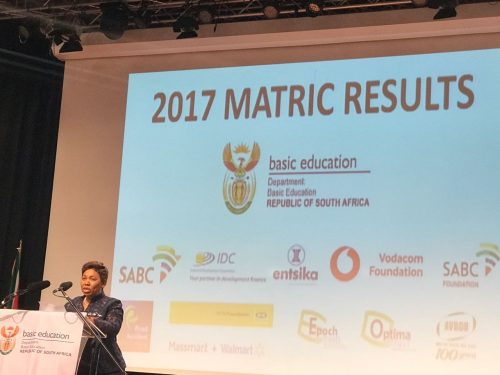
Delivering keynote address during the release of the results at the SABC studios in Auckland Park, Minister of Basic Education, Angie Motshekga, praised the Class of 2017 for consistently maintaining the pass rate above the 70% threshold.

Motshekga said the Class of 2017 is “the tenth cohort of learners to sit for the National Senior Certificate, and the fourth cohort to write CAPS-aligned NSC Examinations”, adding this was the third highest enrolment of Grade 12 in the history of the basic education system in the country.

The overall number of candidates, who registered for the November 2017 NSC examinations, was 802 431 and this included 629 155 full-time candidates and 173 276 part-time candidates. Of these candidates, Motshekga said, 534 484 full-time candidates, and 117 223 part-time candidates, wrote the examinations.

“We wish to thank all provinces, especially Gauteng, Free State, Mpumalanga, and KwaZulu Natal for the extra support and pointed interventions they gave to their progressed learners. If these provinces did not do this, some of the progressed young people, could have fallen through the cracks of the system, due to continuous repetition and ultimate drop-out from the system”, said Motshekga.  

She also stressed the important role of the district’s offices which are the key delivery vehicles nearest to schools. In 2017, 66 of the 70 districts attained pass rates of 60% and above, said Motshekga. She said 31 of the 70 districts attained pass rates of 80% and above.  

She said 4 of the 70 districts achieved pass rates lower than 60%, adding that for the first time, no district has performed below 50%.

Motshekga also applauded three most rural provinces, namely Eastern Cape, KwaZulu-Natal and Limpopo, which recorded an upward trend in their performances. She said 51.5% of the candidates, who wrote the 2017 NSC examinations, come from the three provinces.  

She said 68.7% of the candidates who wrote the 2017 NSC examinations passed and that the three provinces combined produced 44.8% Bachelor passes. This translates to almost 45 Bachelor passes per 100 produced anywhere else in the country, she said. Motshekga said the improved performance of the three provinces is a direct outcome of their targeted interventions.

She said the NSC results are very crucial because they serve as the barometer to assess progress government made in improving access, redress, equity, efficiency, and the quality of teaching and learning outcomes.

Motshekga said her department is prioritising early grade literacy in response to the recent international tests where South African learners fared badly in numeracy and literacy tests.

She said her department is making strides to accommodate learners with special education needs. “Providing learners with special education needs access to quality basic education programmes, is an imperative, based on the Constitutional principles of equity and redress, among others.  

“We have for the past few years included the learners with special education needs in tracking learner performance in the NSC.”

Of the 2 777 learners with special education needs, wrote 2017 NSC examinations, 906 and 789 of these learners achieved Bachelor and Diploma passes, respectively. Those who achieved Higher Certificate passes are 307; 2 achieved NSC passes; and 121 achieved endorsed NSC passes.

NYDA urges matrics to apply for Solomon Mahlangu Scholarship Fund

0

Bonile Khanyi

The National Youth Development Agency (NYDA) has encouraged those who cannot afford fees to apply for the NYDA’s Solomon Mahlangu Scholarship Fund.

“The NYDA will be available at all universities and TVET colleges to ensure the implementation of Fee-Free Higher Education,” NYDA Chairperson Sifiso Mtsweni said in a statement on Thursday night.

Mtsweni applauded the matric class of 2017 on Thursday, saying they wished them well in their future academic endeavours.

He said the matric class of 2017 did extremely well by achieving an increased overall national pass rate of 75,1% in the 2017 National Senior Certificate (NSC) Examination, up by 2,6% increase from the 2016 figure.

“As the NYDA, we commend the matric class of 2017 for achieving an outstanding overall national pass rate of 75,1% in the 2017 National Senior Certificate (NSC) Examination, from a previous figure of 72,5% in 2016 and 70% pass rate achieved in the year 2015 respectively,” said Mtsweni.

Mtsweni said he hopes learners who did not do well in their exams last year will take advantage of the Second Chance Matric Program which aims to give matric learners another opportunity to take their matric finals while equiping them with new learning skills. 

He urged learners who had not applied at an institution of their choice to make use of the Central Applications Clearing House (CACH) service.

“We also urge young people to make use of the Central Applications Clearing House service, for admission at various institutions of higher education,” said Mtsweni.

Applications for the scholarship fund closes on the 16 January 2018.

For more information about the scholarship visit their website on www.nyda.gov.za.

Matric Results Full Speech by Angie Motshekga: Freestate gets top honours for third year in a row

Good Evening Fellow South Africans!

Strategic direction in the basic education sector

Today we have gathered here to announce the 2017 National Senior Certificate examination results. The NSC examination results, are one of the most important barometers to evaluate progress made by Government in improving access, redress, equity, efficiency, and the quality of teaching and learning outcomes, through the implementation of the Medium-Term Strategic Framework and the National Strategy for Learner Attainment (NLSA).

As we implement our Medium-Term Strategic Framework and the NSLA, we have an obligation to ensure a seamless implementation of the regional, continental and international declarations, as well as the recommendations from regional and international assessment studies, in order to ensure that the critical principles of access, redress, equity, efficiency and quality, anchor our work, programmes, interventions, progress, and achievements.

Building a solid and foundation for teaching and learning

We should always remember that if we have to further improve the outcomes of the schooling system, we will have to continue to improve the fundamental quality of teaching and learning, well before Grade 12.

We are increasingly prioritising interventions and policies that target an improved quality of learning and teaching and implementing accountability systems to ensure that quality outcomes are achieved. More specifically, we have deliberately prioritised early Grade literacy. This is necessary to respond pointedly to the concerns raised in the PIRLS 2016, SACMEQ IV – 2013, and the TIMMS 2015 reports. These reports are available in our website.

2017 National Senior Certificate Examination Results

As we analyse the 2016 NSC examination results, we wish to remind the South African public about the main purpose of the National Senior Certificate examinations. The primary purpose of these examinations is to provide learners with an exit qualification. We, however, are able to also glean on the progress we are making as a country to provide access to an inclusive, equitable, quality and efficient basic education to our children. These results are intended to do exactly just that.

The effects of our interventions are beginning to result in improved teaching and learning outcomes. We have reported that the skills of learners have improved. Ambitious policy shifts by government, combined with the efforts and commitment of the thousands of people who work in our schools, especially our principals, teachers and parents, are paying off. Available scientific comparisons of the quality of learning outcomes over time indicate noteworthy improvements in recent years.

Profile: Class of 2017

The Class of 2017 is the tenth cohort of learners to sit for the National Senior Certificate, and the fourth cohort to write CAPS-aligned NSC Examinations. The Class of 2017 has recorded the third highest enrolment of Grade 12 learners in the history of the basic education system in South Africa.

The total number of candidates, who registered for the November 2017 NSC examinations, was 802 431; comprising 629 155 full-time candidates, and 173 276 part-time candidates. Of these candidates, 534 484 full-time candidates, and 117 223 part-time candidates wrote the 2017 NSC examinations.

2017 NSC examinations declared as “incident free”

Fellow South Africans, I am glad to announce that the Umalusi, the Council for Quality Assurance in General and Further Education and Training, has declared the 2017 NSC examinations as “fair, valid and credible“. Umalusi declared that the 2017 NSC examinations were “largely incident free”, with a few minor disruptions in some parts of the country. This, Umalusi said, is testament “to the success of the heightened vigilance and rigid measures put in place by the DBE”.

Performance of the progressed learners

The criteria for learner progression introduced in 2013, were streamlined in 2017. The South African public will recall the learner progression policy encouraged provinces to progress or condone over-aged learners, who have repeated Grade 11 more than once, and give them extra support to sit for the NSC examinations; or allow them to modularise their examinations. In the latter case, progressed learners wrote part of the 2017 NSC examinations in November 2017, and the rest could be written in June 2018.

The support provided to progressed learners by provinces is important, particularly for learners who come from poorer communities. You know that affluent communities arrange extra tuition for their children at extra costs. Provinces on the other hand, go out of their way to provide progressed learners with extra support; and this, provinces do without any additional budget.

Consequently, in 2017, we saw the second largest number of progressed learners, since the policy was promulgated in 2013. An analysis of the raw data on progressed learners paints, an extremely interesting picture, particularly for this year. For the Class of 2017, we had 107 430 registered progressed learners.

34 011 progressed learners wrote the requisite seven subjects during the 2017 NSC examinations. The rest of the learners, are modularising their examinations, as I had already explained earlier. Of the progressed learners, who wrote the 2017 NSC examinations, 18 751 passed; which represents 55.1% of all progressed learners, and 4.7% of all learners, who passed the 2017 NSC examinations. 5.6% achieved Bachelor passes; 25.2% achieved Diploma passes; 24.3% achieved Higher Certificate passes; and 10 achieved NSC passes. A total of 1 801 distinctions was attained, including distinctions in critical subjects, such as Accounting, Business Studies, Economics, Mathematics and Physical Science.

The significance of these achievements, is that the 18 751 progressed learners, who passed the 2017 NSC examinations – the would-be-high-school repeaters and dropouts if they were not progressed, now have a golden opportunity to access either university or TVET College.

This is positive indeed, especially when the NDP enjoins us to mediate the high drop-out rate of learners from the basic schooling system by increasing the learner retention rate to 90%, and allowing for an increase in the number of learners entering vocational and occupational pathways. The second chance programme, the learner progression policy, and the incremental introduction of the three-stream model – which include quality technical-vocational and quality technical-occupational programmes in the Basic Education sector, directly address this NDP directive.

I wish to remind South Africans that the second chance programme and the learner progression policy were introduced to redress the inequalities of the past, by creating a conduit through which young people could be afforded a second chance in life, rather than adding to the large number of young people, who are neither in education, nor employed, nor in any form of training – the so-called NEETs. These programmes were intended to improve the access and retention of learners in the system, and improve the internal efficiency of the system.

We wish to thank all provinces, especially Gauteng, Free State, Mpumalanga, and KwaZulu Natal for the extra support and pointed interventions they gave to these learners. If these provinces did not do this, some of the progressed young people, could have fallen through the cracks of the system, due to continuous repetition and ultimate drop-out from the system. We encourage the other provinces to take a leaf from these four provinces, which supported the progressed learners to the extent necessary.

Learners with Special Education Needs

We strongly believe that an Inclusive Education system, makes an immense contribution towards an inclusive economy to serve an inclusive society. Providing learners with special education needs access to quality basic education programmes, is an imperative, based on the Constitutional principles of equity and redress, among others. We have for the past few years included the learners with special education needs in tracking learner performance in the NSC.

2 777 learners with special education needs, wrote 2017 NSC examinations – an increase of 42.8% from 2016. 906 and 789 of these learners achieved Bachelor and Diploma passes, respectively. 307 achieved Higher Certificate passes; 2 achieved NSC passes; and 121 achieved endorsed NSC passes.

This means that 77.2% of the learners with special education needs, who wrote the 2017 NSC examinations, passed. Gauteng and KwaZulu-Natal should be congratulated for their combined contribution of Bachelor passes of 80.2% – an increase of 3.5% from 2016; and the combined contribution of Diploma passes of 70.1% – an increase of 4.1% from 2016.

1 956 distinctions were achieved by the learners with special education needs, including distinctions in the critical subjects, such as Accounting, Business Studies, Economics, Mathematics and Physical Science. The Western Cape’s contribution, is the largest with 1 599 distinctions.

The benefits of the “pro-poor” policies of Government on the Grade 12 examination results, with progressed learners included

In the 2017 NSC examination results, the poverty ranking of schools in terms quintiles 1 to 5, revealed the following interesting trends. The NSC passes for quintiles 1 to 3 schools (“no fee” schools) combined, stand at 243 260; compared to 138 525 for quintiles 4 and 5 schools (fee-paying schools).

The Bachelor passes achieved by learners in “no fee” schools, stand at 76 300; while fee-paying schools produced 67 867 Bachelor. This implies that in 2017, “no fee” schools produced 53% of the Bachelor passes (compared to 52% in 2016, and 51% in 2015); while fee-paying schools produced 47% Bachelor passes (compared to 48% in 2016, and 49% in 2015). The significance of this, is that the gap between the Bachelor passes produced by “no fee” schools versus those produced by fee-paying schools in 2016 of 4%, has increased to 6% in 2017.

This is poignant, as it points to a remarkable shift in the balance of forces. From 2015 to date, greater equity was observed despite the reality that inequalities still remain in the system. Government must be applauded for its pro-poor polices, which in the Basic Education arena, alleviate poverty through a variety of interventions – among others, the pro-poor funding of schools; the provision of nutritious meals on a daily basis; and the provision of scholar transport to deserving learners on daily basis.

These interventions, called the “social wage” by the Statistics South Africa, continue to improve access to schools, increase the retention of learners in schools, promote equity immeasurably in the Basic Education system; and improve substantively the quality of educational outcomes in our system. What a great story to tell!!!

The 2017 NSC examination results are also telling us that, for every fee paying school, which achieved at 60% to 79.9% pass rate, there are more than five “no fee” schools achieving at the same level. Similarly, for every fee paying school, achieving at the 80% to 100% pass rate, there are almost two “no fee” schools achieving at the same pass rate. An exactly 100% pass rate, was achieved equally by fee paying as well as “no fee” schools. This is indeed a good story to tell!!!

In February 2017 I tasked the National Education Evaluation Unit in the Department to conduct a study on Schools that Work, and particularly lift the characteristics of both primary and secondary schools that work across the system. You may recall that the NDP enjoins us to “recognise top-performing schools as national assets”. It further directs that “the support of these schools should be enlisted to assist [in uplifting] underperforming schools”.

The Schools that Work study, affirmed that there are schools that are doing exceptional work, and these schools include “no fee” schools. An example that has been identified, is a quintile 1 school in Limpopo, which serves the poorest of the poor in that province. This school continues to achieve within the top 1.5% of all public schools, and performs better than 87% of the best resourced schools in the country. There are similar schools that were identified in other provinces, which are universally serviced by teachers who go to extraordinary measures to help their learners to achieve, despite their circumstances. These schools, principals, teachers, parents and learners are definitely our national assets, and their selfless efforts must be celebrated.

Learners receiving social grants

79.7% of the learners, who were recipients of some form of social grants, who wrote the 2017 NSC examinations, passed. 5 016 of them achieved Bachelor passes; 5 997 achieved Diploma passes; 2 863 achieved Higher Certificate passes; and 2 achieved NSC passes. These learners also achieved 500 distinctions, including distinctions in critical subjects such as Accounting, Business Studies, Economics, Mathematics and Physical Science.

Clearly, the Government’s pro-poor policies have made an indelible contribution in these young people’s lives. It is indisputable, that without such assistance and support, these young people could have been lost to posterity. We must commend the Department of Social Department for the “social wage” and support they provided.

Performance of the Districts

The NDP recognises districts as a crucial interface of the basic education sector in identifying best practice, sharing information, and providing support to schools. The continued growth in the performance of districts is closely monitored by both the provincial and national education departments. In 2017, the Eastern Cape has rationalised the number of districts from 23 to 12; which has reduced the number of districts from 81 to 70 nationally.

In 2017, 66 of the 70 districts (94% of our districts) attained pass rates of 60% and above; and 31 of the 70 districts (44.3%) attained pass rates of 80% and above. Regrettably, 4 of the 70 districts (5.7%) achieved pass rates lower than 60%. For the first time, no district has performed below 50%.

The top 10 performing districts in the country, in the descending order, with the progressed learners included, are as follows –

  • First, is Fezile Dabi in the Free State with 2%;
  • Second, is Thabo Mafutsanyana in the Free State with 90%;
  • Third, is Tshwane South in Gauteng with 8%;
  • Fourth, is Ekurhuleni North in Gauteng with 1%;
  • Fifth, is Tshwane North in Gauteng with 9%;
  • Tied at sixth, are Gauteng West and Johannesburg West in Gauteng with 6%;
  • Eighth, is Sedibeng East in Gauteng with 9%;
  • Ninth, is Johannesburg East in Gauteng with 8%; and
  • Tenth, is Overberg in the Western Cape with 7%.

The top-performing districts in their respective provinces, in the ascending order, with progressed learners included, are as follows –

  • Nelson Mandela Metro in the Eastern Cape with 6%;
  • Vhembe in Limpopo with 6%;
  • Ehlanzeni in Mpumalanga with 8%;
  • Umgungundlovu in KwaZulu Natal with 5%;
  • Ngaka M Molema in the North West with 5%;
  • Namaqua in the Northern Cape with 83%;
  • Overberg in the Western Cape with 7%;
  • Tshwane South in Gauteng with 8%; and
  • Fezile Dabi in the Free State with 2%.

Performance of the Provinces

The Council of Education Ministers had agreed that the reporting on the NSC examination results, should first, exclude the performance of progressed learners; and second, include their performance.

First, a glimpse is given, in an ascending order, on how provinces performed, with progressed learners excluded

  • Eastern Cape attained 8%, an increase of 2.5% from 2016;
  • Limpopo attained 4%, a decline of 0.8% from 2016;
  • KwaZulu-Natal attained 6%, an increase of 4.1% from 2016;
  • Mpumalanga attained 6%, a decline of 4.7% from 2016;
  • Northern Cape attained 6%, a decline of 4.6% from 2016;
  • North West attained 1%, a decline of 4.1% from 2016;
  • Western Cape attained 4%, a decline of 3.3% from 2016;
  • Gauteng attained 86%, a decline of 1% from 2016; and
  • Free State attained 8%, a decline of 3.4% from 2016.

We must applaud the four provinces that retained their 80% plus pass status.

Now, let me announce the results achieved by the provinces with progressed learners included. Two provinces attained lower than 70%, and these are –

  • Eastern Cape achieved 65%, improved by 7% from 2016 – the second largest improvement in the country; and
  • Limpopo achieved 6%, up by 3.1% from 2016.

Four provinces achieved above 70%, and these are –

  • KwaZulu-Natal achieved 8%, improving by 6.4% from 2016 – the largest improvement in the country;
  • Mpumalanga achieved 8%, a decline of 2.3% from 2016;
  • Northern Cape achieved 6%, a decline of 3.1% from 2016;
  • North West achieved 4%, a decline of 3.1% from 2016;

The following provinces achieved above 80%

  • Western Cape achieved 7%, a decline of 3.2% from 2016;
  • Gauteng achieved 1%, the same pass rate as in 2016.
  • The top performing province in 2017 is the Free State, which achieved 86%, down by 2% from 2016. Congratulations to MEC Tate Mekgoe and your team!!!

We can see that the 2017 NSC examination results with progressed learners, dispel the myth that progressed learners adversely affect the overall results. Certainly, this was not the case, particularly in the Eastern Cape, Gauteng, KwaZulu Natal, and Limpopo. In fact, in KwaZulu Natal, the results with progressed learners included, are better than those without the progressed learners.

We have noted the upward trend in the performance of our three most rural provinces, namely, Eastern Cape, KwaZulu-Natal and Limpopo. 51.5% of the candidates, who wrote the 2017 NSC examinations, come from these three rural provinces. Remarkably, 68.7% of the candidates, who wrote the 2017 NSC examinations passed. More remarkably, these three provinces combined, produced 44.8% Bachelor passes, which translates to almost 45 Bachelor passes per 100 produced anywhere else in the country.

Three years ago, we had declared that we would continue to pay particular attention to the Eastern Cape, KwaZulu Natal and Limpopo, so that we can improve the overall performance of our learners through the Grades. The improvement in these rural provinces, is a clear indication that our pointed interventions, based on our National Strategy for Learner Attainment, have begun to bear good fruit. What we dare not do, is to drop the ball. We must continue with our pointed interventions, so that the levels of teaching and learning outcomes in these three rural provinces, continue to rise.

Overall national performance

This brings us to the 2016 NSC examination overall results. For the past seven years, we have noted that the NSC pass rate has consistently been above the 70% threshold. The Class of 2017 must be commended for maintaining this trend. The 2017 NSC overall pass rate, with the progressed learners excluded, stands at 76.5%, a 0.3% improvement from the 76.2% achieved in 2016.

However, with the progressed learners included, the overall pass rate, stands at 75.1%, a 2.6% improvement from the 72.5% achieved in 2016. This, represents a total of 401 435 candidates, who had passed the 2017 NSC examinations. Well done to the Class of 2017!!!

Further analysis of the results show that, of the number of candidates, who wrote the 2017 NSC examinations –

  • 153 610 achieved Bachelor passes (equivalent to 7%);
  • 161 333 passed with a Diploma (equivalent to 2%);
  • 86 265 passed with Higher Certificates (equivalent to 1%) and
  • 99 passed with a National Senior Certificate.

It is important to note that a total of 314 943 candidates (equivalent to 78.5%), who achieved Bachelor and Diploma passes, are eligible to register for studies at higher education institutions. The 86 364 candidates (equivalent to 21.5%), who obtained certificate passes, may register at TVET Colleges and other skills training institutions. We encourage the 133 049 candidates, who did not make it, to register for the Second Chance programme.

In 2017, a total of 161 081 distinctions were achieved, an improvement of 1.8% from 2016. The main contributors are KZN with 28%; Gauteng with 22.4%; Western Cape with 15.5%; Limpopo with 9.5%; and Eastern Cape with 9%. It is remarkable to note that the Eastern Cape, KwaZulu Natal and Limpopo produced a combined 46.5% of the total distinctions achieved nationally.

In the 12 key subjects (including Accounting, Business Studies, Economics, Mathematics, and Physical Science among others), the total number of distinctions stands at 62 154, a decline of 4.6% from 2016. The number of distinctions attained specifically in the gateway subjects is as follows:

  • 5 040 distinctions were achieved in Accounting;
  • 6 726 distinctions were achieved in Mathematics; and
  • 7 861 distinctions were achieved in Physical Science.

Aggregation according to gender

There are 65 007 more girls than boys, who enrolled for the 2017 NSC examinations; and there are 57 918 more girls than boys, who wrote the 2017 NSC examinations. Overall, there are 217 387 girls, compared 184 048 boys, who passed the 2017 NSC examinations. When translated into percentages, 73.4% girls and 77.2% boys passed the 2017 NSC examinations.

There are 28.5% female candidates, who obtained Bachelor passes, compared to 29% of their male candidates; 28.4% female candidates obtained Diploma passes, compared to 32.4% of their male counterparts; 16.4% female candidates obtained Higher Certificate passes, compared to 15.8% of their male counterparts. 62.6% of the distinctions were attained by female candidates, including distinctions in critical subjects such as Accounting, Business Studies, Economics, Mathematics, and Physical Science.

Clearly, our gender-based intervention programmes have uplifted the performance levels of the girl child. While this is plausible, we must make a concerted effort to provide similar interventions for the boy child. Even the regional and international assessment studies, implore us to do so.

Conclusion

Fellow South Africans, we will be the first to concede that despite the notable stability of and improvements in our system, we are yet to cross our own Rubicon. We must agree that much has been achieved, but much more needs to be done in the areas of efficiency and quality. We call upon all South Africans to work together with us to move the public schooling to greater heights.

Once again, I take off my hat to the Class of 2017, and I wish them the best in their future. I believe that you will continue to shine wherever you are. Speaking of success, Madiba said: “I learned that courage was not the absence of fear; but the triumph over it. The brave man (sic) is not he, who does not feel afraid, but he who conquers that fear.”

In celebrating the Class of 2017, I must also thank the principals, teachers, and parents for the work they continue to do. What you do at the school level, is what matters the most. The nation had put the future of our learners in your hands, and you delivered. We applaud you for the great work you continue to do on a daily basis.

I thank you.

Treasury and the higher education department contradict each other on free education

Ido Lekota

With Government officials contradicting each other about how free education will be funded, there is rising uncertainty over whether thousands of youth from poor and working-class households will have access to free tertiary education in 2018.

On Tuesday Mkhize told Inside Education that plans were in place for the free tertiary education plan to be implemented effectively. 

At a media briefing on Thursday however, Mkhize failed to tell the public how much was budgeted for the plan to be implemented and where the money would come from.

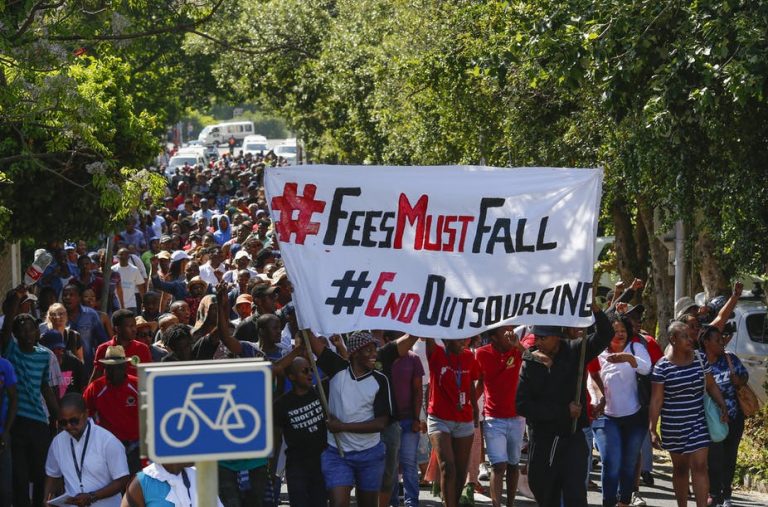
Instead, she told journalists that the budgeting for the extension of free education to poor and working-class students started in 2015 – following the fees must fall protests that ravaged the university sector. She went on to say that the funding of the 5-year free tertiary education implementation plan was therefore with the approved budget vote.

Mkhize was contradicted by Mayihlome Tshwete, the Finance ministry spokesperson, who also on Thursday, told 702 that Treasury was still looking for money to fund free tertiary education.

Asked if there was money readily available to fund all poor students expected to register, Tshwete confirmed that there were no billions set aside.

“We are under pressure but will find a way to do it in a fiscally sustainable and responsible manner”, said Tshwete.

Meanwhile, the EFF has thrown the uncertainty around the plan in President Zuma’s lap.

“If government officials are creating uncertainty around his announced plan – then Zuma must create the needed certainty”, said EFF Spokesperson Mbuyiseni Ndlozi told Inside Education.

DA Shadow Minister for Education Belinda Bozzoli accused the government of falsely raising the hopes of poor students.

“This is really disappointing to the thousands of students supposed to be covered by the plan”, she said.

Matric results: If you need NSFAS funding, Department of Higher Education will help

Ido lekota

Students who have been admitted to tertiary institutions but had not applied for NSFAS funding because they previously did not qualify will be assisted by the Department of Higher Education.

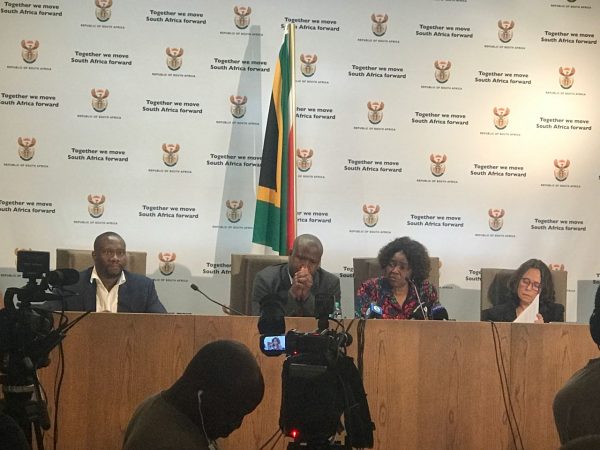
This announcement was made by the department minister, Hlengiwe Mkhize in Hatfield, Tshwane, on Thursday. 

“Students who are in possession of firm offers from universities or TVET colleges but did not apply to NSFAS for funding, who qualify for funding according to the revised criteria will be assisted”, Mkhize said.

The minister also said students who did not apply to tertiary institutions during the official application period but were now seeking space would be assisted through its online Central Applications – which will be opened on Friday.

Mkhize emphasised that universities would not be considering any walk-in applications for admission.

At the ANC’s elective conference in December last year, President Jacob Zuma said the government would offer free tertiary education to poor students including those from families with a combined income of up to R300 000.

Previously, NSFAS funded students from families with a maximum combined income of up to R160 000.

Mkhize said the free tertiary education announced last year would be phased in within 5 years starting this year.

“The phasing in of this policy will ensure sustainability of Government financial resources whilst simultaneously ensuring that improved access to post-school education and training for students is guaranteed”, said Mkhize.

In terms of the plan, the NSFAS loans taken by current tertiary institutions students would be converted into bursaries. This is to ensure that current students do not face previous situations where many of them we denied further registration because they owed the previous year’s tuition.

On Thursday Mkhize revealed that the plan included anyone who had previously acquired a matric certificate but, due to lack of funding, could not continue with their tertiary education – with no age restrictions.

“While our focus is on the youth we also believe in life-long learning for everyone”, she said.

Meanwhile, NSFAS chief executive officer Steven Zwane told the media on Thursday the only walk-in applications expected were at TVET colleges – and the funding organisation would be on-site to assist those who qualify to apply for funding.


Access to mobile phones won’t magically fix youth unemployment in Africa

0

Gina Porter and Ariane De Lannoy

Many in the international development community view technology –not least, mobile phones – as a possible panacea for Africa’s youth unemployment crisis. Their use is sharply on the rise. Mobile phones reduce the need for physical travel, allow rapid access to information about job openings and enable people to contact potential employers. They can be used to help run more efficient businesses.

Research my colleagues and I conducted as part of a study funded by the UK Economic and Social Research Council and the Department for International Development found that some young people in Africa are using mobile phones successfully to access or create employment. But mobile phones are failing many more young people in their search for employment and livelihoods.

The study, conducted in Ghana, Malawi and South Africa, suggests some important reasons why phones may be unable to help young people fulfil their employment dreams. Our findings demonstrate that phone connections are not enough. Connectivity is only useful if it opens up access to employment opportunities that will pay a living wage.

That’s the crux of the problem: there simply aren’t enough quality jobs available. Ghana and Malawi have extensive informal sectors which have long provided at least some work for young people. Mobile phones have opened up some new opportunities in the informal sector – young people sell airtime or repair handsets, or may grow their service and trading businesses through the phone.

South Africa, meanwhile, has failed to grow a vibrant informal sector since apartheid ended in 1994. Its young people tend to be looking for work in the formal sector, and most do not have the employability skills that might make mobile phones useful to achieving this goal.

In reality, the extent to which the mobile phone can support and sustain real improvement in young lives is depressingly finite unless significant interventions occur – particularly in the education and technology sectors.

Informal versus formal sector

Our respondents were aged between nine and 25 and came from 24 diverse sites from poor urban neighbourhoods to remote rural locations. We conducted more than 1500 interviews face to face and in focus groups, and followed this up with a questionnaire survey of about 4500 young people.

In Ghana and Malawi – as in much of sub-Saharan Africa – most young people are exposed to work in the informal sector at an early age. There are many problems with this. But limited inputs into the informal sector can bring significant benefits.

It can help children to build a repertoire of knowledge and skills that will later help them to obtain an income. It’s also a way to consolidate social networks young people can draw on when they are subsequently searching for paid work.

Over the last decade, mobile phones have brought potential and new flexibility into young people’s lives. This is especially true for those who are entrepreneurial. Some of the people we interviewed earn a living directly linked to phones: selling airtime, charging and mending phones. This is often short-term, low paid work but can help them to earn money for further training. They also used their phones extensively to build up personal contacts in key support networks while looking for jobs.

The situation in South Africa is very different. In the poor urban neighbourhoods where we conducted the study, virtually every household where we interviewed young people owns at least one phone and smart phone access is growing rapidly. But the devices have had remarkably little positive impact on young people’s livelihoods.

Work opportunities of any kind for low-skilled youth are very sparse, and especially so in the absence of a vibrant informal sector. This is a historical legacy stemming back to bans on informal enterprise during the apartheid era. Unemployed school leavers tend to concentrate on trying to find low-skill jobs in the formal sector. Most formal jobs, however, require higher skill levels; so competition for low-skill jobs is very intense and few young people succeed in their search for work.

Poor young people in South Africa also lack access to productive social networks that could provide them with information about the formal job market. Few have had the opportunity to gain work experience during their school days, which would help them to acquire the key skills and networking opportunities that might promote employability. Many look for volunteer posts which they hope will give them the experience and skills to find paid work.

All of this emphasises a fundamental difference in youth employment stakes between Ghana and Malawi on the one hand, and South Africa on the other: the role of the informal sector. In the first two countries the informal sector dominates. Despite its very many deficiencies, it provides a training ground for learning basic skills and a labour absorption mechanism.

In South Africa the near absence of informal sector openings arguably denies low-skilled young people any early work experience and limits their subsequent access to paid work opportunities.

Access to mobile phones cannot change this reality. Bigger changes at a societal level are necessary.

Moving on?

Both the overall basket and the scope of local livelihood opportunities open to young people will have to grow exponentially, across the continent, if mobile phones are to realise their potential in local employment arenas.

Researchers at the Southern Africa Labour and Development Research Unit and the Children’s Institute who were involved in this project suggest various interventions that might help, particularly in South Africa.

For instance, travel vouchers could help young people who currently don’t have enough money to move from deprived areas to areas with labour demand. And, given the stronger demand for skilled over unskilled labour, there’s obviously an urgent need for skills development and training at secondary, post-secondary and workplace level. There are some opportunities to build experience through the country’s public works programme, National Youth Service and NGO volunteering. But these need to incorporate stronger skills training for young people from poor communities.The ConversationSouth Africa could also consider extending social assistance to the chronically unemployed through a basic income grant or a comprehensive support package for poor youth. This would make sense when many young people are currently trapped in poverty, often exacerbated by the need to contribute to their family incomes – a reality which could hinder their ability to invest in training or business expansion.

Gina Porter, is a Senior Research Fellow at Durham University and Ariane De Lannoy is a Senior Researcher at the Poverty and Inequality Initiative, Southern Africa Labour and Development Research Unit, University of Cape Town. 

Source: The Conversation. Read the original article.

Matric results: A trigger for death by suicide

Bonile Khanyi

After six long weeks of writing exams and another five weeks of anxiously waiting for results, the matric class of 2017 will on Thursday finally know whether or not they will move on to the next phase of their education.  

For some, the results will not be cause for celebration.

Learners who do not pass matric and those who do not reach their target pass rates often feel alone, isolated and self-loathing. This can cause anxiety and depression, which can sometimes lead to suicidal thoughts.

According to the South African Depression and Anxiety Group (SADAG), 9.5% of teen deaths in South Africa are caused by suicide and one of the triggers is exam disappointment.

In December last year, Inside Education reported the deaths of two grade 11 learners who died from suicide after finding out they did not make it to matric.

Speaking to Inside Education, psychiatrist Zamo Mbele, said while it’s normal to be worried about how one performed, some learners who believe they haven’t done well tend to worry too much, which leads to being anxious or depressed.

“Anxiety is a real and severe worry that does not respond very easily to facts and reality testing and checking. So, if we imagine somebody with such a very heavy worry, we can imagine that sometimes that worry can feel like it’s overwhelming or overpowering for the person,” Mbele said.  

Mbele said sometimes people felt there was no way to deal with their worry which then leads to death by suicide. 

Despite the number of support structures provided to learners by the Department of Basic Education, some learners felt there wasn’t enough help Mbele said. She said parents should support their children ahead of the release of matric results.

“Parents should have open and honest conversations with their children leading up to the results. They should reassure their children that it’s not the end of the world. And they can also be there through the process of getting the results, be with their children, help them think and make sense of the results. This will help learners as they often feel alone at times like these,” said Mbele.

Speaking to Inside Education, the department’s spokesperson Elijah Mhlanga said learners who did not qualify to further their studies this year must not consider suicide.

“Suicide is not a solution, in fact people shouldn’t even think about taking their own life after they’ve realised they failed,” he said.

Mhlanga said learners should take advantage of the second chance support program, among other options provided by the department.

“We have the second chance support program aimed at students who did not make the grade. The aim of the programme is to provide free support to learners who need to rewrite a maximum of two subjects in February and March and also those who wrote three or more subjects in November and will complete the rest in June,” said Mhlanga.

“Learners can also write their supplementary exams or apply to have their exam paper re-marked or rechecked.”

Mhlanga said those that don’t make it should not let failure define who they are, but take it as a lesson that sometimes one needs to keep trying to  achieve a desired goal.

“We don’t succeed in everything we do in life and failure does not define us. It should rather make us stronger and wiser so that we can carry on and learn from our mistakes,” said Mhlanga.

According to the SADAG, the most effective way to prevent suicide is to learn to recognise the signs of someone at risk, take these signs seriously and know how to respond to them.

Here’s a list of some of the signs to look out for:

  • Suicidal talk and a previous suicide attempt
  • Current talk of suicide or making a plan
  • A strong wish to die or a preoccupation with death and dying
  • Giving away prized possessions
  • Signs of depression, such as moodiness, hopelessness, withdrawal, difficulty with appetite and sleep, and loss of interest in usual activities
  • Increased alcohol and/or other drug use
  • Hinting about not being around in the future or saying goodbye
  • Behavioural changes and taking excessive risks
  • Making arrangements to take care of unfinished business.

If you or someone you know might need help with depression, anxiety or thoughts of suicide, here are a few places you can get help:

  • South African Anxiety and Depression Group (www.sadag.org).
  • SADAG also runs a counselling helpline that is open 7 days a week from 8am to 8pm.
  • Concerned parents, teachers or peers can contact a SADAG counsellor toll-free on 0800 21 22 23 or 0800 12 13 14, or SMS 31393.

Panyaza Lesufi to release Gauteng matric results on Friday

0

Bonile Khanyi

Gauteng’s MEC for Education Panyaza Lesufi is expected to release the Gauteng matric results for the 2017 academic year on Friday.

In a statement issued on Wednesday, the department of education said this follows the release of the National Matric results by the Minister of Basic Education, Angie Motshekga on Thursday evening.

The department also said learners who passed their grade 12 extremely well in 2017 will be awarded on Friday.

“Among others, MEC Lesufi will also award learners that have demonstrated high levels of academic excellence in various categories such as subject performance, top performing township school learners, top learner in the SSIP programme, as well as most improved schools and top performing schools,” said the department.

According to the SABC, Lesufi said he’s confident that the province will record the highest number of matric passes when the NSC results are announced.

Gauteng obtained a matric pass rate of 87% in 2016, coming in third after the Free State which obtained the highest matric pass rate in the country with 93.2% and the Western Cape coming in second with 87.7% pass rate respectively.

Lesufi said he expects Gauteng learners to perform well especially those from township area’s like Soweto, Tembisa, Hammanskraal, and the West Rand where a lot of investment has been made.

UFS can maintain its English only language policy

0

Ido Lekota

The effort to change previously white universities into exclusive racial and cultural enclaves have received a major shot in the arm following a Constitutional Court ruling yesterday favouring the University of the Free state language policy in which English is the primary medium of instruction.

On Friday Chief Justice Mogoeng Mogoeng ruled that the institution’s language policy is lawful. Justice Mogoeng Mogoeng ruled against the Afrikaner civil right movement AfriForum’s application for leave to appeal a Supreme Court of Appeal (SCA) ruling from March this year, also in favour of the policy.

In 2016, the University of the Free State adopted a new language policy.  This saw English become the primary medium of instruction, replacing Afrikaans and English as parallel mediums of instruction.

The university’s main reason for departing from the parallel-medium policy was that it had the “unintended consequence” of segregating white Afrikaans-speaking students from black students who had chosen to study in English. It led to racial tensions, as well as staff and student complaints.

UFS Vice-chancellor Professor Francis Petersen welcomes the Friday ruling saying it has paved the way for the policy implemented. He said the policy has already been implemented in at least three faculties at first year level.

“I also want to say in the same vain as I articulated in a statement that we don’t see this a victory against Afrikaans. In fact we still continue to develop Afrikaans as an academic language”, said Petersen.

UFS Student Representative Council has also welcomed the ruling saying it was a boost for the university’s efforts to deal with language issues at the institution.

“This is something that for years we have longed and complained about to say that the dual language policy was not assisting in terms of redress and the transformation that needs to take place at the institution. We therefore welcome the judgment by the Constitutional Court. We think it is very clear and we want to also note and acknowledge the efforts of the University executive management for being resilient”, said SRC President Asive Dlanjwa,

The Higher Education Transformation Network (HETN) has also welcomed the judgment.

In a statement following the ruling HETN said the CC decision set a legal precedent establishing official university policy certainty.

HETN said South Africa was a country with 11 official languages and all languages and cultures must be treated equally with respect.

AfriForum’s Alana Bailey said the judgment shows that languages of minorities are not protected.

“Indigenous languages are being marginalised while the colonial English language is being empowered more and more. This ruling proves that minorities are left on their own by government and that if we want to see our language rights realised, we will have to establish our own institutions privately.”