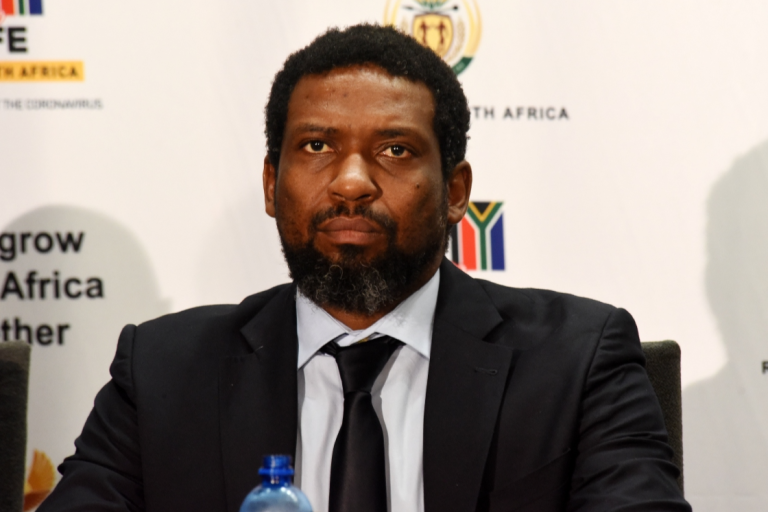
Minister of Higher Education and Training Buti Manamela is set to appoint the boards of the Sector Education and Training Authorities (SETAs) this week, with board chairpersons set to be installed during October.
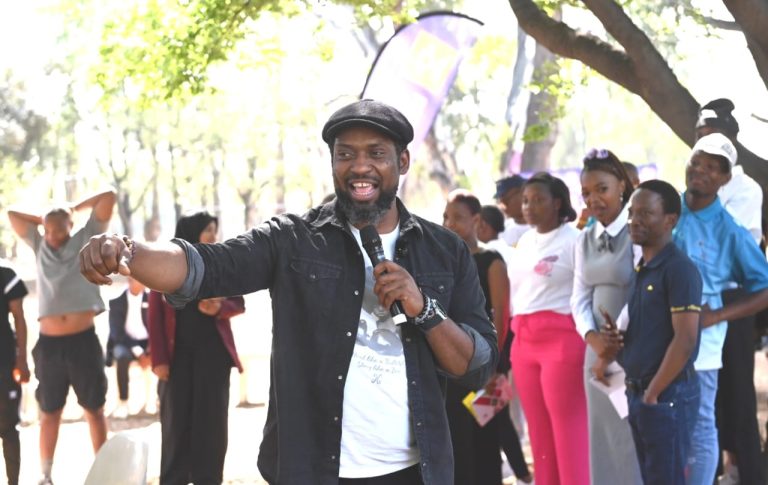
Manamela confirmed this with Inside Education on the sidelines of the Mandela Sobukwe Leadership Camp, held at the University of Johannesburg Island at the Vaal last week.
“We are finalising the appointment of the Accounting Authorities, those are going through vetting, upon conclusion of the vetting they will be informed and those for whom vetting has been concluded can begin their work,” Manamela said, adding that the process will begin as early as this week.
The process of appointing SETA board chairs was derailed and ultimately accounted for Manamela’s predecessor, Nobuhle Nkabane, being removed from her post due to a public outcry over the process followed and the identity of some of the board chairs.
Manamela said that the process is now back on track.
“We can confirm that the Minister is appointing Accounting Authorities that have been vetted this week. The [Board] chairpersons will take longer, and the Ministry will communicate in due time,” said Matshepo Seedat, Manamela’s spokesperson.
Manamela acknowledged that there is a need to change the way SETAs are run. “I think there is national consensus that SETAS, the way in which they are structured, the way in which they are governed, and the way in which they provide services, requires some level of reform.”
He said that the conversation about that will have to be held within various parts of government as well as with stakeholders such as labour, industry and training institutions.
The five-year term of the previous boards expired in March this year. In May, the National Treasury gave Nkabane permission to allow CEOs to act as Accounting Authorities for a period of three months or until new boards are appointed. That three-month period expired at the end of August.
The incoming boards have a litany of challenges to address across the various SETAs. Three of the SETAS are under administration. Asked if more are likely to be taken this route, Manamela said “I don’t know”.
The first order of business for the boards is to appoint new CEOs or renew the contracts of incumbent CEOs as their five-year terms ended in September. Thereafter, the boards must instil a culture of excellence to improve performance.
SETAS such as the Chemical Industries Education and Training Authority (CHIETA) and The Mining Qualifications Authority (MQA) have obtained clean audits and achieved 100% of their goals.
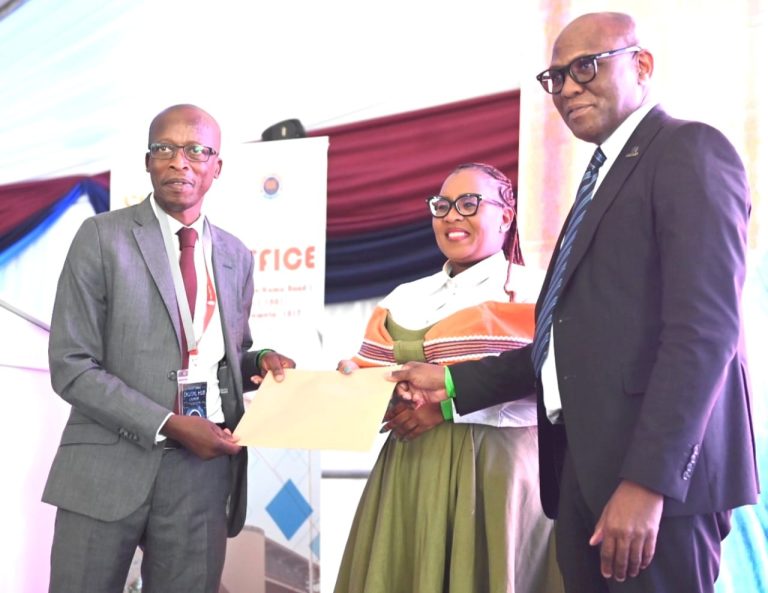
The Finance and Accounting Services Sector Education and Training Authority (FASSET) has, in collaboration with the Department of Higher Education and Training (DHET), launched a digital hub at the South West Gauteng College in Dobsonville, Soweto (SWGC), in order to introduce digital careers that are adaptive to the fast-growing technological industry.
According to FASSET CEO Ayanda Mafuleka, the hub is poised to bridge the digital divide between township areas and affluent suburban areas by ushering in digital transformation in the SWGC campus, where students will learn digital courses enabling them to contribute to the 4th Industrial Revolution economy.
“The world is not waiting for us to catch up. The 4th Industrial Revolution, the Just Energy Transition, they are all here already reshaping industries, demanding new skills and rewriting the future of work,” she said on Tuesday during the launch at the SWGC campus.
“As FASSET, this is a bold step for us because we believe that through this initiative, we will empower students and lecturers with the tools not just to service in the future, but to lead.”
The digital transformation initiative has been described as empowering not only the students, but the entire community of Soweto at large with digital literacy while also responding to the pressing needs affecting the community, especially unemployment.
Eight hundred learners are going to enrol for digital courses over the next two years in cybersecurity, coding, data analytics, cloud practioners, software development, software testing, digital marketing and artificial intelligence, amongst other skills that are critical to the digital economy.
With a financial investment totalling R28,000, 500 to aid in the steadfast implementation of the digital hub initiative, the college has also identified 60 lecturers to be upskilled with digital skills, enabling them to impart that knowledge to learners who will be learning in person and those participating in distance learning. The courses span a minimum of three months.
Mafuleka reaffirmed the entity’s endeavours to roll out the initiative across the country, especially in rural colleges. She said that Soweto was chosen as the first destination owing to its vibrant economy and strategic location as a major contributor to the township economy.
“Soweto is an ecosystem on its own, embodying the intense cultural, political and economic hub key points. Soweto has a rich history which can be preserved by ensuring that the community thrives. This hub is going to be an impactful initiative that will see Soweto having access to a digital world,” Mafuleka told Inside Education following the launch at the campus.
DHET Deputy Director General (DDG) for TVET Colleges, Zamokuhle Zungu, speaking to Inside Education, reiterated government’s efforts to incentivise community colleges as an attractive and prioritised destination for students. He said that the launch was aiding government plans to increase TVET college enrolments to 2.5 million students by 2030.
Zungu appealed to students not to be concerned about the physical location of TVET colleges, often in township areas — a contrast of environment when compared to universities — saying location does nothing to alter the quality of education.
“If you go to any operation, plant or manufacturer, the people that are supervisors across the globe, it is people coming from universities in those positions. But our education system is the opposite, [TVET colleges] are pumping more supervisors,” he added.
He highlighted the action to diversify teaching and learning beyond the traditional classroom to have a far reaching and greater impact through the implementation of virtual classrooms enabled by digital platforms.
Zungu said that for government to reach its threshold of 2.5 enrolments by 2030, the infusion of technology would play a critical role.
SWGC Principal Malose Monyamane told Inside Education that they have implemented measures to enable the upskilling of lecturers at the campus without destabilising or delaying the start of the digital hub.
“We have e-libraries, meaning that students will be able to access e-books – any material that they want read. Lecturers do post their lessons on our portal, making it easy for students to access those from wherever,” Monyamane added.
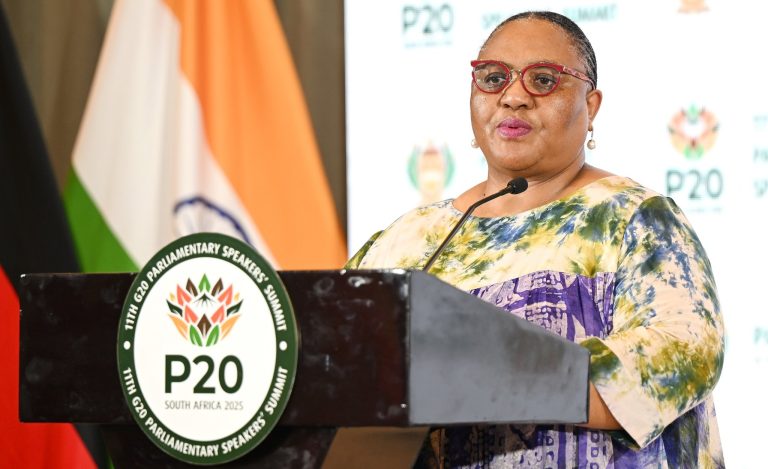
National Assembly Speaker Thoko Didiza has urged stronger youth participation in legislatures and international decision-making platforms, saying young leaders are central to building inclusive and sustainable societies.
Didiza was addressing the P20 Young Parliamentarians Forum in Cape Town under the theme “Young Parliamentarians as Drivers of Global Solidarity, Equality and Sustainability.” The meeting precedes the 11th Parliamentary Speakers’ Summit (P20), which will take place from 1 to 3 October.
Welcoming delegates from around the world, Didiza said young people were a vital force in shaping the future. “Young people are a powerhouse in exploring solutions to the problems of the modern world. Their perspectives, energy and inventive ideas are critical in helping us find original solutions needed for today’s challenges,” she said.
Despite progress in some areas, youth remain under-represented in global legislatures. Didiza cited Inter-Parliamentary Union figures showing only 2.8% of the world’s parliamentarians are under 30, while nearly three-quarters of upper houses have no members in that age group.
South Africa, she said, has encouraged youth participation through political party processes and activism, ensuring their voices are heard.
Didiza urged parliaments to use their oversight powers to advance policies supporting youth empowerment, entrepreneurship, decent work and technology access. She also called for responsible regulation of artificial intelligence.
“As we promote societies founded on democracy and respect for human rights, we must be conscious that young people are often the most affected by the decisions we make today. It is no longer acceptable to take decisions without their voices,” she said.
Solidarity and international cooperation, she added, were vital to tackling shared global challenges such as inequality, climate change and geopolitical tensions.
“The actions and decisions we take today must ensure that young people, particularly in the Global South, gain meaningful access to economic opportunities and play a central role in shaping a just and sustainable future,” Didiza said.
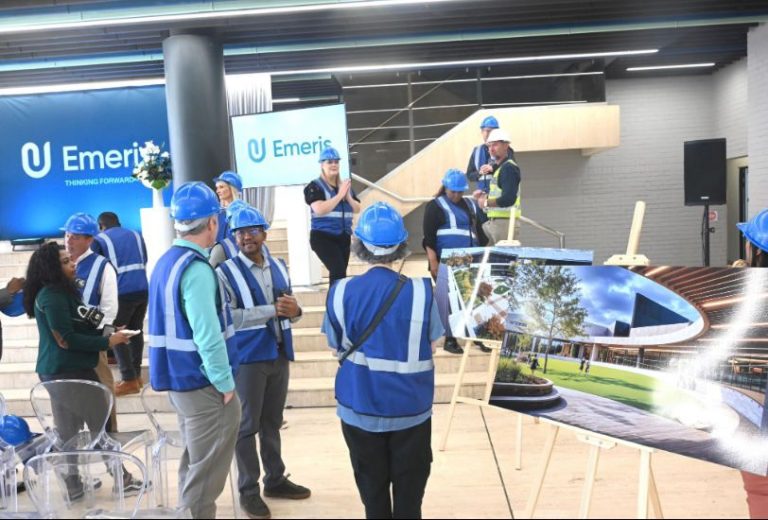
Private education provider ADvTECH Group has unveiled its R420m Emeris mega-campus in Sandton, Johannesburg.
According to the group, the new private higher education brand will bring together Varsity College, Vega School, and MSA brands, under one name.
The campus is scheduled to open its doors in January 2026 and it is expected to accommodate approximately 9 000 students.
ADvTECH Group CEO Geoff Whyte said the strategic alignment amplifies the group’s “commitment to delivering diverse, high-quality educational pathways, tailored to meet market demands”.
The campus includes a double-storey library and information centre, student experience hub with career and counselling services, and a custom-designed indoor sports centre capable of hosting international events.
IT labs, podcast studios, and interactive mock classrooms are also available.
Whyte said the Emeris campus represents a fundamental shift in education, focusing on future-proof, skill-based, and tech-integrated learning.
“We’re preparing students for jobs that don’t exist yet,” he said.
Louise Wiseman, managing director of the Independent Institute of Education (IIE), said the IIE was committed to social investment and student accessibility, and that the Emeris academic model prioritised real-world skills, critical thinking and collaboration.
ADvTECH said its undergraduate opportunities had also grown, with the launch of three engineering qualifications, making Emeris the only private institution in South Africa with accreditation from the Engineering Council of South Africa (ECSA).
According to Andrea Abrahams, IIE’s executive dean of academic affairs, the campus will offer flexible programmes catering to diverse needs, including law, business, technology, and the arts.
The campus has also established partnerships with industry leaders to ensure students gain practical experience.
“We’re not just about delivering qualifications; we’re about delivering skills that make our graduates ready for the workforce,” Wiseman said.
With over two million learners depending on the KwaZulu-Natal (KZN) Education Department and the 2025 National Senior Certificate (NSC) examinations looming, Basic Education Minister Siviwe Gwarube has called for urgent collaboration between the national Basic Education Ministry and the provincial Education and Finance departments to address the escalating financial crisis in the province’s education sector.
Following an all-government meeting with KZN Premier Thami Ntuli and the provincial MECs for Education and Finance, the government emphasised the need for swift action, announcing the formation of a task team—chaired by the Premier—to seek solutions to severe budgetary pressures threatening school operations, the distribution of learning materials, and the upcoming NSC examinations.
“We have to resolve this; and get the department on its feet. It’s one of the provinces with the largest cohort of learners, educators and schools. Ultimately, we have to protect the system. Especially for those South Africans who don’t have an option to ‘opt out’ of what the government is meant to provide,” Gwarube said over social media.
The national delegation, which included Deputy Minister Reginah Mhaule and Director-General Mathanzima Mweli, met with Education MEC Sipho Hlomuka, and Finance MEC Francois Rodgers, alongside senior officials from both provincial and national departments.
The engagement was framed as an “all-of-government” response to address urgent financial challenges and develop a recovery plan to safeguard the province’s education system.
KwaZulu-Natal, home to over two million learners and tens of thousands of educators and non-teaching staff, faces a multi-layered budgetary strain.
Rising personnel costs, historic accruals, and unfunded mandates have compounded pressures across the system, with schools in Quintile 1 to 3 areas, serving the most vulnerable learners, particularly at risk.
While these challenges mirror a broader national trend, the scale of KwaZulu-Natal’s system magnifies the urgency for immediate intervention.
During the discussions, it was noted that there are no existing legal or financial instruments that permit the Basic Education department to directly inject funds into a provincial department.
While a Section 100 intervention under the Constitution could theoretically be deployed, all parties agreed that such an approach would be undesirable.
Instead, the Provincial Treasury will continue supporting the Education department through existing Section 18 mechanisms under the Public Finance Management Act (PFMA), complemented by technical guidance and resource reprioritisation advice from the national government.
The meeting prioritised four critical areas for immediate intervention: safeguarding school transfers, particularly for the poorest learners; protecting the delivery of Learning and Teaching Support Materials (LTSM); ensuring a smooth and fair rollout of examinations; and securing scholar transport to maintain learner access in rural and underserved areas.
A premier-chaired rescue team will now coordinate recovery efforts in collaboration with the national department and the provincial treasury, driving implementation of a comprehensive financial recovery plan with speed and accountability.
Short-term measures agreed upon include releasing statutory allocations to schools to guarantee uninterrupted school nutrition, utilities, transport, and teaching services; clearing arrears owed to municipalities and service providers, including those involved in the National School Nutrition Programme; ring-fencing conditional grants for their intended purposes; and enforcing strict consequence management for officials responsible for financial mismanagement.
Longer-term measures will include payroll and post provisioning reform, verification of learners and employees to eliminate ghost posts, contract rationalisation to reduce inflated costs, and efficiency gains in procurement.
The provincial government has already advanced R900 million earlier this year to provide immediate relief, with further allocations to be secured through the Medium-Term Expenditure Framework to ensure sustainability.
The province aims to achieve savings of up to R1 billion per year through these reforms, alongside improved oversight and operational efficiency.
Gwarube commended the provincial leadership for their candid engagement and shared commitment to stabilising the education system, while Ntuli reaffirmed that quality education remains KwaZulu-Natal’s highest priority.
Minister of Higher Education and Training, Buti Manamela, addressed university students at the Mandela-Sobukwe Leadership Bootcamp last Friday, marking the close of Heritage Month with a focus on youth leadership development at the University of Johannesburg’s Island Vaal Dam.
Speaking to Inside Education, Manamela said the camp seeks to inspire young people to recognise the roles Nelson Mandela and Robert Sobukwe played, while engaging them on the challenges those leaders confronted.
He said that their skills, capacity, and traits should serve as building blocks for future leadership.
Launched in 2023, the Mandela-Sobukwe Leadership Camp has since become an annual event, commemorating Mandela’s 1990 release while equipping students to navigate and address pressing socio-economic challenges.
“We have this annually at Robben Island, and so because of the youths demand we decided that we’ll have pop-ups in the year, where we take students from different campuses, and it’s all conversations on leaderships, entrepreneurship, digital transformation and digital economy topics such as scenario planning,” said Manamela.
He noted that the boot camp goes beyond abstract leadership concepts, addressing the everyday challenges students face on campus. Sessions included discussions on tackling these issues and exploring the youth’s role in the broader post-school education and training sector.
Reflecting on Mandela’s principles, Manamela said he has met students who previously participated in programmes on Robben Island.
Some had been trained as members of Student Representative Councils (SRCs), while others were active in various political formations across the spectrum.
This, he added, helps plant the seed of leadership needed to shape South Africa’s future.
“It’s also about their interpretation of leadership in a different context and how that leadership has had an impact on things that happen,” he said.
He emphasised the dangers of disconnecting from history, cautioning that misperceptions—such as viewing Mandela as a sell-out or solely focusing on Sobukwe’s incarceration—can shape the youth’s future.
The challenges faced by these leaders are not entirely new; rather, it is how their roles and actions are understood that will influence young people today.
To turn ideas into action, Manamela urged youth to take responsibility for their initiatives.
He added that the department aims to foster agency, encouraging students to be resourceful citizens—not only on campuses but in contributing to a stronger nation.
Acknowledging unemployment as a pressing concern, the minister expressed his hope that the boot camp would inspire students to engage in research, innovation, and product development.
He stressed the importance of creating opportunities and jobs, rather than merely seeking them.
“Through the entrepreneurship sessions at this Camp, we hope to inspire student leaders and peer educators to embrace research, innovation, and product development, turning their ideas into realities. The goal is not only for them to seek jobs, but to create jobs. That is the vision we are driving forward through this initiative,” said Manamela.
“The Post-School Education and Training sector is designed to produce graduates who can meaningfully contribute to the economy, whether they come from Community Colleges, TVET Colleges, Universities, or are trained through SETAs. But beyond producing skilled graduates, our country needs leaders. These leadership sessions are about cultivating a new generation of leaders who can contribute in a context very different from the one in which Mandela and Sobukwe grew up.”
The Gauteng Education department has moved to clarify confusion surrounding payment delays affecting service providers under the Extended National School Nutrition Programme, while also reaffirming its crackdown on illegally operating schools across the province.
Gauteng education spokesperson Steve Mabona emphasised that meals for learners in no-fee-paying schools remain uninterrupted under the National School Nutrition Programme (NSNP), which is funded through a national grant from the Basic Education department, but that the province’s demographics, changing socio-economic conditions and austerity consequences may affect the extended programme in statistically more privileged public schools.
“The rapid growth in the number of learners requiring nutrition support in Quintile 4 and 5 schools has placed significant pressure on provincial funding of the GDE Extended NSNP. This increase is directly linked to the rising socio-economic vulnerabilities faced by families who were previously self-sufficient. Compounding these pressures, budget reductions at the provincial level have created further strain on this essential programme,” Mabona said.
The province has in recent years introduced the Extended NSNP, a provincially funded scheme aimed at reaching disadvantaged learners in Quintile 4 and 5 fee-paying schools in light of shifting socio-economic conditions in Gauteng.
The department acknowledged that the rapid growth of the programme has placed pressure on provincial budgets, particularly as more families who were once self-sufficient now require state support.
Mabona said the department is working directly with affected providers to resolve the matter and remains committed to ensuring all outstanding payments are cleared and would continue to prioritise the daily provision of meals to learners and to support service providers so they can carry out their vital work.
He said the department is planning on reviewing its quintile system in order to introduce a more accurate and responsive categorisation of schools, recognising that the traditional distinction between fee-paying and no-fee-paying schools no longer fully reflects the financial circumstances of many families.
Alongside clarifying the nutrition programme, the department announced fresh action against illegally operating schools, warning parents and guardians about the risks of enrolling children in unregistered institutions.
Mabona said these schools operate outside the framework of the South African Schools Act and pose serious dangers to learners.
Learners at such schools are not captured in the Education Management Information System (EMIS), leaving them unfunded and without access to formal records.
Reports issued by unregistered schools are invalid, and teacher qualifications and learning standards are not subject to quality assurance.
For matric learners, the risks are even more severe with many being forced to write exams at designated centres and may not receive valid certification due to non-compliance, compromising their chances of entering tertiary institutions.
The department said its Independent Schools Directorate is actively working with communities, parents, and law enforcement agencies to close illegal schools and place affected learners in compliant public or registered independent schools.
Learners are also provided with remedial and catch-up programmes, while psychologists offer psychosocial support to help them adjust.
Over the past five years, about 1 200 learners have successfully transitioned from non-accredited institutions into recognised schools.
In addition to learner support, the department is pursuing legal action against owners of non-compliant schools.
Several cases have been opened with the South African Police Service in line with Section 46(4) of the South African Schools Act.
These include matters involving Boipuso School in Bloubosrand, Thakane School, Hope Fountain School, and Gateway Academy, all of which are currently before the courts.
To prevent the reopening of such schools, officials conduct routine monitoring of closed sites in partnership with ward councillors, community leaders, and law enforcement.
The department stressed its dual commitment to ensuring that every learner receives a nutritious daily meal and that all children are protected from exploitation by unregistered schools.
Limpopo Premier Phophi Ramathuba has urged the matric Class of 2025 learners in the Sekhukhune district to rise above challenges as they prepare for their final examinations, saying that making it to this stage of their academic journey is a testament to strength and perseverance.
“Some of you may have faced challenges, financial struggles, and long distances to school, overcrowded classrooms, or personal difficulties at home. Yet here you are, standing tall, preparing for the final lap of your schooling journey,” she said.
Accompanied by Limpopo government officials, including the Education MEC, teachers, principals and community leaders, Ramathuba joined a Solidarity Walk with 1,000 learners in Ga-Nkwana to launch the official matric exam countdown campaign and boost student morale.
She said the walk served as both a symbol of unity and a declaration of collective effort by parents, government, teachers, and learners to ensure that disciplined action leads to a successful examination period.
She encouraged learners to view their upcoming exams as a defining moment that would shape the trajectory of their lives beyond high school, opening the door to exciting opportunities and rewarding careers.
Emphasising the importance of personal responsibility, the Premier reminded learners that while government has invested in providing the necessary resources for teaching and learning, it is ultimately up to them to seize the opportunity, apply themselves, and conquer the final stretch of their school journey.
She also appealed for academic honesty, saying: “Success earned through dishonesty is not true success.”
“Take care of yourselves. Study hard, but do not neglect your health. Rest well, eat well, and manage your time wisely. A healthy body and a calm mind will carry you to the finish line,” Ramathuba added.
The Premier urged the Class of 2025 to build on the achievements of the Class of 2024, which attained an 85.1% pass rate, encouraging them to surpass that milestone and position Limpopo among the top five provinces nationally for school performance.
The Deputy Minister of Higher Education and Training, Mimmy Gondwe, joined student leaders from across the country on Friday at the University of Johannesburg’s Island Vaal Dam campus to address pressing challenges faced by young people.
At the roundtable discussion, student representatives from TVET colleges and universities raised concerns over accommodation shortages, NSFAS funding delays, mental health struggles, and the scourge of gender-based violence (GBV).
Zandile Sithole, President of the Soweto Diepkloof Community Learning Centre and Gauteng’s Deputy Provincial CLC President, spoke candidly about sexual misconduct by lecturers.
“We have serious cases of lecturers sending inappropriate messages or engaging in sexual relationships with students. When reported, they either receive a warning or get transferred elsewhere,” she said, calling for decisive action, including dismissals.
Sithole added that the abuse of power by lecturers suppresses students: “Yes, we are both adults, but you are using your position to oppress me. Lecturers must understand they are there to teach, not exploit.”
Reflecting on her SRC experience, Sithole said her understanding of GBV had expanded: “At first, we thought of GBV as only physical or sexual violence, but we’ve seen its mental and emotional dimensions too.”
In response, Gondwe stressed that the department takes GBV seriously, citing ongoing work with the Commission for Gender Equality.
“They have found patterns of sexual exploitation not only between lecturers and students, but also among students themselves, where SRC members abuse their positions,” Gondwe said.
She urged student leaders to call out perpetrators, hold them accountable, and lead by example.
By Christine Girtain, Theresa Maughan, Joe Nappi, Angel Santiago and Stefanie Lachenauer
Research and experience are clear: one of the greatest indicators for educators’ long-term success and job satisfaction is effective classroom management. The NJEA Review asked the five recent New Jersey state teachers of the year to share practices and advice for fostering productive, respectful learning environments.
Grade school discipline starts with routines—but grows with relationships
Angel Santiago: Response to Intervention (RTI)elementary school teacher, Loring Flemming Elementary School in Blackwood, Camden County, 2020-21 NJ State Teacher of the Year
“We needed to throw another “R” in there: relationship.“
In college, our instructors always emphasized drilling routines and procedures during the beginning of the year. I think we can all agree it’s essential to have proper procedures and routines. But as a new teacher, I had no idea what that looked like. It took some time, observing colleagues––which I believe all first- and second-year teachers should have access to. Through observation, I discovered Whole Brain Teaching before I understood how to create a safe and well-oiled learning environment.
From our morning meeting, where we review the day’s itinerary, to setting clear goals and expectations for each lesson, to assigning roles during group work––even the seemingly minor tasks like lunch count and asking for a pencil––everything follows a consistent, clearly taught procedure. I make sure that my students know what’s expected of them and give them the support and resources to accomplish those daily goals.
I believe that teaching these expectations is essential. Using real-life examples through role-play or videos can make these expectations more relatable and effective. Once I mastered the routines and procedures, I realized I also needed to give my students a reason why they mattered. It took a couple of years, but I came to understand that alongside routines and procedures, we needed to add another “R” to our mix: relationships. So, in addition to establishing routines and procedures, I made it a goal during the first two weeks of the school to really get to know my students––their likes and dislikes, their dreams for the future, their cultures, and their identities. Learning who my students are and what they aspire to be allows me to use lessons in class to help bring them a little closer to those dreams.
Before disciplining a student, I always ask myself, “Would I want a teacher to say this to my child in this manner?” We must remind ourselves: these are people with feelings, ideas, compassion and fears. It’s OK to be firm, but we must never intentionally provoke a fight-or-flight response in our kids. Fear isn’t a useful tool in education.
It’s almost impossible to develop strong classroom management without begging, borrowing and stealing from seasoned colleagues. Find a veteran teacher bestie and soak everything in. Be open to change and to constructive feedback. One of my professors, Donna Bender, gave me the best advice for new teachers.
“In order to become a brilliant teacher, you must always be willing to be a brilliant student,must always be willing to be a brilliant student, she said.” she said.
Never, ever stop being a brilliant student of this profession.
Build a learning community, not just classroom rules
Theresa Maughan, social studies teacher at East Orange STEM Academy, East Orange, Essex County, 2021-22 NJ State Teacher of the Year
“Reflect on your own identity and be sure you’re not bringing personal biases into the classroom.“
It’s not about “managing behavior,” but about building a community of learners. That’s the key to reducing potential classroom conflicts. So how do I build a community?
Each year, I devote the first week of the school year to activities that foster trust and a sense of belonging. I begin with something as simple as our names. I ask students to share the phonetic pronunciation of their names to show respect—because our names are part of our identity. My students also create “identity charts,” which we then share together.
I use many strategies outlined in Facing History and Ourselves Back to School: Building community for connection and learning. One of the most important strategies is collaboratively creating our classroom guidelines or expectations. I have students use Padlet to list positive suggestions for how students should treat each other in class. We review the responses together, and students vote on a final list of expectations. I print the Padlet responses in the classroom for everyone to see.
It’s also essential to establish classroom routines early in the school year. Students should have roles such as timekeeper, teacher assistant (distributing journals/materials) and class ambassador (guiding discussions). These responsibilities work well, even in high school. The goal is for students to feel comfortable with the daily procedures the moment they enter the room.
My classroom practices shifted once I recognized the importance of creating a learning community that provides a safe space for students to accept our differences. Centering our community norms around the word “Respect” leads to fewer behavioral conflicts. I model the behavior I want to see—speaking to students with respect, and helping them understand that in our community, we lift each other up instead of using words that are put-downs.
My advice? Start with some personal archaeology. Reflect on your own identity and be sure you’re not bringing personal biases into the classroom—ones that could unintentionally make students feel unwelcome. Also, remember that the more engaged students are with the class activities, the less likely they are to act out.
I like to begin each period with a brief writing prompt in a journal or notebook. It could connect to the day’s lesson or ask students for their opinion on a current issue. The New York Times Learning Network is a great resource for student opinion prompts that can be adapted for your “Do Now” activity. Also, give yourself grace. Some days will be more challenging than others.
See the needs of your students, make them feel special
Christine Girtain, science teacher and the director of Authentic Science Research at Toms River High School North and Toms River High School South in Toms River, Ocean County, 2022-23 NJ State Teacher of the Year
“No one is innately bad–especially at that age.“
When I have a student dealing with behavioral issues, I try to get to know them before it ever gets to the point of detention. If it’s a situation that warrants immediate detention, the student serves it with me, and I don’t just sit silently with them. I talk to them and get to know who they are. When you understand where they’re coming from—or when they understand where you’re coming from—that line of communication becomes essential. It helps both of us move forward.
I’m still close with the first student I ever gave detention to. I ran into him at ShopRite. We hugged and ended up crying together. He was so happy for me with the teacher of the year honor.
“I’m going to go to the car, and my wife is going to ask why I’m crying,” he said.
He’s in the military now.
One of the best pieces of advice I can give is: See the needs of your students. Make them feel special. Make sure they know they have something to contribute. Let them know when you need their help. Students feel valued for what they understand they bring to the table.
Whatever the issue is, it’s coming from somewhere. No one is innately bad—especially at that age.
The students are different post-pandemic. They’re more stressed, and they’re not handling that stress the way they used to. I teach high achievers. I could push them before, but I can’t in the same way now. I must be mindful of where they are emotionally and mentally.
If I’m having issues with a student, I’ll talk with other teachers about the student and see what works for them. For example, I once had a student who looked miserable in my class. Another teacher said she looked the same way in his class—and it was affecting how he interacted with her. But she told me she loved his class; she just had a resting unhappy face. I told him that, and it changed the dynamic. He stopped internalizing her expression. I also encouraged her to be mindful of how she appeared.
I recommend sitting in on other teachers’ classes during lunch. You might pick up on student dynamics that help you better understand them. I had one student who wore a fluorescent green sweatshirt, and I noticed everything he did. So I was really riding him because it seemed out of the ordinary for me but for him, these were things that he’d been doing all along. We joked about it.
“You need to get rid of that sweatshirt,“ I said.
We were all good because we talked about it.
You have to figure out what works for you by trying lots of things. Because what works for one teacher might not work for another. Newer teachers have to give themselves grace.
Be firm, fair and follow through
Joe Nappi, social studies teacher, Monmouth Regional High School, Tinton Falls, Monmouth County, 2023-24 NJ State Teacher of the Year
” Sometimes the students who are hardest to love are the ones who need it most.“
I got some really good advice early in my career about the three F’s of classroom management, and they’ve served me well over the years.
The first F is firm, if there’s going to be a rule in your room, you need to fully understand why it exists and be able to explain that to your students. Let them know why it matters—and don’t waiver in your commitment to upholding that rule.
The second F is fair. It’s crucial to be fair when enforcing your rules and policies. This is where equity comes into play in classroom procedures. A student who’s late to class because they came from the other side of campus is not the same as one who’s late when their previous class was across the hall. I generally don’t allow students to take phone calls during my class, but if someone is in school while a family member is having surgery, that rule needs to be flexible. When students see that you’re fair and willing to work with them, you open lines of communication and build relationships.
The final F, follow-through, is the most important and the hardest for novice teachers. If I say something, you better believe I mean it. If I say anyone who doesn’t put their phone into the bin will get a teacher detention, then I follow through with that.
While I’m not a big punitive guy, but when it comes to classroom management, I will have students meet with me after school or during their lunch—especially if they have to work, for example—to discuss their behavior, why it is a problem and how we can move forward together. I’ve found that handling these situations myself, rather than outsourcing discipline to the assistant principal’s office—except in cases where a student endangers others—is far more effective.
Although I set high academic expectations and have established classroom procedures—many of which I “borrowed” from other teachers I’ve observed over the years—I’ve added an additional rule and that one is all about respect. That one is nonnegotiable. I keep a framed picture of Aretha Franklin on my classroom shelf and play her song “Respect” for them on the first day of school.
“Aretha is watching!” I tell my students.
It doesn’t take long before they’re calling each other out, even making each other apologize to Aretha.
What about the other norms and expectations for the class? We create them together. As a class, we develop a contract, and everyone signs it. Facing History and Ourselves has a great strategy for developing class contracts that new teachers might find helpful. (facinghistory.org)
I believe that with fair rules, engaging lessons and community building, most classroom problems will disappear. When issues persist even in that environment, it’s usually a sign of deeper concerns. These are the kids who make us earn our salaries, and they’re the ones most deeply impacted by how we respond. I know this because I was one of those kids. When you encounter one of them, remember this: Sometimes the students who are hardest to love are the ones who need it most.
Building community, not just managing a classroom
Stefanie Lachenauer, Skills for Success and Global Leadership teacher, at Montgomery Upper Middle School in Montgomery Township, Somerset County, and the 2024-25 NJ Teacher of the Year
“We hold one another accountable with kindness and grace. It is everyone’s responsibility to create the classroom culture we want.“
For me, classroom management is about relationships. I don’t love the term “classroom management” because what we’re really talking about is behaviors and connection with students. From the first day, I work with my class to build relationships—with each other and with me.
We begin by creating community agreements. These are not the same as classroom rules or norms, they are commitments we make together.
We ask: What do you want this classroom to feel like? What makes you feel safe enough to ask a question? What environment do you need to learn best?
These conversations lead to thoughtful agreements that we all sign—students and me—and then post in the classroom. Later, when something comes up, we return to the agreements and ask whether we are missing something or whether something needs to change. This allows us to hold one another accountable with kindness and grace. It is everyone’s responsibility to create the culture we want.
Students will act out, call out or argue. That is part of being human. But instead of labeling it as misbehavior, I try to look through a lens of curiosity: What does this student need that they are not getting? Maybe they need to stand while learning, sit closer to the board or move away from distractions. Sometimes they just need to be seen and heard. Approaching behavior this way helps all of us understand what is missing and then support the student in finding healthier ways to meet that need. When we teach through a trauma-sensitive lens, we are always thinking about students’ needs and how we can best support them.
Clear expectations and routines are another foundation of a safe learning environment. I model everything—from communication to assignments—so students know exactly what is expected of them. If I want a project completed in a particular way, I spend time going over it, showing examples and building skills step by step. This alleviates confusion, reduces anxiety and helps students feel confident in their work.
Restorative practices are also central to how I think about community. Instead of focusing only on behavior and consequences, restorative practices help the community take responsibility for actions. When something breaks down, we talk about how to repair it. When feelings are hurt, we discuss how to heal the harm. In my classroom, restorative conversations and circles give everyone a voice in restoring trust and strengthening our community.
Finally, mindfulness has been a game changer. Helping students regulate themselves and prepare their brains for learning makes everything else possible. The more students know who they are, what they need and how they learn, the better they are able to show up for themselves and their education. I am so passionate about this that I have embedded mindfulness into my curriculum and even written a book for students on the practice.