Home Blog Page 55

Strengthening global research through open data and collaboration

By Sarah Schafer and Sarah Marriott

The University of Cape Town (UCT) recently joined the World Data System (WDS), reinforcing its commitment to advancing open science, data accessibility and research excellence on a global scale.

The WDS is an affiliated body of the International Science Council (ISC) that aims to enhance the capabilities, impact and sustainability of its member data repositories and services.

For UCT eResearch, membership in the WDS aligns closely with its vision of fostering open science and supporting global research collaboration.

Reinforced leadership in data stewardship

Membership in WDS means joining a trusted international community dedicated to strengthening the scientific enterprise across the entire data lifecycle. It ensures that UCT’s data repositories uphold rigorous international standards of trust, sustainability and interoperability – enhancing the visibility and impact of its researchers’ work worldwide.

The significance of this milestone was highlighted by Professor Mattia Vaccari, Director of eResearch at UCT: “Becoming a member of the World Data System underlines UCT’s dedication to creating high quality and accessible data infrastructure that supports our researchers in producing impactful, reproducible science.

“Membership strengthens our ability to collaborate internationally, reinforcing our leadership in responsible data stewardship.”

Professor Vaccari said this includes creating first-class, quality-assured data that feeds first-class research outputs. “It is about advocating for accessible, transparent, impactful and reproducible science.”

Professor Jeff Murugan, UCT’s acting deputy vice-chancellor for Research and Internationalisation, emphasised the strategic importance of WDS membership for the university. “This is a key step in our broader commitment to open science and global research excellence. It not only advances our digital identity but also ensures our research outputs are connected and recognised within the worldwide scientific ecosystem.”

Earlier this year, UCT officially joined DataCite, a global non-profit organisation dedicated to providing persistent digital object identifiers (DOIs) for research data.

This move empowers UCT researchers to establish a stronger digital identity, ensuring their contributions receive the recognition they deserve in academic and public domains. With the new WDS affiliation, UCT now joins a worldwide community devoted to the provision of quality assured data and data services.

Membership entails the university’s participation in a trusted network that supports data repositories in enhancing data discoverability, reliability and accessibility, fostering an environment conducive to collaboration.

Advancement of Open Science and reproducibility

UCT’s engagement with the WDS builds on its existing achievements such as the CoreTrustSeal certification awarded earlier this year to the institutional repository ZivaHub: Open Data UCT.

Hosted by UCT Libraries, the ZivaHub platform publishes UCT research data and scholarly outputs.

“UCT Libraries’ continued support to the university is now bolstered by membership of WDS,” said Nikki Crowster, director of Information Systems and Resources.

“It reinforces our commitment to the ongoing advocacy for FAIR (findability, accessibility, interoperability and reusability) data principles and Open Scholarship.”

A core principle of WDS is to improve and facilitate access to research data, supporting the open data movement and making data available to researchers and the public.

As a trustworthy repository, ZivaHub sets high standards in research data management and accessibility. ZivaHub has been recognised for its outstanding contribution to science, engineering and technology (SET) and innovation in South Africa, and was a recent finalist in the ‘Data for Research’ category at the NSTF-South32 2024/2025 Awards.

Overall, being part of the World Data System means that UCT will continue to champion accessible data, sustainable data management practices, and global collaboration, ensuring that its research data infrastructure supports the university’s position as a leader in research excellence and innovation.

UCTNEWS
Summer sports weekend delivers thrilling water polo and cricket contests across SA

0

By Johnathan Paoli

The country’s summer sports calendar burst into life this past weekend, with school teams and touring visitors producing a series of contests that combined drama, grit, and fine individual performances.

From nail-biting water polo finals in Hilton and Durban to a commanding cricket display in Cape Town, the weekend’s events underlined the strength of youth sport in the country.

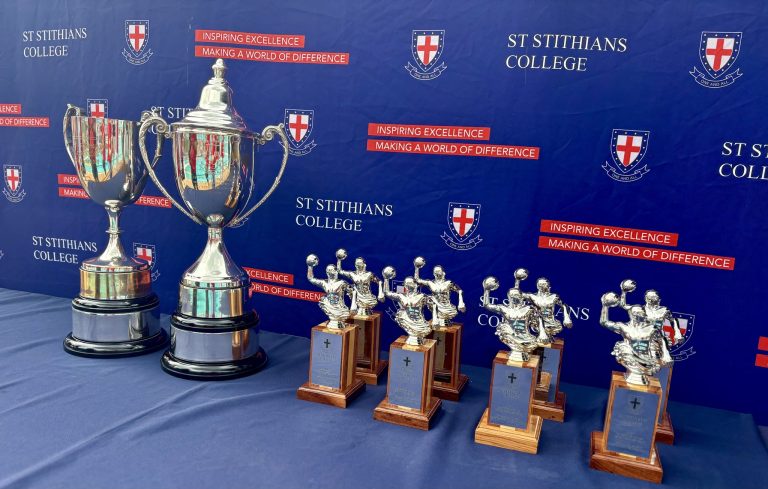
At the St Anne’s Diocesan College Water Polo Tournament in Hilton, former head coach Megan Sileno made a victorious return, this time at the helm of Johannesburg powerhouse St Stithians.

Reflecting on the success of the event, St Anne’s head coach Cameron Wiid praised the high standard of play.

“With all top medal matches and even the 5th/6th playoff going to penalties, it’s clear that the level of women’s water polo in South Africa is on the rise,” he said.

In a dramatic final on Sunday, Saints edged out Roedean 7–6 in a penalty shootout after the teams were locked at 4–4 in regulation time.

The run for the title included an 8–6 quarterfinal victory over Durban Girls’ College, winners of both the KZN Top 10 and Mackenzie Cup tournaments, and a semi-final triumph over Herschel Girls, also decided on penalties.

On the other side of the draw, Roedean ended hosts St Anne’s unbeaten run with an 8–6 semi-final win. In the bronze medal playoff, Herschel defeated St Anne’s 7–6 on penalties after a 5–5 stalemate.

Tournament honours were shared, with St Stithians’ Isabella Imbriolo earning Defender of the Tournament, while Danielle Sassenberg was named Most Valuable Player.

Wiid said that hosting 16 of the country’s top U19 teams created a unique competitive atmosphere, further elevated by the calibre of match officials, several of whom had officiated at World Championships and Olympic Games.

While the girls battled it out in Hilton, the Clifton Aquatic Centre in Durban hosted the prestigious boys’ tournament, where Hilton College lifted the title after a 10–8 victory over St John’s College.

Guided by coach Paul Martin, who spent a decade leading Clifton’s programme, Hilton impressed with their sharp attacking responses and defensive strategy.

The standout was striker Tristan Uys, who netted five goals, before being red-carded midway through the game.

Mitchel Garreau stepped up late, scoring twice from penalties to keep Hilton in front, while goalkeepers Trent Chubb and Garrick Phillips made critical stops in a tense finish.

Clifton College claimed third place with a 9–7 win over Kearsney College, while South African College Schools took fifth after a comfortable 9–3 win over Selborne.

Further down, Michaelhouse ended seventh, Durban High School ninth, and Afrikaanse Hoër Seunskool 11th, while King Edward VI avoided a winless campaign with a 17–3 rout of Grey College in the 15th place playoff.

If water polo offered tension and fine margins, Wynberg Boys’ High School delivered dominance on the cricket field at its Jacques Kallis Oval.

Hosting New Zealand visitors Palmerston North, the Cape Town side powered to a 95-run victory in a 45-over clash.

Openers Matthew Saunders and Fawaaz Hendricks gave Wynberg a strong start with a 68-run stand, before Saunders went on to anchor the innings with a composed 81 off 115 balls, including seven fours and a six.

Supported by Michail Tarentaal’s quick-fire 36 and helped along by 38 extras conceded by the tourists, Wynberg posted 238/9.

Palmerston North’s Lucas Kempthorne impressed with the ball, taking 4/46, but his teammates struggled for accuracy, sending down 21 wides.

Chasing 239 runs, the visitors faltered, with only Sean Rowe (29) and Max Culleton (34 off 34 balls) offering resistance.

Wynberg’s Damien Harris tore through the lower order with figures of 4/15, while Jiyaad Abrahams and Luke Kleinsmith shared four wickets between them, bowling out Palmerston North for 143.

The victory was Wynberg’s second in as many days, following a 36-run win over Paarl Gimnasium on Saturday, underlining their fine early-season form.

INSIDE EDUCATION

Gwarube to lead intergovernmental meeting amid KZN education funding crisis

By Johnathan Paoli

Basic Education Minister Siviwe Gwarube is expected to travel to KwaZulu-Natal on Monday for urgent talks aimed at resolving the province’s worsening education funding crisis.

The minister is set to convene an all-of-government meeting with Premier Thami Ntuli, Education MEC Sipho Hlomuka, Finance MEC Francois Rodgers, and senior national and provincial officials.

“The meeting will discuss the serious financial challenges besetting the province and propose a financial recovery plan for the provincial department to ensure stability and continuity in the delivery of education services in the province,” Basic Education spokesperson Terence Khala said.

The emergency meeting comes against a backdrop of deepening fiscal constraints that have left the KwaZulu-Natal education department struggling to fill critical posts, deliver resources to schools, and maintain basic operations.

Gwarube has emphasised that ensuring continuity in education services is a top national priority, noting that the sector is under immense pressure due to years of budget reductions and growing demands on the system.

The provincial department previously revealed that nearly 9,000 posts remain vacant due to budget constraints.

Appearing before the provincial legislature’s Education Portfolio Committee, officials confirmed that while more than 107,000 posts have been approved for the 2025/26 financial year, including over 90,000 educator positions and around 190 therapist posts, funding shortfalls have stalled appointments.

Chief Financial Officer Yali Joyi said the impact of budget cuts is evident in the department’s workforce and that by the end of the quarter in June, there were 98,801 filled posts against the fixed establishment, and that translated to 8,702 vacant posts.

The all-of-government meeting is expected to explore several options, including short-term financial bailouts, reprioritisation of provincial budgets, and longer-term structural reforms.

With nearly 9,000 teaching and support posts hanging in the balance, the stakes for Monday’s meeting are high, with the outcome possibly determining whether the province can begin to reverse years of financial decline or whether schools, teachers, and learners will continue to bear the brunt of austerity.

INSIDE EDUCATION

DASO condemns ‘inhumane’ lockout of Tshwane South TVET students  

By Johnathan Paoli

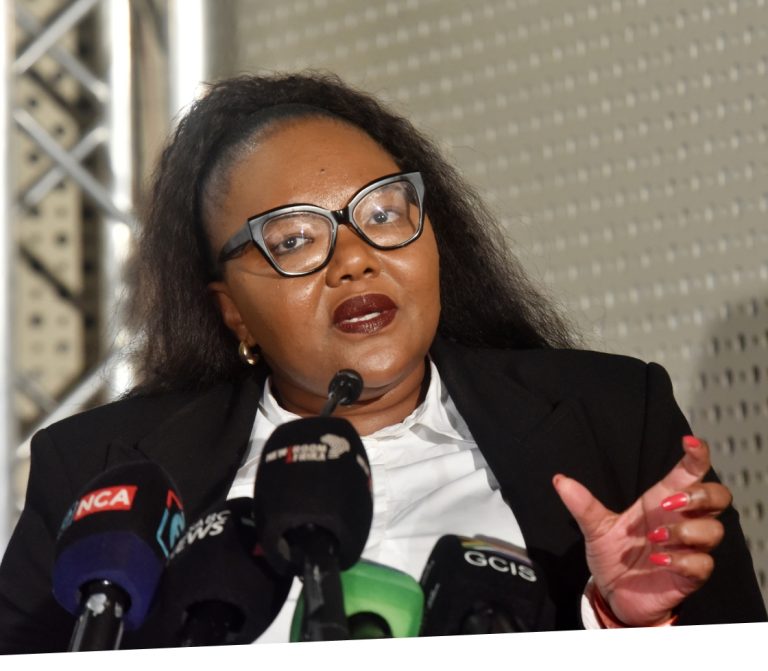
The Democratic Alliance Student Organisation (DASO) has condemned the forced lockout of students from their residences at Tshwane South TVET College in Pretoria West, calling the situation “inhumane and unacceptable”.

The lockout followed a payment dispute of more than R9 million between the Foundation Residence, in Pretoria, and the National Student Financial Aid Scheme (NSFAS).

“Education cannot take place under conditions of homelessness and insecurity. We call upon all stakeholders to urgently act in the best interests of the students, who should never have to bear the brunt of institutional and administrative failures,” DASO’s Deputy Chairperson of Administration, Lizwi Mneno, said.

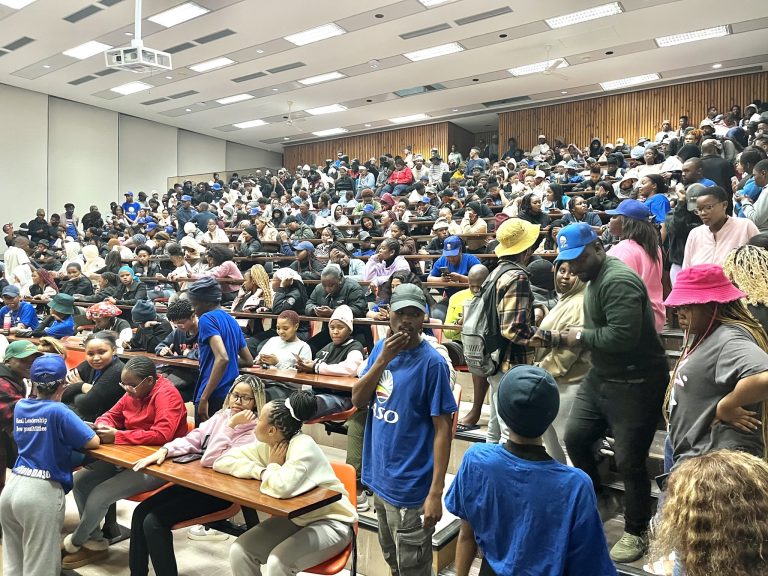
The lockout left students stranded outside their residence, with some being forced to seek alternative shelter while others reported having to sleep in unsafe conditions.

At the centre of the dispute is NSFAS’s funding model, which channels accommodation allowances directly into students’ bank accounts rather than to service providers.

While the policy was intended to give students greater control over their allowances, it has instead created delays and disputes between landlords and students, with some residence providers refusing to accommodate NSFAS beneficiaries until full payments are received.

Mneno said that the payment backlog has left many students across the country vulnerable, as similar incidents have been reported at other institutions.

The student organisation called for several measures to address the crisis, including that:

  • — NSFAS take full accountability for the accommodation crisis and immediately resolve payment backlogs.
  • — Residence providers at Tshwane South TVET College urgently revisit their approach and reopen their doors to accommodate students who have been unjustly locked out.
  • — Accommodation fees be directly paid to residence providers, not students, to prevent disputes and ensure stability.
  • — The Minister of Higher Education intervene to ensure NSFAS reforms its inconsistent funding model, which continues to jeopardise students’ dignity, safety and education.

NSFAS has previously defended its direct payment system, saying it aims to reduce fraud and ensure funds reach the intended beneficiaries.

Earlier this month, the funding scheme announced that it will unveil a new student accommodation framework by the end of October, which will address persistent problems such as delayed disbursements, unpaid landlords, and students being left without housing.

At a media briefing in Pretoria, Acting NSFAS CEO Wasseem Carrim said the scheme is reviewing its accommodation system to strengthen policy, internal controls, and business processes, stressing that NSFAS did not want to pass the student accommodation function around like a football.

The Private Student Housing Association previously raised concerns about NSFAS paying rent money directly to students, sometimes resulting in misuse of funds and evictions.  

The scheme has urged landlords to adhere to payment guidelines during the transition.

At Tshwane South TVET College, the lockout has disrupted academic activities for affected students, with some missing classes and tests due to the uncertainty around their living arrangements.

The Foundation Residence has not yet publicly responded to DASO’s call to reopen the facility.

INSIDE EDUCATION

eThekwini and academia forge agreement to drive growth, improve service delivery

Inside Education Reporter

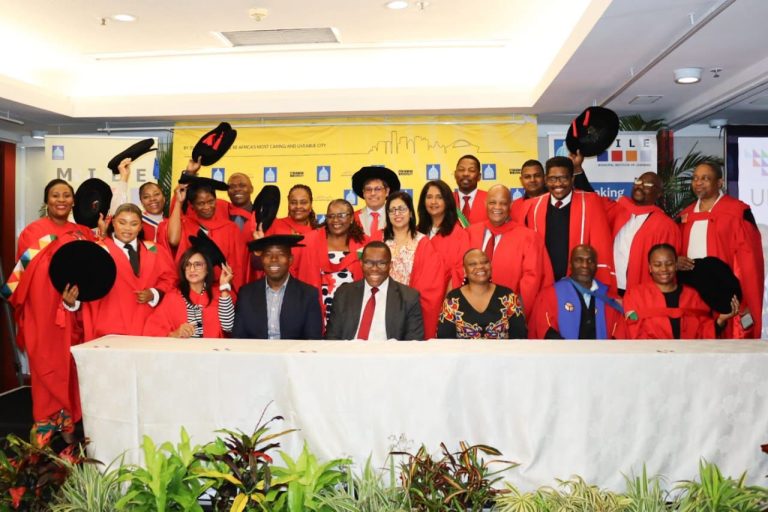
eThekwini Municipality has renewed a three-year partnership with five of South Africa’s leading universities, saying that in doing so, it is reaffirming its commitment to knowledge, innovation and collaboration as tools to drive inclusive growth and improve service delivery.

The agreement, signed on Friday, brings together the University of KwaZulu-Natal, Stellenbosch University, the University of South Africa, Durban University of Technology, and the Mangosuthu University of Technology.

Through a new Memorandum of Agreement (MOA), the city said it was taking “a bold path” in its transformation journey, pledging to continue building a smarter, more liveable and opportunity-rich Durban.

The initiative was first established in 2011 and has since become a cornerstone of the municipality’s development strategy. It is designed to merge academic expertise with the city’s development agenda to tackle pressing real-world challenges.

According to officials, the partnership is aimed at improving service delivery, strengthening skills development, and creating pathways for residents to thrive.

eThekwini Mayor, Councillor Cyril Xaba, described the MOA signing as a powerful recommitment to the city’s transformation agenda.

“This agreement is more than a renewal, it is reaffirmation of the power of collaboration, the spirit of innovation, and our shared commitment to building a better future for the city and its people,” he said.

The mayor added that working alongside universities would help create a city that was “not only smart and sustainable, but also inclusive and just.”

At the heart of the partnership lies the Municipal Institute of Learning (MILE), which has positioned Durban as a global centre for municipal learning and innovation.

MILE serves as a platform for knowledge exchange, drawing researchers, policymakers and community leaders to collaborate on urban solutions. City officials said the programme had made Durban a “beacon of knowledge exchange” and a hub for thought leadership.

The arrangement was described as mutually beneficial. Academic institutions provide research, innovation and intellectual capacity, while the municipality offers opportunities for applied learning and community engagement.

The city said that the partnership has helped eThekwini secure the distinction of having the highest number of PhD holders in South Africa, affirming its commitment to intellectual growth and excellence.

Universities involved in the agreement have pledged to work closely with municipal departments to co-create solutions for development challenges facing Durban and its residents.

“It is through collaboration, shared vision, and collective action that we can build a city that is resilient, equitable, and full of possibility,” Xaba said.

INSIDE EDUCATION

VIDEO: Academic vs Financial Exclusion at Tertiary Level and/or University

Many students are puzzled by the term “exclusion”; even more have no idea what the term means. Any student embarking on tertiary studies faces an equal risk of being excluded.

In this video, Inside Education explains the difference between Financial and Academic exclusion.

A decade ago, “exclusionary” policies by universities were the central tenet that gave birth to the #Fees Must Fall protests in South Africa.

Our children can read the words, but can they read the world?

0

By Dumisani Tshabalala

Recently, to mark International Literacy Day 2025 under the theme: Promoting Literacy in the Digital Era, Buti Manamela, South Africa’s Minister of Higher Education and Training, said, “In an age of endless information, literacy is no longer about accessing words, but about mastering the world.”

Reflecting on his address, I was struck by how his words echo a deep anxiety I see every day in my work as an educator. We are facing a profound disconnect between what we say literacy is and what our children, and our democracy, actually need it to be.

For as long as I can remember, the literacy debate in South Africa has been stuck in familiar ruts: phonics versus whole language, tablets versus textbooks, English versus mother tongue. But I think this noise distracts us from a more dangerous problem. We have become obsessed with the performance of reading, often mistaking the sound of fluency for the substance of understanding.

I’ve seen it countless times. We rightly praise the Grade 4 learner who reads a passage aloud with perfect diction and pace. It’s a beautiful performance. But what happens when we ask her to analyse the author’s argument, question the evidence, or even just explain the text’s significance in her own words?

Too often, there’s a hesitant silence. We then have the other learner, the one who stumbles over syllables and reads haltingly, yet in a class discussion, they can brilliantly trace cause and effect or poke holes in a weak claim.

When we prioritise speed over substance, we celebrate the performance, not the comprehension. This isn’t just an academic concern; I believe it’s a matter of civic survival in our information-saturated world. Literacy today is about the ability to resist manipulation. Can a young person spot the bias in a news report, untangle the distortion in a cropped graph, or see through a misleading statistic? In an era of viral memes and deepfakes, this is no longer a niche skill. It’s fundamental.

When the 2021 PIRLS study revealed that 81 percent of our Grade 4 learners could not read for comprehension in any language, it sent a shockwave through the country. But, if we’re being honest with ourselves, was it truly a surprise? For too long, we’ve operated under the flawed assumption that if you teach a child to decode words, comprehension will magically follow. We rush through content, rarely pausing to model the essential work of sense-making: asking who wrote this and why? How do we know this is true? Who is left out of this narrative? We often separate reading from thinking as if they were two different tasks.

So, what would it mean to truly embrace the Minister’s call to master the world, not just the words?

It starts by weaving critical thinking into the very fabric of learning. It’s not enough to have a once-a-year lesson on media literacy. We need to arm our children with a set of relentless questions to ask of everything they consume: Who created this? What is their claim? What is the evidence? And, perhaps most importantly, what is being omitted? Asked daily, these questions turn mindless scrolling into active scholarship.

This work also requires us to use all our languages as levers for understanding. A child who can reason powerfully in isiZulu is not deficient; they are bilingual in thought. Brainstorming in home languages and drafting in English isn’t an indulgence; it’s just good pedagogy, rooting new, complex ideas in the familiar soil of a child’s mind.

And we must make writing a daily, purposeful habit, not just the occasional formal essay, but quick reflections, summaries, and arguments. Writing, after all, is just thought made visible. If we want our children to think more clearly, we must demand they write more often.

At the Oprah Winfrey Leadership Academy for Girls, we try to embody this vision. Our teachers weave concepts across subjects, so a debate in Life Sciences reappears in a Geography lesson and becomes a comparative editorial in English. Our students learn to ask, with a polite but fierce curiosity, “Where did this claim come from?” Visitors to our school don’t just hear fluent reading; they hear fluent questioning.

This work isn’t glamorous. It’s the slow, cumulative effort of weekly book clubs, of teachers sharing articles in the staffroom, of principals who fiercely guard time for deep, unhurried reading against a packed curriculum.

The ultimate goal here isn’t just better test scores, though those will certainly come. The real goal is active, engaged citizenship. A truly literate nation isn’t one where everyone can read a paragraph aloud flawlessly. It’s a place where a teenager can analyse a loan agreement before signing it, where a voter can see beyond the slogans in a manifesto, and where a community can interpret its own data to demand a better future.

We are at a crossroads. We can continue to chase the illusion of fluency, or we can choose to cultivate a generation that doesn’t just read the world but has the tools, the confidence, and the critical consciousness to reshape it. That is the literacy our children, and our democracy, deserve.

Dumisani Tshabalala is Head of Academics at the Oprah Winfrey Leadership Academy for Girls (OWLAG)

GDE slams Operation Dudula’s anti-migrant school drive

By Johnathan Paoli

The Gauteng Department of Education (GDE) has issued a stern warning to Operation Dudula, saying that no form of intimidation, disruption, or violence will be tolerated on school premises.

This follows Operation Dudula’s ongoing campaign to block migrant children from enrolling in public schools.

The group recently announced that it wants to ensure “no foreign children” are admitted to public schools from January 2026.

On Monday, the group staged a campaign at Soweto schools and demanded that public schools prioritise South African learners over foreign nationals.

Department spokesperson Steve Mabona stressed that admissions are strictly governed by the Gauteng School Admissions Regulations, which prioritise factors such as a learner’s proximity to a school, siblings already enrolled, and feeder zones.

Citizenship or immigration status, he added, does not determine admission.

“The law is very clear: schools are not immigration centres. Their responsibility is to educate children, and constitutionally, all children of school-going age must be in school,” Mabona said.

Mabona added that the department will not compromise its constitutional duty to provide access to education.

He pointed out that many South Africans are themselves undocumented and that the department works closely with the Department of Home Affairs to guide parents on documentation.

“We have a constitutional obligation to make sure that we teach all children. Now it is even more critical because Grade R is compulsory, and the law dictates that those children must be taught. Education is not conditional on nationality or paperwork,” Mabona said.

The department’s stance follows Operation Dudula’s delivery of “warning letters” to 11 schools in Soweto, including Lofentse High School for Girls in Orlando East and Noordgesig Primary School.

The organisation, now positioning itself as a political party, warned that it would take further action by January if schools do not comply with its demands.

The department has made it clear that any attempt by Operation Dudula or any group to disrupt learning will be met with swift intervention from law enforcement agencies.

“We cannot enter into their plan. But as a department, we have a responsibility to work very closely with the law enforcement agencies to make sure that there is law and order in our schools. Anything done within the confines of the law is not a problem. But if you go into our schools and do anything unlawful, then the law enforcement agencies must assist us,” Mabona said.

The department stressed that legislation does not permit any disruption of schools or interference with teaching and learning.

Schools, it said, must remain safe and accessible environments for all learners, parents, and employees.

Operation Dudula has framed its school campaign as part of a broader political mobilisation ahead of next year’s local government elections.

Its leader, Zandile Dabula, claimed that undocumented South Africans were also being neglected by state systems and that the organisation was exposing “wrongs” in school admissions.

But critics argue the campaign is a dangerous continuation of the group’s anti-migrant activism, which previously targeted public health facilities.

Just days earlier, the Economic Freedom Fighters (EFF) in Gauteng laid a criminal complaint against Operation Dudula, accusing it of inciting violence after a one-year-old baby allegedly died when its mother was denied healthcare.

The department reiterated that it is committed to ensuring schools remain centres of safety, learning, and inclusivity.

Mabona pointed to its broader efforts in strengthening education infrastructure and addressing challenges such as overcrowding, mobile classrooms, and waiting lists in special needs schools.

He said the department’s immediate priority, however, is protecting learners and educators from intimidation campaigns.

“Schools must never become battlegrounds for political agendas. We will protect the right of every child to learn in a safe, peaceful environment,” he said.

INSIDE EDUCATION

Gwarube hails Bana Pele ECD drive topping 10,000 registrations

By Johnathan Paoli

Basic Education Minister Siviwe Gwarube has welcomed the Bana Pele Early Childhood Development (ECD) Mass Registration Drive successfully registering and approving 10 000 ECD centres, three months ahead of the original 31 December deadline.

She said this signals that the campaign is not only on track but exceeding expectations.

Gwarube, who earlier this year set an ambitious target of bringing 10 000 centres into the formal system, described the milestone as a victory for children, practitioners, and communities across South Africa.

“This success is a testament to what can be achieved when the government, the private sector, civil society, and communities join forces. But we cannot take our foot off the pedal, much work remains to ensure every child has access to quality early learning opportunities,” she said.

The drive, which was launched nationally in July, has rolled out in five provinces with great success.

Through community-based registration clinics, a nationwide radio campaign, and direct engagement with practitioners, the department has lowered barriers that historically kept many centres unregistered.

The approach has brought government services closer to communities, particularly in rural and under-resourced areas, where ECD facilities have often operated informally without oversight or funding support.

The success comes at a time when South Africa is facing a severe early learning crisis.

According to the recently released Thrive by Five Index, 80% of children tested were found not to be developmentally on track, with the vast majority struggling to grasp foundational literacy and numeracy skills.

Experts warn that without intervention in the earliest years, these children face significant hurdles in school and beyond.

Gwarube has historically reiterated that addressing South Africa’s literacy and numeracy crisis requires urgent investment in early learning.

“If we want to fix the outcomes in senior primary school, we must first fix the foundations. This means ensuring children aged zero to four are enrolled in structured ECD centres where they can benefit from a curriculum, professional practitioners, and supportive learning materials,” she explained at the campaign’s launch.

Finance Minister Enoch Godongwana previously bolstered the initiative with a R10 billion allocation to early childhood development, reflecting the government’s recognition that strong foundations are critical to long-term educational and social outcomes.

Last week, the Western Cape leg of the registration drive doubled as a Literacy Month celebration.

Registered centres stand to benefit significantly from formalisation.

Once approved, ECD centres become eligible for departmental support, including a daily subsidy of R24 per child, as well as access to essential learning and teaching materials such as toys, colouring books, and reading resources.

These resources are intended to level the playing field for children from disadvantaged households, many of whom currently lack access to structured learning environments.

The department has introduced a tiered certification process, namely Bronze, Silver, and Gold; that allows centres to progressively improve their compliance and quality standards.

While the initial target has been met, the department is pressing ahead with the next phase of the drive.

Efforts will now intensify in the remaining four provinces, where unregistered centres remain widespread.

Gwarube confirmed that she will personally lead provincial visits to encourage practitioners to register and to engage directly with communities about the benefits of early learning.

Provincial leaders have already begun aligning with the initiative.

In the Northern Cape, Premier Zamani Saul has committed to building 10 new ECD centres annually over the next decade, while Education MEC Abraham Vosloo has acknowledged that the registration drive will help address longstanding challenges around infrastructure, practitioner training, and compliance.

Similarly, Free State Education MEC Mamiki Maboya has highlighted the campaign’s role in extending oversight, improving safety, and unlocking subsidies for low-income families.

President Cyril Ramaphosa, speaking earlier this year at the Bana Pele ECD Leadership Summit, conceded that the government should have prioritised early childhood development decades ago.

He framed the current drive as a long-overdue correction, essential to ensuring that every South African child has the chance to “thrive by five”.

INSIDE EDUCATION

Jozi Invitational XI proves the power of school sport with Rams T20 victory

0

By Johnathan Paoli

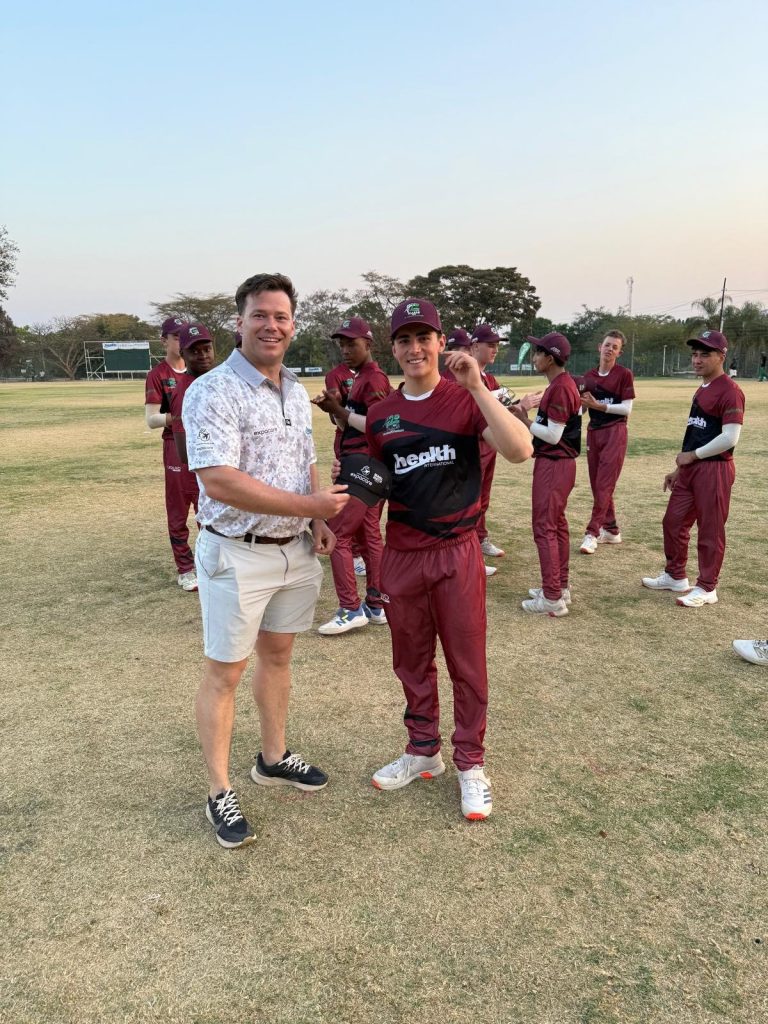
Johannesburg’s school cricketing talent shone brightly on the international stage as the Johannesburg Schools Invitational XI stormed to victory at the prestigious St John’s Rams T20 Tournament in Harare, Zimbabwe.

The composite team, made up of players from King Edward VII School (KES), Jeppe High School for Boys, Queens High School and St John’s College (Johannesburg), finished the week-long tournament undefeated and lifted the trophy after a decisive 39-run win over Clifton College in the final.

Captain of the composite team Wade McQuinn, described the triumph as not only a sporting success, but also a reminder of the educational and developmental value of school sport.

“I had a really good group of boys. We’ve gelled so well together, and that made my job as captain really easy because the guys knew what they needed to do. My job was just about putting the guys in the right place,” McQuinn said.

The tournament brought together young cricketers from across Southern Africa, offering them an environment to sharpen technical skills, learn leadership, and represent their schools on an international stage.

The standout figure of the tournament was KES’s Troy Gordon, whose consistent run scoring made him the batting cornerstone of the Invitational XI.

He struck a superb 54 off 41 balls in the final, notching up his third half-century of the competition.

By the close of the tournament, Gordon had amassed 242 runs in five innings at an average of over 60 and a strike rate exceeding 150, a remarkable statistics at schoolboy level.

His performances earned him the coveted Batsman of the Tournament award.

Captain McQuinn embodied the role of a finisher, playing calculated attacking innings that turned tight contests into comfortable wins.

His rapid 38 off 17 deliveries in the final underscored his ability to handle pressure.

Overall, McQuinn scored 120 runs at a strike rate close to 185, proving that school cricket can produce athletes capable of adopting modern, professional approaches to the game.

Meanwhile, Lincoln Casais demonstrated the importance of versatility in school sport.

Known more for his batting, Casais delivered a match-winning bowling spell in the final, taking three wickets for just 12 runs in two overs.

His breakthrough performance destabilised Clifton College early in their chase and earned him the Player of the Match award.

The Rams T20 Tournament is more than a cricket contest; it is a platform for education in teamwork, resilience and international camaraderie.

For many of the players, the experience of travelling to Zimbabwe, competing against strong opposition, and carrying the expectations of Johannesburg schools offered lessons in responsibility and discipline that extend far beyond sport.

Performances in Harare will strengthen the players’ cases for selection to provincial and national youth squads, potentially unlocking bursaries, scholarships, and pathways into higher education institutions with strong cricketing programmes.

Behind the on-field success stood experienced educators and coaches.

The team was guided by St John’s College Director of Cricket Bongani Ntini, supported by Sharmin Naidoo (KES) and Casey Arnold (Jeppe).

Their roles extended beyond tactical planning; they served as mentors, ensuring that players managed the dual pressures of competitive sport and school responsibilities.

“Such mentorship demonstrates the crucial role teachers and coaches play in holistic education,” Ntini said.

INSIDE EDUCATION