Home Blog Page 54

Bloemfontein, South Africa: how to turn clear skies, a planetarium and an observatory into a tourist attraction

0

By Eben Proos

Astro-tourism is a niche form of tourism where visitors explore the night sky through stargazing events, guided tours, educational presentations and digital astronomy experiences. Unlike mass tourism, astro-tourism focuses on learning rather than just sightseeing.

Astro-tourism could also offer a lifeline to places that don’t have major natural resource attractions that draw tourists.

One place that could benefit from astro-tourism is Bloemfontein, situated in the heart of South Africa’s Free State province. It’s never been considered one of South Africa’s popular tourist destinations. That’s because the city lacks a major attraction like the Kruger National Park or Cape Town’s Table Mountain.

But Bloemfontein has unpolluted skies, a planetarium and an observatory. It is also accessible by air and road. It has hotels and guesthouses for tourists to stay in.

I’m a niche tourism researcher who set out to discover if Bloemfontein could turn those assets into an astro-tourism niche. I surveyed 160 people who were already visiting the planetarium and observatory and asked them what they thought of the facilities and services.

My research found that young people aged between 18 and 35, from the Free State and neighbouring Gauteng province just a three-hour drive away, were the most likely to become astro tourists in Bloemfontein.

It also suggested that expanding astro-tourism could boost local jobs. This would happen if entrepreneurs set up small coffee shops, information centres and local craft sales.

Establishing astro-tourism in Bloemfontein could also highlight Indigenous knowledge of astronomy and the cultural heritage of the area.

With strong marketing, and involving local communities and cultures, my research shows that astro-tourism could generate economic benefits, create jobs, and put Bloemfontein on the map for both domestic and international visitors.

What makes Bloemfontein an astro-tourism destination

The city already has the Naval Hill Planetarium, the Boyden Observatory and Sterland, an observatory on Onze Rust farm.

The Naval Hill Planetarium is located in the city on Naval Hill (a game reserve). It offers immersive digital experiences to visitors. The Boyden Observatory is an astronomical research station located 26km outside the city. It hosts frequent public events. Sterland (“star land”) offers two telescopes to gaze at the stars.

The other advantage of astro-tourism is that it is available all year round. Planetariums are open in all types of weather.

The people I interviewed said a few factors made Bloemfontein a good astro-tourism destination. The friendliness of the local people and astro-tourism staff counted in the city’s favour. Cleanliness, ease of driving to the area and a lower crime rate were other factors.

These are all key attributes that can either ensure success or failure of any tourism attraction. My research concluded that Bloemfontein has top astro-tourism facilities which can boost the city’s fortunes if utilised correctly. Because travellers are looking for memorable, authentic, and engaging experiences especially to lesser known destinations or tourism “gems”, this could also attract astro-tourists to Bloemfontein.

In South Africa, Sutherland has already benefited from astro-tourism. The coldest place in South Africa, Sutherland used to be a tiny sheep farming town with a population of fewer than 3,000 people. But after one of the world’s largest telescopes was installed there, as the darkest site in the world from which to stargaze, it became an astro-tourist destination. However, it’s further off the beaten track than Bloemfontein.

What needs to happen next

It is of critical importance to change people’s negative perceptions of Bloemfontein. Currently it is viewed as a city where there is nothing exciting to do on holiday.

Indigenous astronomical knowledge must be preserved and brought to the front of astro-tourism. Events and displays should be held to focus on this topic. Experts on Indigenous astronomy could also be approached to deliver addresses at the astro-tourism facilities.

The astro-tourist facilites also need to collaborate so that valuable knowledge is exchanged and the astro-tourism product is improved for all involved.

Local communities, amateur astronomy clubs, universities and museums must be drawn in as ambassadors for astro-tourism in Bloemfontein. These key role players can get involved by attending astro-tourism events. They could also take the lead in marketing astro-tourism on social media.

Apart from this, the city needs a strong, dedicated marketing initiative to highlight the impressive astro-tourism products that are currently available.

Bloemfontein has two universities – this means that astro-tourism could be marketed as an inexpensive outing for students. Holiday programmes and school outings for school pupils could also embed astro-tourism in the culture of the city.

All astro-tourism facilities need to be maintained in great condition. This will affect whether people recommend Bloemfontein as an astro-tourism destination.

New and improved technology is needed to improve the overall astro-tourism experience.

Combining astro-tourism with other niche tourism experiences – like festivals, hiking, or wildlife tours – could attract more people to the area.

If astro-tourism is developed, Bloemfontein could potentially become the must-visit astro-tourism destination in South Africa. The economic impacts range from local job creation to infrastructure improvement. Astro-tourists who travel to Bloemfontein will also need accommodation, food and refreshments. If this money was spent in Bloemfontein, it could boost the city’s fortunes.

Eben Proos, Senior Lecturer in Tourism and Event Management, Central University of Technology

THE CONVERSATION

Education beyond the traditional classroom: The benefits of home and online schooling for South African learners

Change is the only constant. And while it may seem that nothing much has really changed about the traditional classroom model, it is important to recognise that it is not the only viable path. 

This is according to Louise Schoonwinkel, Managing Director of Optimi Schooling, of which Impaq is a registered trademark, who explains that home and online schooling has emerged as compelling alternatives to the traditional system. 

“When it comes to educating our children, a one-size-fits-all approach is becoming obsolete. There is a growing need for a more dynamic, learner-centric model that is fit-for-purpose and accessible,” she says. 

One of the most significant advantages of home and online schooling is the ability to tailor the educational journey to the individual learner.

The conventional school system operates on a set pace, with students moving through a curriculum in lockstep.

This can be problematic, as some learners grasp concepts quickly and may become disengaged, while others require more time to master subjects and risk falling behind. 

Learner-centric learning 

Home and online schooling dismantles these rigid boundaries, allowing children to learn at their own pace.

As Schoonwinkel points out, “Education today is about putting the needs of the learner first, which starts with the acknowledgement that the days of a one-size-fits-all approach are both outdated and simply no longer necessary.”

This approach allows a student to spend extra time on a challenging topic until they truly understand it, or to accelerate through a subject they find easy.

It fosters a deeper understanding of the material and cultivates a genuine love for learning, moving beyond the pressure to simply pass exams.

Personalised learning is the central premise of both home- and online schooling. It encourages learners to take responsibility for their own education, fostering self-discipline and independent thinking. 

“I completed my high school career through Impaq, and it was one of the best decisions I could have made for my future,” says Tiwhan Botha – now 19 – who matriculated in 2024.

“The homeschooling structure taught me how to work independently, manage my time effectively, and take responsibility for my own progress. I now apply these skills daily in my role as office manager at a company specialising in Body Corporate and HOA management.”

“The self-discipline and independence I developed at Impaq help me handle large volumes of administration, client service, and management tasks with confidence and accuracy.”

“Impaq’s flexibility gave me the opportunity to focus on academic content, but also to develop life skills that prepared me for the realities of the professional world.”

“Since I became used to managing my own schedule, I am now able to balance both my work and my studies. I am currently completing my LLB degree through UNISA, and every day I see how Impaq’s system taught me to work consistently, with perseverance and a clear sense of purpose.”

Rather than being passive recipients of information, students become active participants in their learning process.

Parents or caregivers assume a supporting role, guiding their child’s educational journey rather than acting as a traditional teacher.

This self-directed approach helps to build confidence and prepares learners for a future that will demand self-management and continuous learning. 

What’s more, an agile structure allows for a broader range of subject choices.

Learners are not limited by the resources available in a single school; instead, they have the freedom to explore other subjects such as coding, creative arts, or entrepreneurship.

Adding options like these makes learning more meaningful and directly aligns education with a child’s interests and future aspirations.

Tech and tools 

The accessibility and power of technology are central to the success of this educational shift.

“The rise of online schooling platforms has made quality education available to learners regardless of their geographical location,” Schoonwinkel says.

It leverages digital tools and resources to create a rich and interactive learning environment. 

Beyond just accessibility, technology enriches the learning experience itself.

Digital platforms can offer interactive lessons, educational videos and real-time assessments that provide immediate feedback.

This level of engagement can make complex topics more understandable and engaging for learners.

Myth busters 

Contrary to common myths, home and online schooling are far from haphazard.

Schoonwinkel confirms that these learners follow structured, reputable curricula like CAPS, which ensures they receive the same National Senior Certificate (NSC) as traditionally schooled learners.

This fact is crucial, as it reassures parents that their child’s education is not compromised. 

Further, one of the most persistent myths surrounding homeschooling is the idea that it leads to social isolation. However, this concern is largely unfounded.

As Schoonwinkel advises, “The reality is that home and online schooled learners often have more flexibility to engage in activities outside of a school setting. Socialising does happen – it just looks different.”

Joining homeschooling groups, sports clubs, or online communities can help learners build strong social connections.

For families with children involved in demanding activities, home and online schooling provides the necessary flexibility to balance education with personal passions, creating a well-rounded individual.

Ultimately, the decision to pursue home or online schooling is a personal one, but it is a choice that is increasingly being recognised as a legitimate and beneficial alternative. 

It represents a paradigm shift from a one-size-fits-all approach to an educational model that is dynamic and truly puts the needs of the learner first.

By leveraging technology and embracing alternative education methodologies, home and online schooling provide a powerful pathway for South African learners to achieve a quality, future-ready education that is tailored to their unique pace and passions.

PRESENTED BY IMPAQ

STEM: South Africa’s future depends on rebuilding education

By Bertie Jacobs

For decades, South Africa has grappled with an education system that seems to promise much but deliver little. Despite commendable reforms and bursts of innovation, the country’s schools remain unequal, under-resourced, and often poorly governed. The result is a crisis that goes far deeper than declining mathematics enrolments or underperforming universities: it is a crisis of national competence.

According to Prof Linda du Plessis, senior deputy vice-chancellor of the North-West University (NWU), this is nowhere more evident than in the state of science, technology, engineering and mathematics (STEM) education.

“These fields hold the key to South Africa’s economic renewal, yet they rest on crumbling foundations. A staggering 81% of Grade 4 learners cannot read for meaning, according to the 2023 Progress in International Reading Literacy Study. Without literacy, numeracy falters; without numeracy, STEM collapses. The failure to get the basics right has turned the promise of technological progress into a mirage.”

“The problem does not start at university gates. It begins at home, in communities, and in the earliest years of schooling. A strong STEM pipeline depends on well-trained teachers, engaged parents, and curricula that reward curiosity rather than compliance. Yet in 2025, nearly 500 South African schools offered no mathematics at all. In rural areas, class sizes exceed 40 pupils, sometimes 55, and teachers are left to manage chaos rather than inspire learning. The system is not producing underachievers; it is manufacturing exclusion,” she says.

Prof du Plessis further explains that the first step towards repair is to treat education as a continuum rather than a set of silos, as universities should not only prepare graduates but help shape national policy and strengthen the basic education ecosystem.

“Universities’ research can guide reforms in teacher training, curriculum design and early childhood development. Teacher quality remains the fulcrum. Incentive schemes for rural educators, coupled with continuous professional development in digital and AI literacy, could stem the exodus of talent from the classroom. Teaching must be restored to its former prestige, which is a respected, aspirational career rather than a reluctant fallback.”

Technology can amplify progress if used wisely.

“Artificial intelligence, already ubiquitous in learners’ lives, can provide personalised tutoring and rapid feedback. But it also demands ethical literacy and responsible use. Universities must therefore train both teachers and students to harness AI without surrendering judgement. Learning management systems should evolve beyond repositories of lecture notes into dynamic tools for engagement, assessment and adaptation. At their best, they can turn passive consumption into active inquiry”.

“Yet technology alone will not close South Africa’s digital divide. Solutions must be low-tech enough to reach schools with limited connectivity. Expanding broadband access through national partnerships or even satellite initiatives such as Starlink could democratise opportunity, particularly in remote areas. Case studies from countries like South Korea -– once poorer than Kenya and now wealthier than Spain -– show what disciplined investment in education can achieve. South Korea’s rise was not built on slogans but on consistent attention to teacher training, extended class hours and respect for academic excellence.”

She also states that, at the tertiary level, universities must align their STEM curricula with economic realities, as the future labour market will reward adaptability, data skills and entrepreneurial thinking more than narrow technical proficiency.

“Integrating business acumen into STEM degrees would allow graduates to create employment, not just seek it. Work-integrated learning and community-based projects should form part of every programme, ensuring that knowledge translates into impact. Micro-credentials and modular courses can then help graduates reskill throughout their working lives.

“The state, meanwhile, must confront its own complacency. Celebrating matric pass rates based on 30% thresholds is political theatre. It masks the rot of low expectations and hollow achievement. Between 2023 and 2024, more than 12 000 fewer pupils enrolled for mathematics, and thousands dropped physical and life sciences. These are not mere statistics; they signal the erosion of ambition. If the government insists on parading inflated success rates while neglecting substance, it will condemn another generation to mediocrity.”

Prof du Plessis is adamant that fixing education also means cleaning up governance, as corruption, mismanagement and political interference have corroded trust in provincial departments. The focus on Grade R is commendable and holds a lot of promise, provided it is supported by sufficient resources.

“Funds meant for textbooks or feeding schemes vanish before they reach classrooms. A zero-tolerance stance is overdue, not only for moral reasons but because every rand stolen from a school deprives a child of a future. Reforming the Sector Education and Training Authorities (SETAs), now mired in dysfunction, would further help bridge the gap between learning and labour.

“Ultimately, South Africa’s future will be written in its classrooms. A country that cannot teach its children to read and reason cannot expect to innovate or compete. The task is not glamorous, but it is existential: rebuild the foundations, or watch the edifice crumble,” she concludes.  

Her message then, is clear. The solution lies not in grand strategies or more promises, but in the daily act of putting competent, motivated teachers before engaged learners in functional classrooms. That is how nations rise, and how South Africa might yet learn to do so again.

Courtesy: NWU

Manamela steps in as governance concerns resurface at Mangosuthu University of Technology

By Thapelo Molefe

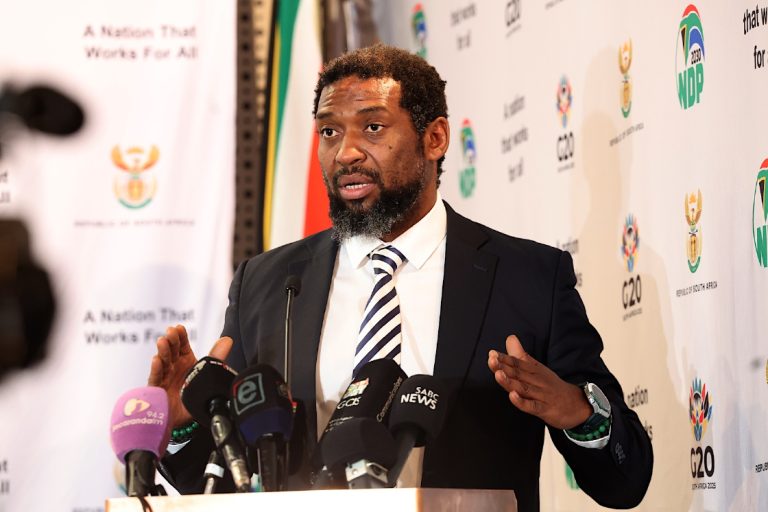
Higher Education and Training Minister Buti Manamela has intervened at the Mangosuthu University of Technology (MUT), meeting the institution’s council and management amid renewed governance and leadership instability following the end of its administration period.

The meeting took place after a series of developments raised concerns about governance at the Durban-based university, which exited administration earlier this year.

A new council was appointed in January, months after the administration period ended, but the institution has since faced fresh turbulence.

Central to the discussions were ongoing challenges that recently led to the suspension of the vice-chancellor and two other senior managers. The suspensions have left critical leadership vacancies, creating what the department described as a vacuum in key positions necessary for the university’s stability.

Council chairperson briefed Manamela on steps taken since the council’s appointment to stabilise MUT, including efforts to address financial pressures, tighten governance controls, fill key posts and mitigate identified risks.

These interventions are seen as crucial as the university works to consolidate its recovery and prepare for the 2026 academic year.

In response, Manamela said his department would provide direct support to the council in carrying out its oversight responsibilities. He instructed the council chairperson to formally outline the specific challenges facing the university and to indicate what support is required from the department.

The minister also directed that the disciplinary process involving the suspended vice-chancellor be finalised urgently to ensure leadership stability is restored.

“We are going to support the university on this journey as the 2026 academic year depends on a stable university that is able to provide an academic programme with integrity,” Manamela said. 

He added that the council must govern the institution in line with the Higher Education Act and ensure policies are properly implemented.

Manamela stressed that safeguarding the 2026 academic year was his overriding priority, warning the council to maintain a clear separation between governance oversight and day-to-day management functions.

Despite the challenges, the minister expressed confidence in the council and management, saying he believed they were doing their best under difficult circumstances and wished them well as they continue to steer the university forward.

INSIDE EDUCATION

Schools again warned: Don’t withhold report cards over unpaid fees

0

By Charmaine Ndlela

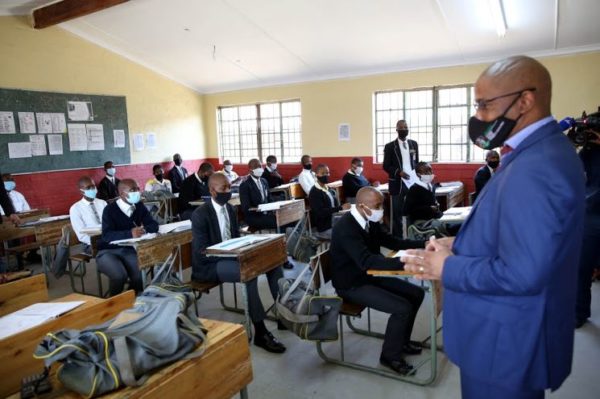
Education authorities and opposition politicians have urged public schools not to withhold report cards over unpaid school fees, after complaints that some pupils ended the 2025 academic year without knowing whether they had progressed to the next grade.

Section 25(12) of the National Protocol on Assessment (NPA) for Grades R–12 states: “A learner’s progress report or school report must not be withheld for any reason, including non-payment of fees.”

The Department of Basic Education says school fees are an agreed amount paid by parents to improve the quality of education, and may not include registration, administration, or additional subject fees.

The department said fee-paying public schools may take legal action against parents who fail to pay, but only after exemption criteria have been applied and parents are found liable.

It said learners must remain in school during the process and cannot be excluded from official school programmes due to non-payment, adding that a school may not retain a learner’s report because the parent cannot afford to pay school fees.

Ashleigh Laurent, legal counsel at Tenant Profile Network (TPN) Credit Bureau, said enforcement steps must follow exemption checks and written notices.

“Government schools can only take action against non-paying parents once they have determined if the parents qualify for a full exemption, partial or conditional exemption from payment and are required to notify parents in writing if they have not applied for an exemption. The government school can send a letter of demand giving the parents three months to pay from date of receipt of the letter.”

According to TPN data released in June 2024, 66% of independent school fee accounts were paid on time and in full, compared to 42% of fee-paying public school accounts. In the first quarter of 2024, TPN said 30% of parents at fee-paying public schools made no payments, while 22% made partial payments and only 28% of fees were paid on time, compared with 15% of parents making no payments and 32% making partial payments at independent schools.

The Democratic Alliance (DA) in KwaZulu-Natal called on public schools and School Governing Bodies (SGBs) to comply with the law and release report cards without prejudice.

DA education spokesperson Sakhile Mngadi said report cards are critical for progression, applications and academic continuity, and advised parents not to confront schools but to lodge formal complaints with provincial education departments at circuit or district offices.

Provincial departments have also issued warnings. The North West Department of Education in December condemned the denial of report cards, with MEC Viola Motsumi saying:

“I have received numerous calls from parents and learners across the province who complain about learners being denied their reports cards. This action is highly unacceptable and those school principals should desist from doing so.”

The Mpumalanga Department of Education also urged schools not to withhold learner report cards under any circumstances, urging parents to report any institution that fails to comply, and said report cards are the official tool showing a learner’s progress, strengths and areas for improvement.

In Gauteng, MEC for Education Matome Chiloane encouraged parents to honour school fee commitments and urged families to plan for fees during the festive season, saying: “Together we can ensure that all learners in Gauteng receive the best possible education and that all schools will run smoothly.”

INSIDE EDUCATION

NSFAS ‘turning a corner’, says CEO Waseem Carrim

By Johnathan Paoli and Thebe Mabanga

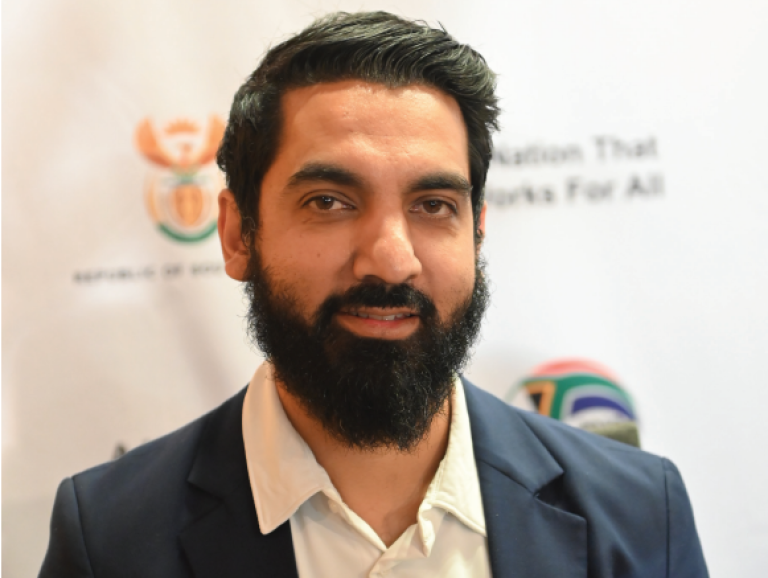
National Student Financial Aid Scheme (NSFAS) acting CEO Waseem Carrim says the entity has entered a “new era of stability, governance reform and operational rebuilding” after years of turbulence, delays and governance failures that shook confidence across the higher education sector.

In an exclusive interview with Inside Education, Carrim detailed a far-reaching reform plan — from leadership stabilisation and decentralisation to accommodation regulation, debt recovery, and NSFAS’s R69.9-billion budget for the 2025/26 financial
year. His comments come as the scheme faces mounting pressure, including a R10.6-billion funding shortfall and rising demand for financial aid.

Carrim said NSFAS is “turning a corner” following prolonged instability marked by delayed payments, fraud scandals and administrative backlogs.

The appointment of a new board chairperson, Dr Mugwena Maluleke, and the filling of several critical senior posts represent what he calls “strategic, deliberate and necessary” interventions.

“The appointments were guided by a strategic focus on strengthening governance, enhancing operational efficiency, and restoring public trust,” Carrim said.

“Stabilising leadership and filling critical vacancies are essential to ensuring accountability and driving strategic reforms.”

He added that NSFAS prioritised leaders with strong backgrounds in public finance, governance and higher education.

These appointments, he said, will enable NSFAS to “operate more transparently, deliver on its mandate efficiently, and rebuild stakeholder confidence”.

One of the most consequential changes underway is the decentralisation of NSFAS operations to all 25 universities and TVET colleges.

For the first time in NSFAS’s history, core functions such as student registration, bursary administration and accommodation support will be handled by NSFAS offices located on campuses.

“The decentralisation initiative is driven by the need to enhance responsiveness, efficiency and localised support for students,” Carrim said.

On-site staff will speed up processing, reduce bottlenecks and offer direct assistance to students, landlords and administrators — especially during the busy registration season.

NSFAS is also preparing to relocate its head office from Cape Town to Johannesburg to improve coordination with government departments and institutions.

“The move aims to position NSFAS closer to key partners, enhance accessibility and strengthen stakeholder engagement,” Carrim said.

The relocation is expected to reduce long-term operational costs and improve service delivery.

Student accommodation — plagued by delayed payments, accreditation disputes and quality concerns — remains a major pressure point.

Carrim said NSFAS has taken “significant steps” to stabilise this function ahead of the 2026 academic year.

These include comprehensive audits of accredited accommodation, strengthened verification processes and the development of new monitoring systems.

A student accommodation protocol was released for public comment in 2025, setting new regulatory standards.

“Significant steps have been taken to bring landlord payments under control and prevent mass evictions of students,” he said.

However, Carrim acknowledged that the crisis was partly “self-inflicted”.

NSFAS assumed responsibility for accommodation from institutions even though it lacked property-management expertise.

He argued that a national accommodation policy, aligned to uniform standards and backed by DHET investment, is required.

He pointed to PRASA’s new 700-bed Braamfontein residence as an example of the type of infrastructure needed.

Responding to questions on historical failures, Carrim outlined systemic reforms to address fraud, backlogs and internal control weaknesses.

These include ICT system overhauls, strengthened compliance units, enhanced oversight mechanisms and
improved payment turnaround times.

“Early signs of progress include greater stakeholder engagement and more frequent public reporting,” he said.

Dedicated liaison units have been set up to respond to accommodation disputes, while direct-payment systems are being upgraded to
provide real-time transparency.

NSFAS continues to face severe financial pressure. In August, the scheme announced a R10.6-billion shortfall for university funding.

The shortfall was driven by increased bachelor passes, rising cost-of-living pressures that widen the pool of eligible applicants, and real-term reductions in state resources.

Government subsequently reprioritised R13.3 billion within DHET’s budget to fund 34,000 students with blocked registrations and 15,000 second-semester applicants.

NSFAS said this reprioritisation also enabled it to settle outstanding accommodation payments, marking “a significant moment in the stabilisation of NSFAS for the 2025 academic year”.

Demand for NSFAS continues to surge.

Of the 893,853 applications received for 2026, 85% were first-time applicants, including 520,544 SASSA beneficiaries.

Young women made up 66.45% of applicants.

DHET’s new enrolment plans will see university numbers rise from 1.07 million in 2023 to 1.18 million by 2030 — growth that will place even more pressure on NSFAS’s budget.

NSFAS will manage R69.9 billion in 2025/26, including R719.6 million for administration and R950 million for loan funding.

The remainder will support bursaries, accommodation and system upgrades.

Carrim said that while the budget is substantial, “we remain committed to advocating for increased funding to meet growing demand”.
Historical debt remains a major challenge.

NSFAS is owed R45.9 billion by 841,879 debtors, some dating back to 1991 when the scheme operated as TEFSA.

NSFAS is procuring a new loan-management system and intensifying debt recovery.

“Where debtors are employed and not making repayments, we initiate recovery processes, which may include external debt collectors or legal action,” he said.

The long-term strategy, he added, will balance financial sustainability with fairness.

Carrim also noted that major policy shifts — such as the introduction of the “missing middle” loan and changes to accommodation rules — were implemented without giving NSFAS time to adapt its systems, contributing to instability.

NSFAS has supported 7.8 million students since its inception and disbursed R51.6 billion in the last financial year alone.

Carrim highlighted that South Africa now produces four times more black African graduates than in 1994 — evidence, he said,
of NSFAS’s role in expanding access.

In a recent interview on the Palatable Politics podcast, he expressed pride in NSFAS’s work, noting that the scheme supports about 900,000 students at any given time.

While graduate unemployment remains a concern, joblessness among graduates is significantly lower than among those without degrees.

“This progress underscores the importance of stabilising and strengthening NSFAS,” Carrim said.

INSIDE EDUCATION

Africa’s richest man commits $688 million to strengthen Nigeria’s education sector

0

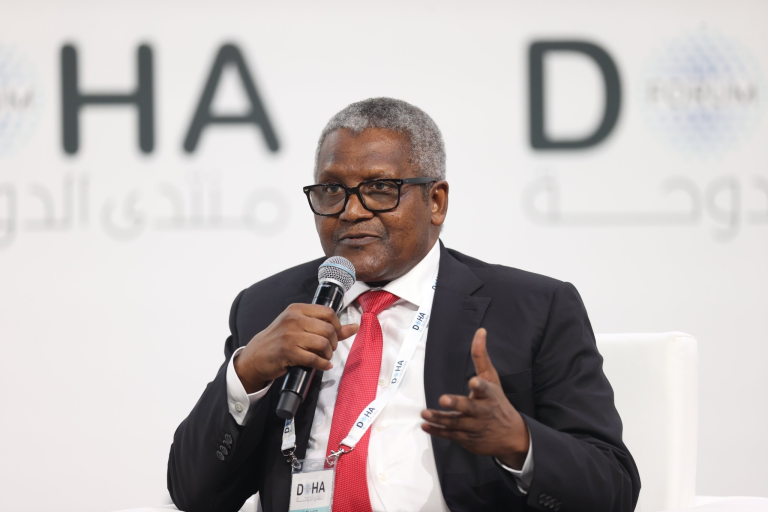
The Aliko Dangote Foundation, chaired by Africa’s richest man, has committed ₦1 trillion ($688 million) to strengthening Nigeria’s education sector over the next decade, in what is set to become one of the largest private philanthropic investments in the country’s schooling system.

The foundation will begin the initiative next year by supporting 45,000 students, with plans to scale up to 1.33 million beneficiaries over ten years.

The program will prioritise students in STEM fields, science, technology, engineering and mathematics, alongside girls’ education and nationwide teacher training.

Earlier this year, Dangote was named among TIME’s Top 100 Philanthropists, alongside fellow African business leaders Patrice Motsepe, Strive Masiyiwa and Mo Ibrahim.

The Aliko Dangote Foundation, which he endowed with $1.25 billion in 2014, is designed to give back to the continent that enabled his rise. The foundation invests an average of $35 million annually in programmes across Africa.

Dangote said the long-term investment is aimed at addressing deep-rooted inequalities in Nigeria’s education landscape, where, according to UNICEF, one in every five out-of-school children globally lives in Nigeria, and more than half of the population of 230 million faces poverty.

“We cannot allow financial hardship to silence the dreams of our young people,” he said in a statement.

The initiative will target students most vulnerable to dropping out and those whose potential can drive community transformation.

This is not only charity. This is a strategic investment in Nigeria’s future,” he said. “Every child we keep in school strengthens our economy. Every student we support reduces inequality.”

Philanthropy is becoming an increasingly powerful force in Africa, with African billionaires taking the lead in addressing critical developmental challenges.

BUSINESS INSIDER

Gauteng principal killed in suspected robbery

0

Staff Reporter

The principal of Samit Christian Academy, an independent school in Kempton Park, was killed in what police said was a suspected house robbery in the early hours of Sunday in Maokeng Extension, Tembisa.  

A suspect has been arrested in connection with the murder, the South African Police Service said.

The Voice of Tembisa FM named the principal as 61-year-old Simon Lubisi.

Gauteng Education MEC Matome Chiloane extended condolences to the principal’s family, the school community, learners, and colleagues.

“Another brutal and senseless act of violence has once again robbed the Gauteng education sector of a school leader. The Department extends its deepest condolences to the bereaved family, the school community, learners and colleagues during this period of immense grief. We also wish the family members a speedy and full recovery,” he said on Monday.

He praised the police for their swift response and called for a thorough investigation to bring all responsible parties to justice.

“The loss of another principal to violent crime is devastating and deeply concerning. The GDE reiterates its call for strengthened community safety measures and continued collaboration between law enforcement agencies, communities and social partners to protect educators and school leaders,” Chiloane said.

“Violence against educators and school leaders undermines the stability of our schools and threatens the future of our children. We condemn this heinous act in the strongest terms and stand in solidarity with the family, the school and the broader education community,” he said.

INSIDE EDUCATION

Parents must take active role in children’s education, say teachers and researchers

0

By Charmaine Ndlela

Education experts and teachers are calling on parents to become more involved in their children’s academic lives, stressing that parental support plays a decisive role in a learner’s performance, confidence and long-term success.

Research consistently shows that learners whose parents are actively involved in their schooling are more likely to achieve higher grades, display positive behaviour and remain motivated throughout their academic journey. Teachers say this involvement should start at home, continue throughout the year, and not only happen at report-collection time.

A review by the National Committee for Citizens in Education found that students experience numerous academic benefits when schools and families work together. These benefits include better grades, higher test scores, higher graduation rates and stronger enrolment rates in post-secondary education.

According to Positive Action, students with supportive parents are 81% more likely to graduate from high school.

According to a study by Rumberger, students who lack academic support and supervision are 34% more likely to drop out of school. The same study found that students whose parents have low educational expectations are more likely to leave school compared to those whose parents have higher expectations.

The South African government has identified improving the quality of education as a national priority. In an effort to strengthen education outcomes for all learners, the Department of Basic Education (DBE) has introduced a number of programmes in schools and has repeatedly emphasised the importance of parents and guardians in supporting children’s learning.

The department said that the level of parent and community participation in schools is low. To encourage fuller involvement, the DBE developed a booklet of practical guidelines that outlines how parents can contribute meaningfully to their children’s success at school, including what parents can do at home to improve learner achievement.

The DBE said the booklet aims to help parents reflect on questions such as:

  • How is my child doing at school?
  • How can I make sure that my child is successful at school?
  • How can I make sure that my child improves?
  • What can I do to make sure that my child has a positive experience at school?
  • How can I support my child and encourage them through difficult times?

The department further said the booklet will empower parents with information to enable them to become more involved in their children’s education so that children can reach their full potential.

The African proverb, “It takes a village to raise a child” means that the work of raising and educating a child cannot be left to the parent alone, but requires the support of an entire community. It is only as the ‘village’ participates and strives together that children will receive a quality education,” the DBE said.

National and international research confirms the crucial role that parents and communities play in children’s success, including more positive attitudes toward school, higher achievement, better attendance and more homework completed consistently.

The South African Schools Act highlights the importance of parental involvement and establishes systems aimed at facilitating meaningful school–parent relationships.

Despite efforts to encourage parental involvement, progress is often hampered by poverty, single-parent households, unemployment and a lack of supportive family structures. In many communities, these pressures shift the focus from education to daily survival — leaving children without the consistent academic support they need.

The teachers that Inside Education spoke to emphasised the importance of building a strong academic bond with children, so they feel comfortable sharing challenges they may be facing.

None of the teachers can be named as their schools have not given them authority to speak to the media.

“Support your children by all means and give them the support they deserve,” one educator said. “Assist them with schoolwork all the time and learn to listen to them without judging. Be present in the process.”

Educators also advised parents to make checking schoolbooks and schoolwork a daily routine.

“It is important to always check your children’s books every day after school,” another teacher said. “This helps parents understand what their child is learning and where they may be struggling.”

Many teachers said parental involvement should go beyond homework supervision and include consistent engagement with the school.

“Attend meetings don’t just come in December to collect reports,” one teacher urged. “Parental presence throughout the year makes a difference.”

Another educator stressed the importance of monitoring children’s behaviour and emotional well-being.

“Check your child’s behaviour patterns and always put your child first after God,” the teacher said.

Teachers also pointed out that learning responsibilities are increasingly shared between schools and parents, especially as workload pressures grow.

“Teaching has largely been transferred to parents nowadays,” one educator explained.
“There is a lot of homework given. If parents don’t help teach their children at home, many learners will struggle or fail.”

“As a former Education Assistant (EA), I believe parental involvement must be intentional and consistent,” she said.

“Parents should also teach children that failure is not final, but a learning opportunity while still encouraging them to aim higher academically.”

Some teachers highlighted the importance of parents being willing to confront difficult truths about learners’ academic behaviour and performance.

“Make appointments to discuss your child’s behaviour,” one parent advised. “Your child may be an angel at home and a monster at school. Many parents are in denial.”

Another educator cautioned against forcing learners into subjects beyond their capabilities.

“Maths and science are not for everyone,” the parent said. “If a child struggled with maths in Grade 9, insisting they continue may only lead to further failure.”

Teachers also raised concerns about excessive cellphone use, warning that while devices can be useful educational tools, they often become major distractions.

“Some children are exposed to inappropriate content and online dangers,” a teacher said. “Parents must monitor and limit cellphone usage.”

Discipline was repeatedly highlighted as a key contributor to academic success.

“Education is not only about IQ,” one educator noted. “Discipline is the main factor. Parents are the greatest teachers.”

Tutors and education practitioners encouraged parents to invest in study materials such as extra textbooks, study guides and past exam papers, while remaining actively involved in how learners use them.

One tutor said. “Above all, show interest in your child’s education from January, not just at the end of the year.”

Experts warned that children who are academically neglected often lose interest in education because they see no vision or purpose in it. However, with consistent parental guidance, support and encouragement, learners are more likely to persevere and reach higher education.

As one put it: “Love your child enough to care about their education. Remember, your child didn’t ask to be here therefore guiding them is your responsibility.”

INSIDE EDUCATION

Western Cape crowned overall champions at 2025 National School Sport Championships

0

By Levy Masiteng 

The Western Cape has emerged victorious as the overall champions of the 2025 Summer National School Sport Championships, held in Ekurhuleni, Gauteng.

The win marks a hat-trick of success for Team Western Cape, following strong performances across the Autumn, Winter and Summer editions of the games.

The 2025 championships included more than 960 learners from all nine provinces.

Western Cape athletes delivered standout performances in gymnastics, goalball, softball and table tennis, competing against the best young talent from across the country.

According to the provincial Department of Cultural Affairs and Sport, the team’s consistent excellence throughout the year secured the coveted overall title, supported by strong results in athletics, swimming, rugby and netball.

The MEC for Cultural Affairs and Sport, Ricardo Mackenzie, congratulated Team Western Cape on their achievement.

“I want to express my heartfelt pride in all our incredible athletes and coaches as you take the national stage. You are not only competing for medals, but you also carry with you the hopes, ‘gees’, and determination of our province.”

He also praised the athletes’ discipline, perseverance, and hard work, saying: “Each one of you earned your place at the championship through discipline, perseverance, and countless hours of training. That alone makes you champions.”

The games were organised by the Department of Sport, Arts and Culture in collaboration with the Department of Basic Education.

“Founded in 2012, School Sports is the cornerstone of sporting development and is central to streamlining sport development in the country and, in so doing, increasing participation in sport in schools,” said the Department of Sport, Arts and Culture.

Western Education MEC David Maynier also congratulated the team.

“The talent and discipline of our school sports stars shows that the future of South African sport has a home in the Western Cape!” he said.

Mackenzie said the province remained confident its school sport strategy would give young people more opportunities to compete, develop and succeed — and to reach even greater heights in the years to come.

INSIDE EDUCATION