Home Blog Page 540

Panyaza Lesufi deserves a committee to help share his workload

0

Thabo Mohlala

ANALYSIS

The recent announcement by Gauteng premier David Makhura to appoint a special cabinet committee to look into the spate of sexual assault at several schools in the province should provide some respite to the embattled education MEC, Panyaza Lesufi. Lesufi has always been on the ground responding to issues such as racism and school violence, to mention just two.

He will now draw on the support of his colleagues in MECs for Community Safety, Sizakele Nkosi-Malobane and Social Development, Nandi Mayathula-Khoza. They will also rope in the relevant NGOs to carry out gender education at schools.

When he received the news of the sexual molestation of 87 girl learners at AB Xuma Primary School in Soweto, it sounded like an isolated incident. He never imagined it will open the floodgates of similar misdeeds.

The hands-on MEC leapt into action immediately suspending the school management team for failing to pick up the problem. He also called in a specialist team of psychologists from the Teddy Bear Foundation to provide counselling to the affected learners. He then convened and addressed an emotionally-charged parents and community meeting at the school. He vowed, in the presence of the parents, that he would immediately overhaul the existing vetting system and install more cameras.

On the day the alleged 58-year-old culprit appeared in court, yet again Lesufi received depressing news that a 28-year-old guard allegedly raped a teenage girl at Mahube Valley Secondary School in Mamelodi, Tshwane. This was followed by two more reports of sexual assault at schools in Hammanskraal and Bronkhortspruit. Recent cases involved two girls from Benoni and West Rand respectively.

In his reaction, Lesufi sounded genuinely angry, touched and embarrassed. He remorsefully and publicly confessed: “We failed your children”, adding that he, together with the school management where the abuses occurred, take full responsibility for what happened.

He personally got involved to put out the raging sexual molestation fires; a hallmark of true leadership. But in doing this Lesufi also emotionally exposed himself. Handling such weighty and emotionally taxing issues in quick succession must have taken a heavy emotional toll on him.

Shaheda Omar, an experienced psychologist, concurs. “Anyone who has been heavily involved with a process such as the recent sexual abuse cases would have definitely been affected and traumatised,” said Omar.

She said, naturally, as people, we tend to immerse ourselves in and empathise with the victim. And as we do this, she said, we get sucked in emotionally. Omar recommends, in such situations, that people should “de-role” and “de-brief”. She said even psychologists, go for debriefing and therapy sessions after dealing with serious cases. Given Lesufi’s level of exposure and involvement in the recent sexual abuse cases, there is a sense that he too should get de-briefed and rejuvenate himself.

That is why the formation of the committee would go some way to lessen the pressure he has been under. According to premier Makhura, the committee’s first task will be to meet with school principals, governing bodies, station commanders, community policing forums and patrollers to tighten security and safety at schools.  The intervention measures will also focus on re-vetting of all 6000 patrollers. The government will resource the police with more officers and vehicles and the appointment of Life Orientation educators as the first contact for reporting.

“We are perturbed and angered by these horrific crimes against our children which are committed in schools and in communities in general. The sexual abuse, molestation and rape of girl children follow the same trend as the violence, rape and killing of women in general and young in particular. “We must confront this scourge with all the arsenals and resources we have and bring the perpetrators to book. We need a comprehensive response by the police, communities, households and all relevant authorities,” said Makhura.

The re-introduction of the Family Violence, Child Protection and Sexual Offences Unit (FCS) as the specialised police unit and increasing resource allocation to fight crimes against women and children was yielding positive results, said Makhura. He said the FCS is one of the major success stories because of the high rate of arrests and successful prosecution of perpetrators.

“Gender-based violence and crimes against women and children is a societal scourge based on patriarchy. It can only be eradicated through a comprehensive partnership between law enforcement agencies, communities and other decision-makers in society to promote gender equity and bring to book those who commit crimes against women and children,” said Makhura.

UCT students: We will meet in court, Mr. President

Thabo Mohlala

With calls for the release of the Fees Commission report gaining traction, University of Cape Town (UCT)’s students are contemplating legal action to force President Jacob Zuma to release the report to the public.

Naledi Mbaba, SRC member confirmed that they were looking into legal action. She has been tasked with looking into the legalities related to the matter

“We are exploring the legal route because the president is just not prepared to move on this matter,”Mbaba told Inside Education. She said they were currently in the process of briefing their legal team and tightening potential loopholes.   

UCT’s SRC president, Seipati Tshabalala said: “As students, we feel disheartened that the government has not given us an answer or release the fees commission report to speak to this issue. And that shows the lack of interest in addressing our concern.”

Mbaba said this would not be the only action taken saying they would continue to engage in parallel actions “on the ground”. They aim to mobilise students and force shutdowns of operations on campus.

On Thursday they achieved their objective. Following demonstrations and disruptions of classes and examinations, the university was compelled to suspend classes. Police have since been called in to join the private security company that was already deployed on campus.

UCT’s media liaison Elijah Moholola said: “The University of Cape Town has suspended face-to-face classes on the upper, middle, lower and evening campuses. This excludes the Faculty of Health Sciences and the Graduate School of Business. The reason for the suspension is for the safety of students and staff.”

UCT secured an urgent interdict against “all those persons participating, or intending to participate in unlawful conduct at the properties of the applicant’s properties”. 

On Wednesday police prevented UCT and Cape Peninsula University of Technology (CPUT) students from marching to parliament to demand the release of the Heher Commission report. The march was planned to coincide with Minister Malusi Gigaba’s  Medium Term Budget Policy Statement speech. In his address, Gigaba made no mention of how much was allocated for tertiary education, also deferring to president Zuma to reveal the contents of the report.

Next in the crosshairs was the private security company hired on UCT campus Mbaba told Inside Education.

“We would also like to take similar legal action against the private security company for their use of excessive force when dealing students. They assault and brutalise our members here on campus,” said Mbaba.

But Moholola said the private security company was brought in to safeguard high-risk venues such as laboratories as they house dangerous materials.

“We have briefed the company fully on the scope and limitations of their work. The company is deployed to safeguard high-risk venues. Staff and students might notice the officers in their duties on campus…To interfere with their services may cause a serious health and safety risk,” he said.

UCT is not the only university demanding the release of the Heher Commission. Students at the University of the Freestate started protesting on 20 October. There is growing anticipation that protests will escalate and spill into other campuses and disrupt the writing of final examinations. 

In various recent interviews, student leaders have indicated their unwillingness to consider anything that does not address their key demand of “free education for all”. Others warned of a repeat of the 2015/16 protest actions that crippled teaching at most campuses.

Similarly, management at various institutions said it cannot survive with 0% fee increment. Most universities have held back on their fee increment announcement pending the release of the Fees Commission. Only the Central University of Technology and Stellenbosch felt the wait was not worth it and unilaterally hiked their fees by 8% for 2018.

UCT’s vice-chancellor, Dr. Max Price, the first to an official SOS to president Zuma urging him to urgently release the report, said it would be extremely difficult for universities to function optimally and provide quality tuition without increasing fees. Speaking on 702, Price proposed that government should adjust their student funding in proportion the universities’ expected fee increase through the National Students Financial Aid Scheme (NSFAS).

Earlier this week, Universities South Africa’s chief executive, Professor Ahmed Bawa told Inside Education that if universities did not receive additional funding their operations would be severely crippled and destabilised. He said their salvation lies in the Fees Commission’s findings.

Reports indicate that the commission’s report was supposed to have been released by September. However, this was delayed by the recent cabinet reshuffle which saw the then Minister of Higher Education and Training Blade Nzimande pushed out. If this is the main reason behind the hold-up, then all depends on how quickly Nzimande’s successor, Hlengiwe Mkhize, settles in her new post.

Inside Education got no response from the presidency’s spokesperson even after requesting that questions be sent to him via Whatsapp facility.

Missing North West teacher found dead in a bush

0

Bonile Khanyi

A North-West teacher who went missing on Saturday has been found dead outside Mahikeng in the North West.

Speaking to Inside Education on Thursday, police spokesperson Yvonne Maqoboza said police found the body of Thulisile Ngwenya in the bushes near Lorwaneng village on Wednesday.

Maqoboza further said the police are investigating a case of murder and kidnapping.

She further urged community members to come forward with any information that could lead to the arrest and prosecution of the perpetrators.

Ngwenya was reported missing on Sunday, after she was last seen on Saturday morning, while going to one of the banks in Mahikeng.

Police say her vehicle, a Mazda CX3 was found parked near Mahikeng taxi rank.

She was a teacher at Lekoko Primary School outside Mahikeng.

Her nephew Lucky Mohalaba told Inside Education on Thursday that he was distraught after they heard that his aunt had allegedly been murdered.

“She lost her husband last year July and now this. We don’t understand why and who would kill her, she was a God loving woman and just like her name suggested, she was a quiet person who was always kept the peace,” said Mohalaba.

Born in Mpumalanga, in Kamhlushwa, Ngewenya moved to the North West about 20 years ago, where she met her late husband Professor Themba Ngwenya.

Thulisile is survived by her two kids.

Ngwenya’s family have yet to make funeral arrangements, Mohalaba said.

The country’s tertiary education system is “constipated” and “wasteful”, says Statistician-General

Thabo Mohlala

Statistician-General, Pali Lehohla yesterday gave his final financial statistics presentation for 20 public universities and six universities of technology in Pretoria.

Lehohla’s 17-year tenure comes to an end on 31 October when he will be succeeded by Risenga Maluleke who has been with the organisation for 20 years. Maluleke will take over from November 1, 2017.

In his presentation, Lehohla highlighted the fact that universities enrol many students but produce fewer graduates describing the system as “constipated and wasteful”, adding that “its progression ratios show a declining cohort success”.

He said the overall enrolment increased by 975 837 in 2016.

“But generally the roll of students is around a million in a system the capacity of each can only generate 150 000 a year, meaning for a three-year degree they get only 450 000,” said Lehohla.

He also lamented the capacity and integrity of the Technical and Vocational Education Training (TVETs) to contribute to the country’s job creation.

“The rate of unemployment for the TVETs and specific age-groups is significantly much higher and does not follow the trends for those who are over 35 years old and above. And this begs the question as to why in a skills-hungry TVETs graduates are not employed. It also begs the question as to what is being taught at these TVETs”, said Lehohla.

TVETs have been ring-fenced to offer specialised education geared towards producing graduates with a range of artisan skills.

Similarly, Lehohla pointed out that the rate of black graduates is declining every year, saying this is very concerning for the country. Other aspects of the report showed that the universities paid more bursaries to students in 2016 than the year before. For instance, in 2015 the combined figure given to students in the form of bursaries amounted to R3.115bn while in 2016 this came to R3.271, an increase of R156 million.

The breakdown of the contributions to student bursaries shows that universities of Johannesburg, Nelson Mandela and Fort Hare contributed more than their counterparts.

Overall, the country’s public higher education institutions had a total income from operating activities of R67.4bn. According to the report, institutions received more in tuition fees from government totalling R21.595bn in 2016. This is an increase from the 2015 figure of R21.287bn. Unisa, said the report, raised more tuition fees, collecting R2.8bn, followed by the University of Pretoria with R1 927bn.

Universities also receive cash from other operating activities and this increased by R6.4bn‚ from R60.956bn in 2015 to R67.366bn in 2016. The report attributed the increase to the Department of Higher Education and Training grants including tuition fees. The report further indicated that universities of Cape Town, Stellenbosch and Pretoria this year collected R15.7bn through other activities other than tuition fees.

In his past presentations, Lehohla has always highlighting the country’s education system’s deficiencies. Early this year he told the higher education fees commission that “South Africa is a lost cause when it comes to education”. His views seem to echo a fairly widespread perception that the country is not getting returns for its investment given that education gets a lion’s share of the country’s overall budget every year and yet produces very little outcomes.  

Lehohla further told the commission that the country has great policies of making education generally accessible but these are not matched with the necessary support and results in black people not making it at universities.

Lehohla also called for the release of the Fees Commission’s findings.

Educating girl learners on their rights is crucial – CHRR

0

 Mayamiko Majawa-Mana 

Centre for Human Rights and Rehabilitation (CHHR) in Malawi, has stressed the importance of empowering primary school learners with basic human rights principles for them to be assertive.

Machinga CHRR Project Officer, Stain Katuli, made the observation on Sunday during a two-day training workshop on child rights in Liwonde, Machinga, with focus on sexuality, leadership and advocacy.

Katuli said most girls were dropping out of school because they did not have adequate knowledge of their human rights, noting that most child marriages and early pregnancies were as a result of the influence of some cultural practices.

He said the training was part of the ‘Yes I Do’ project CHRR is implementing in Traditional Authority Liwonde in the district which aims at empowering learners, especially girls, to have requisite knowledge and skills to be change agents in their respective communities.

“The trend where more girls are leaving school for either marriage or due to pregnancy is a source of concern to us. We would like to protect girls to remain in school and excel in their education to realise their dreams,” Katuli said.

He said CHHR’s priority was to ensure that children are well trained on their rights since child marriages and teen pregnancies border on human rights. He, therefore, appealed to the project beneficiaries to be responsible in life and overcome peer pressure.

“Report any type of abuse to relevant authorities,” Katuli said, adding that CHRR had already trained traditional leaders, traditional counsellors and primary school teachers on child rights issues.

Kambewe Primary School Patron, Phillip Mponela, commended CHRR for training the learners on human rights, saying it was important to equip the learners, particularly girls, to remain in school and achieve more in life.

Mponela expressed hope that the girls would be effectively empowered to resist child marriages and teen pregnancies because they would have a clear understanding of the reality of pregnancy-related complications, such as fistula.

One of the participants to the training, Catherine Milopo, said the training on child rights was necessary considering that most girls fall prey to sexual-related crimes since culprits take advantage of the girls’ ignorance of their rights.

It is expected, according to Katuli, that the trained learners would further sensitise fellow learners in their respective schools on child rights and on the impact of child marriages and teen pregnancies.

Source: Nyasa Times

80-year-old ready for doctorate after acing her master’s degree

Kamau Maichuhie

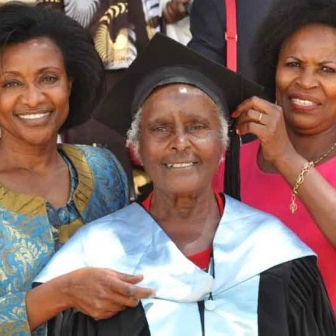
For Janet David Silla, age is just a number that cannot prevent her from achieving whatever she has trained her eyes on. The 80-year-old grandmother proved that last Friday when she graduated with a master’s degree in Development Studies at St Paul’s University in Limuru, Kiambu County. She was among 2,969 graduands who were conferred with degrees, diplomas and certificates in various disciplines during the university’s graduation ceremony.

Silla, who was born in 1938 in Muthumo village, Machakos County, was elated after being crowned with her second degree. The elderly woman, who has now set her sights on getting a doctorate degree, said her desire to further her education was stoked when she travelled to Bugema University in Uganda in 2008 to visit a friend. And bored of staying idle at home, she enrolled for an undergraduate degree.

Speaking to The Standard during the graduation ceremony, Silla narrated how her family in 2009 tried to prevent her from enrolling for a degree in Social Work at the university. “My children said that I was going to embarrass them and my grandchildren laughed at the idea. I was however determined,” she said. She said life at the university was not a bed of roses as she was confronted by culture shock and fast-paced life. “Things were very challenging at first for me. My fellow students could not believe I was one of them. They thought I was a lecturer but I soldiered on and graduated with a degree in Social Work,” she said. After bagging her first degree, she returned to Kenya and started to work as a social worker with the Seventh Day Adventist (SDA) church.

However, even as she continued to work as a social worker, she still harboured thoughts of furthering her education. Her thirst for higher education had not been quenched and she decided to enrol for a master’s degree at St Paul’s University. She said at first, the treatment by some of her fellow students and a section of lecturers almost made her abandon her studies. Silla told The Standard she was taken aback on the first day when a whole class burst out in laughter. “At first, I felt disappointed and out of place. One of the lecturers even told me I did not belong there.

My young classmates asked me why I was studying at my age and who would be interested in employing me. Their attitude did not, however, deter me from pursuing my goal,” she said. She said the students and the lecturers, however, came to understand and appreciate her, adding their support and cooperation kept her going. With the two degrees, Silla hopes to continue with her campaign to empower women and the girl-child. “I want to encourage the young pupils and students in the country that education is the key to a good life,” she said.

Her master’s degree supervisor at the university, Dr James Kuria, termed her a good student who was always on top of things. Dr Kuria acknowledged things were challenging at first but added that she was quick to catch up. If she gets some money, she hopes to enrol for a doctorate degree soon.

Source: The Standard

Presidential polls force schools closures in Kenya

Ouma Wanzala

A number of schools are hurriedly closing ahead of Thursday’s fresh presidential election, with parents asking the government to beef up security for candidates who have remained in schools.

On Thursday, several students were spotted in Nairobi heading home, with schools set to reopen on January 2.

Mangu High School in Kiambu County closed on Thursday, while Maseno School in Kisumu, among other schools, will close on Friday.

The schools are closing early to allow students to travel home safely as political temperatures escalate due to the election. According to the Ministry of Education timetable, all primary schools will close for Christmas holidays on October 25. Students in Form One, Two and Three will close on October 24.

Safety Measures

Kenya Secondary Schools Heads Association chairman Kahi Indimuli said teachers have a responsibility to ensure students are safe.

Similarly, National Parents Association chairman Nicholas Maiyo said the government has a responsibility to ensure that more than 1.6 million candidates are safe as they sit for their examinations.

“We need that assurance from the government that our children will not be affected by the politicking,” said Mr Maiyo.

On Monday, Form Four candidates will sit for the first practical paper, while Standard Eight pupils will write their examination starting October 31.

The practicals — French (oral), German (oral), Arabic (oral) Kenya Sign Language, Braille, music, building and construction and home science — will end on November 3.

Kenya Certificate of Secondary Examination

According to the timetables already sent out to schools, Kenya Certificate of Primary Education examinations will begin on October 31 and end on November 2, while KCSE theory papers will start on November 6 and end on November 29.

At the same time, universities have closed, to allow students and staff to participate in the elections.

Jomo Kenyatta University of Agriculture yesterday closed its main and Karen campuses. Students are expected to resume studies on October 30.

Registrar of Academics ET Mworia said students who wish to remain in the university should give out their names to the dean of students immediately for planning.

Ordered to leave

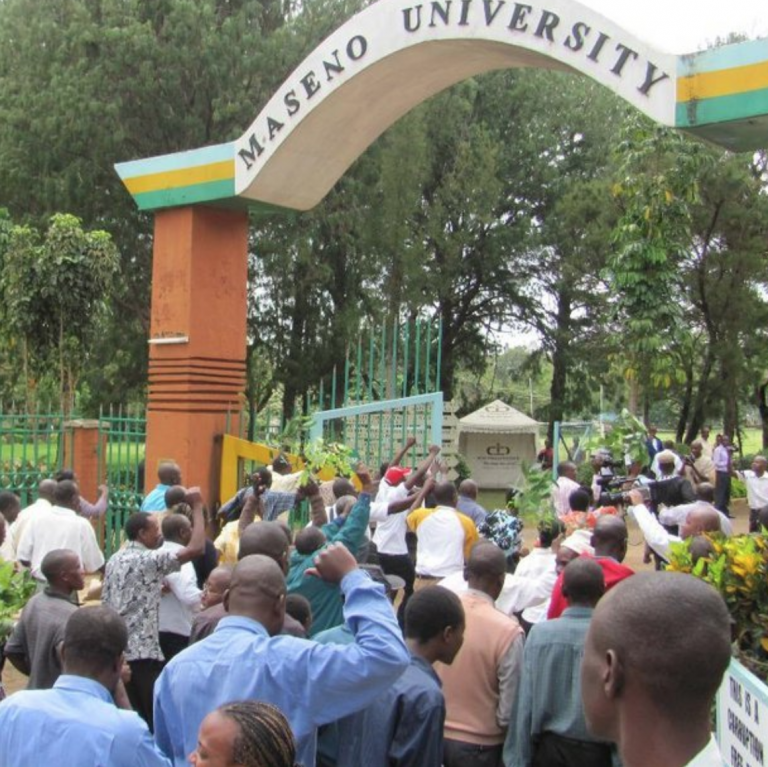
Maseno University closed on Wednesday and students were ordered to leave by Thursday morning. Masinde Muliro University of Science and Technology has also closed.

A circular signed by the acting Registrar of Academic Affairs Carolyne Onyancha said lectures will resume on October 30.

Source: Daily Nation

Angie Motshekga sends best wishes to Matric 2017

0

Bonile Khanyi

Basic Education Minister, Angie Motshekga, has wished the class of 2017 well ahead of their final examination.

“I’d like to wish the class of 2017 good luck for these year’s National Senior Examinations,” said Motshekga.

“Keep your head down, study hard, stay focused and remain confident, you’ll make us proud.”

The Minister also urged this year’s candidates to take advantage of the various post-Grade 12 learning opportunities in the country.

“After at least 12 years into the education system, you owe it to yourself to put your all in these examinations, so that you are able to take advantage of post-school activities. The world is your oyster. So, once more good luck and we ask you to do your best,” said Motshekga.

About 798 289 students are registered for this year’s national senior certificate examination, a decrease of almost 37 840 from last year.

Results will be released on 4 January.

EFF Student Command celebrates landslide victory in Wits SRC Elections

Bonile Khanyi

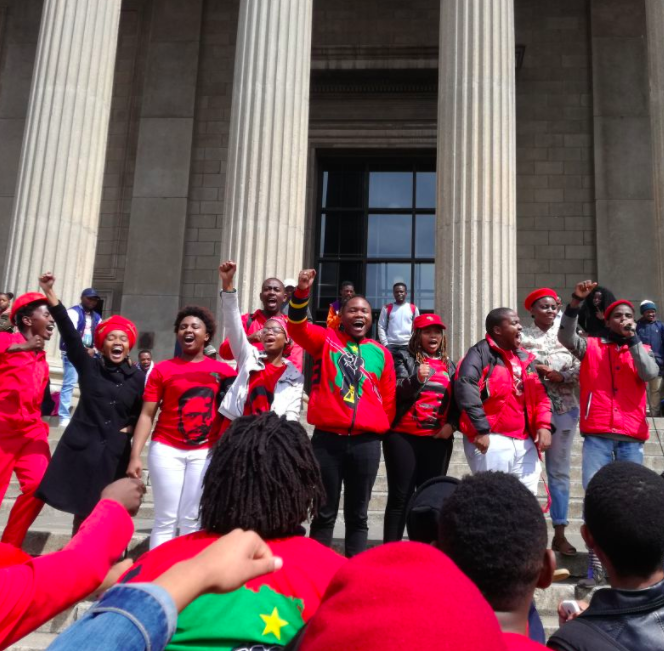
The Economic Freedom Fighters Student Command (EFFSC) had a landslide victory in the Student Representative Council elections at the University of the Witwatersrand.

EFFSC won 12 out of 15 seats on the Student Council, while the Progressive Youth Alliance (PYA) won 3.

This is a great loss for PYA which walked away with all 15 seats last year. 

Tshenelo Leshika from the EFFSC secured the highest number of votes in this election with 2992, followed by the EFFSC’s Syduel Motha with 2963 votes.

Speaking to Inside Education on Thursday, Koketso Poho, Chairperson of the EFFSC said the incoming SRC will be consistent with the EFF policy of transparency and accountability.

“We’ve been complaining about how the SRC hides information from the students, they don’t communicate regularly with the students… What they do, they confine all the issues and the battles with management and that doesn’t do enough in terms of making sure that people are aware of these issues, and that the issues are at least getting a substantial and qualitative response from the ground,” said Poho.

Poho further said the EFFSC will change the pressure on academic structures that prevent students from graduating on record time.

“Among other things we want better health facilities, we want a 24-hour health centre on campus that will be available for students, we want libraries that will accessible at all times of the day,” said Poho.

“It’s easier to enjoy a greater support from the student population when you communicate with them regularly.”

“Our role is to characterise the status quo that is Wits university, its governance, how it is run, the students’ experience, the workers’ experience and to give an overarching view of how we think that society is supposed to be governed.”

National EFF spokesperson Mbuyiseni Ndozi has congratulated the students on Twitter.

The new SRC members are listed below:

  1. Tshenolo Leshika
  2. Syduel Motha
  3. Bonga Gebashe
  4. Mphumi Malatji
  5. Othandwayo Mgqoboka
  6. Orediretse Masebe
  7. Sivuyile Mhatu
  8. Boitumelo Monedi
  9. Kelebogile Morukhu
  10. Nontsikelelo Nkosi
  11. Warren Makoga
  12. Vuyo Qhwesha
  13. Sandla Mtotywa
  14. Palomino Jama
  15. Azra Karim


O.R. Tambo statue unveiled at airport

1

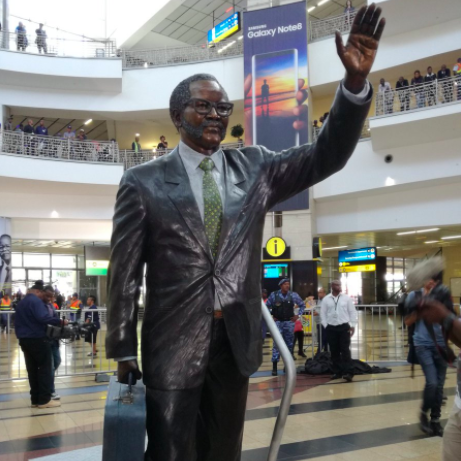
President Jacob Zuma unveiled a life-size statue of the late ANC President Oliver Reginald Tambo to applause and jubilation on Thursday morning.

The statue of Tambo, who served as ANC president from 1967 to 1991, was erected at the O.R. Tambo International Airport, also named after him.

The statue unveiling ceremony forms part of the O.R. Tambo centenary celebrations that are being held across the country this month under the theme Life and Legacy of O.R. Tambo. Earlier on Thursday Zuma also unveiled a bust of the struggle icon at the Air Traffic and Navigation Services (ATNS) where the tower was also named after him.

Tambo, who was passionate about education, was a remarkable teacher of Mathematics and Science subjects, often insisting that students should take their studies seriously and achieve high marks during their exams.

Tambo died at the age of 75 in Johannesburg on 24 April 1993.