Home Blog Page 541

Sadtu march was the last resort

Thabo Mohlala

On the same day that South Africans reacted with shock and disbelief at the recent surprise cabinet reshuffle, South African Democratic Teachers’ Union (Sadtu) painted the streets of the capital city red as they marched to the offices of the Department of Higher Education and Training (DHET) to present a memorandum of demands.

Although the march was completely overshadowed by President Jacob Zuma’s cabinet announcement, Sadtu spokesperson, Nomusa Cembi, told Inside Education the march was a success. The union commands 260 000 members within the education system giving it enormous bargaining power.

Cembi said the march was the last resort and they tried to avert it. She said the department continuously failed to engage with them to address the deteriorating state of education and governance issues at Technical and Vocational Education and Training (TVET) colleges and Community Education and Training (CET) centres in the provinces.

“It took us exactly eight years trying to address these problems with DHET but this has yielded no positive outcomes and that is why we embarked on this course of action. The decision to march was not taken lightly, we had to think long and hard about it,” said Cembi.

Asked if the march was ill-timed, considering grade 12 learners are sitting for the final year examinations, Cembi said: “We are aware that it is during exam time, but every school day is crucial and our matters are equally crucial.”

She said the conditions of service particularly for TVET lecturers were so bad, most of them were demoralised. Cembi cited pay disparities where lecturers received 1% pay progression while their counterparts within the Public Service got 1.5%. She said the department routinely undermined collective bargaining forums and systems to “deliberately frustrate their efforts to raise the genuine concerns of their members.

TVET and CET centres have been earmarked to become institutions that offer specialised curriculums as part of re-configuring the entire post-school education system. DHET has poured billions into the sector to ensure they are adequately re-capitalised to enhance the quality of their institutions. The union’s memorandum also calls on President Zuma to release the report on the feasibility of free higher education which was handed to him at the end of August, by the chair of the commission Jonathan Heher. Sadtu supports students’ demand for free tertiary education, specifically for the poor. Most universities, except Central University of Technology and Stellenbosch, are waiting for the publication of the Fees Commission report before they announce their fees for the 2018 academic year.  

In its memorandum, Sadtu said its patience reached its limit.

“We have had to make difficult choices whether to allow this untenable situation to persist or to confront it head-on. We must point it out that our patience and flexibility has now been tested to the extreme. We regard this on-going state of affairs as an act of provocation against a disciplined work-force. We regard this as an affront to the poor and working class,” read the memorandum.

Hlengiwe Mkhize has her work cut out for her in the restless tertiary sector

Thabo Mohlala

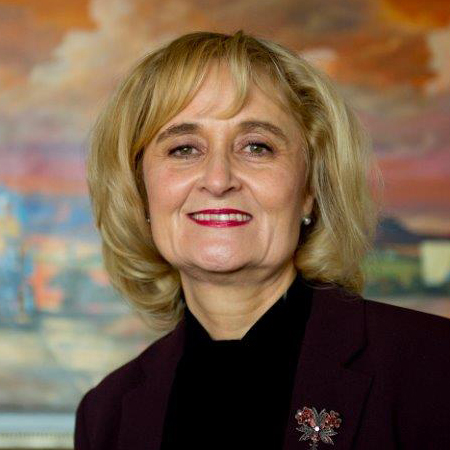
Just when she was settling in at the department of home affairs, Hlengiwe Mkhize, was reshuffled to yet another challenging portfolio: higher education and training (DHET). She is taking over at a time when the higher education sector is anxiously waiting for the publication of the Fees Commission convened by advocate Jonathan Heher.

Although the report was finalised and submitted to President Zuma, he is yet to release its recommendations. The delay has put the entire tertiary sector on tender hooks as free education was the main factor behind student protests that have been ongoing for a number of years.

Stellenbosch University and Central University of Technology have already announced an 8% fee increase for the coming academic season. Other universities said they will only announce their fee increment once the report is public.

Various student leaders have already indicated that nothing less than the implementation of free tertiary education would appease them. These students said they would not hesitate to embark on protests similar to those seen since 2015 when a number of academic programmes were halted at various campuses around the country under the banner of the Fees Must Fall movement. Mkhize would have to be ready with an intervention strategy to stabilise the situation if the report falls short of the students’ demands.

According to the Citizen, the minister has hit the ground running as she is already tackling one of the matters her predecessor initiated. This relates to the appointment of an independent assessor to investigate the affairs of the University of Zululand. The report said she confirmed in a letter that she is in the “process of appointing an independent assessor” at the university.

Mkhize, at the time of Zuma’s reshuffle on Tuesday, was embroiled in an ugly spat with her Director-General Mkhuseli Apleni over several administrative and legal wrangles. Also on Tuesday, while Apleni was in the North Gauteng High Court challenging his suspension,  the Parliamentary Select Committee on Social Services weighed in and lashed at Mkhize for refusing to share with them the precise reasons behind the sacking of the director-general. According to the Mail and Guardian, Mkhize accused Apleni of insubordination when he failed to give her a status report on a legal matter involving Fireblade, an Oppenheimer family-owned company. She said he undermined her in his handling of the matter. Apleni, on the other hand, claimed in his court papers that Mkhize’s son stood to benefit from his absence as there was an unsettled R1million legal dispute between Atlantis Corporate Travel and Home Affairs. Even though papers seen by the Mail and Guardian stated otherwise, his lawyer maintained that Apleni was not given reasons for his suspension. 

Mkhize is an old hand in politics and a staunch member of the ANC, having served as a member of parliament since 2009. She was formerly Treasure General of the ANC Women’s League. Before taking over as the minister of Home Affairs, she was the Deputy Minister of the Department of Telecommunications and Postal Services from 2014 till the end of March this year. Mkhize returns to DHET having served as deputy minister from 2010 to 2012.

She is also involved in a number of civil organisations and trusts. In 1995 she founded and became a trustee of the Children and Violence Trust and has also been a trustee of the Malibongwe Business Trust from 2005. She also chaired the Peace Commission of the South African Women Dialogue since 2004.


We must fight sexual violence at schools says parliament education committee

0

Bonile Khanyi

Parliament’s Select Committee on Education and Recreation has condemned the recent acts of sexual assault against learners at schools in Gauteng and Limpopo.

The Gauteng Department of Education (GDE) is currently conducting three cases of sexual assault in the province.

In two of the most recent incidents in Gauteng, a 17-year-old girl from Mahube Valley Secondary School reported that she was allegedly raped by a school guard who works at her school.

And in Benoni, another learner was allegedly raped by an older boy over the weekend. The incident is alleged to have taken place at a Park in Benoni on Saturday, October 14.

Meanwhile, in Limpopo, a 51-year-old teacher was arrested on Saturday afternoon after he allegedly raped a 14-year-old girl in a village near Tzaneen.

Speaking to Inside Education on Tuesday, Police spokesperson Lieutenant Colonel Moatshe Ngoepe said the 14-year-old had been travelling home from school with the teacher last week Friday.

“He first stopped at a shop to buy something and later raped the victim inside of his car on their way home. He then dropped her off at home,” said Ngoepe.

Chairperson of the committee, Lungelwa Zwane said in a statement on Monday that the safety of the school environment must be restored.

“The safety of the school environment must be reasserted to ensure that parents feel free to send their children to school and that learners are able to learn because education is vital in fighting the triple scourges of poverty, inequality and unemployment,” said Zwane.

The committee reiterated its call for a societal re-commitment to fighting all forms of violence in schools.

It also urged the Department of Education to strengthen verification procedures with the National Register for Sex Offenders (NRSO) to ensure that children are protected from known offenders.

“As a society, we have failed our children and have exposed them to risks from which they must be protected. As a society, we need to find solutions to these problems that besiege the education sector,” said Zwane.


State of the art Nokuthula School is what special needs children deserve

0

Bonile Khanyi

Children living with disabilities in Alexandra will now have easier access to schooling.

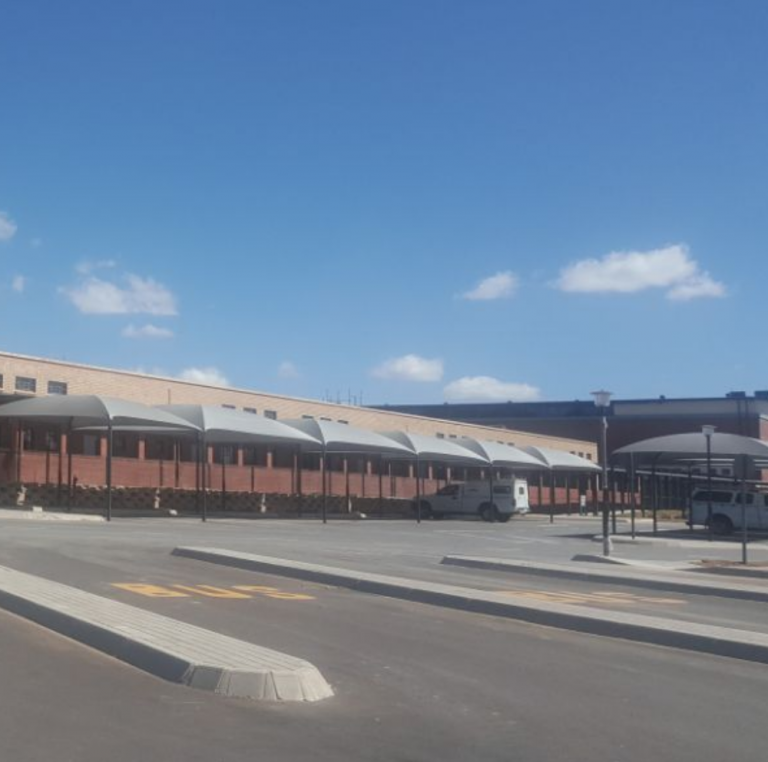
On Tuesday, the Gauteng Department of Education (GDE) officially opened the state-of-the-art Nokuthula LSEN School in Lyndhurst, Johannesburg.

During his keynote address at the unveiling, Gauteng Premier David Makhura commended both Gauteng MEC for Education Panyaza Lesufi and Gauteng MEC for Infrastructure Development Jacob Mamabolo for the work they’ve done “to deliver this service to the public”.

Makhura said children with special needs should not be discriminated against and called names.

He also encouraged learners not to be “disabled in spirit”.

Speaking at the opening, Lesufi said children with special needs used to be on a waiting list for about 5 years but this has now been reduced to 18 months.

Earlier this year, Sonja Boshoff, a Democratic Alliance Member of Parliament revealed that the number of children with special needs who were on the waiting list had increased from 9 323 learners in 2013/2014 to 9 606 in the 2015/16 financial year.

She said that 3 244 learners with special needs were without school places in the Eastern Cape, followed by Gauteng which had a waiting list of 1 785.

Lesufi has since committed himself to ensuring special needs learners are not left behind.

On Tuesday morning, Lesufi said the R250 million school is adaptable and was built to take into account different weather conditions.

The school boasts unique features including Wi-Fi, smart classrooms, a swimming pool and sports grounds.

The school was built to provide primary support to children living with severe intellectual disabilities, severe to profound intellectual disabilities, learners with autism spectrum disorder and mild to moderate intellectual disabilities.

The school will cater for 560 learners, with 80 accommodated within the school premises.

Reopening teacher education colleges – a remedy for education ills?

Professor Sarah Gravett

The media frequently reports on calls to re-open teacher education colleges, however, those who make these calls are scant on providing detail. What exactly is called for? To resuscitate the system of provincially based teacher education colleges?  The term “reopen” seems to suggest this. If so – why this insistence? And why were these colleges closed in the first place?

In 1994 a National Teacher Education Audit was conducted. The audit reported a total of 101 — 93 contact and 8 distance — state teacher education colleges, with more than two-thirds of the colleges based in rural areas. The audit highlighted as a critical issue the poor quality of teacher education in the majority of colleges, particularly in the light of the high cost of college provisioning. From 1997 onwards colleges were rationalized and on 1 January 2001 teacher education colleges ceased to exist as separate institutions – those that were not closed were incorporated into higher education institutions.  

Despite the bleak picture painted by the audit of the quality of teacher education at the majority of the colleges, proponents of the reopening of colleges claim that these institutions prepared student teachers more adequately for the teaching profession than universities and universities of technology do currently. The logical implication of this claim is that those teachers who were trained at teacher education colleges would be good teachers in general. It is safe to say that the majority of the approximately 435 000 teachers in the country (2016 study) were trained at teacher education colleges. Given the many issues in education and the continuous questioning of the quality of teachers and teaching in our schools, one could argue that the claim relating to the superiority of teacher education colleges is not corroborated by evidence.

Though the far majority of teacher education colleges was deemed wanting, the audit judged some colleges as excellent. Thus, when teacher education is criticised for not preparing student teachers well for the teaching profession, the type of institution offering the programmes is of little significance. In the past some teacher education colleges performed dismally, others were adequate and some excelled. Currently, the same applies to universities and universities of technology as teacher education institutions.

Nevertheless, the view that universities and universities of technology are not preparing student teachers sufficiently for the realities of teaching is prevalent. Teacher education institutions need to take heed of this criticism and be self-critical.  Also, the critique that student teachers “know only theory” must be listened to. I assume that those who say this, are implying that student teachers are not able to use coursework learning to deal with the complexities and challenges of the classroom.

What is to be done? The most recent report of the Department of Higher Education and Training on Trends in Teacher Education indicates that 23 public higher education institutions were involved in initial teacher education in 2015. So – are all 23 institutions (equally) guilty of delivering ill-prepared teachers to the system? I would call on those who question the quality of teacher education not to make sweeping statements but to point to the underperforming institutions and to provide specific input on how the teacher education at these institutions is lacking.  Generalisations are not helpful and taint those institutions that work tirelessly towards producing well-rounded novice teachers.

And if I were to single out one aspect that could contribute significantly to strengthening the quality of teacher education, it would be the collaboration between teacher education institutions and schools so as to ensure that school practicum (work integrated learning) is optimally educative. This requires purposeful mentoring of student teachers, with school teachers and teacher educators working in partnership. However, at some schools, student teachers are often left to fend for themselves. They receive little input and guidance from the teachers that they are assigned to. At these schools, the school management team and teachers do not take co-responsibility for educating their future colleagues. Yet the very same people are often the ones who complain that student teachers are not well prepared.

But not only schools are to blame. Teacher education institutions often do not support the schools where students are placed adequately. Many have neither the human nor financial resources to collaborate with the schools in actively supervising and mentoring student teachers. This presents a significant quality challenge for teacher education. During the past few years, the Education Deans Forum has been advocating for ring-fenced funding to support the work integrated component of teacher education programmes. This has been futile. Thus, funding is not readily available to support teacher education.  

Coming back to teacher education colleges.  The closing of teacher education colleges meant that teacher education disappeared in many rural areas. One could argue that there is a need to bring teacher education closer to the communities where teachers will be deployed. The Higher Education Amendment Act 91 of 2016 allows for a new type of higher education institution, namely a higher education college. If there is indeed a definite need to open more teacher education sites, and taking financial constraints into consideration, the establishing of higher education colleges could be an option in the future.

Sarah Gravett is Dean of Education: University of Johannesburg


Blade Nzimande fired in latest cabinet reshuffle

In another not-so-surprising overnight cabinet reshuffle, President Jacob Zuma has fired the Minister of Higher Education and Training, Blade Nzimande.

Nzimande was replaced by Hlengiwe Mkhize who was the home affairs minister is joined by Buti Manamela as department deputy. The deputy minister position was left vacant after Mduduzi Manana resigned in August. Assualt charges were laid against Manana and after public outcry, Zuma told Manana to either resign or get fired.

A recent move to swear in Nkosazana Dlamini-Zuma as a member of parliament sparked rumours that Zuma was about to rock the boat in his cabinet. Speculation has been rife for months now that Nzimande would be ousted but he survived the March reshuffle that resulted in Pravin Gordhan, Mcebisi Jonas and Derek Hanekom getting axed. 

Other ministerial changes to the cabinet this time around, include a move from communications to home affairs for Ayanda Dlodlo, a move to communications from energy for Mamaloko Kubayi and a move to energy from state security for David Mahlobo. Bongani Bongo is the newly appointed Minister of State Security. 

Bongo is a sitting member of parliament from Mpumalanga who was on the Justice and Correctional Services Committee, ad hoc committee on party political funding and served on the Defense and Military Veterans Portfolio Committee.


Girl learner allegedly raped by older schoolboy in Benoni

0

Bonile Khanyi

Another school in Gauteng has been rocked by sexual assault claims — this time in Benoni. 

The Gauteng Department of Education (GDE) has confirmed that another learner was allegedly raped in Benoni over the weekend. This is the third sexual assault case the department has dealt with in the past two weeks. 

In a statement issued on Monday afternoon, the department said the incident occurred on Saturday, October 14.

“It is alleged, that learners organised a farewell function outside the schooling environment, at a Park in Benoni. The victim (Grade 8) who was under the influence of alcohol was offered a toilet by the boy learner (Grade 10) who resides next to the said Park. Subsequently, the boy allegedly raped the girl,” the department said.

Meanwhile, on Monday morning, Gauteng MEC for Education Panyaza Lesufi, visited a Mahube Valley Secondary School in Mamelodi where it is alleged a 17-year-old learner reported that a Community Police Forum (CPF) guard had raped her at the school’s matric dance in Bronkhorspruit last month.

The incident is alleged to have taken place on September 30, and a case was apparently opened earlier this month.

During his visit, MEC Lesufi said the 28-year-old guard was arrested and will appear in the Bronkhorspruit Magistrate’s court on Wednesday.

In another incident that has rocked the province, a 57-year-old scholar patroller was arrested last week for sexually assaulting 87 learners at a primary school in Soweto.

On Sunday, Lesufi addressed a meeting between parents and the School Governing Body (SGB) at the AB Xuma primary school in Orlando East.

During his address, Lesufi said that proper validation still needed to be finalised regarding the number of victims.

The MEC also apologised to parents for a communication breakdown after they expressed their anger about apparent delays in the reporting of the matter by the school principal.

On Thursday, the department removed the principal and her entire management team, who are facing an independent investigation.

Meanwhile, the Commission for Gender Equality (CGE) says it is outraged at the molestation of school pupils and will now be taking the matter forward.

Speaking to Inside Education on Monday, CGE spokesperson Javu Baloyi said going forward, officials will need to ensure that the school environment is created to be conducive.

“Those that are patrolling the school are vetted going forward, to eliminate the roses among the thorns, because some of these predators they take advantage because we don’t know their background,” said Baloyi.

“This was all a witch-hunt” – a teacher from Klipspruit West Secondary School

0

Thabo Mohlala

So racially toxic was the situation at Klipspruit West Secondary School that a learner took his own life after a heated altercation with one of the teachers.

This was one of the revelations shared by Khaphane Moloi, one of the four teachers who bore the brunt of the alleged racist treatment by some parents at the school.

“He (the learner) had an altercation with a teacher at the school. I am not sure if he was wrong but he felt slighted when he was singled out and told not to set foot the following Monday. He does not have parents. And that Monday he hanged himself. I strongly feel his suicide could have been as a result of racism that manifested itself at school,” Moloi said.

Another teacher, Fallon Murhombo, said she gets on well with her coloured learners and they were always worried about her safety. “They informed me beforehand that I must be careful as there will be lockout of black teachers,” she said

Her colleague, Flora Sibidla, said this was a witch-hunt targeted at black teachers. “I mean they accuse us of the very same things that our coloured colleagues also do. Yet they single us out. In the end, we are human and we do slip here and there,” said an agitated Sibidla.

David Vuma, also a teacher, told the hearing that tension at school was instigated by outside elements. He said it was an open secret that Patriots for Equality (PfE) and the Eldorado Park Business Forum captured the school.

“The whole thing revolves around [their] business interests. They have been having things their way and they felt threatened by the appointment of a black principal,” said Vuma.

He tore into Rita Davis, who testified before them.

“I used to greet her and actually took her as my mother. But I cannot anymore after I saw her other [racist] side,” said Vuma.

He said contrary to parents’ claims since he joined the school ten years ago he always produced good results.

“I am not bragging they know that,” said Vuma.

Earlier in her submission, Davis – a former school governing body member before Gauteng Education MEC, Panyaza Lesufi, dissolved the structure – contradicted herself several times.

“The community was concerned that the “rotten” black teachers at the school would take advantage if a principal was appointed”, she said.

Asked if she was not opposing the appointment of the black principal, Davis said: “From my knowledge, there were 29 applications and 11 were coloured but there was not even one coloured for an interview or shortlisting.”

“Do you mean the appointed candidate should have been coloured? Davis answered ‘No”.

In its testimony, early in the morning, the South African Democratic Teachers’ Union (Sadtu) also blamed the racial flare up at the school on Patriots for Equality.

Moses Maluleke and Desmond Luvhengo (Sadtu’s regional secretary and branch chairperson) respectively, made submissions. They said the group started the disruptions in 2015 at Roodepoort Primary School in Davidsonville – another majority-coloured residential area.

“This group seems to be advancing their own interest by strategically using schools as battlegrounds. They know that disruption of learning and teaching will force the authorities to listen to them. Yet they raise issues that are completely unrelated to education,” said Maluleke.

He said after causing chaos at Roodepoort Primary School the group then went to Noordgesig and now “resurfaced again in Klipspruit”.

“Our observation some of their members have business interest as they always insist that all school-based projects should be given to the locals. What is more, some of them do not have children at the school. So, on what basis do they come and disrupt learning and teaching here at KWSS?” asked Maluleke.

Luvhengo said: “racism is rife in the area making it very difficult for one to work there”.

Referring to the disputed appointment of the principal, Luvhego said, every time a black African teacher was up for promotion, the Patriots for Equality objected. He said he and a Naptosa representative observed the appointment process and were satisfied everything went well. He said during the interview, the deputy-chairperson of the panel excused himself because he wanted a coloured candidate to score more point because it was “their territory”. 

But the audience was surprised when Sadtu delegation vehemently rejected the infamous “Vat Alles” slogan, which has always been associated with Sadtu. It is believed this was Sadtu’s deliberate strategy of ensuring that its members were appointed to top positions across the entire education system. The recent ‘Jobs for pals’ scandal, which implicated some members of the union, is directly linked to this position.

“We know nothing about that, it doesn’t exist. To us this is just an attempt by PfE (Patriots for Equality) to discredit Sadtu and inflame the emotions of the community,” said Maluleke.

Maluleke said they regretted withdrawing their members from the schools: “The decision was taken out of frustration after parents locked out our members. It was a reaction out of anger and a need for security,” said Maluleke.

Kago Moeng didn’t die immediately says Busisiwe Seabe

Bonile Khanyi

The 19-year-old student who allegedly died from suicide in Braamfontein did not die on impact. This is according to student activist Busisiwe Seabe who was there when Kago Moeng allegedly jumped from the 6th floor of a Braamfontein student accommodation block on Saturday night.

Seabe told Power FM’s Iman Rappetti on Monday morning that the Wits University student was alive after she hit the ground and died while bystanders waited for an ambulance to arrive.

“The most upsetting part is that when she landed on the ground she was still alive. It took an ambulance over an hour to arrive. Even the manner South Point (student accommodation) handled this matter was not to the best of their ability because there was a lot that they could have done, Kago had been up on the balcony for approximately two hours before she had jumped,” Seabe said.

Speaking to Inside Education Police spokesperson Kay Makhubela confirmed the incident and said that the police were investigating the circumstances behind the alleged suicide.

“A 19-year-old girl who was a student at Wits threw herself out the window from the 6th floor in Braamfontein where she died instantly. The motive of the incident at the moment is not known, but a case has been opened,” said Makhubela.

Some bystanders are said to have jeered at Moeng and shouted for her to jump because she was seeking attention.

Her family, friends and fellow students have taken to social media to share their grief and offer their condolences.

The Wits Student Representative Council (SRC) also expressed their shock and said: “The unspoken pressure on students at our institutions at our institutions are becoming prevalent and the current measures in place are grossly inefficient.”

“So many of our students live in external accommodation and are at risk of these kinds of incidents.”

Wits university said it was saddened by the incident and was in contact with the student’s family.

The university also urged anyone with any further information on the matter to contact the police and Wits security so that it can be investigated.

The Economic Freedom Fighters at Wits held a night vigil at the Great Hall on campus on Sunday night to honour the life of Moeng.

Youth unemployment keeps rising because industry, tertiary institutions and government work separately

Thabo Mohlala

Lack of collaboration between industry and tertiary institutions, as well as, the failure of the government to incentivise business to offer apprenticeships to graduates, are some of the main reasons the country is failing to make a dent in youth unemployment.

With the country joblessness rate continuing to climb, the future looks bleak for most young South Africans. In the first quarter of 2017, according to Statistics South Africa, the unemployment rate hit 27.7 % mark with over 3.3 million young people constituting the bulk of this figure. Even worse is the fact that the vast majority of them have university degrees.

It is not uncommon to see young graduates using major road intersections as strategic sites to market themselves carrying big banners emblazoned with words shouting: “I have a degree in engineering, please give me a job or “hire me, I am qualified”, among others. Early this year frustrated unemployed graduates, resplendent in their graduate regalia, staged peaceful protests at nine points around the Eastern Cape.

Recently, Lilian Bususu, National Graduate Manager at the Independent Institute of Education, reflected on the reasons behind the stubbornly high statistics behind the graduates’ state of joblessness and also explored possible solutions. She was a guest on Talk Radio 702’s The Eusebius McKaiser Show.

Bususu said the problem of growing unemployment is not unique to South Africa but a global phenomenon. She said while some employers are looking to hire young people they also look at the quality of the qualifications of who they employ. She reckoned that the situation may worsen if the country’s economy continues to contract as it will limit the capacity of the market to grow and create new job opportunities.

However, she said, the primary reason industry is incapable to absorb sufficient numbers of graduates is the mismatch between their qualifications and what the market requires. Bususu said this is exacerbated by poor coordination between industry, institutions of higher learning and the government.

“There is pushback from industry which blames tertiary institutions for not producing graduates with requisite skills-set. But the institutions also feel the blame is misplaced as the industry should also step up to the plate and engage the institutions in terms of how they should structure their curricula,” said Bususu.

She said it is wrong of industry to sit back and expect universities to produce certain types of skills while they do not engage or give feedback to tertiary institutions regarding what skills they require.

Bususu said when the two critical sectors work in silos it is the youth or graduates who suffer as they anticipate to get employed. But she also highlighted the need for graduates to package themselves so they appeal to potential employers.

“Some of them feel entitled to a job simply on the basis that they have a degree,” said Bususu, adding that often graduates get so idealistic and when they cannot get employed, they feel dejected. She said each graduate should strive to beat off the stiff competition from their counterparts.

She said although some companies offer internships to graduates most of them do not have a retention strategy and in the end, graduates are left out in the cold.

“My experience is that some of the companies just want to tick BEE boxes without making serious attempts to absorb or help the kids to find decent jobs,” said Bususu.

She said some of these companies are just not prepared to invest their time and resources to develop youths. They would rather focus on developing their own internal talent and expertise. Bususu advised graduates not to underestimate the significance of acquiring soft skills such as how to do desktop research, put together an appealing CV, prepare for a job interview and handle it. She said these are essential in improving their opportunities to be considered.

Industry, tertiary institutions and the government to work together and develop strategies that could help reduce the sky-rocketing youth unemployment particularly among graduates, said Bususu.