Home Blog Page 60

Western Cape celebrates International Literacy Day with call to action

By Levy Masiteng 

As International Literacy Day is commemorated on Monday, Ricardo Mackenzie the provincial Minister of Cultural Affairs and Sport, urged residents of the Western Cape to join their local libraries and cultivate a love for reading. 

According to the province’s Department of Cultural Affairs and Sport (DCAS), they have been working tirelessly to promote literacy through various programs and interventions.

In a statement DCAS said the province has 375 public library service points, 229 rural libraries which provides free internet through over 1,500 workstations and free Wi-Fi access at 180 libraries.

When it comes to materials, they said they have 160,307 hard copy books which were procured in the last financial year, 36,968 e-books, audiobooks, and online magazines that are available for access. 

For the blind and visually the department impaired  37 mini-libraries with 275,194 e-books and 80,990 audiobooks circulated in the past year. 

“Thousands more benefit annually from library storytimes, school class visits, book clubs, reading quizzes, writing competitions, and study support initiatives,” the government said. 

Mackenzie in a statement emphasised that public libraries are more than just buildings with books but they are springboards into learning, opportunity, and hope. 

“On International Literacy Day, we celebrate the everyday heroes—our librarians, volunteers, parents, and young people—who keep the flame of reading alive,” he said. 

Mackenzie continued to say the DCAS aims to build a culture of reading in the province, with library literacy programs directly supporting over 600 residents this year.

He invited every resident to visit their local library, borrow a book or download an e-book, join a reading circle, and sign up for the ALMAL Book Club. 

“Reading opens doors—at school, at work and in life,” Mackenzie proudly said. 

INSIDE EDUCATION

Enhancing teacher education through PrimTEd

By Janine Greenleaf Walker

Interventions aimed at improving teacher education and development in South Africa  – particularly concerning the teaching of languages and mathematics – are beginning to pay dividends.

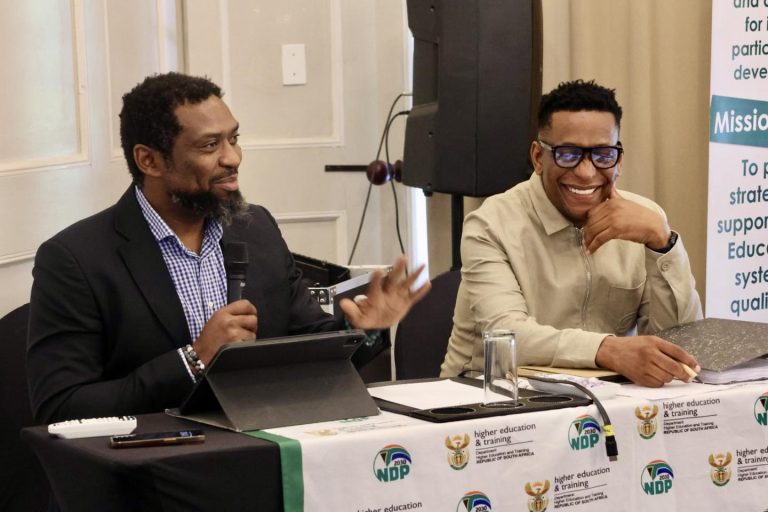
This message emerged from an entity involved in teacher education at Universities South Africa’s Education Deans’ Forum (EDF) meeting on 15 August.

The Primary Teacher Education (PrimTEd) project began as an initiative of the Department of Higher Education and Training (DHET). It is part of the Teaching and Learning Development Capacity Improvement Programme (TLDCIP) that covers areas of primary teacher education.

Since 2016, PrimTEd has assessed standards for measuring Initial Teacher Education (ITE) programmes for primary school teachers’ English and mathematics levels and abilities. It also tracked their development by testing both first-year and fourth-year students. It has now been expanded to measure student teachers’ knowledge in foundation phase literacy in IsiXhosa, Sepedi and English as a First Additional Language (EFAL).

The project also facilitates communities of practice (CoP) among lecturers from the 20 public and private universities involved in PrimTEd, to garner their support and inputs in the design and uptake of these assessments. Lecturers engage in research, standard setting, item writing, and collaborative dialogue based on research outputs produced by colleagues across all participating universities.

Professor Maureen Robinson who currently works for the educational consultancy, Kellelo, was previously a Dean of Education at Stellenbosch University for five years, and for 10 other years served the Cape Peninsula University of Technology (CPUT) in a similar capacity. She reported to the EDF on the progress that PrimTEd has made to date.

isiXhosa and Sepedi glossaries

She said PrimTed had developed isiXhosa and Sepedi glossaries to standardise the languages, and to enable quality assurance and testing. “Extensive piloting of the (updated) maths and English test and pre-piloting of isiXhosa and Sepedi has been done. If you are going to create a benchmark test across universities, you want to be very confident that the testing is valid and that the resulting information is useful. It’s been an intense and long process developing and checking these tests, which included Rasch analysis,” she said.

Professor Robinson dealt with the nuances between Home Language (HL) Knowledge and HL Practice: “It’s not just about what English, Sepedi, isiXhosa or maths content student teachers know; it’s also about what they know about the teaching of these subjects. This takes into consideration the pedagogy, the theory and practice of teaching that subject. That’s really what these tests are aimed at.”

She urged deans to encourage their maths and language staff to join the CoP meetings and administer PrimTEd testing at their universities.

Maths pilot testing

Her colleague, Dr Qetelo Moloi, a Quantitative Analysis Expert at Kelello, shared some of the findings of the PrimTEd maths pilot testing that has taken place.

He said that between 2016 and 2022 they used what they now refer to as PrimTEd 2.0, which has now been changed to PrimTEd 3.0.

“We have developed a standard that can be used across the institutions of higher learning, and this is not only about content. The process is now at the stage where we have piloted more than 500 items of maths with standards attached to them”

“We have tested more than 3000 first-year students and more than 1000 in year four. It is worth noting that there is good progress from first to fourth year – evidence that students improve their performance as they progress through their degree. We also have fewer students functioning at the basic level and more functioning at a higher level of competency– evidence that the interventions in place are bearing fruit.”

Key changes to ISPFTED

Mr Haroon Mahomed, Executive Manager: Teacher Education and Development (TED) Policy and Planning, updated the EDF members on the status of the Integrated Strategic Planning Framework for Teacher Education and Development (ISPFTED), currently being revised. He also updated them on the National Policy Framework for Teacher Education and Development (NPTED).

According to Mahomed, TED policy in South Africa is guided by ISPFTED. It aims to improve the quality of teaching and learning in schools by enhancing teacher education and development opportunities. It focuses on improving access to quality education and development for both current and prospective teachers. 

The first TED summit took place in 2009, and ISPFTED was launched in 2011. The second TED summit, held at the end of 2021, developed resolutions in six key areas, namely,  teacher standards and professionalism, teacher recruitment and retention, teacher education, system deployment, career paths and accountability.

The 2011 ISPFTED framework, Mahomed said, laid the groundwork by outlining strategies for teacher development, recruitment and professionalisation. It has been undergoing revision since the 2021 TED Summit, and this 2025 framework builds upon this foundation, focusing on further improving teacher quality and ensuring a well-rounded education system for all learners. 

Key changes include:

  • Context and content updating – Including the impact of Covid, rapid technological advances between 2011 and 2025 and inclusive education including mother-tongue based bilingual education.
  • Governance and coordination – Proposal to strengthen governance through the establishment of a National Council for Teacher Education and Development (NCTED). 
  • Alignment – Process to align the ISPFTED with the NPFTED, previously not aligned, resulting in many challenges with mandates.
  • Adjustment of outputs and activities – Outputs increased from four to eight, and activities were adjusted, based on SMART (Specific, Measurable, Achievable, Relevant and Time-bound) principles for ease of planning and implementation; planning was streamlined, and goals were made more achievable.
  • Budget – Current budget information was updated with an increase to around R2 billion and how these funds can be used more effectively and efficiently. A  70% skills levy can be used for TED.
  • Collaboration: The roles of various role players including higher education institutions, Sector Education and Training Authorities, the South African Council for Educators, the Education Labour Relations Council and unions to be clarified.

Mahomed asked the EDF to provide feedback, adding that in-depth dedicated workshops could be arranged at universities in collaboration with the Education, Training and Development Practices Sector Education and Training Authority (ETDP SETA).

The updated ISPFTED policy document will be tabled at the Heads of Education Departments Committee (HEDCOM) meeting later this year and later taken to the Council of Education Ministers (CEM).

“In terms of current projection, we could complete this work by the end of this year with HEDCOM and CEM to advise on the further rollout of this process in 2026.”

Changes to Grade R qualifications

Ms Nombulelo Sesi Nxesi, CEO of ETDP SETA, said there had been a change to Grade R teaching: “A decision has been taken that all Grade R teachers must have a Bachelor of Education (BEd) in Foundation Phase Teaching. We are no longer going to be funding a Grade R diploma for employment purposes.”

For the unqualified or underqualified Grade R teachers, transitional measures are currently being developed in consultation with the Education Labour Relations Council (ELRC) and HEDCOM. This framework will ensure that teachers are appropriately qualified for the specific developmental and pedagogical needs of learners at this critical early stage of education. 

University of South Africa

KZN school shooting suspect found almost five years after the incident

0

By Palesa Nguqu

A suspect linked to the 2020 murder of KwaZulu-Natal school principal, Zwelebantu Zuma, was killed in a shoot-out with police at a Soweto hostel on Sunday.

The 40-year-old was tracked down by the South African Police Service (SAPS) National Intervention Unit (NIU) at a hostel in Mapetla.

According to the police, the suspect opened fire when he spotted officers, who returned fire and fatally wounded him.

Police spokesperson Brigadier Athlenda Mathe said the suspect was also wanted in connection with car hijackings and possession of an unlicensed firearm in KwaZulu-Natal.

“Members of the National Intervention Unit (NIU) tracked down the suspect to a hostel in Mapetla Soweto. When the suspect noticed the presence of the police, he began shooting and the NIU returned fire fatally wounding him,” said Mathe.

Zuma, a school principal in Msinga, KwaZulu-Natal, was shot dead in his office in 2020.

Two other accused in the case of the murder of the school principal are already serving life sentences, while two others died before the case went to trial.

One suspect remains at large.

Police confirmed they are still searching for one remaining suspect.

INSIDE EDUCATION

KZN last province to start preliminary exams as national focus turns to Class of 2025

By Johnathan Paoli

KwaZulu-Natal (KZN) has officially become the last province in South Africa to commence its 2025 matric preliminary examinations, joining the rest of the country in preparing learners for the all-important National Senior Certificate (NSC) finals in October.

The KZN Education Department confirmed that its 2025 matric cohort began writing their trial examinations on Monday, with the assessments scheduled to conclude on 2 October.

Education MEC Sipho Hlomuka encouraged pupils to take the preliminary examinations (prelims) seriously, stressing that they are an essential stepping stone to academic success.

“As a department, we motivate, inspire and encourage our Grade 12 learners to manage their time wisely and to use the preliminary exams as a rehearsal for the finals. We urge learners to revise past papers, maintain balance, and study in focused sessions,” Hlomuka said.

These exams, widely regarded as a “dress rehearsal” for the final NSC papers, will test the readiness of more than 200,000 Grade 12 learners in the province, the largest matric population in the country.

The MEC extended best wishes on behalf of the province, saying that the department stood firmly behind learners as they entered the final stretch of their schooling careers.

The start of the matric prelims has been staggered across the country.

Eastern Cape was the first province to begin on 25 August, followed by Gauteng, the Northern Cape, and North West before the end of the month.

Limpopo, Mpumalanga, and the Free State opened their exam sessions in early September, while the Western Cape commenced on 5 September.

KZN’s later start, on 8 September, places it at the tail end of the rollout.

According to the Department of Basic Education (DBE), the varying schedules allow provinces to align with logistical needs, curriculum completion, and local considerations.

Basic Education Minister Siviwe Gwarube previously said the different dates should not detract from the shared national commitment to support learners.

“To our matric class of 2025, as you begin your preliminary examinations, I want to commend you for the dedication and resilience that have brought you this far. Prelims are an important milestone; use them to sharpen your preparation for the final exams,” she said.

Gwarube emphasised balance, reminding learners to rest, exercise, and stay positive during what can be an anxious period.

Across the country, teachers, parents, and communities have been called upon to rally behind learners.

The DBE has provided tools such as its Mind the Gap study guides, Practical Assessment Task guidelines, and access to past exam papers online.

These resources, available across subjects like Accounting, Life Sciences, Agriculture, and Life Orientation, are designed to bolster learners’ confidence and help them master challenging content.

The Zero Dropout Campaign and education specialists have encouraged practical study strategies such as breaking subjects into manageable sections, practising active recall, and applying the Pomodoro method, 25 to 50 minutes of study followed by short breaks.

The 2025 prelims come against a backdrop of continued challenges, from school disruptions in the Western Cape to communities still recovering from flood damage in parts of the Eastern Cape and KwaZulu-Natal earlier this year.

The prelims pave the way for the NSC final examinations, which begin on 21 October with Computer Applications Technology in the morning and Eastern Languages in the afternoon.

The finals will run until 26 November, concluding with the Music Paper.

As the largest province to write last, KwaZulu-Natal will be closely watched as a barometer of national readiness.

With nearly a quarter of South Africa’s matric candidates based in KZN, their performance will weigh heavily on the national pass rate and the future skills pipeline.

INSIDE EDUCATION

New sports facility unveiled at Phulong Secondary in Kwa-Thema

0

By Johnathan Paoli

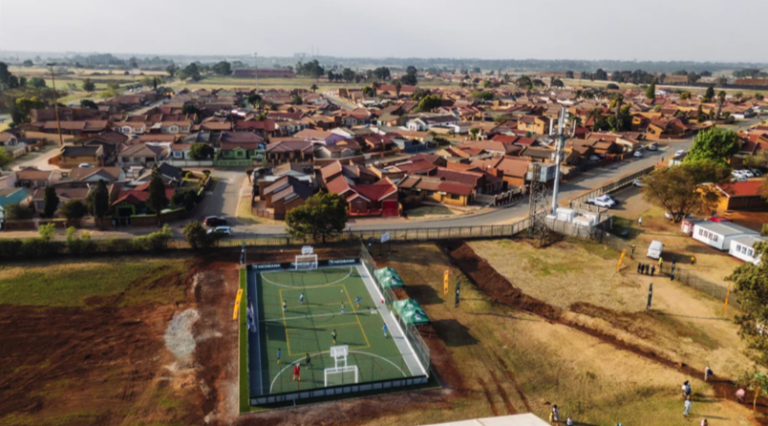
Kwa-Thema in Springs on the East Rand became the latest township to benefit from a state-of-the-art multi-purpose sports facility, thanks to a partnership between Nedbank and Kaizer Chiefs.

Explaining the choice, Kaizer Chiefs Marketing and Commercial Director Jessica Motaung highlighted the club’s commitment to empowering women’s football.

“We are very deliberate in our choice. The facility is not only helping the school or the community, but also providing a suitable training ground for women’s football. That is why we made sure the Home Sweepers train here,” Motaung said.

The facility was officially handed over to Phulong Secondary School, marking a milestone for the community and for women’s football in particular.

The handover forms part of the Nedbank Cup legacy project, which allows the competition winners to select a school that will benefit from a multipurpose sports court.

Chiefs, crowned 2025 Nedbank Cup champions, exercised this privilege by choosing Phulong Secondary, home to over 1,500 learners and a school deeply embedded in the Kwa-Thema community.

The facility will not only serve Phulong learners but also provide a home ground for Springs Home Sweepers Football Club, a women’s team with which Chiefs have established a strategic partnership.

The partnership between Chiefs and Home Sweepers has grown steadily in recent years, with the two sides working together to develop pathways for women players.

Home Sweepers owner and former Banyana Banyana coach, Joseph Mkhonza, expressed heartfelt gratitude for Chiefs’ investment in Kwa-Thema.

“We appreciate everything Chiefs has done for this community. Chiefs had six former players from this community. This community deserves better than what they’ve been getting,” Mkhonza said.

The unveiling was attended by Sport, Arts and Culture Deputy Minister Peace Mabe, who welcomed the initiative as a model for public-private partnerships.

“Partnerships should be fostered with the private sector and this is a step in the right direction. We appreciate Chiefs and Nedbank for this initiative. Let this court become a space for discipline, hard work, talent, and teamwork,” Mabe said.

Learners at Phulong Secondary were equally enthusiastic.

Grade 10 pupil Lindokuhle Gumbi said the project would inspire hope in the school.

“As a school we feel grateful because we don’t usually receive sponsors because of the area we are in. Hopefully, this will inspire dreams for many people,” Gumbi said.

In addition to the court, Chiefs donated sports attire and presented a framed, signed Amakhosi jersey to the school as a symbol of unity and opportunity.

On social media, Nedbank framed the handover as a continuation of the Nedbank Cup’s community impact.

Nedbank Chairperson Daniel Mminele said the initiative aligned with the bank’s belief in the importance of township communities.

“At Nedbank, we recognise that townships are the heartbeat of South Africa’s entrepreneurial spirit, culture, and economic resilience. Through projects like this, we hope to nurture that resilience by creating spaces where young people can thrive,” Mminele said.

Founded in 1969, Phulong Secondary has a proud history spanning 56 years.

The school currently has 1,514 learners enrolled and has produced many achievers, including a learner who won the Southern African Society for Co-operative Education Choral Eisteddfod in July.

The multipurpose sports court adds another feather to its cap, enhancing both its sporting and cultural offerings.

Principal and staff members said the facility would not only improve physical education but also provide a safe, structured environment for learners to pursue their sporting ambitions.

The Kwa-Thema court is the 10th facility built under the Nedbank Cup legacy initiative.

Since its inception, past winners of the Cup have been able to select schools of their choice to receive similar facilities, ensuring that communities across South Africa benefit from footballing success.

For Chiefs, the project reflects their broader philosophy of transforming victories on the field into victories for communities.

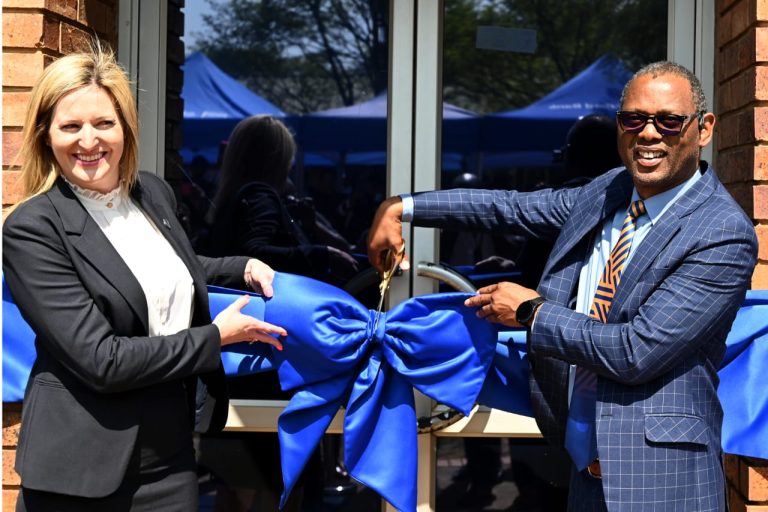
As the ribbon was cut and the first learners took to the new court, the occasion represented more than just a handover but a promise of opportunity, growth, and empowerment for Kwa-Thema’s youth.

INSIDE EDUCATION

VUT launches Green Hydrogen Centre to drive SA’s clean energy transition

By Akani Nkuna

The Vaal University of Technology (VUT), in collaboration with Standard Bank, has launched a Green Hydrogen and Alternative Energy Hub to safeguard the environment and advance sustainable energy education, research, and innovation.

The initiative aims to cut carbon emissions while empowering students and driving economic growth in the Vaal Triangle and beyond.

Speaking at the official launch on Thursday, VUT Vice-Chancellor Khehla Ndlovu said South Africa has responded through the Hydrogen Society Roadmap, a national strategy that positions hydrogen as a key pillar of the country’s just energy transition.

“Here, in the heart of the Vaal, we know that industries are energy-intensive and that communities bear the burden of pollution and unemployment. We also know that our people carry the ambition to innovate, to engineer, to lead. That is why this Centre matters. It is not just about technology—it is about justice, jobs, and the joy of building a sustainable future,” said Ndlovu.

Ndlovu, speaking during the launch at the VUT Southern Gauteng Science & Technology Park in Sebokeng, said that the state-of-the-art facilities are designed to accelerate South Africa’s green energy transition through multidisciplinary academic collaboration and strategic partnerships.

The Centre will produce hydrogen gas from waste products and renewable-powered systems, incorporating the ideas of both academics and students to develop practical solutions that make hydrogen a viable tool in addressing the challenges of climate change.

Ndlovu stated that the Centre will be critical in equipping students with skills, research opportunities, and real-world experience to meet growing industry demand.

He also highlighted the significance of its Sebokeng location, offering students first-hand exposure to the effects of carbon emissions in an industrial area.

“It houses our Advanced Manufacturing Precinct, Technology Transfer Office, and innovation labs that connect researchers with local and global networks. Its mission has always been to foster industrial renewal through science and technology,” he added.

“By situating the Green Hydrogen Centre here, we anchor it within a space designed for applied research, skills development, and enterprise incubation.”

The Vice-Chancellor further emphasised that the Centre will provide green energy solutions specifically tailored for South African industry, arming the next generation of engineers, scientists, and entrepreneurs with essential knowledge for the green economy.

“[The Centre] will empower communities by creating jobs, nurturing skills, and ensuring that the benefits of innovation are felt beyond the laboratory, in homes and in local enterprises. The ripple effects are profound: reduced carbon emissions, strengthened energy security, new business opportunities, and, above all, hope,” said Ndlovu.

During an interview with Inside Education outside the Centre, Ndlovu further reiterated the institution’s commitment to decarbonising the entire Sebokeng area and mitigating the health hazards posed by polluting firms.

“We have received R600,000 from Standard Bank and we are matching that amount for the initial costs. We also have our master plan for Sebokeng—not just the campus but the surrounding area—where we are committed to bringing in more buildings to decarbonise the region,” Ndlovu told Inside Education.

Meanwhile, Standard Bank Head of Business and Commercial Banking South, Simone Cooper, reaffirmed the bank’s commitment to funding projects across sectors to combat carbon emissions.

She said the bank has allocated R33.6 billion in sustainable finance for infrastructure and R19.8 billion for new renewable energy power plants over the past year, resulting in an estimated cumulative installed renewable capacity of 1,703 megawatts.

“In the past year alone, our climate-focused approach has resulted in R2.4 billion in green finance for homes, R2.2 billion mobilised for planet-smart agriculture, and R2.9 billion provided to 1,500 businesses for renewable energy solutions. This represents a 27% increase in green energy generation capacity, reaching 235 megawatts,” Cooper added.

INSIDE EDUCATION

Videographer: Kgalalelo Setlhare Mogapi

EFF slams move to criminalise student debt 

0

By Johnathan Paoli

The Economic Freedom Fighters (EFF) has written to the Chairperson of Parliament’s Portfolio Committee on Higher Education, Science and Innovation, Tebogo Letsie, requesting an urgent joint sitting with the Portfolio Committee on Trade, Industry and Competition to address what it describes as “a devastating and anti-poor” draft regulation that threatens millions of students across South Africa.

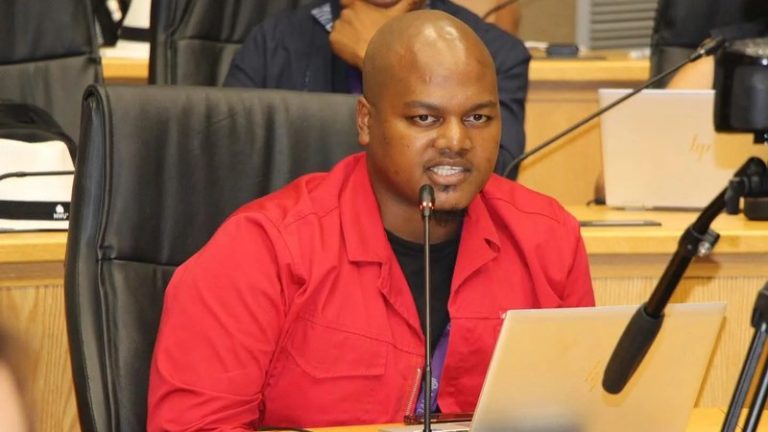
EFF’s Sihle Lonzi, a member of the Higher Education Portfolio Committee, penned the strongly worded letter, warning that the proposal would entrench economic exclusion for poor and working-class youth.

“It is no secret that the majority of students struggling to pay university fees come from poor and working-class communities, ravaged by the legacy of apartheid and ongoing structural inequality. This proposed amendment to the law will punish them for being poor by turning their unpaid fees into permanent scars on their credit records,” Lonzi argued.

The regulation in question, published in Government Gazette 53154, proposes that universities and other higher education institutions be permitted to report unpaid student fees to credit bureaus. This, according to the EFF, would effectively criminalise student debt by saddling young graduates with blacklisted credit records.

The EFF contends that blacklisting young graduates for unpaid fees will create long-term economic consequences, barring them from accessing loans for housing, cars, or business start-ups, and trapping them in generational poverty.

“This is a life sentence, keeping our youth trapped in cycles of poverty and exclusion, before they even have a fair chance to build their futures,” Lonzi said.

The party insists that the draft regulation undermines the very principle of education as a liberating force.

It has called for a coordinated parliamentary response, demanding Letsie convene a joint sitting between the two committees to scrutinise the department’s proposals. Alongside its opposition to the draft regulation, the EFF previously released the first draft of its Student Debt Relief Bill, 2025, which it describes as a legislative breakthrough aimed at dismantling the “structural crisis” of student debt in South Africa.

According to the EFF, more than 500,000 students nationwide are weighed down by institutional debt. Of these, around 300,000 have completed their academic requirements but are unable to graduate or obtain certificates due to outstanding fees.

In 2022 alone, over 120,000 students were barred from graduating. Student debt, which stood at R16.5 billion in 2021, has ballooned further.

“This is not failure; this is poverty being weaponised,” Lonzi said, stressing that debt exclusion is not simply a financial issue but a structural barrier to economic mobility.

The Bill proposes the creation of a state-backed Student Debt Relief Fund, through which eligible students may apply to have their debts cancelled.

Importantly, the fund would reimburse universities and colleges, protecting institutional finances while lifting the burden off students. The draft legislation also seeks to compel all higher education institutions to release qualifications to students who have completed their studies, regardless of outstanding balances.

EFF national spokesperson Sinawo Thambo framed the Bill as “a people’s bill, grounded in the pain and suffering of students who have been excluded for too long”.

He argued that clearing debt would empower graduates to enter the workforce and stimulate the economy.

“This is not simply about financial relief; it is about restoring dignity, enabling graduates to work, to specialise, to start businesses, and to participate in the economy,” Thambo said.

Parliament has opened a 30-day public consultation period on the draft Bill, inviting written submissions from students, academics, trade unions, civil society organisations, and the general public.

The EFF has also announced nationwide consultative meetings at universities and TVET colleges to refine the legislation and build momentum.

INSIDE EDUCATION

SA celebrates national coding winners in honour of Mandela

By Johnathan Paoli

The winners of the 2025 #Coding4Mandela National Championships have been crowned, following a record-breaking season that saw more than 50,000 learners participate in July’s regional tournaments.

Tangible Africa, an initiative of Nelson Mandela University (NMU) and the Leva Foundation, develops offline-friendly coding games such as Rangers and Juicy Gems to promote 21st-century skills through play.

“Our vision is to make the #Coding4Mandela movement an annual, national event in South Africa, preparing teachers and learners for the roll-out of the gazetted Coding and Robotics curricula,” said Andre Greyling, Head of Computing Sciences at NMU.

Leva Foundation CEO Ryan le Roux highlighted the global reach of the programme:

“Tournaments are one of three main components of Tangible Africa’s activities. The World Cup has now caught the attention of major role players. It is always amazing to see how excited educators on other continents are about an application developed in Gqeberha.”

Global Engagement Manager Jackson Tshabalala emphasised the growing interconnectedness among young people:

“From looking at social media posts by participating teams over the past week, it is clear that the digital connection among learners from diverse backgrounds brought about by the nationals has great added value. At the world champs, where part of the event involves teams interacting via Zoom before the tournament, this takes on an exciting global scale.”

The virtual finals, held late last month, brought together 147 winning teams across three age categories, competing through the new Tangible Tournament app. Each team coded from their own school, with their solutions transmitted to Tangible Africa’s headquarters in Gqeberha for evaluation.

After a day of intense competition, the national champions emerged:

• Stanger Manor Primary School (KwaDukuza, KwaZulu-Natal) in the primary category.

• Southlands Secondary School (Chatsworth, KwaZulu-Natal), which clinched victories in both the Grades 8–9 and Grades 10–12 divisions.

Building on this success, a squad of 48 South African teams was announced to represent the country at the Tangible World Cup on 30 September. The global event will feature hundreds of teams from more than 25 countries, with Tangible Africa and the Leva Foundation leading South Africa’s preparations.

For learners, the impact extends beyond competition. Some schools have launched coding clubs, while others report participants securing bursaries and career opportunities in technology.

INSIDE EDUCATION

Manamela calls for sustainable funding in higher education

By Rafieka Williams

The Department of Higher Education and Training (DHET) Minister, Buti Manamela, said Wednesday that stabilising student funding remains a top priority in order to ensure the long-term sustainability of tertiary education.

Manamela delivered a keynote address at the Portfolio Committee on Higher Education’s Strategic Planning Workshop, held in Cape Town, Western Cape, from 2 to 4 September 2025.

He told participants at the workshop that the department was adopting a long-term approach to managing challenges in the sector, with a particular focus on funding.

“There has to be urgent reforms with regard to the national skills fund, there are ministerial recommendations on the table which I think we need to accelerate in their implementation and some of that work would require us to come to committee in terms of legislative changes as it relates to the national skills fund,” Manamela said.

“(These are) discussions that would require us to consider bold decisions if we are to have sustainable student funding model. ”

He told participants that the DHET has engaged with National Treasury to address funding stability in the higher education sector, suggesting the reprioritisation of resources to plug the shortfall in the National Student Financial Aid Scheme (NSFAS).

Manamela added that the department is also working to position Technical and Vocational Education and Training (TVET) colleges, community colleges, and government departments as central to skills development for school leavers.

However, he cautioned that governance inconsistencies remain a major obstacle to progress.

“There are urgent issues around governance challenges, filling up vacancies with the University of South Africa forum and the college council, TVET’s and the guidance principals of the university and colleges,” Manamela said.

“We are prioritizing stabilizing governance of councils and TVET colleges, finalising the process for the accounting authorities of sector education training authorities and the process for the chairperson of SETA’s.”

Manamela said that by stabilising governing councils, the department could help restore stability to institutions, noting that governance failures and financial misconduct have hampered its ability to deliver.

Referring to the ongoing challenges with Sector Education and Training Authorities (SETAs), he asserted that investigations by the Auditor-General (AG) and the Special Investigating Unit (SIU) have uncovered serious concerns.

“We have had engagements with both the AG and the SIU and, of course, we are concerned with the volume of the work they are doing within our universities and TVET colleges, and the investigations happening there,” he said.

Manamela also urged the sector to reconnect with the original purpose of TVET colleges, established two decades ago.

“I said to the team at the department, we are supposed to be the factory of the brains and thoughts and thinking and skills in the country, we have to show that, that is what we are. Building capacity of our department,” he said.

INSIDE EDUCATION

AfriForum urges public to comment on BELA regulations amid growing debate

By Johnathan Paoli

Civil rights organisation AfriForum has welcomed the Department of Basic Education’s decision to extend the deadline for public comments on the draft regulations of the Basic Education Laws Amendment Act (BELA).

The move has reignited calls from civil society organisations, unions, and advocacy groups for South Africans to help shape the future of schooling.

AfriForum’s Head of Cultural Affairs, Alana Bailey, described the extension as “positive and necessary.”

“Both sets of regulations will have a significant impact on the nature of public schools and the provision of high-quality education. It is essential for as many institutions, organisations, and individuals as possible to submit comments,” she said.

Originally set to close on 5 September, the deadline has now been extended to 5 October, according to the Government Gazette.

The regulations, published in August, focus on school capacity and admissions and form part of implementing the BELA Act, which came into effect on 24 December 2024.

Bailey welcomed the extra time, saying it would allow the public to provide more thoughtful and detailed input. She also warned that vague or contradictory regulations could trigger costly legal battles.

“Legislation is often broad, and regulations must bring clarity on its application. If people feel the regulations are unclear, inconsistent, or out of touch with realities in schools, these concerns must be raised with the Minister and the Department. This is particularly important if they infringe on the rights of learners, teachers, or the Constitution itself,” she added.

AfriForum confirmed it is finalising its submission in consultation with its legal team.

The South African Democratic Teachers’ Union (SADTU) has also weighed in, voicing “great concern” over the minister’s approach.

SADTU General Secretary Mugwena Maluleke argued that the regulations undermine both the letter and spirit of the Act, which followed more than a decade of consultations and parliamentary processes.

“Regulations cannot be used to change the text of the Act, impose requirements not provided for, or undermine its purpose and intent,” he said.

The union criticised the Minister for publishing regulations on only two areas instead of the eight originally envisaged, warning this piecemeal approach could create confusion. It further claimed that several provisions fall outside the Minister’s legal authority, encroaching on other ministries such as Home Affairs and Public Administration, and ignoring Constitutional Court rulings on learners’ rights.

Civil society group Free SA has also raised objections, warning that the regulations could weaken school governing bodies (SGBs) and marginalise parents in decision-making. A key concern is a clause that allows provincial officials to override SGB decisions on admissions, zoning, and language policy.

Free SA argues that this shift would erode accountability and weaken the democratic role of SGBs, which were designed to secure parental and community involvement in education.

The Department has defended the regulations as necessary to ensure uniformity, fairness, and improved governance in public schools. Officials say they will enhance equity and accountability while modernising school governance for the country’s 13.5 million learners.

INSIDE EDUCATION