Home Blog Page 61

KZN education department probes viral classroom discipline incident

By Rafieka Williams

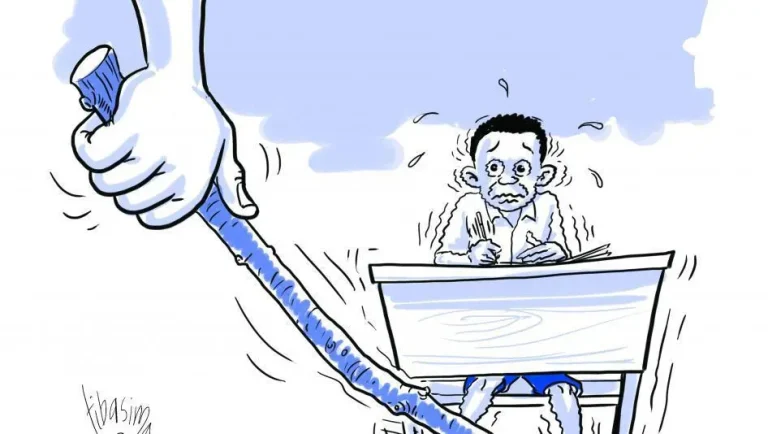
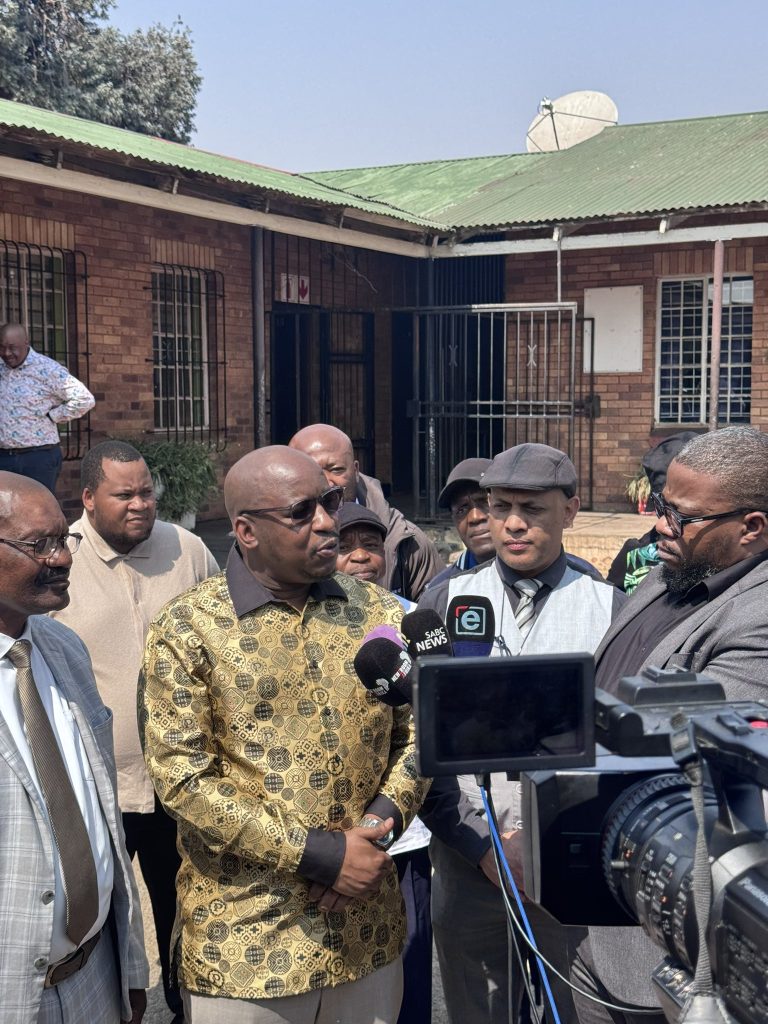
KwaZulu-Natal Education MEC Sipho Hlomuka on Wednesday visited Dr. Joseph Shabalala High School in Ladysmith following public outcry over a viral video showing a teacher physically disciplining learners.

The clip, which has garnered more than one million views on X (formerly Twitter), shows a teacher raising his hands against three learners lined up at the front of a classroom while others watch.

The footage prompted swift action from the provincial education department.

On Wednesday morning, Hlomuka met with learners, educators, the School Governing Body (SGB), and the teachers’ unions during his visit.

“The necessary measures have been put in place to ensure the safety of learners and to protect the integrity of the investigation and its outcome. These measures are meant to ensure stability in the school as all learners prepare for final exams,” he said afterwards.

The South African Democratic Teachers’ Union (SADTU) condemned the use of violence in classrooms.

“SADTU does not condone violence against learners in any form,” said union spokesperson Nomusa Cembi.

However, Cembi cautioned against blanket criticism of teachers, noting that many face challenges with unruly learners, but maintained that physical punishment is unjustifiable.

Corporal punishment in schools is outlawed in South Africa.

However, a recent Stats SA report found that 40% of households with children still support its use in classrooms, with rural households more likely than urban ones to view it as acceptable.

“More households in rural areas than urban areas had perceptions that it was acceptable for children to be physically punished for breaking the rules,” the report said.

INSIDE EDUCATION

DBSA posts record profit, boosts collections, and improves school sanitation

By Thebe Mabanga

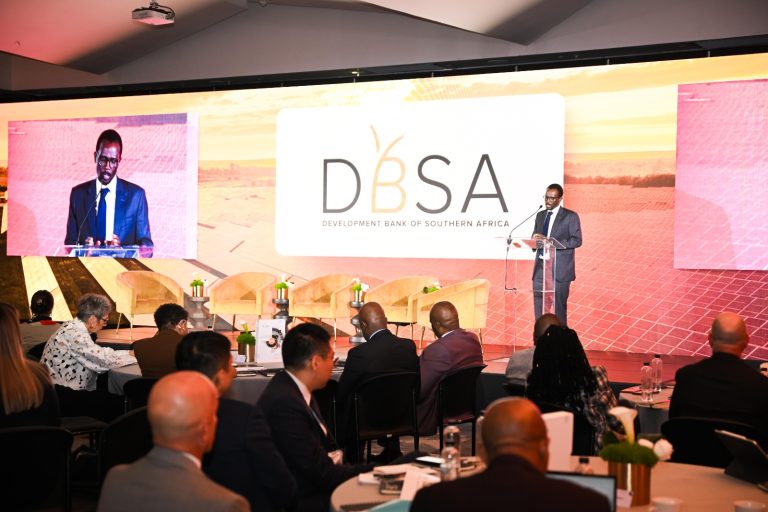
The Development Bank of Southern Africa (DBSA) has posted record financial results, reporting higher profits, improved loan collections, and expanded infrastructure support for municipalities and schools.

The results, for the year ending March, were released on Wednesday.

Despite what it described as a challenging domestic and global environment, the state-owned financier delivered a record net profit of R5.3 billion, up 14.4% from R4.6 billion last year.

Net interest income rose 8.6% to R8.4 billion, while operating income increased 12.3% to R8.8 billion. Sustainable earnings grew 13.7% to R5.1 billion.

The DBSA also maintained strong asset quality, with net non-performing loans at just 1.2% of total development loans and bonds of R114.6 billion, down by 0.5% from last year.

Global conditions weighed on performance, with supply chains disrupted by US trade tariffs, conflicts in Europe and the Middle East, and tighter financial markets.

Domestically, easing load-shedding and structural reforms offered some relief, but challenges remained, including logistics bottlenecks, weak municipal financial management, and limited government capacity to implement infrastructure policy.

During the year, the bank disbursed R17.5 billion in loans and equity (up 2.9% from R17 billion), supported by a R120 billion asset base.

Collections rose 19% to a record R27.4 billion. Its debt-to-equity ratio, including R20 billion callable capital, improved to 78% from 89%, well below the 250% regulatory limit.

The DBSA also mobilised R91.3 billion in infrastructure support, including R22.9 billion in catalysed funds.

The bank said it delivered R5.2 billion in infrastructure implementation support and unlocked a further R2.6 billion for under-resourced municipalities.

Key projects worth R39.9 billion were enabled and supported, while projects valued at R2.4 billion were prepared and approved. In addition, specially identified District Municipalities received R800 million.

The DBSA also made a notable impact on school sanitation through the Department of Basic Education’s SAFE programme, with 22,722 learners benefiting from new sanitation facilities built in 98 schools funded by the programme.

A further 11,397 learners benefited from improved sanitation facilities constructed in 67 schools funded through provincial allocations.

In terms of inclusive development, black-owned enterprises delivered projects worth R4 billion, while women-owned businesses accounted for R2.6 billion.

A total of 956 small, medium and micro enterprises (SMMEs) were contracted to deliver projects, with local construction SMMEs receiving R584 million in benefits.

These initiatives created approximately 35,000 jobs and provided skills training to 1,650 young people.

INSIDE EDUCATION

Soshanguve school principal suspended following learner protests

By Rafieka Williams

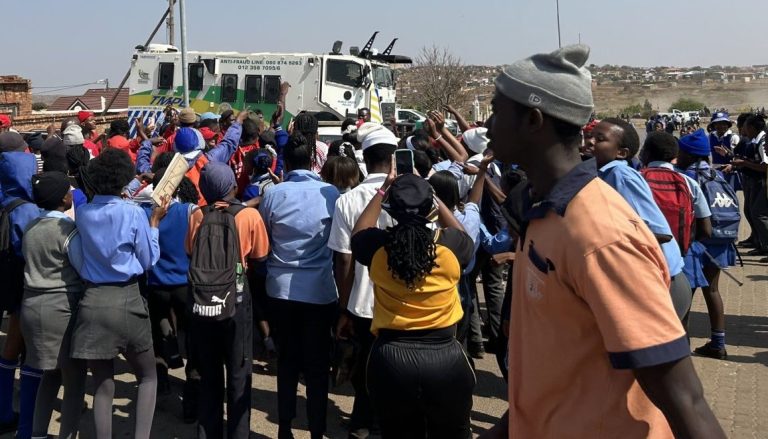
Calm has returned to Tiyelelane Secondary School in Soshanguve, north of Pretoria, following a protest on Tuesday by learners that left one student injured and damaged four state vehicles and one private car.

This comes after irate learners were seen pelting stones and moving between schools in an uproar over allegations of sexual assault by the teaching staff.

It is alleged that a teacher at the school had sexually assaulted one of the learners and one of the bus drivers had been in a relationship with another learner at the school.

The learners had reported the incidents to the principal who they said had ignored their outcry.

On Tuesday, the Gauteng Department of Education (GDE) removed the principal of Tiyelelane High School to restore calm to the school and the surrounding area.

GDE spokesperson Steve Mabona said: “The department has taken the precautionary step of removing the principal from Tiyelelani Secondary effective from Wednesday, 3 September 2025.”

“We believe that this action will play a significant role in stabilising the school environment and allow for an impartial process. The acting deputy principal will assist with the day-to-day running of the school, supported by district officials.” 

Mabona said GDE are investigating the allegations of sexual assault, however the Tshwane South Africa Police Service (SAPS) said no allegations of sexual assault had been reported by the school.

Education MEC, Matome Chiloane said: “We are determined to act in the best interest of learners at Tiyelelani Secondary School and surrounding schools. Allegations of misconduct by educators or any employee even those from our service providers will be subjected to disciplinary processes.”

During the protests one learner was injured and rushed to a medical facility where they are recovering.

“The SAPS and TMPD continue to monitor the situation in Soshanguve after learners reportedly disrupted schools in that area. The police used stun grenades to disperse the crowd, which was pelting stones,” police said.

Matric learners who were scheduled to sit for preliminary examinations managed to write their papers as planned while law enforcement keeps a watchful eye on the situation.

INSIDE EDUCATION

Gina calls on youth to take SA into digital future

0

By Johnathan Paoli

Deputy Minister of Science, Technology and Innovation, Nomalungelo Gina has warned that the country must not be left behind in the global race for innovation, urging young entrepreneurs to dream big, commercialise faster and lead South Africa into the digital future.

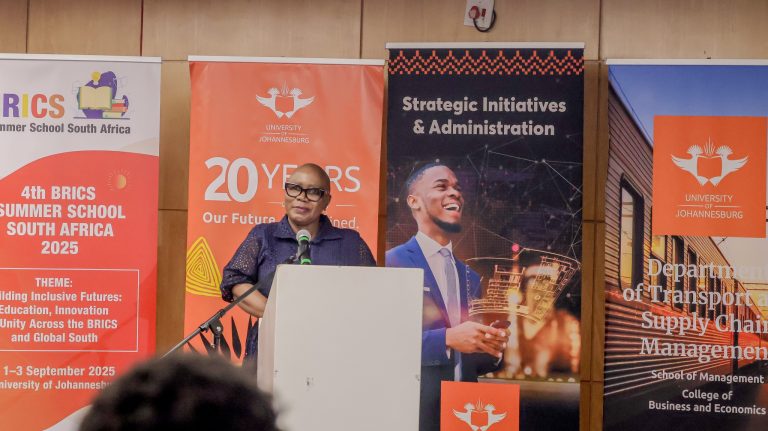
Delivering the keynote address at the University of Johannesburg-BRICS Summer School’s 2nd Innovation Challenge, Gina described the challenge as “serious and important work” by a university that has positioned itself as a leader in the Fourth Industrial Revolution (4IR), calling on students to seize opportunities to create solutions that respond not only to South Africa’s development needs but also to global challenges.

“BRICS nations are not simply consumers of global innovation; we are producers, pioneers, and contributors to global progress. South Africa must continue to learn from these experiences while adapting them to our own context, particularly in renewable energy, digital skills development, and advanced manufacturing,” she said.

The event, held under the theme “Strengthening Digital Skills and Entrepreneurship in BRICS+ through Student Innovation”, brought together students, academics, policymakers, and industry leaders in a celebration of innovation and entrepreneurship.

Gina highlighted a persistent challenge in South Africa’s higher education landscape: while universities produce numerous prototypes each year, many struggle to move beyond the Technology Transfer Office stage into the economy.

To address this, she outlined the Department of Science, Technology and Innovation’s initiatives, including the Innovation Fund and the Higher Education Innovation Fund, launched last year with the support of the UN Development Programme.

These funds are designed to help students and researchers bridge the costly gap between prototype development and commercialisation.

“I would like to see more innovators collaborating with the CSIR, the Technology Innovation Agency, and our Departmental teams. Our aim is to build a resilient and agile innovation ecosystem that supports young innovators with venture capital, angel investors, and institutional backing,” she said.

Gina also stressed that South Africa must position itself strategically within both the global and African innovation race, citing progress in Egypt, Nigeria, Kenya, Rwanda, and Tanzania.

She connected UJ’s efforts to the broader BRICS Young Innovators Forum, established in 2015 as a platform to connect youth-led innovation across BRICS nations.

“Events such as today’s challenge serve as a springboard for South Africa’s representation on global platforms. They allow us to identify and empower the most promising talents, ensuring that when our young people step onto stages like the upcoming BRICS Young Innovators Forum in Brazil, they do so as confident leaders,” Gina explained.

Executive Dean of the College of Business and Economics Tankiso Moloi hailed the challenge as a milestone for youth-led solutions in the Global South.

He paid tribute to Sebonkile Thaba, the driving force behind the challenge, and Vicky Graham, who helped create an enabling environment for the initiative.

“Innovation without direction is like an engine without a steering wheel—powerful but prone to chaos. What we need for the BRICS+ era is ecosystem leadership: from policymakers, academics, industry partners, and most importantly, from students themselves,” Moloi said.

He argued that BRICS+ innovation must be contextual, solutions rooted in the realities of Johannesburg as much as those of Beijing, Brasília, New Delhi, Moscow, Cairo, or Jakarta.

Such innovations, he said, could reshape the global innovation map, turning the Global South into a distributed hub rather than leaving dominance to a single region.

Moloi also called for a pedagogical revolution in education, where digital skills go beyond basic computer literacy to include computational thinking, data literacy, ethics, cybersecurity, and cross-border collaborative learning.

“Our students must not just be job seekers, but job creators, audacious problem-solvers, and agile global citizens,” he said.

At the heart of the event were the top five student-led start-ups, who pitched their projects to an expert panel of judges.

Among the standouts was Inkulumo Connect, an AI-powered real-time translation platform for South African Sign Language, designed to bridge communication barriers for more than 230,000 SASL users.

Another finalist, ProcureTech Innovations, is using AI and blockchain to revolutionise rural healthcare supply chains, addressing inefficiencies in medicine and equipment delivery.

Other projects showcased cutting-edge solutions in fintech, agritech, and education technology, reflecting the challenge’s emphasis on digital skills and entrepreneurship.

Judges commended the quality of the pitches, noting the scalability and potential global impact of several of the ideas.

Both Gina and Moloi positioned the challenge as more than a competition—it is a step toward reimagining South Africa’s place in the global knowledge economy.

They argued that innovation ecosystems, if nurtured, could transform the country’s socio-economic trajectory while strengthening ties across the BRICS+ alliance.

INSIDE EDUCATION

EFF unveils draft student debt relief bill to confront higher education crisis

By Johnathan Paoli

The EFF has released the first draft of the Student Debt Relief Bill, 2025, a sweeping proposal to address what it calls the “structural crisis” of student debt in South Africa.

EFF MP and Higher Education Portfolio Committee member Sihle Lonzi, who is driving the Bill, described the crisis as a national emergency.

“There are more than 300,000 students who have met all their academic requirements but cannot graduate, cannot receive their certificates, because of student debt. This is not failure; this is poverty being weaponised,” Lonzi said.

The party says the Bill is not only a legislative milestone but also the continuation of its longstanding campaign for free, quality education.

The draft legislation, gazetted earlier this year, proposes the establishment of a Student Debt Relief Fund through which eligible students may apply to have their debts cancelled.

Crucially, it also seeks to compel institutions of higher learning to release qualifications to all students who have completed their academic requirements, irrespective of outstanding fees.

According to the EFF, more than 500,000 students across the country are burdened by institutional debt, preventing many from graduating or receiving their qualifications.

In 2022 alone, over 120,000 students were unable to graduate due to unpaid fees. Student debt, which stood at R16.5 billion in 2021, has ballooned further in recent years, turning higher education into a “tool of exclusion,” the party argues.

The EFF contends that the withholding of qualifications entrenches inequality, trapping young people in cycles of joblessness and debt.

“Young people were told to go to school. They did, they completed their studies, yet they cannot graduate because of the economic backgrounds they come from,” Lonzi added.

The Student Debt Relief Bill would create a state-backed Student Debt Relief Fund, empowering students who meet specific criteria to have their debts written off.

The fund would also ensure that universities and colleges are reimbursed, preventing disruptions to institutional budgets.

EFF national spokesperson Sinawo Thambo described the Bill as “a people’s bill, grounded in the pain and suffering of students who have been excluded for too long.”

He argued that clearing debt would not only empower individuals but also stimulate the economy by allowing graduates to enter the workforce and contribute meaningfully.

“This is not simply about financial relief; it is about restoring dignity, enabling graduates to work, to specialise, to start businesses, and to participate in the economy,” Thambo said.

Public consultation on the draft Bill is now open for 30 days, with written submissions invited to Parliament.

The EFF has urged students, academics, workers, civil society organisations, and the broader public to participate in shaping the final version.

“We have exactly 30 days to unite the whole of South Africa behind this progressive Bill. This is about the future of our young people and the future of our nation,” Lonzi said, calling for a broad coalition of support.

The EFF also plans to hold nationwide consultative meetings at universities and TVET colleges in the coming weeks.

Lonzi said these engagements will not only refine the legislation but also mobilise public pressure ahead of its formal tabling in Parliament.

Opposition parties are expected to scrutinise the Bill.

The African National Congress has historically resisted blanket debt cancellation, favouring schemes like NSFAS, while the DA has argued for a means-tested model to assist only the poorest students.

The EFF rejects these alternatives, insisting that means-testing perpetuates exclusion.

The Bill is being positioned by the EFF as part of its broader struggle for free, decolonised education.

The party, which was instrumental in amplifying the #FeesMustFall protests of 2015–2016, says this legislation marks a critical shift from protest to policy.

If passed, the legislation could free hundreds of thousands of graduates from financial exclusion, potentially altering South Africa’s higher education landscape.

INSIDE EDUCATION

KZN Education Department condemns racial violence at Glenover Secondary

By Levy Masiteng 

The KwaZulu-Natal Department of Education has expressed deep concern and regret following a serious incident of racial violence at Glenover Secondary School on Friday.

Five learners were stabbed in the attack — four African learners and one Indian learner.

According to departmental spokesperson Muzi Mahlambi, the violence began as a minor altercation on the soccer field between two learners but escalated into a wider conflict with racial undertones.

“The school acted swiftly, suspending the four learners directly involved in the initial incident,” Mahlambi said.

The situation worsened after school hours when a group, including a parent and former learners not part of the original altercation, confronted and assaulted some of the learners.

In a statement, the school strongly condemned the violence, warning that such incidents would disrupt learners’ preparation for their trial examinations.

“We are gravely concerned that this violence was racially motivated and aggravated by adults who should be setting an example of tolerance, peace, and restraint,” the school said.

Mahlambi stressed the importance of parental responsibility, adding: “Discipline begins at home. Parents play a critical role in instilling values of respect, tolerance, and non-violence.”

Education MEC Sipho Hlomuka echoed the condemnation, denouncing the “criminal behaviour of certain community members alleged to be fuelling violence” at the school.

“We will stand firmly with the principal, management team, SGB, and SAPS to ensure that this racial conflict is swiftly resolved and that schools remain safe spaces for teaching and learning,” he said.

The department said they are working with  the school to restore peace and stability, urging parents to support the school’s efforts to maintain a safe and inclusive learning environment.

“We urgently call on all parents to work with us to restore peace and stability,” the school appealed. “Your support is more important now than ever. Together, let us ensure the safety, well-being, and future of every learner at Glenover Secondary School,” Mahlambi said. 

INSIDE EDUCATION

Chiloane pledges new school for Nigel after Alra Park safety crisis

0

By Johnathan Paoli

Gauteng Education MEC Matome Chiloane has pledged to deliver a new school for the Nigel community within 18 months, following weeks of turmoil over unsafe learning conditions at Alra Park Primary School.

Speaking to the media after a meeting with the School Governing Body (SGB), staff, departmental officials, and the Infrastructure Crisis Committee, Chiloane stressed that learners have already missed more than three weeks of schooling following the shutdown of the 85-year-old school in protest over crumbling infrastructure.

“Ultimately, what we want is to get our children back to class. It’s not good that they’ve been at home for so many weeks. They are losing a very important aspect of teaching and learning. The district will work closely with the school on a recovery plan,” he said.

He acknowledged that the school’s condition had justifiably alarmed parents, describing it as “not fit for today’s schooling” and promising that the community’s demand for a new facility would be honoured.

Chiloane said his department would implement a catch-up plan to help learners recover lost time, which may include weekend and after-school classes. He outlined a phased-in reopening strategy, starting with Grade 7 learners preparing to transition to high school.

“They’ve already lost a lot of time. We want to start with them so that they don’t suffer next year,” he said.

As immediate relief, the department will install additional mobile classrooms and prepare interim learning spaces while plans for the new school are finalised. Chiloane emphasised that renovating old and unsafe buildings would cost more than building anew, stressing that the new school is intended not only for current learners but for generations to come.

However, the Democratic Alliance (DA) in Gauteng has slammed Chiloane and the provincial government for what it called a sluggish and negligent response to the crisis.

In a statement, DA Gauteng Shadow MEC for Education Sergio Isa Dos Santos accused Chiloane of abandoning learners for weeks despite the school being declared unsafe in 2023.

“The MEC’s failure to act swiftly reveals the Premier Panyaza Lesufi-led administration’s disregard for learners’ rights. Not only is it arrogant, but it is also unresponsive to the plight of our learners,” Dos Santos said.

He noted that despite asbestos structures and mobile classrooms plagued by electrical faults, the department inexplicably installed air conditioners in hazardous buildings in 2024 rather than addressing urgent safety concerns. Both learners and staff have reportedly been injured by collapsing infrastructure.

“A DA-led Gauteng Department of Education would never abandon learners in this manner. We would prioritise safe and dignified learning spaces by eradicating asbestos schools, accelerating upgrades, and ensuring compliance with occupational health and safety standards,” Dos Santos added.

The crisis at Alra Park Primary reached a boiling point in mid-August when parents, citing health and safety risks, forcibly closed the school and barred learners and staff from entering.

Frustrated by broken promises, parents and community members launched protests, blockading roads and clashing with police. Officers fired rubber bullets to disperse demonstrators, heightening tensions.

The chairperson of the community crisis committee, Farid Mohammed, said residents had been demanding a new school for years.

The GDE previously attempted to address safety concerns by installing mobile classrooms in 2023 after engineers declared parts of the school unsafe. But parents argue that too few units were provided, forcing continued use of condemned buildings.

The department initially resisted calls for a new school, citing budget constraints and engineers’ recommendations that refurbishments could extend the life of existing structures. However, mounting community pressure and sustained protests have now forced a shift in approach.

Chiloane told parents that his commitment to a new school is final, emphasising that the immediate priority is getting learners back into classrooms safely while construction plans are set in motion.

INSIDE EDUCATION

South African learners struggle with reading comprehension: study reveals a gap between policy and classroom practice

South African learners consistently struggle with reading comprehension, performing poorly in both international and local assessments. A significant issue is that 81% of grade 4 learners (aged 9 or 10) are unable to read for meaning: they can decode words, but do not necessarily understand them.

While this problem has received considerable attention, no clear explanation has emerged.

In my recent PhD thesis, I considered a crucial, but often overlooked, piece of the puzzle – the curriculum policy.

My research sought to uncover and understand the gaps and contradictions in reading comprehension, especially between policy and practice, in a grade 4 classroom.

This research revealed a difference between curriculum policy and practice, and between what learners seemed to have understood and what they actually understood in a routine reading comprehension task.

My main findings were that:

grade 4 learners were being asked overly simple, literal questions about what they were reading, despite the text being more complex than expected

the kinds of questions that learners should be asked (as indicated in the curriculum policy) were different from what they were being asked

  • this gap led to learners seeming to be more successful at reading comprehension than they actually were.

Pinpointing the gaps between what the policy says and how reading comprehension is actually taught at this crucial stage of development (grade 4) could pave the way for more effective interventions.

Curriculum policy

South African teachers are expected to base their reading comprehension instruction and assessment on the guidelines provided by the 2012 Curriculum and Assessment Policy Statement.

The policy outlines specific cognitive skill levels – essentially, ways of thinking and understanding – that learners should master for each reading task.

These levels are drawn from Barrett’s 1956 Taxonomy of Reading Comprehension, an international guideline. It’s based on the popular Bloom’s Taxonomy of Reading Comprehension, which categorises reading comprehension according to varying skill levels.

According to Barrett’s Taxonomy, reading comprehension involves five progressively complex levels:

  1. Literal comprehension: Identifying meaning that is directly stated in the text. (For example, “Name the animals in the story”.)
  2. Reorganisation: Organising, paraphrasing, or classifying information that is explicitly stated. (“Find four verbs in the story to describe what the animals did.”)
  3. Inference: Understanding meaning that is not directly stated, but implied. (“When in the story is the leopard being selfish?”)
  4. Evaluation: Making judgements about the text’s content or quality. (“Who do you think this story is usually told to?”)
  5. Appreciation: Making emotional or personal evaluations about the text. (“How well was the author able to get the message across?”)

Typically, reading comprehension tasks will assess a range of these cognitive skills.

South Africa’s Curriculum and Assessment Policy Statement document specifies (on pages 91-92) that all reading comprehension tasks should comprise questions that are:

  • 40% literal/reorganisation (lower-order thinking skills)
  • 40% inferential (middle-order)
  • 20% evaluation and appreciation (higher-order).

This approach aims to allow most students to demonstrate a basic understanding of the text, while challenging more advanced learners.

However, as my classroom case study shows, the system appears to be failing. There was a mismatch between the policy and what was taking place in the classroom.

Classroom practice

For this research, I observed the reading comprehension practices in a single classroom in a public school in the Eastern Cape province. This took place over six months, at a time when schools were not fully reopened during the COVID-19 pandemic.

The task in question included a text and activity selected by the teacher from a textbook aligned with the policy.

My analysis (which used Appraisal, a linguistic framework that tracks evaluative meaning) showed that most of the text’s meaning was implicit. To fully understand it, learners would need higher-order thinking and sophisticated English first-language skills. This was a surprising finding for a grade 4 resource, especially because most learners in this study were not English first-language speakers.

Even more surprising, learners achieved seemingly high marks on comprehension, with an average of 82.9%. This suggested they understood this complex text.

However, I found that the questions in the textbook did not align with policy. Instead of the balance of skills required by the policy, 73% of the questions called only for lower-order skills. Only 20% were inferential and a mere 7% required evaluation or appreciation (middle- to higher-order skills).

At least six of the 15 available marks could be gained simply by listing explicitly stated items, not requiring genuine comprehension.

This reveals that, in this classroom, activities labelled as policy-compliant actually tested only lower-order comprehension. Learners could pass simply by identifying and listing information from the text. This creates a false sense of comprehension success, as revealed by the high marks.

When learners were tested on the same text but using different questions that I designed to align with the policy requirements, they scored lower marks, especially for the higher-order questions.

This mismatch might partly explain why South Africans score poorly in international tests (which require more higher-order thinking).

Why this matters and moving forward

These findings are concerning, as learners may be lulled into believing that they are successful readers. A false sense of accomplishment could have significant impacts on the rest of their education.

Comprehension difficulties can’t be blamed solely on the disconnect between policy and practice, however. Many other contextual factors shape how learners perform in reading comprehension tasks.

In my study, factors like COVID-19, insufficient home language teaching policies, educational inequalities, and the pressures on teachers during a crisis (brought on by COVID-19) all contributed to the literacy crisis.

How to get kids back on a sleep schedule for the school year

0

After a summer of vacations and late nights, it’s time to set those back-to-school alarms. A good night’s sleep helps students stay focused and attentive in class. Experts say it’s worth easing kids back into a routine with the start of a new school year.

“We don’t say ‘ get good sleep ’ just because,” said pediatrician Dr. Gabrina Dixon with Children’s National Hospital. “It really helps kids learn and it helps them function throughout the day.”

The amount of sleep kids need changes as they age. Preschoolers should get up to 13 hours of sleep. Tweens need between nine and 12 hours. Teenagers do best with eight to 10 hours of shut-eye.

Set an earlier bedtime

Early bedtimes can slip through the cracks over the summer as kids stay up for sleepovers, movie marathons and long plane flights. To get back on track, experts recommend setting earlier bedtimes a week or two before the first day of school or gradually going to bed 15 to 30 minutes earlier each night.

Don’t eat a heavy meal before bed and avoid TV or screen time two hours before sleep. Instead, work in relaxing activities to slow down like showering and reading a story.

“You’re trying to take the cognitive load off your mind,” said Dr. Nitun Verma, a spokesperson for the American Academy of Sleep Medicine. “It would be like if you’re driving, you’re slowly letting go of the gas pedal.”

Parents can adjust their back-to-school plans based on what works best for their child. Nikkya Hargrove moves her twin daughters’ bedtimes up by 30 minutes the week before school starts.

Sometimes, her 10-year-olds will negotiate for a few extra minutes to stay up and read. Hargrove said those conversations are important as her children get older and advocate for themselves. If they stay up too late and don’t have the best morning, Hargrove said that can be a learning experience too.

“If they’re groggy and they don’t like how they feel, then they know, ‘OK, I have to go to bed earlier,’” said Hargrove, an author and independent bookstore owner from Connecticut.

In the morning, soaking in some daylight by sitting at a window or going outside can help train the brain to power up, Verma said.

Squash back-to-school sleep anxiety

Sleep quality matters just as much as duration. First-day jitters can make it hard to fall asleep no matter how early the bedtime.

Dixon says parents can talk to their kids to find out what is making them anxious. Is it the first day at a new school? Is it a fear of making new friends? Then they might try a test run of stressful activities before school starts to make those tasks feel less scary — for example, by visiting the school or meeting classmates at an open house.

The weeks leading up can be jam-packed and it’s not always possible to prep a routine in advance. But kids will adjust eventually so sleep experts say parents should do what they can. After all, their kids aren’t the only ones adjusting to a new routine.

“I always say, ‘Take a deep breath, it’ll be OK,’” Dixon said. “And just start that schedule.”

AP

NotInMyName demands firing of Prinshof teacher accused of raping 14-year-old learner

By Johnathan Paoli

Civil society organisation NotInMyName International (NIMNI) is calling for the immediate dismissal of a teacher at Prinshof School for the Blind in Pretoria, following disturbing allegations that he raped a 14-year-old learner in 2024.

NIMNI spokesperson Themba Masango said the education department must act swiftly and decisively in response to the allegations.

“The Department of Education needs to come in here and handle this issue. Gender-based violence, femicide and the assault of young children need to be made a national outcry. We cannot afford to have teachers like this amongst us,” Masango said.

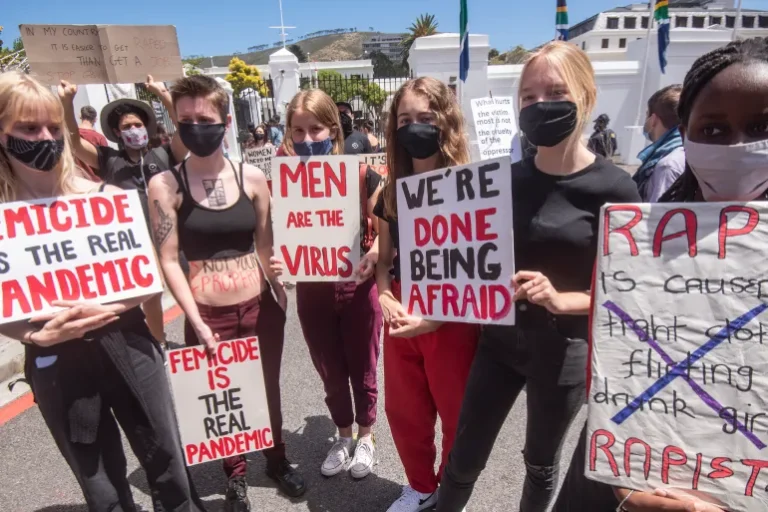
The movement staged a protest outside the school on Monday, calling for urgent intervention by the Gauteng Education Department.

The case, which only came to light recently, has sparked outrage amid growing concerns about sexual abuse within South African schools.

“This horrific crime came to light only after the victim’s father, concerned by a sudden drop in her academic performance, pursued the matter with school authorities. It was then that the traumatised child confided in her father, revealing that she was no longer happy or comfortable at the school because she had been sexually assaulted by the said teacher,” said Masango.

“We hold the school management accountable for their apparent failure to protect this child and to create a safe environment where learners can thrive without fear. The fact that this was uncovered by a vigilant parent, and not through the school’s own safeguarding mechanisms, is a damning indictment of its leadership. We confirm that the names of both the minor victim and the alleged perpetrator are known to us. We welcome the news that a criminal case has been opened at a Pretoria South African Police Service (SAPS) station and we will be closely monitoring its progress.”

The girl’s father, who asked to remain anonymous, told journalists he was only informed of the alleged assault two weeks ago after being called to the school by social workers concerned about his daughter’s academic performance and fainting spells.

According to him, the teenager confessed during a private session that she had been sexually assaulted by her music teacher.

“She explained that on that day the class was moved to a different room without cameras. That’s when it happened. He touched her, tried to kiss her, and put his hands in her private parts,” the father said.

The father expressed anger that he had been kept in the dark.

“I then asked the social workers why I am hearing this for the first time. They said they thought I knew. The school spoke to the mother and child, but I was excluded. The mother admitted she was told the case was being handled internally,” he added.

The father has since opened a criminal case and sought legal advice.

He claims that when he approached the school principal for information, he was met with hostility.

“I asked for the case file with my daughter’s statement and meeting minutes. The principal told the social worker not to give me anything and said if I wanted answers, I should ask my daughter or her mother. She told me to get out of her office,” he recounted.

The family has called for transparency, saying the school attempted to suppress the matter instead of escalating it to authorities.

The Prinshof case is not isolated.

In the Free State, six former learners from St Bernard High School in Bloemfontein have come forward with allegations of sexual harassment against at least three teachers.

The incidents, which reportedly took place in 2024 and 2025, involved inappropriate messages, unsolicited nude images, and other forms of misconduct.

Lesedi Motlangane, 19, said she decided to go public after a teacher sent her explicit material.

Another former learner, Mapaseka Veldman, said a teacher sent her a sexually inappropriate video.

Following media exposure, the Free State Education Department confirmed that one of the implicated teachers has been dismissed, while two others face suspension pending investigations.

These cases underscore systemic failures in schools’ handling of sexual abuse complaints.

Victims and parents often face intimidation, while institutions appear to prioritise reputational protection over learner safety.

NotInMyName International has vowed to intensify its campaign until the accused Prinshof teacher is removed from the classroom and criminal proceedings are expedited.

INSIDE EDUCATION