Home Blog Page 62

Western Cape tops National Education Awards with 21 wins

0

By Johnathan Paoli

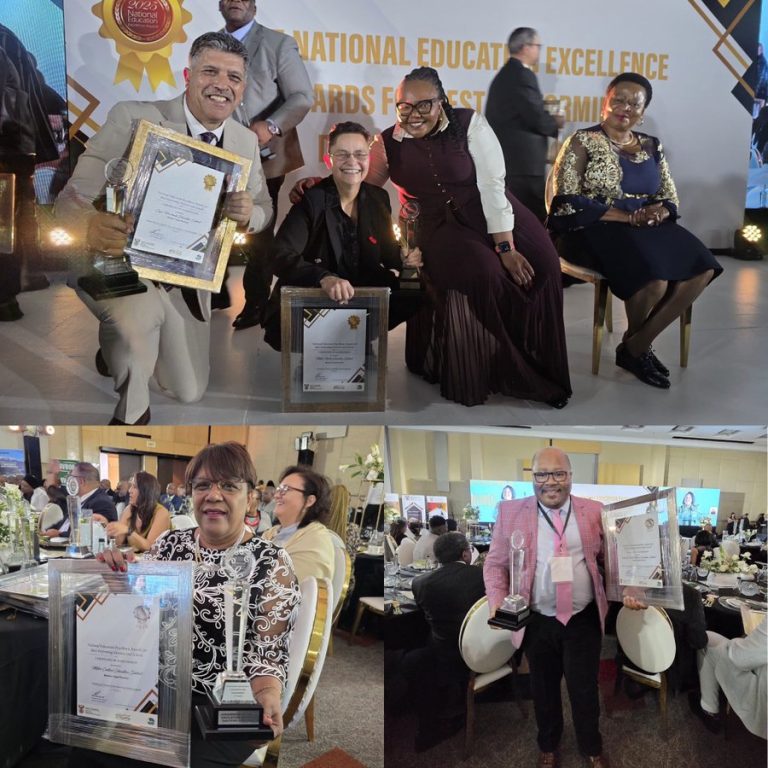
The DA has praised the Western Cape Education Department as South Africa’s leader in education, following the province’s impressive haul of 21 awards at the National Education Excellence Awards.

The achievement comes alongside efforts to protect thousands of teaching jobs amid national budgetary pressures.

The party’s Western Cape education spokesperson, Peter Johnson, said the province’s success reflects both systemic excellence and the dedication of its learners and educators.

“These incredible achievements once again demonstrate that the Western Cape continues to set the standard for education excellence in South Africa,” said Johnson.

“Sweeping awards in Mathematics, Physical Science, and Accounting shows that the DA-led WCED is ensuring that learners who exit our schooling system are well-equipped to contribute to the progress of our province.”

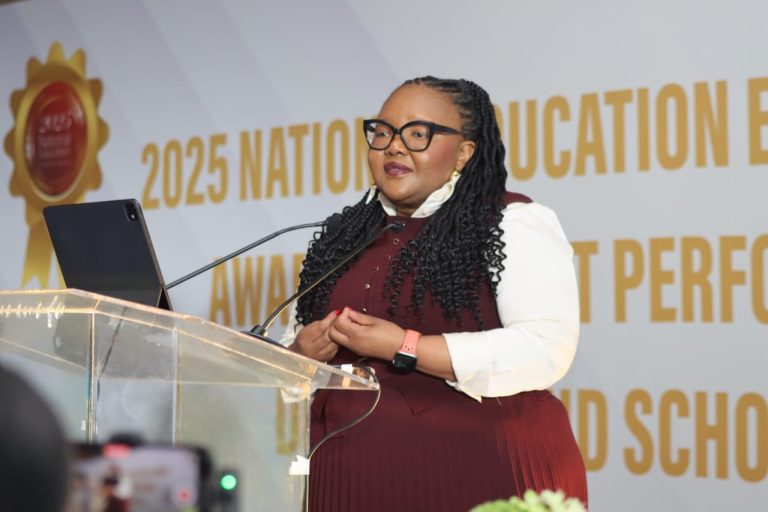
The awards ceremony, held at the Sandton Convention Centre on Friday, 29 August 2025, celebrated outstanding teaching and learning achievements across the country.

The Western Cape dominated the event, securing top honours in key categories such as Mathematics, Physical Science, and Accounting, subjects central to building a skilled workforce capable of driving economic growth and innovation.

Among the standout awards won by the province’s education districts were: Highest NSC Mathematics Passes 60% and above (2022–2024), Highest NSC Participation vs Achievement in Mathematics (2022–2024), Highest NSC Physical Science Passes 60% and above (2022–2024), Highest NSC Participation vs Achievement in Physical Science (2022–2024), and Highest NSC Accounting Passes 60% and above (2022–2024).

The Western Cape also led in ensuring broad participation and achievement across these critical gateway subjects.

Johnson added that every accolade was the product of immense effort from school communities.

“Behind every award are learners, teachers, principals and officials who work tirelessly to achieve success, often under challenging circumstances,” he said.

The DA’s praise for the department did not stop at academic outcomes.

The party welcomed the announcement that the province will retain its Basket of Posts allocation of 35 934 teaching posts for the 2026 school year.

This move comes against the backdrop of severe national fiscal constraints, with provincial education departments across South Africa being forced to cut staff, freeze posts, or consolidate classes due to dwindling budgets.

For the Western Cape, however, the decision provides teachers and learners with much-needed stability as enrolment continues to grow.

Johnson described the retention of posts as a “significant victory” that highlighted the province’s ability to “do more with less”.

“The Western Cape continues to face enormous pressure as thousands of learners move here every year. Retaining over 35 000 teaching posts is a victory for teachers and learners alike, and a clear sign that the DA-run Western Cape is doing more with less to keep education strong, despite national fiscal constraints,” he said.

The Western Cape remains one of South Africa’s fastest-growing provinces, attracting families in search of economic opportunities and more reliable public services.

This influx has increased the demand for classrooms, teachers, and learner support programmes such as school nutrition, transport, and specialised education for children with disabilities.

The DA has positioned the Western Cape’s dual achievements of academic excellence and job protection as evidence of its governance model in action.

While learners benefit from award-winning teaching and improved access to high-demand subjects, teachers and support staff are also assured of job security, which in turn strengthens classroom performance.

Johnson stressed that this balance was deliberate, saying the DA-led provincial government will continue to ensure that teachers are supported, classrooms are adequately staffed, and learners receive the opportunities they need to thrive.

As South Africa grapples with economic stagnation, rising unemployment, and fiscal belt-tightening, the DA argues that the Western Cape’s education trajectory offers a glimpse of what a focused, outcomes-driven approach can achieve.

The party has made it clear that it will use the province’s success as both a political platform and a governance benchmark in its broader national campaign.

INSIDE EDUCATION

Gauteng education: Incomplete school applications won’t be considered

Rafieka Williams

The Gauteng Department of Education (GDE) has called on parents to finalise their online applications by 12pm on 9 September 2025 or risk their children not being placed.

Parents and guardians must upload or submit certified copies of all required documents by the deadline.

The department warned that incomplete applications will not be considered, while fraudulent or invalid documents will result in forfeiture.

“We urge all parents who have not yet completed the full five-step process to do so immediately. Failure to act before the deadline will result in disappointment and loss of placement priority,” said Education MEC Matome Chiloane.

Online applications for Grades 1 and 8 closed on 29 August 2025, with over 800,000 applications recorded.

However, the GDE flagged 52,929 incomplete applications, noting that many parents have yet to select schools or submit the necessary documents.

Gauteng education spokesperson Steve Mabona said that only learners with complete and verified applications will receive placement offers.

The placement period begins on 16 October and will continue until all learners are placed.

To support families without internet access, the department made schools and walk-in centres available for assistance.

While no new applications are being accepted, parents can still use these facilities to submit outstanding documents.

Mabona added that placements will be determined by several criteria, including whether the learner lives within the school’s feeder zone, has siblings already enrolled, the proximity of a parent’s workplace, and whether the home is within a 30km radius of the school.

INSIDE EDUCATION

Gauteng showcases future innovators at Technical Skills Festival

By Johnathan Paoli

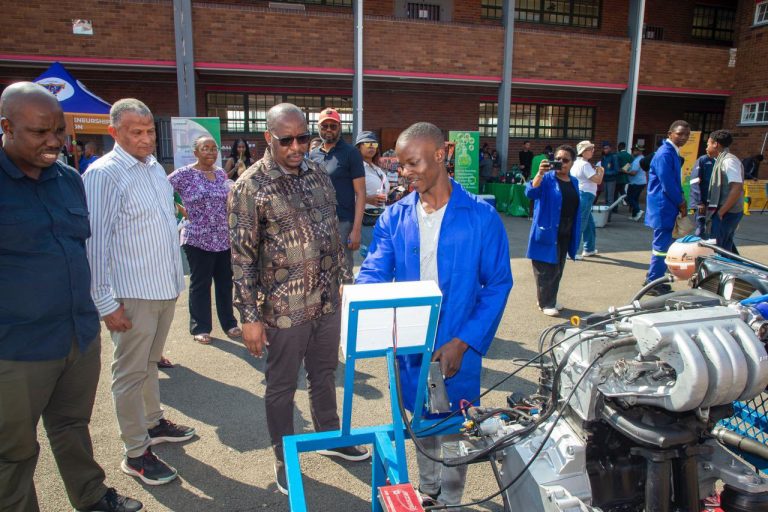
The Gauteng Education department has reaffirmed its commitment to building a skilled workforce for the future by hosting the much-anticipated Technical Skills Festival at John Orr Engineering School of Specialisation.

Addressing the event, MEC of Education Matome Chiloane applauded the learners for their creativity and commitment.

“These young talents proved that they are not merely learners, but innovators with the imagination and ability to shape industries,” he said.

Chiloane emphasised that the winners would advance to higher levels of competition, with the potential to reach a global stage.

By recognising excellence early, the Department hopes to encourage young innovators to pursue technical careers that will support Gauteng’s industrial growth and economic sustainability.

“By harnessing these skills early, we are nurturing creators and builders who will drive innovation and define the future of our economy. We extend our heartfelt thanks to our partners and sponsors for walking this journey with us in building tomorrow’s technicians today,” Chiloane added.

The event brought together learners from across the province who showcased their technical expertise and innovative problem-solving skills in a range of disciplines critical to South Africa’s economy.

The festival, branded under the hashtag #TechnicalSkillsFest, provided a platform for learners to demonstrate their capabilities in Automotive, Power Systems, Electronics, Fitting and Machining, Civil Services, Woodworking, Construction, and Welding.

Far from being a traditional competition, the initiative was designed as a dynamic hands-on showcase of knowledge, creativity, and application in real-world contexts.

Throughout the day, workshops allowed participants to engage in practical projects that tested their technical abilities, teamwork, and creativity.

From fine-tuned engines in the Automotive category to precision measurements in Fitting and Machining, the learners displayed not only technical mastery but also ingenuity in solving practical challenges.

To encourage excellence, trophies were awarded to the top three learners in each of the eight subjects, recognising outstanding performance in Automotive, Electrical, Electronics, Fitting and Machining, Welding, Civil Services, Woodworking, and Construction.

Winners were further rewarded with full sets of professional tools of their trade, giving them a tangible foundation to continue developing their craft and careers.

According to the department, the festival was not just about competition but also about creating a learning space where young people could gain exposure to industry expectations and showcase their potential to educators, industry partners, and future employers.

The Technical Skills Festival forms part of the department’s broader Schools of Specialisation programme, which focuses on developing excellence in priority sectors such as engineering, aviation, ICT, mining, and the arts.

By aligning education with the province’s industrial and economic needs, the department seeks to equip learners with both the academic knowledge and technical expertise required in the workplace.

Industry partners and sponsors played a critical role in supporting the festival, providing resources, mentorship and prizes.

Their involvement also helped expose learners to professional networks and industry-standard tools, bridging the gap between classroom learning and workplace expectations.

By giving learners a competitive stage and rewarding their excellence, the department said it was ensuring these careers are seen as aspirational and essential.

With unemployment among South African youth remaining stubbornly high, initiatives such as the Technical Skills Festival underscore the urgency of equipping learners with employable, in-demand skills.

By fostering confidence, creativity, and practical ability, the Department aims to position its learners not just as job seekers but as future innovators, entrepreneurs, and industry leaders.

The festival concluded with celebrations of the winners, but the broader message was clear that the province’s economic future is in capable hands.

INSIDE EDUCATION

Patience, resilience and talent on show at Fasken Time cricket festival

By Johnathan Paoli

The seventh edition of the Fasken Time Cricket Festival wrapped up this weekend at St David’s Marist Inanda in Sandton, reaffirming its status as a launchpad for South Africa’s emerging cricket talent.

St David’s Director of Sports Performance and Cricket, Dave Nosworthy, hailed the event as a true celebration of time cricket.

“It’s massive value to the youngsters to be able to bat for long periods, bowl long spells and learn game management. The spinners come into play, captains think differently about field placements, and players build resilience through the long sessions,” Nosworthy explained.

While hosts’ star Jason Rowles walked away with the Player of the Festival award, and King Edward VII School’s (KES) Steele Grooteman and Tiago Dias claimed Bowler and Batsman of the Festival respectively, the tournament’s impact stretched far beyond individual accolades.

Rowles embodied the resilience demanded by the long format, amassing 272 runs in three innings — including two centuries — and taking seven wickets. Dias topped the run charts with 292 runs, while Grooteman’s 15 wickets at an average of 11 confirmed his dominance with the ball.

Yet the festival’s purpose runs deeper: teaching South Africa’s top schoolboy cricketers the craft of red-ball cricket. Unlike the quick thrills of limited-overs formats, time cricket prizes patience, adaptability, and mental toughness. Matches often turn on concentration or lapses in discipline, and the festival is deliberately designed to immerse players in these realities.

St David’s Director of Sports Performance and Cricket, Dave Nosworthy, said the event is about laying lasting foundations:

“The true test of character isn’t in easy runs, but in the long spells, the tough sessions, and the moments that demand resilience. Any international cricketer will tell you, learning the longer format first gives you the tools you need for the rest of your career.”

The festival’s legacy is already clear: more than 100 former participants have gone on to provincial or international cricket. Among them are Proteas Gerald Coetzee and Marco Jansen, Ireland international Curtis Campher, and rising stars Kwena Maphaka, Richard Seletswane, and Riley Norton — all once in the shoes of the 156 players who competed this weekend under 12 schoolboy captains.

This year’s edition featured leading schools including St David’s, KES, Waterkloof, St Stithians, Jeppe, St John’s, Clifton College, St Andrew’s, Noordheuwel, Nelspruit, St Charles, and the Lions Invitational XI. Victories were recorded by St David’s, KES, Waterkloof, and Noordheuwel, but the greater goal was to immerse every participant in the tempo and nuance of time cricket.

The festival continues to thrive thanks to committed sponsorship, particularly title partner Fasken Law. Managing Partner Blaize Vance described the partnership as an investment in South Africa’s sporting and personal development:

“We often judge talent by timing or shot-making, but qualities like determination, courage, discipline and temperament are just as important. That’s the kind of talent this festival nurtures.”

With its blend of competitive intensity, developmental focus, and proven record of producing professional cricketers, the Fasken Time Cricket Festival has cemented its place as a cornerstone of South Africa’s schoolboy cricket calendar.

INSIDE EDUCATION

Teenagers are choosing to study Stem subjects – it’s a sign of the times

By Mike Watts

A-level results in 2025 show the increasing popularity of Stem (science, technology, engineering and maths) among students. For students taking three A-levels – the majority – the most popular combination of subjects was biology, chemistry and maths.

The subject with the greatest rise in entries from 2024 is further maths, followed by economics, maths, physics and chemistry. Maths remains the most popular subject, with entries making up 12.7% of all A-level entries.

Conversely, subjects such as French, drama, history and English literature are falling in exam entry numbers.

There is considerable incentive for young people who may be looking beyond school and university to the job market to study Stem. Research has found that Stem undergraduate degrees bring higher financial benefits to people and to the public purse than non-Stem subjects.

Many of the world’s fastest-growing jobs need Stem skills. These include data analysts, AI specialists, renewable energy engineers, app developers, cybersecurity experts and financial technology experts.

Within Stem itself, science alone is a broad church that spans astronomy to zoology and all letters of the alphabet between. Add to this the many variations of technology, engineering and maths and the range of subjects and specialisms is enormous.

It might come as no surprise, then, that young people have considerable scope in the possible careers and employment they might follow in life. From accountancy to the environment, medical engineering to computer technology, etymology to vulcanology, the possibilities are vast. There is little doubt that this very broad arena is attractive as possible employment.

What’s more, maths, engineering and the sciences are now vital parts of careers that might have once seemed unrelated. It was once the case that the division between arts and science was seen as unbridgeable: you were firmly on one side or the other. Today this is far less evident.

Artists, in their many manifestations, are almost by default material scientists. Architects, photographers, musicians, video-makers, sound and lighting technicians are (arguably) technical engineers. Landscape gardeners are environmentalists, chefs are food scientists.

Everyday Stem

Stem affects everyday life at all levels. Wearing a smart watch to track our health and fitness, as so many of us do, requires analysis of data, averages and percentages. We need maths skills to navigate our personal finances. Following directions means programming a Satnav.

Young people take their attitudes, advice and directions from a multitude of sources. 

Concern about the environment may lead teens to consider careers in areas such as ecology or environmental engineering. The ubiquity of social media apps and the tech companies that run them raises awareness of the use of computer science or tech skills.

And leaving aside Instagram, TikTok and other social media, Sir David Attenborough’s TV series Blue Planet prompted a surge of interest in marine ecology and plastic pollution.

Nor are young people immune to social influences more broadly. In more diffuse ways, peers and parents are also influential in shaping career choices, as are science centres, museums, botanical gardens, planetariums, aquariums, environmental centres, city farms and such like.

Then there are teachers and schools. Positive experiences in school Stem prompt further study. There is increasing evidence that individual project work, industrial placements, role-model scientists, school outreach and class visits all play an important part in promoting career intentions and aspirations.

One important factor here is imbuing students with a positive Stem identity. When young people think they are good at Stem subjects and are able to be successful, they are much more likely to choose a Stem career.

The upshot here is that, as the world changes, and changes quickly, so does the realisation that Stem is an essential and invaluable dimension of life and that career prospects are varied and available at many, many levels. It seems little wonder that students have to come to see this and are enrolling in study and employment in greater numbers than before.

THE CONVERSATION

Are high school sports living up to their ideals?

By Jedediah Blanton and Scott Pierce

Coach Smith was an easy hire as the head coach of a new high school lacrosse team in Tennesseee: She had two decades of coaching experience and a doctorate in sport and exercise science.

After signing the paperwork, which guaranteed a stipend of US$1,200, Smith – we’re using a pseudonym to protect her identity – had four days to complete a background check, CPR and concussion training and a Fundamentals of Coaching online course. After spending $300 to check all these boxes, the job was hers.

The Tennessee Secondary School Athletic Association’s mission statement highlights how high school athletes should be molded into good citizens and have their educational experiences enhanced by playing sports.

Yet Coach Smith hadn’t received any guidance on how to accomplish these goals. She didn’t know how a high school coach would be evaluated – surely it went beyond wins, losses and knowing CPR – or how to make her players better students and citizens.

Over the past 15 years, our work has focused on maximizing the benefits of high school sports and recognizing what limits those benefits from being reached. We want to know what high school sports aspire to be and what actually happens on the ground.

We have learned that Coach Smith is not alone; this is a common story playing out on high school fields and courts across the country. Good coaching candidates are getting hired and doing their best to keep high school sports fixtures in their communities. But coaches often feel like they’re missing something, and they wonder whether they’re living up to those aspirations.

Does the mission match reality?

Dating back to the inception of school-sponsored sport leagues in 1903, parents and educators have long believed that interscholastic sports are a place where students develop character and leadership skills.

Research generally backs up the advantages of playing sports. In 2019, high school sports scholar Stéphanie Turgeon published a review paper highlighting the benefits and drawbacks of playing school sports.

She found that student-athletes were less likely to drop out, more likely to be better at emotional regulation and more likely to contribute to their communities. While athletes reported more stress and were more likely to drink alcohol, Turgeon concluded that the positives outweighed the negatives.

The governing body of high school sports in the U.S., the National Federation of State High School Associations, oversees 8 million students. According to its mission statement, the organization seeks to establish “playing rules that emphasize health and safety,” create “educational programs that develop leaders” and provide “administrative support to increase opportunities and promote sportsmanship.”

Digging deeper into the goals of sports governing bodies, we recently conducted a study that reviewed and analyzed the mission statements of all 51 of the member state associations that officially sponsor high school sports and activities.

In their missions, most associations described the services they provided – supervising competition, creating uniform rules of play and offering professional development opportunities for coaches and administrators.

A majority aimed to instill athletes with life skills such as leadership, sportsmanship and wellness. Most also emphasized the relationship between sports and education, either suggesting that athletics should support or operate alongside schools’ academic goals or directly create educational opportunities for athletes on the playing field. And a handful explicitly aspired to protect student-athletes from abuse and exploitation.

Interestingly, seven state associations mentioned that sports participation is a privilege, with three adding the line “and not a right.”

This seems to conflict with the National Federation of State High School Associations, which has said that it wants to reach as many students as possible.

The organization sees high school sports as a place where kids can further their education, which is a right in the U.S. This is important, particularly as youth sports have developed into a multibillion-dollar industry fueled by expensive travel leagues and club teams.

We also noticed what was largely missing from these mission statements. Only two state athletic associations included a goal for students to “have fun” playing sports. Research dating back to the 1970s has consistently shown that wanting to have fun is usually the No. 1 reason kids sign up for sports in the first place.

Giving coaches the tools to succeed

Missions statements are supposed to guide organizations and outline their goals. For high school sports, the opportunity exists to more clearly align educational initiatives and evaluation efforts to fulfill their missions.

If high school sports are really meant to build leadership and life skills, you would think that the adults running these programs would be eager to acquire the skill set to do this.

Sure enough, when we surveyed high school coaches across the country in 2019, we found that 90% reported that formal leadership training programs were a good idea. Yet less than 12% had actually participated in those programs.

A recent study led by physical education scholar Obidiah Atkinson highlighted this disconnect. While most states require training for coaches, the depth and amount of instruction varied significantly, with little emphasis on social–emotional health and youth development. 

In another study we conducted, we spoke with administrators. They admitted that coaches rarely receive training to effectively teach the leadership and life skills that high school sports promise to deliver.

This type of training is available; we helped the National Federation of State High School Associations create three free courses explicitly focused on developing student leadership.

Thousands of students and coaches have completed these courses, with students reporting that the courses have helped them develop leadership as a life skill. And it’s exciting to see that the organization offers over 60 courses reaching millions of learners on topics ranging from Heat Illness Prevention and Sudden Cardiac Arrest to Coaching Mental Wellness and Engaging Effectively with Parents.

Yet, our research findings suggest that if these aspirational missions are to be taken seriously, it’s important to really measure what matters.

Educational programs can be evaluated to determine whether and how they are helping coaches and students, and coaches ought to be evaluated and retained based on their ability to help athletes learn how to do more than kick a soccer ball or throw a strike.

Our findings highlight the opportunity for high school athletic associations and researchers to work together to better understand how this training is helping coaches to meet the promises of high school sports.

Taking these steps will help to make sure coaches like Coach Smith have the tools, support and feedback they need to succeed.

THE CONVERSATION

OPINION: Insights from a study visit in China – lessons for South Africa

By Prof. Mashupye H Maserumule

Spending time in China was truly a wonderful experience, allowing me to see firsthand how this nation of hardworking and dedicated people has transformed into one of the world’s leading economies.

Its history clearly demonstrates that its success mainly comes from resilience and a strong focus on science, technology, and innovation—these closely linked processes foster development by tackling humanity’s complex challenges.

It’s no surprise that China sees them as ongoing efforts to find solutions that genuinely support its development goals. Its post-school education system has been reimagined to play a much bigger and more meaningful role in society. A key part of this progress is its university system, which has grown significantly over the past 75 years, focusing on practical and valuable learning, complemented by strategic partnerships with vital sectors of the economy.

Beijing Jiaotong University, which hosted my study sojourn, is a prime example of how nurturing strategic collaborations can significantly enhance the capabilities essential for economic growth and development. Supported by the Ministry of Education, this university collaborates closely with notable partners, including China Railway Corporation and the Beijing Municipal Government, to enhance its research and academic capabilities.

This collaboration is vital for generating valuable knowledge. The Collaborative Innovation Centre for Rail Transit Safety, one of the first 14 centres approved by the Chinese government for the 2011 national projects, exemplifies how collaboration can boost the nation’s innovative capacity – a valuable lesson in building a sustainable government-industry-university ecosystem for growth and innovation.

Shenzhen and Zhongquancun are just examples of what this ecosystem can achieve. These are tech powerhouses formed through partnerships between universities and research centres to strengthen China’s innovation and manufacturing capacity. The Chinese government has spearheaded the development of these tech hubs, often referred to as the Chinese equivalent of Silicon Valley.  

While much of my stay was spent in Beijing, I also had the opportunity to explore the vibrant cities of Shanghai and Kunming. I also enjoyed visiting several museums, where I learned about China’s fascinating history of economic growth and development. It was truly inspiring to see how the country has blossomed into one of the world’s leading economies, with its cities shining as bright symbols of progress and hope. And yes, just to brag a bit, I reached the top of the Great Wall of China – Fortress 12. This incredible piece of architecture is a proud symbol of Chinese history, culture and resilience. Since 1987, the Great Wall of China has been recognised as a UNESCO World Heritage Site, built over centuries by various dynasties to safeguard the people from nomadic tribes. It really captures the resilience and spirit of the Chinese people. 

Shanghai, apart from being China’s economic gateway, has become a centre for science and innovation. This is a fascinating concept for reimagining cities, not only as centres for economic activity, but also as hubs for research and development. In Kunming, the lively capital of Yunnan Province in Southwest China, I found a city filled with warmth and charm that beautifully blends modern comforts with breathtaking natural scenery. Known for its delightfully spring-like weather all year round is why Kunming is affectionately called the ‘City of Eternal Spring.’ Its strategic location near Southeast Asian borders makes it an important transportation hub, with rail links to Vietnam and road connections to Burma and Laos.

Kunming’s geographical location enhances its role as a bustling trading centre and a wonderful place for travellers to explore. The city exemplifies how embracing both modernity and natural beauty can boost economic growth, providing a compelling example for South Africa, with its stunning scenery and natural treasures.  

My experiences learning in China have truly inspired me, especially seeing how science and innovation are vital drivers of economic growth and progress. I’ve shared this before, but it’s worth highlighting again that innovation really thrives through dedicated research and development, especially when collaboration is wholeheartedly embraced. Thanks to its innovative collaboration centres, China has achieved remarkable milestones in its development journey. Its investment in research and development, which accounts for 2.68% of its GDP, makes it the second-largest spender in this area. This reflects its strong commitment and visionary approach, which are essential parts of its strategy to lead in technology and innovation.

It gives the United States the shivers. For a nation leading in technology will also be the one that shapes the future of the global political economy; hence, the tech war between these countries. However, some suggest that on the technological front, China has won.

It is also making great strides in other exciting areas of innovation. The goal is to have a space solar power station up and running by 2050, which is a thrilling milestone for the next quarter-century. Building on research showing that solar panels in space can catch significantly more sunlight than those on Earth, this project proposes using microwave beams to send energy down, offering a dependable and eco-friendly power source.

Small-scale experiments have already successfully tested this concept, and China is making impressive progress with this innovative approach—an inspiring development that could reshape the future of energy. At the core of China’s success is science, technology and innovation. Harnessing these boosts a nation’s capacity for innovation. This is an important lesson for South Africa.

With focused, strategic and resilient efforts, it can replicate some of China’s successes, especially in Gauteng, which boasts five universities and various science councils, including the Centre for Scientific and Industrial Research (CSIR) and the National Research Foundation (NRF). Building strong strategic partnerships among these institutions, with support from the Department of Higher Education and Training and the Department of Science, Technology and Innovation, can significantly boost South Africa’s research and development efforts, tailored to meet the country’s unique needs.

The cities of Tshwane and Johannesburg have the potential to become dynamic hubs for science and innovation, contributing to the country’s economic growth and development. They could even rival Shanghai as top innovation hotspots, only if South Africa can harness its resources and discover new opportunities for growth, including creating its own tech hubs like Shenzhen and Zhongguancun.

Although South Africa has some innovation hubs, they are not yet as dynamic as those in China. I believe the Chinese offer valuable lessons on how we can reimagine our innovation hubs as powerful engines to support economic growth and prosperity.

Prof. Mashupye H Maserumule is the Deputy Vice-Chancellor for Tshwane University of Technology.

INSIDE EDUCATION

Eskom, VUT team up to support STEMI learners

0

By Levy Masiteng

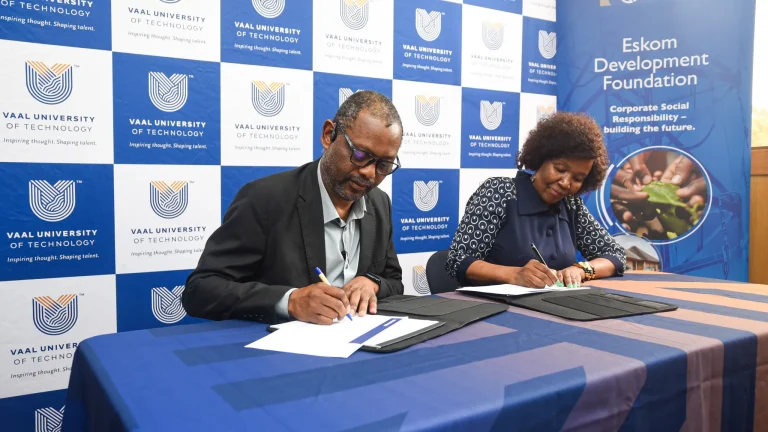
The Eskom Development Foundation has renewed its partnership with the Vaal University of Technology (VUT) by donating R2.7 million to support 1040 learners in Science, Technology, Engineering, Mathematics and Innovation (STEMI). 

The university said the donation would support its Girls in STEMI Programme and winter school initiative, which would create opportunities for learners to pursue careers in these critical fields that drove economic growth. 

According to VUT, the Girls in STEMI Programme focused on opening pathways for young women into technical careers, while the 2026 winter school offered extra academic support in key subjects for matric learners, both boys and girls, during the winter break.

The partnership between VUT and Eskom has been running for two years. 

Eskom Development Foundation acting CEO Mologadi Motshele said the collaboration demonstrated the power of partnership in driving transformation and excellence. 

“Through this investment we are shaping South Africa’s future by empowering young women with dedicated support, while ensuring all learners have access to high-quality technical education.”

VUT Vice-Chancellor Khehla Ndlovu said Eskom’s commitment was more than a corporate gesture. It was a “catalytic force for transformation”.

“With Eskom’s support we are not simply running programmes, we are rewriting futures by empowering hundreds more to break barriers in science and technology, to aspire and to achieve,” she said.

“Together, we are building a diverse pipeline of talent for South Africa, lighting up futures and reshaping our nation’s story.”

The winter school will provide high school learners with exposure to university-level STEM education, mentorship and hands-on research experiences.

INSIDE EDUCATION

SA unveils bold energy transition plan for green economy

By Thapelo Molefe

South Africa has launched a major skills development programme to prepare students, workers and communities for opportunities in the fast-growing green economy, with  strong backing from international partners.

Speaking on behalf of Deputy President Paul Mashatile at the launch of the JET (Just Energy Transition) Skills Desk and the National Jet Skills Advisory Forum, Higher Education and Training Minister Buti Manamela said these structures formed part of a vital transition towards a low-carbon, inclusive and equitable energy future.

They will provide the leadership and coordination necessary to advance a cohesive and demand-driven skills development agenda.

The structures, located within the department and the Human Resource Development Council of SA, will coordinate reskilling programmes, curriculum reforms and career pathways for South Africans in renewable energy, green hydrogen, electric vehicles and other sustainable industries.

“This is not only a skills agenda, it is a nation-building agenda,” Manamela said. 

“The just energy transition must be about ensuring that women, youth and vulnerable groups are not left behind. Universities, TVET colleges and community education centres must prepare South Africans, especially workers in vulnerable sectors, for new opportunities.”

The desk will serve as an operational hub, driving adult upskilling, labour market intelligence and curriculum readiness, while the advisory forum will ensure coordination between government, labour, business and civil society.

They will tackle the green skills gap hindering equitable energy transition and affecting economic development and competitiveness.

The minister said there was a collective recognition for a holistic strategy that included education reform and an increase in skilled labour to guarantee that all South Africans, particularly those living in coal-dependent and disadvantaged areas, could participate in the green economy.

The structures will also establish key integrated mechanisms, including a JET Skills Integrated Plan, to guide and coordinate interventions across the system.

They will further support the development of Skills Development Zones, which are targeted hubs in high-impact areas like Mpumalanga, the Eastern Cape and the Northern Cape. These zones will link training to employment opportunities in emerging sectors such as renewable energy, green hydrogen and new energy vehicles to grow local economies.

International partners, including the European Union (EU), Germany and Switzerland, are supporting the initiative through a multi-donor programme.

Ambassadors from the EU, Germany and Switzerland highlighted education as the backbone of the transition. Switzerland cited its globally respected TVET apprenticeship model, while Germany underscored the importance of long-term cooperation in skills development. 

South Africa’s just energy transition is expected to reshape the labour market dramatically.

Electricity and Energy Minister Kgosientsho Ramokgopa warned that coal-dependent towns risked economic collapse unless workers were retrained for alternative employment. 

“We must design interventions that ensure the net employment benefit is positive. Otherwise, the transition risks leaving communities behind,” he said.

Education experts said the challenge was not just about producing engineers and scientists, but also technicians, artisans and entrepreneurs who could drive innovation and job creation in the renewable sector.

The Department of Higher Education and Training has committed to working with industry to align qualifications with market demand.

Manamela said the new structures would also prioritise career guidance, entrepreneurship support and train-the-trainer programmes, ensuring educators themselves were prepared for the green transition. 

“Skills are the bridge between transition and inclusion, between economic restructuring and social justice,” he said.

As South Africa prepares to host the G20 Summit later this year, education and training for a just energy transition will form part of its agenda. 

“We must measure success not only by how much green power we generate, but by how many young people gain access to sustainable jobs in the new economy,” Manamela said.

Video by: Katlego Tshekoesele

INSIDE EDUCATION

Basic Education honours top schools and districts

By Johnathan Paoli

Basic Education Minister Siviwe Gwarube has called for “bold ambition” in South Africa’s schools, urging districts, teachers and communities to strengthen the foundations of learning while tackling persistent challenges of infrastructure, safety and literacy.

Speaking during the 11th edition of the National Education Excellence Awards on Friday, Gwarube placed the spotlight on early childhood development, foundations of learning and the resilience of districts that have sustained performance despite immense challenges.

“Congratulations to all the nominees and winners. You inspire us, and you remind us of what is possible when we are bold in our ambition, when we work collaboratively and when we strive for excellence,” the minister said.

The awards, held under the theme “Recognising Excellence in Education”, celebrated the dedication of district officials, principals, teachers and learners across all nine provinces.

Gwarube hailed the past year as a defining one for her department, noting that reforms such as the Bana Pele Early Childhood Development (ECD) registration drive and the compulsory introduction of Grade R from December were laying the groundwork for long-term change.

“I have personally witnessed the pride of practitioners who, for the first time, feel recognised as part of the system. This is not easy work, but together we have laid the foundation for a future where every child can access quality ECD,” she said.

The minister warned, however, that the system still faced significant challenges.

Uneven school infrastructure, lingering pit latrine toilets and violence in schools continue to undermine progress.

She urged district directors to accelerate the roll-out of the Safer Schools Protocol with the South African Police Service, ensuring that every school has a functional safety committee.

The minister also reaffirmed her belief that excellence must be woven into the “DNA of the education system”, driven by communities, parents, partners and the government.

Deputy Minister Reginah Mhaule emphasised respect for teachers, warning that bullying and societal neglect were undermining their contribution.

“Every teacher who wakes up and goes to class is a winner. Families, I call upon you – let’s teach our children respect. Education is a collective responsibility,” she said.

Chief director for planning and support, James Ndele, reflected on the 11-year journey of the awards, noting how they had expanded from purely academic metrics to recognise innovation, sport, inclusivity and school maintenance.

“The education sector is a rising tide, excellence is not static; every year the bar is raised,” he remarked.

Acting director of district coordination, monitoring and support, Khanyi Mantshongo, mentioned new categories focusing on participation in gateway subjects such as mathematics, physical science and accounting, which were aimed at aligning education with economic needs.

The highlight of the event was the recognition of top-performing schools and districts across multiple categories.

In the category of Top Performing Public Secondary Schools, excellence was recognised across quintiles, ensuring fair comparison between schools of different resource levels.

In Quintile 1, Macingwane Secondary School claimed first place for the second consecutive year, followed by Ntsizwa Senior Secondary and Nomafu High.

Quintile 2 was led by Ngopoleng Bakone Secondary, with Guduza Secondary and Ubulinga Secondary in second and third place respectively.

In Quintile 3, Menzi High School took top honours ahead of Velabahleke High and Emhlwaneni High.

Potchefstroom Gimnasium led Quintile 4, with Hoërskool Middelburg and Sibusisiwe Comprehensive Technical High as runners-up.

Finally, in Quintile 5, Bloemhof High secured first place, followed by Rhenish Girls’ High and Rustenburg Girls’ High.

Beyond academics, the Excellence in Full-Service Schools and Facilities category honoured institutions fostering inclusive, supportive and well-maintained environments.

Alpha Primary School was named the top-performing full-service school, with Toe Vlug and Discovery Full-Service Schools following.

For primary school facilities, Vredendaal Noord Primary topped the list, with Sekutupu Primary and Sipheni Primary recognised for their upkeep.

In secondary school facilities, Bridgeton Secondary led the way, followed by Osborne Secondary and Indala High.

At district level, awards celebrated leadership and improvement in NSC results.

Video by: Kgalalelo Setlhare Mogapi.

Johannesburg West Education District emerged as a consistent leader, topping categories for overall performance and highest pass rates, with Tshwane South and Metro Central close behind.

Ugu Education District took first place in quality indicators among large districts, while Pixley-ka-Seme was named the most improved.

For Bachelor passes, Tshwane South, Johannesburg West and Johannesburg North secured the top three positions.

Gwarube urged every district to embrace ambition, saying they must not only catch up with international standards, but to set them.

The minister called for a renewed sense of pride and responsibility among educators, district leaders and communities, reminding them that despite immense challenges, excellence remained both achievable and contagious.

INSIDE EDUCATION