Home Blog Page 72

Africa backs SA’s historic bid for 2030 World Chess Olympiad

0

By Johnathan Paoli

The African Chess Confederation (ACC) has thrown full weight behind South Africa’s intention to bid for the 2030 World Chess Olympiad, hailing the move as a historic step to bring the world’s most prestigious chess event to African soil for the first time.

The ACC said in a statement the decision marked “a bold and historic step towards bringing the world’s most prestigious chess event to African soil” and called on the entire continent to unite behind the campaign.

Since the first Olympiad in Paris in 1924, the event has been staged on every continent except Africa.

“We are proud to announce that Chess SA will prepare a bid to host the 2030 World Chess Olympiad, making history by bringing the world’s greatest chess event to African soil for the first time ever,” the federation said.

The announcement followed a recent meeting when Chess South Africa’s (Chess SA) executive board met a high-level delegation of sports and chess leaders.

The gathering included International Chess Federation deputy chairperson Dana Reizniece, South African Sports Confederation and Olympic Committee first vice president Lwandile Semilane, and Western Cape cultural affairs and sport acting deputy director-general Lyndon Bouah.

According to Chess SA, all parties at the meeting aligned on a single ambition to secure the 2030 Olympiad for South Africa.

The ACC said South Africa’s intention to bid for 2030 was not only about hosting a major tournament, but about completing the Olympiad’s global journey and affirming Africa’s readiness to welcome the international chess family.

“With the strong backing of SASCOC and the Department of Sport, Arts and Culture, this prospective bid is more than a dream, but a continental statement of unity, excellence and determination. We call on all African federations, chess enthusiasts and international partners to rally behind South Africa’s campaign,” the ACC said.

If successful, the bid would give South African chess fans a rare opportunity to watch the game’s elite players live, while showcasing the country’s ability to host world-class events.

It would also expose thousands of young players to the sport at the highest level, potentially inspiring the next generation of champions.

The bid comes at a time of renewed energy in international chess.

Later this year, FIDE’s calendar includes the World Youth U16 Chess Olympiad in Barranquilla, Colombia (16–23 August 2025), and the 2nd FIDE Chess Olympiad for People with Disabilities in Astana, Kazakhstan (19–26 October 2025).

These events, while smaller in scale, reflect the global growth and inclusivity of chess, qualities South Africa hopes to highlight in its 2030 campaign.

INSIDE EDUCATION
Nzimande urges stronger African role in global science

By Johnathan Paoli

Science, Technology and Innovation Minister Blade Nzimande has called for African universities, particularly historically disadvantaged institutions, to take a leading role in global knowledge production as the world confronts mounting climate and environmental crises.

Delivering the keynote address at the 3rd International Conference on Earth and Environmental Sciences at the Durban International Convention Centre on Monday, Nzimande said the imbalance in the global system of knowledge production had long marginalised African perspectives and expertise.

“While we value collaboration, we do not want our historically disadvantaged universities to be comfortable with simply being consumers of the knowledge that others produce. Universities on the African continent must make their own distinct contribution to the global knowledge project,” he told delegates.

The conference, jointly organised by the University of Zululand and Chang’an University of China, has attracted scientists, policymakers, industry leaders, civil society actors and students from over 70 countries across six continents.

It aims to foster interdisciplinary dialogue, explore innovative ideas and strengthen partnerships on earth and environmental sciences.

Nzimande commended the partnership between the University of Zululand and Chang’an University, noting that it had grown from bilateral academic cooperation into a respected international platform.

He said the collaboration underscored both the importance of cross-border higher education partnerships and South Africa’s long-standing diplomatic ties with China.

Framing his remarks within the “triple planetary crisis” of climate change, pollution and biodiversity loss, the minister warned of the escalating global threats to ecosystems, human health and economic stability.

“We are increasingly witnessing life-threatening heatwaves, floods, disappearing species and severe pressures on water and ecosystems. Without prompt, well thought-out and coordinated action, the outcomes for future generations will be devastating,” he said.

Nzimande drew on the World Meteorological Organisation’s 2023 State of the Climate in Africa Report, which found the continent faces “exceptionally heavy burdens” from climate change, with adaptation costs projected at up to $50 billion annually over the next decade.

“African countries are already losing 2–5% of GDP and in some cases diverting nearly 9% of their national budgets to respond to climate extremes.

“By 2030, up to 118 million extremely poor people will be exposed to drought, floods and extreme heat in Africa if adequate response measures are not put in place,” he said.

The minister said South Africa was already experiencing rising temperatures, drought, water scarcity and more frequent and intense storms, with severe consequences for agriculture, biodiversity and rural livelihoods.

“Farmers are struggling to cope with shifting weather patterns, extreme heat and irregular rainfall. This directly threatens food sovereignty and the survival of communities who depend on biodiversity for everyday life,” he said.

Nzimande outlined a range of government-led interventions through the department, including the Science Mission on Global Change and Biodiversity Science, which builds on two decades of investment and hosts programmes such as the South African Environmental Observation Network and the South African Risk and Vulnerability Atlas.

The department facilitated a newer inter-departmental Science Mission on Climate Change and Environmental Sustainability, prioritising: climate adaptation strategies; the South African Research Infrastructure Roadmap; and a high-level programme focused on pollution, oceans, natural resource management and science-based policy.

He added that South Africa actively engaged in global platforms such as the UN Framework Convention on Climate Change, the Convention on Biological Diversity and the Convention to Combat Desertification.

Nzimande also announced that preparations were underway for the 6th Global Change National Conference, to be hosted by his department, the National Research Foundation and the University of Mpumalanga from 1–4 December this year.

The conference will serve to advance implementation of the Climate Change and Environmental Sustainability Societal Grand Challenge framework.

The minister welcomed the involvement of students and young researchers at the Durban gathering, stressing the need to increase the number of black and women scientists in senior positions across South Africa’s research institutions.

“This aligns with our strategic objective of transforming the scientific community so that it reflects the demographics and potential of our society,” he said.

Nzimande, who urged African government to embrace evidence-based policymaking, said the Durban conference represented a valuable opportunity to generate new research, and data and climate-resilient technologies.

INSIDE EDUCATION

W.Cape teachers celebrated as “first responders” for child development

By Johnathan Paoli

The Western Cape education department has praised teachers as pivotal in shaping the lives of learners and positioning the province as a leader in education outcomes.

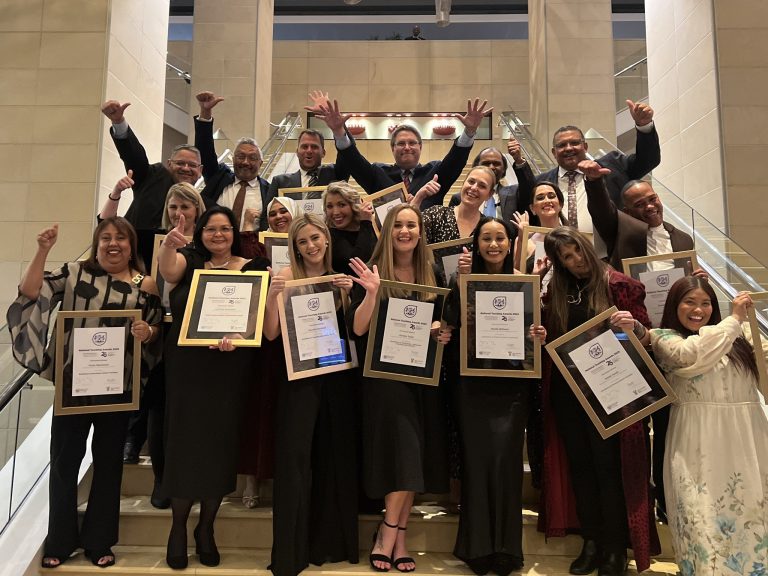
Speaking during the 25th Annual Provincial Teaching Awards in Cape Town, education MEC David Maynier praised teachers, calling them the province’s “greatest asset”.

He said they were vital to ensure that learners have a brighter future.

“Teachers have become our children’s first responders. We need to ensure that our teachers in turn have the emotional support and tools they need to cope with difficult circumstances. A better teacher translates directly into better learning outcomes, and I have never met a teacher who did not want to be a better teacher,” Maynier said.

Head of Education Brent Walters formally welcomed the winners, describing them as “wonderful educators who embody the best of what our schools have to offer”.

The awards celebrated winners across 15 categories, including Grade R teaching, school leadership, special needs education and lifetime achievement.

This year’s ceremony also highlighted the powerful role women play in shaping education in the Western Cape.

Of the 15 awards presented, 13 went to female educators.

Maynier welcomed the timing during Women’s Month.

He said the awards reinforced the contribution women made not only as classroom teachers but also as leaders, mentors and innovators in education.

Educators from the Eden and Central Karoo Education District stood, securing the most awards of any district.

Their success is seen as a sign of the quality and commitment present across even the province’s rural schools.

The Democratic Alliance congratulated all the nominees and winners.

DA provincial education spokesperson Leon van Wyk said the awards underscored the value of educators who often served as “mentor, counsellor and motivator” in their schools.

“Teachers are the backbone of our education system, and their dedication ensures that every child has the opportunity to thrive.

“The department’s investment in teacher development is therefore an investment in the future of our province, and the DA wholeheartedly welcomes it,” Van Wyk said in a statement.

He further emphasised that recognising teachers’ achievements must go hand-in-hand with continued support.

The following educators were recognised as the province’s best in their respective categories:

Excellence in Grade R Teaching: Charles Mokoena, Dirk Boshoff Primary School, Uniondale (Eden and Central Karoo)

Excellence in Teaching Life Skills (Grades 1–6): Ammarah Ford-Pieters, Cedar Primary School, Bonteheuwel (Metro Central)

Excellence in Primary School Teaching (Grades 1–7): Dome Swart, Kasselsvlei Primary School, Bellville South (Metro North)

Excellence in Primary School Leadership: Roche Witbooi, Concordia Primary School, Knysna (Eden and Central Karoo)

Excellence in Secondary School Teaching (Grades 8–12): Fiona Blanchard, Crystal Secondary School, Hanover Park (Metro Central)

Excellence in Secondary School Leadership: Hendrik Smith, Hoërskool Langenhoven, Riversdale (Eden and Central Karoo)

Excellence in Special Needs Teaching: Chantelle Carstens, Paarl School, Brackenfell (Metro East)

Excellence in Special Needs School Leadership: Alsje Schoeman, Oudtshoorn School of Skills, Oudtshoorn (Eden and Central Karoo)

Excellence in Teaching Mathematics (GET): Mariska Niemand, Altena Primary School, Strand (Metro East)

Excellence in Teaching Mathematics (FET): Charissa Shay-Sithole, Apex High School, Eerste River (Metro East)

Excellence in Teaching Natural Sciences: Demi Michelle Potts, Kretzenshoop Primary School, George (Eden and Central Karoo)

Excellence in Teaching Physical Sciences: Lana Schreuder, Rhenish Girls’ High School, Stellenbosch (Cape Winelands)

Excellence in Technology-Enhanced Teaching and Learning: Kirsten Tome, Fraaisig Primary School, Knysna (Eden and Central Karoo)

National Best Teacher Award: Wedaad Esau, Bridgeville Primary School, Bridgetown (Metro Central)

Kader Asmal Lifetime Achievement Award: Lorinda Rinkwest, Kasselsvlei Primary School, Bellville South (Metro North)

All 15 winners will go on to represent the Western Cape at the National Teaching Awards on 9 October.

Maynier expressed confidence that the province’s teachers would shine on the national stage.

INSIDE EDUCATION

Government to appoint independent law firm to probe Grade 3 learner death

By Johnathan Paoli

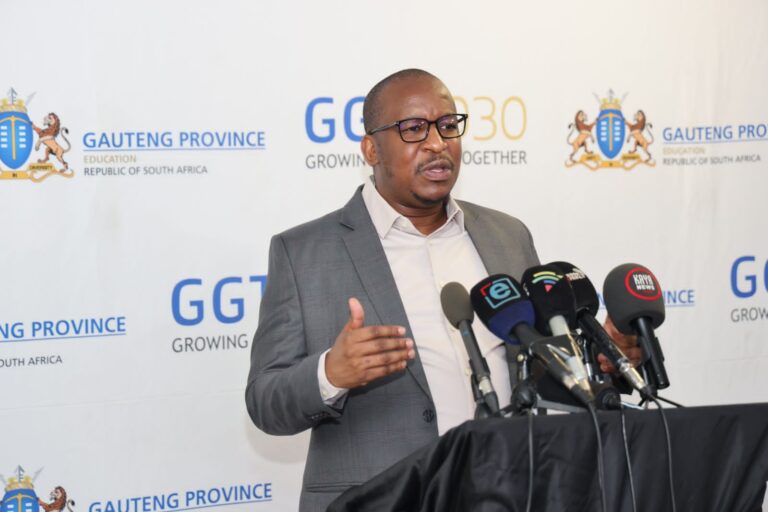
The Gauteng education department is finalising the appointment of an independent investigative law firm to probe the death of a Grade 3 learner from Alberview Primary School in Alberton, Ekurhuleni.

Gauteng education MEC Matome Chiloane has expressed his condolences to the boy’s family, the Alberview school community and all who knew him, emphasising the need for an independent probe to uncover the truth.

“In our pursuit of ensuring the safety and well-being of our learners across all schools, we expect this investigation to provide detailed facts around this incident. We are hopeful that it will uncover the facts behind the learner’s passing, ensuring accountability,” Chiloane said.

The MEC stressed that the safety of children in schools was non-negotiable and that any negligence, if found, would be dealt with decisively.

According to preliminary reports, the learner was allegedly injured while playing with friends on the school field during break.

Despite being rushed to a nearby hospital by paramedics, he was declared dead.

Department spokesperson Steve Mabona confirmed that an independent law firm would be mandated to investigate all circumstances surrounding the incident.

He explained that the investigation would go beyond internal departmental processes to ensure transparency and accountability.

“Once the law firm is onboard, the family and other stakeholders will be formally engaged for introductions and to outline the terms of reference,” he added.

The department’s psycho-social support unit has been deployed to the school to provide counselling and trauma support for learners, staff and affected families.

While no exact deadline has been announced, the department has indicated that findings will be shared with the family first before being made public.

It called for patience as the investigation process unfolds.

INSIDE POLITICS

Kids need soft skills in the age of AI, but what does this mean for schools?

0

By Jennifer L. Steele

For the past half-century, the jobs that have commanded the greatest earnings have increasingly concentrated on knowledge work, especially in science and technology.

Now with the spread of generative artificial intelligence, that may no longer be true. Employers are beginning to report their intent to replace certain white-collar jobs with AI. This raises questions over whether the economy will need as many creative and analytic workers, such as computer programmers, or support as many entry-level knowledge economy jobs.

This shift matters not just for workers but for K-12 teachers, who are accustomed to preparing students for white-collar work. Families, too, are concerned about the skills their children will need in an economy infused with generative AI.

As a professor of education policy who has studied AI’s effect on jobs and a former K-12 teacher, I think the answer for teachers and families lies in understanding what AI cannot – and perhaps will not – be able to do.

Prior waves of automation replaced routine and manual jobs, boosting the earnings advantage of cognitively demanding work. But generative AI is different. It excels at pattern-matching in ways that allow it to simulate human coding, writing, drawing and data analysis, leaving the lower rungs of these occupations vulnerable to automation.

On the other hand, because its output mimics patterns in existing data, generative AI has a harder time handling complicated reasoning tasks, much less complex problems whose answers depend on many unknowns. Moreover, it has no understanding of how humans think and feel.

This means that the “soft skills” – attributes that allow people to interact well with others and to be attuned their own emotional states – are likely to be ascendant. That’s because they are integral to solving complex problems and working with people. Though soft skills such as conscientiousness and agreeableness are considered to be personality traits, research suggests these are emotional tools that can be taught.

Teaching emotional awareness

The good news is that soft skills can be taught in tandem with traditional subjects such as math and reading – those areas for which teachers are held accountable – using techniques teachers already know.

For example, teachers often ask students to submit “exit tickets” as they depart the classroom at the end of a lesson. These are brief, written reflections or questions about the concepts students just learned.

Exit tickets can also be used to help students burnish their emotional and social skills along with their academic learning. In practice, teachers can give prompts that focus on moments of intellectual bravery, emotional regulation or interpersonal understanding, such as:

  • Write about a time when you helped someone today.
  • Tell me about someone who was kind to you today. How were they kind?
  • Describe a time this week when you learned something that seemed very hard. How did you do it?

The point of the task is not just to boost students’ mood or engagement, though these are great byproducts. The goal is to help students realize that their emotional responses to external circumstances fall within their control. Enhanced awareness of their own emotions predicts children’s ability to manage frustration, to perceive and anticipate the emotions of others and to work smoothly with other people. All of these are vital workplace skills that will likely become more valuable with the rise of generative AI.

Teaching problem-solving

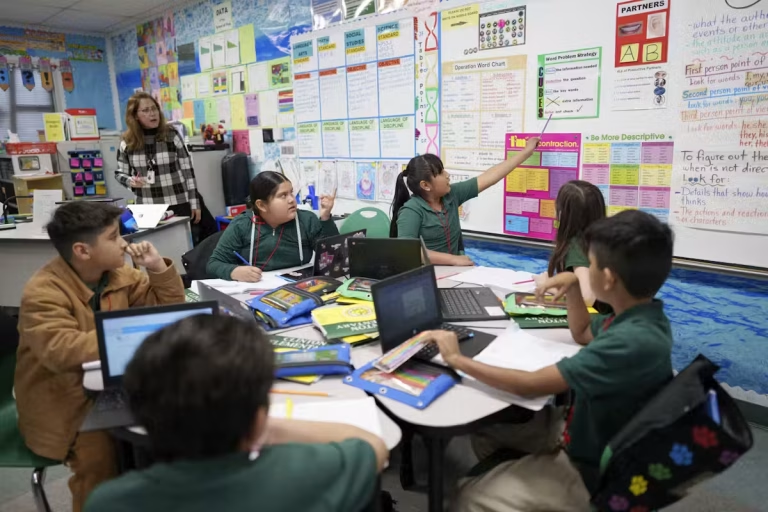
Teachers can also have students practice solving messy problems whose answers are not known. For example, as elementary students learn to calculate perimeters, areas or volumes, they can work in groups to find the measurements of objects around the school, including large or oddly shaped items. Teachers can prompt students to reflect not just on the correctness of their answers but on how they framed and approached each problem.

Real-world problem-solving, also known as authentic assessment, can be taught in any discipline, with examples that include:

  • Testing the soil slopes and moisture levels on school grounds and proposing landscaping solutions.
  • Creating and pilot-testing video campaigns for social causes.
  • Reimagining how history might have played out if leaders had made different choices, and considering policy implications for today.

Teaching children to unpack complexity helps them understand the difference between seeking textbook answers versus testing possibilities when the best option is unknown. Solving novel, complex problems will continue to befuddle AI, not only because there are many steps and unknowns, but also because AI lacks our spatial and emotional understanding of the world. Even in the long term, countless variables that humans instinctively grasp will be difficult for computers to intuit.

Protecting slow learning

The technology complaint I hear most often from teachers is that students are having generative AI do their work for them. This happens not because students are deceptive or evil but because humans are self-regulating creatures. We take shortcuts on tasks that seem dull or too daunting in order to prioritize tasks that feel more rewarding.

But when students are building new skills, delegating work to AI is a huge mistake. By making slow things fast, AI undermines learning, because effort is needed to learn hard things.

For this reason, I think teachers must protect the classroom as a place where basic skills are learned slowly, alongside other students. For many lessons, this will mean harking back to the days before computers, in which students wrote assignments by hand or presented their work orally, learning to anticipate and respond to different viewpoints. If students are permitted to use digital automation tools, they should be prompted to reflect on how they used them, what they learned from them and which skills they weren’t able to practice – such as spelling, long division or bibliography formatting – when they delegated work to the tool.

The soft skill to rule them all

The truth is no one knows exactly what will happen to workers in an AI-enabled economy. People disagree about the skills AI will complement or replace. But the skills that underpin modern technology, such as math and reading, will likely continue to matter, as will the intra- and interpersonal skills that make us distinctly human.

Perhaps the most important skill schools can teach children today is the self-awareness to prioritize learning over shortcuts, and to refrain from delegating work to machines until they know how to do it themselves. It will also become even more important to be able to work with others in order to unpack hard problems.

An AI-enabled society will not be a society in which complex problems simply disappear. Even as the labor market reorders itself, I believe opportunities will abound for those who can work well with others to tackle the great challenges that lie ahead.

Jennifer L. Steele is a Professor of Education at American University.

The Conversation

Women in STEM must be an expanding goal: Gina

0

By Johnathan Paoli

Science, Technology and Innovation Deputy Minister Nomalungelo Gina has highlighted the need to showcase women’s contributions to science, technology, engineering and mathematics (STEM), despite the ongoing underrepresentation of women at senior and strategic levels in the sectors.

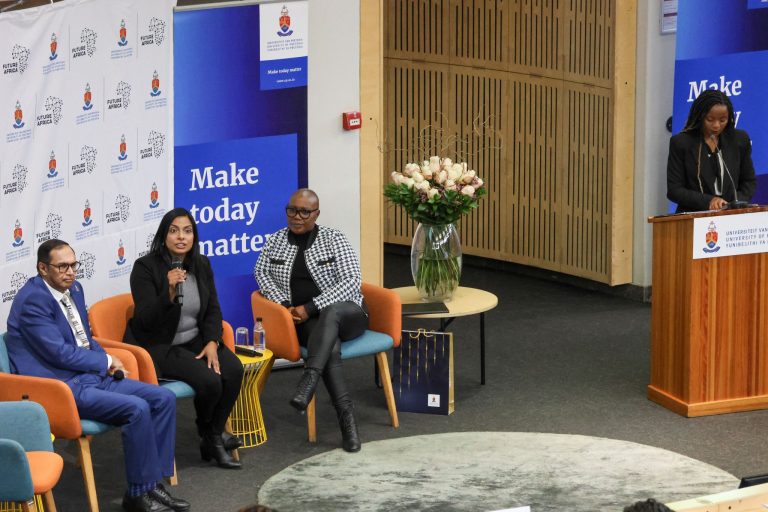
Delivering the keynote address during the 7th Annual Women in Science Symposium at the University of Pretoria (UP), Gina recognised the event as both a celebration and a call to action for systemic transformation.

“As we look toward the future, let us expand our definition of success in science. It is not only about the accolades or the statistics, it is about building a culture and a legacy that enables every young girl—regardless of where she is born or the circumstances she faces—to see herself as a scientist, an innovator, a leader,” Gina said.

The deputy minister welcomed government initiatives such as mentorship networks, women-led research funding and the South African Women in Science Awards as part of efforts to shift the landscape.

However, she cautioned that the struggles of gender equity remained a reality that transcends statistics.

“Representation must go beyond numbers. It must be measured by agency, the power to influence decision making, set research agendas and mentor the next generation,” she said.

Opening the symposium, UP’s director for Internationalisation and Strategic Partnerships, Dr. Rakeshnie Ramoutar-Priesch, underscored the urgent need to bridge the gender gap in STEM.

“While we celebrate progress this Women’s Month, we must also confront the reality. True equality means more than participation, it means women leading innovation across every scientific discipline,” she said.

The symposium’s second session, “unpacking STEM careers”, showcased how women were shaping diverse scientific fields.

Head of Corporate Affairs at L’Oreal South Africa, Thandi Kunene, revealed the science behind beauty, from artificial intelligence to sustainable chemistry.

“Women still make up less than 30% of the global STEM workforce. Being bold, building visibility and telling the stories of women in science are key to breaking barriers. At L’Oreal, we don’t just hire scientists, we empower science-led innovators,” Kunene said.

She urged learners to see opportunities not only in labs but also in industries ranging from green technologies to digital science.

Representing students, UP SRC president Vhutshilo Muambadzi cautioned against “representation without transformation.”

“Let us stop asking if women belong in science. Let us start asking how science can better serve women and society,” she declared.

In a session focused on early exposure to STEM, UP’s Sci-Enza Outreach Programme manager Puleng Tsie highlighted the need to reach young girls with hands-on science experiences.

“When girls see women scientists who look like them, when they touch, build and experiment, science becomes part of their normal. It becomes theirs,” Tsie said.

This sentiment was echoed by panellists including Hafsa Essop from the university’s radiography department, TuksSport High School head girl Thato Semono and Universities South Africa CEO Phethiwe Matutu.

They spoke about overcoming self-doubt, navigating male-dominated classrooms and the importance of safe spaces where young women are encouraged to “dream boldly and fail forward”.

UP Vice-Principal for Research, Innovation and Postgraduate Education Sunil Maharaj noted that 57% of the university’s academics were women, with women also holding 50% of its prestigious South African Research Council’s research chairs.

“My heartfelt wish is that in the near future we can dispense with terms like ‘male-dominated world’ as a never-to-be-repeated anachronism,” Maharaj said.

As proceedings closed, Gina stressed that gender equity in STEM would not occur by accident, but must be designed, championed and sustained.

INSIDE EDUCATION

Gwarube wants stronger partnerships to transform Free State education

0

By Thapelo Molefe

Basic Education Minister Siviwe Gwarube has called for a deliberate and practical partnership between the government, universities and communities to transform the education system in the Free State.

She said global priorities must connect directly to local classrooms.

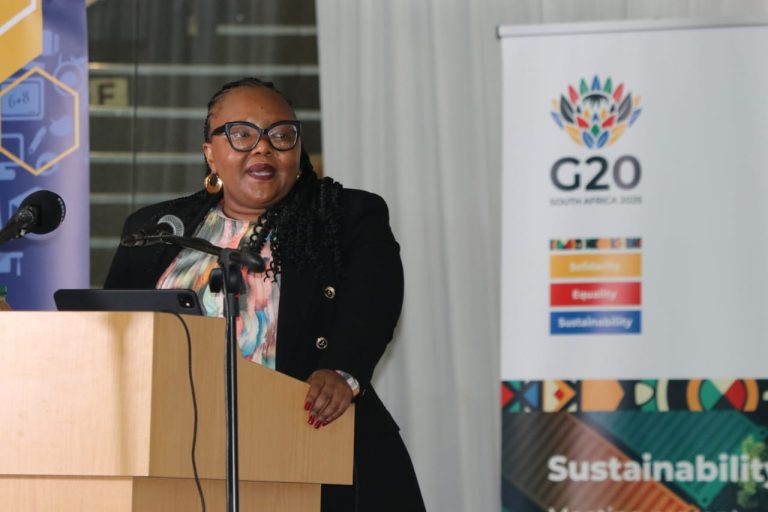
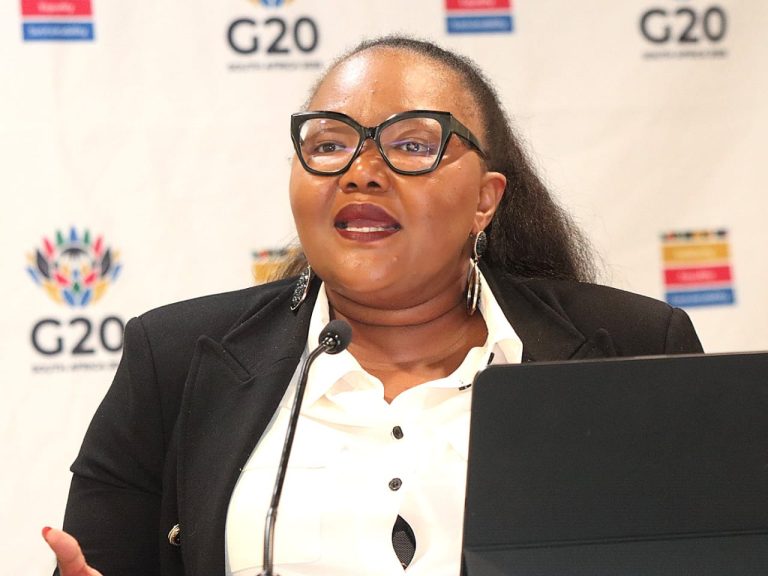
Speaking at the G20 Free State Indaba, Gwarube said South Africa’s presidency of the G20 in 2025 came with a commitment to take the G20 to the people, ensuring that policies shaped internationally reflected the realities of learners and teachers across the country.

“This is about ensuring that global debates on education are not abstract, but connected to the classrooms in Thaba Nchu, the early childhood centres in QwaQwa, the high schools of Bloemfontein and the rural schools stretching across the province,” she said.

Gwarube outlined key priorities aligned with G20 education goals, including improving foundational literacy and numeracy, strengthening teacher professional development in the face of technological and environmental change, and expanding early childhood development (ECD) access.

She stressed that while high-performing countries like Finland and Singapore offered lessons, South Africa needed its own approach rooted in local realities and aimed at transformation.

The minister proposed six key focus areas for the Free State, starting with aligning policies between the national department, the provincial education department and local universities to ensure a coordinated approach to teacher training and education priorities. 

She also called for the creation of professional learning communities that linked subject advisers with academics to share best practices and strengthen the bridge between theory and classroom reality. 

Addressing the challenge of teacher shortages, particularly in rural areas, Gwarube emphasised the need to match teacher supply with demand. 

She further highlighted the importance of strengthening teaching practice placements for student teachers to give them relevant exposure, as well as smoothing the transition from university to classrooms through aligned induction programmes. 

Lastly, she urged for joint monitoring, evaluation and research to inform evidence-based reforms tailored to the province’s specific needs.

“If we commit to these actions, we will align teacher education with national and provincial priorities, close the gaps between oversupply in some subjects and shortages in others, and treat teacher development as a lifelong journey,” Gwarube said.

INSIDE EDUCATION

70 learners hospitalised after suspected food poisoning at Eastern Cape school

0

By Johnathan Paoli

Emergency Medical Services (EMS) teams in the Eastern Cape rushed to Gobizizwe Agricultural School in Ngqeleni on Wednesday after a suspected mass food poisoning incident left about 70 learners requiring urgent medical attention.

According to Eastern Cape health department spokesperson Siyanda Manana the alarm was raised earlier in the day when learners began showing symptoms consistent with food poisoning, including nausea, vomiting, abdominal pain and dizziness.

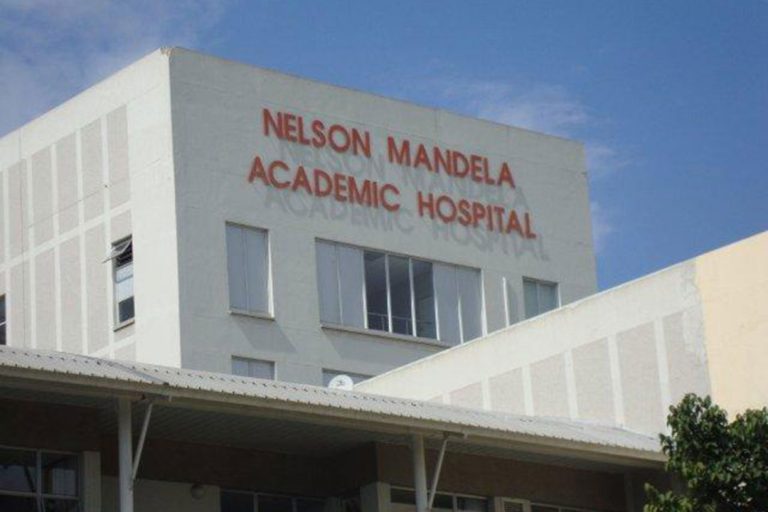
“About 70 school children were taken to Nelson Mandela Academic Hospital, Mthatha Regional Hospital and Ngangelizwe Community Health Centre. Those in serious condition were airlifted to hospital,” he said.

Manana confirmed that the learners were stabilised on-site, with several placed on intravenous drips before being transported to hospital.

The cause of the suspected food poisoning has not yet been confirmed.

The department has assured parents and the community that all affected learners were receiving treatment and that no fatalities were reported.

Officials have urged parents to remain calm while investigations continue.

The provincial education department is also involved in the probe, and counselling services are expected to be provided to the affected learners.

Authorities have indicated that an update will be issued once the investigation yields results.

INSIDE EDUCATION

Gwarube wants closer collaboration between basic education and higher learning

By Johnathan Paoli

Basic Education Minister Siviwe Gwarube has stressed the urgent need for a stronger, more deliberate partnership between her department and higher education institutions (HEIs).

Speaking during the G20 Education Seminar under the theme “From Dialogue to Implementation” at Unisa in Pretoria on Tuesday, Gwarube explored practical strategies for strengthening South Africa’s teacher education system while aligning with global G20 priorities.

“The Department of Basic Education invests heavily in curriculum innovation, teacher development and systemic reform. But for too long, our efforts have run alongside each other, not in full alignment. That must change. We need a shared stewardship of the education system, where the DBE and universities operate not in parallel, but in true partnership. Where accountability is reciprocal and leadership is collective,” Gwarube said.

She identified six strategic areas for collaboration between the department and HEIs. They include policy alignment and responsiveness, professional learning communities, teacher supply and demand planning, strengthening work-integrated learning, seamless induction and continuous professional development, and joint monitoring, evaluation and research.

The minister said the proposals could improve outcomes by aligning teacher preparation with systemic needs, bridging the gap between theory and practice, ensuring equitable teacher distribution and embedding continuous learning in teaching careers.

She underscored that the G20’s call for transformative leadership must be met with practical commitments rather than rhetoric.

“This conference must not be remembered for eloquent speeches, but for the partnerships it forges and the commitments it inspires. If we do this right, the ripple effects will be felt not just in Unisa’s lecture halls, but in every classroom in South Africa and far beyond,” Gwarube urged.

She stressed that foundational learning was a moral imperative and that teachers must be prepared to address challenges posed by artificial intelligence, climate change, migration and economic uncertainty.

Basic Education Deputy Minister Makgabo Reginah Mhaule reflected on South Africa’s historic role as 2025 G20 president and chair of the Education Working Group.

“It’s an honour and a strategic imperative to address you today, not simply as deputy minister, but as a teacher and an alumna of this university. In 2025, we will lead with clarity, courage and conviction, advancing three priorities: quality foundational learning, mutual recognition of qualifications and educational professional development for a changing world,” she said.

Mhaule said basic education must produce learners who met higher education’s expectations, warning against systemic misalignment.

Welcoming delegates, Unisa principal and Vice-Chancellor Puleng LenkaBula described the seminar as a platform for meaningful dialogue and collective responsibility.

“As South Africa prepares to host G20 activities, we are called to amplify the voice of the Global South. Investment in teacher development and early learning infrastructure is not only a national priority, but a global necessity. Empowerment is realised in classrooms, communities and the lives of learners and educators” she stated.

Gwarube praised Unisa’s leadership in teacher education, noting its reach across the continent and its pivotal role in producing educators across all phases from early childhood to postgraduate studies.

INSIDE EDUCATION

Manamela confident on overhauling PSET sector

By Johnathan Paoli

Higher Education and Training Minister Buti Manamela has committed to decisive, phased interventions for the Post-School Education and Training (PSET) system over the next four years, acknowledging persistent structural weaknesses.

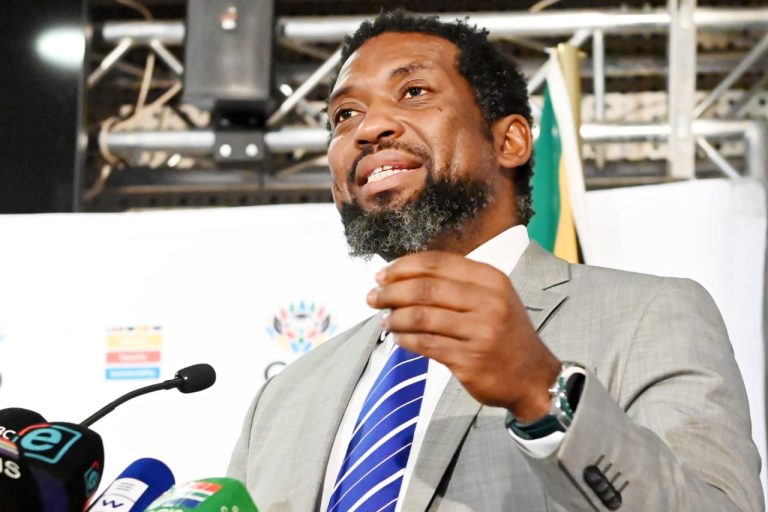
Addressing reporters in Pretoria, Manamela outlined a plan to reform the system, saying the past 19 days of nationwide consultations with students, educators, unions, institutions and employers had revealed both deep frustration and high expectations for change.

“We will reimagine and reengineer our Post-School Education and Training system for a changing world. We will fix what is broken. We will strengthen what works. And we will build what is missing. We do this because South Africa deserves a system that delivers skills, knowledge and opportunity for all – and because our future depends on it.,” Manamela stated.

His vision is anchored on six objectives: creating a unified system, expanding equitable access, aligning skills with economic needs, improving quality, strengthening governance, and ensuring sustainability.

These objectives will be driven by five strategic pillars.

Economic renewal and jobs will ensure that graduates are employable and institutions align with growth sectors, while a green just transition will position skills development to support climate resilience and low-carbon innovation.

Public sector capacity must be increased to deliver services effectively, the country’s intellectual sovereignty will be strengthened through research and innovation, and no community must be left behind.

The minister detailed a three-phase timeline.

Within three months, the department wishes to stabilise the National Student Financial Aid Scheme (NSFAS) and initiate a sustainable student funding model; establish the PSET Reengineering Task Team; and realign and tighten oversight of Sector Education and Training Authorities (SETAs).

Additionally, the department is launching three flagship projects: “Skills to Work Transitions” connecting unemployed youth to training and jobs; “Career Choices” guiding learners from early school years into suitable career pathways; and “Literacy for Empowerment” targeting four million functionally illiterate adults.

Within 12 months, Manamela said the department would pilot autonomous college and new CET (Community Education and Training) models; launch TVET curriculum pilots in emerging industries; establish a national PSET database; roll out the National Senior Certificate for Adults as an alternative school-leaver pathway; and complete legislative reviews and accelerate campus infrastructure upgrades.

Within four years, the department plans on fully implementing the sustainable funding model, consolidating SETA and CET reform, driving system-wide digital learning, institutionalising lifelong learning pathways, and expanding research capacity and global partnerships.

Video by Kgalalelo Setlhare Mogapi.

Manamela stressed the need to rebalance the system, which he said was “heavy at university level and quite lean when it comes to TVET and community colleges”.

He announced plans to invest in short-term, work-oriented programmes such as automotive spray painting, bricklaying and energy transition skills, ensuring young South Africans were first in line for green economy jobs.

The minister acknowledged “fundamental challenges” at NSFAS, including governance instability, corruption allegations and delayed allowance payments.

While 800,000 students have received allowances, others remain unpaid due to administrative backlogs.

Manamela warned that without reform, the current funding model risked collapse.

“We must relook at the current student funding model, identify priority skills and mobilise resources from SETAs and the National Skills Fund,” he said.

NSFAS board leadership is reviewing vacancies, including the CEO position, with the aim of appointing competent candidates to stabilise operations.

Responding to questions about SETA board appointments, Manamela said nominations for chairpersons have closed and the department was assessing candidates’ skills and capacity.

Additional member nominations were reopened to accommodate applicants without master’s or PhD qualifications, especially from labour and community sectors.

On recent grade tampering allegations at the University of Cape Town, Manamela confirmed that the institution had requested the department to lead an investigation. He commended the university over its willingness to cooperate fully and commit to accountability.

Manamela emphasised that the government could not reform the sector alone, calling for a “broad national compact for skills and knowledge” involving students, staff, business, labour, civil society and communities.

This compact would be formalised at a Higher Education National Convention in 2026 to set the sector’s long-term direction.

The department will hold a detailed briefing in September on preparations for the 2026 academic year, including NSFAS reforms, institutional readiness and funding priorities.

INSIDE EDUCATION