Home Blog Page 74

What the new BELA regulations mean for learners, parents and schools

By Johnathan Paoli

The Basic Education Department has formally published two important regulations for public comments that will reshape how learners are admitted to public schools and how those institutions manage the number of learners they can accommodate.

The Regulations Relating to the Admission of Learners to Public Schools and Regulations Relating to the Capacity of Public Schools have been gazetted.

“The purpose of these regulations is to provide all departments and the governing bodies of all public schools with regulatory provisions to manage learner admissions in public schools… and provide for the minimum uniform norms and standards for the capacity of an ordinary public school in respect of the number of learners a school can admit,” the regulations read.

In short, the regulations are designed to bring fairness, clarity and order to the often messy and frustrating school admissions process.

They address long-standing issues around school overcrowding, unfair admission practices and unequal access, especially in high-demand urban areas.

Until now, many schools followed their own rules when admitting learners, often turning away children from the local community or prioritising certain language groups or income brackets.

The new admissions regulations fix this by creating a centralised, standardised process for all public schools in the country.

All school applications must be done online through the Admissions System, which opens during a set period every year, while the Head of Department (HOD) now manages all admissions, not individual schools or governing bodies.

Schools must prioritise children who live in their “feeder zones” rather than selecting based on preference or ability. Parents will need to provide proper documents such as birth certificates, proof of residence, immunisation records and past school reports.

Schools must accept children with disabilities and special support will be provided where needed.

The regulations list a priority order for placements, namely children who live within the school’s feeder zone; siblings of children already at the school; children of school staff; and children outside the feeder zone, ranked by how close they live.

If a child is not accepted at their preferred school, parents have a right to appeal the decision to the department within seven days.

The capacity regulations are meant to address overcrowding by ensuring every school knows and sticks to how many learners it can handle safely and effectively.

The HOD will decide each school’s capacity based on the size and number of classrooms, the number of teachers, furniture, equipment and learning materials, subject offerings, for example science labs, health and safety requirements, and special access for learners with disabilities.

Each school will now be audited yearly to update its official learner capacity, with this figure being published online so parents can make informed decisions when applying.

Schools may not accept more learners than their official capacity, unless the HOD gives special written permission.

Over enrolment can lead to disciplinary action against school principals or district officials.

The regulations also limit the role of School Governing Bodies (SGBs) in admissions.

In the past, some SGBs created their own policies that were used to exclude certain learners, especially based on language, income or ability.

Now, all admission decisions are made by the HOD, and SGBs must comply with the department’s regulations.

This change follows previous Constitutional Court rulings that found school policies cannot override the government’s duty to ensure fair access to education.

The new regulations are fully backed by law and align with the South African Schools Act, rights enshrined in Section 29 of the Constitution and key court rulings that protect learners’ access to fair and equitable schooling.

They form part of the broader reforms under the Basic Education Laws Amendment Act, which aims to modernise and streamline education policy across the country.

Schools must follow the centralised system and respect official capacity and can no longer use their own admissions rules.

Further, they must cooperate with audits and report accurate information, and they will face consequences if they break the rules.

Parents must ensure applying online within the set time and submit the right documents with no late applications accepted.

They can no longer “shop around” by applying to faraway schools without valid reasons, but have a right to appeal if they believe their child was unfairly rejected.

To ensure success, the department stressed that it would need to train school officials and district staff, help parents understand the new process through workshops and campaigns, provide technical support for online applications, especially in low-income areas, and monitor schools for compliance and respond quickly to problems.

The department has welcomed the new admissions and capacity draft regulations as representing a major step forward in building a fairer, more efficient education system in the country.

INSIDE EDUCATION
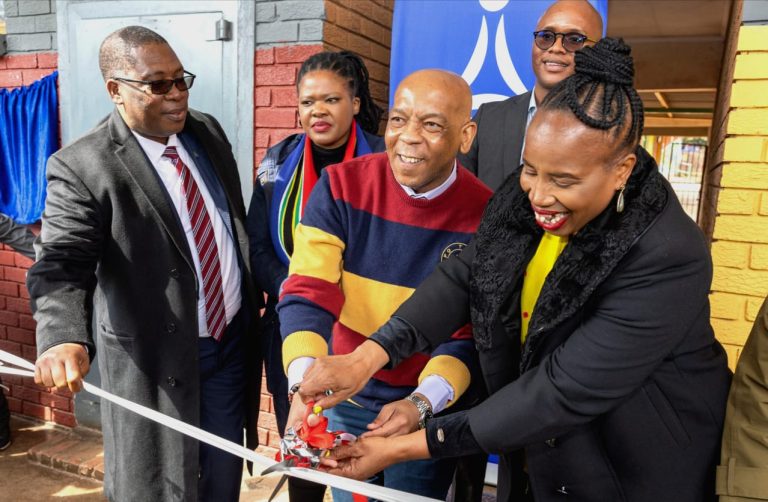
Township schools get four state-of-the-art science labs 

By Levy Masiteng

In a significant step towards promoting STEM education, Electricity and Energy Minister Kgosientsho Ramokgopa has unveiled four new science laboratories in schools in Atteridgeville outside Pretoria. 

The schools are Bokgoni Technical Secondary School, Hofmeyr High School, Edward Phatudi Comprehensive School, and Seaparankwe Primary School.

Department spokesperson Mawkhosonke Buthelezi told Inside Education that the schools were chosen because they offered science, technology, engineering and mathematics subjects.

The event twas also attended by Communications and Digital Technologies Minister Solly Malatsi, Deputy Minister in the Presidency Nonceba Mhlauli, and City of Tshwane MCC for roads and transport, Tlangi Mogale.

Buthelezi said the newly equipped laboratories were part of a collaborative initiative between public and private sector partners, including the SA Nuclear Energy Corporation, Huawei, and Avon and Dedisa. 

“Public-private partnerships are important because government has limited resources, yet there’s a high demand for its services. Therefore, partnerships with the private sector for these projects is crucial for improvement in our communities,” he explained. 

According to Buthelezi, the old science labs in the four schools needed to be revamped and equipped with modern technology.

“[Because of] Minister Ramokgopa, because of his passion about STEM subjects, he took it upon himself to mobilise private sector assistance to revamp the labs and have them equipped with modern technology,” he said.

During the unveiling, Mhlauli, highlighted the importance of investing in STEM education, particularly in township schools.

“Here today, we are right now at a primary school because we obviously want these young people or the learners to get involved in STEM subjects from the primary school phase,” she said.

Ramokgopa also emphasised the significance of STEM subjects in driving economic growth and increasing competitiveness. 

“We are investing a lot in the STEM subjects because these are the frontiers of the future. They are the ones that are going to underpin our economic growth… and make our industries more and more competitive going into the future,” he said.

“STEM subjects are very important for learners to pursue as they influence innovation, particularly in technology and science.” Buthelezi added. 

“The labs will give learners a head start by getting used to conducting experiments while still in high school, and they will be inspired to pursue careers in engineering and other related areas.”

The event was part of the Mandela Month commemorations, highlighting the importance of education and community service.

According to Buthelezi, they have already implemented a similar project in Howick, KwaZulu-Natal, and plans for other provinces would be determined as time goes on.

Mhlauli and Ramokgopa concluded the event with inspiring and uplifting messages, expressing hope and optimism for the future.

“We are excited. We’ve now discussed that we should be able to roll it out going to different provinces going forward,” Mhlauli said. 

“We want to grow it exponentially and expand its reach,” Ramokgopa said. 

INSIDE EDUCATION

Gwarube gazettes some Bela regulations for public comment

By Thapelo Molefe

Basic Education Minister Siviwe Gwarube has gazetted the first two sets of draft regulations under the Basic Education Laws Amendment (Bela) Act for public comment, which are aimed at reforming the country’s schooling system.

These are the first draft regulations to be published since the law came into effect last year.

The publication follows months of deliberation and mounting pressure from Parliament’s Portfolio Committee on Basic Education, which had called on Gwarube to finalise and publish the 10 regulations required to operationalise the law.

Among the key provisions in the newly released regulations is a clause on school capacity, which states that from Grade 1 to Grade 12, there must be one teacher to a maximum of 40 learners. 

In a statement on Thursday, Gwarube said the regulations were designed to ensure that the amendments introduced by the Act were implemented in a manner that upheld learners’ rights, enhanced school functionality and maintained a careful balance of powers between school governing bodies (SGBs) and government.

“The release of these regulations is an important opportunity for education stakeholders and the broader South African public to actively shape the future of basic education in our country,” Gwarube said. 

“These regulations are instruments that will affect how schools are governed and managed, how children are admitted and how our values as a society are reflected in our education system.”

The Act is aimed at improving governance, enhancing equity and elevating the quality of education for South Africa’s 13.5 million learners. 

“I call on all South Africans… to participate meaningfully in this public comment process. Your voice matters. Let it be heard in shaping the policies and regulations that govern the education of your children,” the minister urged.

To facilitate engagement, the department announced plans to launch a national public awareness campaign aimed at helping communities understand the content of the proposed regulations and make informed submissions.

The department has also adopted a modular approach to publishing the regulations to avoid delays associated with bulk releases.

Gwarube said further regulations would be released for public comment once they were legally vetted and approved.

Public submissions on the current draft regulations will be accepted for 30 days, closing on 5 September. Comments can be submitted through the department’s website.

INSIDE EDUCATION

Fire destroys two school classrooms in Krugersdorp in suspected arson incident

By Johnathan Paoli

Five learners have been arrested in connection with a fire that gutted two prefabricated classrooms at Thuto-Lefa Secondary School in Munsieville, Krugersdorp on Wednesday.

Gauteng education department MEC Matome Chiloane strongly condemned the destruction of school property, calling the act criminal and deplorable.

“Burning a classroom is not a form of protest, it is a criminal act that robs learners of their right to quality education. We will not tolerate such destructive behaviour, and those responsible must face the full consequences of the law,” Chiloane said.

The blaze is suspected to have been started deliberately, allegedly in response to recent changes in the school timetable aimed at improving academic outcomes ahead of preliminary exams.

The fire occurred shortly after midday. Emergency services managed to contain the blaze before it could spread further.

No injuries have been reported.

While the exact cause of the fire remains under investigation, early indications point to learner dissatisfaction over the school’s recent timetable restructuring.

The changes, implemented by school management, were introduced to ensure that all prescribed curriculum content was covered before the upcoming Grade 12 preliminary examinations and to provide learners with additional revision opportunities.

The timetable adjustment, however, was reportedly met with resistance from some learners.

The South African Police Service has launched a formal investigation into the incident, and four Grade 10 learners and one Grade 9 learner have been arrested.

Authorities are now working to determine the exact roles the learners played and whether others may have been involved.

Chiloane reiterated that the department’s goal was to strengthen academic performance across the province, not to inconvenience learners.

The department has assured parents, learners and the broader school community that efforts were underway to ensure that the loss of the two classrooms would not cause prolonged disruption to teaching and learning.

Officials have been deployed to assess the extent of the damage and develop an urgent response plan.

The department plans to bolster security measures at the school to prevent any further incidents.

Chiloane urged learners, parents and communities to approach grievances constructively and to respect school infrastructure, which belonged to all citizens and played a crucial role in enabling future opportunities for the youth.

INSIDE EDUCATION

Huawei opens applications digital skills programme

By Thapelo Molefe

Huawei South Africa has officially opened applications for the 2025 edition of its Women in Tech Digital Skills Training Programme, set to take place from 27 to 29 August in Johannesburg.

Now in its fourth year, the fully funded programme is targeted at women entrepreneurs and professionals who are actively building businesses and seeking growth in an increasingly digital economy. 

This year’s theme “TechHERpreneur: Where Innovation Meets Ambition”, underscores the importance of using technology to scale, adapt and lead.

Huawei SA spokesperson Vanashree Govender, said the programme was designed to give women a practical edge and confidence to grow.

“Our 2025 theme, TechHERpreneur, is about meeting women where they are – building, adapting and leading in a rapidly changing world,” Govender said.

“Whether it’s understanding how to use everyday tools more effectively or exploring the power of emerging technologies, this programme gives women the tools and perspective to make smarter decisions in a changing world.”

The three-day training kicks off with two days at Huawei’s Johannesburg campus, featuring hands-on sessions focused on emerging technologies such as artificial intelligence, 5G and digital tools tailored for business application. These sessions will be led by Huawei leaders and Information and Communication Technology specialists.

The final day will be held at Henley Business School Africa and will focus on personal leadership, business resilience and strategic adaptability. Participants will receive a certificate of attendance from Henley, which is part of the University of Reading.

A new highlight for this year is a business growth masterclass and technology demonstration led by Stuff, a South African consumer tech publication. 

Their session will showcase real-world tech solutions from smartphones and cloud storage to productivity platforms designed to enhance small business performance.

Pro-Dean of Teaching and Learning at Henley Business School Africa, Linda Buckley, praised the collaboration with Huawei.

“This is about digital fluency, personal mastery, and the confidence to grow beyond survival,” Buckley said. 

“At Henley, our mission is to build the people who build the businesses that build Africa, and partnerships with committed corporate citizens like Huawei are a critical part of this.”

Applications are open to women entrepreneurs with an existing business and a strong vision for growth. 

There are no sector or age restrictions. Selection will be based on innovation potential, business growth mindset and entrepreneurial drive. Only 40 women will be selected for the 2025 cohort.

INSIDE EDUCATION

Chiloane welcomes over half a million online applications for Grade 1 and 8

By Johnathan Paoli

Gauteng has recorded over 600,000 successful online applications for Grade 1 and Grade 8 learners for the 2026 academic year so far.

Gauteng Education MEC Matome Chiloane said on Tuesday that the department’s online admissions system had recorded 600,936 applications, comprising 254,251 for Grade 1 and 346,685 for Grade 8.

“The phenomenal number of applications we’ve received is a concrete demonstration of the trust parents place in Gauteng’s education system. We are grateful to all parents for their co-operation, and we continue to urge all parents to apply online,” Chiloane said in a statement.

The system opened less than two weeks ago and will remain open until 29 August.

Parents and guardians must complete the 5-step application process on the department’s website to ensure their applications are considered.

Incomplete applications will not be processed.

After registering, applicants must upload certified documents online or submit them physically to all selected schools within seven days of applying.

Documents uploaded online need only be submitted once, as all selected schools will have access to them via the system.

The system supports real-time document verification, prompting schools to update the status of submitted documents and alerting parents via SMS once verification is complete.

Schools also receive automated alerts when new documents are uploaded.

To improve placement chances, parents are encouraged to apply to a minimum of three and a maximum of five schools and to provide a valid cellphone number, as all communication, including placement offers, will be sent via SMS.

Placement offers will begin rolling out from 16 October.

To ensure access for parents without digital tools, the department has made support available through 81 decentralised walk-In centres and all Gauteng public schools, where trained officials assist with online applications. The department reaffirmed its commitment to a transparent and efficient admissions process that ensures every child has access to quality

INSIDE EDUCATION

KZN education addressing infrastructure needs

By Johnathan Paoli

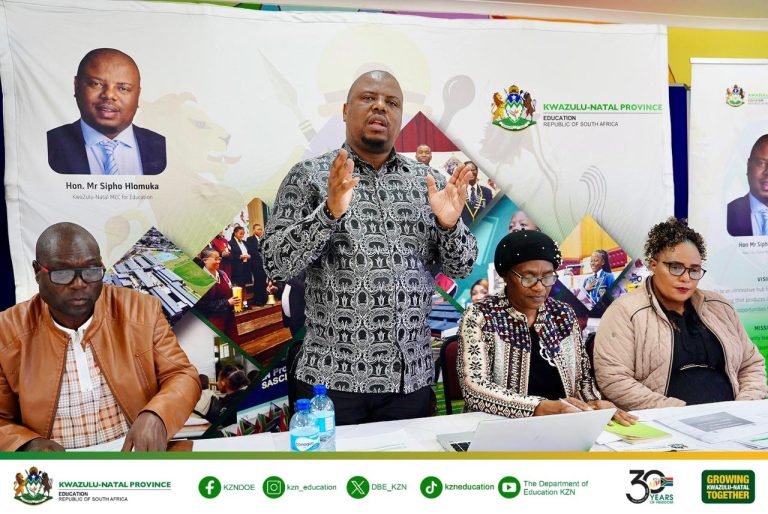
KwaZulu-Natal education MEC Sipho Hlomuka has praised the recent infrastructure upgrades at Vimbukhalo Primary as a testament to what is possible when communities, local leadership and government departments work in unison.

Addressing stakeholders during a visit to Begville, Hlomuka expressed his satisfaction with the progress made in delivering what he described as “a state-of-the-art, learner-focused facility”, noting that the new infrastructure signified a shift towards equitable development.

“This school is a demonstration of the government’s commitment to prioritising education even in our most remote areas. Despite earlier challenges, we are close to handing over a facility that meets all the basic standards of quality learning,” he said.

Hlomuka was conducting an oversight visit to the school as part of the department’s ongoing Operation Siyahlola monitoring and accountability programme.

Located in a remote part of the province, the school had previously relied on temporary park homes as classrooms, with its few permanent structures declared unsafe and unsuitable for learning and teaching.

The visit marked a significant moment for the school and the surrounding community, who gathered in large numbers to witness the transformation of their educational facility.

Vimbukhalo now boasts 11 classrooms, including two Grade R facilities.

Additional amenities include a dedicated counselling suite, a sick room, a storage room, a communications room, a fully equipped school nutrition kitchen, an administrative block, and a guardhouse.

The school’s sanitation facilities have also seen a significant upgrade, with 16 learner toilets, five for educators, four for Grade R pupils, and one for learners with disabilities, in addition to a designated waste disposal area.

The entire project was completed at an estimated cost of R73,689.61, a budget the MEC praised as both “efficiently allocated and responsibly managed”.

While the infrastructure is nearly ready for occupation, Hlomuka noted the final outstanding step was the procurement and delivery of school furniture, which he confirmed was being expedited.

“We are working to ensure that learners move into these facilities as soon as possible. The space is ready; now we must make it usable,” he said.

He urged the local community to take ownership of the school and protect it from vandalism or neglect.

“This is your investment. We call on the parents, the learners, the School Governing Body and community leaders to safeguard it for future generations,” he added.

INSIDE EDUCATION

South African learners struggle with reading comprehension: study reveals a gap between policy and classroom practice

0

By Tracy Kitchen

South African learners consistently struggle with reading comprehension, performing poorly in both international and local assessments. A significant issue is that 81% of grade 4 learners (aged 9 or 10) are unable to read for meaning: they can decode words, but do not necessarily understand them.

While this problem has received considerable attention, no clear explanation has emerged.

In my recent PhD thesis, I considered a crucial, but often overlooked, piece of the puzzle – the curriculum policy. My research sought to uncover and understand the gaps and contradictions in reading comprehension, especially between policy and practice, in a grade 4 classroom.

This research revealed a difference between curriculum policy and practice, and between what learners seemed to have understood and what they actually understood in a routine reading comprehension task.

My main findings were that:

  • Grade 4 learners were being asked overly simple, literal questions about what they were reading, despite the text being more complex than expected
  • The kinds of questions that learners should be asked (as indicated in the curriculum policy) were different from what they were being asked
  • This gap led to learners seeming to be more successful at reading comprehension than they actually were.

Pinpointing the gaps between what the policy says and how reading comprehension is actually taught at this crucial stage of development (grade 4) could pave the way for more effective interventions.

Curriculum policy

South African teachers are expected to base their reading comprehension instruction and assessment on the guidelines provided by the 2012 Curriculum and Assessment Policy Statement.

The policy outlines specific cognitive skill levels – essentially, ways of thinking and understanding – that learners should master for each reading task. These levels are drawn from Barrett’s 1956 Taxonomy of Reading Comprehension, an international guideline. It’s based on the popular Bloom’s Taxonomy of Reading Comprehension, which categorises reading comprehension according to varying skill levels.

According to Barrett’s Taxonomy, reading comprehension involves five progressively complex levels:

  1. Literal comprehension: Identifying meaning that is directly stated in the text. (For example, “Name the animals in the story”.)
  2. Reorganisation: Organising, paraphrasing, or classifying information that is explicitly stated. (“Find four verbs in the story to describe what the animals did.”)
  3. Inference: Understanding meaning that is not directly stated, but implied. (“When in the story is the leopard being selfish?”)
  4. Evaluation: Making judgements about the text’s content or quality. (“Who do you think this story is usually told to?”)
  5. Appreciation: Making emotional or personal evaluations about the text. (“How well was the author able to get the message across?”)

Typically, reading comprehension tasks will assess a range of these cognitive skills.

South Africa’s Curriculum and Assessment Policy Statement document specifies (on pages 91-92) that all reading comprehension tasks should comprise questions that are:

  • 40% literal/reorganisation (lower-order thinking skills)
  • 40% inferential (middle-order)
  • 20% evaluation and appreciation (higher-order).

This approach aims to allow most students to demonstrate a basic understanding of the text, while challenging more advanced learners.

However, as my classroom case study shows, the system appears to be failing. There was a mismatch between the policy and what was taking place in the classroom.

Classroom practice

For this research, I observed the reading comprehension practices in a single classroom in a public school in the Eastern Cape province. This took place over six months, at a time when schools were not fully reopened during the COVID-19 pandemic.

The task in question included a text and activity selected by the teacher from a textbook aligned with the policy. My analysis (which used Appraisal, a linguistic framework that tracks evaluative meaning) showed that most of the text’s meaning was implicit. To fully understand it, learners would need higher-order thinking and sophisticated English first-language skills. This was a surprising finding for a grade 4 resource, especially because most learners in this study were not English first-language speakers.

Even more surprising, learners achieved seemingly high marks on comprehension, with an average of 82.9%. This suggested they understood this complex text.

However, I found that the questions in the textbook did not align with policy. Instead of the balance of skills required by the policy, 73% of the questions called only for lower-order skills. Only 20% were inferential and a mere 7% required evaluation or appreciation (middle- to higher-order skills).

At least six of the 15 available marks could be gained simply by listing explicitly stated items, not requiring genuine comprehension.

This reveals that, in this classroom, activities labelled as policy-compliant actually tested only lower-order comprehension. Learners could pass simply by identifying and listing information from the text. This creates a false sense of comprehension success, as revealed by the high marks.

When learners were tested on the same text but using different questions that I designed to align with the policy requirements, they scored lower marks, especially for the higher-order questions.

This mismatch might partly explain why South Africans score poorly in international tests (which require more higher-order thinking).

Why this matters and moving forward

These findings are concerning, as learners may be lulled into believing that they are successful readers. A false sense of accomplishment could have significant impacts on the rest of their education.

Comprehension difficulties can’t be blamed solely on the disconnect between policy and practice, however. Many other contextual factors shape how learners perform in reading comprehension tasks.

In my study, factors like COVID-19, insufficient home language teaching policies, educational inequalities, and the pressures on teachers during a crisis (brought on by COVID-19) all contributed to the literacy crisis.

However, two key points became clear during this study.

Firstly, teaching materials favour lower-order comprehension skills, skewing perceptions of learners’ abilities.

Secondly, teachers may lack the knowledge, resources or motivation to adjust these materials to truly align with the national policy in how reading comprehension is assessed.

This calls for urgent intervention in how reading comprehension is taught and assessed and in how teachers are prepared to do this effectively.

Tracy Kitchen is a Student Academic Development Lecturer at Rhodes University.

The Conversation

Nzimande to boost access to science

By Levy Masiteng 

Science, Technology and Innovation Minister Blade Nzimande is on a mission to change the face and landscape of the country’s public science system so that it truly reflects the demographics of South Africa.

This week, the country is celebrating National Science Week, which aims to close the gap between society and science.

Over the past 25 years, the programme has grown significantly, and from next year it will become the National Science Month.

Nzimande, who kicked off celebrations at the Tshwane University of Technology in Pretoria, spoke about his department’s plans for science.

“We intend to upscale our science centres project. In the past, we donated mobile lab units in the form vans which were customised to serve as labs. This intervention has proven to be quite impactful and with the experience we have gathered, we intend to scale up this programme,” he said.

The department was currently considering the establishment of two forms of science centres. One was a national flagship science centre, which would comply with the highest global standards, and the other was limited-scale science centres that were service delivery focused and strategically located within localities for easy access to the public. 

“Our decision to upscale our science engagement interventions is informed by a number of considerations. One is my dream of seeing each of our provinces having a high-quality science centre before the end of my term,” Nzimande said.

Other interventions, including aligning science engagement interventions with national priorities, are focused on increasing the number of learners with higher pass rates in maths and science.

The aim is to help more young Black children, especially in rural areas, gain the confidence and skills for science careers.

“From an epistemic perspective, our interventions are also aimed at making sure that we produce young academics, scientists and researchers, who don’t merely see themselves as consumers of the knowledge that others produce (especially the Global North), but see themselves as producers of knowledge,” he said.

The week-long programme is coordinated by the SA Agency for Science and Technology Advancement. It forms part of the government’s efforts to contribute to the development of a society that engages critically on science, technology and innovation.

The countrywide events include science and career exhibitions at schools, lectures, science discussions and online science events.

There will also be exhibitions at taxi ranks to demonstrate how inclusive science can drive social cohesion, economic growth and sustainable development.

“The department’s goal is to make science accessible to everyone, regardless of background, class, or geographic location,” Nzimande said.

INSIDE EDUCATION

Skills development programme gets youngsters ready for 4IR

By Thapelo Molefe

A young graduate from Tshwane North TVET College has turned a personal business challenge into a technical breakthrough by developing a battery-powered nail dryer.

This was after she joined a skills development programme offered by Greycode and funded by the Media, Information and Communication Technologies Sector Education and Training Authority (MICT Seta).

Keletso Rampedi, who completed her N6 in Management Assistance in 2023, was unable to find in-service training and set up a small nail business. However, when load-shedding affected her income, she was forced to consider other ways of staying in business. earning a living.

Rampedi came across a Greycode-run Internet of Things (IoT) programme. But the 15 available funded spots were already filled. She volunteered to join without a stipend.

“She wasn’t initially selected because only 15 were funded, but she insisted on joining the programme without a stipend. She just wanted the skill,” said MICT Seta CEO Matome Madibana.

Her story highlights the impact of practical, skills-based training in addressing South Africa’s massive youth unemployment and digital skills gap.

Greycode, which specialises in crafting IoT solutions, partnered with MICT in 2023 to introduce hands-on technical training at Tshwane North TVET College.

“Traditionally, students will only learn theory, but now they actually thrive because… you actually get to build a tangible series circuit and parallel circuit,” Greycode CEO Mutshidzi Mapila told Inside Education.

That focus on access and inclusivity also led to the creation of the company’s training division.

“That realisation led to the birth of Greycode Skillshare, our education and training arm. It was created to democratise tech skills, especially in underserved areas where formal tech education is limited,” Mapila said.

“We wanted to build a platform where anyone from high school learners to young professionals could gain hands-on experience in electronics, programming and innovation, breaking the myth that tech is only for the highly intellectual, and creating a space where people feel empowered to innovate.”

The programme centres on Greycode’s custom-built IoT development board, an all-in-one tool that combines Wi-Fi, GPS, LTE and Bluetooth.

“It’s a versatile tool that can be used across various industry sectors, from industrial automation to DIY projects. Most importantly, it’s an excellent tool for the classroom — giving students the opportunity to learn through practical, hands-on experience,” Mapila said.

Students are trained in electronics, programming, networking and 3D printing. They are required to design, code, develop a prototype and present functional devices as part of their final assessment.

The programme is also intended to build entrepreneurship and self-reliance among graduates and help reduce the growing mismatch between education and employment.

Video by Kgalalelo Setlhare Mogapi.

Madibana said short, focused, hands-on programmes were critical to closing South Africa’s education-employment gap.

Looking ahead, Greycode plans to expand the programme to support tech-based entrepreneurship.

“We’d like to focus more on everybody who’s business-minded and has a tech idea… and then they want to build that prototype and further commercialise it,” Mapila said.

“We aim to grow Greycode Skillshare into a platform where anyone, regardless of background, can go from beginner to builder to business owner. Ultimately, I want Greycode to demonstrate that we don’t have to wait for imported solutions, we can create our own right here.”

INSIDE EDUCATION