Home Blog Page 75

Inclusive tech imperative for SA’s development

By Johnathan Paoli

Despite the many challenges around implementing Information and Communication Technology to counter obstacles for persons living with disabilities, South African developers are proving that innovation can equal inclusion.

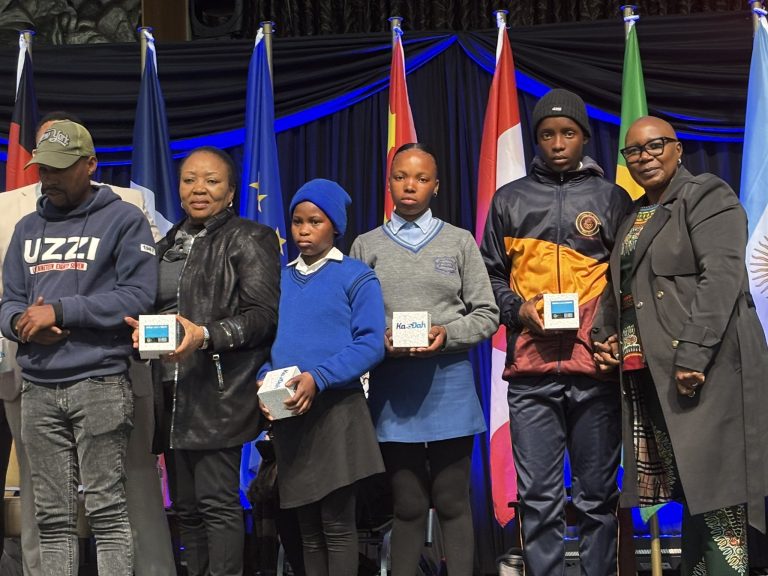
This week, a suite of assistive technologies aimed at transforming the lives of people with disabilities was launched at the Central University of Technology (CUT) in Bloemfontein.

“The technologies we introduce today are more than just tools; they are symbols of inclusion, innovation and purposeful change. They represent a future where no one is left behind in the Fourth Industrial Revolution. A future where ‘all means all’, including youth, women and persons with disabilities,” said Science, Technology and Innovation Deputy Minister Nomalungelo Gina.

The programme, which is a collaborative initiative of the DSTI, the Technology Innovation Agency (TIA) and CUT, showcased four transformative tools developed under the Technology Acquisition and Deployment Fund and the Grassroots Innovation Programme.

The deputy minister praised the launch, themed “Innovation for Inclusion: Empowering Abilities Through Technology”, as a bold statement that the time had come to dismantle systemic exclusion in workplaces, classrooms and public life.

The assistive technologies are all locally developed and aligned with the lived experiences of South Africans with disabilities.

They were incubated through TIA-supported programmes and refined at CUT’s Product Development Technology Station (PDTS).

Most of the developers are youth with disabilities, which affirms the importance of representation and inclusive design in innovation.

The Ka-Dah Device is a wearable hands-free system designed for the visually impaired.

It pairs a Bluetooth earpiece with a tactile interface, allowing users to operate smartphones without touching the screen, thereby enabling mobile access with independence and ease.

A real-time Video Remote Interpreting service called Virecom links deaf individuals to South African Sign Language (SASL) interpreters at public service points, such as police stations, to ensure fair access to justice and communication.

A mobile application, WeSignIt, converts written content into SASL through QR code scanning, enhancing comprehension and decision-making within the deaf community.

An innovative audio-description storytelling app called ShazaCin, which was created by a visually impaired South African entrepreneur, allows blind users to experience tourist destinations, cinemas and cultural landmarks through rich auditory narration.

CUT Vice-Chancellor Pamela Dube told the launch that assistive innovation was crucial.

“These technologies are not just projects; they are proof of what’s possible when innovation is driven by empathy and grounded in community,” she said.

Dube highlighted the university’s ongoing investment in inclusive technologies through its Centre for Rapid Prototyping and Manufacturing, which, alongside PDTS, has played a pivotal role in supporting student-led research, experiential learning and prototype development.

Dube spotlighted the Ka-Dah Device as an example of CUT’s innovation ecosystem translating academic research into impactful, real-world tools.

“It exemplifies how innovation can change lives. This is not the end of our journey, but the beginning of a more inclusive future,” she said.

Delivering remarks on behalf of Free State premier MaQueen Letsoha-Mathae, education MEC Manthlake Maboya reinforced the provincial government’s dedication to inclusivity.

“We cannot build a democratic and just society unless people with disabilities are at the centre of development,” she said.

Maboya confirmed that funding has been secured to expand disability services across the province, with a particular focus on eliminating barriers in rural schools and public institutions.

The DSTI shared its broader vision to scale these technologies nationally.

Plans include establishing a national disability innovation hub, expanding funding for youth-led tech startups, and partnering with NGOs, municipalities and national departments to integrate assistive technologies into service delivery.

Multiple departments, including Social Development, Women, Youth and Persons with Disabilities, and Small Business Development, are working together to ensure the rollout is multi-sectoral and sustainable.

The event also resonated globally, with representatives from G20 nations participating online and acknowledging South Africa’s leadership as the host of the G20 Disability Inclusive Working Group.

As the country accelerates its development of inclusive technology, the deputy minister stressed that a truly modern society must be one where all abilities were recognised, empowered and included.

INSIDE EDUCATION
Cricket’s great global divide: elite schools still shape the sport

By Habib Noorbhai

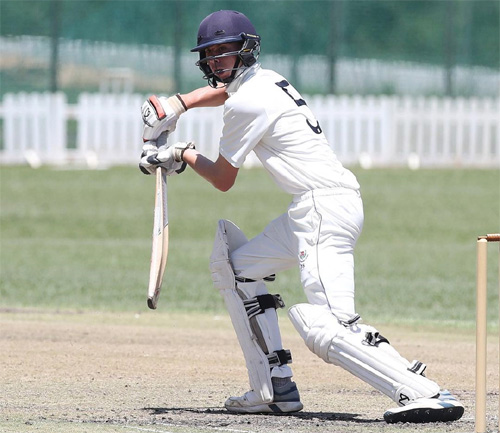
If you were to walk through the corridors of some of the world’s leading cricket schools, you might hear the crack of leather on willow long before the bell for the end of the day rings.

Across the cricketing world, elite schools have served as key feeder systems to national teams for decades. They provide young players with superior training facilities, high-level coaching and competitive playing opportunities.

This tradition has served as cricket’s most dependable talent pipeline. But is it a strength or a symptom of exclusion?

My recent study examined the school backgrounds of 1,080 elite men’s cricketers across eight countries over a 30-year period. It uncovered telling patterns.

Top elite cricket countries such as South Africa, England and Australia continue to draw heavily from private education systems. In these nations, cricket success seems almost tied to one’s school uniform.

I argue that if cricket boards are to see equity and competitiveness being promoted, governments need to step up more and broaden the talent search by investing in grassroots cricket infrastructure in under-resourced areas.

For cricket to be a sport that anyone with talent can succeed in, there will need to be more school leagues and entry-level tournaments as well as targeted investment in community-based hubs and non-elite school zones.

Findings

South Africa is a case in point. My previous study in 2020 outlined that more than half of its national players at One-Day International (ODI) World Cups came from boys-only schools (mostly private).

These schools are often well-resourced, with turf wickets, expert coaches and an embedded culture of competition. Unsurprisingly, the same schools tend to produce a high number of national team batters, as they offer longer game formats and better playing surfaces. Cricket’s colonial origins have influenced the structure and culture of school cricket being tied to a form of privilege.

In Australia and England, the story is not very different. Despite their efforts to diversify player sourcing, private schools still dominate. Even in cricketing nations that celebrate working-class grit, such as Australia, private school players continue to shape elite squads.

The statistics say as much; for example: about 44% of Australian Ashes test series players since 2010 attended private schools, and for England, the figure is 45%. That’s not grassroots, it could be regarded as gated turf.

Yet not all countries follow this route. The West Indies, Pakistan and Sri Lanka reflect very different models. Club cricket, informal play and community academies provide their players with opportunities to rise. These countries have lower reliance on private schools. Some of their finest players emerged from modest public schooling or neighbourhood cricketing networks.

India provides an interesting hybrid. Although elite schools such as St. Xavier’s and Modern School contribute players, most national stars emerge from public institutions or small-town academies. The explosion of the Indian Premier League since 2008 has also democratised access, pulling in talent from previously overlooked and underdeveloped cities.

In these regions, scouting is based on potential, not privilege.

So why does this matter?

At first glance, elite schools producing elite cricketers might appear logical. These institutions have the resources to nurture talent. But scratch beneath the surface and troubling questions appear.

Are national teams truly reflecting their countries? Or are they simply echo chambers of social advantage?

In South Africa, almost every Black African cricketer to represent the country has come through a private school (often on scholarship). That suggests that talent without access remains potentially invisible. It also places unfair pressure on the few who make it through, as if they carry the hopes of entire communities.

I found that in England, some county systems have started integrating players from state schools, but progress is slow. In New Zealand, where cricket is less centralised around private institutions, regional hubs and public schools have had more success in spreading opportunities. However, even there, Māori and Pasifika players remain underrepresented in elite squads.

Four steps that can be taken

1. One solution lies in recognising that schools don’t have a monopoly on talent. Cricket boards must increase investment in grassroots infrastructure, particularly in under-resourced areas. Setting up community hubs, supporting school-club partnerships and more regional competitions could discover hidden talent.

2. Another step is to improve the visibility and reach of scouting networks. Too often, selection favours players from known institutions. By diversifying trial formats and leveraging technology (such as video submissions or performance-tracking apps), selectors can widen their net. It’s already happening in India, where IPL scouts visit the most unlikely of places.

3. Coaching is another stumbling block. In many countries, high-level coaches are clustered in elite schools. National boards should consider optimising salaries as well as rotating certified coaches into public schools and regional academies. They should also ensure coaches are developed to be equipped to work with diverse learners and conditions.

4. Technology offers other exciting possibilities too. Virtual simulations, motion tracking and AI-assisted video reviews are now common in high-performance centres. Making simplified versions available to lower-income schools could level the playing field. Imagine a township bowler in South Africa learning to analyse their technique using only a smartphone and a free app?

Fairness in sport

The conversation about schools and cricket is not just about numbers or stats. It is about fairness. Sport should be the great leveller, not another mechanism of exclusion. If cricket is to thrive, it needs to look beyond scoreboards and trophies. It must ask who gets to play and who never gets seen?

A batter from a village school in India, a wicket-keeper from a government school in Sri Lanka or a fast bowler in a South African township; each deserves the chance to be part of the national story. Cricket boards, policymakers and educators must work together to make that possible.

The game will only grow when it welcomes players from all walks of life. That requires more than scholarships. It requires a reset of how we think about talent. Because the next cricket superstar may not wear a crest on their blazer. They may wear resilience on their sleeve.

Habib Noorbhai is a Professor (Health & Sports Science) at the University of Johannesburg.

The Conversation

Umalusi CEO to head up international education body

By Johnathan Paoli

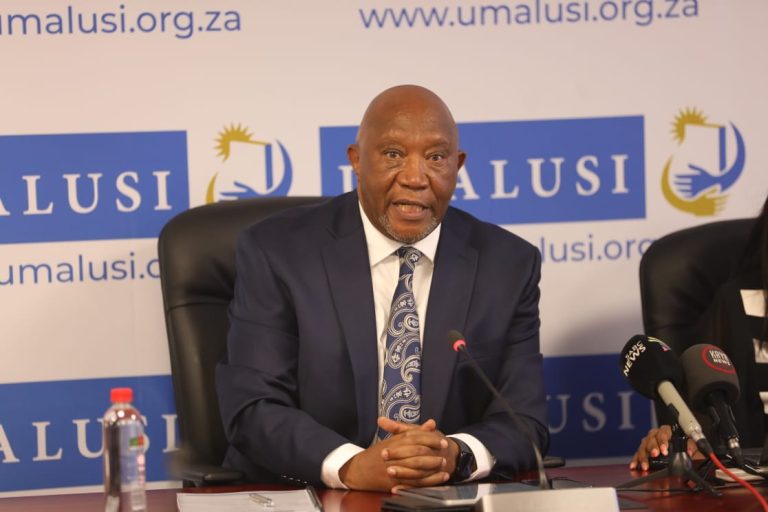
South Africa’s education sector has scored a major international victory with the appointment of Umalusi CEO Mafu Rakometsi as the new president of the International Association for Educational Assessment (IAEA).

Umalusi, which is the Council for Quality Assurance in General and Further Education and Training, confirmed the news with pride.

“We congratulate our CEO, Dr Mafu S. Rakometsi, on his appointment as the president of the International Association for Educational Assessment,” the council said on social media platform X.

The announcement, which has been welcomed by the country’s largest teacher union, Sadtu, marks a significant milestone for the country’s standing in global education quality assurance.

The IAEA is a globally respected body that brings together assessment professionals from over 50 countries across all continents.

Its membership includes national examination boards, university departments, government education agencies and research institutions that focus on education evaluation in primary and secondary schooling, post-school education and the workplace.

The association also provides a platform for advancing scholarly and policy debates on student achievement and quality learning.

With a career in the public service spanning more than four decades, Rakometsi has held multiple leadership positions and remains one of South Africa’s most respected education administrators.

Born and raised in Matjhabeng in the Free State, Rakometsi has been instrumental in strengthening education quality assurance mechanisms across the country.

Under his leadership, Umalusi has developed a reputation for upholding rigorous and credible standards in the certification of school and college qualifications.

He has championed various reforms that modernised assessment processes, improved public confidence in national examinations and promoted data-driven insights into learner performance.

Rakometsi is widely recognised for his strategic thinking, administrative excellence and commitment to education transformation.

Sadtu issued a congratulatory statement, hailing Rakometsi’s election to the prestigious global position.

“Dr Rakometsi’s appointment is a significant honour and recognition of his outstanding leadership, experience and commitment to educational quality assurance,” Sadtu spokesperson Nomusa Cembi said.

The union further noted that his presidency affirmed the depth of South African educational expertise and enhanced the international credibility of institutions like Umalusi.

“It places South Africa firmly on the world stage in terms of matters of assessment and quality education,” Cembi added.

Sadtu pledged its ongoing support for Rakometsi’s efforts to advance fair and equitable educational assessments both nationally and internationally.

His elevation to the presidency of IAEA is expected to amplify the voice of developing countries in the global education discourse, especially in how assessment tools and methodologies are designed to reflect diverse contexts and developmental challenges.

Rakometsi is also expected to advocate for more inclusive approaches that accommodate the realities of Global South education systems, particularly in Africa.

With educational equity and standards increasingly under the spotlight globally, his role will be key in advancing policies that ensure meaningful, fair and culturally relevant assessment systems.

INSIDE EDUCATION

Tiger Brands expands its school breakfast programme

By Levy Masiteng

Ensuring that children have a decent meal is essential for their health and educational outcomes.

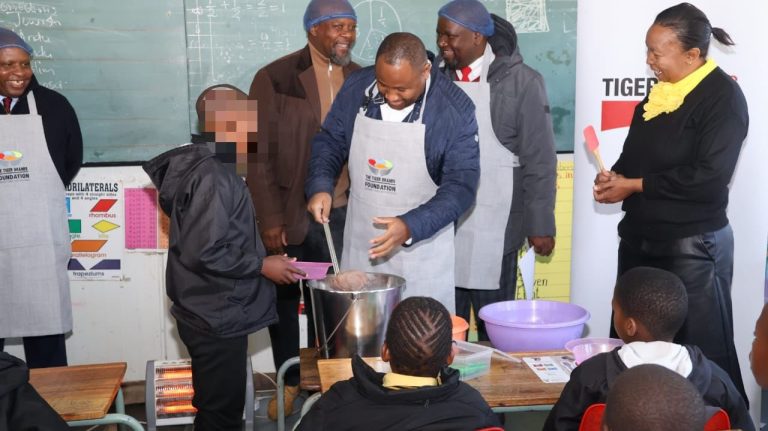
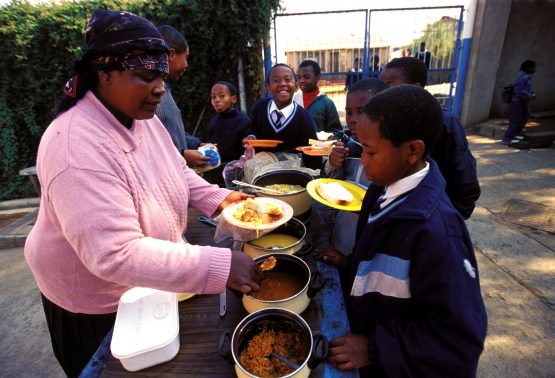
Recently, Tiger Brands along with the Mogale City municipality in Gauteng, extended the company’s in-school breakfast programme to Tsholetsega Primary School, where 1280 learners will be fed breakfast daily for the next five years.

As part of the launch, mayor Lucky Sele and Tiger Brands also donated 300 pairs of new school shoes to the most deserving learners identified by the school in Kagiso.

Sele expressed his appreciation to the company and the Tiger Brands Foundation for their dedication to developmental partnerships with the government. 

“This is a practical demonstration of how public-private partnerships can yield tangible benefits for our communities. Feeding a child is not only a humanitarian imperative – it is a critical developmental investment in the future of our nation,” he said.

Tiger Brands, which opened a nearby state-of-the-art peanut butter manufacturing plant last year where its Black Cat Peanut Butter is produced, has a long history of investing in community development programmes that promote education, health and nutrition. 

“As a leading food manufacturer and employer in the country, food security is an important social priority for Tiger Brands. Our socio-economic development strategy focuses on sustainably building resilience (and) food secure and healthy communities across South Africa by working with implementation partners who are experts in their respective fields,” said Tiger Brands chief legal and corporate affairs officer Joe Ralebepa.

“We are a proud member of the business community in the Mogale City municipality and are honoured for the opportunity to work with our stakeholders and partners to support the education and prospects of learners at Tsholetsega Primary School.”

The mayor’s office said that by providing nutritious meals to pupils, the programme was expected to improve attendance, attentiveness and overall educational outcomes.

“This programme reflects the city’s ongoing commitment to building developmental and resilient communities through targeted social programmes, intergovernmental cooperation and strategic corporate partnerships,” it said a statement. 

Tsholetsega is one of two schools whose breakfast programme is sponsored by Tiger Brands at a total investment of R8,7 million over a five-year period. The second beneficiary is Phomolong Primary School in Henneman, Free State, where the company’s mill is based. 

The Tiger Brands sponsorship of the two schools is an extension of its foundation’s existing and long-standing in-school breakfast programme in partnership with the Department of Basic Education’s National School Nutrition Programme.

Launched in 2011, the programme provides a daily nutritious breakfast to 55,000 learners across 68 schools in the most food-insecure communities across the country.

The company said more than 149 million meals have been served since 2011.

In addition to the daily breakfast, the foundation has donated 65 new school kitchens and renovated existing school kitchens at participating schools.     

It said that to date, it has invested around R2 million on monthly stipends for food handlers, including for their accredited training in hygiene, food safety, food nutrition entrepreneurship and employment opportunities.  

The schools are also provided with all cooking and dining utensils, such as spoons and bowls, and aprons for the food handlers.

INSIDE EDUCATION

Green is the new gold

By Yershen Pillay

Imagine a South Africa where the sun powers communities, waste fuels industries and rural youth become green tech pioneers.

That future is within reach, if we act now. As the world grapples with rising climate risks, deepening inequality and economic fragility, the question is no longer whether we must go green, but how fast, how far and how inclusively we can do it.

For South Africa, a country with one of the highest youth unemployment rates in the world and a pressing need for economic transformation, green entrepreneurship presents an unprecedented opportunity.

It’s time to stop treating sustainability as an afterthought. We must centre it in our economic planning not only as a moral obligation, but as a strategic advantage. Done right, green entrepreneurship can create industries, unlock innovation and restore ecosystems.

It can uplift and empower rural and poor communities. And perhaps most importantly, it can give our youth a future worth believing in.

Why Green?

Let us begin with the fundamentals. Why go green? First, it’s cleaner. Climate change is not a distant threat. It is already here, disrupting agriculture, displacing communities and damaging infrastructure. A green economy curbs emissions, reduces pollution and protects biodiversity.

Second, it’s cheaper in the long run. Renewable energy, for example, has become more cost-effective than fossil fuels in many parts of the world. Green technologies are increasingly modular, scalable and economically viable.

Third and most importantly, it is sustainable. Green models align long-term economic growth with environmental stewardship, creating resilience rather than extraction.

Green entrepreneurship is about building a more humane and sustainable society. It’s about finding that sweet spot where innovation, inclusion and impact converge. In short, green is the new gold.

Our Natural Advantage

South Africa is not starting from zero. We are blessed with abundant sunlight, strong mineral reserves, rich biodiversity and a dynamic, youthful population hungry for opportunity. We also have growing pockets of innovation and entrepreneurship from agri-tech hubs to clean energy startups that are quietly but steadily rewriting the script.

South Africa has a unique opportunity to lead in the green hydrogen economy. With 70% of the world’s platinum reserves a key component in hydrogen fuel cells, South Africa could manufacture electrolyser and fuel-cell components locally. Initiatives like the Sasol–Green

Hydrogen National Programme and CHIETA’s Green Hydrogen Skills Centre are already laying the groundwork for a future-ready hydrogen economy. We could establish modular production units, support hydrogen-powered logistics solutions such as forklifts, and develop containerized hydrogen hubs. The market is already forming; we must act quickly to own it.

Green ammonia presents another bold opportunity particularly in fertiliser production, where decarbonisation is urgently needed. With the right investment, South Africa could pioneer ammonia-based solutions for both agriculture and green shipping fuels. Imagine small-scale ammonia plants serving farming cooperatives bringing industrial solutions to rural economies.

Circularity, Construction, and Clean Chemistry

Green plastics are another critical frontier. Traditional plastics, derived from fossil fuels, are polluting our oceans and choking landfills. The world is crying out for circular, biodegradable alternatives and we can meet that demand.

We must support green plastics incubation programmes that partner with sugar mills, breweries, and food producers to convert waste into sustainable polymers. We can create hubs for 3D filament production and foster circular design thinking in product development.

This is a global export opportunity waiting to be unlocked.

In the building and construction sector, eco-brick manufacturing and energy-efficient home retrofitting offer a dual solution addressing the housing crisis while reducing carbon emissions.

South Africa has the capacity to train artisans in green building techniques and insulation materials derived from recycled waste. This is job creation that is both practical and green.

Our chemical industry, too, is poised for transition. We must accelerate the move away from fossil-based inputs toward biofuels, biodegradable plastics, green solvent and eco-friendly industrial cleaners. These are not futuristic ideas, they are tangible opportunities, and the market appetite is growing.

Water, Agriculture, and the Green Workforce

Innovation doesn’t stop with materials and machinery. Water, one of our most threatened resources, offers a powerful area for entrepreneurial disruption. Technologies like metal-organic frameworks (MOFs), pioneered by scientists like Professor Omar Yaghi, enable the harvesting of clean water from the air even in arid regions.

Supporting “waterpreneurs” throughstartup funding and cooperatives could revolutionise water access in drought-prone areas.

In agriculture, the potential is equally massive. Green agriculture from organic and regenerative farming to hydroponics and aquaponics, is already the fastest-growing subsector in African agribusiness.

Add smart sensors, AI and data-driven planting techniques, and you have the makings of a digital green food economy. Our youth must be the architects of this transformation.

But to truly unlock green entrepreneurship, we must build the green workforce. This requires investment in training programmes for solar technicians, biogas specialists eco-plumbers and green artisans.

We must integrate green career guidance into schools and TVET colleges and develop digital platforms that connect green-certified professionals with market demand.

Funding the Future

Of course, entrepreneurship requires more than good ideas, it requires resources. The Chemical Industries Education and Training Authority (CHIETA), in recognition of this need, has allocated R40 million toward entrepreneurship development, with a focus on green startups.

This is an important step but it must be scaled, replicated, and embedded across the ecosystem. We need dedicated grant windows for green SMMEs, especially youth- and women-led ventures. We must create green incubation hubs in rural areas, aligned to local value chains.

We must incentivise public-private partnerships that offer skills development, market access, and compliance support.

Big picture thinking alone won’t change lives. We need boots-on-the-ground implementation, backed by funding, training, and political will.

From Green Shoots to Green Systems

The opportunity is clear. So is the urgency. South Africa doesn’t need to choose between growth and sustainability. With green entrepreneurship, we can drive both. We can re-industrialise our economy, build climate resilience and create dignified livelihoods – all at the same time. This is not about wishful thinking. It’s about bold planning, smart policy, and entrepreneurial energy. If we invest now in ideas, in infrastructure, and in people, we can turn green from a buzzword into a backbone of our economy.

Because green isn’t just good. Green is gold. Let’s mine it sustainably, inclusively and boldly.

Yeeshen Pillay is the CEO of the Chemical Industries Education & Training Authority (CHIETA).

INSIDE POLITICS

Ministers hand over smart tablets to Glenvista Primary School

By Levy Masiteng

As part of bridging the digital divide in the education system, the Basic Education Minister Siviwe Gwarube and Communications and Digital Technologies Minister Solly Malats handed over smart learning tablets to learners at Glenvista Primary School in Johannesburg. 

During the event, learners showcased their ability to navigate educational apps and use the devices to reinforce their learning. 

They also engaged the ministers in a short question and answer session on responsible digital citizenship and the safe use of technology. 

According to the departments, the donation was made possible through private sector partnerships which aim to drive digital inclusion in schools and prepare learners for the modern world.

Gwarube emphasised the importance of technology in improving education outcomes and transforming the way children learn.

“The future of basic education lies in our ability to prepare children for a world that is changing at lightning speed. But we cannot do this alone. We need strong partners from across society, particularly the private sector, to help us bridge the resource gap and fast-track digital transformation in our schools,” she said in a statement.

“The smart tablets are more than just devices. They are tools of empowerment. They open a world of learning opportunities, from literacy and numeracy apps to coding platforms and digital libraries. We want our learners to be creators, problem solvers and innovators. This is the future we are building.”

Malatsi said his department was committed to school connectivity and inclusive digital infrastructure. 

“Our department is focused on ensuring that no child, school or community is left behind in the digital age. These tablets and the broader connectivity interventions reflect how we are using partnerships to fill gaps that government cannot always meet on its own,” he said.

They commended Glenvista Primary School for its commitment to innovation and for being an early adopter of digital learning initiatives.

The departments said they will continue to jointly hand over tablets in the Free State, Western Cape and Eastern Cape.

INSIDE EDUCATION

Gauteng education clears school municipal debt, accelerates infrastructure projects

By Johnathan Paoli

The Gauteng education department has confirmed significant progress in resolving long-standing municipal debt owed by public schools and outlined major infrastructure plans to address overcrowding.

The department announced on Thursday that as of the end of June, it had successfully settled 99.95% of the R426.45 million owed to municipalities and Eskom by schools without Section 21(1)(d) financial functions.

“As the department, we remain committed to ensuring sound financial governance, transparency and service continuity in all public schools. We call on all education stakeholders, particularly parents, communities and School Governing Bodies (SGBs) to continue working closely with the department to deliver quality learning environments across Gauteng,” education MEC Matome Chiloane said.

A remaining balance of just R175,853.61, amounting to 0.05%, will be cleared by mid-August.

The delay in finalising the last payment was attributed to technical updates linked to the Standard Chart of Accounts, an accounting reform introduced by the Provincial Treasury to modernise and enhance financial management systems across government departments.

The department currently retains direct financial control over 40 public schools in Gauteng that have not been granted Section 21 functions, which would otherwise allow SGBs to manage their own finances.

As of last month, these schools had a combined municipal debt of just over R105,000.

The department confirmed that none of these schools have been disconnected from basic services such as water and electricity, and that active financial oversight and payments were ongoing to prevent any future disruptions.

Schools are funded annually according to the Amended National Norms and Standards for School Funding.

SGBs are expected to use these allocations prudently, with guidance from compliance workshops and departmental circulars.

These funds are also meant to supplement state contributions to ensure the financial sustainability of each school.

To confront the persistent challenge of overcrowding in Gauteng schools, the department is investing R2.8 billion in school infrastructure development during the 2025/26 financial year.

Of this total, R1.489 billion is allocated for constructing new schools and replacing dilapidated infrastructure, R615 million will go toward upgrades and additions, including mobile classrooms and self-build projects, R166 million is dedicated to refurbishment and rehabilitation, and R476 million is allocated to maintenance interventions.

The department outlined a multifaceted approach to solving overcrowding, focusing on both short-term relief and long-term sustainability.

This includes the construction of new schools on available land, expansion of classrooms within existing school sites using cost-effective self-build methods, and the direct procurement of mobile classrooms.

In a move to accelerate infrastructure delivery in high-pressure areas, the department is actively exploring a public-private partnership model.

Under this initiative, private sector partners will design, build and potentially maintain new schools, while the government pays for the infrastructure over time through agreed amortisation schedules.

Chiloane reiterated the department’s commitment to fiscal discipline, transparency and continuous service delivery, urging all stakeholders, including parents, SGBs and community members to collaborate with the department in its efforts to improve the quality of education and school environments.

The department encouraged the public to follow its platforms for further updates and insights into ongoing programmes.

INSIDE EDUCATION

Community colleges must be reimagined to serve youth and adults: Gondwe

0

By Akani Nkuna

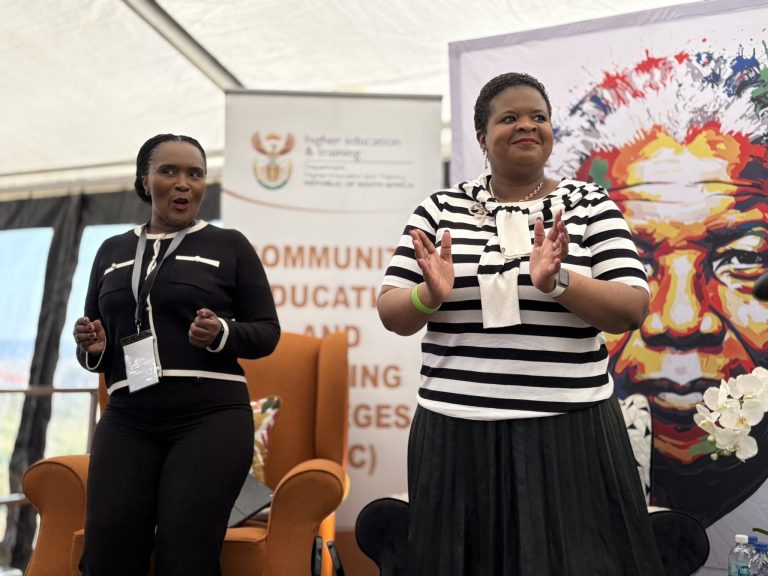
Higher Education and Training Deputy Minister Mimmy Gondwe has called for the rebranding of community colleges to attract and serve learners across different age groups.

She said they would in turn uplift those around them and help combat the scourge of unemployment, especially in rural communities.

Gondwe undertook a visit to the Eastern CET College, Phakamile Community Learning Center in Kariega, as part of a Mandela Month outreach programme.

She urged both private and public sector stakeholders to collaborate in tackling challenges facing community colleges across the country.

“Community colleges in general and this college, in particular, face a number of challenges which include the lack of infrastructure and resources, low enrolment rates and poor academic performance,” she said.

“As such, there is a dire need to rebrand community colleges to be fit-for-purpose and make them the colleges of choice for out of school youth and adults.”

Gondwe was accompanied by representatives from seven of the Sector Education and Training Authorities (SETAs), including the Fibre Processing and Manufacturing SETA, as the main partner to help revamp Phakamile.

She said it was imperative that the physical structures of community colleges were well-taken care so that they were attractive destinations of learning.

Part of the activities undertaken during the visit included cleaning and painting classrooms.

“Even though this centre is housed in an old school building, there is a lot that we as a collective can do to significantly turnaround the situation for the better. By responding to this call to action, we are literally transforming the centre into a more conducive and dignified teaching and learning environment,” Gondwe added.

She also extended the call to the students to be ambassadors of the centre to help ensure that enrolment numbers went up.

“I trust that the work done here today at the centre will lead to retaining the current students, tripling the enrolment at the centre and render it more conducive for teaching and learning,” she said.

“Let the work that we are doing here today not signify the end — but a brand new beginning. Let us leave Phakamile Learning Centre inspired, not only by the improvements made but by the collective efforts that have these improvements possible.”

INSIDE EDUCATION

Govt pushes for inclusive education for learners with disabilities

By Thapelo Molefe

The government is taking steps to make schools more inclusive for children with disabilities.

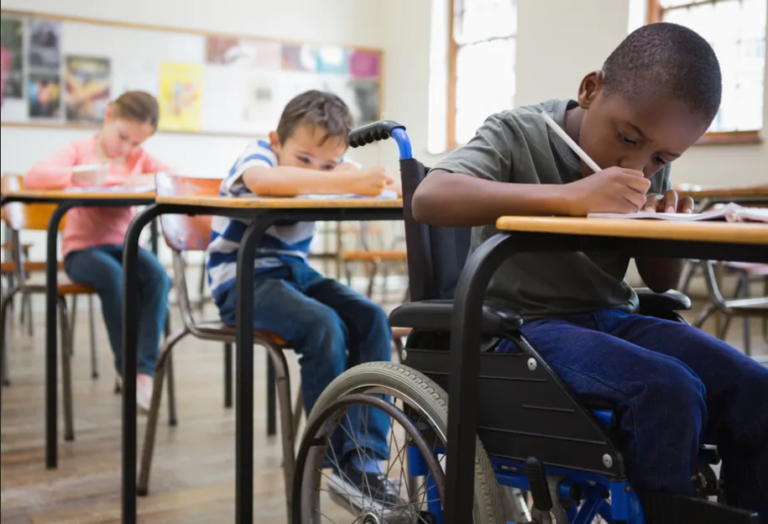
The Department of Basic Education told Parliament that over 67,000 learners with disabilities were now in ordinary public schools, and more than 259,000 teachers have been trained to support them. 

Briefing the Select Committee on Education and Creative Industries, the department said it was working to ensure that children with disabilities could learn alongside their peers in safe and supportive environments, starting from early childhood all the way to high school.

“We are using inclusive education to give effect to the constitutional mandate that education must be accessible to all,” said the deputy director-general Jabulani Ngcobo.

According to the department, enrolment in special schools doubled from 64,000 in 2002 to 127,677 learners. Public schools now host an additional 67,104 learners with disabilities, while about 9000 more remained in community-based care centres awaiting school placement.

To support the rollout of inclusive education, 259,000 teachers have been trained in specialisations such as Braille, South African Sign Language, autism and other inclusive education fields. 

“There’s an increase in the number of teachers that are being trained… our current total nationally is just over 259,000,” said chief director Cheryl Weston.

A multidisciplinary national task team has been created to identify and place out-of-school learners into appropriate schools. As of the latest figures, 403 learners had already been moved into schools, with more placements expected as the screening and support processes continue.

“This is a sensitive process. We need to screen learners, identify their challenges and then find schools where they can be placed appropriately,” Weston explained.

The department confirmed that 88% of special schools have already received Information and Communication Technology (ICT) equipment and connectivity. Learning materials, including Braille and large-print books, were also being supplied. 

“We can report 100% of requisition already from all special schools for 2026,” Weston said.

She noted that materials were also uploaded online for access by schools and provinces.

Across provinces, infrastructure upgrades were underway.

However, chairperson of the committee, Makhi Feni, raised serious concerns over the state of Nokuthula School in Gauteng, calling it “a ticking time bomb, a disaster or a crisis in motion”. 

He criticised the department’s report on the school as not accurately reflecting the real situation.

The department said it was scaling up scholar transport for special schools, with increasing numbers of learners and schools served each year. 

It also highlighted co-curricular initiatives like adapted school sports and participation in national choral competitions.

“We are working to ensure that learners with disabilities feel included not only in classrooms but also in extracurricular activities,” Weston stated.

The department is currently reviewing White Paper 6, the national policy on inclusive education, with a ministerial task team working alongside provincial teams. 

Oversight has also improved, with three to four provinces monitored annually and collaboration with disability advocacy organisations now a standard practice.

The department’s director-general, Mathanzima Mweli, acknowledged progress, but said more needed to be done.

“We’ve made some progress, but not good enough… Only learners with severe disabilities should be in specialised institutions. The rest must go to ordinary public schools,” he said.

Challenges remain, particularly around under-expenditure in provinces due to delayed appointments and procurement. 

Weston said the department has escalated issues to provincial heads and imposed penalties where needed.

“We do issue notices of intention to withhold the transfer. If there’s no improvement, we then withhold the transfer,” she said.

Mweli pledged to follow up on problem areas, including Nokuthula School. 

“I promise… I will go to Gauteng and visit Nokuthula, work with the department to deal with the issues,” he said. 

“You’re holding us accountable, and we’re making progress because of your oversight.”

Members of the committee welcomed the progress but called for urgency and more honest reporting.

The department was reminded by MP Malesela Mokwele that “disability is not inability”, and urged schools to be more accessible, especially in rural areas.

“We’re not doing oversight just to tick a box…We need full transparency about what is happening on the ground,” Feni said.

INSIDE EDUCATION

Gwarube wants answers on KZN learner feeding programme

By Amy Musgrave

Basic Education Minister Siviwe Gwarube has written to the KwaZulu-Natal education department demanding answers over allegations surrounding the National School Nutrition Programme.

The provincial department confirmed on Wednesday that it would respond to her as well as to KwaZulu-Natal premier Thami Ntuli over claims of corruption, political interference and tender irregularities.

KZN education HOD Nkosinathi Ngcobo also said that the department would respond to bidders who were unhappy with the process.

“The department wants to place on record that it will respond to all the bidders who would have submitted their objections / appeals to the Bid Appeals Tribunal convened under the auspices of the KwaZulu-Natal Provincial Treasury,” he said in a statement.

Last week, education MEC Sipho Hlomuka denied allegations of political interference and personal enrichment linked to the tender.

Responding to claims made by the NSNP Service Providers Association, the MEC acknowledged past ties with a company allegedly implicated in the current tender award, but said he had divested years before taking office.

The department said on Wednesday it was issuing the statement to clarify concerns in the media that there had been irregularities in how the R2.9 billion NSNP tender has been processed.

“From the outset, it is important, that we place on record the fact that the process has been done in line with all the procurement processes and relevant prescripts,” it said.

“The process undertaken had various stages which included the advertising of the tender after which every eligible South African was at liberty to apply. It is also very important to indicate that after the advertisement of the bid, all bidders were invited to the compulsory briefing sessions in all the 12 districts, where all the bidders were taken through the requirements of the bid.”

It said all the bids received, amounting to approximately 20,000, were subjected to the same comprehensive evaluation criteria in line with all the Supply Chain Management processes.

All the bids were subjected to a standard evaluation process as set out in the bid document, and the evaluation and adjudication were followed in line with the prescribed procedures.

The department was currently at a stage where it was dealing with appeals or objections.

It said it must be noted that with regards to this tender that while attracted thousands of bidders, they were competing for 1756 clusters across the 12 districts.

“We note with disappointment that once some bidders are not recommended for the award, they resort to illegitimising the entire process,” the statement read.

However, the appeals process would afford the bidders an opportunity to raise the grievances.

The premier and minister have come under pressure from various quarters to act against Hlomuka.

INSIDE EDUCATION