Home Blog Page 8

How grants sustain half of SA households – Stats SA

Des Erasmus

Half of South Africa’s households receive social grants, according to the latest General Household Survey.

Released by Stats SA on Tuesday, the survey found that grants reached 39.5% of individuals and 50.6% of households in 2025, while 24.4% of households relied on grants as their main source of income.

The increase in grant coverage accelerated after the introduction of the special COVID-19 Social Relief of Distress (SRD) grant in 2020, which was initially designed to temporarily cushion income losses during the pandemic.

ALSO READ: Cele, Tolashe among five ANC members to face disciplinary action

Salaries and wages remained the main income source for 54.3% of households, but the figures show how heavily South Africa’s tax-funded safety net is supporting households in an economy that has struggled to generate jobs and income.

The survey tracks basic service delivery, healthcare, education, agriculture, household composition, income, food access, water, sanitation, energy, and refuse removal.

It showed that food insecurity remained severe, with many households still unable to secure enough food despite widespread access to grants.

“Almost one quarter (22,0%) of households considered their access to food as inadequate or severely inadequate,” the report said.

That was 4.2 percentage points higher than in 2019, before the COVID-19 pandemic, with the Northern Cape worst affected at 43.0% and Limpopo lowest at 6.1%.

The findings come despite improvements in basic service delivery since 2002. Access to improved sanitation increased from 61.7% in 2002 to 84.0% in 2025, while access to mains electricity increased from 76.7% to 90.6%.

Almost nine in 10 households had access to piped water in a dwelling, yard or communal tap.

ALSO READ: Ramaphosa files court bid to review Phala Phala panel report

But rural households lag far behind urban households in access to waste services.

“Access to refuse removal services highlights ongoing inequality,” the report said.

The survey found that 84.9% of urban households received regular refuse removal, compared with only 13.0% of rural households. It also found that 84.7% of households reported burning waste, while just 10.5% separated recyclable material.

Health access remained deeply unequal, with medical aid still out of reach for most households.

“Medical aid coverage remained relatively unchanged at 15,5%,” the report said.

Coverage was highest in the Western Cape at 25.9% and Gauteng at 22.1%, and lowest in Limpopo at 8.2% and KwaZulu-Natal at 9.5%.

The survey also showed growing social pressure on children and households. Fewer than one-third of children lived with both biological parents in 2025, while 45.9% lived with their mothers only, 18.5% lived with neither parent and 11.2% had lost one or both parents.

ALSO READ: How Matlala talks with state could shake SAPS leadership

Female-headed households accounted for 42.6% of all households, increasing to 47.6% in rural areas.

According to the report, the share of adults with no education fell from 11.4% in 2002 to 2.6% in 2025, while those with at least a National Senior Certificate increased from 30.7% to 53.5%.

But early childhood development remained uneven, with only 36.3% of children aged 0 to four attending ECD facilities, while 50.2% were cared for at home.

INSIDE EDUCATION
Gwarube says Grade R reform at risk as education budgets buckle

Staff Reporter

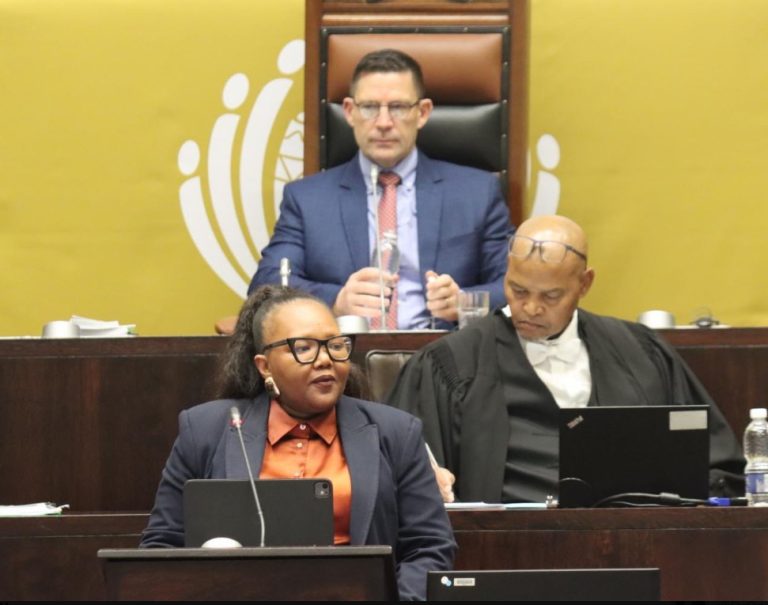
Basic Education Minister Siviwe Gwarube has warned that cash-strapped provincial education departments are beginning to buckle, forcing the state to redirect money from early childhood development (ECD) to keep compulsory Grade R reforms alive.

South Africa is trying to implement the Basic Education Laws Amendment Act, which makes Grade R attendance compulsory.

At the same time, it is battling teacher-post placements, infrastructure backlogs and a literacy crisis in which 81% of Grade 4 learners could not read for meaning in any language in the 2021 PIRLS assessment.

“Aligning qualified Grade R practitioner salaries with Foundation Phase educators, while appointing additional Grade R teachers, will cost approximately R10 billion over the Medium Term,” Gwarube told Parliament during her Budget Vote speech.

“National Treasury has not allocated the full funding required. We have therefore redirected R800 million from the ECD Grant to address immediate Grade R pressures. This is not ideal, but doing nothing would be worse.”

The Department of Basic Education’s 2026/27 allocation is R38.2 billion, including R32.7 billion for conditional grants. Those include almost R11 billion for school nutrition, R16 billion for school infrastructure, R4.6 billion for early childhood development, R477 million for mathematics, science and technology, and R307 million for learners with disabilities.

Treasury has said the ECD grant receives an additional R12.8 billion over three years to expand access to an estimated 300,000 more children and maintain the R24 per child per day subsidy introduced in 2025/26.

But Gwarube’s speech made clear that national allocations are not keeping pace with the full cost of implementation in provinces, where most schooling delivery takes place.

“The learner must not become the shock absorber for provincial cash-flow failures,” she said.

Gwarube said financial risks previously identified in provincial education departments were now “materialising in KwaZulu-Natal, the Free State and the Northern Cape, with others under growing pressure”.

She announced a “Multi-disciplinary Recovery Technical Support Team” to support provinces on budget planning, financial analysis and school resourcing.

“When provincial education finances fail, learners suffer first,” she said.

In September 2024, Gwarube said a financial analysis she had initiated projected that three provincial education departments would fall into the red by 2025/26, increasing to four by 2026/27 and seven in the outer year of the medium-term spending period.

The Northern Cape later told Parliament it had a R358 million shortfall on declared posts, equivalent to 663 educator posts, including 51 Grade R practitioners for which funding had not been provided by the provincial treasury.

Gwarube put the funding fight at the centre of South Africa’s attempt to break entrenched inequality before children reach formal schooling.

“Over 90% of South African children are Nelsons and not Lindiwes,” she said, referring to two fictional 10-year-olds in her speech — one who had access to structured early childhood development and one who did not. “This is the education injustice of our time”.

The latest Thrive by Five Index found that 68% of South Africa’s four-year-olds live below the upper-bound poverty line, 37% live below the food poverty line, and about 29% were not attending any group learning programme in 2024.

Gwarube said more than 13,300 ECD centres had been registered in the past year, exceeding a 10,000-centre target. She said ECD registration had grown by 200% between 2021 and 2026, giving more than 1.2 million children access to registered ECD programmes.

She also announced that an ECD nutrition pilot had entered implementation, with the contract advertised in March 2026 and centres in the Eastern Cape expected to be piloted soon. She said the programme responded to Thrive by Five findings that 7% of South African children were stunted because of malnutrition.

Gwarube said the department would rank provinces using a “quality basket” instead of relying mainly on the matric pass rate.

The basket will include the overall pass percentage, bachelor passes, distinctions, participation and performance in gateway subjects such as mathematics, physical sciences and accounting, and learner retention.

“[F]or too long, the national conversation on quality has been reduced to a single percentage – the national pass rate or the misleading myth of a 30% pass mark,” she said.

Gwarube also said 10,000 Foundation Phase teachers would receive targeted literacy and numeracy training this year, while the department refreshes implementation of the National Reading Literacy Strategy.

She said the Funza Lushaka bursary programme had shifted more strongly toward Foundation Phase education, with 55% of bursaries allocated to that phase in 2026, up from 42% in 2025.

Gwarube announced an independent external investigation into the Foundation Phase National Catalogue process, saying concerns about procurement for Grade 1 to 3 learning materials were serious enough to require outside scrutiny.

She said Treasury’s consideration of the matter had been inconclusive, but had raised concern about whether the department’s deviation from ordinary competitive bidding processes was lawfully justified and properly supported by the required records, reasons and approvals.

“Corruption in education is never victimless. And neither is weak governance,” Gwarube said. “Both are ultimately paid for by children.”

INSIDE EDUCATION

Over 65,000 learners miss school due to Mangaung shutdown

By Lebone Rodah Mosima

At least 65,000 learners stayed away from schools in parts of Mangaung on Monday as a shutdown over service delivery and other grievances disrupted teaching and learning across the metro, the Free State Department of Education said.

The department said preliminary reports from the Mangaung Metropolitan Education District showed learner attendance had fallen dramatically in Mangaung township, Heidedal and Botshabelo, with schools in Mangaung township and Heidedal worst affected.

The shutdown came amid heightened tension in parts of the country over service delivery, unemployment and undocumented foreign nationals.

SABC reported that the Mangaung shutdown, called by the National Service Delivery Forum, had by Monday morning spread to the looting of foreign-owned shops, with about 100 people arrested.

In Mangaung township schools, only 5,280 of 38,110 enrolled learners attended classes, an attendance rate of 13%, while 860 of 1,248 educators reported for duty.

Heidedal schools recorded similar learner attendance, with 2,226 of 17,631 learners at school. Educator attendance there stood at 84%.

Botshabelo schools were less severely affected, with 30,082 of 47,417 learners attending, or 63%. The department said 1,225 of 1,513 educators in Botshabelo reported for duty.

Free State Education MEC Dr Mamiki Maboya said children should not be made to carry the cost of community protests.

“Our children are not party to the matters giving rise to this shutdown, yet they are among those most affected. While communities have a constitutional right to express their concerns, we appeal that schools and learners be protected from unintended disruption,” Maboya said.

“The long-term cost of lost teaching and learning time is one we can ill afford, particularly at a time when we are working collectively to improve educational outcomes.”

The department said schools in the town area, including former Model C schools, also recorded reduced learner attendance despite relatively strong educator turnout.

Navalsig Secondary School recorded 26% learner attendance, with 276 of 1,089 learners present, while educator attendance stood at 92%. HTS Louis Botha recorded 47% learner attendance, with 524 of 1,110 learners present, and 94% educator attendance. Roseview Primary School recorded 32% learner attendance, with 420 of 1,298 learners present, and 85% educator attendance.

The department said it respected the constitutional right to lawful protest, but warned that schools should remain protected spaces during periods of social contestation.

“Every effort must be made to ensure that the constitutional right to protest is exercised in a manner that does not inadvertently compromise the equally important constitutional right of children to access basic education,” it said.

Section 29 of the Constitution guarantees everyone the right to basic education. The department appealed to community leaders, protest organisers, parents and residents to help keep schools open and ensure learners can access education safely.

“The education of our children is a shared societal responsibility. We therefore appeal for collective understanding and cooperation to ensure that learners are able to return to school and continue with the academic programme without further interruption. Our province and country depend on an educated, skilled and empowered generation,” Maboya said.

The department said it had activated academic recovery measures at affected schools, including curriculum rescheduling, afternoon classes, Saturday programmes, winter school support where necessary, and targeted support from district officials and subject advisers.

It said it would continue monitoring the situation and engaging stakeholders to support the restoration of normal schooling.

INSIDE EDUCATION

Manamela tightens SETA oversight, Gondwe pushes for full skills system overhaul

By Thapelo Molefe

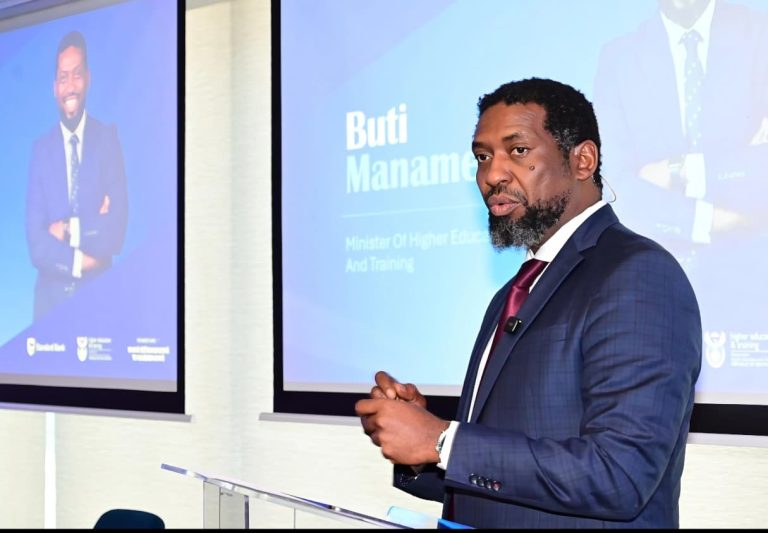
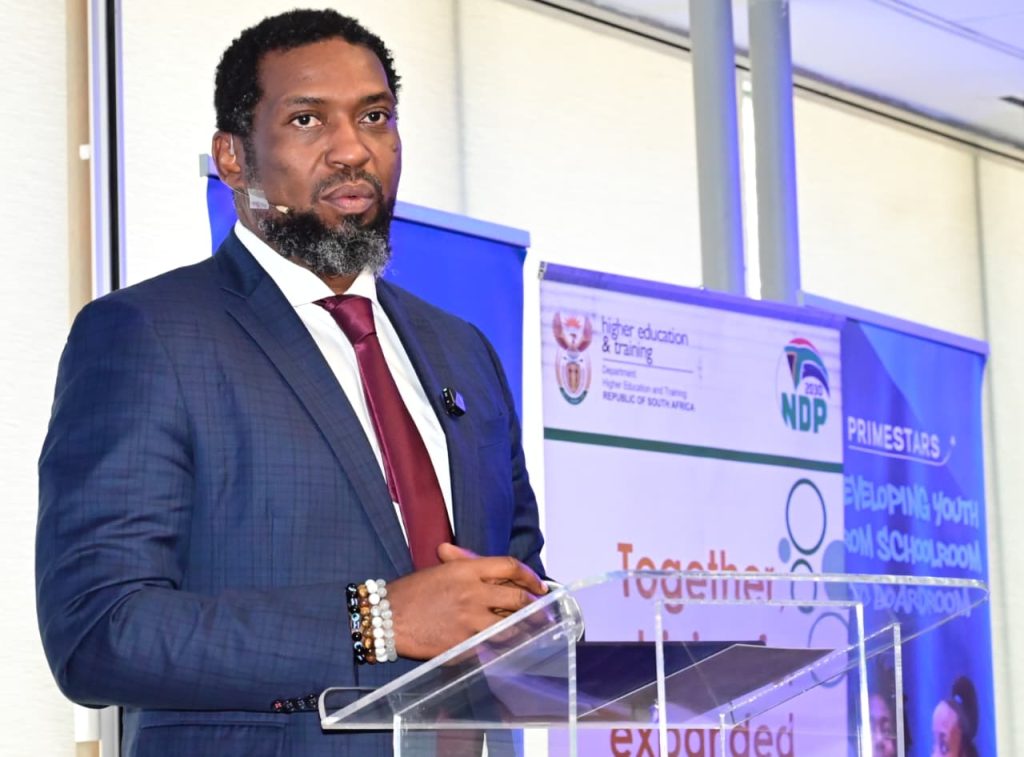
Higher Education and Training Minister Buti Manamela says Sector Education and Training Authorities (SETAs) must be held to stricter performance standards and brought closer to employers.

Delivering his Budget Vote in the National Assembly on Tuesday, Manamela said SETAs should no longer operate mainly as funding administrators but must demonstrate clear results in linking training to employment.

“The problem is that the link between education, skills, work and industrial development is too weak, and in some places it is broken,” he said.

ALSO READ: Gondwe calls for NSFAS to be scrapped, Manamela says current model unsustainable

He said that SETAs will be required to sign employer compacts covering at least 30% of employers in their sectors, aimed at increasing private sector participation in training and workplace placement.

Manamela also introduced a target that 70% of SETA service level agreements must be met, with stronger enforcement where institutions fail to comply.

“The private sector cannot remain a spectator to skills development,” he said.

“The skills levy is not a tax. It is an investment. And investors expect a return.”

Skills development levies are projected at R27.7 billion in 2026/27, rising to R31.1 billion by 2028/29.

Manamela said SETAs will also be integrated into regional industrial skills compacts that bring together employers, municipalities and training institutions to align skills planning with local economic needs.

Deputy Higher Education and Training Minister Mimmy Gondwe took a more hardline position, saying the current SETA system should be replaced entirely with a model where employers directly procure training from accredited institutions.

Gondwe said the current skills development system was failing to produce employment outcomes for young people despite significant public spending.

“The current skills development regime is failing to produce the employment outcomes our economy and young people urgently require,” she said.

She said that employers are better placed than government intermediaries to determine skills needs and should take greater responsibility for training outcomes.

ALSO READ: Shoprite, Trevor Noah foundations launch robotics lab at Soweto school

Under her proposal, companies would directly source training from accredited providers, supported through tax incentives rather than the current levy-based system.

Manamela did not propose scrapping SETAs, but said government was open to wide-ranging reforms depending on performance and outcomes.

INSIDE EDUCATION

Gondwe calls for NSFAS to be scrapped, Manamela says current model unsustainable

By Thapelo Molefe

Deputy Higher Education and Training Minister Mimmy Gondwe has called for the National Student Financial Aid Scheme (NSFAS) to be scrapped and replaced with a new university-driven funding system, while Higher Education Minister Buti Manamela warned that the current student funding model is financially unsustainable.

Delivering the Higher Education and Training budget vote debate in Parliament on Tuesday, Gondwe said NSFAS had repeatedly failed students and institutions and should no longer remain the country’s central student funding mechanism.

“There is no longer a need for NSFAS. NSFAS has repeatedly failed, and it is time to replace it with a student funding model which sees our higher education institutions themselves select students and assess their financial needs and then apply directly to National Treasury,” Gondwe said.

She said the Post School Education and Training (PSET) sector should be judged not by enrolment numbers, but by whether graduates leave institutions with employable skills and pathways into work.

She said that universities should take direct responsibility for determining students’ financial needs and managing applications for tuition and living allowances.

Gondwe said the replacement funding model should place greater emphasis on science, technology, engineering and mathematics (STEM), occupations in high demand and scarce skills needed by the economy.

Her remarks came as youth unemployment among people aged 15 to 24 remains at 60.9%.

“This is not merely an economic crisis. It is a national crisis and a ticking time bomb,” Gondwe told Parliament.

“The true measure of the success of the PSET sector cannot simply be about how many young people enter into our institutions, but whether those young people leave our institutions with the skills and training that is needed and demanded by our economy,” she said.

While Gondwe called for NSFAS to be dismantled, Manamela stopped short of endorsing the proposal but acknowledged that the current funding model could not continue in its present form.

Speaking during a media briefing before tabling the department’s R149.2 billion budget vote, Manamela said government was discussing long-term reforms to student funding.

“The model as it stands now is unsustainable,” Manamela said.

“Year after year after year, we’ve been going to Treasury saying to them, give us more money.”

Earlier this month, Manamela placed NSFAS under administration, citing governance instability, legal concerns and operational failures at the institution.

He confirmed that discussions were under way within Cabinet about the future of NSFAS and other student funding reforms.

“There is no proposal that is off the table,” Manamela said.

The minister said government was trying to find a sustainable model that would support poor students as well as the “missing middle”, students who do not qualify for NSFAS grants but still cannot afford higher education.

Manamela also pointed to rising student debt at universities, saying estimates ranged between R18 billion and R26 billion.

“The fact that we’ve got such a huge figure in terms of student debt shows that the demand for student loans is high,” he said.

Manamela said government had already moved to stabilise the scheme.

“Where the institution fell short of the public trust placed in it, we acted within the law to restore order.”

The minister also defended government’s interventions in higher education entities, saying accountability and oversight would be tightened across the sector.

“We will defend institutional autonomy, but we will not confuse autonomy with impunity,” he said.

INSIDE EDUCATION

Bloemfontein edges out North Durban to win St Anne’s hockey cup

By Johnathan Paoli

Bloemfontein’s Meisieskool Oranje hockey team has clinched their first championship with a 3-0 win over Durban’s Our Lady of Fatima Dominican Convent School in the St Anne’s Cup final.

Oranje Meisieskool 1st team Hockey

Playing at St Anne’s Diocesan College in Hilton, KwaZulu-Natal on Sunday, the Free State team scored its three goals with stellar performances from Xylia Choene, Kayla du Preez and Daniella Grobbelaar.

The win is Oranje’s first appearance at the tournament, but their third trophy of the season under coach Morne Odendaal.

ALSO READ: Shoprite, Trevor Noah foundations launch robotics lab at Soweto school

Earlier this year, Oranje lifted titles at the St Mary’s Waverley Festival and the National All Girls’ Festival, continuing a remarkable run that has established them as one of the leading schoolgirl hockey teams in South Africa.

“When this group started the journey for the 2026 season, the goal was simple: to play a beautiful brand of hockey that people would stop and watch. A team that played with freedom, intensity, courage, and connection. Somewhere along the way, that vision turned into something special,” Odendaal said, speaking after the final.

Oranje entered the title decider as the tournament’s most balanced side, having scored 22 goals while conceding only twice in their run to the final; while Fatima, scored 14 goals and allowed just two on their way to Sunday’s showdown.

However, Oranje wasted little time asserting themselves in the final, scoring their first two goals early in the match.

Despite the setback, Fatima responded positively and began to settle into their passing rhythm.

Despite Fatima’s attempts to equalise the scoreboard, their attempts were successfully defended by Oranje goalkeeper Dane Janse van Vuuren.

ALSO READ: Manamela: Business pledges secured for skills push

Speaking to the media after the match, Odendaal praised his team as outstanding, saying that players constantly moved to create options and make ball flow look seamless.

“Mentally, the group handled pressure well. They stayed composed in key moments and trusted the process and structure. We defended as a unit, pressed well, and forced teams into low-percentage areas,” he said.

Fatima continued to apply pressure at the start of the second chukka, pinning Oranje inside their own half for extended periods.

But Oranje’s defensive discipline ensured they kept the Durban team from scoring.

The team from Bloem won a penalty corner just before halftime to extend their advantage to 3-0.

The second half saw Fatima continue to search for a breakthrough, while Oranje focused on controlling the tempo and protecting their lead.

Fatima created one final opportunity shortly before the end when they earned a penalty corner, but Oranje again made a successful defence.

The tournament also brought individual recognition for several Oranje players.

Marichelle Crous was named Player of the Tournament after a standout campaign, while Janse van Vuuren shared the Goalkeeper of the Tournament award with St Anne’s shot-stopper Lilli-Anna James.

Kirstin Booysen shared the Best Defender accolade with Inati Ngcobo of St Anne’s, while Fatima forward Charly-Rose Boyall claimed the Forward of the Tournament honour.

St Anne’s thanked all the players, coaches, staff and supporters for the tournament and said they looked forward to next year’s cup.

INSIDE EDUCATION

Shoprite, Trevor Noah foundations launch robotics lab at Soweto school

By Levy Masiteng 

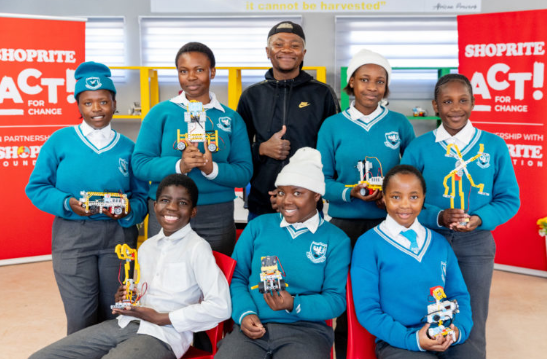
A new robotics and artificial intelligence lab at Siyabonga Secondary School in Soweto will give learners access to coding, robotics, AI and career-readiness training.

The lab was launched in May through a partnership between the Shoprite Foundation and the Trevor Noah Foundation. It will serve as a continuation pathway for learners in the area, with nearby Moses Kotane Primary School already operating a robotics lab.

The programme will provide Grade 8 and 9 learners with curriculum-aligned coding and robotics lessons during school hours. Grade 10 to 12 learners will take part in an after-school programme focused on artificial intelligence and career readiness.

Learners and educators will also use technologies such as motion sensors, microcontrollers and smart devices that can detect movement, respond to inputs and communicate data.

“Robotics is no longer a niche area in education – it’s a rapidly growing field reshaping how young people learn and engage with technology globally,” said Shoprite Foundation Director Maude Modise.

“By bringing labs like this into South African schools, we aim to support learners to step confidently into the future. Technology is already part of their everyday lives, but these skills are essential to help them unlock the opportunities and innovation it brings.”

According to the Trevor Noah Foundation, the Siyabonga lab is its fifth robotics lab in Gauteng under its Khulani Schools programme.

The foundation said the placement of the lab in the same community as Moses Kotane Primary School would allow learners to continue building coding and robotics skills from primary school into high school.

“We believe every learner deserves access to the tools, skills and educational pathways they need to thrive. By creating spaces where learners can explore, experiment and build real-world skills, we are helping young people imagine new possibilities for themselves and empowering them to contribute meaningfully to their communities,” Trevor Noah Foundation Communications Manager Olona Tywabi said.

The partnership brings together the Trevor Noah Foundation’s school development work and the Shoprite Foundation’s support for education-focused projects. The Shoprite-backed foundation is now supporting its seventh robotics lab, following earlier launches this year in Dullstroom in Mpumalanga and Khayelitsha in the Western Cape.

Educational partner Sifiso EdTech will oversee curriculum support, teacher training and programme implementation.

“Learners will use coding and robotics to tackle real-world community challenges such as designing safety systems and monitoring soil and water use in school gardens,” said Head of Digital Learning and Technology Xoliswa Mahlangu.

INSIDE EDUCATION

Manamela: Business pledges secured for skills push

By Akani Nkuna

Higher Education and Training Minister Buti Manamela has secured commitments from private-sector leaders to partner with government in expanding workplace-linked training.

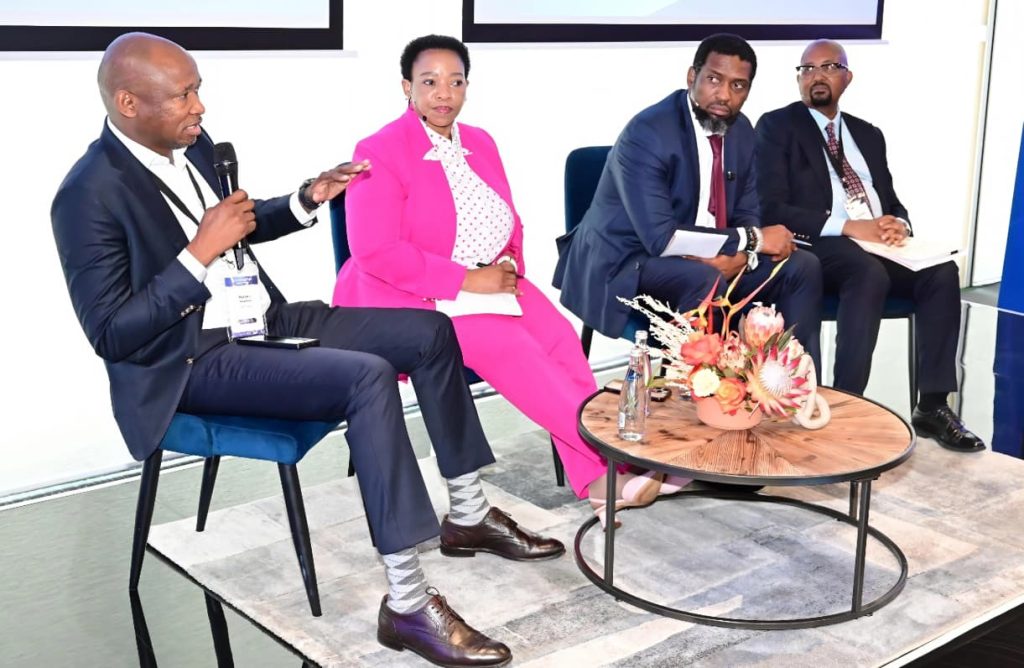
The commitments – which were not specifically named — were made at the Skills Revolution Business Breakfast in Johannesburg on Monday, convened by Manamela as part of the precursor to the Higher Education and Training Budget Vote on Tuesday.

Panel discussion. Photo: Eddie Mtsweni.

The engagement brought together executives and leaders from agriculture, mining, engineering, ICT, financial services and other strategic sectors, as well as government, skills development institutions, intermediaries and start-ups.

According to the department, the meeting will now evolve into an ongoing partnership platform, supported by an implementation plan between engagements to track progress and accountability.

Manamela said South Africa’s skills development system continued to favour universities over technical and community colleges, despite the urgent need for practical skills that can help young people enter the labour market.

He said universities remained important to the country’s post-school education system, particularly in producing strategic skills needed by the economy, but warned that Technical and Vocational Education and Training colleges and Community Education and Training colleges were not receiving the same level of attention.

“This is indicative of the fact that the structure of our skills favours more universities. I think we should be emphasising that, and it is much to the detriment of TVET and our Community Colleges,” he said.

Manamela said the imbalance was a concern in a country facing high unemployment, with more than three million young people not in employment, education or training, while businesses continued to raise concerns about a shortage of workers with the right skills.

The department said the breakfast sought to confront this disconnect by creating a practical platform through which government and business could work together to ensure that skills development responds to labour market demands and economic growth.

The discussions focused on reimagining public-private partnerships in the Post-School Education and Training sector, bridging the skills-industry gap, scaling apprenticeships, learnerships and work-integrated learning, identifying what business requires from government, and establishing a shared accountability framework.

Manamela called on business to play a more active role in funding and shaping skills development, particularly through workplace training, work-integrated learning, science and digital laboratories, and programmes linked directly to industry needs.

The minister said closer collaboration between government and the private sector was needed not only to fund training, but also to shape the curriculum and determine how training is delivered.

He said this would help ensure that students leave colleges with skills that match the needs of employers and allow them to contribute soon after completing their studies.

“What we expect today is a pledge that says we will consolidate all our efforts, working together with government to show the extent within which business is committed in providing Work Integrated Learning and sharing resources with regards to curriculum development,” said Manamela.

Business leaders at the engagement expressed support for the revitalisation and repositioning of TVET colleges, saying they should be rebranded as institutions that prepare young people for practical and future-focused occupations, including in an economy increasingly shaped by artificial intelligence and automation.

Participants also stressed the need for better coordination within government and stronger alignment between government and business to ensure that skills development programmes are integrated, responsive and effective.

The meeting also highlighted entrepreneurship development as a key part of the skills agenda, with business leaders saying young people should be equipped not only to become job seekers, but also job creators capable of building enterprises and contributing to economic growth.

Manamela pointed to countries such as Germany and Switzerland, where closer links between education institutions and industry have helped strengthen pathways from training into employment.

“If we work together to determine the quality of training, the nature of training that is needed, it almost immediately means that those young people will be guaranteed employment because you (the private sector) have a say,” Manamela said.

Standard Bank’s Dr Kirston Greenhop reinforced the importance of vocational education and practical skills development as a pillar of inclusive economic participation, while Primestars CEO Nkosinathi Moshoana emphasised the importance of moving young people from learning into earning.

Manamela said the commitments made at the breakfast had to lead to practical implementation and measurable impact.

“The report that emerges from this process must speak directly to how we action partnerships and collaboration in a meaningful and measurable way. There is already important work happening across sectors and institutions.

“Our responsibility now is to identify what is working, understand how to scale it, and take all of these commitments forward into concrete programmes that benefit young people and the economy,” he said.

“Ultimately, we cannot allow our education and training system to become a waiting room for unemployment for our youth. It must become a platform for empowerment, productivity, innovation and national development,” he said.

INSIDE EDUCATION

GDE promises subsidy payments in June

By Levy Masiteng 

The Gauteng Department of Education (GDE) has said that schools will start receiving delayed subsidy payments from the beginning of June, after missing the May deadline for the first tranche of funding.

In a statement issued over the weekend, the department said it acknowledged the delay in releasing the subsidies to schools across the province, adding that  the funds were expected to have been deposited into school accounts by 15 May.

“Firstly, we would like to express our apologies to all schools and stakeholders of Gauteng for the delays in the release of funds schools are entitled to as per paragraph 12A of the National Norms and Standards for School Funding (NNSSF),”Gauteng Education, Sport, Arts, Culture and Recreation MEC, Lebogang Maile said.

The subsidies are meant to cover critical operational costs at schools, including learning and teaching support materials, municipal services, maintenance, and administrative expenses.

“We recognise that the funds are also key in the promotion of proper school governance, financial management, and improved educational outcomes while addressing historical injustices of our society and improving conditions in previously underfunded public schools,” Maile added.

Under paragraph 121A of the National Norms and Standards for School Funding, provincial education departments must make transfer payments to public schools on or before 15 May and 15 November each year.

The department said schools had already received final allocation letters indicating how much funding they would receive during the current financial year.

“We want to assure the public and all stakeholders that the funds are there and schools will start accessing them from the start of June,” Maile said. 

INSIDE EDUCATION

UKZN study backs cash support for mental health care

Staff Reporter

A University of KwaZulu-Natal (UKZN) pilot study has found that direct cash support improved medication adherence and quality of life among unemployed young adults recently diagnosed with psychosis.

The research, funded by the Wellcome Trust and published in the International Journal of Mental Health, comes as South Africa continues to debate the introduction of a Basic Income Grant (BIG), also known in some countries as Universal Basic Income.

UKZN said the study adds evidence to the policy debate by showing that unconditional cash transfers can improve mental health outcomes among people facing the “triple burden” of vulnerability — youth, unemployment, and psychosis.

The pilot trial was conducted across public hospitals in KZN and involved 60 unemployed young adults aged between 18 and 29 who had recently been diagnosed with first episode psychosis, a severe mental health condition that often emerges in early adulthood.

Half of the participants continued receiving standard clinical care, while the other half received standard clinical care plus R1,350 a month for three months.

The study found that participants who received the cash support were more likely to adhere to their medication and reported a better quality of life than those who did not receive financial assistance.

Joyce Mlay, a UKZN PhD candidate and one of the researchers, said many young people with psychosis face serious socio economic barriers, including lack of money for transport, food insecurity and unemployment, all of which can make it harder to access care consistently.

Professor Andrew Tomita, the senior author from UKZN, said the results showed the importance of addressing poverty as part of mental health care.

“This research shows that when you reduce financial stress, you enable better health-seeking behaviour. Mental health recovery does not happen in isolation from social and economic conditions.”

The multidisciplinary research team included Mlay, Dr Lise Jamieson of the University of the Witwatersrand, Professor Thirusha Naidu of UKZN, Dr Busisiwe Bhengu of UKZN, Professor Saeeda Paruk of UKZN, Professor Bonginkosi Chiliza of UKZN, Professor Jonathan K. Burns of the University of Exeter and UKZN, Dr Richard Lessells of UKZN, and Tomita.

Although the trial was small and was not designed to conclusively measure long term clinical outcomes, the researchers said it provided important early evidence that addressing poverty could play a role in mental health recovery.

They said the findings suggest that relatively modest cash transfers could improve adherence to treatment and may help prevent hospital readmissions and reduce long term healthcare costs.

INSIDE EDUCATION