By Thapelo Molefe
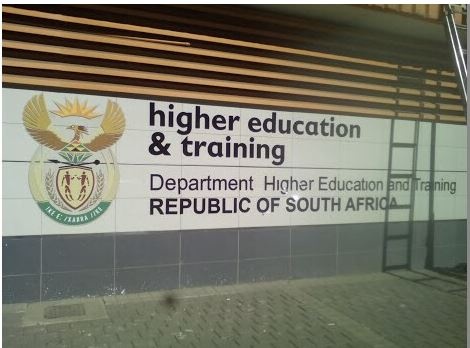
South Africa has entered a new phase in its higher-education reform effort, with the Department of Higher Education and Training’s (DHET) new recognition policy allowing private institutions that meet strict criteria to be formally designated as universities or university colleges.
The shift comes as the national higher-education conversation reaches a crescendo, marked by ongoing instability within the National Student Financial Aid Scheme (NSFAS), controversies around Sector Education and Training Authority appointments, and campus unrest linked to funding delays.
It also follows South Africa’s leadership role in this year’s Group of Twenty (G20) Education Working Group, where the global agenda focused on future-ready skills, strengthened financing, and public–private collaboration.
The change is anchored in DHET’s Policy for the Recognition of South African Higher Education Institutional Types, recently gazetted, and is further unpacked in a sector position paper titled Unlocking Capacity, Advancing Equity, drafted by private providers in response to the policy. The paper says that the policy update is one of the most significant in decades, opening the way for greater system-wide capacity, collaboration, and innovation.
Unlocking Capacity, Advancing Equity contends that the new institutional recognition framework brings regulatory language closer to “the lived reality” of a system in which private institutions already teach, research, and deliver programmes at university level.
It notes that enrolment in private higher-education institutions has almost tripled since 2010, rising from about 90,000 students to roughly 286,000 by 2023, and now accounting for just over 20% of all higher-education students in South Africa. This growth has taken place alongside relatively stagnant enrolments at public universities.
The policy update arrives as the country faces mounting pressure to accommodate a growing youth population. More than 330,000 matriculants qualify for higher education annually, but only about 200,000 seats exist in public universities, leaving tens of thousands locked out every year.
“The existing public infrastructure simply cannot meet the growing need,” the position paper argues.
Under DHET’s new recognition framework, eligible private institutions that offer accredited programmes, support research, and demonstrate community impact may apply for classification as universities or university colleges, subject to quality assurance by the Council on Higher Education and other statutory bodies.
The position paper describes the move as a “bold and necessary shift” that modernises oversight and acknowledges the contribution private providers already make to national development.
Crucially, the document notes that South Africa’s current regulatory model – led by the Council on Higher Education, the Higher Education Quality Committee, the South African Qualifications Authority, and DHET – was built to protect students during a period when “fly-by-night” institutions were common.
But today, it argues, the system’s slow, linear approval processes can delay new programmes by years, even in fields where skills shortages are acute.
“In some cases, the process from curriculum design to final accreditation may take years… even where the provider has a long history of compliance,” the paper states, calling for risk-based and future-fit regulatory pathways that distinguish between trusted institutions and new entrants.
The position paper accompanying the release warns that delays in modernising the education system could have long-term consequences for both inclusion and economic growth.
Africa is the world’s youngest continent, with around three-quarters of its population under 35.
Across the continent, more than 400 million young people are between 15 and 35. By 2040, the number completing secondary or tertiary education is expected to more than double.
Yet 11 million young Africans enter the labour market each year, with over 40% lacking the skills required for work. More than a quarter of 15- to 24-year-olds are not in education, employment, or training.
At the start of the 2025 academic year, more than 337,000 eligible matriculants competed for just 202,000 public university seats. With median household incomes at about R95,770 a year and average annual tuition at around R55,900, the majority of households cannot afford higher education without assistance.
NSFAS, which received over 608,000 applications for 2025, could only provisionally fund 442,079 students.
These pressures, the paper says, make the expansion of higher-education capacity through both public and private providers not optional but essential.
The document details how private higher-education institutions have “quietly become essential partners” in expanding access, noting that they are “fully regulated, quality-assured, and held to the same programme and qualification standards as public universities”.
Many offer programmes in applied sciences, law, digital technologies, biotechnology, business, and the creative industries, while also embedding work-integrated learning and industry-aligned curricula.
Eduvos, a major contributor to the document and one of the country’s largest private higher-education providers, says that it now serves tens of thousands of students annually across multiple campuses. The institution argues that the sector is ready to play a larger role, with strong graduate employment outcomes, distributed campuses, and flexible delivery models that serve both school-leavers and adult learners.
The paper stresses that private institutions are not seeking “preferential treatment” but want to be “recognised, integrated, and included” in national planning.
“Private institutions cannot replace public universities, nor do they seek to,” the document states.
“Instead, they can complement them by expanding capacity, diversifying pathways, and accelerating responsiveness to industry and labour market shifts.”
The position paper proposes a system-wide compact to formalise collaboration between government, public universities, private institutions, business, and civil society.
It identifies the need for a shared national vision, modernised regulatory pathways, inclusive financing models that expand beyond NSFAS, stronger industry engagement in curriculum development, deeper institutional collaboration on research and postgraduate development, and an updated public understanding of private education as part of the national system.
The authors argue that without such a compact, the country risks continuing with fragmented systems that cannot respond to demand or prepare students for emerging labour-market needs.
They describe DHET’s new recognition policy as a “symbol and signal” that all credible providers have a role to play in shaping the future of higher education. But they warn that the policy must be followed by infrastructure investment, regulatory reform, and financing innovation to make a measurable national impact.
“The private sector is ready to contribute its capacity, innovation, industry relationships, and infrastructure,” the paper concludes.
“Government has taken the first courageous step. The sector stands ready to assist, and to partner in this journey of reform and impact.”
INSIDE EDUCATION